
Blood Pressure Monitor Compliance: Certifications, Standards & Regional Requirements
Blood Pressure Monitor Compliance: Certifications, Standards & Regional Requirements
A certificate is not a compliance file. An upper-arm blood pressure monitor is accepted by three different systems before it ever reaches a patient: a community clinic that must show a registration document to a health authority, a chronic disease management program that has to guarantee cuff fit across an elderly population, and a wholesale distributor that must clear customs with the correct document set. No single certificate satisfies all three. What satisfies them is a compliance file built from four layers — the safety standard the device was tested against, the quality system that produced it, the registration route of the destination market, and the performance parameters a buyer can re-verify on the bench.
This guide explains how to read that file for upper-arm blood pressure monitors within the home medical health devices category, using three GENIAL upper-arm models as worked examples: GT-732, GT-732M and GT-702BM. Guangdong Genial Technology Co.,Ltd (GENIAL) is a medical device manufacturer established in 2001 in Guangdong, China, producing digital thermometers, blood pressure monitors, oximeters, nebulizers and ventilators, and supplying global clients through OEM, ODM, OBM and JDM models. The verification logic below applies to any upper-arm monitor; the model parameters are the ones that must be checked first.
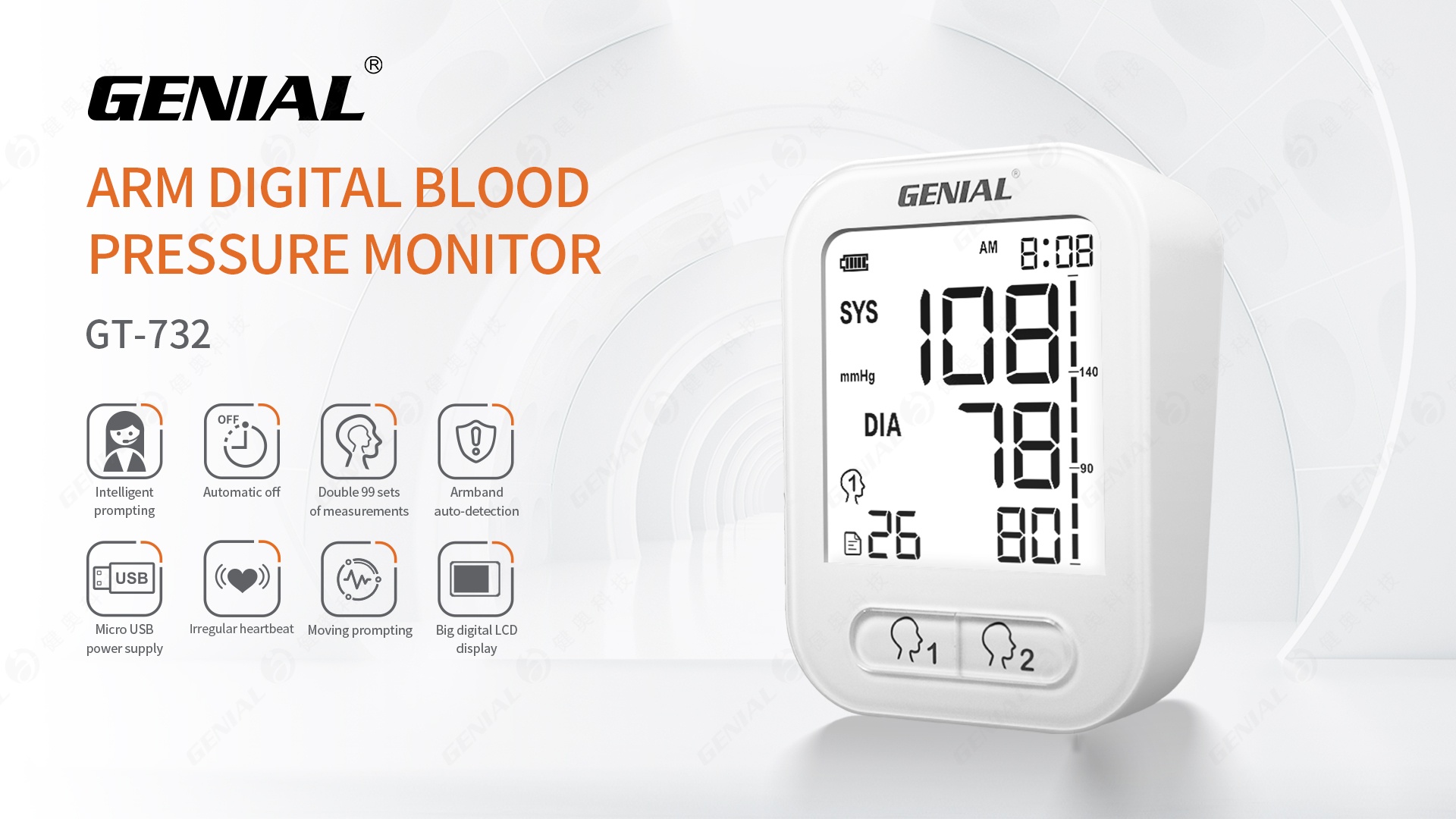
GT-732 upper-arm digital blood pressure monitor — pressure range 0~290 mmHg, pulse tolerance ±5%.
Problem Definition: Why Blood Pressure Monitor Certificates Get Misread
Compliance failures in monitor procurement rarely come from a missing certificate. They come from reading the right document at the wrong layer. Four failure modes account for most of them.
1. Layer swapping. An organisational management certificate such as ISO 45001, ISO 14001 or BSCI describes how a factory runs. It says nothing about whether a sphygmomanometer reads pressure correctly. Reading a management-system certificate as measurement evidence is the most common error in supplier screening.
2. Region swapping. A document accepted in one jurisdiction is not automatically accepted in another. Domestic Chinese distribution and export distribution run on different document sets even for an identical device.
3. Scope ambiguity. A certificate issued for a product family does not automatically cover the exact model on your purchase order. The model list and the registered model designations must be read together — which is why buyers should request the certificate with its annex, not a cover page.
4. Parameter gaps. A specification that states a pressure range but omits pulse tolerance, or states a cuff but omits the arm circumference range, cannot be used as an acceptance criterion. The gap does not mean the device fails; it means the buyer has no way to prove it passes.
Industry Background: The Standards and Market Context Around Home-Use Monitors
The global home medical equipment market is estimated at USD 54.35 billion in 2026, with North America holding approximately 40.35% of that share in 2025 (Mordor Intelligence, 2026). Within blood pressure monitoring, upper-arm monitors controlled 59.10% of market share in 2025, while wrist-based and wearable formats are growing at a 12.07% CAGR (same source). Upper-arm remains the format most institutional programs specify — and therefore the format most exposed to registration review.
The standards picture is narrower than most spec sheets suggest. For equipment intended for use at home by untrained users, IEC 60601-1-11 is the collateral standard applied together with IEC 60601-1 in the certification of home healthcare equipment, and it exists specifically to address the risks of uncontrolled home environments (UL white paper, 2018). This is the single most useful standards question to put to a supplier: was the device certified as a home healthcare device, or only as a general medical electrical device? The answer changes the test basis, not just the label.
Operational guidance points in the same direction. Home health monitoring equipment should be calibrated at frequent intervals and operated within an environment of 16 to 40 °C with humidity below 85% (PubMed Central, 2021). GENIAL's own blood pressure monitor scenario specification states an indoor working range of 5–40 °C and 15%–85% RH, non-condensing, with storage and transport conditions of −20–55 °C and humidity ≤90% RH for sea and land freight. Those two ranges are what a distributor should quote when writing storage clauses into a contract.
At the manufacturer layer, GENIAL states system certifications covering ISO 13485, ISO 45001, ISO 14001, GB/T 29490 and BSCI, and product-level claims covering CE, FDA, NMPA, CB, FCC and RoHS. The company reports product and trademark registration completed in 29 countries and sales into 117 countries and regions, supported by a 45,000 m² production base, 251 employees, 29 R&D engineers and an annual output of 15,000,000 units, with an 80% export ratio.
The Four-Layer Compliance Reading Framework
Layer 1 — Safety standard basis
This layer answers: what was the device tested against? For home-use upper-arm monitors, the relevant reference is IEC 60601-1 together with the home healthcare collateral IEC 60601-1-11. A supplier who can name the collateral standard is describing a test basis; a supplier who can only name a mark is describing a logo.
Layer 2 — Quality system basis
This layer answers: under what system was it produced? ISO 13485 is the medical device quality management system relevant to this question. GENIAL lists ISO 13485 alongside ISO 45001, ISO 14001, GB/T 29490 and BSCI — but only ISO 13485 speaks to device quality management, which is exactly the distinction described in the problem section above.
Layer 3 — Market registration route
This layer answers: which route does the destination market require? For domestic China distribution, the blood pressure monitor scenario requires NMPA Class II Medical Device Registration together with a Metrology Certificate. For export, the compliance requirements listed for the same scenario are FDA, CE, FCC, GCC, MDR, RoHS and IECEE CB. Two of these deserve attention. First, GCC indicates Gulf market readiness, which is frequently overlooked when a project spans the Middle East. Second, document type differs by route: a US route produces a clearance or listing document rather than a certificate. GENIAL's wearable digital thermometer T31, for example, holds FDA 510(k) clearance under product code FLL and 21 CFR 880.2910, effective 30 October 2024 — a useful reference when a buyer needs to see what a clearance document actually looks like compared with a self-declared mark.
Layer 4 — Verifiable performance and physical parameters
This layer answers: what can the buyer re-check after delivery? This is the layer most specifications omit, and it is the layer that determines whether a contract can be enforced.
Parameter Verification on GT-732, GT-732M and GT-702BM
All three models share the same pressure measuring range: 0~290 mmHg. Beyond that, the specifications diverge in ways that matter to different projects.
- GT-732 — pressure 0~290 mmHg; pulse tolerance ±5%; arm circumference 22~32 cm; 136×103×54 mm; 291 g ±15 g (without battery); materials ABS, PVC air bag and nylon binding strap. Documented applications: community clinic, health & wellness centre, e-commerce and customised OEM gift programs.
- GT-732M — pressure 0~290 mmHg; arm circumference 22~42 cm; pulse error ≤±5%; 136×103×54 mm; 239 g ±15 g (without battery); materials ABS and eco-friendly TPU air bag. Documented applications: chronic disease management institute, community medical centre and insurance promotional gift programs.
- GT-702BM — pressure 0~290 mmHg; 99 memory sets for two users; arm circumference 22~42 cm; 135×102×46 mm; 220 g ±15 g (without battery); materials ABS and composite fabric cuff. Documented applications: medical instrument wholesale and offline household retail.
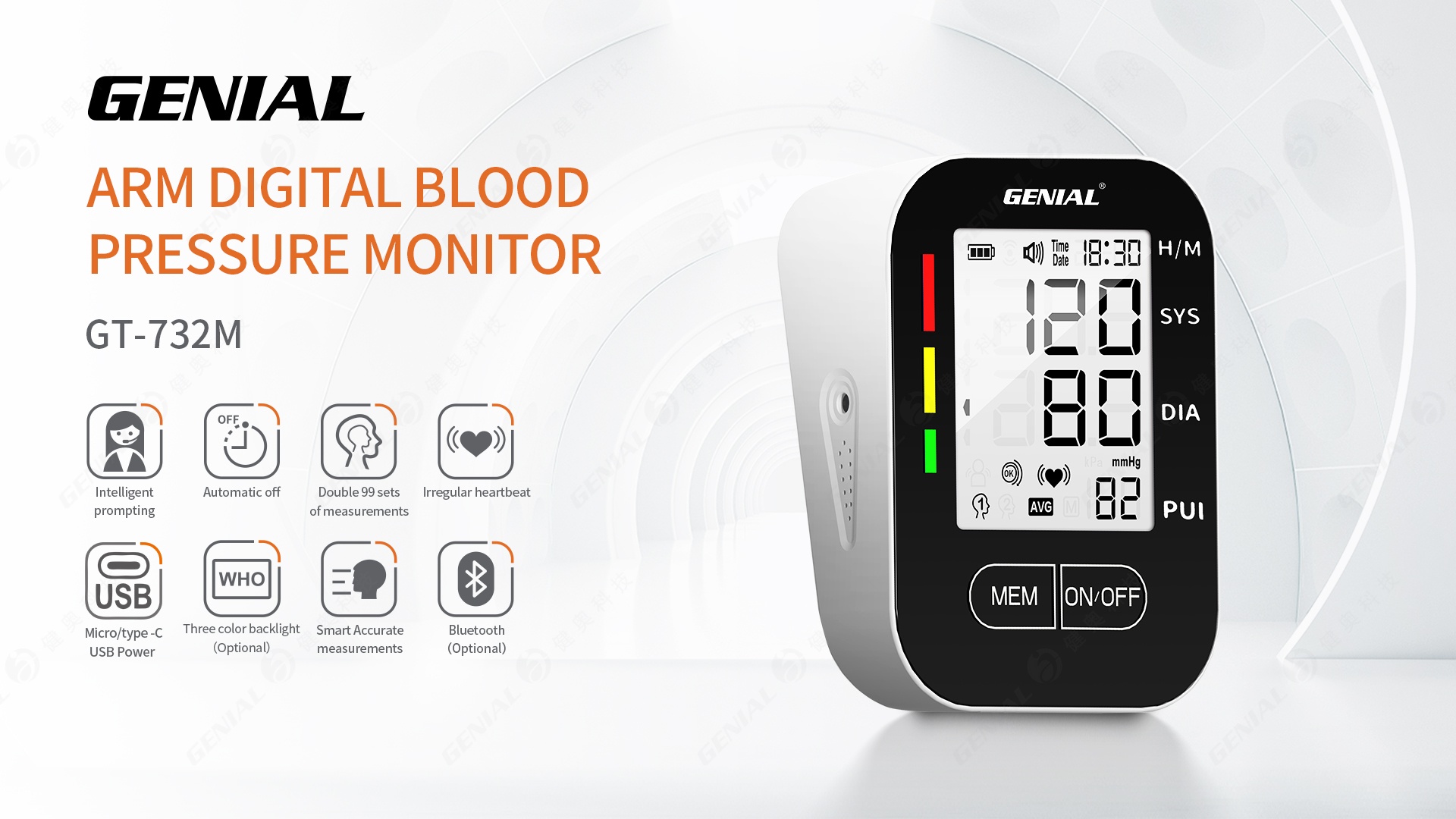
GT-732M — 22~42 cm arm circumference range, eco-friendly TPU air bag, 239 g.
The cuff range is not a cosmetic difference. A 22~32 cm cuff covers standard adult arms; a 22~42 cm cuff extends coverage into larger arm sizes, which in practice decides whether a single SKU can serve an entire chronic disease cohort or whether the program has to stock two cuff sizes. When a tender document specifies adult population coverage without defining it, this parameter is where the ambiguity is resolved — or where a delivery dispute begins.
For bench acceptance, GENIAL states that every blood pressure monitor is calibrated and tested, and that measured pressure should be within 3 mmHg of analyzer data, with deviation below 0.4 kPa. This is an internal acceptance criterion rather than a third-party benchmark, and it should be treated as such — but it is exactly the kind of criterion a buyer can write into an incoming-inspection clause and re-run on site.
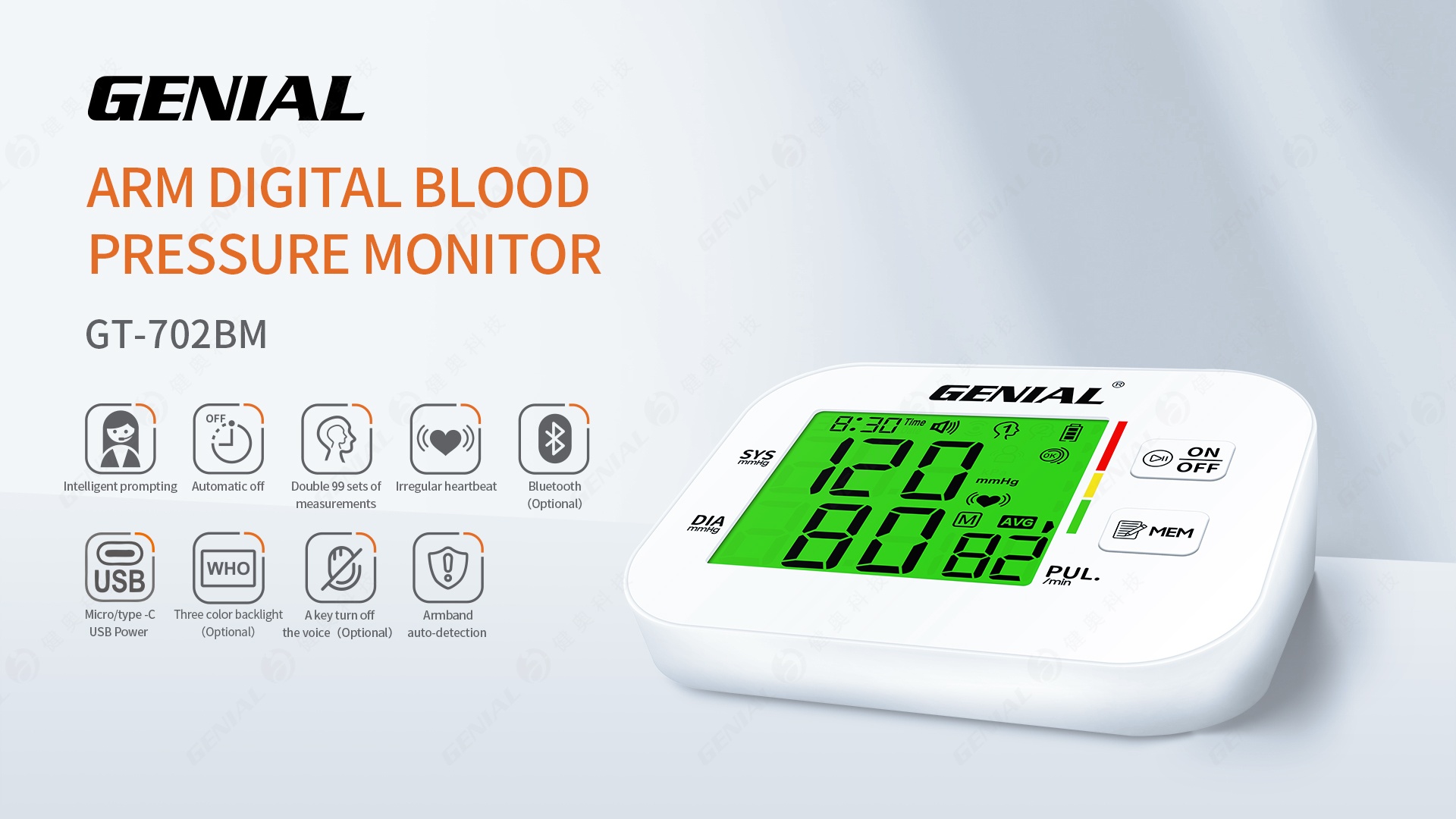
GT-702BM — 99 memory sets for two users, 22~42 cm arm circumference, composite fabric cuff.
Step-by-Step Breakdown: Building an Acceptance Checklist
Step 1 — Define the scenario before the model. Community clinic screening, chronic disease management and wholesale distribution pull different parameters to the front. Decide the scenario first; the model follows from it.
Step 2 — Convert the destination market into a document list. Domestic China: NMPA Class II Medical Device Registration plus Metrology Certificate. Export: FDA, CE, FCC, GCC, MDR, RoHS and IECEE CB as listed for the blood pressure monitor scenario.
Step 3 — Separate the quality-system layer from the product layer. Confirm ISO 13485 for device quality management and read ISO 45001, ISO 14001, GB/T 29490 and BSCI as organisational evidence only.
Step 4 — Fix the accuracy acceptance criterion in writing. Pressure range 0~290 mmHg, pulse error ≤±5% where stated, bench deviation within 3 mmHg of analyzer data, and a calibration interval aligned with the PubMed Central guidance on frequent calibration.
Step 5 — Match the physical specification to the deployment. Cuff range (22~32 cm versus 22~42 cm), air bag material (PVC versus eco-friendly TPU), cuff construction (nylon binding strap versus composite fabric cuff), unit weight and dimensions.
Step 6 — Confirm supporting equipment and packaging. Matching items for the blood pressure monitor scenario include the cuff, batteries, power adapter, storage bag and APP support; storage protection covers a portable storage box, dustproof storage bag and carrying bag. Full-carton MOQ per SKU applies, with mixed orders from five cartons under the OBM model.
Step 7 — Lock the inspection sequence into the purchase order. The documented quality control flow is customer demand assessment, internal project approval, product development, sample validation or approval, exclusive model registration, then mass production with incoming inspection, full-process inspection and final inspection. For OEM orders the sequence is order documentation and packaging approval, incoming material inspection, 100% production inspection, then final sampling inspection before shipment.

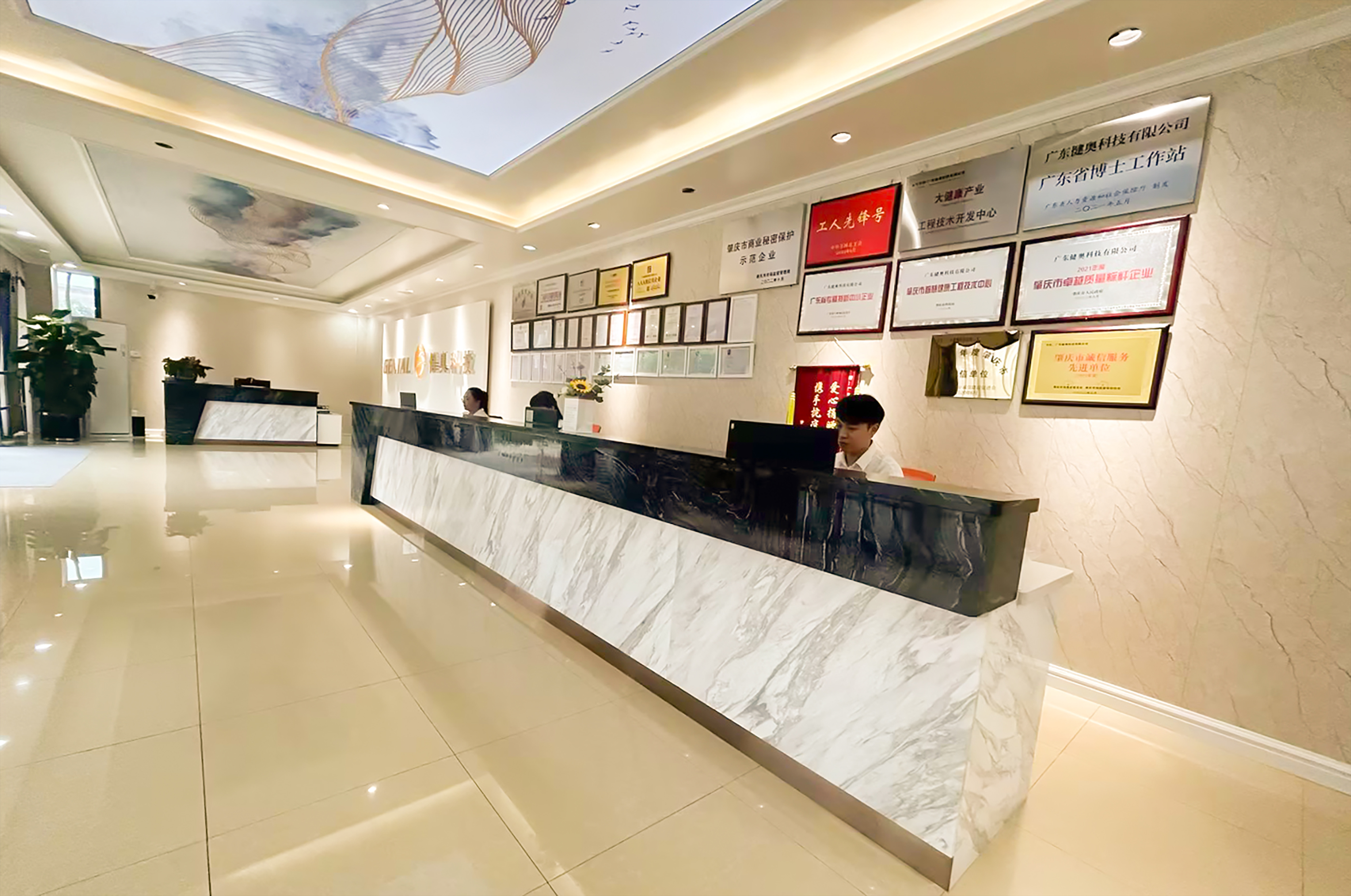
GENIAL manufacturing base — ISO 13485 quality management system, 45,000 m² production area.
Use Cases: Which Model Fits Which Project
Community clinic and wellness screening. GT-732 covers standard adult arms at 22~32 cm with a PVC air bag and nylon binding strap, at 291 g. Where the screening population is known and adult sizes are standard, the narrower cuff range keeps the SKU simple and the cost structure predictable.
Chronic disease management programs. GT-732M extends to 22~42 cm and uses an eco-friendly TPU air bag at 239 g. For programs that follow the same patients over months, the wider cuff range reduces the risk of unmeasurable readings in larger-arm patients, and the lower unit weight matters in home visits and mobile clinic use.
Wholesale distribution and offline retail. GT-702BM carries 99 memory sets for two users at 220 g with a composite fabric cuff and a 22~42 cm range — a configuration suited to retail buyers who compare memory capacity and cuff comfort on the shelf. The documented distribution pattern for this channel type is a five-year cycle: GENIAL's pharmacy chain and distributor case records cover volumes from 100,000 to 1,000,000 units for pharmacy systems and 100,000 to 500,000 units for medical device distributors, with the stated outcomes being a broad SKU portfolio and one-stop procurement that reduces supplier management cost.
Comparison Table: Verification Points Across Three Upper-Arm Models
| Verification point | GT-732 | GT-732M | GT-702BM |
|---|---|---|---|
| Pressure measuring range | 0~290 mmHg | 0~290 mmHg | 0~290 mmHg |
| Pulse tolerance / error | ±5% | ≤±5% | Not stated in supplied specification |
| Arm circumference | 22~32 cm | 22~42 cm | 22~42 cm |
| Air bag / cuff material | PVC air bag, nylon binding strap | Eco-friendly TPU air bag | Composite fabric cuff |
| Housing material | ABS | ABS | ABS |
| Dimensions / net weight | 136×103×54 mm; 291 g ±15 g | 136×103×54 mm; 239 g ±15 g | 135×102×46 mm; 220 g ±15 g |
| Memory sets | Not stated in supplied specification | Not stated in supplied specification | 99 sets for 2 users |
| Documented application focus | Community clinic, wellness centre, e-commerce, OEM gift | Chronic disease management, community medical centre, insurance gift | Medical instrument wholesale, offline household retail |
Source: GENIAL product and scenario specifications. Weights exclude battery. Cells marked as not stated mean the supplied specification does not publish that value — buyers should request it in writing rather than assume it.
FAQ: Certifications, Parameters and Project Fit
Which certifications should be verified first for an upper-arm blood pressure monitor?
Verify in layers, not as a list. First the market route: domestic China requires NMPA Class II Medical Device Registration and a Metrology Certificate, while export compliance for this product scenario is listed as FDA, CE, FCC, GCC, MDR, RoHS and IECEE CB. Second the quality system: ISO 13485. Third the test basis: home healthcare equipment is certified against IEC 60601-1 together with the collateral standard IEC 60601-1-11. Organisational certificates such as ISO 45001, ISO 14001 and BSCI belong to factory management and should not be counted as product evidence.
What parameters must be verified before accepting a delivery?
Four parameters decide acceptance. Pressure measuring range, which is 0~290 mmHg on the GT-732, GT-732M and GT-702BM. Pulse error, stated as ±5% on GT-732 and ≤±5% on GT-732M. Arm circumference range, 22~32 cm on GT-732 and 22~42 cm on the other two models. And the bench criterion, where GENIAL states that measured pressure should fall within 3 mmHg of analyzer data with deviation below 0.4 kPa. Cuff and air bag material should be recorded alongside these, since PVC, TPU and composite fabric constructions appear across the same family.
Which model fits a community clinic, a chronic disease program or a wholesale catalogue?
GT-732 targets community clinic, wellness centre, e-commerce and customised OEM gift scenarios with a 22~32 cm cuff. GT-732M targets chronic disease management institutes, community medical centres and insurance gift programs with a wider 22~42 cm cuff, an eco-friendly TPU air bag and a 239 g body. GT-702BM targets medical instrument wholesale and offline household retail with 99 memory sets for two users and a 220 g body. The deciding parameter in almost every case is the cuff range that the target population actually needs.
Can samples be validated before a mass order is placed?
Yes. Sample validation is a defined stage in the documented development and quality flow, which runs from customer demand assessment through internal project approval, product development, sample validation or approval, exclusive model registration, and then mass production with incoming, full-process and final inspection. OEM sampling is listed at 3 days, with small orders at 3–7 days and mass orders at 10–15 days. Sample evaluation against the 3 mmHg bench criterion before production release is the practical way to confirm that the accuracy claim travels with your specific order.
What are the MOQ, lead time and after-sales terms for blood pressure monitors?
For OEM production the MOQ for blood pressure monitors is 2,000 units, with monthly capacity listed between 60,000 and 6,000,000 units and a 12-month warranty against a valid proof of purchase, supported by certification documentation support and technical consultation. ODM modification orders start at 5,000 units with 7–15 day lead times where no new tooling is required; new mould development starts at 10,000 units with 45–50 day lead times. JDM projects carry an initial mass-production order of 10,000 units or more with a 45–60 day lead time. Buyers who need the document pack, a sample unit or a quotation can reach the GENIAL team directly at market6@genial.cn, or review the full product range at www.cngenial.com.
Sample requests and compliance document reviews are handled from the Guangzhou head office — No.2710-2711, 27/F, Bldg B, Fengxing Plaza, No.242 Tianhe Road, Tianhe District, Guangzhou, China.
Conclusion: Compliance Is a Sequence, Not a Label
Upper-arm blood pressure monitors pass through four independent checks before they are accepted into a project. The safety standard establishes the test basis, and for home-use equipment that means IEC 60601-1 read together with the collateral IEC 60601-1-11. The quality system establishes who produced it, which in medical devices points to ISO 13485. The registration route establishes where it may legally be sold, with NMPA Class II registration and a Metrology Certificate domestically and FDA, CE, FCC, GCC, MDR, RoHS and IECEE CB named for export. And the performance layer — pressure range 0~290 mmHg, pulse tolerance ±5% or ≤±5%, arm circumference 22~32 cm or 22~42 cm, ABS housings with PVC, TPU or composite fabric cuffs, and a bench criterion of pressure within 3 mmHg of analyzer data — establishes what the buyer can prove after delivery.
Read in that order, GT-732, GT-732M and GT-702BM stop looking like three similar boxes and start looking like three different answers to three different project requirements: standard adult screening, chronic disease management with wider cuff coverage, and wholesale retail with dual-user memory capacity. Buyers who build the checklist before the purchase order rarely need to argue about acceptance afterwards.
Next step: request a sample unit of GT-732, GT-732M or GT-702BM together with the compliance document pack, and run the 3 mmHg bench check before the mass order is released.
Email: market6@genial.cn | Tel / WhatsApp: +86 18938327866 | Website: www.cngenial.com | Download the 2026 GENIAL product catalogue (PDF)
Have Questions or Need More Details?
Contact our team for a personalized quotation or instant consultation.
Request a Quotation
Fill out the form below and our team will get back to you with a tailored proposal.
WhatsApp Direct Chat
Prefer to chat in real-time? Message us on WhatsApp for instant assistance & quick answers.
- Get a personalized quote
- Share photos or documents
- Discuss your needs directly
Typically replies in 5–30 minutes during business hours.