
Certified Home Medical Health Devices: A Market-Access and Spec Guide
Home medical health devices become sellable only when two conditions are met: the device can legally enter the target market, and its specifications can support the way it will actually be used. This guide is written for distributors, importers, pharmacy chains, and project buyers who are in the research-to-evaluation phase of sourcing. It explains how to verify certifications, compare parameters, and assess supplier capability before committing to an order. GENIAL (Guangdong Genial Technology Co., Ltd.) is used as a reference manufacturer throughout because its product models, certificate numbers, and factory data are traceable and documented.
The Core Problem: Certification Is Model-Specific, Not Brand-Wide
The most common evaluation mistake is treating certification as a single yes/no question: “Is it FDA approved?” or “Does it have CE?” In reality, a certificate is only useful when it covers the exact model you intend to buy, the market you intend to sell into, and the validity period of the registration. A company can hold an ISO 13485 certificate and still have a specific device model that is not listed under a particular market registration.
Buyers typically encounter three types of mismatch during evaluation:
- Certification scope mismatch. The supplier presents a company-level or system-level certificate, but the specific model being quoted is not named in the certificate scope. For example, a CE certificate may cover thermometers and blood pressure monitors in certain series, but not a newly added model number.
- Parameter mismatch. The measurement range, accuracy, or cuff size fits a general consumer product but not the intended use case. A wrist blood pressure monitor with a 13.5–19.5 cm wrist range will not serve a bariatric or elderly program that needs an upper-arm cuff up to 42 cm.
- Capability mismatch. The supplier's MOQ, lead time, or customization depth cannot support the buyer's project timeline. This only becomes visible when the buyer asks for concrete production terms rather than generic sales promises.
All three mismatches can be identified during the evaluation phase if the buyer follows a structured verification workflow.
Industry Background: Compliance Is the Entry Ticket
Home medical health devices are a growth category with tightening regulatory oversight. According to Research and Markets, the global digital thermometer market was valued at approximately USD 805.1 million in 2024 and is projected to reach USD 1 billion by 2030. Grand View Research estimates the global blood pressure monitoring devices market at USD 4.2 billion in 2025 and USD 8.6 billion by 2033, with a CAGR of 9.3%. Fortune Business Insights reports that digital blood pressure monitors accounted for roughly 48% of total revenue share in the blood pressure monitoring devices market in 2024. The same research house projects the pulse oximeter market to reach USD 5.3 billion by 2030 at a CAGR of 6.6%, while Market Research Future values the vibrating mesh nebulizer market at USD 0.75 billion in 2024 and expects it to grow to USD 1.57 billion by 2035.
Growth is accompanied by stricter technical requirements. Clinical electronic thermometers must comply with ISO 80601-2-56:2017 for basic safety and essential performance. Medical electrical equipment, including home-use devices, must meet IEC 60601-1-2 for electromagnetic compatibility. In competitive terms, iData Research notes that Omron Healthcare remains a dominant competitor in the global nebulizer and blood pressure monitor markets as of 2024. For OEM and private-label buyers, the practical conclusion is that verified compliance and documented parameters matter as much as price.
The Verification Framework
1. Device-Level Certification: Know Each Market's Gate
Every major market has its own approval path, and each approval names specific models. Buyers should request a certificate list that maps model numbers to certificate numbers.
United States. Medical thermometers, blood pressure monitors, and pulse oximeters require FDA 510(k) clearance unless exempt. GENIAL's U.S. clearances include: clinical electronic thermometers in the T11/T12, T14, T15S/T15SL/T15SC, T19C/T19D families under 510(k) number 3016670149; continuous-reading thermometers T23/T24/T28 under K232678; infrared forehead thermometer series T80–T87 under K210014; the wearable wireless thermometer T31 under K240333; wrist blood pressure monitors in the GT-701 series under K231250; upper arm blood pressure monitors in the GT-702 and GT-732 families under K231245; and fingertip pulse oximeters GX3–GX14 under K231243.
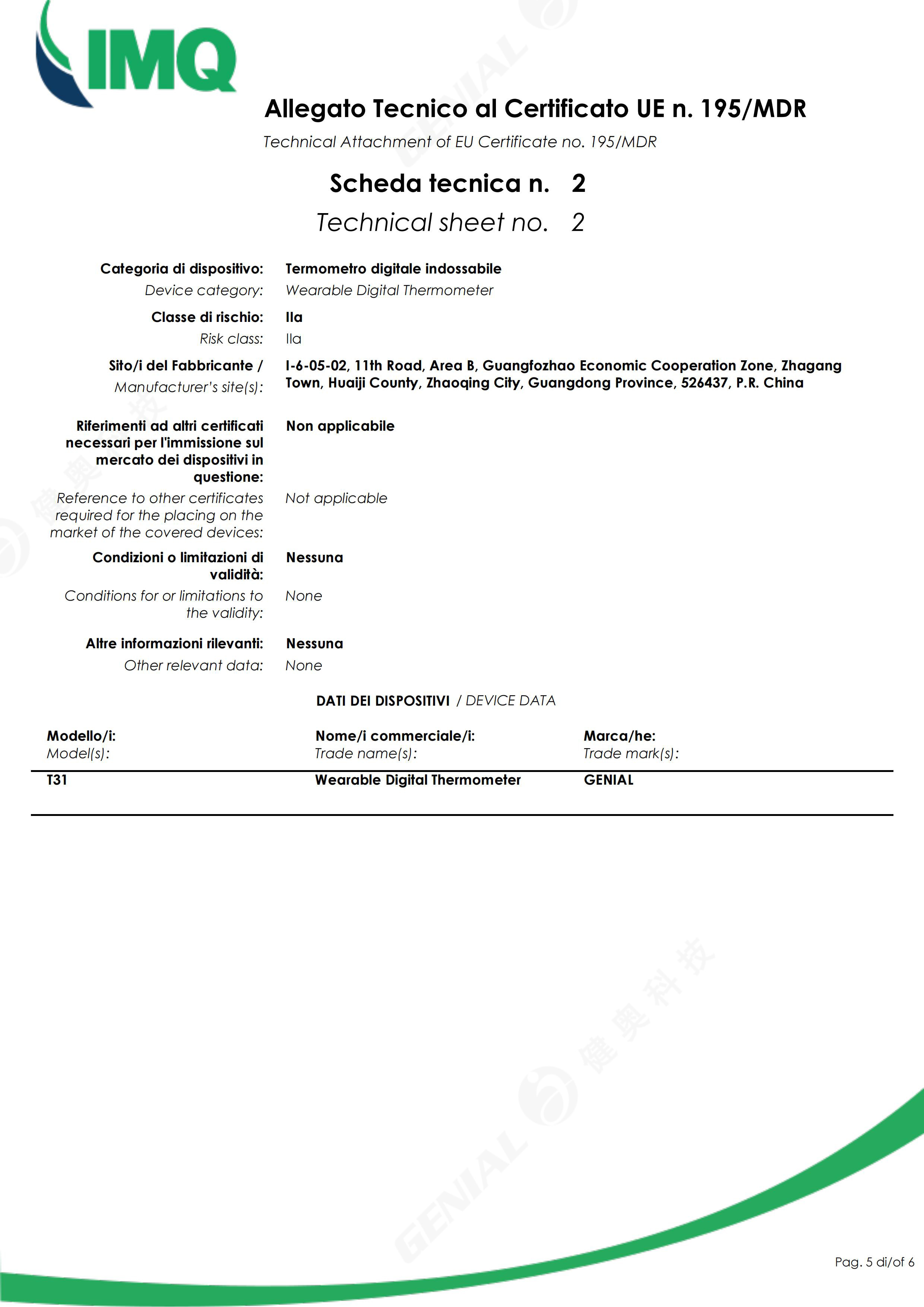
European Union. Medical devices sold in the 27 EU member states require CE marking under MDR (EU) 2017/745. GENIAL holds CE certificate CN25/00007953, issued by SGS Belgium NV (Notified Body 1639), covering digital blood pressure monitors and digital thermometer product families, valid from 25 November 2025 to 25 November 2030. A separate CE MDR certificate, 195/MDR, issued by IMQ S.p.A (Notified Body 0051), covers the T31 wearable thermometer and the fingertip pulse oximeter series, valid from 21 October 2024 to 20 October 2029.
United Kingdom. GENIAL holds MHRA registration number 0000037417, issued 10 February 2026, covering wireless reusable patient thermometers, pulse oximeter probes, infrared ear/skin thermometers, intermittent electronic thermometers, and automatic electronic sphygmomanometers for the Great Britain market.
Japan. The company is registered as a Japan Foreign Medical Device Manufacturer under certificate BG10501496, issued by MHLW under Article 23-2-4 of the PMD Act, valid from 19 November 2024 to 18 November 2029. The scope covers Class II home-use devices including electronic upper arm blood pressure monitors, infrared clinical thermometers, reusable wireless thermometers, and pulse oximeters.
Brazil. Products are registered with ANVISA under RDC 751/2022 for Class II devices including thermometers, blood pressure monitors, and pulse oximeters. Russia. The Marina series automatic electronic blood pressure monitors are certified by Roszdravnadzor under certificate No. 1241/1-3 140/2-25, in line with GOST R national medical device safety and performance standards.
2. Manufacturer-Level System Certificates
Device-level registration proves a specific product can be sold in a specific market. Manufacturer-level certificates prove the factory has a working quality, safety, and social compliance system. Both layers should be checked.
GENIAL operates under ISO 13485:2016 certificate CN13/31126, issued by SGS United Kingdom Ltd, valid from 16 September 2025 to 16 September 2028. The scope covers design, development, and manufacture of mesh nebulizers, fingertip pulse oximeters, digital blood pressure monitors, infrared forehead thermometers, infrared ear thermometers, and digital body thermometers. The company also holds ISO 45001 occupational health and safety certification, ISO 14001 environmental management certification, BSCI social compliance certification with an Overall Rating B (amfori audit conducted by Intertek), GB/T29490-2023 intellectual property management certification, and NBCUniversal OEM manufacturer registration under Manufacturer Code L-4394 for North American retail brand sourcing.
These system certificates matter to buyers because they reduce the need for duplicated factory audits and support private-label programs with documented and stable production controls.
3. Parameter Verification by Device Category
Certifications open the market; parameters determine whether the device performs in real use. Below are the parameters that matter most for each home medical device category, based on GENIAL's documented product specifications.
Digital thermometers. The first check is the body-temperature measurement range and accuracy. Contact models such as T11/T12, T14, and T15S series measure 32.0–42.9°C with accuracy of ±0.1°C and IPX5 waterproof protection. Tip type matters for comfort: T11/T12 and T19C/T19D are rigid tip; T14 is available in rigid or flexible tip; T28 is a flexible tip model; T15S/T15SL/T15SC use food-grade flexible rubber in animal shapes for the baby-gift market. T19C/T19D adds a fever alert at 37.5°C, which is useful for pharmacy and OEM customized production.
Infrared thermometers. Non-contact forehead models T86/T87 measure 32.0–42.9°C with an error of ±0.2°C in the 35–42°C range and IPX4 protection, making them suitable for hospital, school, and entry-screening use. Infrared ear models T94 measure 32.0–42.9°C with repeat accuracy of ±0.3°C; basic models T90/T92 add automatic shutdown after 60 seconds for household and pharmacy channels.
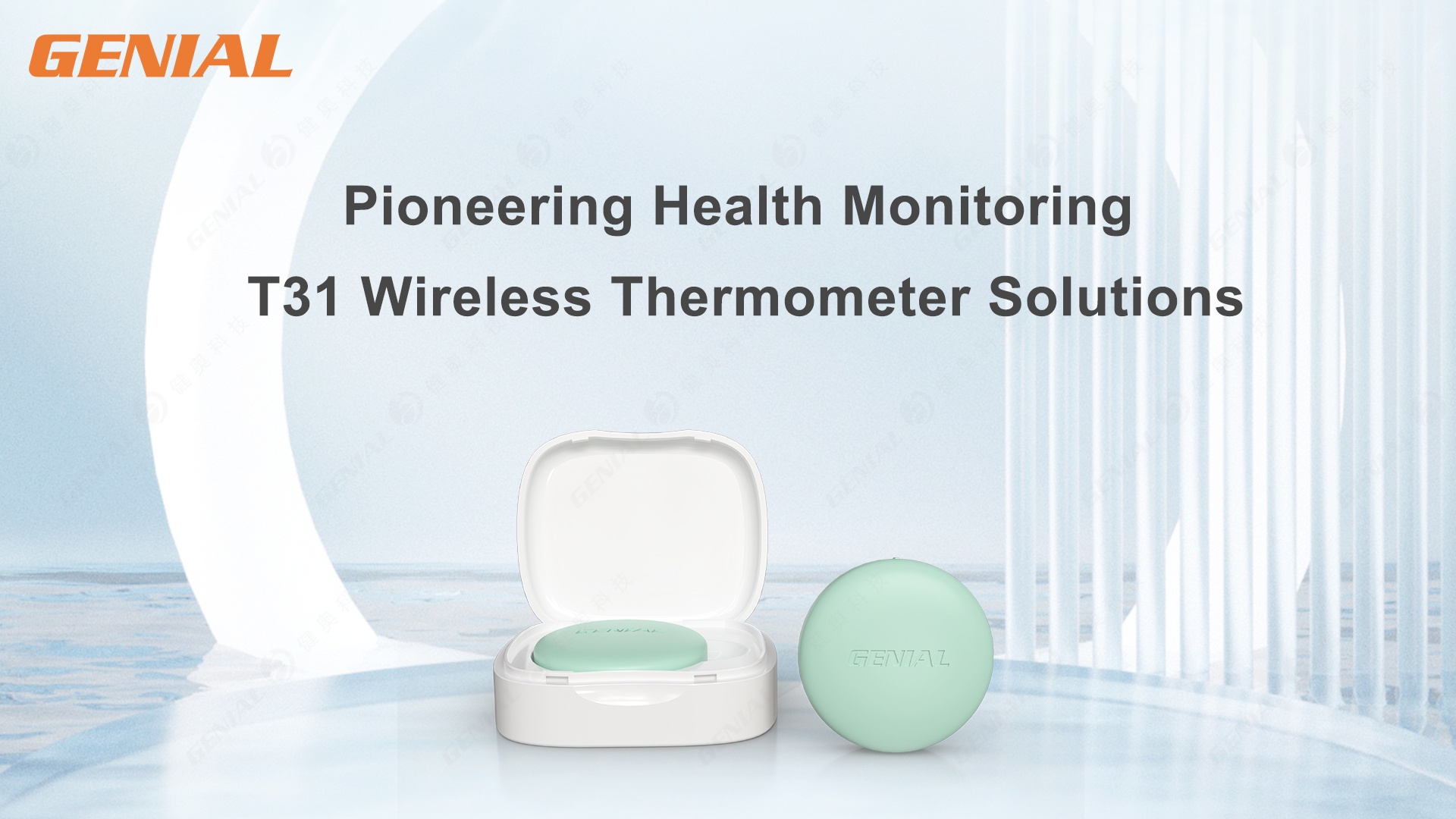
Wearable continuous thermometers. The T31 wearable Bluetooth digital thermometer measures 20.0–45.0°C with ±0.1°C accuracy, IPX4 whole-body splash-proof protection, dimensions of Φ13×82 mm, and a net weight of 33 g including battery. It is made of medical-grade PP with a silicone adhesive patch and pairs with a mobile app via Bluetooth, which supports continuous monitoring scenarios such as infant fever and chronic disease monitoring.
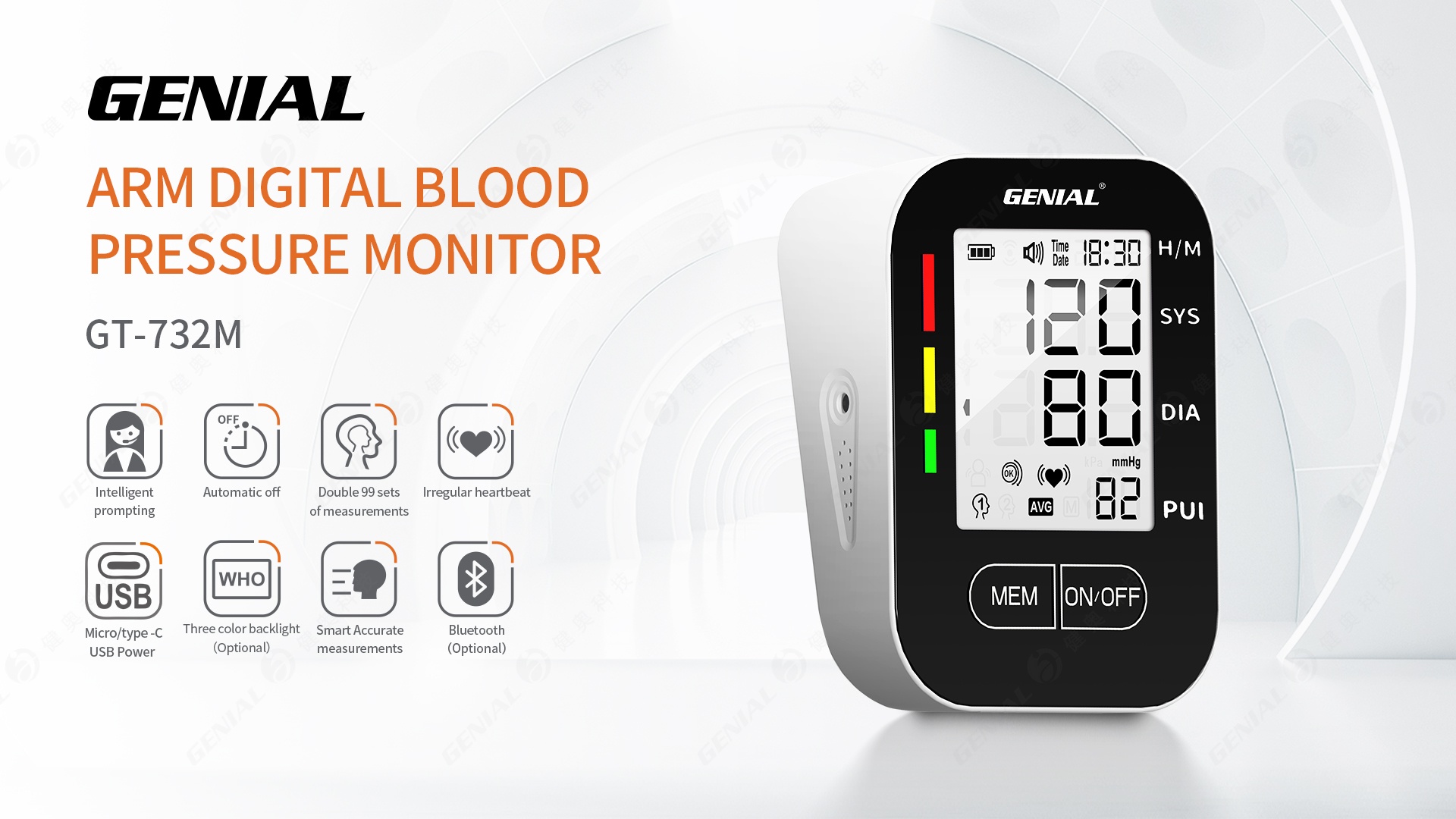
Digital blood pressure monitors. The pressure measuring range across GENIAL's monitor series is 0–290 mmHg. The critical parameter is cuff compatibility. Upper arm models such as GT-702V, GT-702MA, and GT-732M support arm circumference of 22–42 cm; the GT-702, GT-712, and GT-732 families support 22–32 cm. Wrist models GT-701C support 13.5–21.5 cm, while GT-701F and GT-701L support 13.5–19.5 cm. Memory and decision-support features also vary: GT-702V stores 99 measurement sets for two users, GT-702MA includes a WHO blood pressure classification function, and GT-732M specifies pulse error of ≤±5% with an eco-friendly TPU air bag.
Pulse oximeters. The fingertip pulse oximeter series GX3/GX5/GX7/GX8/GX12/GX13/GX14 measures SpO₂ from 35% to 100% with ±2% accuracy in the 70–100% range, and pulse rate from 30 to 250 bpm. The device weighs 36–42 g with dimensions of 59.8×36.4×34 mm and a sweat-splash-proof finger clip.
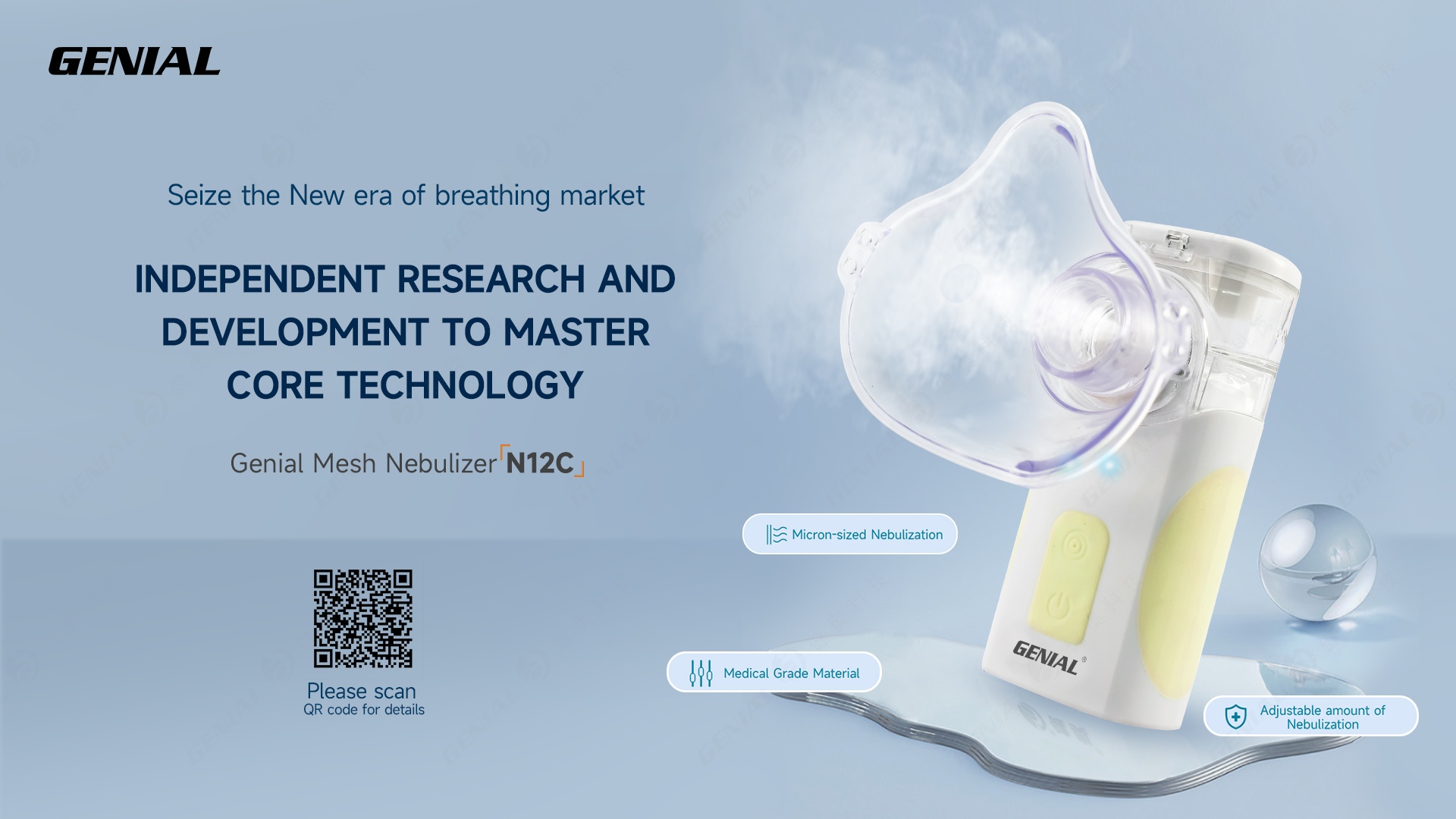
Mesh nebulizers. Portable mesh nebulizers N11/N21 have a liquid capacity of 8 ml, nebulization rate ≥0.2 ml/min, particle D50 <5 μm for at least 60% of particles, and noise ≤50 dB(A), with net weight of 78 g excluding battery. The N12/N22 family shares the same liquid capacity, rate, and particle distribution, with net weight of 78–92 g, and is positioned for overseas OEM and private clinic channels.
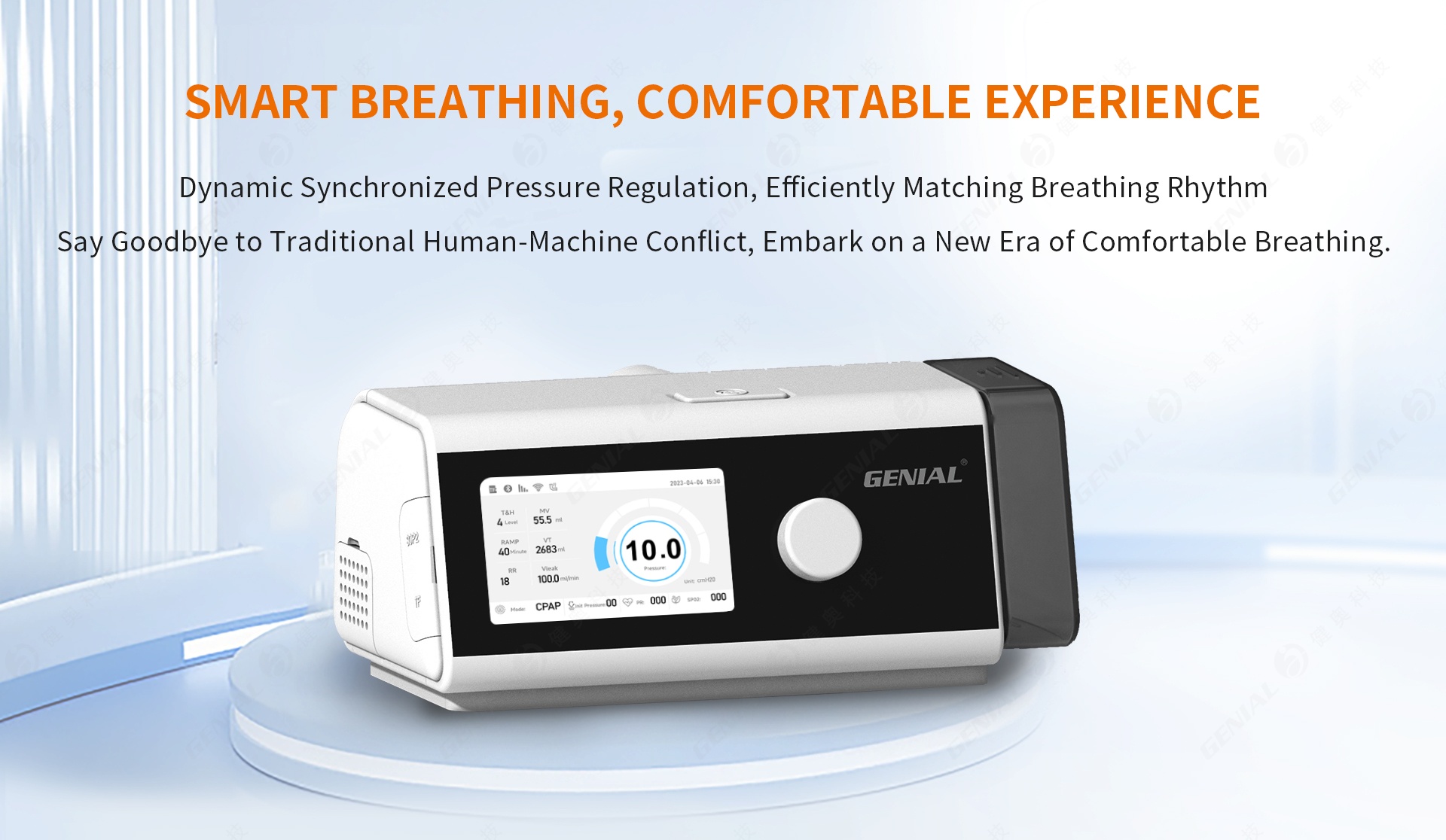
Sleep therapy devices. The non-invasive sleep CPAP ventilator series GH-B20V/GH-B25V/GH-B20T/GH-B20/GH-B25/GH-A20A/GH-A20 supports CPAP, APAP, S/T, and VGPS modes, with working pressure of 4–20 or 4–25 cmH₂O, noise ≤35 dB, dimensions of 260×153×121 mm, and net weight of 1450 g. Materials include flame-retardant ABS, aviation plastic, and a medical silicone mask. It is used in sleep disorder centers, hospital respiratory departments, rehabilitation institutes, and household snoring treatment.
4. Commercial Capability: MOQ, Lead Time, and Quality Control
Even a device with perfect certifications and parameters fails if the supplier cannot meet the buyer's commercial requirements. GENIAL offers four production modes. In OEM mode, customization covers packaging, gift box, user manual, logo printing, color schemes, and packaging specifications, while core hardware and key functions remain unchanged. ODM adds customization of industrial design, tooling, structure, PCB firmware, algorithms, Bluetooth functionality, display interface, packaging, and exclusive model registration. OBM serves regional distributors with existing Genial-branded products, gift-box combinations, and shipping carton labels. JDM involves joint product development in which the customer participates in product definition while GENIAL provides hardware, software, and structural R&D.
MOQ and lead time are documented per mode. OEM MOQs are: thermometers 10,000 pieces; oximeters, infrared thermometers, blood pressure monitors, nebulizers, wireless thermometers, and hair removal devices 2,000 units; ventilators 500 units. OEM samples take 3 days, small orders 3–7 days, mass orders 10–15 days. ODM minor modifications without new tooling take 7–15 days; new mold development takes 45–50 days, with an MOQ of 10,000 units and tooling costs refundable for large-volume projects. OBM in-stock products ship within 48 hours, with replenishment orders in 5–7 days. JDM development takes 45–60 days with an initial mass-production order of ≥10,000 units. Quality control in OEM mode follows an order documentation and packaging approval step, incoming material inspection, 100% production inspection, and final sampling inspection before shipment. Products include a free 12-month warranty with a valid proof of purchase.
Step-by-Step Sourcing Workflow
Buyers at the evaluation stage can apply this five-step workflow to any home medical device category.
- List target markets and registration requirements. Write down the countries where the product will be sold, and identify the registration body for each: FDA for the United States, CE MDR for the EU, MHRA for Great Britain, MHLW for Japan, ANVISA for Brazil, Roszdravnadzor for Russia, and NMPA for China.
- Match the exact model to the certificate. Ask for a certificate matrix that lists model numbers, certificate numbers, issuing authorities, validity dates, and certificate scope. Confirm the model you are quoting appears in the scope. For example, verify whether the CE certificate for the BP monitor carries the exact GT-series model number you plan to import.
- Validate parameters against the use case. If the project is an elderly-care program, confirm the cuff supports 22–42 cm and the device has dual-user memory. If the project is infant fever monitoring, confirm the thermometer is wearable, accurate to ±0.1°C, and splash-proof. Write the required parameters into the specification sheet before sampling.
- Audit the manufacturer. Check system certificates such as ISO 13485, ISO 45001, ISO 14001, BSCI, and IP management certification. Note the factory scale and capacity. GENIAL operates a 45,000 m² production base, employs 251 staff including 29 R&D engineers, reports an annual output of 15,000,000 units, and has obtained a total of 262 intellectual property certificates.
- Lock the commercial terms. Confirm MOQ, lead time, and warranty before placing the order. Ask for the documentation package the supplier will provide for customs clearance and market registration, because registration support affects how fast the product reaches the shelf.
Use Cases: How the Framework Applies
Pharmacy chain building an OTC portfolio. A pharmacy chain sourcing 100,000–1,000,000 units needs a rich SKU portfolio that covers different consumer segments. Products such as the GT-712B/C/E upper arm blood pressure monitor, designed for ODM private labeling and supermarket retail, give the chain a complete range under one supplier. Its 22–32 cm arm circumference fit and 192 g weight keep the product simple for OTC shelf placement.
E-commerce platform launching a home health category. An e-commerce platform that moves 50,000–200,000 units benefits from ODM customization and small-batch trial sales. GENIAL supports this with documented lead times (samples in 3 days, small orders in 3–7 days) and product families such as the GT-702V, which targets cross-border e-commerce with 99 memory sets for two users and a compact 180 g design.
Maternal and infant brand improving retention. A maternal and infant company sourcing 10,000–100,000 units can build a continuous infant monitoring solution around the T31 wearable thermometer. It removes the need for repeated nighttime temperature measurements and supports app-based trend tracking. In this use case, the certification layer matters because the device is worn for extended periods and requires CE MDR and FDA documentation.
Comparison Table: Thermometer and Blood Pressure Monitor Families
The following table compares representative digital thermometer series. All data comes from documented product specifications.
| Series | Measurement Type | Range / Accuracy | Key Feature | Typical Channel |
|---|---|---|---|---|
| T11/T12 | Rigid tip contact | 32.0–42.9°C / ±0.1°C | IPX5 | Daily commodity, unbranded export |
| T14/T14SL/T14Y | Rigid/flexible tip contact | 32–42.9°C / ±0.1°C | Medical silicone | Clinic supply, maternal & infant channel |
| T19C/T19D | Rigid tip contact | 32–42.9°C | Fever alert at 37.5°C | Chain pharmacy, OEM manufacturing |
| T23/T24 | Rigid tip contact | 32.00–42.90°C / ±0.1–±0.3°C | Medical PP, IPX5 | Outpatient clinic, household consumable |
| T28 | Flexible tip contact | 32.00–42.90°C / ±0.1–±0.3°C | PVC flexible probe | Hospital, pharmacy, physical exam center |
| T15S/T15SL/T15SC | Animal shape contact | 32.0–42.9°C / ±0.1°C | Food-grade flexible rubber | Baby gift market |
| T86/T87 | Infrared forehead | 32.0–42.9°C / ±0.2°C @35–42°C | IPX4, non-contact | School screening, hospital, customs |
| T94 | Infrared ear | 32.0–42.9°C / ±0.3°C repeat | Medical silicone ear cap | Pediatric hospital, maternal care |
| T31 | Wearable patch | 20.0–45.0°C / ±0.1°C | Bluetooth, IPX4, 33 g | Maternity, chronic disease monitoring |
Blood pressure monitor selection can be summarized by placement and cuff compatibility:
| Model | Placement | Cuff / Weight | Differentiator | Typical Channel |
|---|---|---|---|---|
| GT-701C | Wrist | 13.5–21.5 cm / 120 g±15g | Compact 70×72×27 mm | Pharmacy chain, cross-border sales |
| GT-701F | Wrist | 13.5–19.5 cm / 120 g±15g | Pulse 30–250 bpm | Travel gift, supermarket retail |
| GT-712B/C/E | Upper arm | 22–32 cm / 192 g±15g | ODM private label | Supermarket retail, customized gift |
| GT-702V | Upper arm | 22–42 cm / 180 g±15g | 99 memory sets for 2 users | Cross-border e-commerce |
| GT-702MA | Upper arm | 22–42 cm / 204 g±15g | WHO blood pressure classification | Physical exam center, elderly care |
| GT-732M | Upper arm | 22–42 cm / 239 g±15g | Pulse error ≤±5%, TPU air bag | Chronic disease management |
Frequently Asked Questions
1. Which certifications should certified home medical health devices have for the U.S., EU, and other major markets?
For the United States, medical thermometers, blood pressure monitors, and pulse oximeters generally need FDA 510(k) clearance. GENIAL holds 510(k) numbers for the T31 wearable thermometer (K240333), forehead thermometer series T80–T87 (K210014), T23/T24/T28 thermometers (K232678), T19C/T19D and T11/T12/T14/T15S families (3016670149), wrist BP monitors GT-701 series (K231250), upper arm BP monitors GT-702/GT-732 families (K231245), and fingertip pulse oximeters GX3–GX14 (K231243). For the EU, CE marking under MDR (EU) 2017/745 is required, with certificate CN25/00007953 (SGS Belgium, NB 1639) covering BP monitor and thermometer families, and certificate 195/MDR (IMQ, NB 0051) covering the T31 and pulse oximeter series. For Great Britain, MHRA registration 0000037417 applies. For Japan, MHLW Foreign Manufacturer registration BG10501496 applies. For Brazil, ANVISA registration under RDC 751/2022 covers thermometers, BP monitors, and pulse oximeters. For Russia, the Marina series BP monitors are covered by Roszdravnadzor certificate No. 1241/1-3 140/2-25.
2. What technical parameters should I compare when evaluating digital thermometers and blood pressure monitors?
For thermometers, compare the measurement range (typically 32.0–42.9°C for body temperature), accuracy (e.g., ±0.1°C for T11/T12, T14, T15S, and T31), waterproof rating (IPX5 for contact models; IPX4 for infrared and wearable models), tip type (rigid, flexible, or animal-shaped), and useful alarms such as the 37.5°C fever alert on T19C/T19D. For blood pressure monitors, compare pressure range (0–290 mmHg), cuff compatibility (wrist 13.5–21.5 cm vs. upper arm 22–42 cm), memory capacity (e.g., GT-702V with 99 sets for two users), decision-support features such as the WHO classification on GT-702MA, and pulse error, which is ≤±5% on GT-732M.
3. How do MOQ and certification coverage affect the budget of a home medical device project?
MOQ determines the minimum budget commitment for the first order. In GENIAL's OEM mode, thermometers require 10,000 pieces; oximeters, infrared thermometers, blood pressure monitors, nebulizers, wireless thermometers, and hair removal devices require 2,000 units; ventilators require 500 units. ODM with new tooling requires 10,000 units but the tooling cost can be refundable for large-volume projects, and JDM starts at 10,000 units for the initial mass-production order. Certification coverage affects speed-to-market: working with a supplier that has already completed registration in multiple countries reduces the registration work a buyer must repeat. GENIAL's professional registration team assists clients with global product registration, and the company has completed product and trademark registration in 29 countries, with products sold to 117 countries and regions.
4. Can I get samples to verify parameters before a bulk order?
Yes. In OEM mode, samples are available within 3 days, and small orders take 3–7 days. ODM minor modifications without new tooling take 7–15 days, while new mold development takes 45–50 days. The buyer should request samples that match the exact model and certificate numbers verified during evaluation, then test the parameters listed in the specification sheet. All products include a free 12-month warranty with a valid proof of purchase, and the supplier provides certification documentation support and technical consultation.
5. What is the typical lead time for OEM/ODM orders of home medical health devices?
OEM mass orders take 10–15 days after order confirmation, with samples in 3 days and small orders in 3–7 days. OBM in-stock products ship within 48 hours, with replenishment orders in 5–7 days. ODM minor modifications take 7–15 days, and new mold development takes 45–50 days. JDM development takes 45–60 days. To align lead time with your project timeline, contact the sales team with your target models and volume for a written production plan.
Need a certified supply plan for your market?
Contact GENIAL with your target models and volume to request a quote or discuss OEM/ODM production terms.
Gary · market6@genial.cn · Tel/WhatsApp: +86 18938327866
Add: No.2710-2711, 27/F, Bldg B, Fengxing Plaza, No.242 Tianhe Road, Tianhe Dist., Guangzhou, China
Website: www.cngenial.com
Conclusion
Certified home medical health devices require more than a familiar brand name or a competitive price. Buyers who succeed at the research and evaluation stage verify three layers: the device-level certificate that matches the exact model and target market, the technical parameters that match the intended use case, and the supplier capabilities that match the commercial timeline. GENIAL provides a workable reference because its certificates, parameters, and production terms are documented across thermometers, blood pressure monitors, pulse oximeters, nebulizers, and sleep therapy devices. Whether you are a pharmacy chain, an e-commerce platform, a distributor, or a care-project buyer, the same checklist applies: confirm registration scope, validate specifications, audit the factory, and lock the terms before the first order.