
GT-732 vs. GT-732M: A Side-by-Side Decision for OEM Buyers
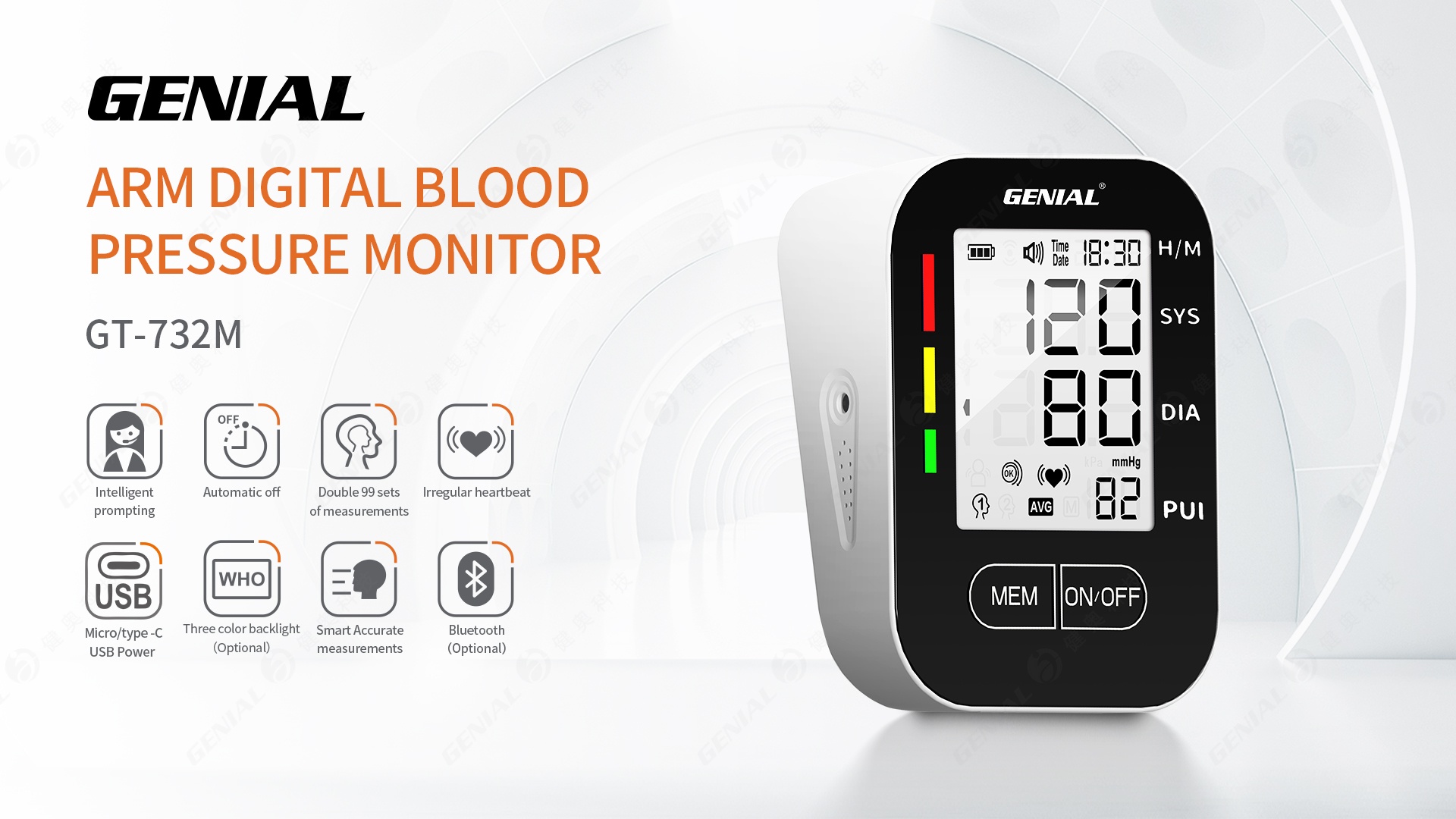
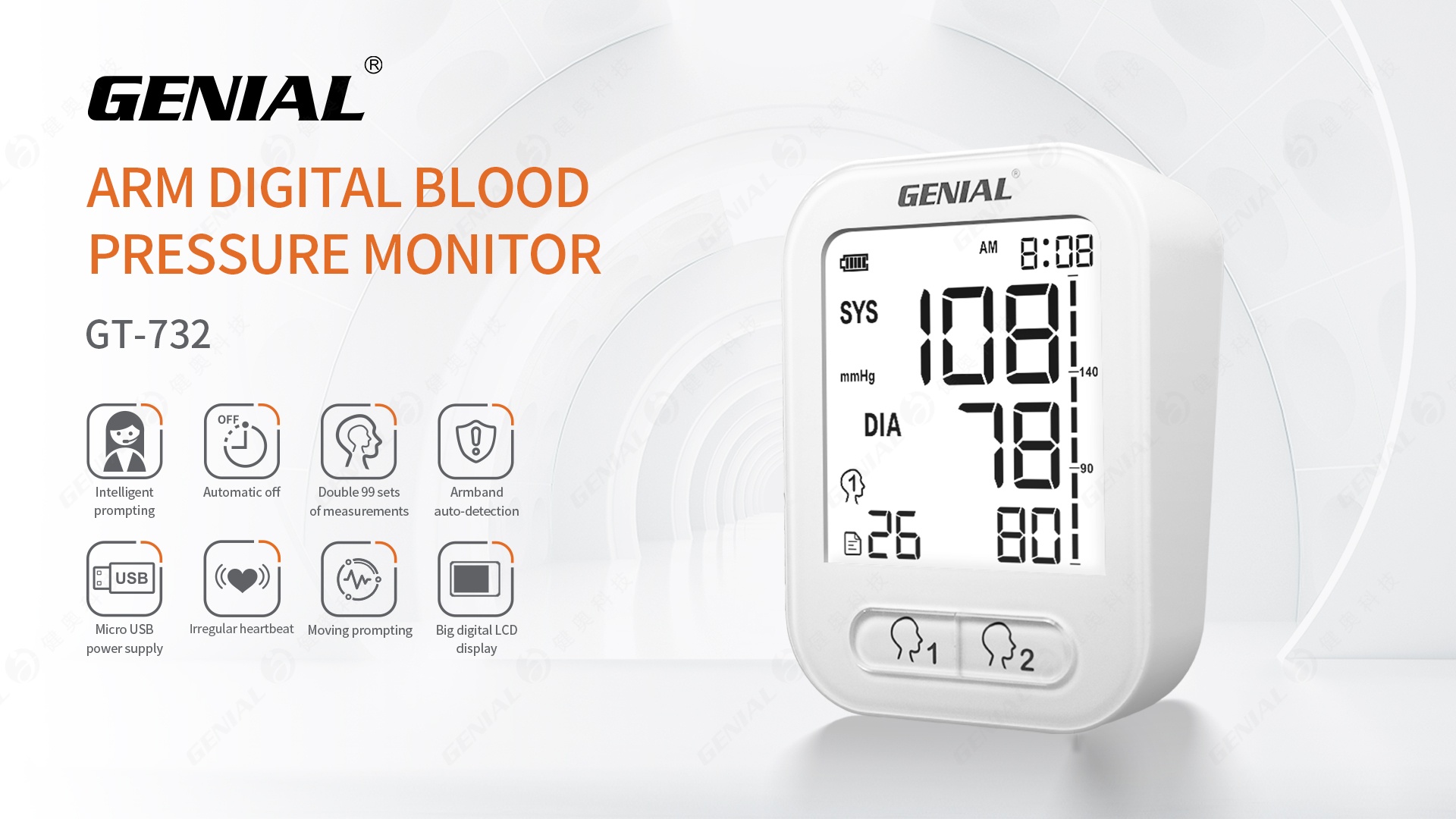
The GT-732 and the GT-732M share the same measurement envelope: a 0–290 mmHg pressure range and a starting arm-cuff fit of 22 cm. What separates them is the air bag material — PVC in the GT-732, TPU in the GT-732M — and the programme each model is built to serve. The standard GT-732 is matched to community clinic deployments; the eco-friendly GT-732M is positioned for chronic care programmes funded through insurance. This guide turns that difference into a procurement decision.
Why Two Nearly Identical Monitors Still Require a Decision
When pressure range and cuff fit match, the comparison usually collapses into unit price. In upper arm blood pressure monitor programmes, that shortcut is where mismatches begin. A cuff assembly specified for a high-volume community clinic rollout and one specified for a multi-year insurance-funded chronic care programme are asked to do different jobs: one optimises cost per unit deployed, the other optimises service life, skin contact and the sustainability story the programme is expected to demonstrate.
That is the gap between the GT-732 and the GT-732M. Both models sit on the same GENIAL upper arm platform, both measure across 0–290 mmHg, and both start fitting at a 22 cm arm circumference. Neither is a better monitor in the abstract. The question an OEM buyer has to answer is narrower: which air bag material and which deployment profile does this specific programme need?
The two models in one view
- GT-732 — PVC air bag, matched to community clinic deployments where cost and volume set the budget.
- GT-732M — TPU air bag, matched to chronic care programmes funded through insurance, where durability, skin-contact comfort and eco-friendly positioning carry weight.
- Shared platform — 0–290 mmHg pressure range; 22 cm starting arm-cuff fit.
Because the measurement envelope is shared, the decision is technically reversible and commercially consequential. Buyers who standardise on the wrong material usually discover it when they try to move the same SKU between a clinic rollout and a long-term care programme.
Industry Background: Why This Choice Keeps Surfacing
Upper arm monitors remain the volume backbone of blood pressure measurement. Mordor Intelligence's home medical equipment research places upper arm devices at 59.10% of blood pressure monitoring market share in 2025, while wrist-based and wearable formats grow at a 12.07% CAGR. The same research estimates the global home medical equipment market at approximately USD 54.35 billion in 2026, with North America holding roughly 40.35% of market share in 2025.
Two procurement logics follow from that split. Public health and community clinic rollouts buy coverage — how many validated units can be placed per budget line. Insurance-linked chronic care programmes buy persistence — how long a device stays in service, how the cuff material behaves against the skin over repeated measurements, and how the programme can describe the device in its own sustainability reporting. One monitor family can serve both, but not usually with the same air bag material.
Regulatory framing reinforces the distinction. UL's guidance on home healthcare equipment identifies IEC 60601-1-11 as the collateral standard used alongside IEC 60601-1, addressing the risks that appear when medical electrical equipment is used in an uncontrolled home environment by untrained users. Separate guidance published through PubMed Central notes that home health monitoring equipment should be calibrated at frequent intervals and operated within an environment of 16–40°C and humidity below 85%.
For an OEM buyer, the practical consequence is that compliance, calibration and operating-condition questions have to be answered before the material question is settled — not after.
What Actually Differs Between the GT-732 and the GT-732M
The differences are narrower than the model names suggest, and that is exactly why they are easy to overlook. Both models carry the same 0–290 mmHg pressure range and the same 22 cm starting cuff fit; the divergence sits in one component and in the programme the model is sold into.
1. Air bag material: PVC versus TPU
The GT-732 uses a PVC air bag. PVC is a cost-efficient, well-understood material for high-volume cuff production and is the natural choice where unit economics drive the programme.
The GT-732M uses a TPU air bag. TPU is generally more flexible and more resistant to abrasion and oils than flexible PVC, and it is formulated without the plasticisers that flexible PVC requires. In programme terms, that supports two arguments PVC finds harder to make: a longer service life in repeated-use settings, and a cleaner sustainability narrative for insurers and public buyers who have to justify a device's environmental profile.
2. Target application: community clinics versus insurance-funded chronic care
The standard GT-732 is most often matched to community clinic deployments, where devices are used frequently but within a supervised environment and where procurement is decided on cost per placement.
The GT-732M is positioned for chronic care programmes funded through insurance. Those programmes run for years rather than quarters, place devices with individual patients, and are more likely to be assessed on sustainability messaging, service life and patient comfort alongside measurement accuracy.
3. What stays identical — and why that matters
Pressure range and cuff fit do not change between the two models. For an OEM buyer, shared specs reduce the cost of switching: cuff-fit guidance, user instructions and training material can be written once and applied to both, even when a fleet mixes the two models across clinic and home-care programmes.
4. The manufacturer behind both models
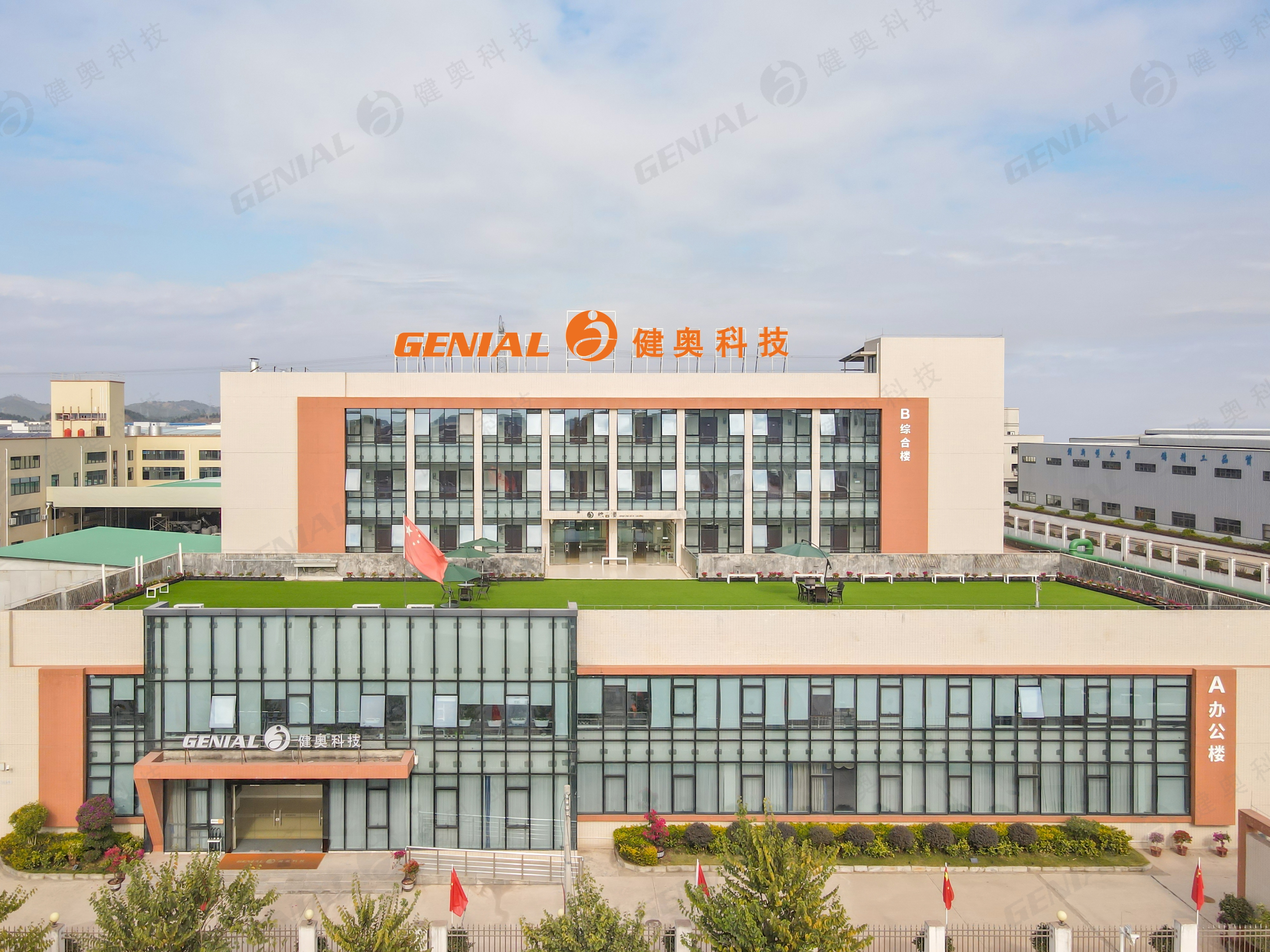
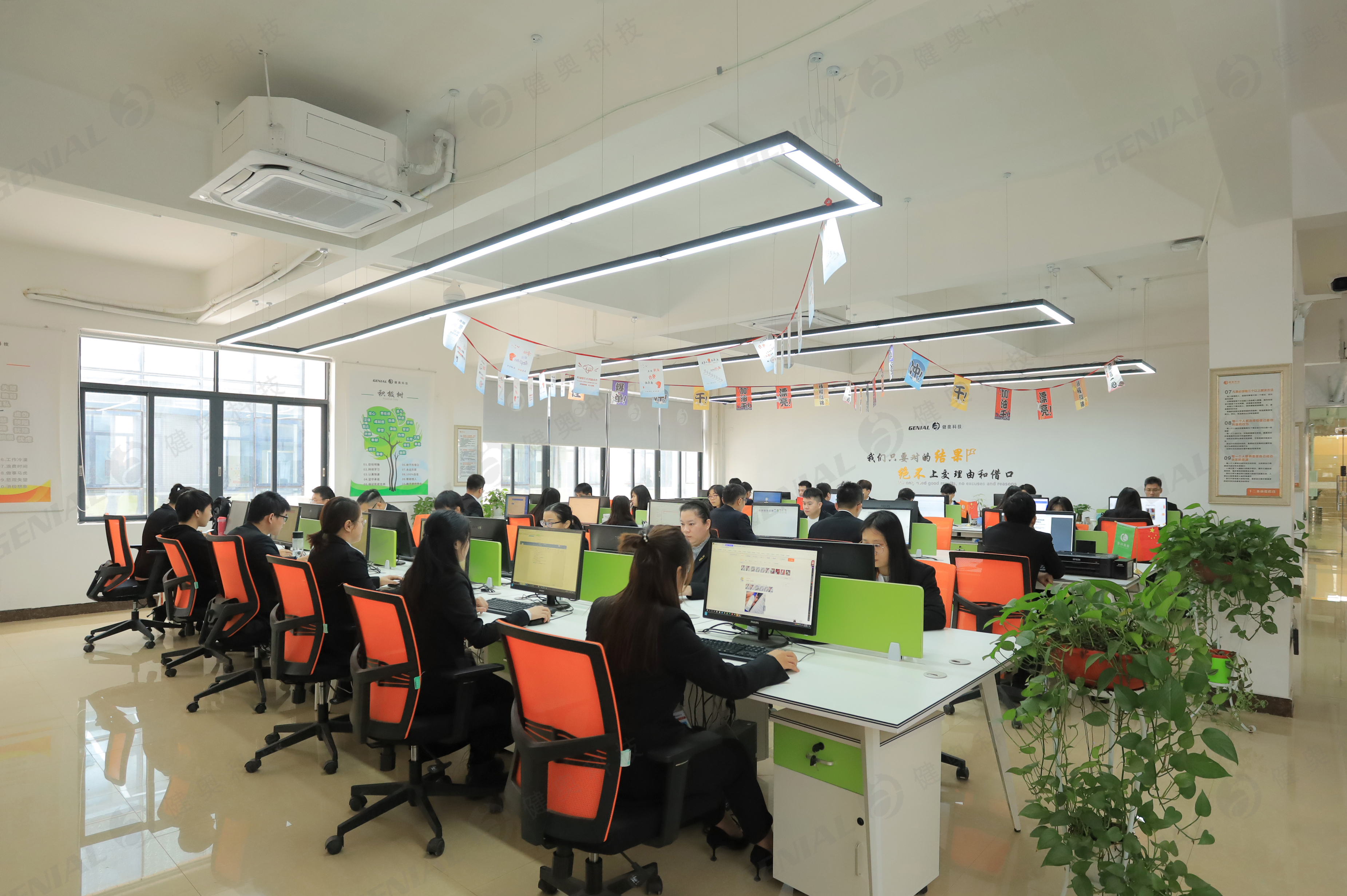
GENIAL — Guangdong Genial Technology Co., Ltd. — is a medical device original manufacturer established in 2001, operating an OEM, ODM, OBM and JDM service model from a 45,000 m² production base with 251 employees, 29 R&D engineers and annual output of 15,000,000 units. Roughly 80% of production is exported, with key markets across Europe, North America, Southeast Asia, the Middle East, Africa, Latin America and Oceania.
Quality control on blood pressure monitors is where the two models are held to the same bar. GENIAL states that each blood pressure monitor is calibrated and tested, with measured pressure required to fall within 3 mmHg of analyser data — a deviation below 0.4 kPa. Production runs under 100% full inspection, with statistical process control (SPC) applied to batch stability, multi-point calibration and batch validation applied to measurement consistency, and supplier audits carried out annually.
The company's quality management system and professional laboratories are established in accordance with GMP and ISO 13485 requirements. GENIAL's certification page lists ISO 13485, ISO 45001, ISO 14001 and GB/T 29490 system certifications along with BSCI, while its products are listed with CE, FDA, NMPA, CB, FCC and RoHS certifications. Product and trademark registration has been completed in 29 countries, and products are sold to 117 countries and regions. Monthly production capacity ranges from 60,000 to 6,000,000 units depending on product type and production model, with some projects running at 300,000 units per month.
Step-by-Step: Choosing Between the GT-732 and the GT-732M
- Classify the programme before the product. Community clinic rollout, insurance-funded chronic care programme, pharmacy chain or distributor catalogue — each points to a different model. Clinic deployments purchase on cost per placement; insurance-funded chronic care purchases on years of service, patient comfort and sustainability reporting.
- Set the material priority. If budget is the binding constraint, the PVC air bag of the GT-732 is the lower-cost baseline. If the programme must demonstrate environmental positioning or expects heavy repeated use over several years, the TPU air bag of the GT-732M is the better fit. This single decision determines everything downstream.
- Confirm the compliance and documentation scope. Home-use devices are assessed under the IEC 60601-1-11 collateral standard together with IEC 60601-1. Certification documentation support is part of GENIAL's after-sales scope, but the required package is confirmed per market and per project rather than assumed from the model name.
- Validate both models through sampling. Sample lead time is typically 3 days, and sample approval is a defined gate in GENIAL's quality control process — which runs from customer demand assessment and internal project approval through product development, sample approval, exclusive model registration, and finally mass production with incoming material, full-process and final inspections.
- Lock MOQ, payment and delivery terms. Published MOQ tiers start at 100 units for in-stock goods and 500 units for customized production, with higher tiers of 1,000 / 2,000 units and 3,000 / 10,000 units used for larger in-stock and customized programmes. Payment is by T/T or letter of credit. Delivery options cover sea freight, air freight, express and railway, under FOB, CIF, DDU or DDP terms, as full container load, less than container load, or from an overseas warehouse.
- Plan lead time and replenishment. In-stock products ship within 48 hours and replenishment orders take 5–7 days; small orders take 3–7 days and mass orders 10–15 days. Where a JDM or ODM change is involved, minor modifications without new tooling take 7–15 days, while new mould development takes 45–50 days.
- Register the model and plan lifecycle support. Exclusive model registration is built into the quality workflow, and after-sales cover includes a free 12-month warranty on presentation of valid proof of purchase, certification documentation support, technical consultation, and a manufacturer-managed return and replacement policy.
Use Cases: Which Model Fits Which Programme
Community and primary care clinic rollout → GT-732
Where hundreds of units are placed across supervised sites and the budget is set per placement, the PVC air bag of the standard GT-732 keeps unit economics predictable. Clinic environments also mean devices are used under trained supervision, so the durability argument that favours TPU carries less weight.
Insurance-funded chronic care programme → GT-732M
Programmes that place monitors with individual patients for years at a time need a device that can carry a sustainability claim and withstand repeated use. The TPU air bag and eco-friendly positioning of the GT-732M align with that brief, and the shared 0–290 mmHg range and 22 cm starting cuff mean measurement protocol does not have to be rewritten.
Distributor catalogue with two price tiers → both
A distributor serving both clinic procurement teams and insurer-funded programmes can carry the two models as a tiered pair rather than as competing SKUs. Because cuff fit and pressure range are identical, sales and support teams train once.
Tender with sustainability scoring → GT-732M
Where environmental criteria are scored separately from clinical performance, the GT-732M gives the bid a material answer rather than a marketing sentence — the air bag itself is the differentiator.
GT-732 vs. GT-732M Comparison Table
| Decision criterion | GENIAL GT-732 | GENIAL GT-732M |
|---|---|---|
| Pressure range | 0–290 mmHg | 0–290 mmHg |
| Starting arm-cuff fit | 22 cm | 22 cm |
| Air bag material | PVC | TPU |
| Typical target application | Community clinic deployments | Chronic care programmes funded through insurance |
| Cost positioning | Lower-cost baseline material | Higher material cost, offset by service life and eco-friendly positioning |
| Sustainability messaging | Limited | Eco-friendly positioning built into the specification |
| Durability and skin-contact profile | Standard, well-established material | Generally more flexible and abrasion-resistant; formulated without the plasticisers flexible PVC requires |
| Choose it when | Unit cost and deployment volume drive the programme | Multi-year patient use, sustainability criteria and durability drive the programme |
| Manufacturer | Guangdong Genial Technology Co., Ltd. (GENIAL) | Guangdong Genial Technology Co., Ltd. (GENIAL) |
| OEM support scope | OEM / ODM / JDM, exclusive model registration, 12-month warranty | OEM / ODM / JDM, exclusive model registration, 12-month warranty |
Material positioning describes general PVC and TPU characteristics and the models' stated target applications. Final specification is confirmed on the signed approval sample.
FAQ: GT-732 and GT-732M for OEM Buyers
Do the GT-732 and GT-732M require different compliance documentation?
Not because of the model name — the documentation package is set by the destination market and by the programme, not by the air bag material. Home healthcare equipment falls under IEC 60601-1-11, the collateral standard applied with IEC 60601-1 for equipment used in uncontrolled home environments by untrained users. GENIAL operates an ISO 13485 quality management system alongside ISO 45001, ISO 14001 and GB/T 29490 system certifications and BSCI, and lists CE, FDA, NMPA, CB, FCC and RoHS certifications across its products. Certification documentation support is included in the after-sales scope, and product and trademark registration has been completed in 29 countries.
Can both models be supplied as OEM or ODM projects with brand and configuration changes?
Yes. GENIAL runs one-stop OEM, OBM, ODM and JDM services, supported by 29 R&D engineers and a quality workflow covering customer demand assessment, internal project approval, product development, sample approval, exclusive model registration and mass production with incoming material, full-process and final inspection. Joint product development technical support is also provided. The air bag material is already the defining variable between the two models, so configuration discussions usually start there and are confirmed at sample approval rather than assumed at quotation. Monthly capacity ranges from 60,000 to 6,000,000 units depending on product type and production model.
Which model is the better value, and what MOQ and payment terms apply?
Value depends on the programme, not on the catalogue. For cost-driven clinic rollouts, the PVC air bag of the GT-732 is the lower-cost baseline. For insurance-funded chronic care programmes, the TPU air bag of the GT-732M is specified for longer service life and eco-friendly positioning, which is where its higher material cost is offset. Published MOQ tiers begin at 100 units for in-stock goods and 500 units for customized production, with 1,000 / 2,000 unit and 3,000 / 10,000 unit tiers used for larger in-stock and customized programmes. Payment terms are T/T or letter of credit.
Can we evaluate both models as samples before committing to a mass order?
Yes — sample lead time is typically 3 days, and sample approval is a formal step in the quality control process rather than an informal courtesy. Acceptance criteria for subsequent supply include inspection of bulk goods against samples, factory inspection, third-party inspection and video inspection, so the sample you approve becomes the reference point for the order. Buyers evaluating a mixed clinic and home-care fleet usually request both models in the same round so the material difference can be assessed side by side.
What lead times and after-sales cover should an OEM buyer plan for?
In-stock products ship within 48 hours; replenishment orders take 5–7 days; small orders are typically 3–7 days and mass orders 10–15 days. JDM or ODM changes without new tooling take 7–15 days, while new mould development takes 45–50 days. After-sales cover includes a free 12-month warranty on presentation of valid proof of purchase, certification documentation support, technical consultation and a manufacturer-managed return and replacement policy. To move a GT-732 or GT-732M decision forward, request samples or a quotation for both models from GENIAL — email market6@genial.cn or reach the team on WhatsApp at +86 18938327866 — and run them through your own cuff-fit and accuracy protocol before the mass order is placed.
Conclusion: Match the Air Bag to the Programme, Not the Price Tag
The GT-732 and GT-732M are not two answers to the same question. They are two answers to two different questions: how do we place validated upper arm monitors at the lowest cost per site, and how do we keep monitors in service for years while making a credible sustainability claim. Both models measure across 0–290 mmHg and both start fitting at a 22 cm arm circumference, so the technical baseline is shared; the PVC and TPU air bags are what separate the clinic rollout from the insurance-funded chronic care programme.
For an OEM buyer, the decision rule is short. If the programme is measured in units placed and price per placement, specify the GT-732. If it is measured in patient-years, skin comfort and environmental criteria, specify the GT-732M. Once the material is chosen, the rest — MOQ tier, payment terms, sample gate, lead time and the 12-month warranty — follows the same GENIAL process for either model.

Next Step
Request GT-732 and GT-732M samples, specifications or a project quotation from GENIAL.
Email: market6@genial.cn · Tel / WhatsApp: +86 18938327866 · Message us on WhatsApp · Website: www.cngenial.com
Download the 2026 English catalogue: GENIAL Product Catalogue (PDF)
Have Questions or Need More Details?
Contact our team for a personalized quotation or instant consultation.
Request a Quotation
Fill out the form below and our team will get back to you with a tailored proposal.
WhatsApp Direct Chat
Prefer to chat in real-time? Message us on WhatsApp for instant assistance & quick answers.
- Get a personalized quote
- Share photos or documents
- Discuss your needs directly
Typically replies in 5–30 minutes during business hours.