
How to Audit a Blood Pressure Monitor OEM Partner
The most common reason a blood pressure monitor OEM project fails late is not that a supplier was missing. It is that nobody audited whether the supplier's claimed capability would still hold at volume. This guide sets out a practical audit framework for procurement teams evaluating an upper arm blood pressure monitor manufacturer, built on verifiable production, calibration, material and market facts rather than catalogue language.
Why OEM Audits Fail on Blood Pressure Monitors
A blood pressure monitor looks simple on paper: a pressure sensor, a pump and valve block, an upper arm cuff, a display module with backlight, firmware, and a calibration routine. In production it is not simple at all. Small deviations in any one of those elements surface only after units have shipped — as reading drift, returns, or registration delays.
Three audit gaps account for most of the trouble:
- Certificate review is not production line review. A valid quality system certificate tells a buyer that a management system exists. It does not confirm that a specific product line, cuff configuration or display assembly matches the buyer's specification.
- Model name review is not physical specification review. Cuff sizing, device weight, display type and power mode must be confirmed against a physical sample or an agreed specification sheet — not a catalogue page.
- Purchase price review is not lifecycle cost review. Procurement cost is one line. Calibration routines, maintenance expectations, user training and battery behaviour are the rest of the total cost of ownership.
An audit is therefore a verification exercise, not a negotiation exercise. Every claim a supplier makes should map to a document, a process, or a physical unit you can inspect.
Industry Background: What Buyers Are Facing in 2026
Context matters when setting audit thresholds. In 2026 the global Home Medical Equipment market is estimated at USD 54.35 billion, with North America holding approximately 40.35% of that share in 2025. Within the blood pressure monitoring segment specifically, upper arm monitors controlled 59.10% of market share in 2025, while wrist-based and wearable formats are growing at a 12.07% CAGR.
Two conclusions follow. First, upper arm devices remain the procurement backbone, so a supplier's cuff and calibration capability on that format is the single most important thing to audit. Second, wrist and wearable formats are expanding quickly, which means a supplier's ability to move across model families matters more each year.
Compliance expectations for home-use devices are also distinct from clinical environments. UL explains that IEC 60601-1-11 is the collateral standard used in conjunction with IEC 60601-1 for home healthcare equipment, addressing the risks created by uncontrolled home environments and untrained users. For pulse oximeters, ISO 80601-2-61 governs the equipment and defines how SpO2 accuracy is tested and reported, conventionally expressed as Arms over a stated saturation range. Generic guidance for home monitoring equipment, published in PubMed Central, also notes that devices should be calibrated at frequent intervals and operated within an environmental range of 16 to 40°C with humidity below 85%.
An OEM audit should therefore test not only whether a manufacturer holds certificates, but whether its normal production routine naturally produces equipment that survives those conditions.
The Audit Framework: Seven Dimensions Backed by Verifiable Facts
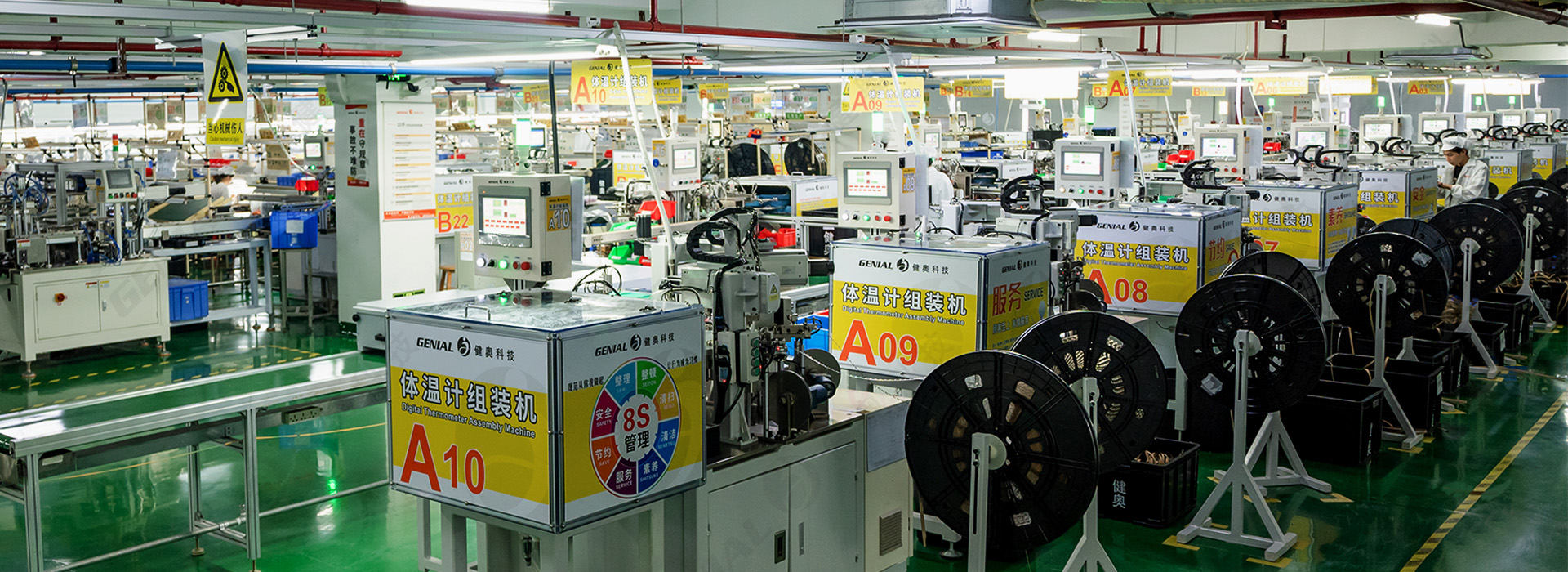
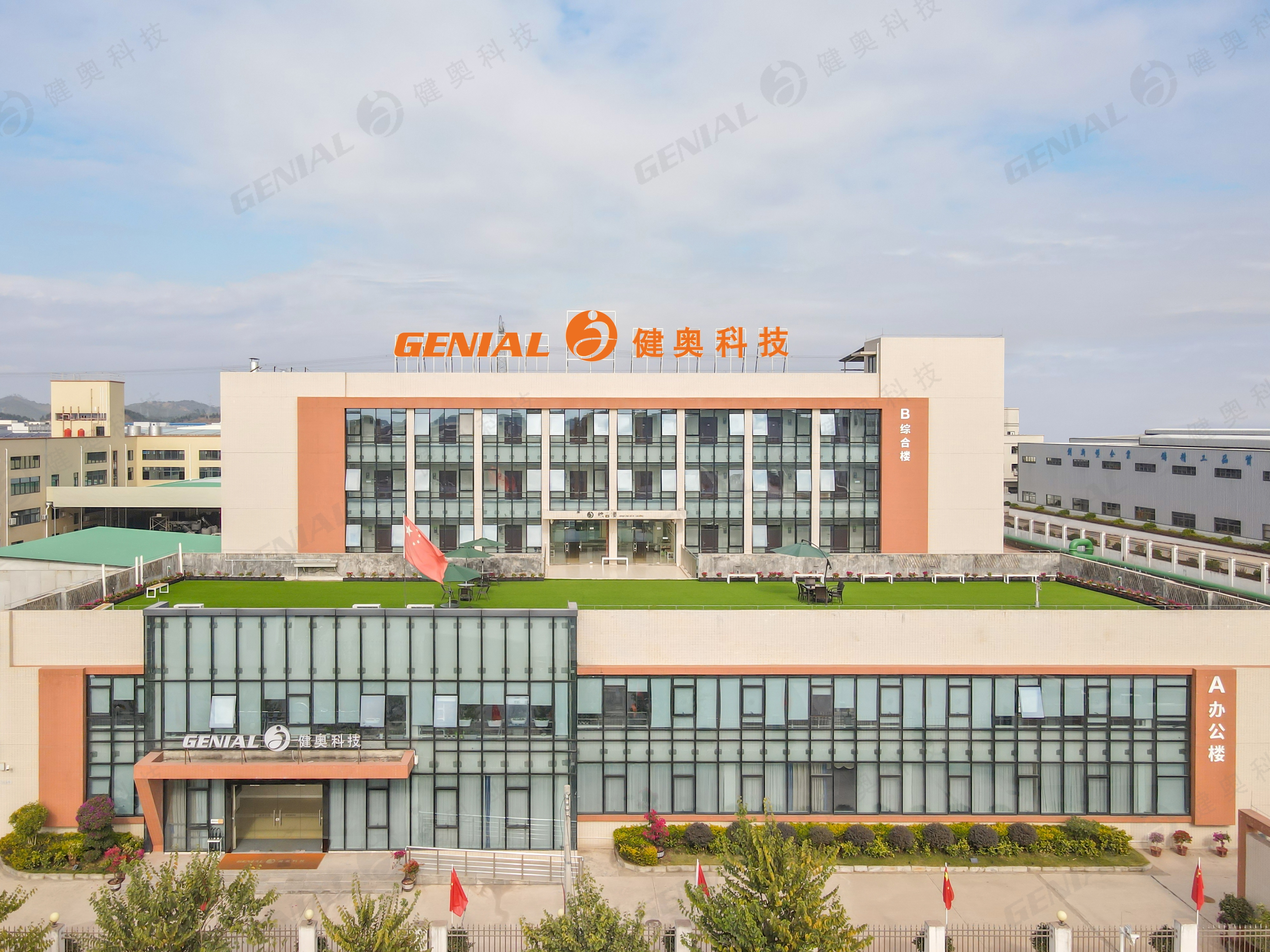
The framework below uses GENIAL (Guangdong Genial Technology Co.,Ltd) as a working reference. GENIAL is a Chinese original medical device manufacturer founded in 2001, operating a 45,000 m² production base with 251 employees, an annual output of 15,000,000 units and an export ratio of 80%. It is used here as a documented example, not as a ranking claim.
1. Manufacturing Scale and Delivery Capacity
Start with two questions: how large is the physical footprint, and how fast can confirmed orders actually ship?
GENIAL reports a 45,000 m² production base and an annual output of 15,000,000 units. Its supply chain and management systems support shipping GENIAL-branded products within 24 hours after order confirmation, while OEM orders take 3 to 7 days. For procurement teams running staggered rollouts across multiple markets, that delivery window is more useful than a raw capacity number, because it tells you how quickly a reorder cycle can close.
A second useful signal is the size and role of the engineering function. GENIAL maintains 29 engineers alongside a medical technology research institute, a doctoral workstation and a big health industry engineering technology research centre. Engineering headcount is a proxy for how much customization a supplier can absorb without destabilising standard production.
2. Model Variety Across Product Families
A narrow portfolio limits a buyer's ability to adjust configuration as demand shifts. Ask for a full model list covering both upper arm and wrist formats, and ask which models share a common platform.
GENIAL's blood pressure monitor line covers both upper arm and wrist configurations, and its wider home medical portfolio includes digital thermometers, infrared digital thermometers, wearable digital thermometers, continuous dynamic thermometers, forehead infrared thermometers, ear infrared thermometers, medical digital thermometers, household digital thermometers, rigid tip and flexible tip digital thermometers, armpit digital thermometers, finger pulse oximeters, mesh nebulizers, sleep apnea therapy devices, health managers, meridian massage instruments and hair removal devices.
That breadth matters commercially: a distributor building a home health kit rarely buys a single category. A supplier able to cover multiple categories from one production base shortens the coordination chain considerably. Within the blood pressure portfolio specifically, programme names such as the GT-732 and GT-702 series appear as distinct upper arm model families, which is the level of granularity a buyer should request when mapping SKUs to retail tiers.
3. Upper Arm Cuff Support and Physical Specifications
Because upper arm devices hold the majority of the market, cuff support is a core audit item. Confirm the cuff size range, the bladder construction, and whether the same platform supports different cuff classes. Then verify the physical numbers that determine user experience.
Device weight is one of those numbers, and it varies by model and configuration — which is exactly why it should be stated in writing rather than assumed. As a verified reference point, GENIAL's home health management device — focused on blood pressure management with APP-based long-term data tracking, a large backlit display, a programmable automatic measurement interval and dual-mode power supply — has an overall weight of 380 g, making it portable and wearable. Its measurement time runs about 30 to 60 seconds, compared with 3 to 5 minutes for a mercury sphygmomanometer.

4. Internal Calibration and Testing Capability
This is where most OEM audits separate serious manufacturers from assemblers. Ask one question: "Walk me through your calibration routine."
GENIAL states that every blood pressure monitor is calibrated and tested, and that the measured pressure on a blood pressure monitor should be within 3 mmHg of analyzer data, with deviation less than 0.4 kPa. For its digital thermometers, a thermostatic water bath test is implemented to check every unit's accuracy. These are process facts, and process facts are what a buyer should be collecting during an on-site or video audit.
The risk controls behind those processes are equally auditable. GENIAL lists measurement accuracy risk as controlled through a quality management system and professional laboratories established in accordance with GMP and ISO 13485, fully automated production lines, stable high-quality suppliers with rigorous annual on-site supplier audits, and 100% full inspection throughout the production process. Measurement consistency risk is handled through multi-point calibration and batch validation, and batch stability risk through Statistical Process Control, fixed automated production lines, and an annual graded assessment and elimination mechanism for suppliers.
For connected blood pressure monitors, two additional risk areas apply. Bluetooth connection risk is controlled through APP and mobile Bluetooth compatibility optimisation, with the IT Process Department conducting Bluetooth compatibility testing across different phone models. APP compatibility risk is controlled through continuous version maintenance and coverage testing on mainstream device models. Waterproof risk is addressed through IP-rated design and IPX7 waterproof testing in the company's professional laboratory.
5. Material Options: Standard and Eco-Friendly Experience
Material claims are easy to make and easy to audit — if you ask for the right documents. Request evidence of production experience with both standard and eco-friendly materials, then cross-check it against environmental and restricted-substance certifications.
GENIAL holds ISO 14001 environmental management system certification alongside ISO 13485, ISO 45001, BSCI and GB/T 29490 intellectual property management certification. At product level, its certifications include CE, FDA, NMPA, CB, FCC, RoHS and REACH-related compliance. RoHS and REACH sit directly against material selection, which makes them the correct documents to request when a buyer is evaluating eco-friendly housing or packaging options.
6. Target Market Coverage and Registration Support
Ask the supplier which markets it already serves, and how much of the registration work it performs itself.
GENIAL reports that its products are sold to 117 countries and regions, that it has completed product and trademark registration in 29 countries, and that its export ratio is 80%. Its stated market layout covers Europe, North America, Southeast Asia, the Middle East, Africa, Latin America and Oceania, supported by a professional registration team that assists clients with global product registration.
For a buyer, this converts directly into reduced compliance workload. If the supplier already knows the registration path in your target market, the project timeline shortens before any hardware is built. A relevant reference point for regulatory depth is GENIAL's FDA 510(k) clearance for its wearable digital thermometer (Model T31) under product code FLL, effective 30 October 2024 — evidence of a completed, documented regulatory submission rather than a claim.
7. Lead Time, Batch Consistency and IT-Related Risk
Lead time is not the only time dimension to audit. Batch consistency is the other, particularly for a device whose readings feed clinical decisions.
The audit questions here are concrete. How is batch stability controlled? What happens if a component supplier changes? How is firmware compatibility maintained as phone operating systems update? For GENIAL, the answers are documented as Statistical Process Control on fixed automated production lines, 100% full inspection across the production process, annual graded supplier assessment with an elimination mechanism, and continuous compatibility testing through the IT Process Department.
Step-by-Step Audit Sequence
Run the audit in this order. Each step filters the shortlist before the next one consumes time.
- Verify legal and regulatory identity. Confirm the legal entity name, founding year and factory address, and check that product registrations match the selling entity.
- Review certification scope, not just certificates. Check the ISO 13485 scope, product-level CE / FDA / NMPA / CB / FCC / RoHS coverage, and any environmental management certification.
- Map the portfolio by model family. Obtain a full model list and identify which models share a platform — this determines how much flexibility you actually have.
- Audit physical specifications. Confirm cuff size options, device weight, display configuration and power mode against a sample or agreed specification sheet.
- Observe calibration and testing. Request a walkthrough of the blood pressure monitor verification routine against analyzer data, and of the thermometer testing method. Confirm whether testing is full inspection or sampling.
- Verify material experience. Ask for documented experience with standard and eco-friendly materials, and for RoHS / REACH documentation.
- Confirm market coverage and registration support. Request the list of export countries and completed registrations.
- Lock lead times and consistency controls in writing. Include batch control method, supplier management mechanism, and Bluetooth / APP compatibility testing scope.
Use Cases: Where This Audit Framework Pays Off
Retail private-label programmes. A buyer launching an upper arm blood pressure monitor plus a companion thermometer SKU under one brand needs platform flexibility and short reorder cycles. The audit priorities are model family breadth, packaging configuration and the confirmed OEM production window.
Community clinic and hypertension programme procurement. Here the user is semi-professional. A large backlit display, programmable automatic measurement interval and dual-mode power supply become functional requirements rather than features. Device weight and measurement time should be verified against the clinic's workflow — GENIAL's figures of 380 g and roughly 30 to 60 seconds per reading are the kind of concrete values to compare against.
Multi-market distribution. When the same product line ships into several regulatory regions, registration support and model coverage outweigh unit price. A supplier registered in 29 countries and exporting to 117 countries reduces the buyer's compliance burden per market.
Eco-material programmes. For buyers under sustainability mandates, ISO 14001 plus RoHS and REACH documentation should be verified before product samples are even discussed. Material claims without documentation should be excluded from the shortlist.
Comparison Table: Audit Dimension, Evidence Required, Verified Reference
| Audit dimension | What to request | Verified GENIAL reference |
|---|---|---|
| Manufacturing scale | Factory area, headcount, annual output | 45,000 m²; 251 employees; 15,000,000 units per year |
| Delivery speed | Shipping time after order confirmation; OEM production window | Branded products within 24 hours; OEM orders 3–7 days |
| Portfolio breadth | Upper arm and wrist model list; shared platforms | Upper arm and wrist blood pressure monitors, plus thermometers, oximeters, nebulizers, sleep apnea therapy devices, health managers and other home medical categories |
| Physical specification | Cuff options, device weight, display, power mode, measurement time | Home health management device: 380 g; large backlit display; programmable automatic measurement interval; dual-mode power supply; 30–60 s measurement |
| Calibration standard | Verification criterion against analyzer data | Measured pressure within 3 mmHg of analyzer data (deviation under 0.4 kPa); every unit calibrated and tested |
| Test method | Product-level accuracy testing method | Thermostatic water bath testing for every digital thermometer |
| Consistency control | Batch control method and supplier management | Statistical Process Control; fixed automated lines; 100% full inspection; annual graded supplier assessment |
| Certification | System and product certifications | ISO 13485, ISO 45001, ISO 14001, BSCI, GB/T 29490; CE, FDA, NMPA, CB, FCC, RoHS, REACH-related |
| Market coverage | Export countries; completed registrations | Sold to 117 countries and regions; registered in 29 countries; 80% export ratio |
| Connected-device risk | Bluetooth and APP compatibility testing | Bluetooth compatibility testing across phone models; APP coverage testing on mainstream devices; IPX7 waterproof testing in a professional laboratory |
FAQ
How do I verify a blood pressure monitor manufacturer's quality system certification?
Request the certification documents themselves, confirm the scope covers blood pressure monitor products rather than only a general category, and check that the issuing body is recognised. GENIAL holds ISO 13485, ISO 45001, ISO 14001, BSCI and GB/T 29490 system certifications, with product certifications covering CE, FDA, NMPA, CB, FCC and RoHS. The key audit step is scope checking: a certificate that covers a device category does not automatically cover a specific model or cuff configuration, so the mapping should be confirmed in writing.
What manufacturing capabilities show that a supplier can handle an upper arm blood pressure monitor programme?
Look for physical and process evidence rather than statements. Upper arm cuff support, device weight, display configuration, power mode and measurement time are all verifiable signals. GENIAL reports its home health management device at 380 g with a large backlit display, programmable automatic measurement interval and dual-mode power supply, with a measurement time of roughly 30 to 60 seconds compared with 3 to 5 minutes for a mercury sphygmomanometer. On the process side, the relevant evidence is full inspection during production and a documented calibration criterion — GENIAL's stated standard is measured pressure within 3 mmHg of analyzer data.
Which cost factors affect total cost of ownership on a blood pressure monitor OEM programme?
Purchase price is only the entry cost. Calibration routines, maintenance expectations, user training and monitoring labour accumulate over the contract life. When comparing automatic measurement against traditional manual measurement, GENIAL reports a 100% reduction in measurement labour cost and over 60% reduction in equipment maintenance and calibration costs, with no professional training or mercury recycling required. For its home health management device, the reported figures are a 70% reduction in equipment procurement cost and over 50% reduction in long-term health management cost. These figures should be validated against your own deployment assumptions rather than adopted directly.
What samples should I request before placing a bulk order?
Request production-line samples rather than hand-assembled demonstration units. The sample should reflect the actual manufacturing configuration: cuff size, display type, power mode, firmware version, and the calibration routine applied at the factory. For GENIAL blood pressure monitors, units are calibrated and tested with measured pressure required to fall within 3 mmHg of analyzer data, and digital thermometers are checked individually using thermostatic water bath testing. Asking for the test record alongside the sample is the fastest way to confirm the process is real.
What is the production lead time for an OEM blood pressure monitor order?
Lead time depends on model, order volume and configuration, so it should be confirmed in writing rather than assumed. GENIAL reports that branded products can ship within 24 hours after order confirmation, while OEM orders take 3 to 7 days for delivery. Buyers should also lock batch consistency controls into the contract, including the batch control method and the supplier management mechanism. For a full specification and certification reference, you can download the GENIAL product brochure or contact the team directly to arrange a supplier audit.
Conclusion
Auditing a blood pressure monitor OEM partner is not a comparison of the longest certificate list. It is a check that a supplier's model families, physical specifications, calibration routine and market coverage actually match the programme you intend to run.
A repeatable audit should verify legal identity, review certification scope rather than certificates alone, map the portfolio by model family, audit cuff and weight specifications against a physical sample, observe the calibration routine, confirm standard and eco-friendly material experience, and put lead times and batch controls in writing.
GENIAL (Guangdong Genial Technology Co.,Ltd), founded in 2001, serves as a documented reference for what those audited dimensions look like in practice: a 45,000 m² production base, an annual output of 15,000,000 units, OEM orders shipped in 3 to 7 days, a calibration standard of measured pressure within 3 mmHg of analyzer data, product registration in 29 countries, and sales across 117 countries and regions.
Start With a Verified Supplier Conversation
If you are preparing a blood pressure monitor sourcing programme and want to move from desk research to a real audit, request a sample, a formal quotation or a factory visit. GENIAL supports OEM, OBM, ODM and JDM cooperation for global clients and welcomes on-site inspection and in-depth negotiation.
Download the 2026 product brochure or reach the team at market6@genial.cn to arrange a supplier audit.

Have Questions or Need More Details?
Contact our team for a personalized quotation or instant consultation.
Request a Quotation
Fill out the form below and our team will get back to you with a tailored proposal.
WhatsApp Direct Chat
Prefer to chat in real-time? Message us on WhatsApp for instant assistance & quick answers.
- Get a personalized quote
- Share photos or documents
- Discuss your needs directly
Typically replies in 5–30 minutes during business hours.