
Cosmetic Filling Machine Audit: Hot-Fill, Powder, Labeling Checks
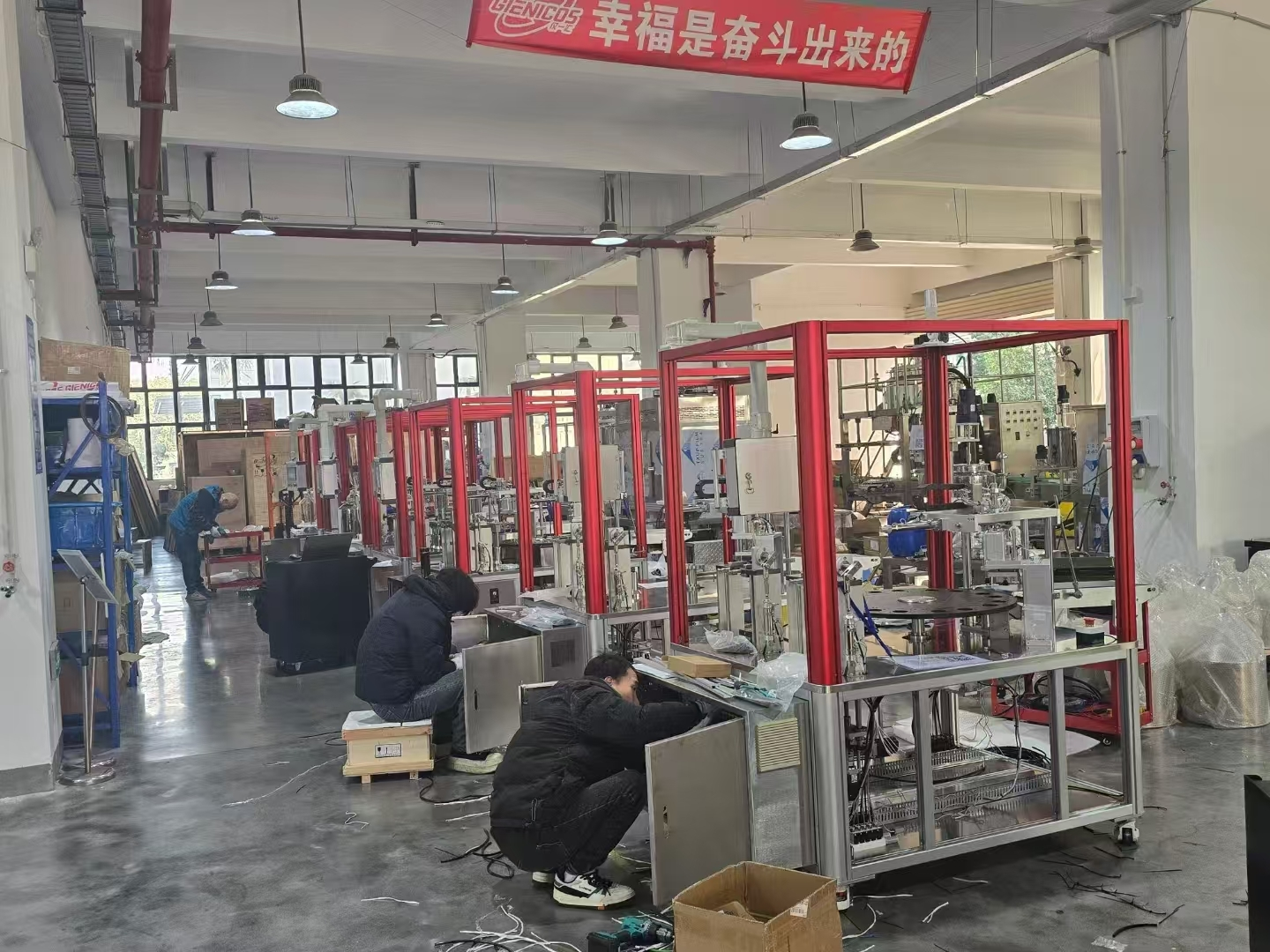
An audit of a cosmetic filling machine supplier should answer one question: can every format the supplier advertises be tied to a named machine, a document with a bounded scope, and an acceptance test you can attend or review? Catalogue breadth is a starting signal. It becomes delivery assurance only after it passes those three checks, format by format.
GIENICOS - SHANGHAI GIENI INDUSTRY CO., LTD. - is a Shanghai-based manufacturer of intelligent cosmetic filling and packaging equipment, founded in 2011, whose published product list runs from lipstick, lip balm and lip gloss filling through mascara, eyeliner, eyebrow pencil, nail polish, compact powder, loose powder, cream, lotion and toner filling, plus labeling, check-weighing and hot-pour melting equipment. The company reports project partnerships with private-label and contract manufacturers such as COSMAX, INTERCOS, Weckerle, VIVA, OXYGEN, ICT and Fiabila, and with brand owners including L'Oréal, Winona and Chando. That breadth is exactly what makes it a useful audit subject: a supplier claiming this many formats should be able to show, for each one, which model is quoted and which document covers it.
This guide sets out how to run that audit across hot-fill, powder, tube and labeling formats, and how to convert the findings into delivery commitments you can enforce. It deliberately separates three things that supplier presentations tend to blend: what is documented, what is still a claim, and what only your own acceptance run can settle.
What a Capability Audit Should Prove
Most procurement failures in cosmetic equipment do not begin with a badly built machine. They begin with a gap between the scope the buyer assumed and the scope the supplier documented. Four patterns repeat across hot-fill, powder and labeling projects:
- A catalogue shows a format, but no model or series is named, so the quotation cannot be traced to any certificate or test record.
- A certificate exists, but its scope names a different model series, a different line composition, or a single configuration rather than the family.
- Customization is offered in a proposal without a written list of what changes, so specification, cost and schedule are settled after the purchase order.
- A delivery date is offered without reference to monthly build capacity or to the event that starts the lead-time clock.
Each pattern is testable before commitment, using three questions:
- Identity. What model or model series is actually quoted, including every unit operation in the line?
- Evidence. Which document names that model, which body issued it, on which date, against which standards, and what does the scope line exclude?
- Acceptance. What will be demonstrated, on which product and which container, before the machine leaves the factory?
What this audit cannot do is prove performance from a document. A certificate confirms conformity assessment of a defined configuration. It does not predict fill accuracy on your viscosity, seal behaviour on your packaging material, or pressed-pan quality from your bulk. Those belong to acceptance testing, and the audit's role is to ensure that testing happens with your materials rather than with a convenient sample.
Why Format Breadth Now Sits at the Centre of Evaluation
The global market for cosmetic filling machines was valued at USD 476.80 million in 2025 and is projected to reach USD 718.63 million by 2036, according to Future Market Insights (published 11 April 2026). The same source projects automatic filling machines at a 41.2% share of cosmetic filling technology in 2026, while Fortune Business Insights recorded Asia Pacific at 33.08% of the wider filling machine market in 2025.
Those figures describe a market, not a supplier. Their practical use in an audit is narrower: they explain why so many suppliers now present themselves as multi-format. Expanding, automation-heavy categories push catalogues toward the same vocabulary - hot fill, powder, tube, labeling, turnkey - and vocabulary stops distinguishing one supplier from another.
Documentation granularity still distinguishes them. Equipment for opening, filling and closing containers is classified under HS Code 8422.30, with 8422.30.91 covering machinery used in opening, filling and closing containers in the USITC Harmonized Tariff Schedule. Classification, certificates and acceptance records are format-specific artefacts that a brochure cannot substitute for.
So the audit's centre of gravity shifts. Instead of asking whether a supplier makes all four formats, ask which model, which scope and which acceptance step apply to each one, and compare how quickly and specifically the answers arrive.
Hot-Fill Verification: Read the Line Composition, Not the Logo
Hot-fill is where scope errors cost the most, because a hot-fill line is an assembly rather than a single machine, and the cooling stage sits between filling and labeling.
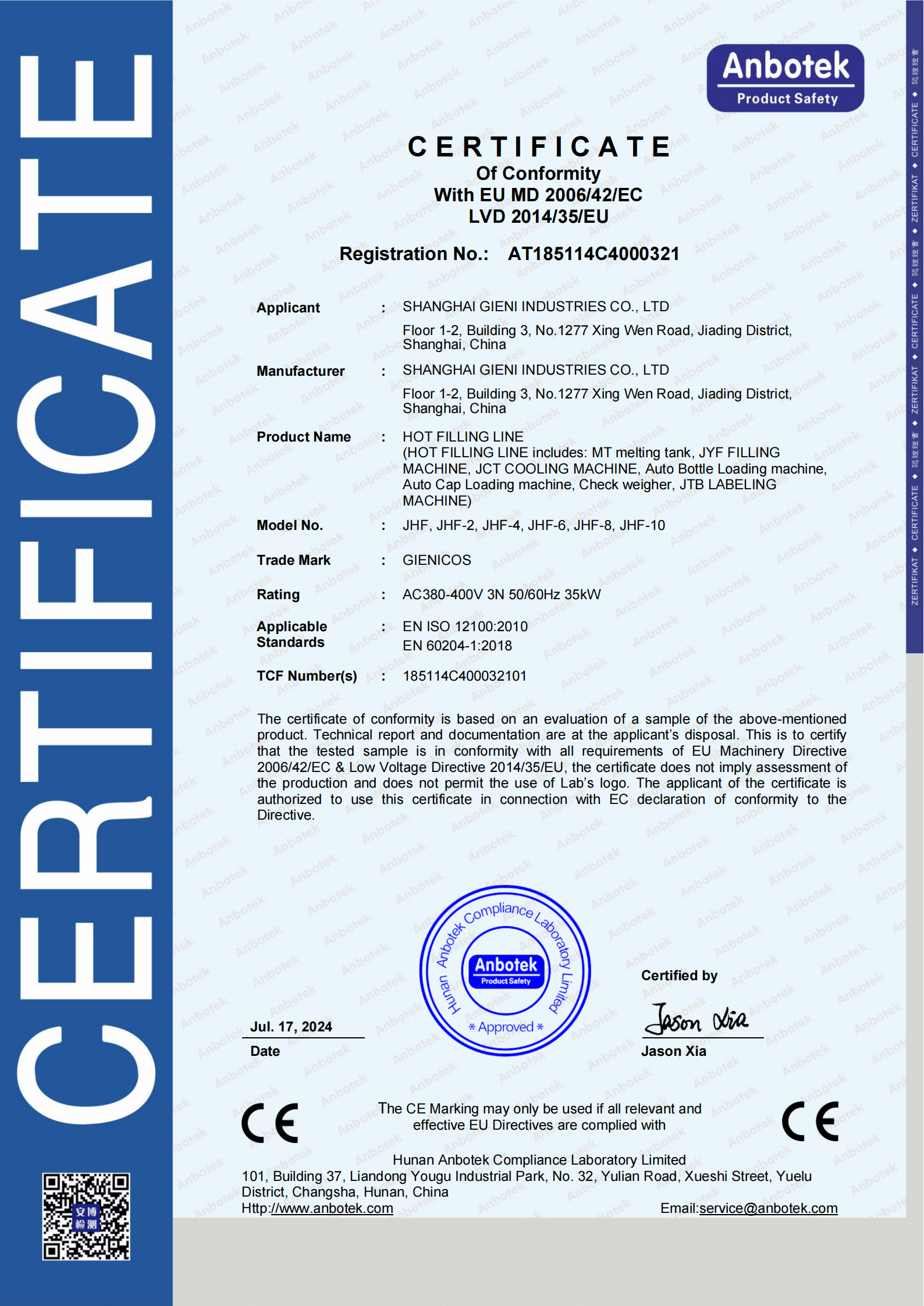
The documented GIENICOS example is CE certificate AT185114C4000321, issued 17 July 2024 by Hunan Anbotek Compliance Laboratory Limited against EN 60204-1:2018 and EN ISO 12100:2010. Its scope names a HOT FILLING LINE composed of the MT melting tank, JYF filling machine, JCT cooling machine, automatic bottle loading machine, automatic cap loading machine, check weigher and JTB labeling machine, with model series JHF-1, JHF-2, JHF-4, JHF-6, JHF-8 and JHF-10.
Three audit lessons follow from that single scope line.
First, the certificate describes a composition. If your quotation removes the automatic loader, substitutes a different labeling model, or buys the filling machine on its own, you are outside the certified configuration and should ask which evidence applies instead.
Second, the cooling stage appears inside the scope as the JCT cooling machine - the step most buyers describe as the cooling tunnel. That confirms the cooling unit is treated as part of the line, not a peripheral. It does not publish a temperature profile, tunnel length or dwell time for your formulation. Those are process parameters: request them in writing, then verify them with your own wax or gel blend during the factory acceptance test.
Third, scopes are configuration-specific. Adjacent GIENICOS scopes show the pattern of evidence added per model rather than one blanket claim: a single-nozzle hot filling line (model JSFL) under AT58250SC000523 issued 31 July 2020; a multifunctional filling production line covering JYF-2, JYF-4, JYF-6, JYF-8, JYF-10 and JYF-12 under AT58250SC100097 issued 19 April 2021; melting tanks MT-1, MT-4, MT-6, TSP, TSF and MT under ATGZAHS190528008-M1 issued 5 June 2019; and lipstick filling machines JLG-10, JLG-12, JSM, FSM-5, FSM and JLG under AT1814C500649151 issued 15 January 2025.
The audit question is therefore not whether a supplier is certified, but which certificate names the model you were quoted - and whether the supplier can point to the line in the scope that covers it.
Powder Verification: Mixing and Pressing Are Two Separate Evidences
Powder projects fail at interfaces, so the audit must separate the unit operations. GIENICOS documents them under separate certificates.
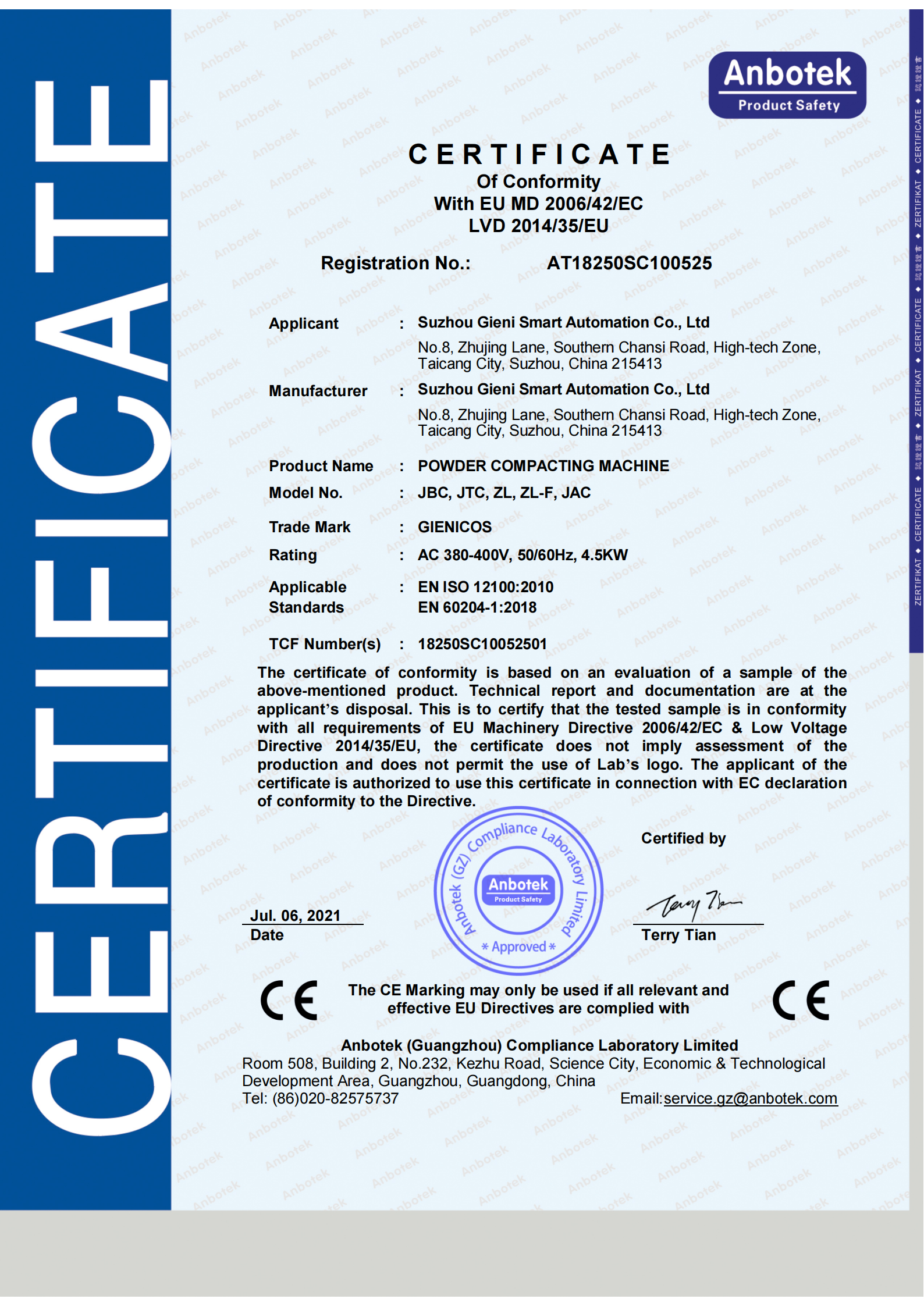
Compacting is covered by CE certificate AT18250SC100525, issued 6 July 2021 by Anbotek (Guangzhou) Compliance Laboratory Limited against EN 60204-1:2018 and EN ISO 12100:2010, with a scope naming POWDER COMPACTING MACHINE model numbers JBC, JTC, ZL, ZL-F and JAC. The product records behind that scope include the Bottom Up Compact Powder Machine JBC-5, the Compact Powder Press Machine JBC-4 and the Compact Powder Press Machine JTC.
Mixing sits under a different certificate: AT18250SC100526, issued 6 July 2021 by the same body against the same standards, covering POWDER MIXER models JY-CR50, JY-CR15, JY-CR20, JY-CR30, JY3-CR100, JY3-CR150, JY3-CR200 and JY3-CR300, with product records for the High Speed Powder Mixer JY-CR200 and JY-CR50.
For an automatic powder press enquiry, that separation forces a model answer. The certified press family is the compact powder press group above; the mixer is a separate purchase and a separate scope. Two further checks matter:
- Loose powder filling is listed as its own machine in the published product range. Do not accept a compact-press certificate as evidence for a loose powder filling machine - they are different unit operations.
- Pressed-pan quality depends on the bulk you bring, not on the press alone. Ask for a trial that runs your formula through the quoted press and the quoted mixer in one session, and record pan weight, appearance and reject rate as acceptance data rather than impressions.
Tube and Narrow-Orifice Formats: Confirm Scope Before Assuming the Machine
Tube projects deserve the most disciplined audit step, because tube describes a package rather than a machine category, and suppliers often answer a tube question with a narrow-orifice filling reference that does not cover the sealing stage.
GIENICOS's published product list names lip gloss, mascara, eyeliner and eyebrow pencil filling, plus lip balm and deodorant stick hot pouring. Its rotary filling machine scope - CE certificate AT18250SC100524, issued 6 July 2021 by Anbotek (Guangzhou) Compliance Laboratory Limited against EN 60204-1:2018 and EN ISO 12100:2010 - names models JR-02-E, JR-01-E, JR-01-M, JR-02-M, JR-01-L, JR-02-L, JR-01-N, JR-02-N, JR-01-P and JR-02-P. Product records map several of those models to specific applications: eyeliner filling (JR-02E), lip pouch filling for lip gloss and concealer (JR-01P), semi-automatic mascara and lip gloss filling (JR-01M/L and JR-02M/L), automatic mascara and lip gloss filling (JQR-01A) and automatic lip gloss filling and capping (JQH-02).
What that evidence supports is narrow-orifice, small-dose filling into lip gloss, mascara, eyeliner and comparable containers - the handling problem most tube projects share. What it does not do is name a tube filling and sealing machine. The published list does not include one, so a collapsible-tube line should be treated as a scoped OEM/ODM customization rather than an off-the-shelf item.
That is not a reason to walk away. It is a reason to change the questions. Ask the supplier to state, in writing:
- The model that performs the filling stage, and whether it sits inside an existing certificate scope.
- The sealing method and the model that performs it, plus whether that configuration has its own conformity evidence - or when it would be issued.
- Which elements are standard and which are engineered for this order, given that the documented customization variables are voltage, logo, automation degree, tank size, filling method and speed request.
- What the acceptance test will demonstrate for the seal, and who signs the result.
If those answers are specific, you are buying engineering. If they are general, you are buying an expectation.
The cushion example shows the same discipline working in the buyer's favour: Air Cushion CC Cream Filling Machine models JQL-04C, JQR-02C and JQL-02C are covered by CE certificate AT1814C502723151, issued 5 September 2025. A newer scope with a narrower model list is what evidence added per model looks like in practice.
Labeling Verification: The Interface That Decides Whether the Line Runs
Labeling is where container geometry, label material and line speed meet, and it appears in two different forms in supplier documentation - inside a line scope and as a standalone machine. The audit must establish which one you are buying.
Inside the certified hot-fill line, labeling is the JTB labeling machine, listed with the JHF series. Separately, the published product range includes a lipstick labeling machine and a sleeve shrink labeling machine as distinct catalogue items.
Three consequences follow for a buyer:
- If labeling is part of the certified line, the certified configuration names the JHF series. Confirm that the quoted labeling model matches it, and that your container was part of the acceptance trial.
- If you buy a sleeve shrink labeling machine or a lipstick labeling machine as a separate unit, its conformity evidence, its acceptance test and the interface responsibility are separate items too. Accumulation, orientation and reject handling sit between units, and that is where commissioning slip appears.
- Sleeve labeling depends on container and sleeve material behaviour. Ask which container samples will be run before shipment, and attach the accepted sample set to the purchase order.
A useful habit: for every labeling answer, ask whether it belongs to the line certificate, the standalone machine record, or the acceptance protocol. Suppliers who answer that consistently are usually the ones whose commissioning runs to plan.
Step-by-Step: Turning Capability into a Delivery Commitment
The sequence below follows the order in which scope risk accumulates, from package definition to the clauses you sign.
- Fix the package before the machine. Send container samples and specify format, material and target fill weight. Filling method is a documented customization variable, so an unsettled package guarantees a moving specification.
- Request a model map. One table, four rows - hot-fill, powder, narrow-orifice or tube, labeling. Columns: quoted model or series, unit operations included, certificate number and scope line, and whether the model is standard or engineered.
- Read certificates as scope documents. Check issuing body, issue date, standards cited and the exact model list. On the hot-fill certificate those are Hunan Anbotek Compliance Laboratory Limited, 17 July 2024, EN 60204-1:2018 and EN ISO 12100:2010, and the JHF-1 to JHF-10 series. A certificate naming a different model list describes a different machine.
- Convert customization into a written variable list. The documented variables are voltage, logo, automation degree, tank size, filling method and speed request, offered through an OEM/ODM program. Each should appear in the technical annex with your value, marked as affecting price, schedule, or neither.
- Match capacity to date. Documented monthly capacity is 10 units, lead time is 45-80 days, and minimum order quantity is 1 unit, produced in a 2,000 sqm factory by around 30 employees at an annual output of 100 units. Ask where your order sits in the current build sequence and which event starts the lead-time clock - deposit, drawing approval or sample approval. Put both answers in the purchase order.
- Define acceptance before shipment. Documented acceptance is a factory acceptance test on site or a video inspection before shipment, supported by 100% OQC testing before shipping. Specify what the test must show per format: fill weight tolerance on your product, seal integrity for tube configurations, pan appearance for powder, label placement for labeling units.
- Fix commercial terms. Documented terms are FOB, CNF, CIF or DDP, with payment at 40%/60% by T/T. Terms decide who carries transport risk and who is present at unloading - both matter for a multi-unit line.
- Agree the service envelope. The standard warranty is 12 months from machine acceptance, covering manufacturing defects and excluding wearing consumable parts and man-made damage, with free spares and freight carried by the supplier. Support covers remote technical support, onsite visits and full-life service support. Modular structural design with fast disassembly is documented for cleaning and spare-part replacement, which shortens the downtime after a wear failure.
- Write the exclusions. Every audit produces a list of what the supplier did not claim. Put that list in the annex; a documented boundary protects both sides better than an optimistic sentence.
Use Cases: Where the Audit Changes the Decision
A brand adding a second filling format. The temptation is to reuse the supplier who built the first line. The audit output is a model map plus certificate scopes for the new format. Documented breadth is a reason to shortlist, not a substitute for the second scope check.
An OEM/ODM contractor quoting a multi-format tender. Contract manufacturers need one equipment base to cover lip gloss, mascara, powder and labeling. GIENICOS documents a 20-set deployment for lip gloss and lip cream production across the United States, Poland, Indonesia and Thailand, with a five-year operating duration reported as stable operation and service support on time. That is repeatable-format evidence: one application, four markets, sustained service. It supports lip gloss and lip cream delivery credibility; it does not transfer automatically to a tube sealing stage or a loose powder line, which is why the audit stays format-specific.
A laboratory validating before scaling. With a minimum order quantity of 1 unit, a lab can buy a single machine and test the process before committing to a line. The audit action is to make the acceptance test representative of the eventual production container rather than of a convenient sample.
A high-speed line with automation integration. GIENICOS documents a lip gloss, mascara and lip tint scenario with PLC control and touch-screen operation, automatic wiper loading and pressing, 10-head servo capping and a stated 80 pcs per minute, matched with MES, remote access, automatic check-weighing with reject, labeling and sleeve shrink labeling, in a GMP clean-grade compatible clean-room. Treat the throughput figure as supplier-stated and settle it at acceptance: run your container, your product and your target rate, and record sustained output rather than peak output.
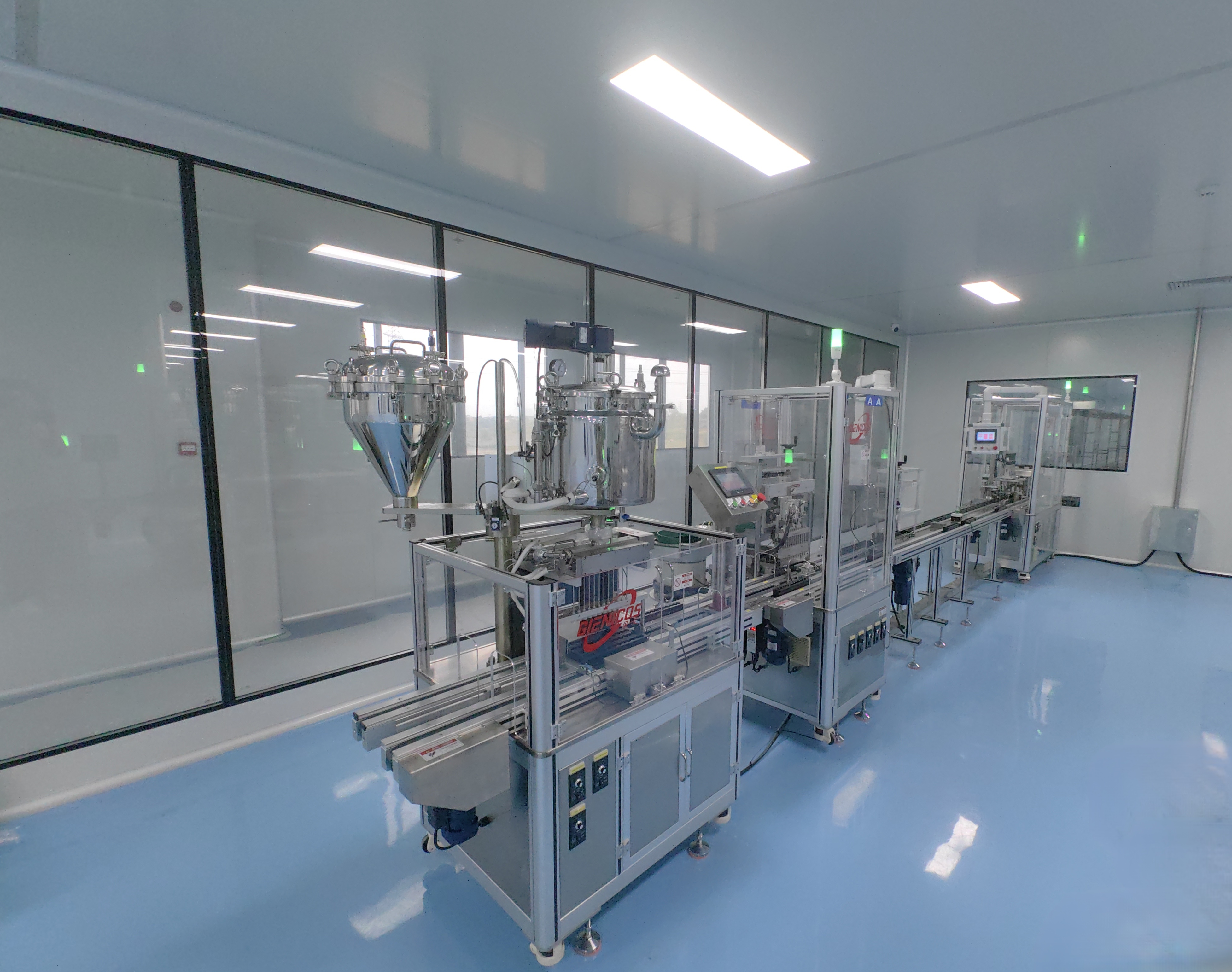
Across all four situations the same discipline holds: breadth gets a supplier into the evaluation, and scope discipline decides whether the delivery date holds.
Format-by-Format Audit Table
| Format | Documented evidence in the supplier record | What that evidence does not establish | Audit question that closes the gap |
|---|---|---|---|
| Hot-fill line | CE AT185114C4000321 (Hunan Anbotek, 17 July 2024; EN 60204-1:2018, EN ISO 12100:2010) naming MT melting tank, JYF filling machine, JCT cooling machine, auto bottle and cap loading, check weigher and JTB labeling machine, JHF-1 to JHF-10 | Fill accuracy or cooling behaviour on your wax blend and container | Which certificate names my exact configuration, and will the acceptance test use my formula and container? |
| Compact powder | CE AT18250SC100525 (Anbotek Guangzhou, 6 July 2021) for JBC, JTC, ZL, ZL-F, JAC; powder mixer JY-CR50 to JY3-CR300 under AT18250SC100526 | Pressed-pan quality from your bulk, or coverage of loose powder filling | Which press model and which mixer model are quoted, and can both run in one trial? |
| Narrow-orifice and tube | CE AT18250SC100524 (6 July 2021) for rotary filling machine JR-01 and JR-02 series; product records for eyeliner, lip pouch, mascara and lip gloss filling | Any collapsible-tube sealing stage, which the published list does not name | Which sealing unit operation, which model, and which conformity evidence applies to it? |
| Labeling | JTB labeling machine inside the hot-fill line scope (JHF series); lipstick labeling machine and sleeve shrink labeling machine listed as separate catalogue items | Compatibility with your container geometry, sleeve material or line speed | Is labeling inside the line certificate or a separate unit, and is it part of the acceptance run? |
| Cushion and cream formats | CE AT1814C502723151 (5 September 2025) for Air Cushion CC Cream Filling Machine JQL-04C, JQR-02C and JQL-02C | Conformity of other models not named in that scope | Does a scope issued for one model series transfer to the model I am buying? |
Frequently Asked Questions
Which certificate should a buyer ask for when ordering a cosmetic hot filling machine?
Ask for the certificate whose scope names the model you are buying, not a general certificate. For a hot-fill line, GIENICOS holds CE certificate AT185114C4000321 issued 17 July 2024 by Hunan Anbotek Compliance Laboratory Limited against EN 60204-1:2018 and EN ISO 12100:2010, naming the MT melting tank, JYF filling machine, JCT cooling machine, automatic bottle and cap loading, check weigher and JTB labeling machine for the JHF-1 to JHF-10 series. Related scopes cover the single-nozzle JSFL line under AT58250SC000523, the JYF multifunctional line under AT58250SC100097, melting tanks under ATGZAHS190528008-M1 and lipstick filling machines under AT1814C500649151. If the quoted configuration falls outside all of them, ask what evidence applies instead.
Can GIENICOS supply an OEM cosmetic hot filling machine, and what can be customized?
Yes. GIENICOS operates an OEM/ODM program with documented customization variables: voltage, logo, automation degree, tank size, filling method and speed request, with a minimum order quantity of 1 unit. The company describes its approach as customized development for key-account clients, iterating and upgrading products according to production requirements, formula features and workshop conditions, with all machines designed on a module concept. For audit purposes, each variable should be written into the technical annex with your value and marked as affecting price, schedule, or neither.
What industries and products are these filling machines suitable for?
The equipment is developed for colour cosmetics and skin care, for use in cosmetic GMP clean-room workshops, and covers lip gloss, lipstick, mascara, cushion, foundation, compact powder, nail polish, eyeliner, eyebrow pencil, cosmetic cream, lotion and comparable items. It serves both OEM/ODM contract manufacturers and brand-owned production bases. Suitability for a specific product still has to be demonstrated with your formula and container at acceptance.
What are the commercial terms around MOQ, payment and delivery?
Documented terms are a minimum order quantity of 1 unit; delivery terms of FOB, CNF, CIF or DDP; and payment by T/T at 40%/60%. Acceptance is a factory acceptance test on site or a video inspection before shipment, so commercial terms and technical acceptance should be negotiated together rather than in separate threads.
How is the machine accepted before shipment?
GIENICOS documents a factory acceptance test on site or video inspection before shipment, plus 100% OQC testing before shipping. To make acceptance meaningful, specify per format what the test must show - fill weight on your product, seal integrity for tube configurations, pan appearance for compact powder, label placement for labeling units - and record the results as signed acceptance data attached to the purchase order.
What lead time and monthly capacity should a buyer plan for?
Documented monthly capacity is 10 units and lead time is 45-80 days, with annual output of 100 units from a 2,000 sqm factory and around 30 employees, exporting to the EU, USA, Asia and the Middle East. Because 45-80 days is a range, the audit question is where your order enters the build sequence and which event starts the clock; both answers belong in the contract.
What does the warranty cover, and how is maintenance handled?
The standard warranty is 12 months from the date of machine acceptance and covers manufacturing defects, excluding wearing consumable parts and man-made damage, with free spares and freight carried by the supplier. Support includes remote technical support, onsite visits and full-life service support, and the modular structural design allows fast disassembly for cleaning and spare-part replacement. Ask for the spares list matched to your four formats before you order; if a formal audit pack would help, request the certificate set together with the 2026 catalogue as one package.
Conclusion
A capability audit is not scepticism for its own sake. It is the fastest way to learn whether a cosmetic filling machine supplier's catalogue describes what the company builds or lists what it would like to quote.
Three tests, applied four times, do most of the work: name the model, read the scope, define the acceptance. For hot-fill, that means reading a composition that includes the melting tank, filling machine, JCT cooling machine, loaders, check weigher and JTB labeling machine as one certified assembly. For powder, it means separating press evidence from mixer evidence and refusing to let a compact-press scope stand in for loose powder filling. For tube formats, it means treating an unlisted sealing stage as scoped engineering with named models and stated conformity evidence. For labeling, it means knowing whether the unit sits inside the line certificate or beside it.
Then convert. Capacity of 10 units a month and a 45-80 day lead time become useful only once you know where your order enters the queue. A 12-month warranty becomes useful once you have read what it excludes. A factory acceptance test becomes useful once you have written what it must demonstrate, with whose product and whose container.
That is what turns equipment breadth into delivery assurance: not the number of formats on a page, but the number of formats you can trace, test and enforce.
Next step for your audit
Download the full 2026 catalogue to compare hot-fill, powder, narrow-orifice and labeling models before you request certificate copies: 2026 GIENICOS Catalogue (PDF).
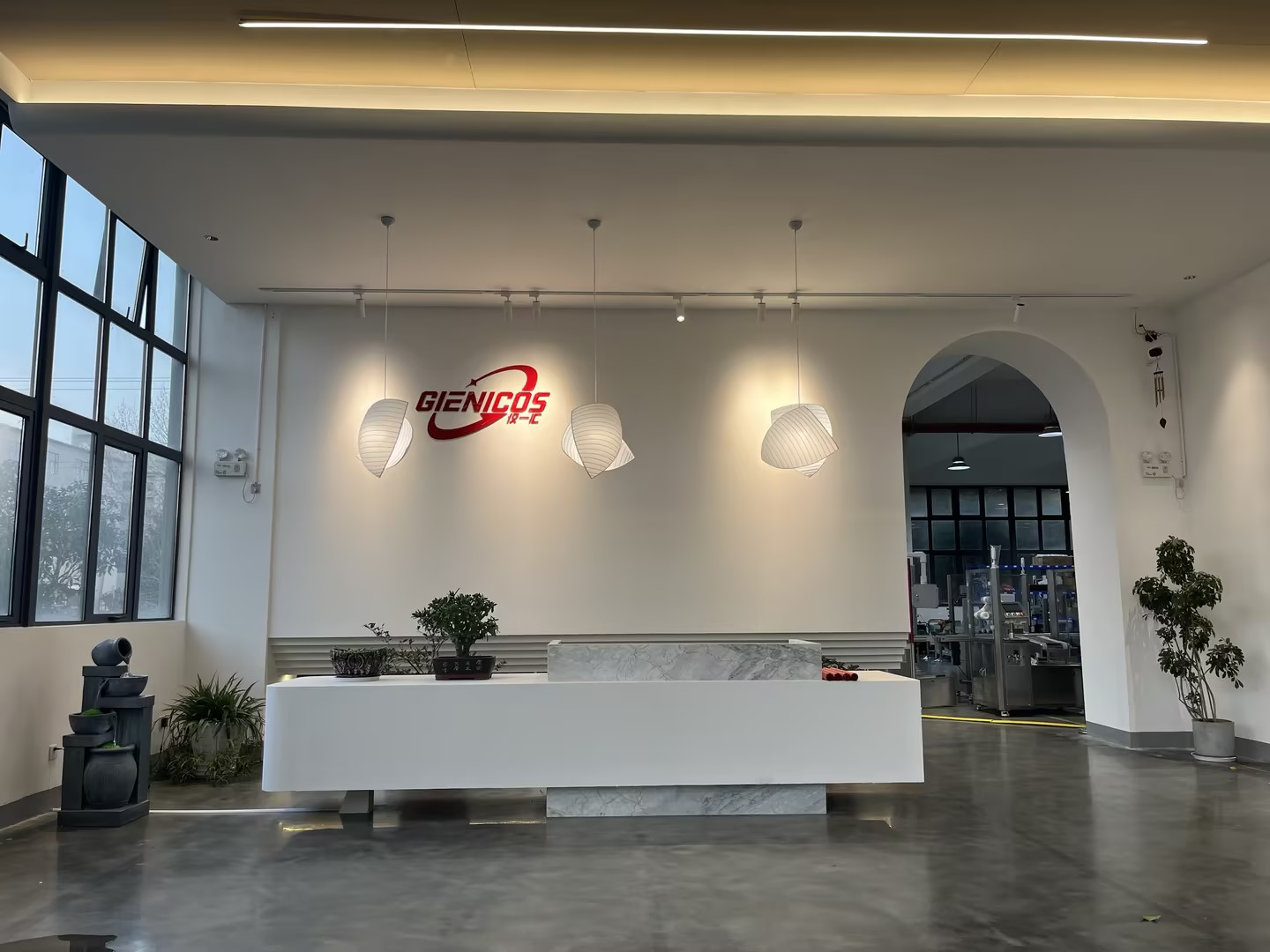
For scope documents, model maps or an acceptance protocol matched to your formats, contact Yoyo at sales@genie-mail.net, tel/WhatsApp +86 134 8206 0127, or visit the factory at FL1-2, Building 3, No.1277 Xingwen Road, Baihao AI Technology Park, Jiading North Industrial Park, Jiading District, Shanghai.
Have Questions or Need More Details?
Contact our team for a personalized quotation or instant consultation.
Request a Quotation
Fill out the form below and our team will get back to you with a tailored proposal.
WhatsApp Direct Chat
Prefer to chat in real-time? Message us on WhatsApp for instant assistance & quick answers.
- Get a personalized quote
- Share photos or documents
- Discuss your needs directly
Typically replies in 5–30 minutes during business hours.