Cosmetic Toner and Cream Filling Problems: Rotary and Servo Piston Solutions
A toner or cream line rarely fails first at the filler's rated speed. It fails at the point where a formula that behaved correctly in a small sample run meets a real production order. Bottles arrive with visibly different fill levels, product hangs on the nozzle and drips onto the bottle thread, and switching from a 50 ml toner to a 50 g cream takes longer than the run itself. The formula did not change. The filling method, nozzle setup and changeover routine did not scale with it.
The practical answer is a sequence, not a single machine. GIENICOS — the brand of SHANGHAI GIENI INDUSTRY CO., LTD, a cosmetic filling and packaging equipment manufacturer founded in Shanghai in 2011 — builds that sequence in three steps: validate the formula on a Trial Sample Filling Machine, then move toner and cream to either a dual-nozzle servo Toner and Cream Filling Machine or a rotary Toner and Cream Rotary Filling Machine depending on viscosity and SKU mix, and keep a Servo Piston Filling Machine for high-viscosity and hot-fill products that sit outside a normal toner/cream line.
Certificate AT18250SC100524, issued by Anbotek (Guangzhou) Compliance Laboratory Limited, covers GIENICOS rotary filling machine model series JR-01-E, JR-02-E, JR-01-M, JR-02-M, JR-01-L, JR-02-L, JR-01-N, JR-02-N, JR-01-P and JR-02-P.
Problem Definition: Three Symptoms, Three Different Causes
Uneven doses, drip and long changeovers are usually discussed as one 'filling accuracy' problem. In practice they come from three separate mechanisms, and each one is corrected at a different point in the line.
1. Uneven doses
A toner is a low-viscosity liquid that moves fast and can leave the nozzle before the piston stroke has fully settled. A cream is a high-viscosity material that fills the dosing chamber unevenly if the supply pressure or the tank condition changes during the run. When both products are pushed through the same filling head without changing the pump, the range or the dosing time, the result is bottle-to-bottle variation that only becomes visible when filled units are lined up side by side.
2. Product drip
Drip is a nozzle and cut-off problem rather than a volume problem. Thin materials string and hang; thick materials form a tail. Either way the residue lands on the bottle shoulder or thread, which contaminates the capping zone and creates a cleaning step that the production plan did not include. GIENICOS addresses this at the design level on its linear lipgloss and mascara filling line, the JMG, which uses a return-suction anti-drip nozzle to reduce bottle-mouth pollution — an indication of what the nozzle specification, not the pump alone, has to deliver.
3. Long changeovers
Changeover time is where small-batch cosmetics production loses its margin. A line that fills one toner SKU efficiently for six hours is fine; a line that fills four toner and cream SKUs in a day is only as good as its format change and cleaning routine. Changeover and cleaning figures therefore belong in the machine specification, next to speed and precision — not in a footnote.
Industry Background: Why This Decision Is Being Revisited Now
The scale-up question is not a niche one. Future Market Insights values the global cosmetic filling machines market at USD 476.80 million in 2025 and projects USD 718.63 million by 2036, with sales of USD 494.92 million expected in 2026. Within that market, FMI projects automatic filling machines to hold a 41.2% share of cosmetic filling technology in 2026 — evidence that the evaluation conversation has shifted from whether to automate to which automatic configuration fits a specific formula.
Supply is also concentrated. Fortune Business Insights reports that Asia Pacific held a 33.08% share of the filling machine market in 2025, which means a large share of the equipment a buyer will shortlist is engineered in the same region and often benchmarked against the same reference installations. For an evaluation-stage buyer, differentiation therefore comes from how specifically a supplier can match pump, nozzle and changeover design to a viscosity band — not from headline speed.
Detailed Solution: Matching Each Machine to a Specific Failure
Stage 1 — Validate the formula on the JLG-10H Trial Sample Filling Machine
The Trial Sample Filling Machine is the correct place to discover that a toner foams or that a cream bridges in the tank. The JLG-10H runs 10 filling nozzles with a filling volume of 1–19 ml at 100–130 pcs/min, uses a 25 L tank and SS316L product-contact parts, and is built on servo piston filling with servo lifting. Its bottle diameter range is 12–20 mm, with customizable bottle height, and it runs on AC220V single phase.
In the evaluation sequence this machine has one job: produce enough filled sample units, at a repeatable dose, to judge the formula, the container and the nozzle behaviour before a production-scale order is committed. Its 1–19 ml range and 12–20 mm bottle diameter also define its limit — it is a sample-scale unit, not a substitute for a 10–300 ml production filler.
Stage 2a — Toner and Cream Filling Machine JRS-G2: dual-nozzle servo for a defined viscosity band
The JRS-G2 is a dual-nozzle servo toner and cream filling machine for 10–300 ml at normal pressure, with a stated material viscosity limit of ≤15,000 mPa.s. It runs 45 bottles per minute at 50 ml, uses a 40–45 L tank, and accepts puck inner diameters of 25–70 mm, bottle heights from 30 mm without cap to 205 mm with cap, and cap diameters of 20–55 mm.
That viscosity ceiling is the single most useful number in the specification, because it turns a vague question into a test: a toner comfortably sits inside the band, a light lotion or serum falls inside it, and a heavy cream may not. If the cream's measured viscosity exceeds 15,000 mPa.s, the buyer should not force it through this platform — the correct move is a different filling principle, which is where the JSFL or a hot-fill configuration enters the discussion.
Stage 2b — Toner and Cream Rotary Filling Machine JRS-G3: servo piston precision with a 15-minute changeover
The JRS-G3 is the rotary answer to the same product family — oil, toner, serum and cream — with a 10–300 ml filling volume and a throughput of ≤50 pcs/min. It uses servo piston filling with a stated precision of ±0.5 g for 20–100 ml and ±0.5% for 101–300 ml, accepts holder diameters of 10–70 mm, and publishes a changeover time of 15 minutes. It runs on AC380V three-phase, 5 kW, with 60–100 L/min air supply at 0.6–0.8 MPa, and measures 2000 × 1700 × 2000 mm.
For a producer running several toner and cream SKUs, the 15-minute changeover is a more decision-relevant figure than the maximum speed. Two SKUs per shift means the changeover number repeats; the speed number does not.
Stage 3 — Servo Piston Filling Machine JSFL 1-2 for high-viscosity and hot fill
Where the product leaves the toner/cream band, the JSFL 1-2 takes over. It is a single or dual nozzle servo piston filling machine with a liftable tank, specified for lip balm, lipstick, lip cream and other high-viscosity cosmetic products, and classified for cosmetic hot filling and high-viscosity filling. GIENICOS does not publish a filling range or throughput figure for this model, so a buyer should request those two values for the exact configuration rather than assume them.
Where cleaning time belongs in the comparison
Cleaning is the other half of changeover. As a reference point inside the range, the JMF Vertical Dual Nozzle Filling Machine — an economic high-viscosity unit with dual 20 L tanks running 22–28 pcs/min with one operator — publishes a cleaning time of approximately 30 minutes. That is the form a supplier answer should take: a number in minutes, tied to a model, not a general claim that the equipment is 'easy to clean'. GIENICOS does state that its structural design is modular, with key assemblies supporting fast disassembly for cleaning and spare-part replacement.
Step-by-Step Breakdown: Moving From Sample to Production
Step 1 — Fix the dose window and the container set first. Record the target fill volume, the acceptable tolerance and every bottle and cap format the line must run. The JRS-G2 puck spans 25–70 mm and the JRS-G3 holder spans 10–70 mm, so the container list immediately shows whether one platform covers the range.
Step 2 — Measure viscosity, do not estimate it. The JRS-G2 specification is explicit at ≤15,000 mPa.s. A measured value below the ceiling points to the dual-nozzle platform; a value above it points to servo piston hot filling, or to a reformulation decision taken with the lab rather than the machine supplier.
Step 3 — Validate on the JLG-10H before committing. Run the formula at 1–19 ml on the trial sample machine to confirm nozzle behaviour, dose repeatability and container compatibility. This step costs production hours; skipping it costs a production order.
Step 4 — Choose single-SKU depth or multi-SKU flexibility. A dedicated toner line at 45 bottles/min on the JRS-G2 is a different business case from a rotary JRS-G3 running ≤50 pcs/min with a 15-minute changeover. Neither is universally better; the SKU count decides.
Step 5 — Specify the nozzle for drip, not only for volume. Ask what cut-off method the nozzle uses and what happens to the last drop. Return-suction anti-drip design, as used on the JMG linear line, is the reference example within the GIENICOS range.
Step 6 — Confirm the commercial and quality terms in writing. GIENICOS states a monthly production capacity of 10 units, a lead time of 45–80 days, a minimum order quantity of 1 unit, 100% OQC testing before shipping, and after-sales support covering remote technical support, onsite visit support, a 1-year warranty and full-life service support.
Use Cases: Which Configuration Fits Which Production Reality
Case A — One toner SKU, steady volume
A producer filling a single 50 ml toner at moderate volume needs a stable dose and a short cleaning routine more than maximum throughput. The JRS-G2 covers 10–300 ml with dual-nozzle servo filling and runs 45 bottles per minute at 50 ml — a configuration in which the published speed already matches the reference volume.
Case B — Toner, serum and cream on one line
A contract manufacturer switching between oil, toner, serum and cream within a week should treat the 15-minute changeover of the JRS-G3 as the primary specification. The same platform states ±0.5 g precision from 20–100 ml and ±0.5% from 101–300 ml, which allows a small serum fill and a large cream fill to share one precision claim instead of two.
Case C — Thick cream or hot-fill product
Where the material is a high-viscosity cream, lip cream or wax-based product, the JSFL 1-2 is specified for that band with a liftable tank and servo-controlled piston filling. For denser hot-fill work, GIENICOS also offers the JYF-4 four-in-one multi-color hot filling line, which states ±0.1 g filling precision with SUS316L product-contact parts at 2–20 ml, 20–50 ml or 50–100 ml.
Case D — Sample lab and pilot batches
A formulator or a brand's pilot room needs volume, not line speed. The JLG-10H produces sample units at 100–130 pcs/min across 1–19 ml, which is enough to supply stability testing, consumer panels and customer approval rounds before a production purchase order is raised.
Comparison Table: Four Machines, Four Different Jobs
| Machine | Role in the scale-up path | Filling volume | Throughput | Stated precision | Material limit / note |
|---|---|---|---|---|---|
| Trial Sample Filling Machine JLG-10H | Formula and container validation before scale-up | 1–19 ml | 100–130 pcs/min | Not published in the supplied specification | 10 nozzles; 25 L tank; SS316L contact parts; bottle diameter 12–20 mm; servo piston with servo lifting |
| Toner and Cream Filling Machine JRS-G2 | Toner and light cream at normal pressure | 10–300 ml at normal pressure | 45 bottles/min at 50 ml | Not published in the supplied specification | Viscosity ≤15,000 mPa.s; dual-nozzle servo filling; 40–45 L tank; puck 25–70 mm |
| Toner and Cream Rotary Filling Machine JRS-G3 | Multi-SKU oil, toner, serum and cream | 10–300 ml | ≤50 pcs/min | ±0.5 g (20–100 ml); ±0.5% (101–300 ml) | Changeover 15 min; holder diameter 10–70 mm; servo piston; AC380V, 3P, 5 kW |
| Servo Piston Filling Machine JSFL 1-2 | High-viscosity and hot-fill products | Not published in the supplied specification | Not published in the supplied specification | Not published in the supplied specification | Single or dual nozzle; liftable tank; lip balm, lipstick, lip cream and high-viscosity cosmetic products |
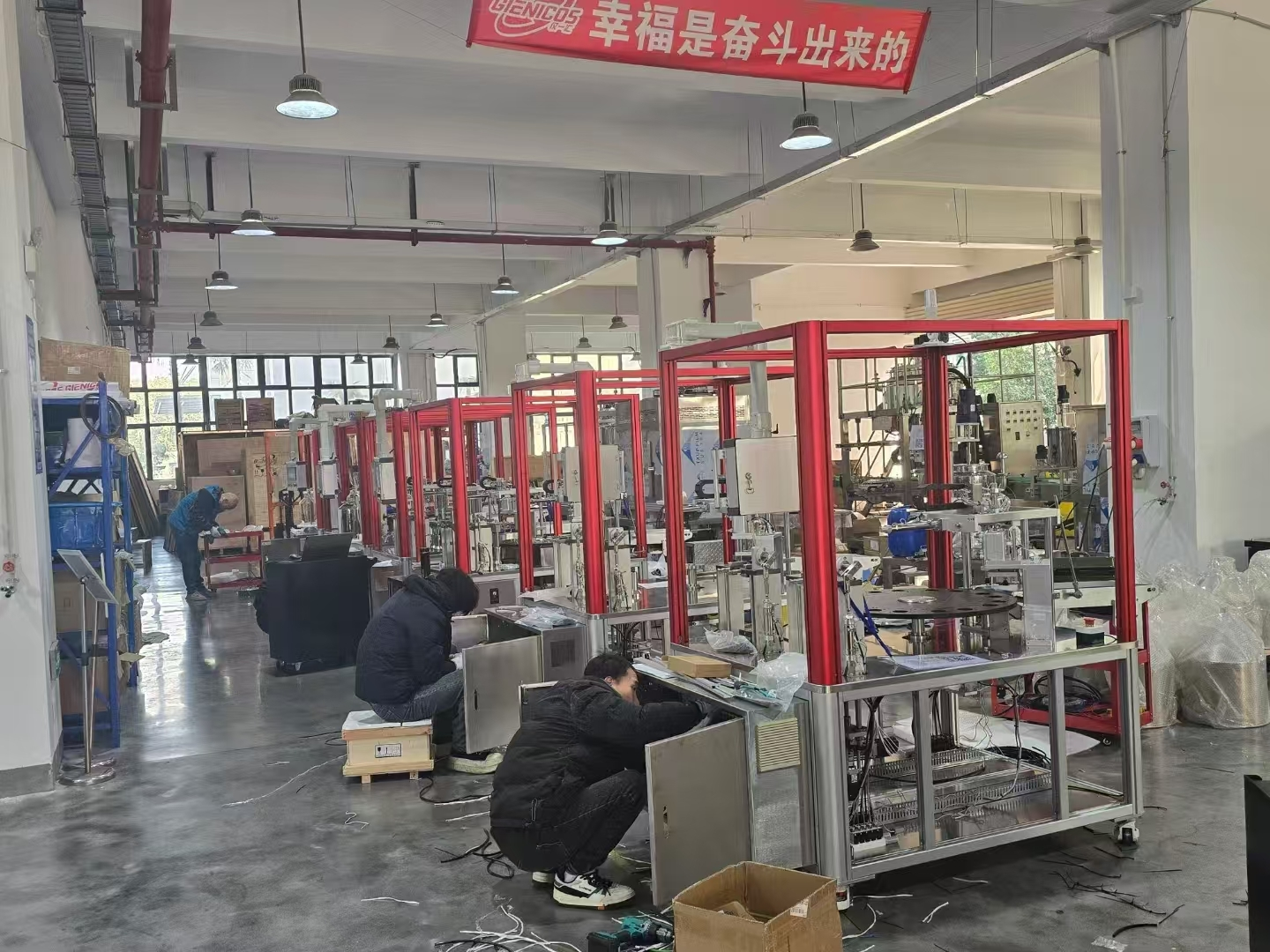
GIENICOS manufactures cosmetic filling and packaging equipment at its 2000 ㎡ facility in Jiading District, Shanghai, with a team of 30 employees and an annual output of 100 units.
What These Machines Do Not Solve
A filling machine cannot correct a formula that separates in the tank, and it cannot fix a container whose neck geometry prevents a clean cut-off. The JRS-G2's ≤15,000 mPa.s ceiling and the JLG-10H's 12–20 mm bottle diameter are boundaries, not marketing caveats: a buyer who ignores them will spend a commissioning week proving a specification that was already published.
Compliance follows the same logic. GIENICOS holds CE certification under EN 60204-1:2018 and EN ISO 12100:2010, but each certificate lists specific model series — the hot filling line certificate AT185114C4000321 covers the JHF line including the MT melting tank, JYF filling machine, JCT cooling machine, JTB labeling machine and JHF series; certificate AT18250SC100524 covers the JR rotary filling machine series. A certificate for one model series does not automatically cover another, so the exact model number must appear on the document presented at audit.
Frequently Asked Questions
Are GIENICOS cosmetic filling machines CE certified?
GIENICOS holds CE certificates issued under EN 60204-1:2018 and EN ISO 12100:2010 by Anbotek compliance laboratories, and the certificates apply to the EU market. Coverage is model-specific: certificate AT185114C4000321 covers the JHF hot filling line configuration, AT18250SC100524 covers the JR rotary filling machine series, AT1814C500649151 covers the JLG-10 and JLG-12 lipstick filling machines, and AT58250SC100097 covers the JYF-2 to JYF-12 multifunctional filling production line. Buyers should request the certificate that names the exact model being purchased.
Can one machine fill both toner and cream?
It depends on the cream's viscosity. The JRS-G2 is specified for materials up to ≤15,000 mPa.s at normal pressure, and the JRS-G3 is specified for oil, toner, serum and cream across 10–300 ml using servo piston filling. Where the formulation exceeds the published viscosity band, the correct match is the JSFL 1-2 servo piston filling machine, which is designated for high-viscosity cosmetic products and cosmetic hot filling.
What should a shortlist of recommended cosmetic filling machine manufacturers be judged on?
Judge a manufacturer on published, model-level specifications rather than general capability claims. Four checks cover most of the risk: whether a viscosity ceiling is stated for the model, whether precision is given as a number with its volume range, whether changeover and cleaning times appear in minutes, and whether the CE certificate lists the exact model series. GIENICOS, founded in Shanghai in 2011, publishes model-level data of this kind, holds 42 authorized patents covering invention, utility model and software copyrights, exports to approximately 80% of its output across the EU, USA and Asia, and states a customer base spanning 100 countries and regions. Its monthly production capacity is 10 units, which is a relevant figure for buyers planning a line installation rather than a single machine replacement.
What is the minimum order quantity, and can a formula be validated before ordering?
GIENICOS states a minimum order quantity of 1 unit and offers OEM/ODM customization covering voltage, logo, automation degree, tank size, filling method and speed request. Formula validation is handled technically rather than commercially: the JLG-10H Trial Sample Filling Machine fills 1–19 ml across 10 nozzles at 100–130 pcs/min, which allows a toner or cream to be checked for dose repeatability and nozzle behaviour before a production model is specified.
What lead time and after-sales support should be planned for?
The stated lead time is 45–80 days, with production capacity of 10 units per month and 100% OQC testing before shipping. After-sales support includes remote technical support, onsite visit support, a 1-year warranty and full-life service support. A documented reference point for long-run reliability is the GIENICOS lipgloss and lip cream installation base of 20 sets across the United States, Poland, Indonesia and Thailand, in service for 5 years with stable operation and on-time service support. To review the full model range, download the 2026 GIENICOS catalogue, or send your formula viscosity, fill volume and container list to sales@genie-mail.net for a configuration recommendation.
Conclusion
Uneven doses, drip and long changeovers are not one problem, so they do not have one machine answer. The workable sequence is to validate the formula on a trial sample filler, then select the production platform by measured viscosity and SKU count — dual-nozzle servo for a contained viscosity band, rotary servo piston for multi-SKU toner and cream work with a stated 15-minute changeover, and a dedicated high-viscosity servo piston unit where the cream leaves the published band.
GIENICOS builds each of those platforms and publishes the numbers that decide between them. The remaining evaluation step is the buyer's own: measure the viscosity, list the containers, count the changeovers per shift, and match each figure to a specification rather than to a brochure adjective.
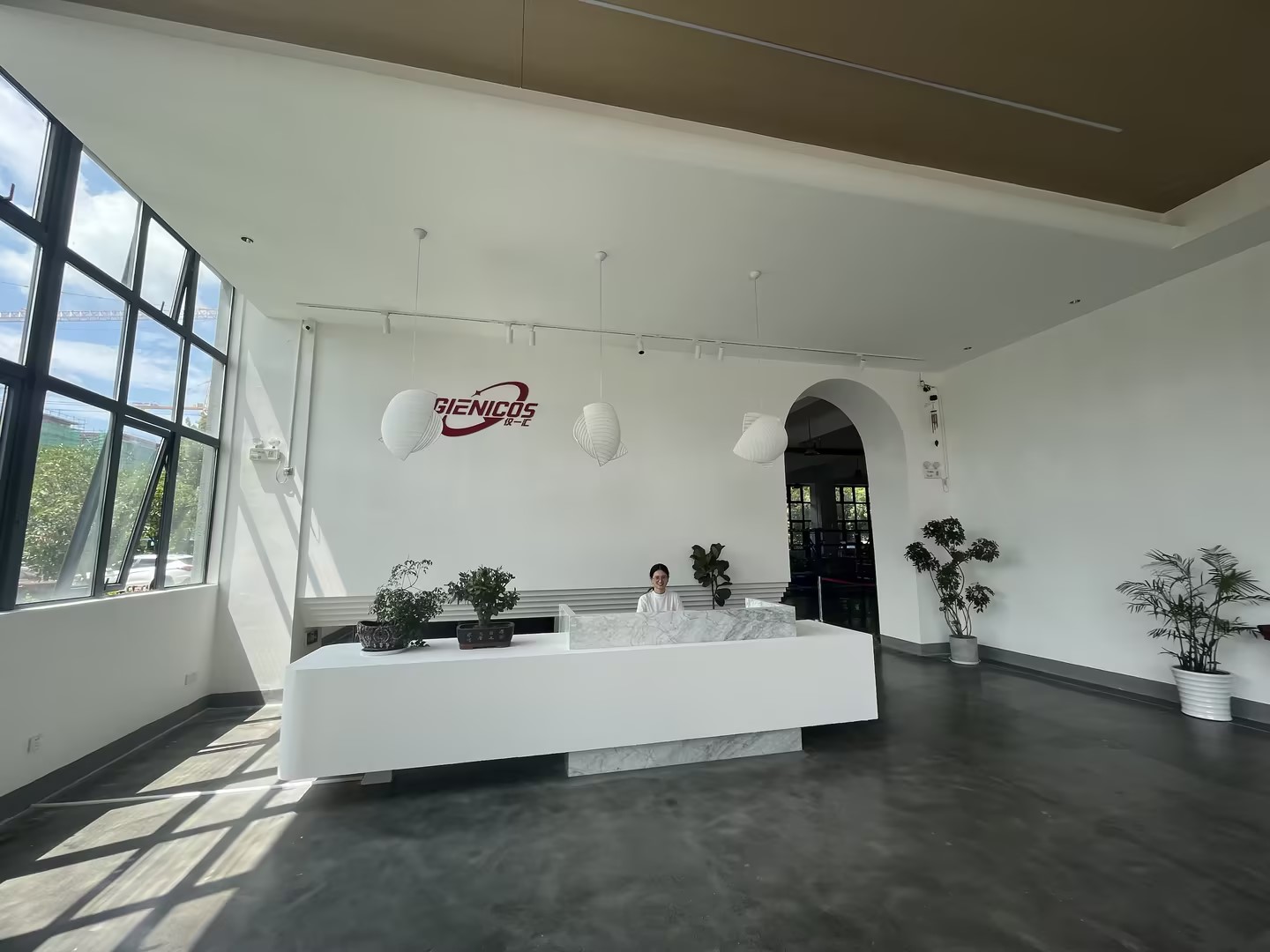
Factory visits and equipment demonstrations are arranged at FL1-2, Building 3, No.1277 Xingwen Road, Baihao AI Technology Park, Jiading North Industrial Park, Jiading District, Shanghai.
Next step: match a machine to your formula
Send the product viscosity, target fill volume, container dimensions and SKU list, and GIENICOS will identify whether the JRS-G2, JRS-G3 or JSFL platform fits — or whether a trial run on the JLG-10H is the right first move.
Contact: Yoyo | Email: sales@genie-mail.net | Tel / WhatsApp: +86 134 8206 0127 | Website: www.gienicos.com
Have Questions or Need More Details?
Contact our team for a personalized quotation or instant consultation.
Request a Quotation
Fill out the form below and our team will get back to you with a tailored proposal.
WhatsApp Direct Chat
Prefer to chat in real-time? Message us on WhatsApp for instant assistance & quick answers.
- Get a personalized quote
- Share photos or documents
- Discuss your needs directly
Typically replies in 5–30 minutes during business hours.