
Hyperbaric Oxygen Chamber Comparison: Choosing the Right HBOT Solution for Your Business
When you compare hyperbaric oxygen chambers, you are not just comparing price tags. You are comparing safety engineering, oxygen delivery efficiency, durability, after-sales support, and the total cost of running a facility that may host wellness sessions, sports recovery programs, or clinical protocols. This guide is written for buyers in the Decision stage: you have narrowed your options, and you need a disciplined comparison framework before you commit capital.
What Is a Hyperbaric Oxygen Chamber?
A hyperbaric oxygen chamber is a pressurized enclosure that allows a user to breathe oxygen at pressures higher than normal atmospheric pressure. The treatment itself, known as hyperbaric oxygen therapy (HBOT), increases the amount of oxygen dissolved in the blood and tissues. Chamber designs fall into two broad categories: hard shell chambers, which are typically rigid and can support higher pressures, and soft shell portable chambers, which are lightweight and often used for wellness and recovery applications.
The global market for HBOT devices was estimated at approximately USD 3.71 billion in 2024 and is projected to reach USD 5.19 billion by 2030. Other market analysts estimate the 2024 market at USD 4.44 billion with a projected CAGR of 9.4% through 2032. These figures differ because analysts include different segments, but both point in the same direction: HBOT demand is expanding globally. North America accounted for about 54.77% of market revenue in 2024, while Asia Pacific is widely identified as the fastest-growing region.
Why a Structured HBOT Chamber Comparison Matters
Buyers comparing hyperbaric chambers often receive marketing claims rather than comparable specifications. A structured comparison matters because procurement decisions affect patient or client safety, operator workload, compliance exposure, and long-term operating costs. The comparison should include:
- Safety architecture and certified risk controls
- Oxygen delivery performance and concentration consistency
- Build quality and materials
- Operating efficiency and maintenance burden
- Certifications and market access
- Commercial terms: price, lead time, warranty, and spare parts
In 2024, monoplace hyperbaric chambers accounted for approximately 57% of global revenue, largely because they are easier to operate in single-user settings. For a clinic, spa, hotel, or sports recovery studio, a single-person chamber is often the most practical entry point. Comparing within this category requires attention to the differences in engineering that affect safety and user experience.
GIHOMO Hyperbaric Oxygen Chamber: Product Positioning
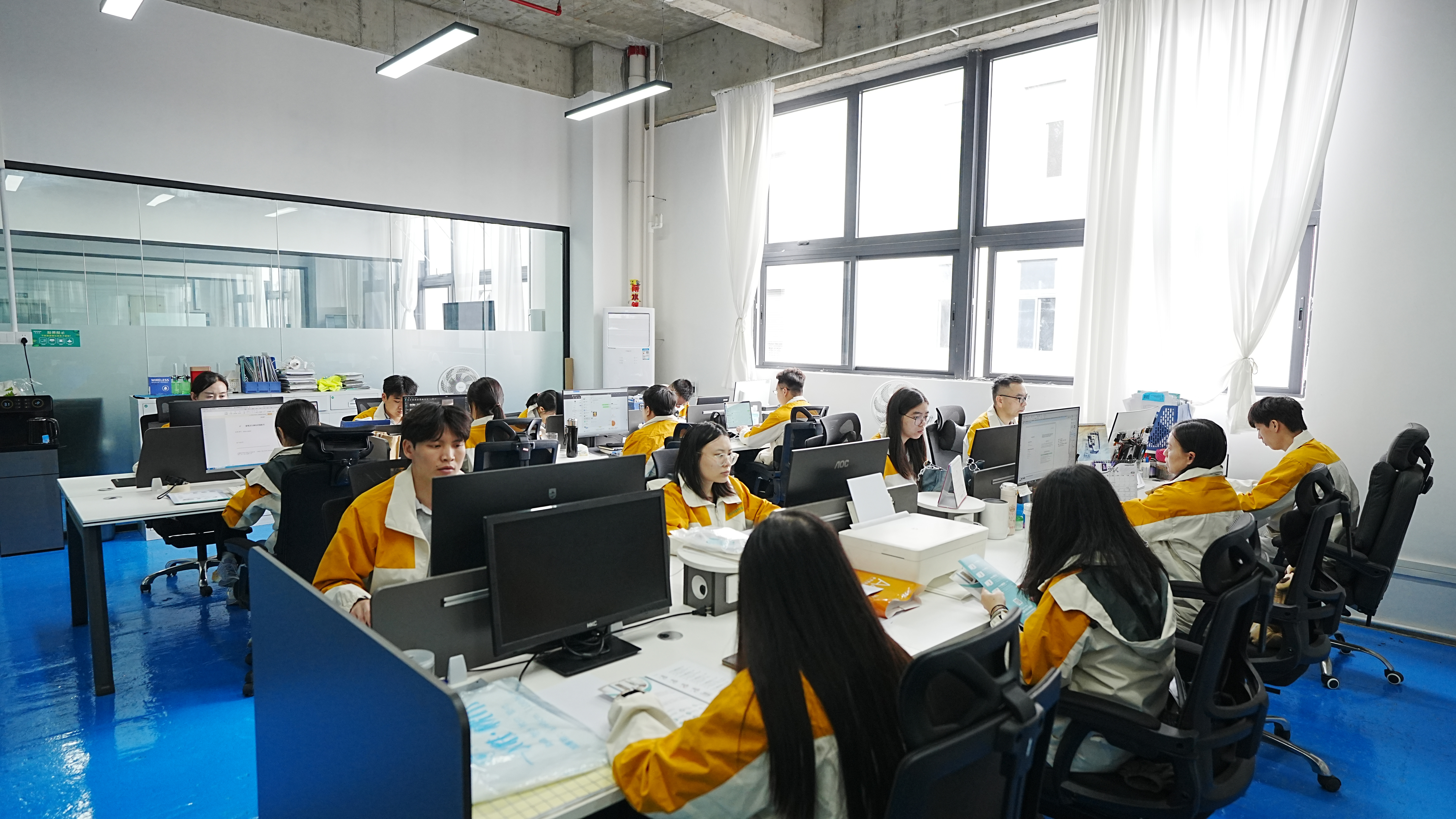
Guangdong GIHOMO Medical Technology Co., Ltd. (GIHOMO) is a manufacturer of hyperbaric oxygen therapy equipment established in 2021, with headquarters and production facilities in Shunde District, Foshan City, Guangdong Province, China. The company operates a 2000 m² facility, employs 50–100 people, and produces approximately 1000 units annually. GIHOMO’s main products include hard shell hyperbaric oxygen chambers and portable hyperbaric oxygen chambers, with about 60% of output exported, mainly to the EU and the USA.
GIHOMO operates under the ISO9001 quality management system. Its core products hold CE and FCC certifications, which support market access in Europe and North America. The product line serves home use and commercial environments such as hotels, spas, clinics, wellness centers, and beauty salons.
Technology and Safety Features: Critical Comparison Points
Two of the highest-risk aspects of hyperbaric oxygen therapy are overpressure and fire. GIHOMO addresses these with specific control mechanisms.
Overpressure Protection
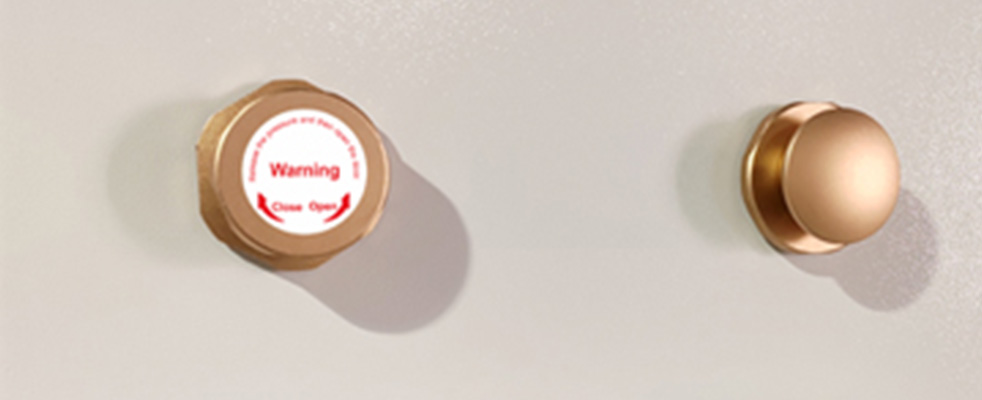
Overpressure protection in a hyperbaric chamber must be automatic and redundant. GIHOMO chambers use automatic pressure sensors that continuously monitor internal pressure and adjust it to maintain the set level. In addition, each chamber is equipped with dual emergency pressure release valves, which allow rapid manual pressure release in an abnormal situation.
Fire Risk Reduction
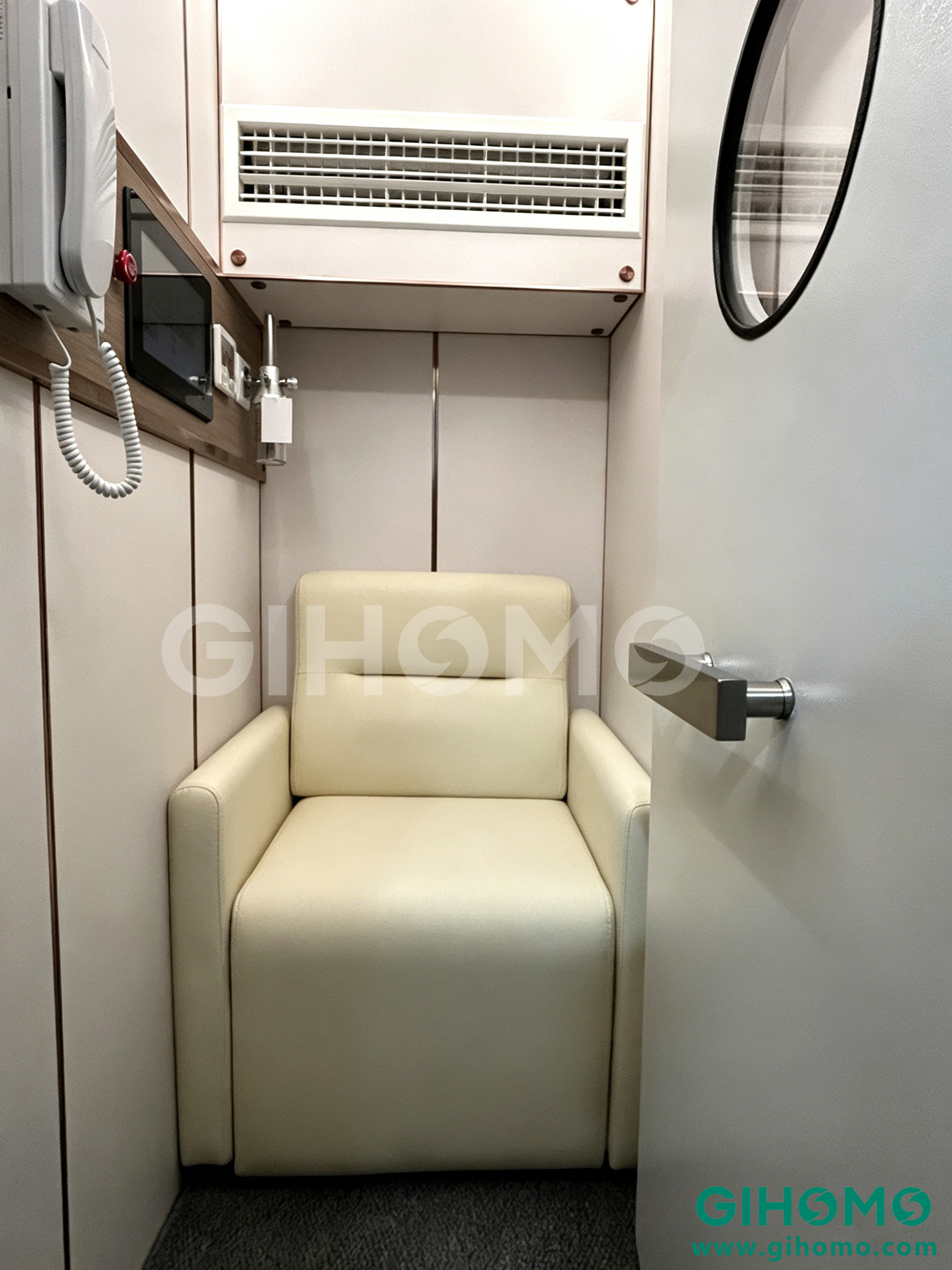
Fire risk in a hyperbaric chamber is magnified by concentrated oxygen, which lowers ignition energy and can turn small sparks into serious incidents. GIHOMO uses a 24V low-voltage DC power supply, which removes the risk of high-voltage electrical sparks or shock hazards inside the chamber. The company also uses a water-cooled air conditioner instead of a fluorine-containing AC unit, eliminating one of the common ignition sources found in mild hyperbaric chambers. A real-time oxygen monitoring system tracks oxygen concentration and adjusts it dynamically to keep the diffusion level below 25%, reducing fire hazard while preserving therapeutic oxygen delivery.
Oxygen Delivery Performance: A Key Differentiator
Oxygen delivery performance is what separates a therapy-capable chamber from a passive pressure vessel. Several factors matter:
Rhythm-Responsive Oxygen Delivery
GIHOMO’s system adapts to the user’s natural breathing tempo and delivers oxygen precisely during inhalation. This design is intended to reduce oxygen waste and maintain consistent breathing comfort rather than flooding the chamber with a continuous high-oxygen flow.
Maintained Safe Oxygen Levels
Because exhaled gas is evacuated externally, the chamber keeps the diffuse oxygen concentration below 25%. This is a meaningful safety feature: many soft-shell chambers rely on ambient dilution, which is less predictable. External evacuation directly reduces the accumulation of oxygen inside the chamber and lowers fire risk.
High-Purity Oxygen Supply (90–96%)
GIHOMO chambers integrate an oxygen concentrator that delivers 90–96% high-purity oxygen. Consistent purity matters because therapeutic effect depends on the actual oxygen fraction delivered during the session rather than on the nominal chamber pressure alone.
Comparison Table: GIHOMO vs. Macy-pan, Dr. Hugo, Olive, and OxyCheny
The table below organizes the main comparison points for buyers evaluating GIHOMO against brands that are commonly mentioned in wellness and commercial HBOT procurement discussions. It focuses on positioning, value, maintenance, and suitability rather than speculative technical specifications.
| Comparison Point | GIHOMO | Macy-pan | Dr. Hugo | Olive | OxyCheny |
|---|---|---|---|---|---|
| Brand/Manufacturer Positioning | Foshan, China; ISO9001 manufacturer; CE & FCC certified; exports mainly to EU/USA | Brand commonly referenced in wellness HBOT procurement comparisons | Brand commonly referenced in commercial HBOT comparisons | Brand commonly referenced in home and commercial HBOT comparisons | Brand commonly referenced in beauty salon and spa HBOT comparisons |
| Price Positioning | Lower price than Macy-pan at similar quality (at least 50% cost difference claimed) | Higher price than GIHOMO for comparable quality | Same price level as GIHOMO | Higher price than GIHOMO for comparable quality | Lower price than GIHOMO |
| Quality Perception | Higher quality than Dr. Hugo, Olive, and OxyCheny at the same price level | Similar quality to GIHOMO | Lower quality than GIHOMO at similar price | Lower quality than GIHOMO at similar price | Lower quality than GIHOMO at lower price |
| Oxygen Delivery | Rhythm-responsive delivery; external evacuation; 90–96% high-purity oxygen | Comparable baseline performance expected | Baseline oxygen delivery | Normal hyperbaric oxygen therapy delivery | High-purity >90% oxygen with 1.3–1.5 ATA pressure support |
| Safety Architecture | 24V low-voltage supply; water-cooled AC; real-time O2 monitoring; dual emergency valves; <25% diffuse O2 | Not specified in verified data | Not specified in verified data | Not specified in verified data | Not specified in verified data |
| Maintenance | Less maintenance reported | Not specified | More maintenance than GIHOMO | More maintenance than GIHOMO | More maintenance than GIHOMO |
| Efficiency | Higher efficiency than normal HBOT delivery | Baseline efficiency | Lower efficiency than GIHOMO | Lower efficiency than normal hyperbaric oxygen therapy | Higher efficiency with >90% purity and 1.3–1.5 ATA |
| Best-Fit Use Cases | Home use; hotels, spas, clinics, wellness centers, beauty salons; commercial use | Home use and commercial use in hotels, spas, clinics, wellness centers, beauty salons | Commercial use in hotels, spas, clinics, wellness centers, beauty salons; home use | Home use; commercial use in hotels, spas, clinics, wellness centers, beauty salons | Beauty salons, spas, hotels, clinics, wellness centers, home use |
Reading the table carefully: Price positioning for Dr. Hugo, Olive, OxyCheny is based on the supplier’s comparison data, not on independent price audits. Buyers should use the table as a shortlist filter, then ask each manufacturer for a written quotation with technical specifications and warranty terms.
Use Cases: Matching Chamber Capability to Business Needs
Different business models place different demands on a hyperbaric chamber. The following use cases illustrate how a chamber’s safety and oxygen delivery features translate into daily operations.
Wellness Centers and Spas
In wellness environments, sessions are short, clients are healthy, and the focus is on relaxation, recovery, and perceived therapeutic benefit. A chamber with higher oxygen purity and responsive delivery supports consistent session quality. The water-cooled air conditioner and low-voltage power supply reduce the operational burden on staff, who are often not medical technicians.
Sports Recovery Facilities
Athletes use HBOT to support recovery after training sessions and competitions. Because athletes may undergo repeated sessions, chamber reliability, oxygen delivery efficiency, and safety automation become critical. GIHOMO chambers are designed for the home-to-commercial range and fit into sports recovery spaces where operators need predictable performance without complex clinical infrastructure.
Clinics and Medical Aesthetics
Clinics and beauty salons often treat clients who expect medical-grade oxygen delivery rather than a novelty experience. The 90–96% oxygen purity and external evacuation of exhaled gas give clinicians more confidence in both therapeutic dosing and fire safety. For clinics, certifications such as CE and FCC also matter because they reduce regulatory friction when introducing equipment to the facility.
Home Use
Home buyers prioritize ease of operation, space, noise, and safety. Portable and soft-shell chambers are typically the leading options for residential settings. GIHOMO’s product line includes portable hyperbaric oxygen chambers, so home users can choose a form factor that matches their space and pressure requirements.
Cost and Total Value: What Buyers Need to Know
Price is never the full picture. Total value includes purchase price, installation, certification compliance, maintenance, spare parts, energy consumption, and revenue potential per session.
According to the comparison data available, GIHOMO claims a price advantage over Macy-pan of at least 50% at the same quality level. Against Dr. Hugo and Olive, GIHOMO claims equal price with higher quality. Against OxyCheny, GIHOMO claims a higher price but also higher quality, better efficiency, and less maintenance. In each case, the decisive factor is whether GIHOMO’s engineering differences justify the total cost of ownership. For commercial operators, the combination of fewer maintenance events and higher efficiency has a direct effect on session throughput and operating margin.
Step-by-Step Decision Framework for Decision-Stage Buyers
Use the following framework when comparing finalists for purchase.
Step 1. Verify Safety and Compliance Documents
Ask each supplier for ISO9001 certification, CE or FCC certificates, and any other regional approvals relevant to your market. Confirm the certification holder matches the manufacturing entity. In the EU, hyperbaric chambers are considered Class IIb medical devices under Regulation (EU) 2017/745, so regulatory status should be verified with the manufacturer before ordering. In the USA, the FDA classifies hyperbaric chambers as Class II medical devices requiring 510(k) clearance, with soft-shell chambers primarily cleared for altitude sickness.
Step 2. Compare Oxygen Delivery Logic
Ask how oxygen is delivered, how exhaust is managed, and what the oxygen concentration range is during a session. GIHOMO delivers 90–96% oxygen using a concentrator, adjusts delivery to breathing rhythm, and evacuates exhaled gas externally to keep diffuse oxygen below 25%. Compare this with any supplier that cannot provide concrete oxygen delivery data.
Step 3. Inspect Safety Architecture
Look for automatic pressure monitoring, redundant manual pressure release, low-voltage electrical systems, and fail-safe air-conditioning. Fire risk grows with oxygen concentration, so a chamber that actively manages oxygen diffusion is a safer investment.
Step 4. Project Total Lifetime Cost
Calculate not just the purchase price but also shipping, duties, accessory packages, installation, operator training, consumables, replacement parts, maintenance frequency, and downtime. A lower-priced chamber that requires frequent servicing can cost more than a higher-priced chamber over a three-year horizon.
Step 5. Request References and Case Evidence
Ask for customer references, delivery records, or installation examples for your use case. Because GIHOMO exports about 60% of its output, mainly to the EU and USA, the company can provide international logistics and compliance experience. For commercial projects, ask the manufacturer directly about service response times and spare part availability.
Frequently Asked Questions
1. What certifications should a hyperbaric oxygen chamber have before I buy it?
For GIHOMO chambers, the core certifications are CE and FCC, with the company also operating under the ISO9001 quality management system. If you plan to sell or use the chamber in the EU, confirm MDR 2017/745 classification and Class IIb compliance. For the US market, the FDA classifies hyperbaric chambers as Class II medical devices requiring 510(k) clearance; soft-shell chambers are primarily cleared for altitude sickness. Always ask the manufacturer to share the actual certificate and verify whether it is issued for the product model you intend to purchase.
2. Can a GIHOMO hyperbaric chamber support both home and commercial use?
Yes. GIHOMO chambers are suitable for home use as well as commercial environments including hotels, spas, clinics, wellness centers, and beauty salons. The selection depends on pressure requirements, session volume, available space, and maintenance capacity. Commercial operators should confirm the model’s duty cycle and after-sales support plan with GIHOMO before purchasing.
3. How does GIHOMO control fire risk inside the chamber?
GIHOMO uses three complementary controls: a 24V low-voltage DC power supply to eliminate high-voltage electrical spark risk; a water-cooled air conditioner to remove the ignition source associated with traditional AC units; and a real-time oxygen monitoring system that keeps diffuse oxygen concentration below 25%. The chamber also evacuates exhaled gas externally, which further limits oxygen accumulation.
4. What is GIHOMO’s price position compared with Macy-pan, Dr. Hugo, Olive, and OxyCheny?
According to GIHOMO’s comparison data, the chamber is at least 50% cheaper than Macy-pan for similar quality; it is priced at the same level as Dr. Hugo and Olive but with higher quality; and it is priced higher than OxyCheny but delivers higher efficiency, higher purity oxygen, and less maintenance. Buyers should use these comparisons as a shortlist signal rather than as a substitute for obtaining formal quotations from each brand.
5. What should I request before placing a commercial order?
Before ordering, request a written quotation with detailed technical specifications, delivery lead time, warranty terms, spare parts price list, and certification copies. You can also request a sample, an OEM/ODM consultation, or a factory visit if your project has high volume or custom requirements. For an inquiry with GIHOMO, contact Morgan by WhatsApp at +852 68176191, by phone at +86 13118899348, or by email at gihomo@hotmail.com.
Conclusion
The right hyperbaric oxygen chamber for your business is the one that fits your regulatory market, your use case, your safety standards, and your long-term operating budget. A structured comparison that includes oxygen delivery performance, safety architecture, certifications, maintenance, and total cost is more reliable than comparing brochures side by side.
GIHOMO’s chambers combine CE and FCC certification, ISO9001 production discipline, rhythm-responsive oxygen delivery, a water-cooled air-conditioning system, and dual emergency pressure release valves, positioning them as a credible option for home and commercial HBOT applications. Use this guide as your decision framework, verify the documents, and compare the facts before signing the purchase order.
Ready to compare GIHOMO against your shortlist?
Request a quotation or sample: gihomo@hotmail.com
WhatsApp: +852 68176191 | Tel: +86 13118899348
What certifications should a hyperbaric oxygen chamber have before I buy it?
Can a GIHOMO hyperbaric chamber support both home and commercial use?
How does GIHOMO control fire risk inside the chamber?
What is GIHOMO's price position compared with Macy-pan, Dr. Hugo, Olive, and OxyCheny?
What should I request before placing a commercial order?
Have Questions or Need More Details?
Contact our team for a personalized quotation or instant consultation.
Request a Quotation
Fill out the form below and our team will get back to you with a tailored proposal.
WhatsApp Direct Chat
Prefer to chat in real-time? Message us on WhatsApp for instant assistance & quick answers.
- Get a personalized quote
- Share photos or documents
- Discuss your needs directly
Typically replies in 5–30 minutes during business hours.