
How to Read Footwear Machinery Specs at GISMA Guangzhou
Reading a footwear machinery specification is a filtering task, not a reading task. Two suppliers on the same exhibition floor can quote the same cycle time, the same automation level and the same whole-line capability, and only one of those specs will survive contact with your own production plan. The difference is rarely the number itself. It is the measurement basis behind the number, the boundary of the configuration that was measured, and the service parameters that were left off the sheet entirely.
This technical guide is written for overseas footwear manufacturers, production managers, factory engineers and sourcing teams who arrive at an international footwear machinery exhibition with a shortlist and need to leave with a defensible purchase decision. It uses GISMA GUANGZHOU — the Guangzhou edition of the international footwear machinery and materials exhibition operated by the Guangdong Shoe-Making Machinery Association — as the working example, and it maps each parameter family to the production scale and production type it actually serves.
Problem Definition: Why Specification Sheets Mislead Decision-Stage Buyers
A specification sheet is a commercial document before it is a technical one. It is written so that a machine can be compared with competing machines, not so that it can be predicted inside one specific factory. That gap produces three recurring errors at the decision stage.
The first is measurement-basis mismatch. A rating only means something together with the conditions under which it was recorded: shoe type, material, layer count, operator skill, and whether the figure describes a peak or a sustained output. When the basis is missing, a buyer is comparing two numbers generated under two different definitions. The same discipline applies to public market data. For 2025, published estimates of the footwear manufacturing machines market range from USD 23.3 billion (IMARC Group) to USD 20.16 billion (Market Research Future) to USD 3.4 billion for one narrowly defined industrial segment (Global Market Reports). These figures do not so much contradict each other as describe different scopes. If published market data diverges that widely on definition, an unqualified machine rating deserves the same scepticism.
The second is configuration boundary. Automatic shoemaking equipment is not one product; it is a family label covering machines with very different levels of integration. A quoted output or a quoted price normally describes one configuration, and everything outside that configuration — feeding, unloading, tooling, changeover fixtures, software — sits outside the compared number.
The third is the missing service parameter. After-sales coverage, technical documentation, spare-part access and training rarely appear on a spec sheet at all, yet they influence the long-term operating cost of an automated line more than a marginal difference in rated speed. Studies of the sector note that roughly 64% of footwear factories are shifting toward automated manufacturing machines to address labour shortages and rising costs, which means automation language is now universal in supplier pitches and therefore carries little discriminating power on its own.
For a buyer at the decision stage, the practical question is not which machine shows better numbers. It is which of these differences will still matter in year three.
Industry Background: The Scale Behind the Spec Sheets
The global footwear manufacturing machine market was estimated at USD 18.74 billion in 2024 and is projected to reach USD 41.79 billion by 2035, according to Market Research Future. A market framed that way makes equipment specification a long-horizon decision rather than a one-off purchase, because the machine you write onto the order is the machine you will still be operating when the market has expanded considerably.
The demand geography reinforces the point. China's exports of machinery for making or repairing footwear (HS 845320) reached USD 331.4 million in 2024, with Vietnam, Indonesia and Cambodia as the leading destinations, according to World Integrated Trade Solution / UN Comtrade data. A large share of new shoemaking capacity is therefore being installed in Southeast Asia, which means equipment is routinely specified in one market and operated under the labour, climate and material conditions of another.
Technology vocabulary is also moving faster than most buyers' checklists. Leading footwear machinery exhibitions, including SIMAC Tanning Tech in Italy and GISMA in China, are increasingly focusing on digital twins and AI-powered defect detection, according to IMARC Group analysis published in 2025. When trend-level features arrive on the exhibit floor before buyers have a way to test them, the discipline of reading specifications carefully becomes more valuable, not less.
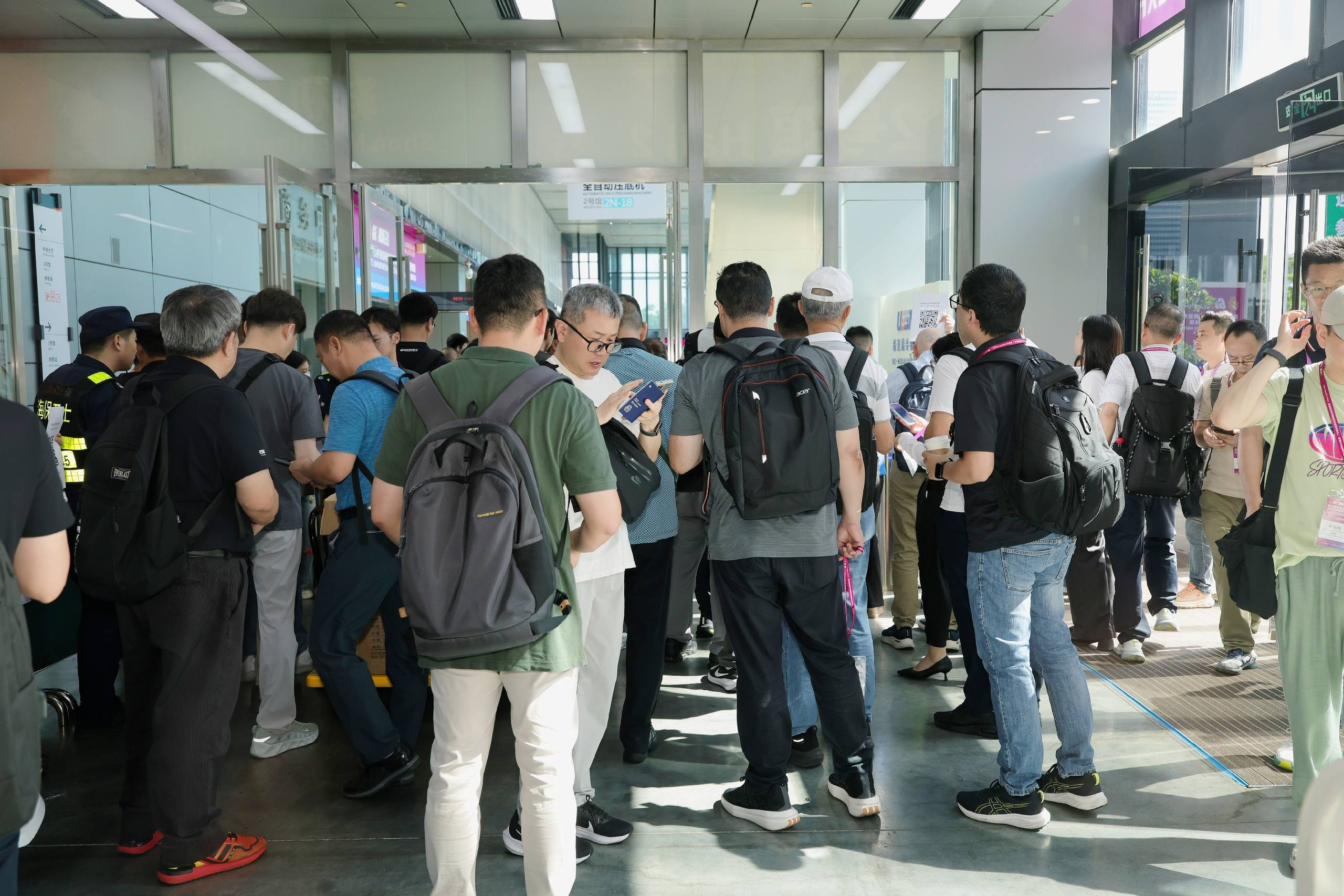
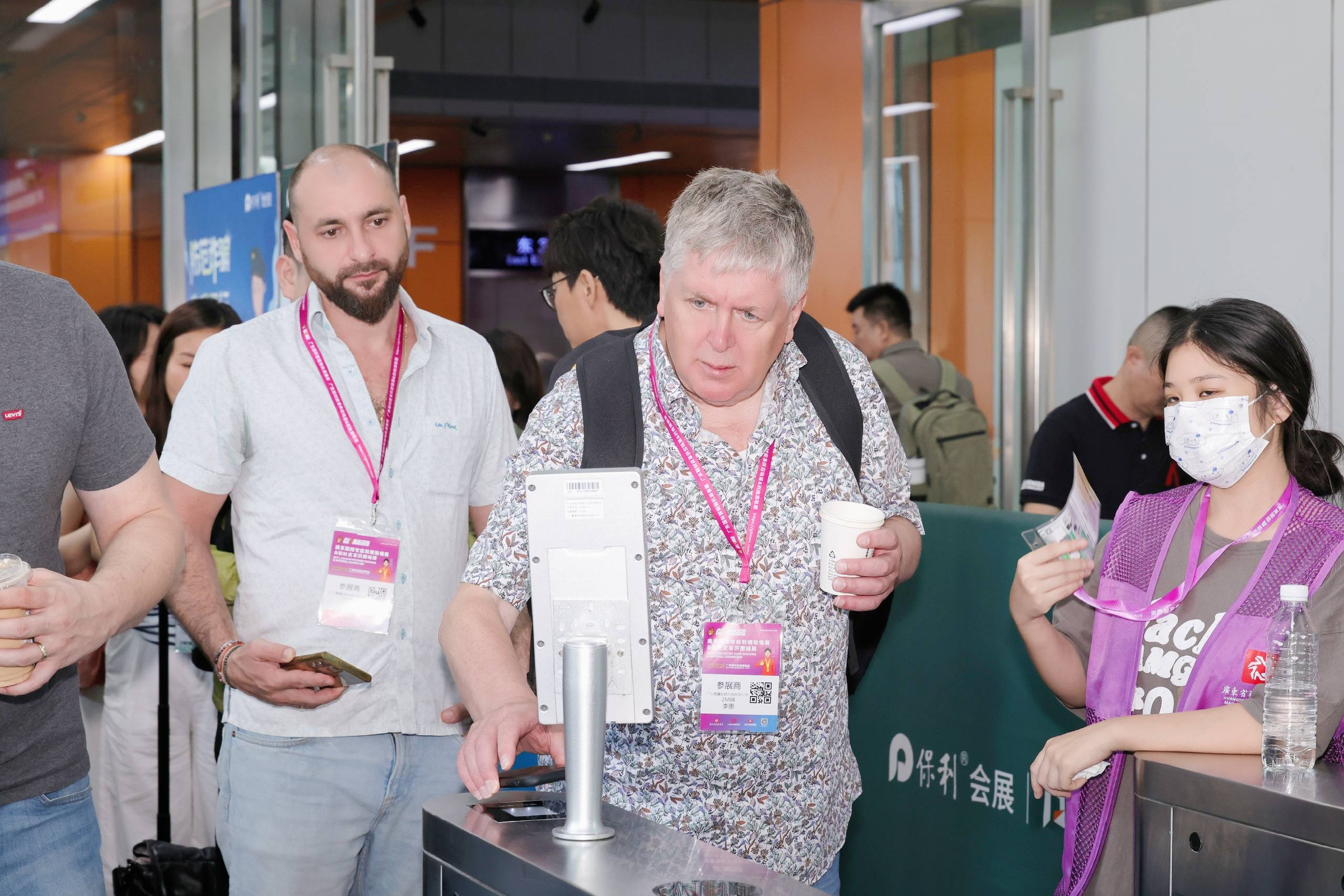
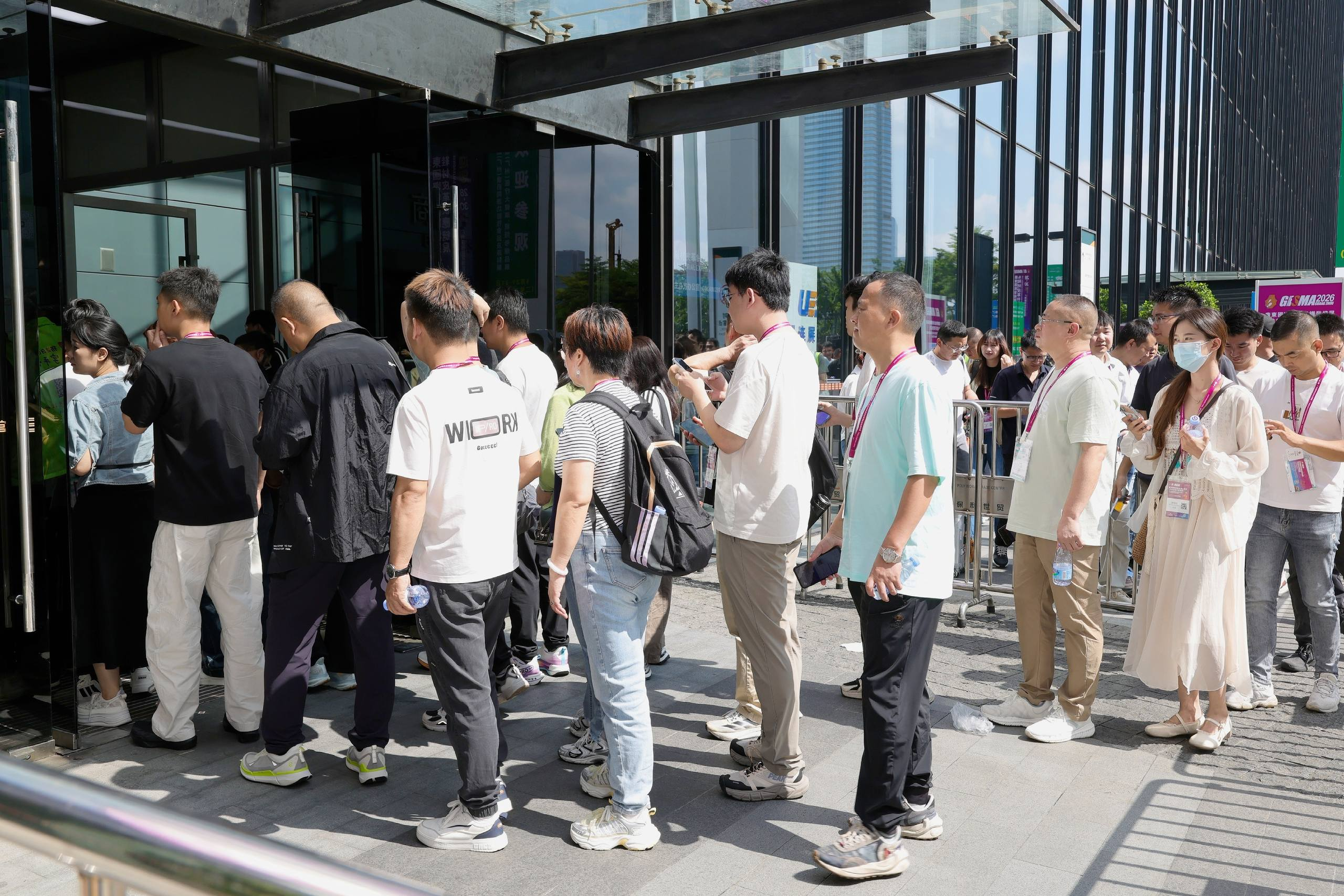
GISMA GUANGZHOU itself illustrates how quickly published numbers shift, and why the source matters. The Guangdong Shoe-Making Machinery Association, the organiser, operates professional international exhibitions in three cities — Guangzhou in China, Ho Chi Minh City in Vietnam and Jakarta in Indonesia — in cooperation with the Guangdong Footwear Machinery Association and the Dongguan Footwear Machinery Association. The 2025 Guangzhou edition gathered high-quality exhibitors from 15 countries and regions and professional buyers from 20 countries and regions. The 2026 Guangzhou edition is expected to gather more than 500 high-quality exhibitors and more than 20,000 professional visitors, with exhibits spanning high-end automatic shoemaking equipment, cutting solutions, sewing technology, 3D printing, sole moulding equipment, natural leather, artificial leather and other footwear materials. Published information for the following edition, GISMA Guangzhou 2027, cites over 400 exhibitors and 20,000+ professional visitors across 30,000 square metres of exhibition space.
Those two sets of figures describe two different editions and come from two different sources. That is exactly the habit this guide asks of a spec sheet: before you compare a number, identify which edition, which configuration and which source it belongs to.
Detailed Solution: A Four-Family Spec Reading Framework
In this industry, supplier qualification is normally assessed against four things: product technology maturity, production capacity, export compliance, and the after-sales service system. A specification sheet should be interrogated along the same four axes, because a machine that fails any one of them fails the purchase regardless of how impressive the remaining data looks.
Family 1 — Throughput and Compatibility: What the Machine Makes, Not Only How Fast
Throughput is a compatibility statement disguised as a speed. The first question is not how many units per hour, but on which shoe type, in which material, at which layer count. A rated figure recorded on a simple upper rarely transfers to a multi-layer construction, and a buyer who compares cycle times without comparing the material they were measured on is comparing two different products. Alongside the rating, read the declared working range: which shoe categories the configuration covers, which materials it accepts, how long a changeover takes, and what tooling or fixtures that changeover requires. Compatibility also determines the machine's position in your process. A cutting solution that is fast but incompatible with your downstream sewing sequence simply relocates the bottleneck.
Family 2 — Automation, Integration and Intelligence Level
Automation claims need to be graded rather than accepted as a binary. Integration can exist at the mechanical level, the electrical level, the software level, or all three, and a line described as integrated may in practice connect only through a data layer. When a supplier presents digital twin or defect-detection functionality, the readable parameters are the ones that describe coverage and output: which sensors or inspection points are included in the quoted configuration, what the system does with the data, and who owns the software and its updates. These features are now a visible focus of the exhibition circuit, including GISMA, so the expectation should be that a serious supplier can explain them in operational terms rather than as a slogan.
Family 3 — After-Sales, Serviceability and Spare-Part Access
Service parameters decide the long-term operating cost of automation, and they are almost always absent from the glossy page. Read for four things: how technical support is delivered once the machine is on your floor, what documentation and training accompany delivery, how spare parts are sourced and how long that sourcing realistically takes, and whether the supplier maintains contact after the transaction closes. The exhibition model used at GISMA GUANGZHOU treats this as a continuing relationship rather than an event: post-exhibition follow-up tracks cooperation progress, provides technical support after the show, and maintains long-term communication so that a first order becomes a supply-chain relationship.
Family 4 — Compliance and Market-Access Documentation
Export compliance is one of the criteria applied when screening suppliers for a professional exhibition, which means the exhibitor base has already passed a basic filter. That filter is not the same as market access for your country. The documents that matter depend on your destination market, your product category and your own import requirements, and the specific list has to come from your side of the border. Read for the document itself: who issues it, which legal entity is the exporter of record, and who is responsible for supplying the paperwork before shipment. A compliance claim that cannot be produced on request should be treated as an open item, not a settled one.
The Fifth Reading: Total Operating Cost
Cost is not a separate family so much as a derived figure. Purchase price is the least comparable number on an exhibition floor, because each quotation describes a different configuration boundary. Total operating cost, by contrast, can be reconstructed from the other four families: consumables and tooling, changeover labour, maintenance and spare parts, training, energy, and the cost of unplanned downtime while a component is shipped from overseas.
Step-by-Step Breakdown: Reading Specs on the Exhibition Floor
A footwear machinery exhibition compresses months of supplier evaluation into a few days only if the buyer arrives with a method. The sequence below follows how an organised exhibition cycle actually runs, from pre-show preparation through post-show follow-up.
Step 1 — Prepare the checklist before you travel
Request product brochures, technical parameters and quotation references in advance so that the first conversation on the floor starts from a defined configuration instead of a general pitch. Prepare your own production profile in writing: order mix, shoe type range, shift pattern, current bottleneck and the constraint you are trying to remove. A spec can only be judged against a stated requirement.
Step 2 — Use pre-arranged matching and one-to-one meetings
Structured exhibitions use supply-demand matching to align exhibitor product advantages with buyer procurement demand, and they schedule one-to-one meetings so that negotiation time is spent with relevant suppliers rather than spent walking. Register early enough to be matched, and state your requirements precisely — equipment category, production scale, target material and destination market — because matching quality depends on the accuracy of what you submit.
Step 3 — Ask for the measurement basis first, the number second
At the booth, lead with the question that most buyers ask last: under what conditions was this figure recorded? Ask for the shoe type, material, layer count, operator assumption and whether the output is peak or sustained. Then ask which parts of the configuration were included and which were excluded from the quotation. A supplier who answers these two questions clearly is usually also the supplier whose written specification will hold up.
Step 4 — Verify by inspection and technical communication
Reading is a substitute for running the machine, not an alternative to it. On-site equipment inspection and direct technical communication let you see the machine operate, examine the components that the sheet describes, and test specific claims against the physical unit. Where language is a barrier, on-site translation and technical guidance exist precisely so that engineering questions reach the people who can answer them.
Step 5 — Convert claims into written commitments
Anything agreed verbally at the booth should leave the booth in writing: the exact model and configuration, the measurement basis for every performance figure, the acceptance criteria you will apply on arrival, and the documentation package. The moment a specification becomes an annex to a quotation, it becomes enforceable — and that is the difference between a comparison and a purchase.
Step 6 — Use post-event follow-up and data
Professional exhibitions collect operational data such as visitor flow, negotiation volume and transaction rate, and use it to refine exhibitor standards and buyer invitation strategy. For the buyer, the same follow-up channel is a service: cooperation progress is tracked, technical support continues after the show, and the relationship is designed to extend beyond a single event. Set a follow-up date with each shortlisted supplier before you leave the city, and hold them to it.
Use Cases: Which Parameter Family Decides Which Buyer
The exhibit system at GISMA GUANGZHOU is intentionally structured to serve footwear factories of different scales and development stages, from large-scale whole-plant production lines down to small single-machine equipment. Because the floor covers both ends of that range, it will not filter for you. The buyer has to know which parameter family is decisive for their own profile.

Large factory installing a whole-plant production line
Here the decisive family is integration, not single-machine speed. The questions that matter are where the line-level responsibility boundary sits, how stations hand off to one another, and what support exists after installation. A configuration that is fast station by station but loosely integrated will underperform a slower line that is genuinely connected.
Mid-sized factory upgrading cutting and sewing
The decisive family is compatibility — material and layer range, changeover procedure, and whether the new station relieves the existing bottleneck or simply moves it. Buyers in this position should compare cost-performance ratio across the equipment category rather than chase the highest rated output on the floor.
Small factory or single-machine purchase
The exhibit range explicitly covers small standalone equipment, so a small factory is not limited to browsing. What changes is the service model: the intelligent matching methodology behind the exhibition is built for long-term supply-chain cooperation, and a one-off purchase of individual small accessories without ongoing supply requirements sits outside its intended scope. The practical implication is that a small buyer should read compatibility and spare-part access very carefully, because the value of the machine depends on keeping it running.
Distributor or importer building a regional portfolio
The decisive families are capability coverage and cost-performance ratio across equipment categories. A distributor is matching a portfolio to a regional market's shoe types and production scales, so the spec question becomes whether the supplier's range covers the demand curve of that market rather than whether any single machine is best in isolation.
Comparison Table: Equipment Categories and the Parameters That Decide Them
The categories below reflect the exhibit scope at GISMA GUANGZHOU. For each, the table identifies which parameter family usually decides the purchase, what to request as evidence, and the error to avoid.

| Equipment category | Parameter family that usually decides the purchase | Evidence to request before a quotation | Most common reading error |
|---|---|---|---|
| Automatic shoemaking equipment | Automation and integration level; boundary of the quoted configuration | Full configuration list for the exact model quoted, plus the measurement basis for any output figure | Reading a peak rating as a sustained everyday output |
| Cutting solutions | Throughput and compatibility; material and layer range | Materials and layer counts tested, changeover procedure, tooling list | Comparing cycle time without comparing the material it was measured on |
| Sewing technology | Compatibility and automation boundary | Stitch and pattern range, operator skill assumption, hand-off to upstream and downstream stations | Treating a single station as a whole-line solution |
| 3D printing | Throughput and material compatibility | Material qualification, build-size limits, post-processing requirements | Assuming prototyping capability equals production capability |
| Sole moulding equipment | Throughput and tooling | Mould changeover time, tooling supply channel, basis of the sustained output figure | Leaving mould and tooling cost out of the total cost picture |
| Whole-plant production lines | Integration and serviceability | Line-level integration scope, interface responsibility, post-installation support terms | Accepting a line that integrates only at the software layer |
FAQ: Reading Footwear Machinery Specs at GISMA Guangzhou
What compliance documentation should I expect before treating a specification as final?
Supplier screening for this type of professional exhibition already considers export compliance alongside technology maturity, production capacity and the after-sales service system, so a compliant exhibitor base is the starting assumption rather than the finished answer. Market access is a separate matter: the documents you actually need depend on your destination market, your product category and your own import requirements. In practice, ask for the documents themselves rather than a compliance logo, confirm which legal entity is the exporter of record, and record who is responsible for supplying the paperwork. If a supplier cannot produce the document on request, treat every downstream performance claim as provisional.
How do I tell whether a specification matches my production scale rather than just impressing me?
The exhibit system at GISMA GUANGZHOU is deliberately built to cover footwear factories of different scales and development stages, from large-scale whole-plant production lines to small single-machine equipment, so the floor itself will not filter for you. Scale matching is a three-way comparison of equipment category, technical parameters and cost-performance ratio against your own order mix and volume. A machine engineered for high sustained output is usually the wrong asset for a factory whose real constraint is changeover frequency, and a light machine presented as a line component generally cannot carry line-level integration. Ask the supplier to state the production profile the configuration was designed for, then check whether that profile resembles yours on volume, shoe type mix and shift pattern.
Which cost figures are actually comparable between shortlisted suppliers?
Purchase price is the least comparable number on an exhibition floor, because each quotation describes a different configuration boundary. Compare total operating cost instead: consumables and tooling, changeover labour, maintenance and spare parts, training, and the cost of downtime when a component has to be sourced from overseas. On the timing side of the decision there is a grounded reference point — the intelligent supply-demand matching methodology used by the Guangdong Shoe-Making Machinery Association reports a 45% improvement in procurement docking efficiency, with the average cycle from demand submission to contract signing falling from 45 days to 24.75 days over a six-month measurement period, an ROI figure of 350%, a three-month time-to-impact, and a high confidence level based on exhibition operation data from Guangzhou, Vietnam and Indonesia. That figure describes the sourcing cycle rather than machine economics, but it sets a realistic expectation for how quickly a well-prepared evaluation can close.
How can I validate a specification before I sign anything?
Validate in three layers. First, at the pre-exhibition stage, request product brochures, technical parameters and quotation references so that the first conversation on the floor starts from a defined configuration. Second, on site, use equipment inspection and technical communication to see the machine operate and to put the measurement-basis questions directly to the people who built it. Third, convert the agreed basis into the order: which shoe type, which material, which operator assumption, which acceptance check. One-to-one meeting scheduling exists so that engineering questions reach someone who can actually speak to the configuration, with on-site translation and technical guidance available during the discussion.
What lead-time and after-sales commitments should be confirmed before leaving the show?
Machine production lead time is set by the individual supplier's production capacity — one of the criteria used to screen exhibitors — but the number itself must come from that supplier's written offer; it is not standardised by the exhibition. What the exhibition does standardise is the service cycle around it: post-exhibition follow-up tracks cooperation progress, provides technical support after the show, and maintains long-term communication so that a first order becomes a supply-chain relationship rather than a single transaction. Before you leave the booth, confirm three things in writing: the delivery schedule and its dependencies, the after-sales response path, and the spare-parts channel. As a starting point, the organiser's catalogue and service overview can be downloaded from the exhibition brochure, and the team can be reached directly at zoe@gsma2017.com or +86 13729945028 (WhatsApp: +8613729945028).
Conclusion: Turn Spec Reading into a Written Shortlist
A footwear machinery exhibition rewards preparation more than it rewards stamina. The buyers who leave with a defensible decision are the ones who arrived knowing which parameter family decides their purchase, who asked for the measurement basis before the number, and who converted every verbal claim into a written commitment before the booth was dismantled. The remaining variable — what the machine actually does on your floor — is determined by the after-sales and serviceability terms that most spec sheets never mention.
GISMA GUANGZHOU gives that work a concentrated venue: an international, high-end footwear machinery and materials exhibition covering the whole industrial chain, from automatic shoemaking equipment, cutting, sewing, 3D printing and sole moulding through to leather and footwear materials, with editions in Guangzhou, Ho Chi Minh City and Jakarta, and a supplier base already screened for technology maturity, capacity, export compliance and service capability. Whether you are comparing whole-plant lines or a single machine, the checklist in this guide applies on the first day of the show, not the last.

Prepare Before the Show
Download the exhibition brochure and service overview to plan your specification review, matching sessions and booth schedule: Exhibition brochure (PDF).
For buyer matching, technical scheduling and exhibitor information, contact the organising team: Zoe Chow — zoe@gsma2017.com, Tel/WhatsApp +86 13729945028. Official site: gismaexpo.com and giismex.com/en. Room 505, Hustcity, 218# Houjie Road Section, Guantai Road, Houjie Town, Dongguan City, Guangdong Province, China.
Have Questions or Need More Details?
Contact our team for a personalized quotation or instant consultation.
Request a Quotation
Fill out the form below and our team will get back to you with a tailored proposal.
WhatsApp Direct Chat
Prefer to chat in real-time? Message us on WhatsApp for instant assistance & quick answers.
- Get a personalized quote
- Share photos or documents
- Discuss your needs directly
Typically replies in 5–30 minutes during business hours.