How to Choose a Stone Processing Supplier in China: A Buyer's Guide (2026)
Aerial view of a large‐scale stone processing facility in Shuitou, Fujian – a key hub for China's stone industry.
Introduction
China is the world’s largest producer and exporter of natural stone, with over 70% of global stone material sourced from its quarries and factories. For international buyers—distributors, contractors, architects, and procurement managers—partnering with the right Chinese stone processing supplier is critical to project success, cost efficiency, and long‑term reliability. However, the market is fragmented, ranging from small workshops to industrial giants, and quality can vary dramatically. This guide provides a systematic approach to evaluating and selecting a stone processing partner in China, with a focus on marble processing, granite processing, stone cutting processing, and custom stone processing.
Problem Definition: Why Choosing the Right Chinese Stone Processor Matters
International buyers face several pain points when sourcing finished stone products from China:
- Inconsistent quality – dimensional deviations, surface defects, or edge chipping can lead to costly rework on site.
- Long lead times and poor communication – many small factories lack project management capabilities.
- Lack of certifications – without ISO 9001 or ISO 14001 compliance, product traceability and environmental responsibility are unverifiable.
- Limited processing capabilities – many suppliers cannot handle irregular shapes, curved slabs, or complex surface finishes required for high‑end projects.
Thus, the core question becomes: How do you identify a Chinese stone processing supplier that delivers consistent precision, scale, and reliability?
Industry Background: The Chinese Stone Processing Ecosystem
China's stone processing industry is concentrated in Fujian province, particularly in Shuitou Town, Nan'an City, known as the “World Stone Capital.” Here, companies like Fujian Nan'an Yinglei Stone Co., Ltd. (brand: GLOBALSTONE) have operated for over 30 years, evolving from raw material suppliers to full‑chain processors. The typical factory covers 50,000–100,000 m², employs 100–300 workers, and maintains annual production capacities exceeding 1 million square meters. Key export markets include Japan, South Korea, Australia, Singapore, the EU, the US, and the Middle East.
Modern stone processing involves multiple stages: block sawing (using line saws and rope saws), slab calibration, surface finishing (polished, honed, flamed, bush‑hammered, etc.), edge profiling, CNC machining for special shapes, and final quality inspection. Advanced factories are equipped with infrared cutting machines, five‑axis machining centers, and automatic polishing lines to ensure high precision and repeatability.
Detailed Solution: A Step‑by‑Step Framework for Selecting a Stone Processing Partner
Step 1: Define Your Processing Requirements
Before approaching suppliers, clearly specify your needs:
- Material type: natural marble, granite, engineered stone, travertine.
- Processing scope: slab cutting, edge grinding, special‑shaped & irregular stone processing, stone splicing & composite processing, stone surface finishing, or custom stone processing.
- Thickness and dimension tolerance: e.g., 2 cm or 3 cm slabs with ±0.5 mm deviation.
- Surface finish: polished, honed, flamed, leathered, antique, acid‑washed.
- Volume and lead time: MOQ, monthly capacity, delivery deadline.
Having a detailed technical inquiry will allow you to filter suppliers that truly match your project.
Step 2: Verify Supplier Credentials and Certifications
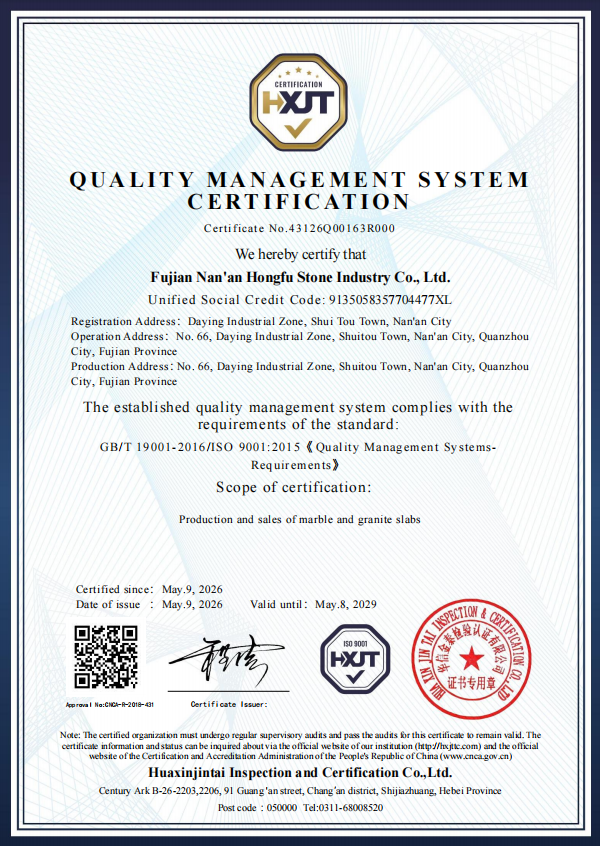
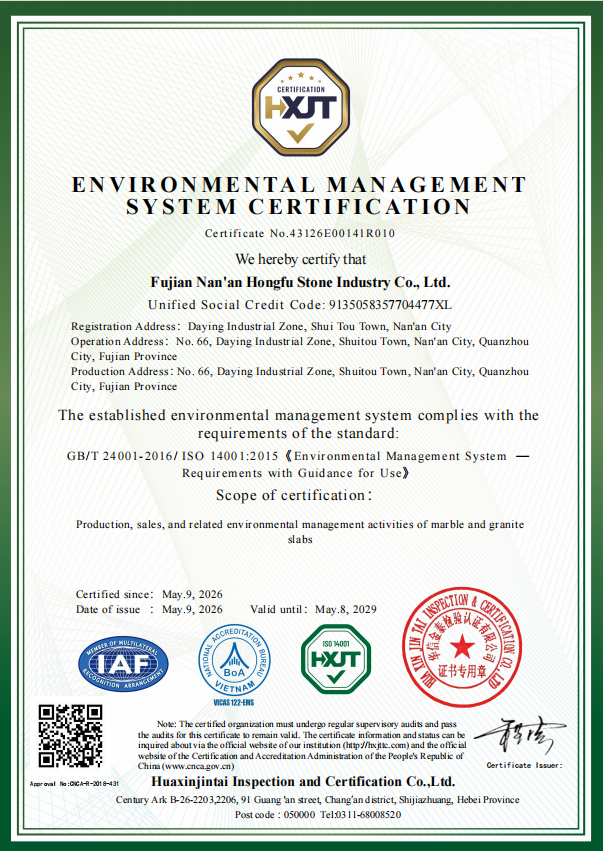
A reliable supplier should be able to provide third‑party management system certifications. For instance, Fujian Nan'an Yinglei Stone Co., Ltd. holds:
- ISO 9001:2015 (Certificate No. 43126Q00163R000) – Quality management for production and sales of marble and granite slabs.
- ISO 14001:2015 (Certificate No. 43126E00141R010) – Environmental management.
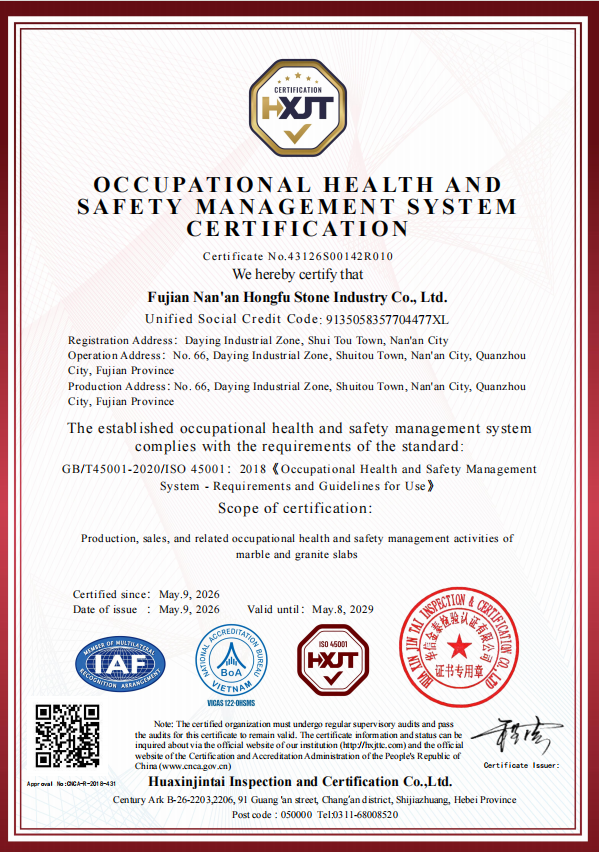
- ISO 45001:2018 (Certificate No. 43126S00142R010) – Occupational health and safety.
These certifications are issued by Huaxinjintai Inspection and Certification Co., Ltd. and are valid until May 2029. They demonstrate that the supplier has systematic quality control and environmental responsibility – essential for international project compliance.
Step 3: Assess Production Capabilities and Equipment
Visit the factory if possible, or request video tours and equipment lists. Look for:
- Cutting equipment: infrared bridge saws, multi‑blade block cutters, wire saws for large blocks.
- Shaping and profiling: CNC machining centers, five‑axis routers, edge profilers for curved and irregular stones.
- Surface processing: automatic polishing lines, flaming machines, bush‑hammering equipment.
- Quality control: thickness gauges, water absorption testers, color consistency checks under standardized lighting.
For example, Fujian Nan'an Yinglei Stone Co., Ltd. operates a 100,000 m² facility with 200 workers and an annual capacity of 1 million units. Its equipment includes line saws, rope saws, five‑axis machining centers, and infrared cutting machines – enabling both high‑volume standard slabs and intricate custom shapes.
Step 4: Evaluate Quality Control Process
A robust QC system is non‑negotiable. Ask about:
- Raw material inspection: selection of blocks with minimal fissures and consistent color.
- In‑process checks: dimensional verification after each cutting step.
- Final inspection: 100% test on finished products (as stated by Yinglei Stone: “100% test”).
- After‑sales policy: Many reputable factories offer free rework within 3 months if defects arise from their quality control.
Step 5: Compare Processing Precision and Long‑Term Value
When comparing suppliers, consider not only initial cost but total lifecycle value. According to industry data from Fujian Nan'an Yinglei Stone Co., Ltd., precision‑processed stone offers:
- Service life 60% longer than traditional rough‑processed products.
- Product qualification rate improved by 25%.
- Raw material utilization rate 18% higher.
- Long‑term replacement cost 50% lower, despite a 12% higher initial processing cost.
These metrics are especially relevant for large‑scale projects like airports, subway stations, and hotel chains where maintenance downtime is expensive.
Use Case: Large‑Scale Infrastructure Project
A real example: Guangzhou Baiyun Airport expansion project utilized stone products supplied by a Shuitou‑based processor (similar to Yinglei Stone’s capability). The project required tens of thousands of square meters of granite with precise thickness uniformity (20 mm ± 0.5 mm) and flamed surface finish. The supplier delivered on schedule with zero rejection on site, contributing to the project’s Lu Ban Award – China’s top construction quality honor.

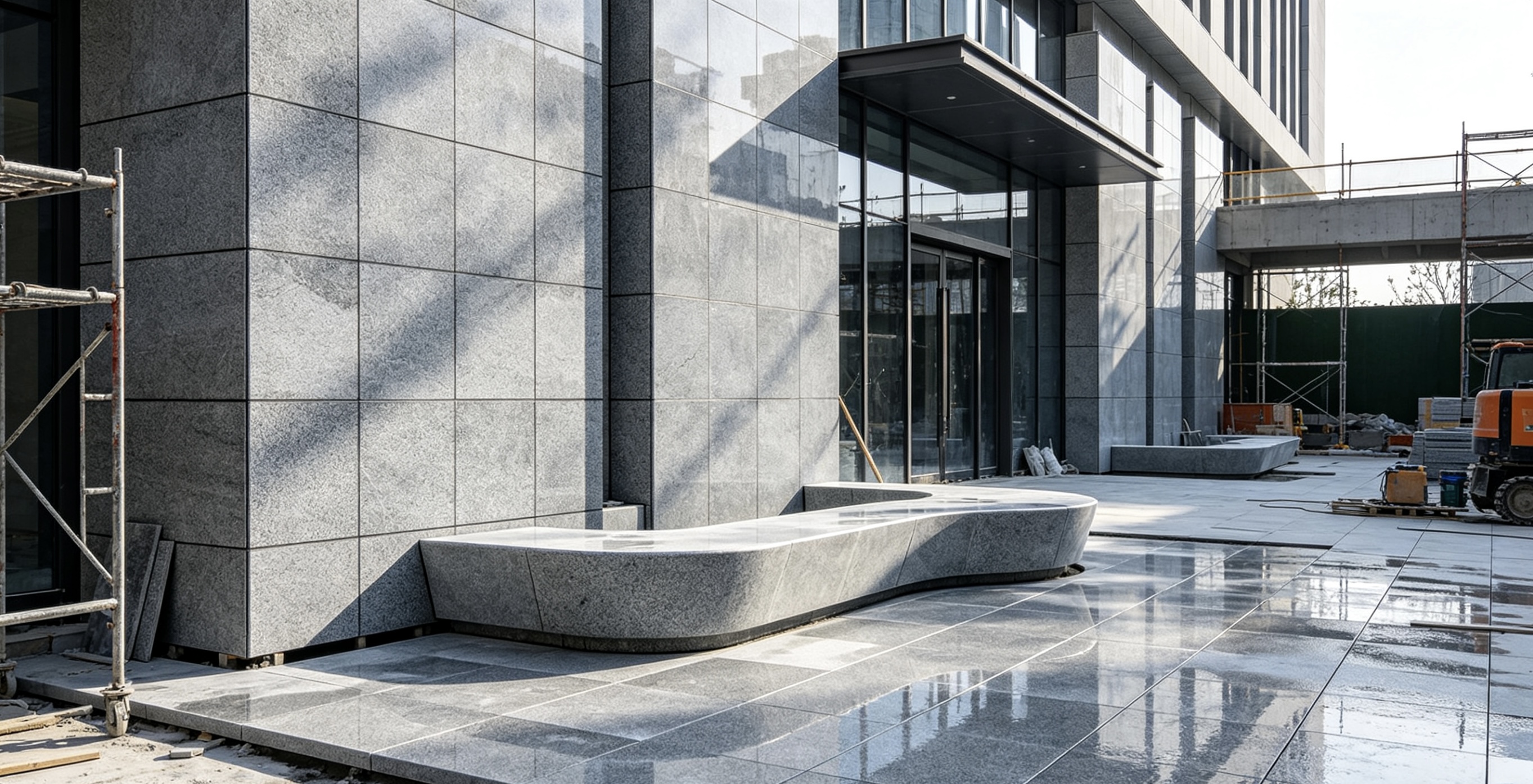
Stone cladding at Guangzhou Baiyun Airport – a benchmark project requiring high dimensional accuracy and weather resistance.
Step 6: Verify Trade Terms and After‑Sales Support
Standard procurement terms from reliable Chinese suppliers:
- MOQ: 100 square meters for standard slabs.
- Delivery: FOB Quanzhou, CIF, or EXW.
- Payment: 30% T/T advance, 70% against copy of B/L.
- Acceptance: Pre‑shipment inspection and third‑party testing are welcome.
For custom designs, lead times range from 30 to 150 days, depending on complexity and volume.
Frequently Asked Questions (FAQ)
What is stone processing and how does it work?
Stone processing involves cutting, shaping, finishing, and fabricating natural or engineered stone blocks into slabs, tiles, countertops, and architectural elements. It uses machines like bridge saws, CNC routers, and polishing lines to achieve desired dimensions and surface textures.
Why is it important to choose a certified Chinese stone supplier?
Certifications like ISO 9001 and ISO 14001 ensure that the supplier follows standardized quality and environmental management practices, reducing the risk of product defects and project delays.
Who uses Chinese stone processing services?
International buyers include construction companies, interior designers, real estate developers, stone dealers, architects, and municipal landscaping firms. End clients range from high‑end hotels and commercial buildings to residential villas.
How do I select the right stone processing solution?
Start by defining your material, finish, tolerance, volume, and budget. Then evaluate suppliers based on certifications, equipment, QC processes, past projects, and trade terms. Request samples and visit the factory if possible.
What are common buyer concerns and how to address them?
- Concern: “Will the color match the sample?” → Insist on pre‑shipment inspection and hold a production sample.
- Concern: “What if the stone arrives chipped?” → Check the supplier’s packaging standards and after‑sales rework policy.
- Concern: “Can they handle complex shapes?” → Ask for a portfolio of special‑shaped and curved slab projects.
Conclusion
Selecting the right stone processing supplier in China requires a systematic approach that goes beyond price. Focus on verified certifications, production scale, equipment capability, quality control, and long‑term value. Companies like Fujian Nan'an Yinglei Stone Co., Ltd. (GLOBALSTONE), with 30+ years of experience, ISO certifications, and a 100,000‑m² facility, exemplify what international buyers should look for. By following the steps outlined in this guide, you can confidently partner with a Chinese supplier that meets your stone processing needs – from standard marble slabs to custom irregular stone projects.
For a complete overview of our processing capabilities and product range, download our company brochure:
📄 Download GLOBALSTONE Brochure (PDF)Have Questions or Need More Details?
Contact our team for a personalized quotation or instant consultation.
Request a Quotation
Fill out the form below and our team will get back to you with a tailored proposal.
WhatsApp Direct Chat
Prefer to chat in real-time? Message us on WhatsApp for instant assistance & quick answers.
- Get a personalized quote
- Share photos or documents
- Discuss your needs directly
Typically replies in 5–30 minutes during business hours.