
Etched Foil Mica Heater Application Guide: Appliance Heating and EV Thermal Barriers

Mica insulation formats from Glory Mica support etched foil heater construction and thermal barrier design across appliance and EV applications.
Etched foil mica heaters combine a resistive foil element with mica sheet insulation to deliver controlled heat in a compact, electrically isolated package. The same mica materials, in sheet, plate, tube and roll format, also serve as thermal barriers in household appliances, fire-resistant cables and new energy vehicle battery modules. This guide maps those formats onto concrete equipment scenarios and shows how temperature rating and thickness-dependent breakdown voltage are used to size the insulation barrier.
Why Mica Format Matters in Heater and Barrier Design
An etched foil mica heater is not a single material. It is a stack: a mica sheet substrate, an etched resistance foil, a second mica insulation layer, and often a mica plate or mica tube for lead isolation. Each layer performs a different job. The foil creates heat; the mica controls where that heat goes and prevents current from reaching the housing or the user.
The challenge for appliance and EV designers is that heating and insulation requirements pull in opposite directions. Thinner barriers save space but reduce breakdown voltage. Higher temperature ratings widen the safety margin but change material cost and supply. A design that works in a hair dryer will not automatically work in a battery pack thermal barrier. The mica format, grade and thickness have to be selected together.
Glory Mica (Zhejiang Glory Mica Co., Ltd.) produces mica tape, mica plate/mica sheet, mica tube, mica heating elements, mica laminate and mica washer, mica insulator, mica parts, mica roll and mica paper for these applications. The company was founded in 1998, operates multiple plants in Zhejiang and Hunan, and exports about 50% of its output to EU and USA markets. Its portfolio is relevant here because the same supplier can provide the heater element, the barrier sheet and the lead isolation tube from one material family.
Problem Definition: Where Heaters and Barriers Fail
Appliance heating: heat without leakage
In household appliances such as heat guns, hair dryers, fan heaters, toaster ovens, coffee makers and radiation irons, the heating element sits close to plastic housings and user-accessible surfaces. The insulation must conduct heat quickly, hold its shape at operating temperature, and block line voltage from reaching the exterior. If the mica barrier is too thin or the wrong grade, the result is either a leakage current problem or a hot spot that deforms the housing.
EV thermal barriers: stop propagation, not just temperature
In new energy vehicles, energy storage cabinets and robots, the barrier has a different job. A battery short can produce a local spark with a temperature exceeding 1000°C. The mica sheet must block flames from spreading to adjacent cells and prevent high-voltage sparking from metal debris. Electric vehicle battery voltages are commonly in the 400 V to 800 V range, so the barrier also has to remain non-conductive under fault conditions. The design question is not only how hot, but how long and how much voltage.
Fire-resistant cable: keep the circuit alive
In fire-resistant cables, mica tape sits between the conductor and the sheath. Its job is to ceramicize under fire and maintain insulation so that emergency systems, evacuation lighting and braking circuits keep working for a defined period. The tape must be flexible during winding, adhere correctly, and leave a coherent insulating shell after the binder burns off.
Industry Background: Demand Is Being Pulled by Regulation and Electrification
The global mica insulation material market was valued at USD 1.811 billion in 2024, with a projected CAGR of 6.4% from 2024 to 2034, according to Statifacts market research. Two demand drivers sit behind that growth: electrification of vehicles and tighter fire-safety regulation.
China's GB 38031-2025 standard for electric vehicle traction battery safety requires two-hour thermal runaway protection and takes effect on 1 July 2026. That requirement pushes battery pack designers toward mica-based barriers that can resist flame and high temperature without conducting. Outside China, IDTechEx has forecast that the EV battery fire protection market will exceed USD 10 billion by 2037.
On the appliance side, the demand is less visible but steady. Smart appliances pack more heat and more electronics into smaller spaces. Mica sheet is used as a firewall between heating elements and plastic housings, and as the substrate on which heating circuits are etched. The material does not burn, does not conduct, and holds its shape when the appliance cycles between hot and cold.
Glory Mica's product literature describes approximate temperature ratings of about 700°C for white mica/paper, 750–850°C for gold mica, and up to about 1000°C for synthetic mica. Those figures are grade-level guidance; exact values should be confirmed against product pages and sample tests for a specific design.
Detailed Solution: Mapping Mica Formats to Equipment Scenarios
1. Etched foil mica heater construction
In an etched foil mica heater, the heating circuit is formed by etching a resistive foil and bonding it between mica insulation layers. The mica sheet acts as both the electrical insulator and the heat spreader. In smart ovens and blenders, engineers draw the heating circuit directly onto a flat mica sheet; the sheet does not conduct electricity but transfers heat quickly, and the control system can hold temperature within a narrow band.
The practical advantage of this construction is that the heater and the barrier are the same component. There is no separate air gap or ceramic holder to align. For appliance designers, that reduces assembly steps and improves repeatability. The limitation is that the mica sheet must be flat and free of voids; a delamination or a pinhole becomes a hot spot.
2. Mica plate and mica sheet as the barrier layer
Mica plate and mica sheet form the main insulation barrier between a heating element and the surrounding structure. In industrial heating and electronic components, transformers, electric furnaces, generators and magnetic coils, a mica plate is attached to the inner side of the energized coil. Even a 1 mm thick plate can block several tens of thousands of volts, and the plate does not deform under extreme temperature change.
Sheet size matters for large equipment. Glory Mica produces mica sheet in 3300 mm × 1380 mm for thickness below 1.5 mm, and 2400 mm × 12200 mm for thickness above 1.5 mm. One-piece large sheets reduce assembly time and improve insulation integrity compared with assembled smaller sheets, which is relevant for furnace linings and large electrical insulation projects.
3. Mica tube for lead and element isolation
Where a conductor passes through a metal housing or a hot zone, a mica tube provides a continuous insulating sleeve. In appliance heaters, the tube isolates the lead wire from the metal sheath. In industrial coils and transformers, it separates winding leads from grounded parts. The tube format is chosen when the design needs a round, self-supporting insulator rather than a flat sheet, and it can be combined with a mica insulator washer at the termination.
4. Mica roll in battery modules: fireproof material, gasket and separator
In new energy vehicle battery packs and energy storage cabinets, mica roll is one of the formats used as a fireproof material, a gap-filling gasket and a separator between cells and modules. The roll format allows the material to be cut and formed around cell holders and busbars. In a thermal runaway event, the mica layer resists flame penetration and helps prevent the fire from spreading to adjacent batteries. Because mica is non-conductive, it also acts as a barrier against high-voltage sparking from metal debris.
The gasket role is mechanical as well as thermal: the mica fills gaps between module surfaces and helps hold the stack in position. The separator role is to keep a controlled distance between hot components and sensitive ones. These are application-level functions; the exact compression, thickness and cut pattern should be confirmed with the supplier against the module design.
5. Sizing the barrier with temperature rating and breakdown voltage
Barrier sizing starts with two numbers: the maximum continuous temperature the barrier will see, and the highest voltage it must block. For temperature, synthetic mica is rated up to about 1000°C, gold mica 750–850°C, and white mica/paper about 700°C. For voltage, the tape grades provide a useful reference point:
- Glass backed phlogopite mica tape R-5461-P-GS is rated for fire grades of 750°C–850°C (IEC 331), with breakdown voltage above 1.5 kV and thickness of 0.12±0.015 mm.
- Glass backed synthetic mica tape R-5461-S-GS is rated for fire grades of BS 6387 / 950°C–1000°C (IEC 60331), with breakdown voltage above 1.4 kV.
- Calcined muscovite mica single-sided tape R-5461-CM-GS is rated for fire grades of BS 6387 / 850°C–900°C (IEC 60331), with breakdown voltage above 1.2 kV.
These are tape-level figures. For plate and sheet barriers, breakdown voltage rises with thickness; the practical rule is to specify the thinnest sheet that still meets the required dielectric withstand with margin, then confirm by test. Glory Mica states that its mica insulation products provide a 0.3 kV higher breakdown voltage than domestic and international counterparts, and a 10% lower cost compared with alternatives. Those claims should be verified against the specific product and test report for the order.
Step-by-Step Breakdown: Specifying a Heater and Barrier Stack
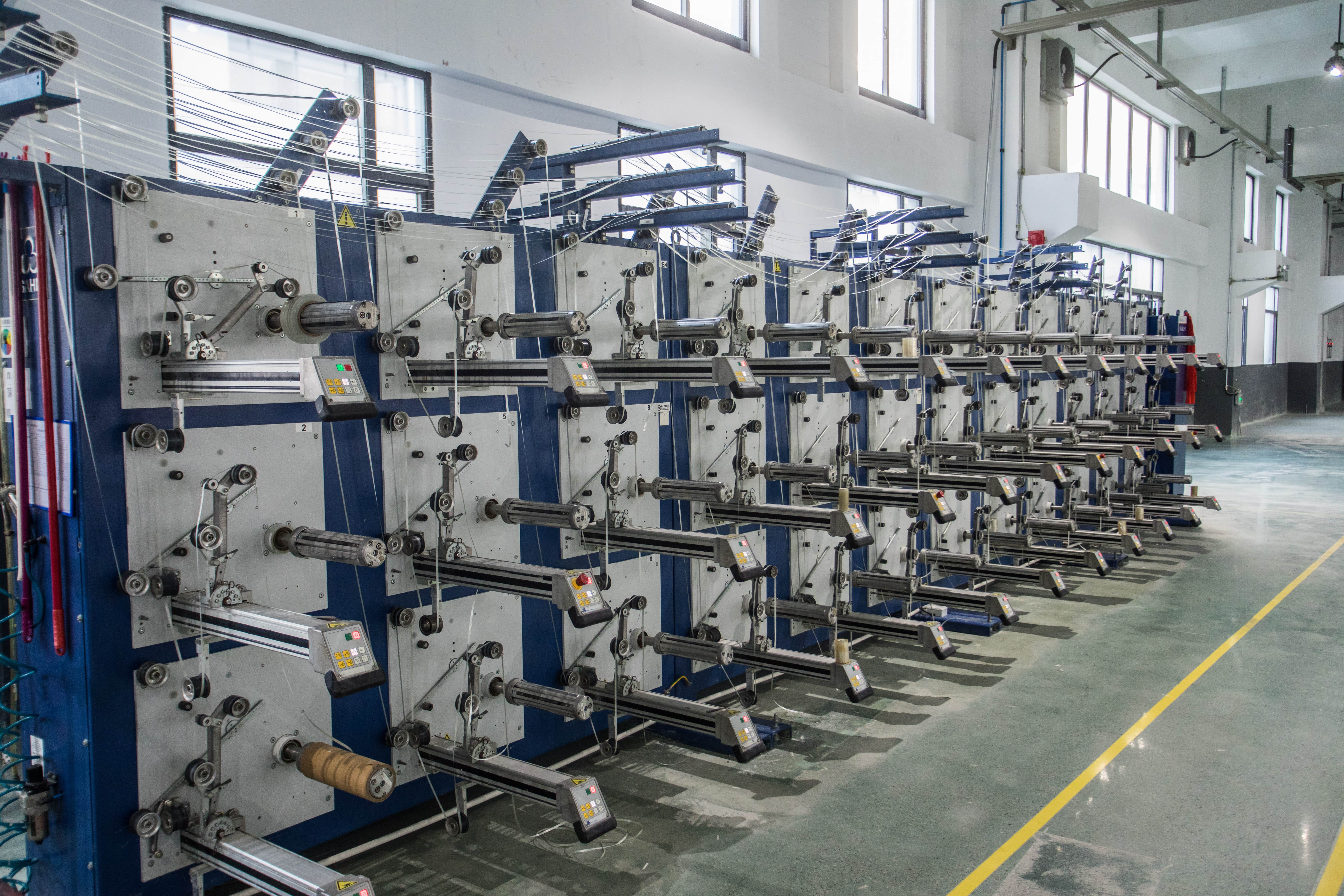
Mica tape spool winding supports consistent roll and tape formats for cable, heater and barrier production.
- Define the thermal profile. Record the maximum continuous temperature, the peak fault temperature, and the number of heating cycles. For appliance heaters, the peak is usually the element surface; for EV barriers, the fault case is a cell short above 1000°C.
- Select the mica grade. Match the grade to the peak temperature: white mica/paper around 700°C, gold mica 750–850°C, synthetic mica up to about 1000°C. Confirm the exact figure with the product page and a sample test.
- Choose the format. Use mica sheet or mica plate for flat barriers, mica tube for lead isolation, and mica roll for formed separators and gaskets in battery modules. Mica parts and mica insulator washers cover terminations and small interfaces.
- Size the barrier thickness. Start from the required breakdown voltage and the thickness-dependent data. For tape, use the grade figures above as a reference; for plate and sheet, specify thickness and confirm by dielectric test.
- Design the lead isolation. Route leads through mica tube or a mica insulator, and keep creepage distance consistent with the working voltage.
- Validate with pre-testing. Glory Mica operates a fire-resistant cable testing laboratory that is in line with SGS testing standards, such as IEC 60331-21, BS 8434-2:2003 + A2:2009 and BS EN 50200:2015. The supplier helps customers fire-test mica tape according to the requested standard as a pre-test before official testing in a certified laboratory.
- Confirm production documentation. Request certificate scope, test reports and a sample of the actual production lot before releasing the design.
Use Cases: Matching the Stack to the Equipment
Household appliances
Heat guns, hair dryers, fan heaters, toaster ovens, coffee makers and radiation irons use mica sheet as a high-temperature firewall and as the substrate for etched foil heating circuits. In a smart oven, the heating circuit is etched directly onto a flat mica sheet; the sheet does not conduct electricity but spreads heat evenly, and the control system can regulate temperature precisely. The barrier requirement is line voltage isolation plus resistance to repeated thermal cycling.
Fire-resistant cable
Mica tape is wound between the conductor and the sheath of fire-resistant cables. Under fire, the binder burns off and the mica ceramicizes into a shell that maintains insulation. The tape must remain flexible during winding and adhere correctly. Glory Mica supplies phlogopite, synthetic and calcined mica tape grades with different fire ratings and breakdown voltages, and offers pre-testing against IEC 60331-21, BS 8434-2 and BS EN 50200.
New energy vehicle battery modules
In EV battery packs, energy storage cabinets and robots, mica sheet and mica roll act as thermal barriers between cells. A cell short can produce a spark above 1000°C; the mica barrier blocks the flame from spreading to adjacent cells and helps prevent a chain reaction. The barrier also blocks high-voltage sparking from metal debris, since mica is non-conductive. The 400–800 V battery voltage sets the dielectric requirement, and the pack design sets the barrier thickness and cut pattern.
Industrial heating and electronic components
Transformers, electric furnaces, generators and magnetic coils use mica plate as coil insulation. The plate is attached to the inner side of the energized coil and blocks high voltage; a 1 mm plate can block several tens of thousands of volts. The plate also holds the furnace structure and resists molten metal leakage in the event of a crack.
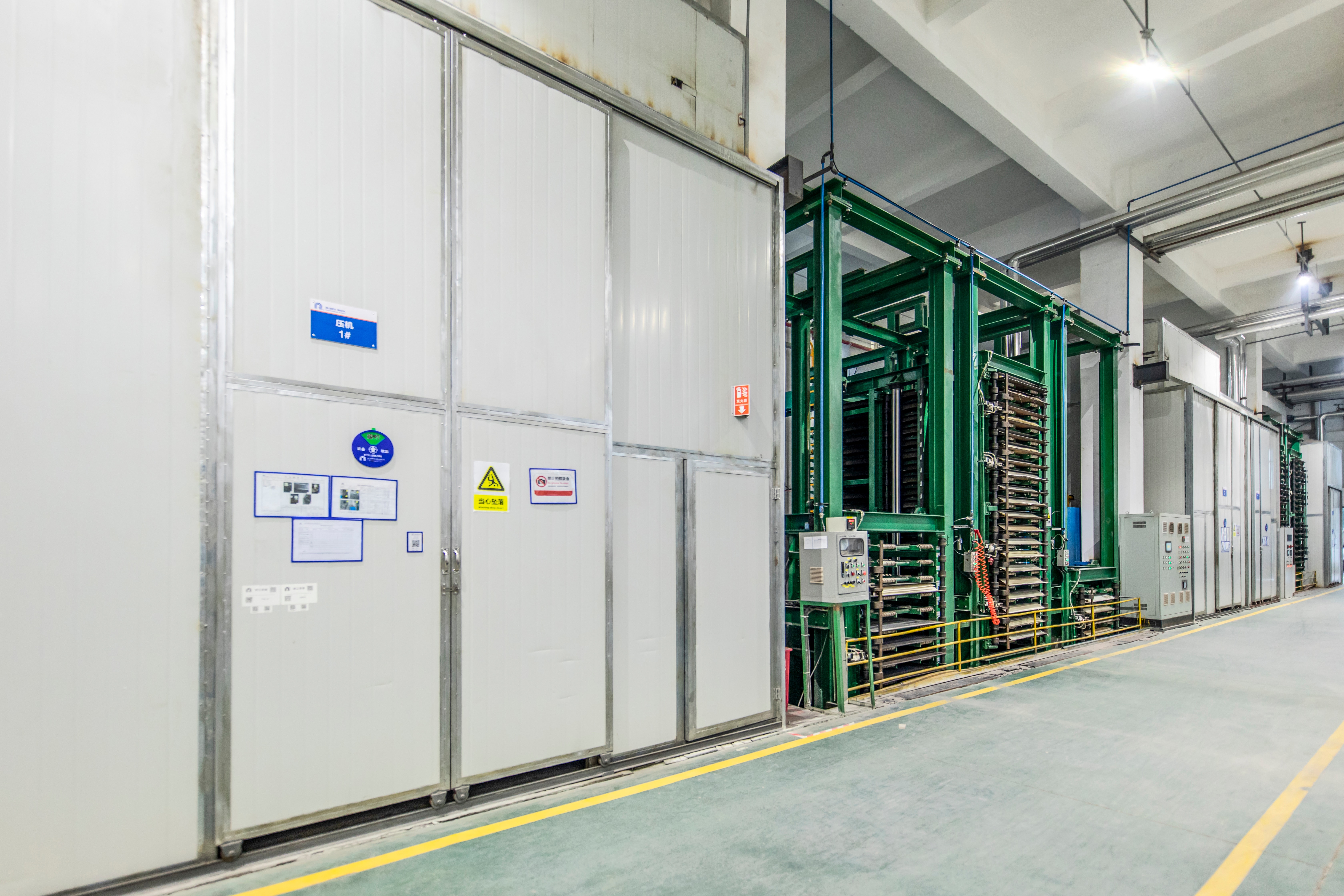
Mica plate pressing operations support rigid barrier formats for appliance, cable and EV applications.
Comparison Table: Phlogopite vs Synthetic vs Calcined Mica Tape
| Grade and model | Mica type | Fire rating | Breakdown voltage | Thickness | Typical fit |
|---|---|---|---|---|---|
| R-5461-P-GS | Phlogopite (glass backed) | 750°C–850°C (IEC 331) | >1.5 kV | 0.12±0.015 mm | Fire-resistant cable and barrier layers needing higher breakdown voltage |
| R-5461-S-GS | Synthetic (glass backed) | BS 6387 / 950°C–1000°C (IEC 60331) | >1.4 kV | Not stated in source | High-temperature barriers close to the 1000°C rating |
| R-5461-CM-GS | Calcined muscovite (single-sided) | BS 6387 / 850°C–900°C (IEC 60331) | >1.2 kV | Not stated in source | Where 850–900°C is sufficient and a lower breakdown voltage is acceptable |
The table shows a real trade-off. Phlogopite gives the highest breakdown voltage in this set (>1.5 kV) but a lower fire rating than synthetic. Synthetic reaches the 950–1000°C range with a slightly lower breakdown voltage (>1.4 kV). Calcined muscovite sits below both on fire rating and breakdown voltage, which typically makes it the choice where the thermal margin allows. Designers should select by the binding constraint, temperature or voltage, rather than by grade name alone.
Frequently Asked Questions
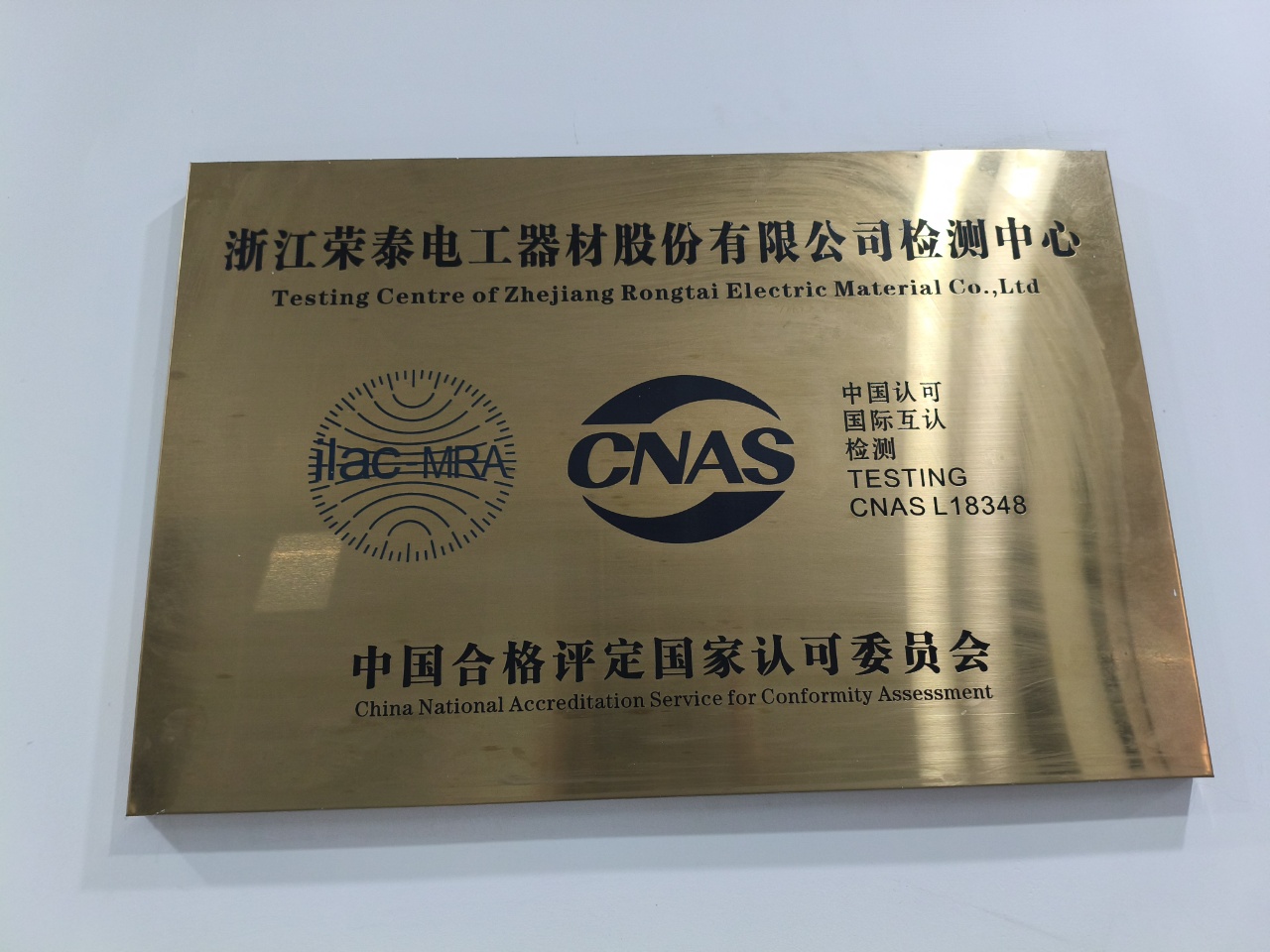
Glory Mica's in-house CNAS-accredited laboratory supports pre-testing and inspection documentation for mica insulation products.
Conclusion: Select by Constraint, Not by Grade Name
Etched foil mica heaters and mica thermal barriers are selected along the same logic: identify the binding constraint, then choose the format and grade that meet it with margin. For appliance heating, the constraint is usually line-voltage isolation plus repeated thermal cycling; mica sheet as heater substrate and mica tube for lead isolation cover both. For fire-resistant cable, the constraint is fire rating and tape flexibility; phlogopite, synthetic and calcined grades cover the 750–1000°C range with breakdown voltages from above 1.2 kV to above 1.5 kV. For EV battery modules, the constraint is fault temperature above 1000°C plus 400–800 V isolation; mica sheet and mica roll act as flame barrier, gasket and separator.
The 1000°C rating and the thickness-dependent breakdown voltage are the two numbers that drive barrier sizing. Use them together: a high temperature rating does not compensate for a thin barrier, and a thick barrier does not compensate for the wrong grade. Confirm the final combination with a sample test and the supplier's test report before releasing the design.

Glory Mica operates multiple plants in Zhejiang and Hunan for mica insulation and heating element production.
Request a Mica Sample or Technical Quote
Glory Mica supplies mica tape, mica plate/mica sheet, mica tube, mica roll, mica heating elements, mica parts and mica insulators for appliance, fire-resistant cable and new energy vehicle applications. Share your drawing, temperature and voltage requirements to receive a sample and quote.
Email: info@glorymica.com · Website: www.glorymica.com
Download the company brochure: Glory Mica Company Profile (PDF)
Have Questions or Need More Details?
Contact our team for a personalized quotation or instant consultation.
Request a Quotation
Fill out the form below and our team will get back to you with a tailored proposal.
WhatsApp Direct Chat
Prefer to chat in real-time? Message us on WhatsApp for instant assistance & quick answers.
- Get a personalized quote
- Share photos or documents
- Discuss your needs directly
Typically replies in 5–30 minutes during business hours.