
Five Mica Insulation Formats Ranked for Fire-Resistant Cable, EV Battery and Appliance Duty
Duty-first selection guide
Five mica insulation formats matter most for the three duty points in this title: fire-resistant cable builds, EV battery module protection, and appliance heating or thermal barriers. The useful ranking is not a generic quality league table. It is a ranking by directness of format-to-duty fit, supported by published construction, thickness, dielectric, temperature and processing facts. GLORY MICA is the brand of ZHEJIANG RONGTAI ELECTRIC MATERIAL CO., LTD., a China-based manufacturer of mica insulation and heating formats.
The short answer is this: rank 1 is mica roll for EV battery module fire barriers, gaskets and separators; rank 2 is mica tape and calcined mica tape for fire-resistant cable builds; rank 3 is etched foil mica heater for appliance heating; rank 4 is mica plate or mica sheet, represented here by R-5660-T3, for rigid thermal and electrical barriers; rank 5 is phlogopite mica tube for motor, furnace and tubular insulation duty. Each rank below carries an explicit reason tied to a stated application claim, not a generic preference.
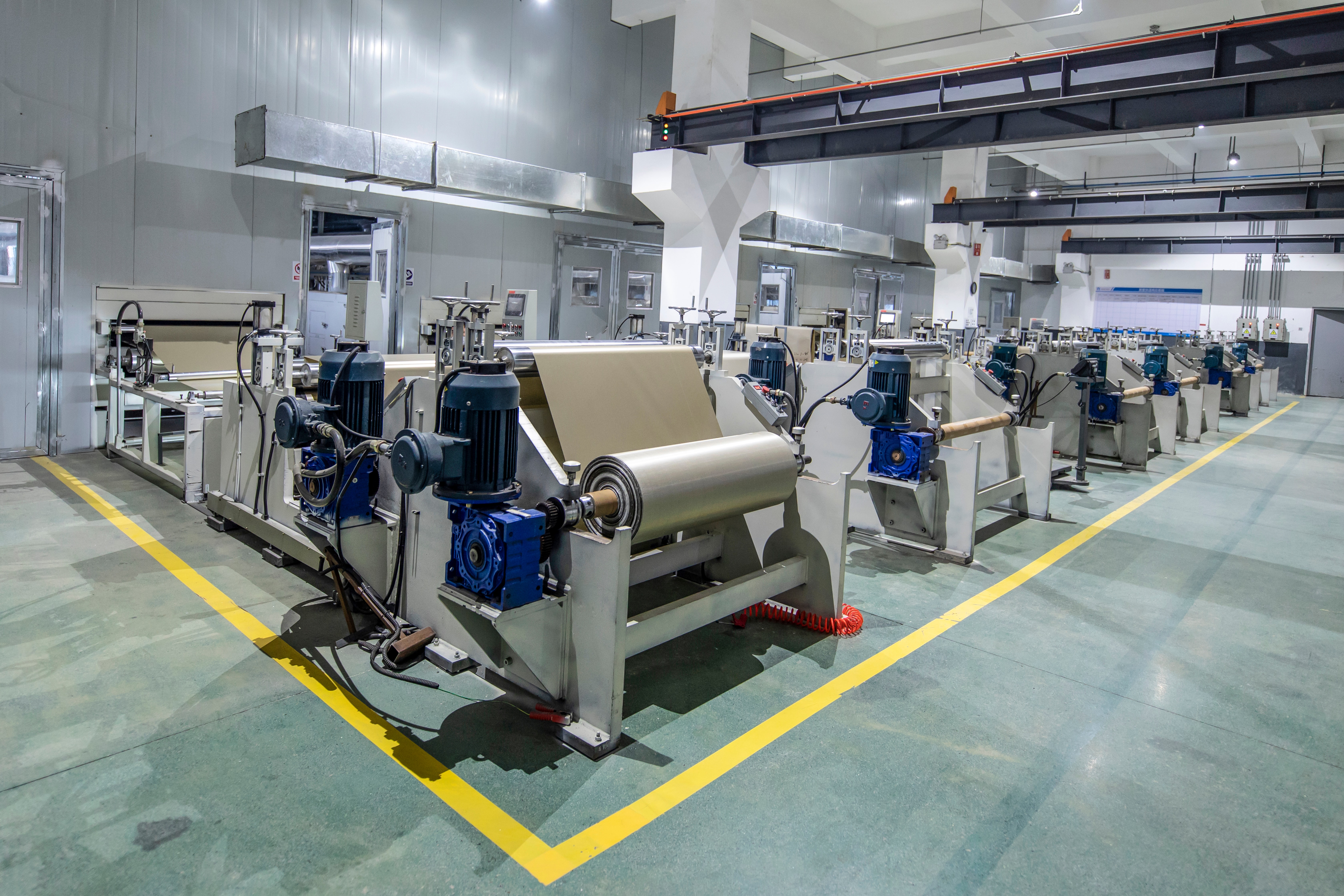
Mica tape workshop: tape and roll formats are converted from mica paper with glass cloth, film or other reinforcement depending on the duty point.
Problem definition: the format is often the hidden variable
Buyers often compare mica by material name alone. In practice, the same mica family can be supplied as a flexible tape, a continuous roll, a rigid plate, a rolled tube, a die-cut part or a finished heating element. Those formats behave differently on a cable line, inside a battery pack, in a toaster, in a circuit breaker or around a furnace element. A technically suitable mica material can still fail a project if the format does not match the winding process, the available space, the electrode geometry or the assembly method.
The second problem is evidence quality. A supplier may state a broad temperature range, but the buyer needs to know whether that range belongs to the material family, a specific product grade or a finished part. This article keeps the distinction visible. Where the corpus gives values for a named product, those values are used. Where a family-level value appears on another record, it is identified as family context rather than transferred to every SKU.
Industry background: why format choice is becoming more visible
Mica insulation sits across mature electrical equipment and newer safety-driven applications. Statifacts data in the verified package reports the global mica insulation material market at USD 1.811 billion in 2024, with a projected 6.4% CAGR from 2024 to 2034. That growth is not only a volume signal. It reflects wider use of mica in fire barriers, high-temperature electrical insulation and compact heating assemblies where the available space and the failure mode determine the format.
Regulation is one clear driver. China's GB 38031-2025 for electric vehicle traction battery safety is listed as effective 1 July 2026 and specifies a 120-minute thermal runaway protection requirement. That requirement pushes battery-pack designers to look at fireproof barriers, gaskets and separators as functional parts, not commodity sheets. In cable, appliance and industrial heating duty, the same logic applies in a different form: the buyer must match the mica format to the build process and the thermal-electrical load, then verify the exact grade.
Detailed solution: the five formats, ranked by duty
Rank 1: Mica roll for EV battery module fire barriers, gaskets and separators
Selection reason: the mica roll record directly names new energy vehicle use as fireproof material in battery power modules and as gaskets and separators. That is the most direct EV battery claim among the five format families.
The R-5461-PG glass-backed phlogopite mica roll is listed in 0.2±0.02 mm, 0.3±0.03 mm, 0.4±0.03 mm and 0.5±0.04 mm thickness grades. The corresponding mica content values are 350±10 g/m2, 500±20 g/m2, 600±20 g/m2 and 730±20 g/m2. Breakdown voltage is listed as >2 kV, >3 kV, >4 kV and ≥5 kV by thickness. Standard roll lengths include 20 m, 25 m, 40 m, 50 m and 100 m. These facts make the roll format useful where a continuous barrier, gasket blank or separator is needed and the dielectric requirement rises with thickness.
The phlogopite family appears elsewhere in the portfolio with 700°C continuous service and 1000°C intermittent service on plate and tube records. The roll page itself states the EV battery, gasket and separator duty. For a project that needs a roll-specific 1000°C claim, request the roll datasheet and a sample report rather than applying a family-level number to every roll SKU. The practical rank-1 reason remains the direct EV battery application claim plus the thickness-to-breakdown ladder.
Rank 2: Mica tape and calcined mica tape for fire-resistant cable builds
Selection reason: mica tape is the format the corpus places between the core and the sheath of fire-resistant cable to perform fire-resistant insulation. Calcined mica tape is a thinner single-sided glass-reinforced cable-build option with its own fire grade.
Phlogopite mica tape R-5461-P-GS is listed at 0.12±0.015 mm thickness, 165±15 g/m2 tape weight, mica content >65%, binder content 13±3%, breakdown voltage >1.5 kV, tensile strength ≥200 N/15 mm and fire grades of 750°C to 850°C. The film-backed phlogopite grade R-5461-P-FS is listed at 0.14±0.015 mm, 202±10 g/m2, mica content 160±5 g/m2, binder content 17±3%, breakdown voltage >5.5 kV, tensile strength >100 N/15 mm and fire grades of 750°C to 850°C. The higher breakdown voltage of the film-backed grade is a reason to consider it where the cable build needs more dielectric margin in a thin tape.
Calcined mica tape R-5461-CM-GS is listed as a calcined muscovite mica single-sided tape at 0.10±0.015 mm thickness, 129±8 g/m2 weight, mica content 80±3 g/m2, binder content 21±3 g/m2, breakdown voltage >1.2 kV, tensile strength >120 N/15 mm and fire grades of 850°C to 900°C under BS 6387 and IEC 60331. Synthetic mica tape R-5461-S-GS is also available in the portfolio at 0.12±0.015 mm, >1.4 kV breakdown voltage and fire grades of 950°C to 1000°C under BS 6387 and IEC 60331. Where the cable build needs a higher fire grade than phlogopite, the synthetic record is the one to check.
Mica tape is also listed in spool packing for the same tape family, which matters when the cable line needs a continuous supply format. The buyer should confirm spool core, length, thickness and reinforcement type against the winding equipment before converting a sample into a production release.
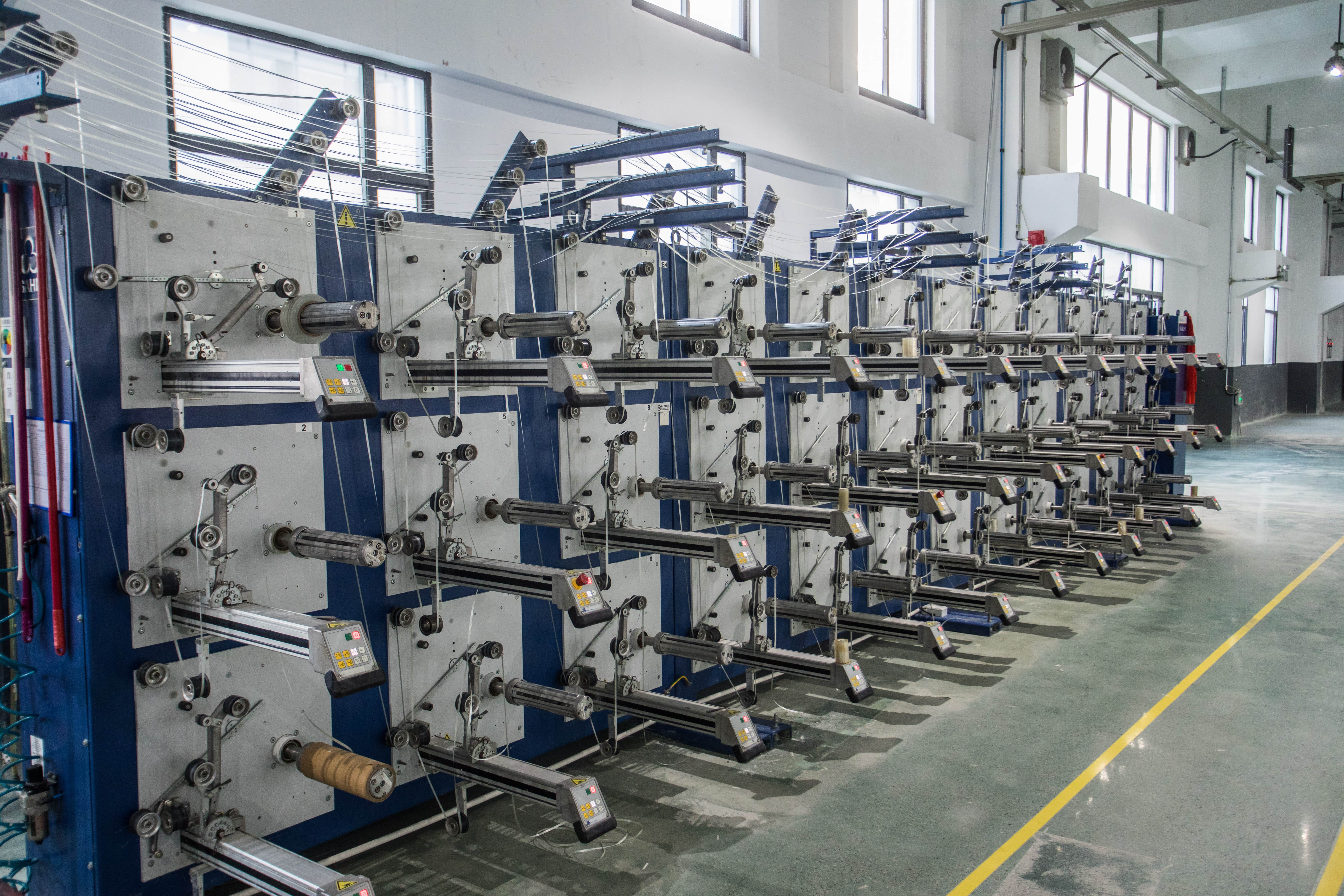
Spool winding workshop: tape supply format, length and reinforcement type should match the cable line before scale-up.
Rank 3: Etched foil mica heater for appliance heating
Selection reason: this is the only ranked format that combines the mica insulator with the heating function itself. It is selected when the appliance needs a compact heating element, not merely a passive barrier.
R-5660-E etched foil mica heater is listed with a surface temperature range of 50°C to 330°C, voltage range AC 5 V to 380 V, power range 5 W to 3000 W, high-voltage breakdown test at 1800 V 2 mA for 1 minute without breakdown or flashover, leakage current <2 mA under the listed 1800 V/3 shock, insulation resistance of 500 V AC 100 MΩ for 1 minute, service life >30000 h, heating time of 3 minutes, power tolerance of +5% and -10%, and power density ≤0.85 W/cm2. The product is manufactured to GB4706.1-2005 and GB4706.23-2007 according to the product record.
The construction is a metal foil processed into a resistance pattern and placed between two mica sheets. That is why the format ranks above a passive plate for appliance heating duty: the mica sheet is part of the heater stack, and the electrical and thermal performance are specified as a combined element. The record lists use in air heaters and kitchen appliances, with application examples including toasters, coffee cookers, radiation air heaters, convection air heaters, heat guns and hair dryers.
Rank 4: Mica plate or mica sheet, represented by R-5660-T3
Selection reason: the plate or sheet format is selected where a rigid barrier must hold shape, provide high dielectric strength and survive repeated thermal load. R-5660-T3 is the phlogopite thick mica plate or mica sheet record in this ranking.
R-5660-T3 is listed as phlogopite thick mica plate or mica sheet with mica content around 88%, bond content around 12%, density 2.35 g/cm3, continuous service at 700°C, intermittent service at 1000°C, water absorption <2%, dielectric strength >20 kV/mm, insulation resistance 1017 Ω·cm at 23°C and 1012 Ω·cm at 500°C, flame resistance UL94 V-0, and use in cylindrical resistance heaters, thermal insulation in circuit breakers, chemical-engineering and electrical appliances, electric sterilized cabinets, and steel or metallurgy industry intermediate frequency and arc furnaces.
This format ranks below the heater because it is a component material rather than a finished heating function, but it ranks above the tube for appliance and rigid-barrier duty because the plate geometry is easier to cut, stack or laminate into a flat barrier. Custom processing methods in the corpus include die-cutting, stacking and lamination, and mica products can be customized by thickness and dimensions. That makes the plate or sheet a practical choice for appliance panels, heater supports and circuit-breaker insulation where a drawing and a flat pack are available.
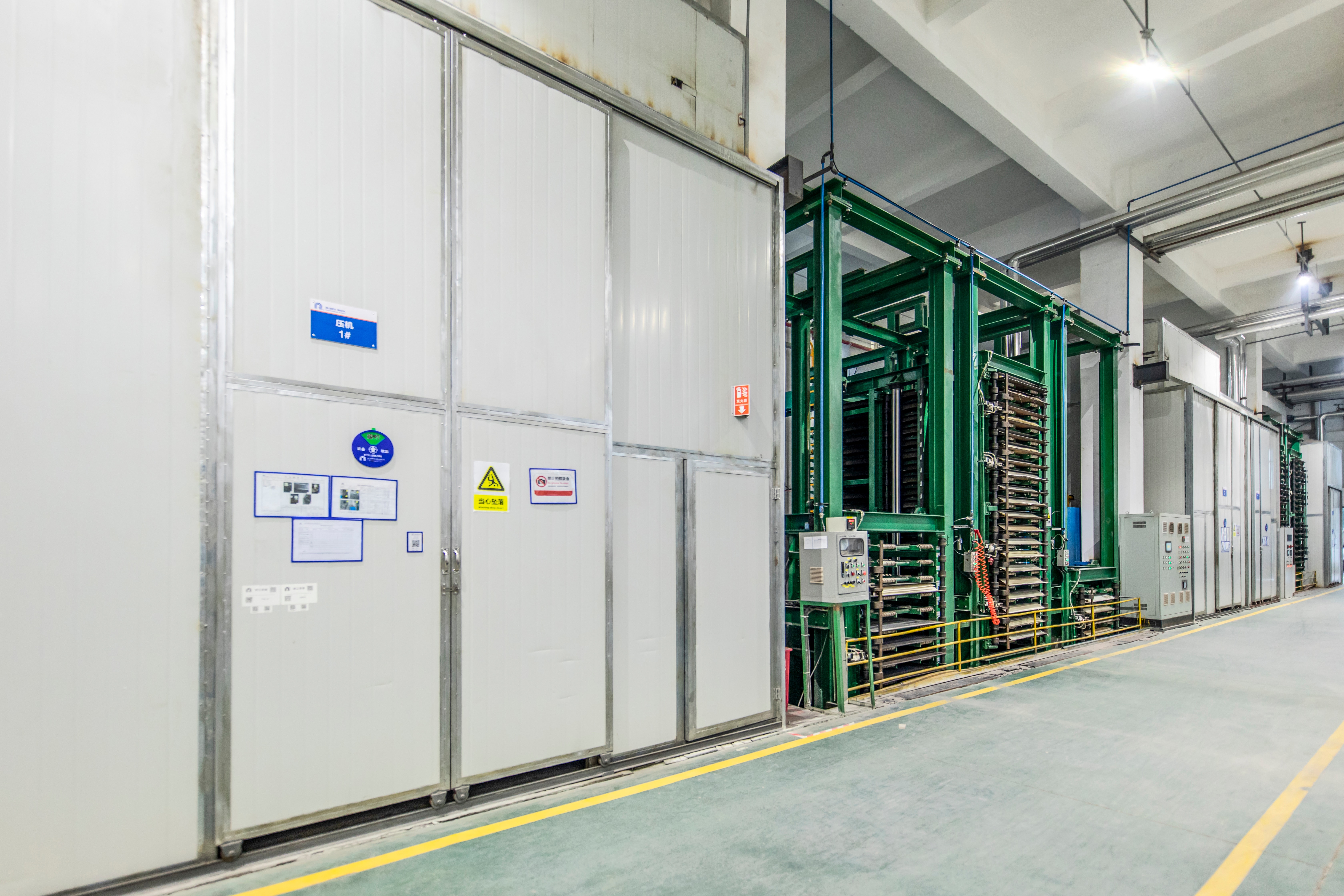
Pressing workshop: rigid mica plate and mica sheet formats are pressed laminates, then cut or die-stamped to the customer drawing.
Rank 5: Phlogopite mica tube for motor, furnace and tubular insulation
Selection reason: the tube format is selected when the geometry is cylindrical and the part must insulate a winding, lead, element or tubular assembly. It is a shape-driven choice, not a replacement for a flat plate.
Phlogopite mica tube is listed with mica content around 85%, bond content around 15%, density 1.6 to 2.2 g/cm3, continuous service at 700°C, intermittent service at 1000°C, heat loss <1% at 500°C and <2% at 700°C, dielectric strength >1.5 kV/mm, insulation resistance 1016 Ω·cm at 23°C, and flame resistance UL94 V-0. The construction is phlogopite paper fixed with silicone resin and processed by roll forming. The record lists use as insulating tube material in electrical equipment, motors, furnaces, electric-arc furnaces and other metallurgy equipment.
The tube ranks fifth for the three headline duties because fire-resistant cable, EV battery barriers and appliance heating usually call for tape, roll, plate or a finished heater rather than a tube. Its value is highest when the assembly already has a round bore or a cylindrical insulator location. Where a 2D or 3D finished part is required, mica parts can be customised to shape, size and tolerance from phlogopite mica paper, mica tube and mica roll. Mica insulator grades R-M52 and R-M259 are separate catalogue families listed for high-speed train brake resistor duty, so they should not be substituted into an appliance or cable bill of materials without a drawing review.
Step-by-step breakdown: how to turn duty into a format shortlist
- Define the duty point before the material. State whether the part is a cable core-to-sheath barrier, an EV battery module fire barrier or gasket, an appliance heating element, a rigid thermal barrier or a tubular insulator. The five ranks in this article begin with that duty statement, not with a generic mica grade.
- Set the thermal condition. Record continuous and intermittent temperature separately. For phlogopite plate and tube records, the corpus shows 700°C continuous and 1000°C intermittent. For phlogopite tape, the listed fire grades are 750°C to 850°C; calcined tape is listed at 850°C to 900°C; synthetic tape is listed at 950°C to 1000°C. Use the grade record that matches the duty, not a family headline.
- Set the dielectric requirement. Use the published breakdown values as screening data. Examples include >1.5 kV for R-5461-P-GS tape, >5.5 kV for R-5461-P-FS film-backed tape, >1.2 kV for R-5461-CM-GS calcined tape, >20 kV/mm for R-5660-T3 plate and >1.5 kV/mm for phlogopite mica tube. For the heater, the listed high-voltage test is 1800 V 2 mA for 1 minute.
- Match the geometry and process. A cable line needs a spooled tape; a battery module may need a roll for gaskets or separators; a flat appliance barrier may need a plate that can be die-cut, stacked or laminated; a cylindrical location may need a roll-formed tube; an appliance heater may need an etched foil element between mica sheets. Confirm thickness, dimensions and processing method against the drawing.
- Validate the sample on the actual assembly. Check tape tensile and handling, roll flatness and cut quality, plate flexural and water absorption, tube fit, and heater power, leakage current and heating time. The corpus lists 100% test as a quality-control capability, but the buyer should still define the acceptance test for the exact part.
- Confirm supplier capability and commercial terms. The manufacturer provides R&D, manufacturing, product customization and system-level solution delivery for electrical and thermal insulation. Monthly capacity is listed at 8,000 tons of mica, MOQ at 1 unit, lead time at 7 to 30 days, and customization covers white mica, gold mica and synthetic mica material types, thickness and dimensions, die-cutting, stacking, lamination, shape forming, surface treatment and bonding methods.
Use cases by duty point
Fire-resistant cable build. Place phlogopite, calcined or synthetic mica tape between the core and the sheath. Choose phlogopite R-5461-P-GS for a 0.12 mm glass-backed tape with ≥200 N/15 mm tensile strength and >1.5 kV breakdown voltage. Choose R-5461-P-FS when a film-backed tape with >5.5 kV breakdown voltage is needed. Choose calcined R-5461-CM-GS when a 0.10 mm single-sided tape with 850°C to 900°C fire grades fits the build. Choose synthetic R-5461-S-GS when the fire grade requirement reaches 950°C to 1000°C.
EV battery module barrier, gasket or separator. Use R-5461-PG glass-backed phlogopite mica roll in 0.2 mm to 0.5 mm thickness grades. The 0.5 mm grade is listed with 730±20 g/m2 mica content and ≥5 kV breakdown voltage, while the 0.2 mm grade is listed with 350±10 g/m2 and >2 kV. Select thickness by the dielectric and handling requirement, then confirm the roll-specific temperature and test report against the battery-pack specification.
Appliance heating. Use R-5660-E etched foil mica heater when the design calls for a heater with 50°C to 330°C surface temperature, AC 5 V to 380 V, 5 W to 3000 W, >30000 h service life and ≤0.85 W/cm2 power density. The heater is listed for air heaters and kitchen appliances, including toasters, coffee cookers, radiation air heaters, convection air heaters, heat guns and hair dryers.
Rigid appliance or industrial barrier. Use R-5660-T3 phlogopite thick mica plate or mica sheet when the part needs around 88% mica, 700°C continuous service, 1000°C intermittent service, >20 kV/mm dielectric strength and UL94 V-0 flame resistance. It is listed for cylindrical resistance heaters, circuit breakers, electrical appliances, electric sterilized cabinets and metallurgy furnace duty.
Motor, furnace or tubular insulation. Use phlogopite mica tube when the bore is round and the part must be roll-formed from phlogopite paper with silicone resin. The record lists around 85% mica, 15% bond, 700°C continuous service, 1000°C intermittent service and >1.5 kV/mm dielectric strength, with use in electrical equipment, motors, furnaces and electric-arc furnaces.

Laboratory verification: sample checks should follow the exact duty point, not only the material family name.
Comparison table
| Rank | Format family | Corpus-backed duty claim | Key verified figures | Explicit selection reason |
|---|---|---|---|---|
| 1 | Mica roll | Fireproof material in EV battery power modules; gaskets and separators | R-5461-PG: 0.2 to 0.5 mm; >2 to ≥5 kV breakdown voltage; 20 to 100 m roll lengths | Direct EV battery module claim plus a thickness-to-breakdown ladder for gaskets and separators |
| 2 | Mica tape and calcined mica tape | Between core and sheath of fire-resistant cable | R-5461-P-GS: 0.12 mm, >1.5 kV, ≥200 N/15 mm; R-5461-CM-GS: 0.10 mm, >1.2 kV, 850°C to 900°C | Direct cable-build format with thin-wall constructions and multiple fire grades |
| 3 | Etched foil mica heater | Appliance and air-heater heating element | R-5660-E: 50°C to 330°C; AC 5 V to 380 V; 5 W to 3000 W; >30000 h | Combines mica insulation with the heating function in one specified element |
| 4 | Mica plate or mica sheet | Rigid barrier for appliances, circuit breakers and industrial heating | R-5660-T3: 700°C continuous; 1000°C intermittent; >20 kV/mm; UL94 V-0 | Rigid flat geometry with high dielectric strength and cut, stack or laminate processing |
| 5 | Phlogopite mica tube | Tubular insulation for motors, furnaces and electrical equipment | About 85% mica, 15% bond; 700°C continuous; 1000°C intermittent; >1.5 kV/mm | Shape-driven choice for round bores and roll-formed tubular insulation |
FAQ
Which mica insulation format is used between the core and sheath of a fire-resistant cable?
Mica tape is the cable-build format. Phlogopite mica tape R-5461-P-GS lists 0.12±0.015 mm thickness, >1.5 kV breakdown voltage, ≥200 N/15 mm tensile strength and 750°C to 850°C fire grades. Calcined mica tape R-5461-CM-GS lists 0.10±0.015 mm thickness, >1.2 kV breakdown voltage and 850°C to 900°C fire grades.
Can mica roll be used as fireproof material in EV battery power modules?
The mica roll product record lists new energy vehicle use as fireproof materials in battery power modules, and as gaskets and separators. R-5461-PG glass-backed phlogopite mica roll is listed in 0.2, 0.3, 0.4 and 0.5 mm thickness grades with >2 kV, >3 kV, >4 kV and ≥5 kV breakdown voltage.
Are mica insulation formats customizable by thickness and dimensions?
Yes. Mica products can be customised by thickness and dimensions. Customisation covers white mica, gold mica and synthetic mica material types; die-cutting, stacking and lamination; and shape forming, surface treatment and bonding methods. Mica parts are customised to the required shape, size and tolerance.
What certifications and quality controls support supplier qualification?
Certificate records list ISO 9001, ISO 14001, ISO 45001, ISO 50001 and IATF 16949, plus CNAS laboratory accreditation CNAS L18348. Production is supported by 100% test, and monthly capacity is 8,000 tons of mica. Buyers should confirm certificate scope and validity for the exact product.
What are the MOQ, lead time and sample checks for mica insulation?
MOQ is 1 unit and lead time is 7 to 30 days. Mica tape is available in spool packing, and custom processing includes die-cutting, stacking and lamination. For a sample or quotation, send duty temperature, voltage, format drawing and annual volume to info@glorymica.com; the company brochure is available at the link at the end of this article.

Sample and quotation review: match the format family to the duty point, then verify the exact grade and drawing.
Next step: send the duty temperature, voltage, available space and annual volume to GLORY MICA. The team can review a mica tape, mica roll, mica plate, mica sheet, mica tube, mica part, mica insulator or etched foil mica heater sample against your drawing. Email: info@glorymica.com. Website: www.glorymica.com.
Conclusion
The five formats should be ranked by duty, not by a generic preference for one mica shape. Mica roll ranks first for EV battery module fire barriers because the record directly names battery power modules, gaskets and separators. Mica tape and calcined mica tape rank next for fire-resistant cable because they are the format placed between the core and sheath. Etched foil mica heater ranks third for appliance heating because it turns the mica stack into a specified heating element. Mica plate or mica sheet, represented by R-5660-T3, ranks fourth for rigid flat barriers with high dielectric strength. Phlogopite mica tube ranks fifth for round-bore motor and furnace insulation.
That order gives a buyer a defensible shortlist, but not a blind specification. Each entry still needs the exact grade, thickness, reinforcement, processing method and acceptance test. The final check is simple: can the supplier show the named product record, the applicable certificate scope, the sample result and the production capacity behind the format you selected? If yes, the mica insulation format is doing its job before the first production run.
Have Questions or Need More Details?
Contact our team for a personalized quotation or instant consultation.
Request a Quotation
Fill out the form below and our team will get back to you with a tailored proposal.
WhatsApp Direct Chat
Prefer to chat in real-time? Message us on WhatsApp for instant assistance & quick answers.
- Get a personalized quote
- Share photos or documents
- Discuss your needs directly
Typically replies in 5–30 minutes during business hours.