
Mica Insulation: Forms, Applications, and Supplier Checks
Mica insulation is a family of electrical and thermal insulation products made from mica paper, mica plate, or mica sheet, usually bonded with silicone resin and often reinforced with glass cloth or polymer film. It is used where heat, voltage, flame, and tracking resistance matter at the same time. The term covers mica tape, mica plate, mica sheet, mica roll, mica tube, mica parts, mica insulator, and etched foil mica heater, so a buyer should not treat all mica insulation as one interchangeable material.

GLORY MICA is the brand of ZHEJIANG RONGTAI ELECTRIC MATERIAL CO., LTD., a China-based manufacturer established in 1998 that specializes in high-temperature-resistant insulating mica composite materials. Its product range includes mica tape, mica plate and mica sheet, mica roll, mica tube, mica parts, mica insulator, and etched foil mica heater. This guide explains the main forms, the facts buyers should compare, and the checks that reduce specification risk during the awareness and research stage.

Problem Definition
The practical problem is not finding a page that mentions mica insulation. The problem is choosing the right mica form before a technical review, sample request, or supplier audit. A fire-resistant cable maker needs a flexible mica tape that can be wrapped between the core and sheath. An appliance engineer may need a rigid mica plate for a heating element support. A battery-pack designer may need a mica sheet or mica roll as a fire barrier, gasket, or separator. An industrial furnace team may need a thick mica plate or mica tube. Each requirement points to different thickness, reinforcement, binder, dielectric strength, and mechanical limits.
Generic product descriptions can hide these differences. A phrase such as high-temperature mica insulation does not say whether the product is muscovite or phlogopite, whether it is rigid or flexible, whether it is glass-backed or film-backed, or whether the listed temperature is continuous or intermittent. Buyers who compare only a headline temperature can select a material that is unsuitable for the wrapping process, clamping force, voltage stress, or fire test in the final assembly.
Decision rule: define the operating envelope first, then select the mica form. The operating envelope should include maximum continuous temperature, intermittent peak temperature, voltage stress, flame or fire test requirement, available thickness, mechanical load, and the production process such as winding, die cutting, or assembly.
Industry Background
Mica insulation sits inside several demand streams: fire-resistant cables, electric vehicles and energy storage, household appliances, industrial heating, rail transportation, and other electrical equipment. Statifacts valued the global mica insulation material market at USD 1.811 billion in 2024 and projected a 6.4% compound annual growth rate from 2024 to 2034. Those figures describe the market category, not the suitability of any single product.
Regulation is one visible driver. China's GB 38031-2025 standard for electric vehicle traction battery safety is listed as effective on 1 July 2026 and requires 120 minutes of thermal runaway protection under its test conditions. That requirement raises the importance of fire-barrier materials in battery modules, including mica sheet, mica roll, and custom mica parts. In parallel, ASTM D1039-16(2022) is a listed standard test method for glass-bonded mica used as electrical insulation. The existence of a test method does not prove that any supplier's product complies; it gives buyers a reference when requesting test reports and product-specific evidence.
For buyers, the useful conclusion is simple. The market is broad, but the selection process should be narrow. Start with the application and the test condition, then compare the mica form and the supplier documentation that supports it.
Detailed Solution: The Main Mica Insulation Forms
Mica tape for fire-resistant cables
Mica tape is commonly used between the core and the sheath of fire-resistant cables to provide fire-resistant insulation. Phlogopite mica tape, synthetic mica tape, and calcined mica tape are made with mica paper as the base material and alkali-free glass fibre cloth or polymer film as reinforcement on one or both sides. The tape format matters because cable lines run at speed and need consistent thickness, tensile strength, and spool handling.
GLORY MICA's glass-backed phlogopite mica tape R-5461-P-GS is listed at 0.12 ± 0.015 mm thickness, breakdown voltage above 1.5 kV, tensile strength at least 200 N/15mm, and fire grade 750°C–850°C to IEC 331 as listed. Synthetic mica tape R-5461-S-GS is listed at 0.12 ± 0.015 mm, breakdown voltage above 1.4 kV, tensile strength at least 200 N/15mm, and fire grade 950°C–1000°C to IEC 60331. Calcined mica tape R-5461-CM-GS is listed at 0.10 ± 0.015 mm, breakdown voltage above 1.2 kV, and fire grade 850°C–900°C to IEC 60331. Film-backed phlogopite mica tape R-5461-P-FS is listed with breakdown voltage above 5.5 kV. These are product-specific figures, not universal values for all mica tape.
Mica plate and mica sheet for rigid or flexible barriers
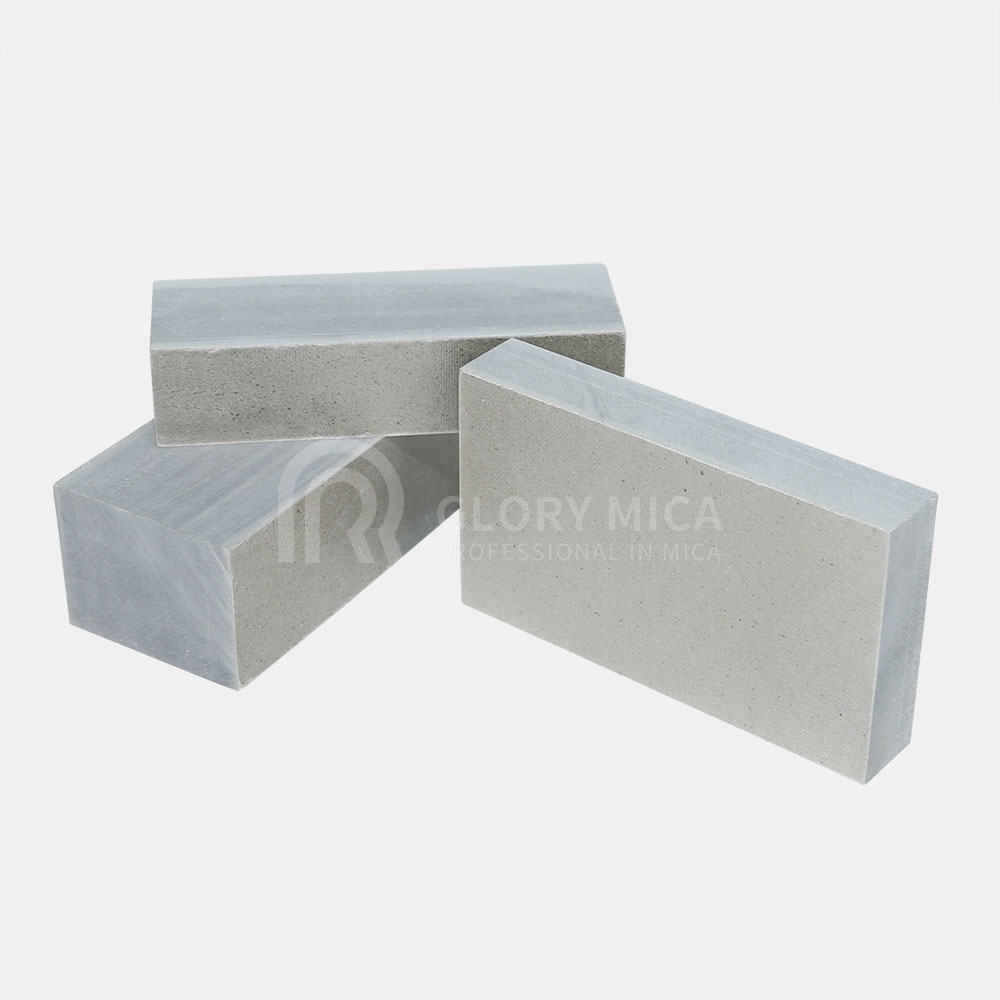
Mica plate and mica sheet are used for electrical insulation, heat-resistant assemblies, appliance heating, and industrial equipment. They are made from muscovite or phlogopite mica paper with a silicone binder, pressed under high temperature to form plate laminates. The R-5660-H series is rigid, the R-5660-G series is glossy, the R-5660-S series is flexible, and the R-5660-T series is a thick mica plate with thickness over 5 mm.
GLORY MICA's phlogopite rigid mica plate R-5660-H3 is listed with mica content of approximately 92%, bond content of approximately 8%, density of 1.8–2.45 g/cm3, continuous service heat resistance of 700°C, intermittent service heat resistance of 1000°C, dielectric strength above 20 kV/mm, and flame resistance UL94 V-0. The muscovite rigid mica plate R-5660-H1 is listed at 500°C continuous and 800°C intermittent. The phlogopite thick mica plate R-5660-T3 is listed with mica content of approximately 88%, bond content of approximately 12%, density of 2.35 g/cm3, 700°C continuous service, and 1000°C intermittent service. These figures illustrate why the material grade and thickness must be checked against the drawing, not chosen by product name alone.
Mica roll for flexible conversion
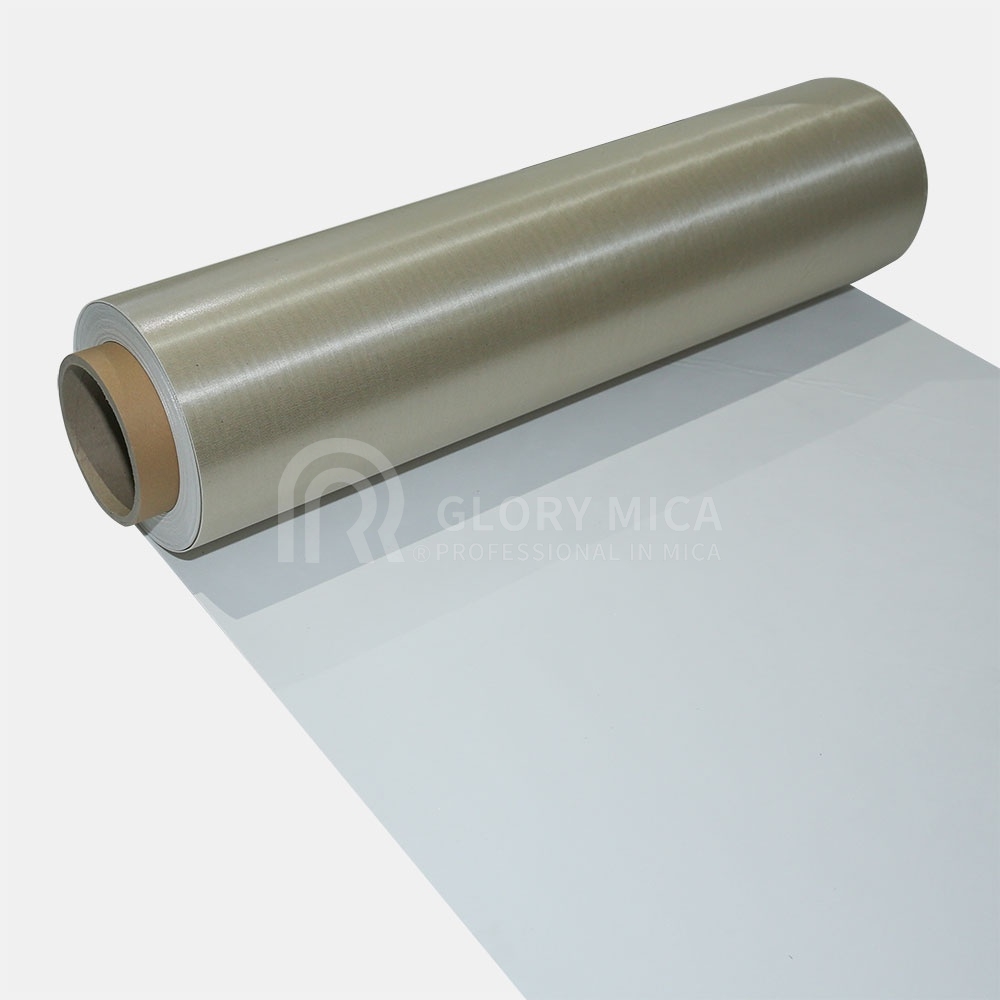
Mica roll is a flexible format used for electrical insulation conversion, fire-resistant cable materials, appliance insulation, and battery module fire protection. R-5461 mica roll consists of phlogopite mica paper, synthetic mica paper, or calcined mica paper impregnated with a special silicone resin on glass cloth, biologic backing, or harmless ceramic backing, depending on the application. The roll can be slit, punched, or laminated into downstream parts.
GLORY MICA's glass-backed phlogopite mica roll R-5461-PG is listed in thicknesses from 0.2 ± 0.02 mm to 0.5 ± 0.04 mm, with mica content from 350 ± 10 g/m2 to 730 ± 20 g/m2 and breakdown voltage from above 2 kV to at least 5 kV across the listed thicknesses. The ceramic-backed R-5461-COMBI G is listed from 2.1 ± 0.04 mm to 2.5 ± 0.1 mm with 2 mm ceramic thickness and breakdown voltage from above 4 kV to at least 6 kV. The product data lists a maximum temperature resistance of up to 1000°C for the mica roll range, but the exact continuous rating still depends on the selected construction.
Mica tube, mica parts, and mica insulator
Mica tube is formed by mica paper fixed with silicone resin and processed by roll forming. It is used as insulating tube material in electrical equipment, motors, furnaces, electric-arc furnaces, and other metallurgy equipment. GLORY MICA's phlogopite mica tube is listed at 700°C continuous and 1000°C intermittent service, with dielectric strength above 1.5 kV/mm. The muscovite mica tube is listed at 500°C continuous and 800°C intermittent service, with the same dielectric strength threshold.
Mica parts are custom components made from phlogopite mica paper, mica tube, and mica roll in 2D form, 3D form, or assembled products. They are used for thermal protection in new energy, energy storage cabinets, and intelligent robots. The product description lists breakdown voltage above 15 kV/mm. Mica insulator is a mineral material made from mica and a glass binding agent, formed under heat and pressure. The R-M259 and R-M52 mica insulators are intended for the high-speed train brake resistor industry and are supplied in multiple tapped-hole and threaded-rod configurations.
Etched foil mica heater
An etched foil mica heater uses metal foil processed into a resistance element and placed between two mica sheets. GLORY MICA's R-5660-E etched foil mica heater is manufactured to GB4706.1-2005 and GB4706.23-2007. Its listed parameters include surface temperature of 50–330°C, voltage of AC 5V–380V, power range of 5–3000W, high-voltage breakdown test at 1800V 2mA for 1 minute without breakdown and flashover, leakage current below 2 mA under the listed test, insulation resistance of 500V AC 100MΩ for 1 minute, service life above 30,000 hours, heating time of 3 minutes, and power density up to 0.85 W/cm2. The mica heating element range is used in toasters, coffee cookers, radiation air heaters, convection air heaters, heat guns, and hair dryers.
Step-by-Step Breakdown
- Define the thermal profile. Record the maximum continuous temperature and the intermittent peak separately. For example, phlogopite thick mica plate R-5660-T3 is listed at 700°C continuous and 1000°C intermittent, while muscovite thick mica plate R-5660-T1 is listed at 500°C continuous and 800°C intermittent. Do not use one headline figure for both conditions.
- Define the electrical duty. Record operating voltage, dielectric strength target, breakdown voltage requirement, insulation resistance, and any leakage-current limit. Mica plate R-5660-H3 lists dielectric strength above 20 kV/mm, while mica tube lists dielectric strength above 1.5 kV/mm. Those are different product forms and cannot be substituted without review.
- Select the material family. Compare muscovite, phlogopite, synthetic, and calcined mica against the application. In the GLORY MICA range, phlogopite plate R-5660-H3 is listed at 700°C continuous and 1000°C intermittent, muscovite plate R-5660-H1 at 500°C continuous and 800°C intermittent, synthetic mica tape R-5461-S-GS at a 950°C–1000°C fire grade, and calcined mica tape R-5461-CM-GS at an 850°C–900°C fire grade. These ratings are product-specific, so request the current datasheet.
- Select the product form. Use mica tape for wrapping fire-resistant cable cores, mica plate or mica sheet for rigid barriers, mica roll for flexible conversion, mica tube for cylindrical insulation, mica parts for custom 2D or 3D thermal protection, mica insulator for high-speed train brake resistors, and etched foil mica heater for heating elements.
- Check mechanical and process fit. Confirm thickness tolerance, tensile strength, density, mica content, bond content, flexibility, spool or roll format, and compatibility with winding, punching, die cutting, or assembly. Mica tape R-5461-P-GS lists tensile strength at least 200 N/15mm, while mica roll R-5461-PG lists thickness and breakdown voltage by construction.
- Request compliance evidence. Ask for certificate numbers, issuing bodies, validity dates, and product-specific scope. GLORY MICA's company profile lists ISO9001, ISO14001, ISO14005, and IATF16949 system certifications, plus UL and FDA product certifications and RoHS and REACH compliance. Treat these as company-reported claims until the documents are checked for the exact product and market.
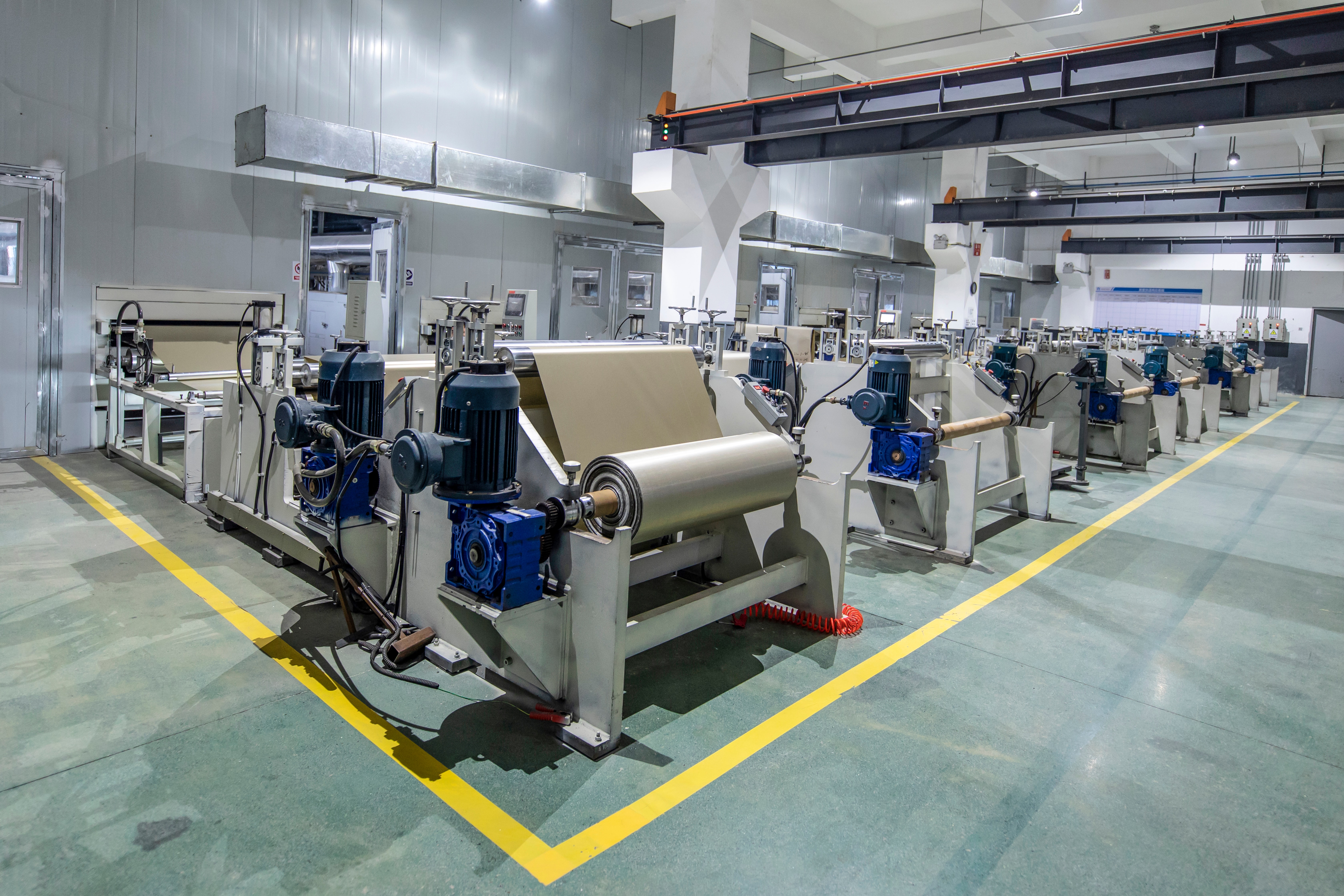
- Validate with a sample and a written specification. Send the drawing, target temperature, voltage, dimensions, quantity, and required test standard. Ask for a sample that matches the production construction, not a generic grade. GLORY MICA operates three plants in Zhejiang and Hunan with total factory area of approximately 404,000 m2 and total annual production capacity of approximately 88,000 tons per year, according to its company profile, but capacity alone does not replace product-specific validation.
Use Cases
Fire-resistant cables
Mica tape is used between the core and the sheath of fire-resistant cables. The operating principle is that the tape is flexible and insulating in normal conditions, the adhesive or binder may change under fire, and the mica layer forms a ceramic-like shell that continues to provide physical insulation for a period. This is why tape construction, thickness, reinforcement, and fire grade must match the cable design and the test standard.
Electric vehicles and energy storage
Mica sheet, mica roll, and mica parts are used as fireproof materials in battery power modules, gaskets, and separators. The mica barrier is intended to block flame and high voltage, and to avoid toxic smoke under fire conditions. China's GB 38031-2025 requirement for 120 minutes of thermal runaway protection makes documented fire performance more important than a generic heat-resistance claim.
Household appliances and heating elements
Mica plate, mica sheet, mica roll, and etched foil mica heater are used in electric irons, hair dryers, toasters, electric kettles, cooking utensils, microwave ovens, air heaters, heat guns, and coffee cookers. The mica part may act as a rigid support, a thermal barrier, or the carrier for a heating circuit. The heater data for R-5660-E lists 50–330°C surface temperature, AC 5V–380V, 5–3000W, and a service life above 30,000 hours.
Industrial heating and metallurgy
Mica plate and mica tube are used in cylindrical resistance heaters, circuit breakers, transformers, electric furnaces, generators, magnetic coils, coil insulation, intermediate frequency furnaces, and arc furnaces. In these applications, the buyer should compare continuous and intermittent temperature ratings, dielectric strength, thickness, and mechanical support rather than only the mica type.
Rail transportation
Mica insulator R-M259 and R-M52 are intended for high-speed train brake resistors. The mica structure is selected for arc resistance and high-voltage insulation. The product family includes variants with one or two tapped holes and one or two threaded rods, so the mechanical interface should be specified with the drawing.
Comparison Table
| Mica insulation form | Typical construction | Common application | Example specification from provided product data |
|---|---|---|---|
| Mica tape | Phlogopite, synthetic, or calcined mica paper with glass cloth or polymer film reinforcement | Fire-resistant cable insulation between core and sheath | R-5461-P-GS: 0.12 ± 0.015 mm, breakdown above 1.5 kV, tensile at least 200 N/15mm, fire grade 750°C–850°C to IEC 331 as listed |
| Mica plate and mica sheet | Muscovite or phlogopite mica paper with silicone binder, pressed into rigid, flexible, glossy, or thick laminates | Appliance insulation, heating element support, industrial barriers | R-5660-H3: mica approximately 92%, bond approximately 8%, 700°C continuous, 1000°C intermittent, dielectric above 20 kV/mm, UL94 V-0 |
| Mica roll | Phlogopite, synthetic, or calcined mica paper with silicone resin on glass cloth, biologic backing, or ceramic backing | Flexible conversion, fire-resistant cable material, appliance and battery module insulation | R-5461-PG: 0.2–0.5 mm, mica content 350–730 g/m2, breakdown above 2 kV to at least 5 kV |
| Mica tube | Mica paper bonded with silicone resin and roll formed | Insulating tube in motors, furnaces, electric-arc furnaces, and metallurgy equipment | Phlogopite mica tube: 700°C continuous, 1000°C intermittent, dielectric above 1.5 kV/mm |
| Mica parts | Phlogopite mica paper, mica tube, and mica roll formed into 2D, 3D, or assembled custom parts | Thermal protection in new energy, energy storage cabinets, and intelligent robots | Custom shape, size, and tolerance; product description lists breakdown voltage above 15 kV/mm |
| Mica insulator | Mica and glass binding agent formed under heat and pressure | High-speed train brake resistor | R-M259 and R-M52 supplied in multiple tapped-hole and threaded-rod configurations |
| Etched foil mica heater | Metal foil resistance element placed between two mica sheets | Toaster, coffee cooker, air heater, heat gun, hair dryer | R-5660-E: 50–330°C surface temperature, AC 5V–380V, 5–3000W, service life above 30,000 hours |
FAQ
What certifications and compliance information should I request from a mica insulation supplier?
Ask for certificate numbers, issuing bodies, validity dates, and product-specific scope. GLORY MICA's company profile lists ISO9001, ISO14001, ISO14005, and IATF16949 system certifications, plus UL and FDA product certifications and RoHS and REACH compliance. ASTM D1039-16(2022) is a relevant test-method reference for glass-bonded mica used as electrical insulation, but its applicability to a specific product should be confirmed in the datasheet and test report.
How can I evaluate China mica insulation tape manufacturers?
Compare the mica paper type, reinforcement, dimensions, breakdown voltage, tensile strength, fire grade, and spool format against your cable process. For example, GLORY MICA lists glass-backed phlogopite mica tape R-5461-P-GS at 0.12 ± 0.015 mm, breakdown voltage above 1.5 kV, tensile strength at least 200 N/15mm, and fire grade 750°C–850°C to IEC 331 as listed; synthetic mica tape R-5461-S-GS is listed with fire grade 950°C–1000°C to IEC 60331. Confirm current datasheets before qualification.
What is the difference between phlogopite and muscovite mica insulation?
The difference is product-specific, so compare datasheets rather than names alone. In the GLORY MICA range, phlogopite rigid mica plate R-5660-H3 is listed at 700°C continuous and 1000°C intermittent service, while muscovite rigid mica plate R-5660-H1 is listed at 500°C continuous and 800°C intermittent service. Phlogopite mica tube is listed at 700°C continuous and 1000°C intermittent, while muscovite mica tube is listed at 500°C continuous and 800°C intermittent.
Which mica insulation form fits my application?
Use mica tape for wrapping fire-resistant cable cores, mica plate or mica sheet for rigid barriers and heat-resistant assemblies, mica roll for flexible conversion, mica tube for cylindrical insulation, mica parts for custom 2D or 3D thermal protection, mica insulator for high-speed train brake resistors, and etched foil mica heater for heating elements. Match the form to temperature, voltage, mechanical load, and available space.
Can I request a sample or quotation for mica insulation?
Yes. Send the application, target temperature, voltage, dimensions or drawing, expected quantity, and required compliance documents to GLORY MICA at info@glorymica.com or +86-573-83679942 for overseas enquiries. The team can review the specification against the mica tape, mica plate, mica roll, mica tube, mica parts, mica insulator, or etched foil mica heater range. The company brochure is available at the link below.
Next Step: Match the Mica Form to the Specification
For mica insulation selection, the most useful first message is a short technical brief: application, temperature profile, voltage, dimensions or drawing, quantity, and required compliance documents. GLORY MICA can review that brief against its mica tape, mica plate, mica sheet, mica roll, mica tube, mica parts, mica insulator, and etched foil mica heater range.
Email: info@glorymica.com | Overseas telephone: +86-573-83679942 | Website: www.glorymica.com
Company brochure: Glorymica Company PDF

Conclusion
Mica insulation is a product family, not a single commodity. Mica tape, mica plate, mica sheet, mica roll, mica tube, mica parts, mica insulator, and etched foil mica heater each solve a different electrical, thermal, or mechanical problem. The buyer's task is to translate the application into a temperature profile, voltage duty, fire test, mechanical format, and compliance requirement, then compare product-specific data.
GLORY MICA's product data provides useful reference points: phlogopite and muscovite plate ratings, tape fire grades, mica roll breakdown voltages, mica tube temperature limits, mica insulator configurations, and etched foil mica heater parameters. Those values should be checked against the current datasheet, drawing, and required certificate scope. That approach keeps the selection grounded in evidence rather than a generic high-temperature claim.
Have Questions or Need More Details?
Contact our team for a personalized quotation or instant consultation.
Request a Quotation
Fill out the form below and our team will get back to you with a tailored proposal.
WhatsApp Direct Chat
Prefer to chat in real-time? Message us on WhatsApp for instant assistance & quick answers.
- Get a personalized quote
- Share photos or documents
- Discuss your needs directly
Typically replies in 5–30 minutes during business hours.