
Mica Insulation: Materials, Forms and Applications
Mica insulation is a family of electrical and thermal barrier materials made from mica paper or mica plate, usually bonded with silicone resin and often reinforced with glass cloth, polymer film or ceramic backing. It is selected where ordinary polymers would degrade: high-temperature heating elements, fire-resistant cables, electric-vehicle battery modules, rail traction equipment, industrial furnaces and household appliances.
Glory Mica is the brand name of ZHEJIANG RONGTAI ELECTRIC MATERIAL CO., LTD., a manufacturer established in 1998 that specializes in high-temperature-resistant insulating mica composite materials. The company operates three plants in Zhejiang Province and Hunan Province, China, and its product range covers mica tape, mica plate, mica sheet, mica tube, mica roll, mica heating elements, mica laminate, mica washer, mica insulator, mica paper and epoxy glass laminate.
Quick answer: mica insulation is not one product. The correct choice depends on the mica type, the product form, the binder and reinforcement, the required temperature class, the dielectric duty and the mechanical process the part must survive. Buyers should select the material family first, then the product format, then the documentation package.

Mica insulation materials are supplied in flexible, rigid, tubular, roll and machined-part formats for different electrical and thermal duties.
Problem Definition: Why Mica Insulation Is Easy to Specify Incorrectly
The practical problem is that the phrase “mica insulation” covers materials that behave very differently in service. A 0.12 mm phlogopite mica tape for a fire-resistant cable, a 5 mm rigid mica plate for a furnace barrier and a custom mica part for an energy-storage cabinet are all mica insulation, but they are not interchangeable. They differ in mica chemistry, binder content, reinforcement, density, dielectric strength, flexibility, flame rating and the way they are converted into a finished component.
A buyer who compares only price per kilogram or price per roll can miss the variables that determine whether the material survives the application. A tape that is too thin may fail the cable fire test. A plate with the wrong mica type may lose insulation resistance at the continuous operating temperature. A flexible plate that is specified where a rigid plate is needed may deform under load. A rigid plate that is specified where a flexible plate is needed may crack during assembly.
The second problem is documentation. Mica products are often qualified through a combination of product datasheets, fire-test reports, certificate scope and first-article samples. A general statement that a supplier is “ISO certified” does not show that a specific mica tape or mica heater is covered by the relevant certificate. Buyers need to connect the material specification to the evidence package before approval.
Industry Background: Where Demand for Mica Insulation Comes From
Mica insulation sits at the intersection of electrical insulation, thermal management and fire protection. Its established demand comes from fire-resistant cables, industrial heating, household appliances, rail equipment and metallurgy. Newer demand is linked to battery safety and energy storage.
According to Statifacts, the global mica insulation material market was valued at USD 1.811 billion in 2024, with a projected compound annual growth rate of 6.4% from 2024 to 2034. That figure describes the market for mica insulation materials, including tapes, sheets and tubes, not the market for any single supplier.
Regulation is one visible driver. China's GB 38031-2025 Electric vehicles traction battery safety requirements, effective 1 July 2026, requires two-hour thermal runaway protection, or 120 minutes, under the defined test conditions. That requirement raises the importance of fire-barrier materials that can resist high temperature, block flame spread and remain electrically insulating. Mica sheet and mica roll are already used as fireproof materials in battery power modules and as gaskets and separators in new-energy vehicle applications.
Standards also shape procurement. ASTM D1039-16(2022), Standard Test Methods for Glass-Bonded Mica Used as Electrical Insulation, is listed by ASTM International. The standard title confirms a test-method reference for glass-bonded mica; it does not by itself confirm that a particular supplier or product complies with it. Buyers should treat standards as part of the specification and verification process, not as a substitute for product-specific test reports.
The supply base is concentrated in mica-processing regions, with China as a major source of mica paper, mica tape, mica plate and converted mica parts. Glory Mica reports a 50% export ratio, with main markets in the EU and USA, and operates approximately 404,000 square meters of factory area across three plants, with total annual production capacity of approximately 88,000 tons per year. The company employs approximately 617 staff, including more than 90 R&D staff.
Detailed Solution: The Main Mica Insulation Product Forms
The most reliable way to specify mica insulation is to start with the product form, because the form determines how the material is processed and how it fails. The main forms are mica tape, mica plate or sheet, mica roll, mica tube, mica parts, mica laminate and washer, mica insulator and etched foil mica heater.
Mica Tape for Fire-Resistant Cables
Mica tape is a flexible insulation built on mica paper, usually reinforced with alkali-free glass fibre cloth or polymer film on one or both sides. It is wrapped between the core and the sheath of fire-resistant cables. The tape must remain flexible during high-speed wrapping, bond cleanly, and then form a ceramic-like barrier when exposed to fire.
Glory Mica's phlogopite mica tape range includes R-5461-P-GS, a glass-backed phlogopite mica tape listed at 0.12 ± 0.015 mm, mica content above 65%, breakdown voltage above 1.5 kV, tensile strength of at least 200 N/15mm and a fire grade of 750–850°C under IEC 60331. The R-5461-P-GD variant is listed at 0.14 ± 0.02 mm with breakdown voltage above 1.5 kV. The R-5461-P-GFD variant, with glass and film, is listed with breakdown voltage above 3.5 kV, and the film-backed R-5461-P-FS is listed with breakdown voltage above 5.5 kV.
Synthetic mica tape is used where a higher fire grade is required. R-5461-S-GS is a glass-backed synthetic mica tape listed with a fire grade of 950–1000°C under BS 6387 and IEC 60331, breakdown voltage above 1.4 kV and tensile strength of at least 200 N/15mm. R-5461-S-GD and R-5461-S-GFD add glass on both sides or glass and film, with breakdown voltage above 1.5 kV and above 3.5 kV respectively.
Calcined mica tape is another option. R-5461-CM-GS is a calcined muscovite mica single-sided tape listed at 0.10 ± 0.015 mm, mica content of 80 ± 3 g/m², breakdown voltage above 1.2 kV, tensile strength above 120 N/15mm and a fire grade of 850–900°C under BS 6387 and IEC 60331. These tapes are normally supplied in 500 m, 1000 m and 2000 m lengths, with spool packing available.
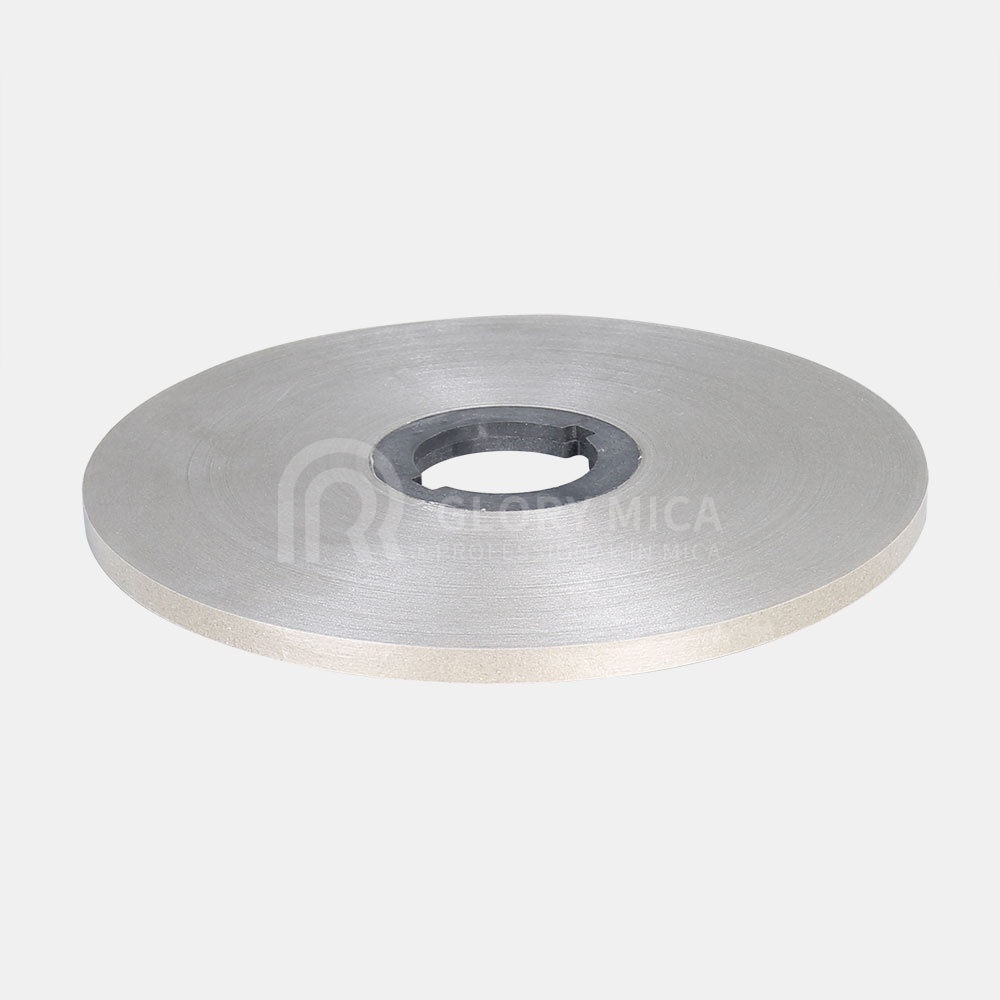
Phlogopite mica tape is supplied in roll form for wrapping between the core and sheath of fire-resistant cables.
Mica Plate and Mica Sheet for Rigid and Flexible Barriers
Mica plate, also called mica sheet, is a laminated material made from mica paper and a silicone binder pressed under high temperature. It is used for rigid insulation barriers, heat shields, mounting plates and machined parts. The main distinctions are mica type, rigidity, surface finish and thickness.
The R-5660-H series is a rigid mica plate with a mesh surface. R-5660-H1 is a muscovite rigid mica plate with mica content of approximately 92%, bond content of approximately 8%, continuous service temperature of 500°C, intermittent service temperature of 800°C, flexural strength above 120 MPa, dielectric strength above 20 kV/mm, water absorption below 1% and UL94 V-0 flame resistance. R-5660-H3 is the phlogopite version, with continuous service at 700°C and intermittent service at 1000°C.
The R-5660-G series is a glossy mica plate produced with a smoother surface. R-5660-G1 is muscovite-based with continuous service at 500°C and intermittent service at 800°C; R-5660-G3 is phlogopite-based with continuous service at 700°C and intermittent service at 1000°C. Both are listed with dielectric strength above 20 kV/mm and UL94 V-0 flame resistance.
The R-5660-S series is a flexible mica plate. R-5660-S1 is muscovite-based, and R-5660-S3 is phlogopite-based. The phlogopite version is listed with continuous service at 700°C, intermittent service at 1000°C and dielectric strength above 20 kV/mm. The flexible plate can be folded and curled into shapes, which makes it suitable for heat guns, hair dryers, fan heaters, circuit breakers, transformers, electric furnaces, generators, magnetic coils and coil insulation.
The R-5660-T series is a thick rigid mica plate with thickness above 5 mm. R-5660-T1 is muscovite-based with mica content of approximately 88%, bond content of approximately 12%, density of 2.35 g/cm³, continuous service at 500°C and intermittent service at 800°C. R-5660-T3 is phlogopite-based with continuous service at 700°C and intermittent service at 1000°C. Both are listed with dielectric strength above 20 kV/mm and are used for high-voltage and high-temperature insulation in cylindrical resistance heaters, circuit breakers, electric sterilized cabinets, intermediate-frequency furnaces and arc furnaces.
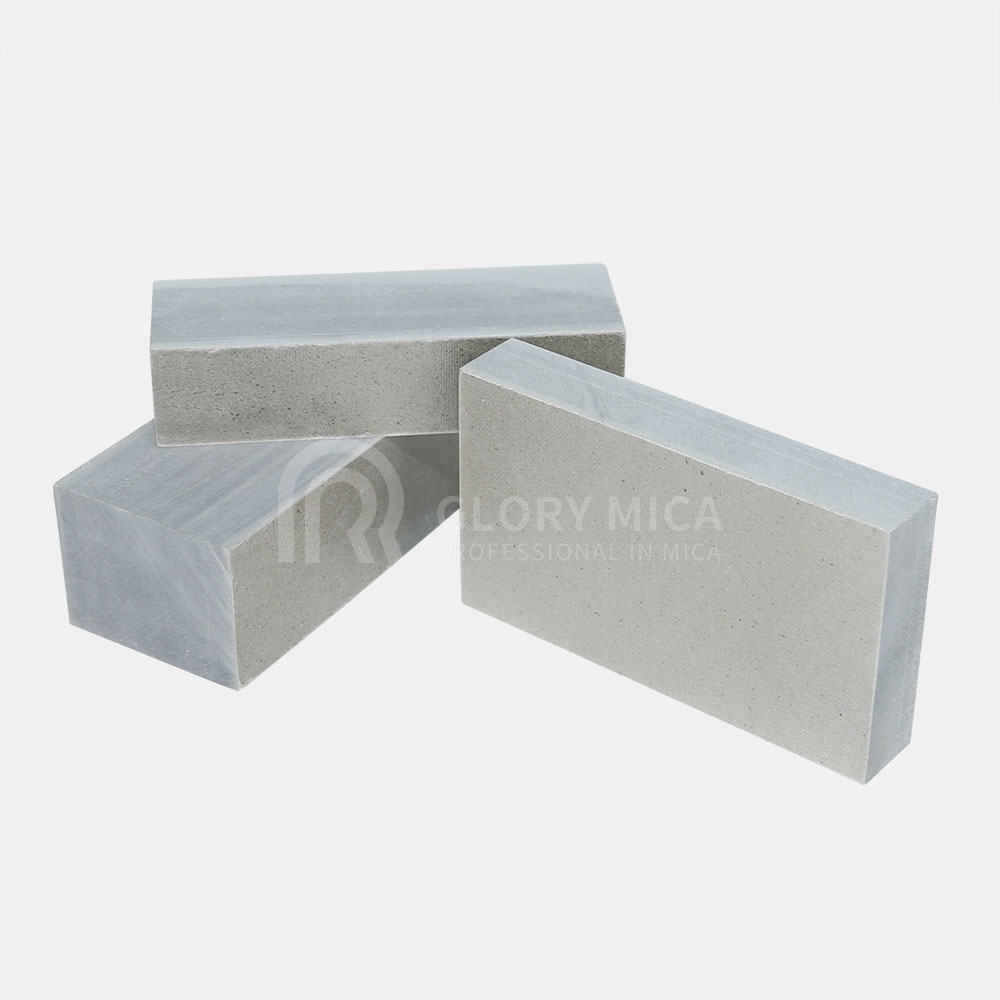
Phlogopite thick mica plate is used for high-voltage and high-temperature insulation barriers.
Mica Roll for Continuous Insulation and Fire Barriers
Mica roll is a continuous flexible format used for wrapping, die-cutting, gaskets, separators and fire barriers. Glory Mica's R-5461 mica roll family includes phlogopite, synthetic and calcined mica paper options, impregnated with silicone resin on glass cloth or other carriers depending on the application.
Typical roll specifications range from 0.2 mm to 0.5 mm in thickness, with mica content from 350 ± 10 g/m² to 730 ± 20 g/m² and breakdown voltage from above 2 kV to at least 5 kV, depending on thickness. Standard roll lengths are 20 m, 25 m, 40 m, 50 m and 100 m. The material is listed as capable of withstanding a maximum temperature of up to 1000°C.
For higher thermal barriers, the R-5461-COMBI G and R-5461-COMBI GC rolls combine phlogopite mica paper with a harmless ceramic fibre backing, with or without glass. These rolls are listed at 2.1 mm to 2.5 mm total thickness, with a 2 mm ceramic layer, mica content from 190 ± 10 g/m² to 480 ± 20 g/m² and breakdown voltage from above 4 kV to at least 6 kV. They are used where a thicker, more robust barrier is needed in battery modules, energy-storage cabinets and high-temperature electrical assemblies.
Mica Tube for Motors, Furnaces and Electrical Equipment
Mica tube is a roll-formed insulating tube made from mica paper fixed with silicone resin. It is used as an insulating tube in electrical equipment, motors, furnaces, electric-arc furnaces and metallurgy equipment. The tube format is useful where a conductor or stud must pass through a hot or high-voltage area with a defined clearance.
Phlogopite mica tube is listed with mica content of approximately 85%, bond content of approximately 15%, density of 1.6–2.2 g/cm³, continuous service at 700°C, intermittent service at 1000°C, dielectric strength above 1.5 kV/mm, insulation resistance at 23°C of 10^16 Ω·cm and UL94 V-0 flame resistance. Muscovite mica tube follows the same construction logic but is listed with continuous service at 500°C and intermittent service at 800°C.
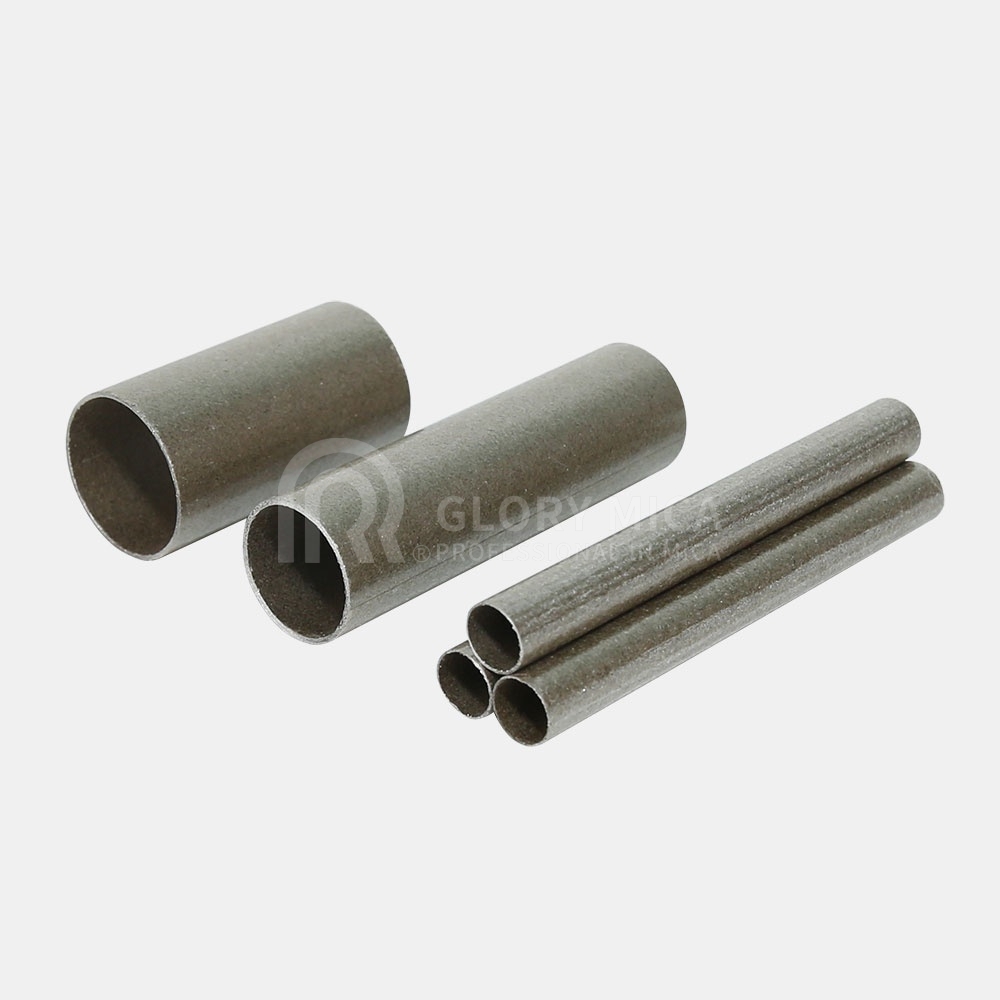
Phlogopite mica tube is used as an insulating tube in electrical equipment, motors and furnace applications.
Mica Parts, Laminates, Washers and Insulators
Many applications do not use a standard sheet or tape; they use a converted part. Mica parts can be cut, die-stamped, laminated or assembled into 2D and 3D shapes to customer drawings. Glory Mica produces mica parts for thermal protection in new-energy applications, energy-storage cabinets and intelligent robots, with dimensions and tolerances defined by the customer's drawing rather than a fixed catalogue.
Mica laminate and mica washer are cut or die-stamped from mica plate or mica sheet. They are used in home appliances, electro-magnets and micro-sensitive control gear. Mica insulator is a different product family: it is a mineral material made from mica and a glass binder that is vitrified by fusion, then pressed into a hard mass. Glory Mica's R-M52 and R-M259 mica insulators are intended for the high-speed train brake resistor industry, with variants that differ in tapped-hole diameter, thread length and weight.
Etched Foil Mica Heaters
Mica is also used as the carrier and insulation in heating elements. In an etched foil mica heater, a metal foil is processed into a resistance pattern and placed between two mica sheets. The mica provides electrical insulation and heat resistance while the foil provides the heating circuit.
Glory Mica's R-5660-E etched foil mica heater is listed as conforming to GB4706.1-2005 and GB4706.23-2007. Its listed parameters include a surface temperature of 50–330°C, voltage from AC 5V to 380V, power from 5W to 3000W, a high-voltage breakdown test of 1800V 2mA for 1 minute without breakdown or flashover, leakage current below 2 mA under 1800V/3 shock, insulation resistance of 100 MΩ at 500V AC for 1 minute, service life above 30,000 hours, heating time of 3 minutes and power density of no more than 0.85 W/cm². The heater is used as a core heating element in air heaters and kitchen appliances. Its far-infrared radiation is concentrated between 3 μm and 14 μm, with 95% of the radiation in that band.
Step-by-Step Breakdown: How to Select Mica Insulation
A disciplined selection process reduces the risk of a material that meets the datasheet but fails in production or in service. The following sequence is suitable for buyers, design engineers and qualification teams.
Step 1: Define the Thermal Profile
Start with the continuous operating temperature, the intermittent peak temperature and the duration of the peak. Distinguish between normal service and a fault condition such as a fire or a battery thermal event. A phlogopite mica plate rated for 700°C continuous and 1000°C intermittent is not equivalent to a muscovite plate rated for 500°C continuous and 800°C intermittent, even if both are described as mica plate.
Step 2: Choose the Mica Type
Muscovite, phlogopite, synthetic and calcined mica are different starting points. Phlogopite is generally selected for higher-temperature and fire-barrier duties. Muscovite is used in standard electrical and electronic insulation where the temperature duty is lower. Synthetic mica is used where a higher fire grade is needed, and calcined mica is used in specific fire-resistant cable constructions. The correct choice should be confirmed against the product datasheet, not only the generic mica name.
Step 3: Select the Product Form
Select tape for wrapping, plate or sheet for rigid barriers and machined parts, flexible plate for shaped or folded insulation, roll for continuous conversion and die-cutting, tube for through-insulation, and custom parts where the geometry is fixed by a drawing. The form determines the available thickness range, the reinforcement options and the conversion process.
Step 4: Size the Dielectric Barrier
Check the breakdown voltage and dielectric strength at the required thickness. For mica plate, the listed dielectric strength is above 20 kV/mm for several R-5660 grades. For mica tube, it is above 1.5 kV/mm. For mica tape, the breakdown voltage depends on the construction and is listed per product, from above 1.2 kV to above 5.5 kV in the examples above. Use the product-specific value and the actual applied thickness, not an assumed generic value.
Step 5: Check Mechanical and Conversion Requirements
Confirm tensile strength for tape, flexural strength and hardness for rigid plate, flexibility for flexible plate and machinability for parts. A tape with high tensile strength is easier to wrap at speed without breaking. A rigid plate with good flexural strength can be machined without delamination. A flexible plate can be folded and curled, but it may not provide the same structural support as a rigid plate.
Step 6: Verify Compliance and Documentation
Ask for the certificate number, issuing body, validity date and product scope for each claimed certification. Glory Mica states that it has passed ISO9001, ISO14001, ISO14005 and IATF16949 system certifications, and that its products have passed UL and FDA certifications and meet EU RoHS and REACH requirements. Those claims should be matched to the specific product and destination market during qualification.
Step 7: Validate with a Sample and a Production Trial
Request a sample at the intended thickness, width, roll length and grade. Run the sample through the actual conversion process: wrapping, punching, forming, laminating, potting or assembly. Record the first-article dimensions and the electrical test result. Only then convert the sample approval into a purchase specification.
Use Cases: Where Mica Insulation Performs a Critical Function
Fire-Resistant Cables
In fire-resistant cables, mica tape is wrapped between the core and the sheath. Under fire exposure, the tape is intended to form a ceramic-like barrier that maintains circuit integrity for a defined period. Phlogopite, synthetic and calcined mica tapes are selected according to the required fire grade, temperature and cable construction. The tape must also survive high-speed wrapping without breaking, which is why tensile strength and surface smoothness matter.
Electric Vehicles and Energy Storage
In battery power modules, mica sheet and mica roll are used as fireproof materials, gaskets and separators. The material must block flame and high voltage, resist high temperature and avoid toxic smoke. GB 38031-2025 raises the bar for thermal runaway protection in China from 1 July 2026, and that requirement is expected to increase demand for fire-barrier materials in battery packs. Glory Mica's mica parts for thermal protection are used in new-energy applications, energy-storage cabinets and intelligent robots.
Rail Transportation
Rail traction and brake resistor systems use mica insulators and mica parts where high-voltage electricity, vibration and heat are present. Glory Mica's R-M52 and R-M259 mica insulators are intended for the high-speed train brake resistor industry. The material is mineral-based and is used to prevent high-voltage breakdown and arc tracking in a compact assembly.
Industrial Heating and Metallurgy
Industrial furnaces, electric-arc furnaces, transformers, generators and magnetic coils use mica plate, mica tube and mica roll for high-temperature electrical insulation. A rigid mica plate can act as a structural barrier between a hot zone and a cooler zone, while a mica tube can insulate a conductor or stud passing through a heated structure. The selection depends on the temperature, the voltage and the mechanical load.
Household Appliances
Household appliances such as electric irons, hair dryers, toasters, electric kettles, cooking utensils and microwave ovens use mica plate, mica roll and mica heaters for thermal and electrical insulation. In a toaster or air heater, the mica heater may be the heating element itself; in a hair dryer or iron, the mica plate may be a heat barrier or a mounting board.
Comparison Table: Mica Insulation Forms at a Glance
The table below compares the main product forms using the specifications and application statements in the available product data. Values are examples from the listed products and should not be applied to another product without its own datasheet.
| Product form | Typical construction | Example performance data | Primary applications | Selection note |
|---|---|---|---|---|
| Mica tape | Mica paper with glass cloth or film reinforcement | 0.10–0.14 mm; breakdown 1.2–5.5 kV; fire grade 750–1000°C depending on grade | Fire-resistant cable insulation | Match fire grade, thickness and tensile strength to the cable design and wrapping equipment |
| Rigid mica plate | Mica paper and silicone binder, pressed laminate | Dielectric strength above 20 kV/mm; continuous 500–700°C; intermittent 800–1000°C | Circuit breakers, resistance heaters, furnace barriers | Choose muscovite or phlogopite according to the continuous temperature |
| Flexible mica plate | Mica paper and silicone binder, flexible laminate | Dielectric strength above 20 kV/mm; continuous 500–700°C | Heat guns, hair dryers, fan heaters, coil insulation | Use where the part must be folded, curled or shaped |
| Mica roll | Mica paper on glass cloth, silicone resin, optional ceramic backing | 0.2–2.5 mm; breakdown above 2 kV to at least 6 kV; up to 1000°C | Battery modules, fire-resistant cables, appliances | Select roll length, core size and backing for the conversion line |
| Mica tube | Roll-formed mica paper with silicone resin | Dielectric strength above 1.5 kV/mm; continuous 500–700°C; intermittent 800–1000°C | Motors, furnaces, electric-arc furnaces, electrical equipment | Define inside diameter, wall thickness and length for the assembly |
| Mica parts | Cut, stamped, laminated or assembled from mica plate, sheet, tube or roll | Custom dimensions and tolerances to customer drawing | Thermal protection, energy storage, robots, appliances | Provide a drawing with tolerances and the expected thermal and electrical duty |
| Mica insulator | Mica and glass binder, fused and pressed | R-M52 and R-M259 variants with defined hole, thread and weight data | High-speed train brake resistors | Select the variant that matches the mounting and thread requirement |
| Etched foil mica heater | Metal foil resistance element between two mica sheets | 50–330°C; AC 5–380V; 5–3000W; service life above 30,000 h | Air heaters, kitchen appliances, toasters, hair dryers | Define voltage, power, dimensions and thermal protection with the supplier |
Note: the figures above are examples from the listed Glory Mica products. They are not a universal specification for all mica insulation, and they should be confirmed against the datasheet for the exact product being purchased.
Manufacturing and Quality Context
Mica insulation quality depends on the mica paper, the binder, the reinforcement and the pressing or roll-forming process. A supplier with in-house control over these steps can hold thickness, mica content, bond content and breakdown voltage within a narrower window. Glory Mica operates three plants with a total factory area of approximately 404,000 square meters and total annual production capacity of approximately 88,000 tons per year. The Pingjiang Plant covers 136,000 square meters with 52,000 tons per year of capacity; Xinhuang Plant I covers 68,000 square meters with 16,000 tons per year; and Xinhuang Plant II covers 200,000 square meters with 20,000 tons per year.
The company reports more than 25 years of mica insulation manufacturing experience since 1998 and a research and development team of more than 90 staff. It has established a Provincial Enterprise Research Institute and a Provincial High-tech R&D Center, and it collaborates with Zhejiang University, Zhejiang University of Technology and Zhejiang University of Science and Technology. These are company-reported facts that buyers can use as a starting point for a supplier audit, not as a substitute for a product-specific qualification.
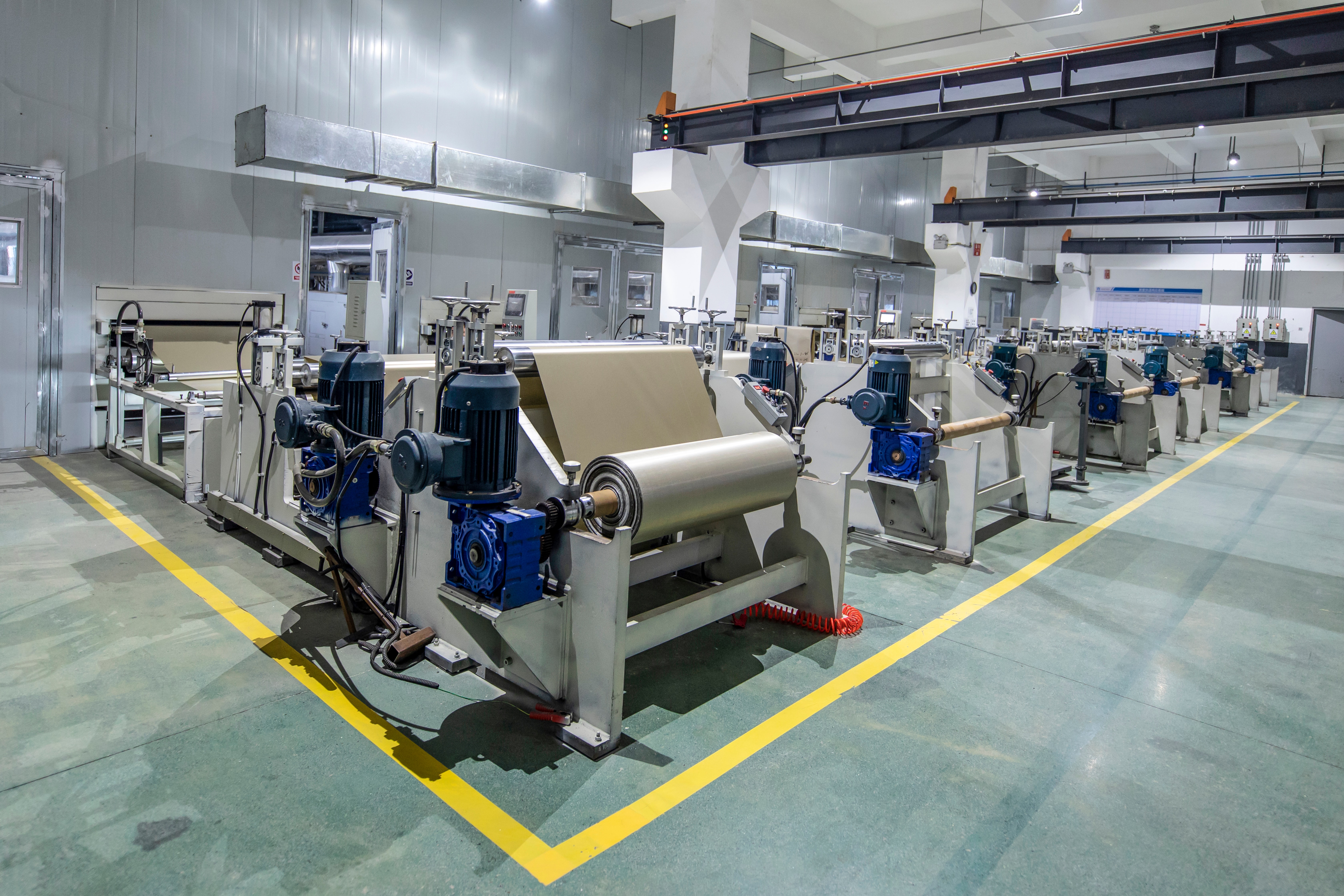
Mica tape production is controlled through the mica paper, resin and reinforcement steps before slitting and spooling.
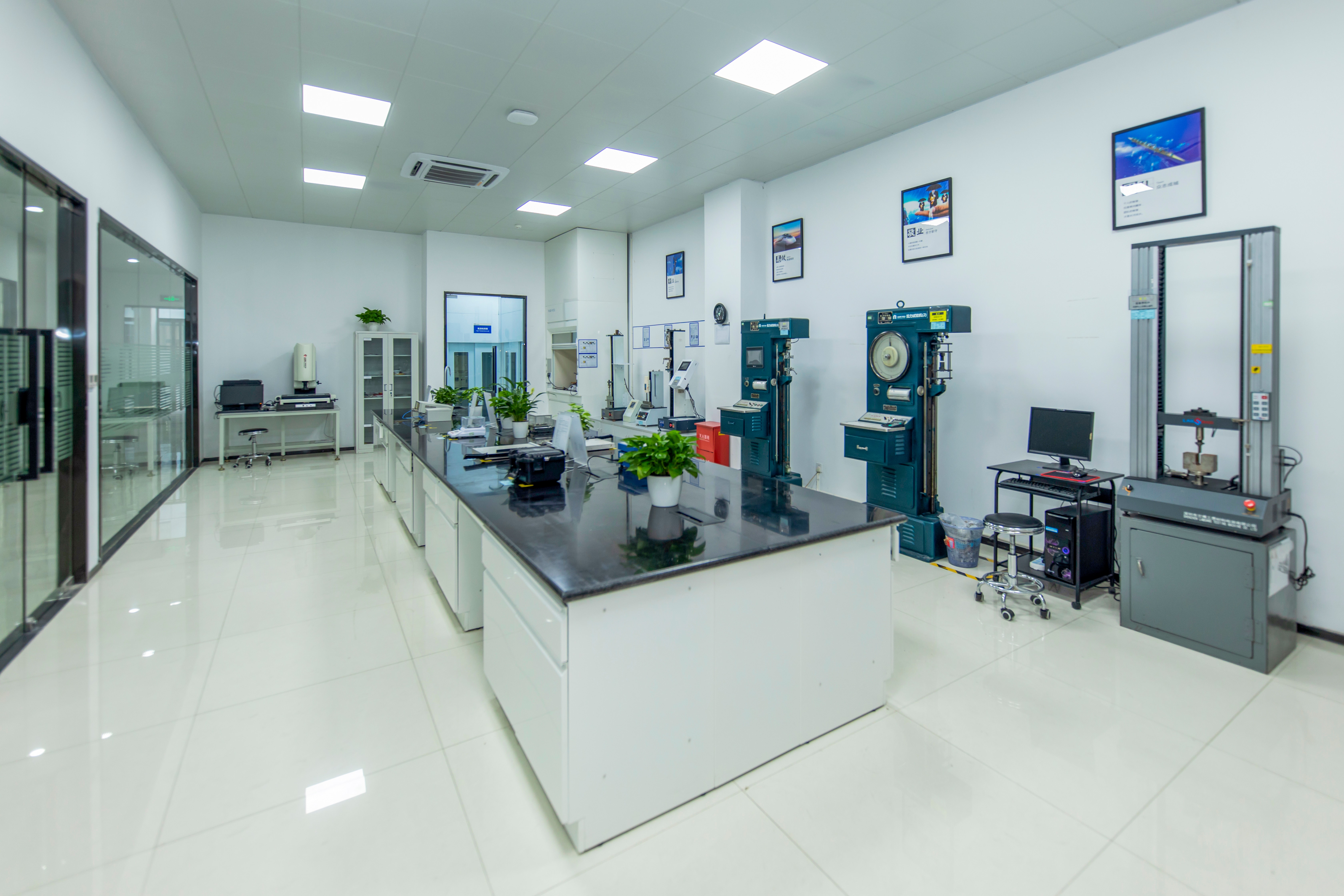
Laboratory testing supports the product datasheet and the qualification package for mica insulation.
FAQ: Mica Insulation and Supplier Selection
What certifications and compliance evidence should buyers request for mica insulation?
Glory Mica states that it has passed ISO9001, ISO14001, ISO14005 and IATF16949 system certifications, and that its products have passed UL and FDA certifications and meet EU RoHS and REACH requirements. Buyers should still request certificate numbers, issuing bodies, validity dates and the exact product scope, because a general compliance statement does not confirm that a specific mica tape, plate or heater is covered.
Which mica tape is used for fire-resistant cables?
Fire-resistant cable insulation typically uses phlogopite, synthetic or calcined mica tape with glass-cloth or film reinforcement. Glory Mica's R-5461-P-GS glass-backed phlogopite mica tape is listed at 0.12 ± 0.015 mm, mica content above 65%, breakdown voltage above 1.5 kV, tensile strength of at least 200 N/15mm and a 750–850°C fire grade under IEC 60331. The R-5461-S-GS synthetic mica tape is listed with a 950–1000°C fire grade under BS 6387 and IEC 60331, while the R-5461-CM-GS calcined mica tape is listed at 850–900°C.
How should buyers compare quotes for mica insulation?
Quotes should be compared against the same specification: mica type, reinforcement, thickness and tolerance, width and roll length, breakdown voltage, tensile strength, fire grade and required documentation. Mica insulation is not a single commodity, so a lower unit price can reflect a thinner tape, a different mica paper or a different reinforcement. Ask each supplier to quote to the same drawing or tape datasheet.
Can buyers request samples before placing an order?
Sample requests should be made against a defined specification, such as a tape thickness and width, a plate grade and thickness, or a drawing for a mica part. Glory Mica can be contacted at info@glorymica.com or +86-573-83679942 for the overseas portfolio to confirm the available sample format and the documentation supplied with it.
How should buyers evaluate China mica insulation tape manufacturers?
Buyers should check the manufacturer's product range, plant and capacity disclosures, certification scope, and the technical datasheet for the exact tape. Glory Mica, the brand of ZHEJIANG RONGTAI ELECTRIC MATERIAL CO., LTD., states more than 25 years of mica insulation manufacturing experience since 1998, three plants with approximately 404,000 m² of factory area and approximately 88,000 tons per year of total capacity, and a product range that includes mica tape, plate, sheet, tube, roll, heating elements, laminate, washer and insulator. Lead time should be confirmed in writing in the quotation, because it depends on the product form, specification and order volume.
Conclusion: Select by Function, Then Verify by Evidence
Mica insulation works best when it is selected as an engineered material, not as a generic commodity. The buyer should define the thermal and dielectric duty, choose the mica type and product form, check the mechanical and conversion requirements, and verify the compliance package for the exact product. A mica tape, mica plate, mica roll, mica tube, mica part or mica heater can all be the right answer, but only when the specification matches the application.
Glory Mica's product range covers the main forms described in this guide, from fire-resistant cable tape and rigid or flexible mica plate to mica roll, mica tube, custom mica parts, mica insulators and etched foil mica heaters. Buyers who need a starting point can review the specifications, request a sample against a defined drawing or tape datasheet, and confirm the certificate scope before approval.
Next step: send your operating temperature, voltage, thickness, format and estimated volume to Glory Mica for a specification review, sample request or quotation.
Email: info@glorymica.com | Overseas telephone: +86-573-83679942 | Website: www.glorymica.com
Company brochure: Glory Mica Company Profile (PDF)
Address: No. 308, Zhongxing Road, Xinhuang Industrial Zone, Fengqiao Town, Jiaxing City, Zhejiang Province, China.

Glory Mica operates manufacturing plants in Zhejiang Province and Hunan Province, China.
Have Questions or Need More Details?
Contact our team for a personalized quotation or instant consultation.
Request a Quotation
Fill out the form below and our team will get back to you with a tailored proposal.
WhatsApp Direct Chat
Prefer to chat in real-time? Message us on WhatsApp for instant assistance & quick answers.
- Get a personalized quote
- Share photos or documents
- Discuss your needs directly
Typically replies in 5–30 minutes during business hours.