Corrugated Digital Press: Leading-Edge vs Belt Feeding
Corrugated Digital Press: Leading-Edge vs Belt Feeding
Short answer: leading-edge feeding and belt feeding solve different problems on a corrugated digital press. Leading-edge feeding registers each board by its front edge and is available in semi-automatic or fully automatic form; belt feeding carries board continuously on a belt. Both feed the same vacuum adsorption platform and both are rated for material thickness from 2 mm to 30 mm. Choose leading edge when board is short, flat and consistently cut; choose belt feeding when board is long, heavy or irregular in edge condition.
GOKING (Guangdong Goking Intelligent Technology Co., Ltd.) builds multifunctional digital printing machines that list leading edge feeding and belt feeding as the two available feeding modes, with the leading-edge type offered as an optional semi-automatic or fully automatic module. That single configuration choice changes daily labour, changeover time and how reliably a job runs. This guide sets out the criteria buyers should use before placing an order.
Problem Definition: Where Feeding Becomes the Bottleneck
On a corrugated line, print quality is decided at the printheads, but production continuity is decided at the feeder. The feeder is the first point in the process where variable input — board thickness, moisture, warp from stacking, edge quality after die-cutting — meets a fixed mechanical cycle. When the feeder cannot adapt, the press stops even though the print engine is still fully capable.
Three failure patterns appear repeatedly when the feeding mode does not match the job:
- Registration drift on short boards. Small panels move more easily between the feeder and the print zone, so board control before printing matters as much as printhead resolution.
- Manual loading as the throughput ceiling. If every sheet is placed by hand, the press's rated speed is never the real constraint on output.
- Thickness changeovers. A press rated for 2–30 mm has to accept both thin coated board and thick corrugated without a rebuild between jobs.
Feeding mode is therefore a workflow decision rather than a specification detail to be settled after the ink and colour configuration.
Industry Background: Why Feeding Choice Matters Now
Packaging print has moved toward shorter, more frequent production runs. Variable data printing made runs under 3,000 units economically viable in 2024, a volume band that was previously cost-prohibitive (Market Research Future). The digital printing packaging market was valued at USD 30.2 billion in 2024 and is expected to reach USD 46.2 billion by 2029 (MarketsandMarkets). The broader digital printing market was USD 38.0 billion in 2023 and is projected to reach USD 57.0 billion by 2030 (Grand View Research), with inkjet holding the largest technology share at 48.4% in 2023 (Grand View Research). Asia-Pacific accounted for approximately 41.6% of digital printing revenue in 2025 (Market Research Future).
Shorter runs mean more changeovers per shift, and every changeover begins at the feeder. That is why feeding deserves to be evaluated as a standalone criterion instead of an accessory bundled with the print engine.
Detailed Solution: How GOKING Configures Both Feeding Modes
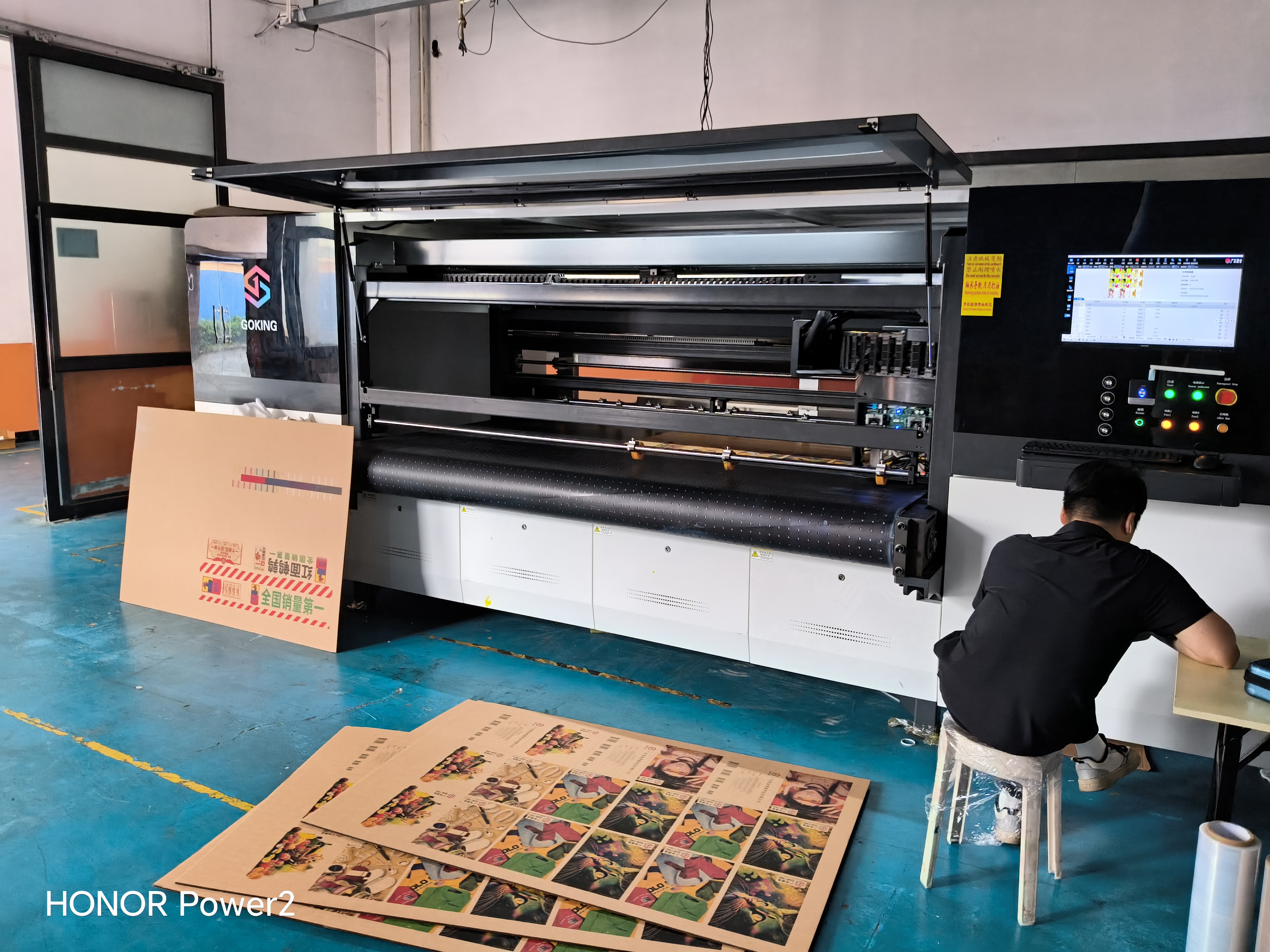
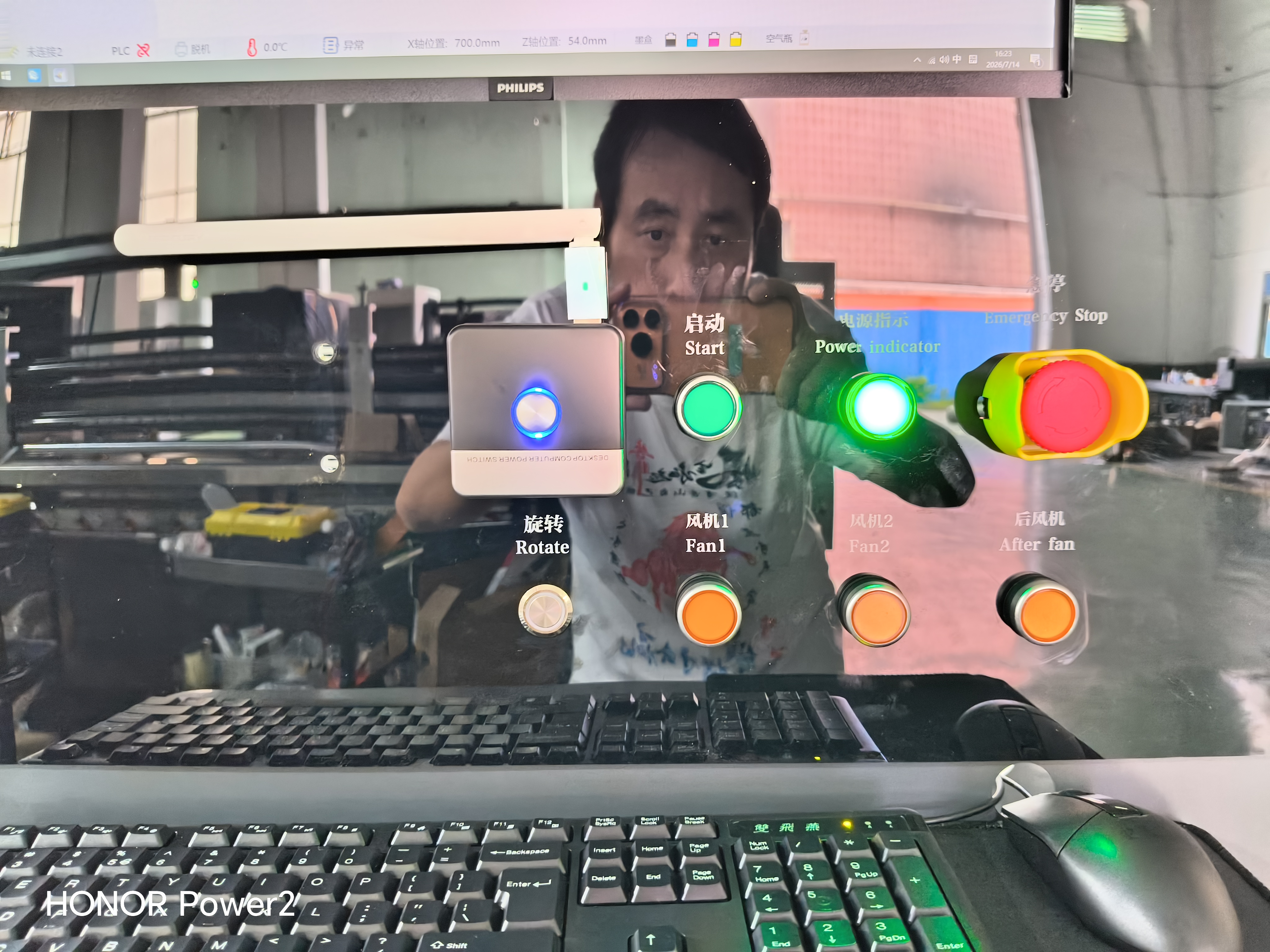
GOKING multifunctional digital printing machines are built around a single platform that accepts either feeding method. Feeding mode is listed as leading edge feeding or belt feeding, and the feeding material follows the same split — leading edge feed or belt feed. Both routes deliver board onto a vacuum adsorption platform, which holds the sheet flat during printing.
Leading-edge feeding: semi-automatic or fully automatic
The machine specification lists the leading-edge type as an optional semi-automatic or fully automatic configuration. In practice, semi-automatic leading-edge feeding keeps an operator in the loading cycle, which suits mixed, low-volume work where the operator is already sorting board by job. A fully automatic leading edge removes the operator from the sheet-by-sheet cycle and is the configuration that lets a printer work toward the platform's rated production efficiency.
Rated production efficiency for the platform is 700 / 1,500 m²/h. Single-pass printing speed is listed at 60 m/min with Epson printheads and at least 100 m/min with XAAR printheads. Those figures remain achievable only when board presentation is consistent — which is precisely what the automatic leading-edge option is designed to deliver.
Belt feeding: continuous board support
Belt feeding carries the board on a belt rather than registering it at the leading edge. In practice it is the more forgiving option when board is long, thick or heavy, or when the job mixes formats inside the same 2–30 mm thickness window. Because the sheet is supported across its length, belt feeding reduces dependence on a clean, square leading edge — a genuine advantage when board arrives from a die-cutter with slightly crushed edges.
The shared vacuum adsorption platform
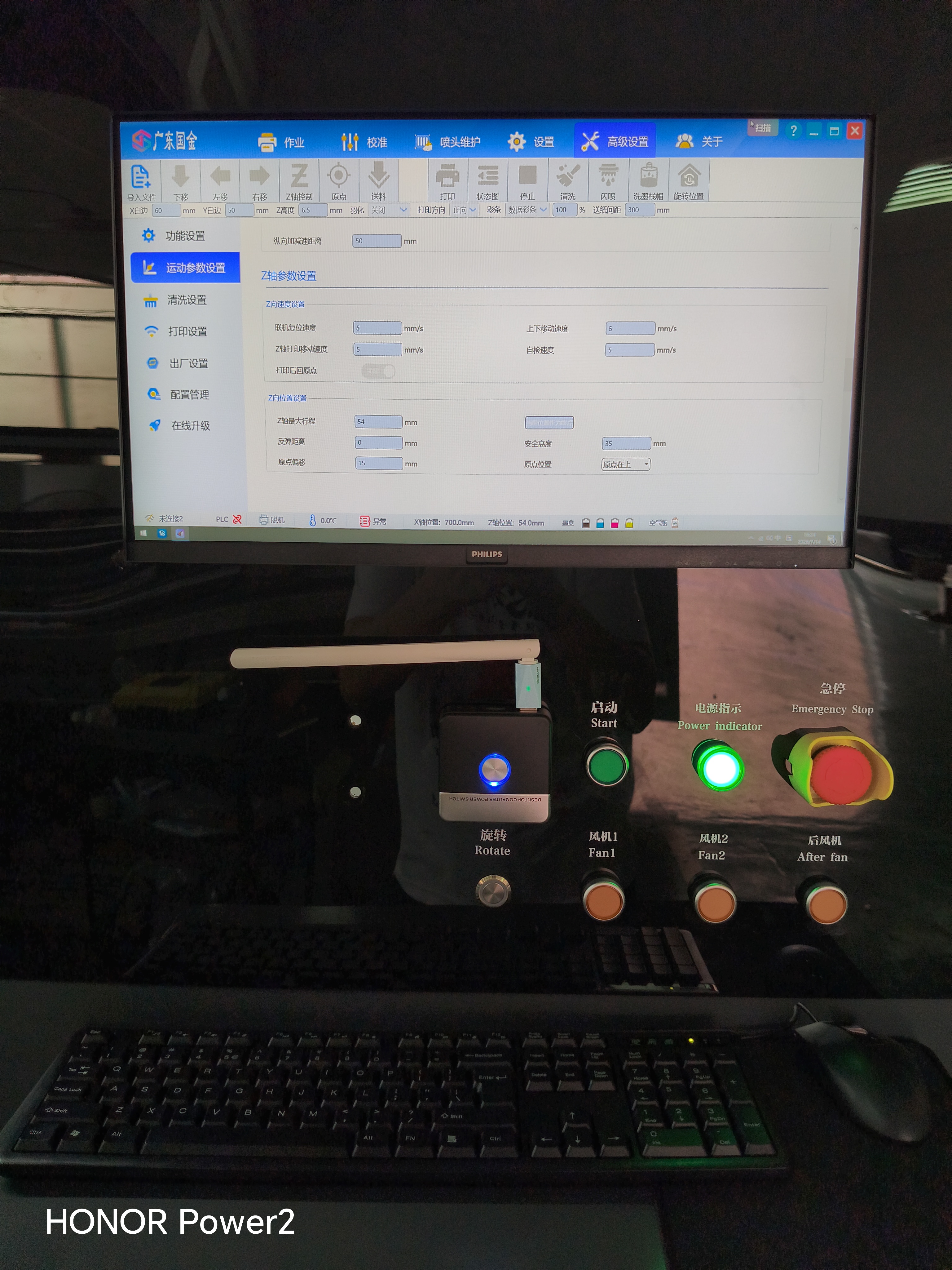
Both feeding modes discharge onto the same vacuum adsorption platform. This matters for the comparison because it means the choice of feeder does not change the ink set, the colour configuration or the printable width. The platform supports printhead counts from 8 to 256, print widths from 264 mm to 2,600 mm, and CMYK or CMYK+White colour modes. Minimum reproducible English text is 1.5 mm. Accepted file formats are PDF, JPG, BMP and TIF, with direct printing supported without converting pictures.
Evaluation point: because both feeding modes share the same vacuum platform and print engine, the feeder decision can be made independently of the ink and colour decision. A buyer can specify five-colour CMYK+W, a 2,600 mm print width and either feeding mode within the same machine configuration.
Configuration flexibility behind the feeder choice
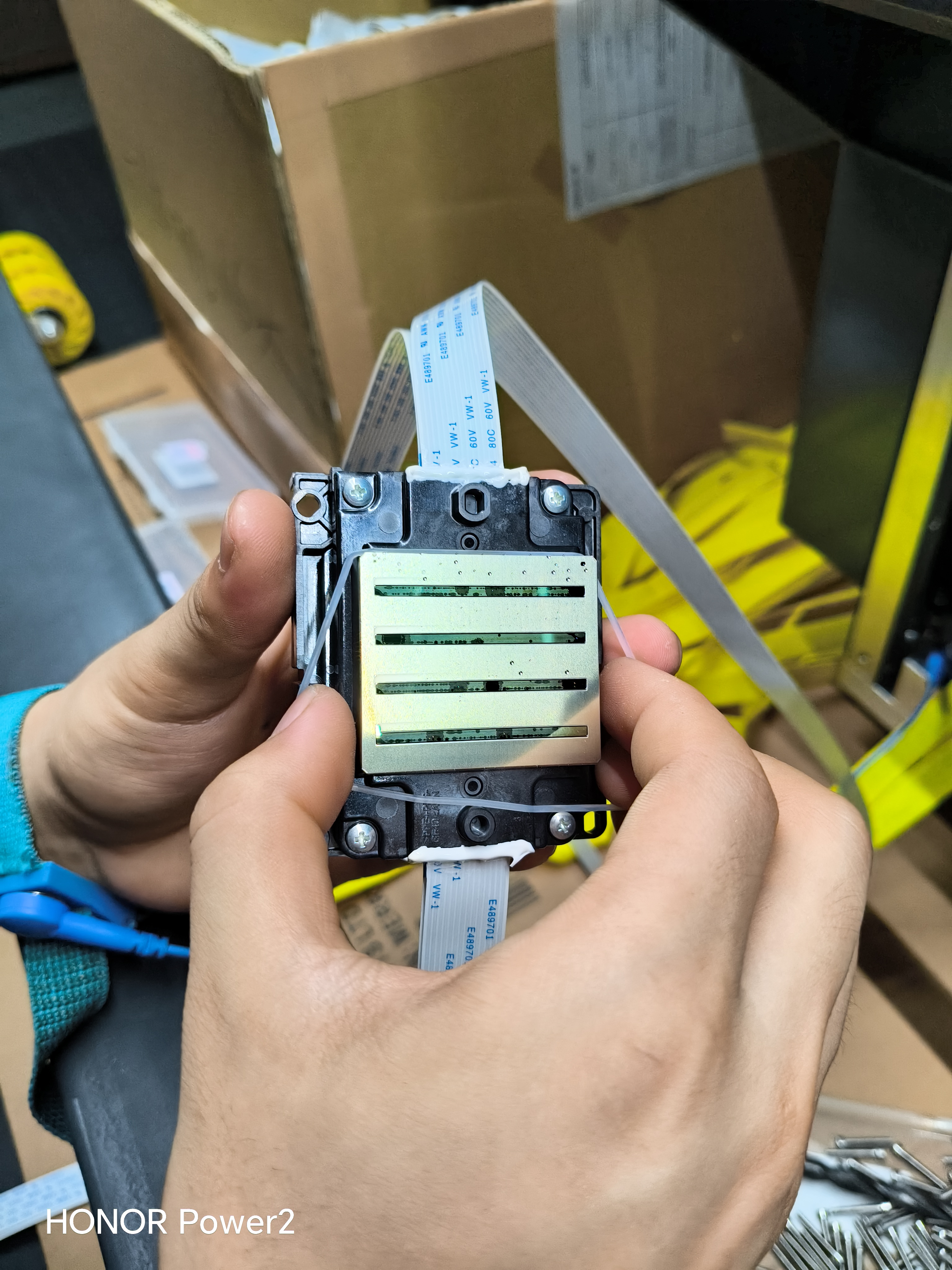
GOKING provides whole-machine R&D and manufacturing services and offers OEM and ODM production services for digital printing machines. Customisation covers machine structure, printhead type (Epson or Xaar), DPI configuration, five-colour schemes and turnkey line solutions, with DPI configurations up to 1,200 DPI supported across the Epson and industrial printhead options. A feeder specification is therefore a configurable parameter rather than a fixed catalogue item.
Step-by-Step Breakdown: Choosing a Feeding Mode in Five Steps
- Map your actual board range. List the thinnest and thickest board that will run on the press and confirm both sit inside the 2–30 mm rated range. If most work is 2–5 mm coated or kraft board, leading edge handles it; if the mix regularly includes thick or large-format board, belt feeding belongs on the shortlist.
- Classify your run pattern. Count typical jobs per shift and average run length. Frequent short runs with heavy operator sorting suit semi-automatic leading edge; long, repeated runs suit fully automatic leading edge.
- Choose the automation level of the leading edge. The platform supports both a semi-automatic and a fully automatic leading-edge module, so this is a deliberate upgrade decision rather than a take-it-or-leave-it feature.
- Confirm the downstream platform is unchanged. Vacuum adsorption, print width range and colour configuration stay the same whichever feeder is specified, so the feeder choice should not force a different ink or colour decision.
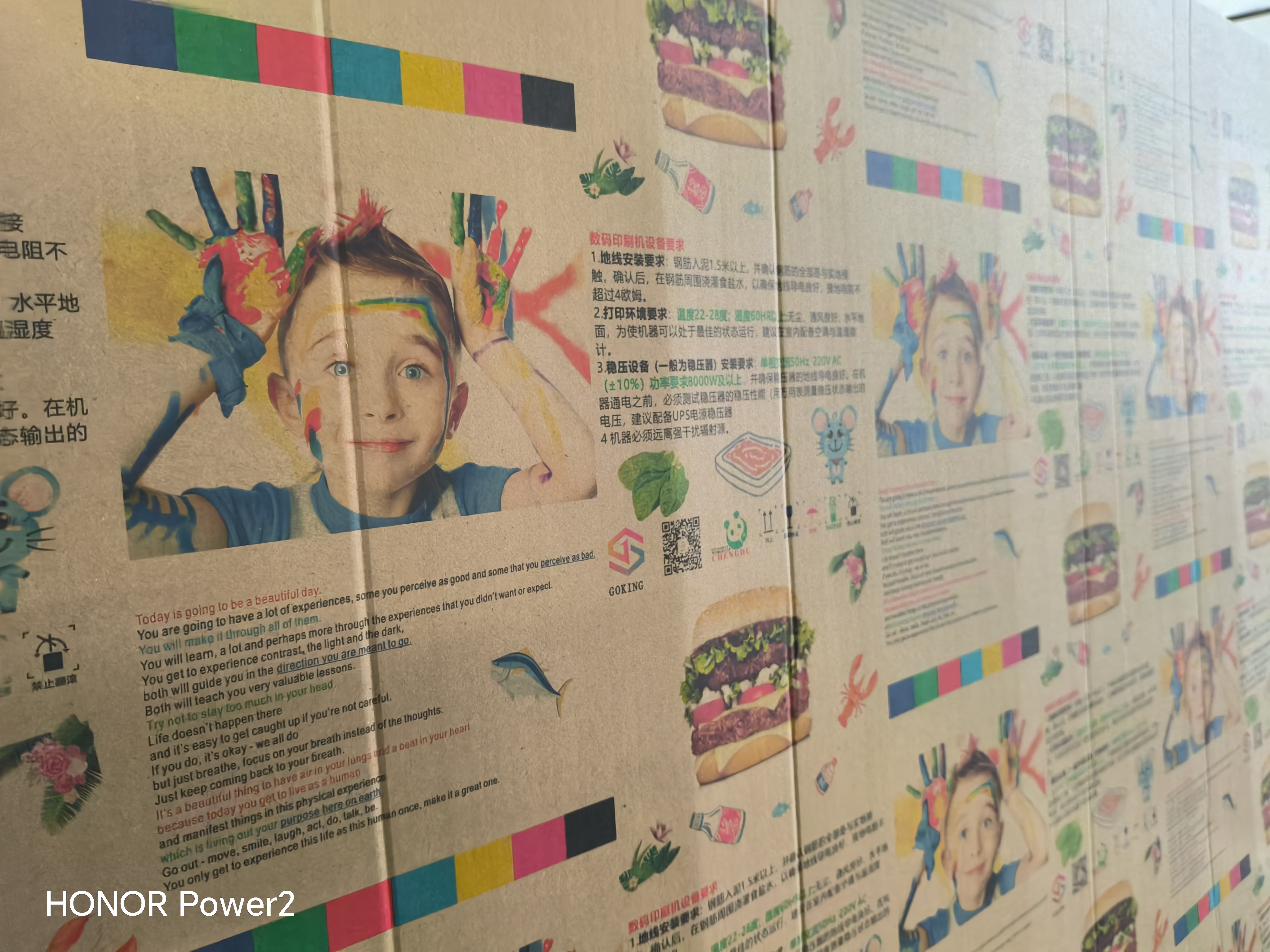
- Validate on your own board. GOKING offers free sample printing for global clients, and acceptance arrangements can include sample testing, factory inspection and pre-shipment inspection. Test the thin end and the thick end of your range, because feeding problems show up at the extremes.
Use Cases: Which Feeding Mode Fits Which Job
Gift boxes and coated board, short runs
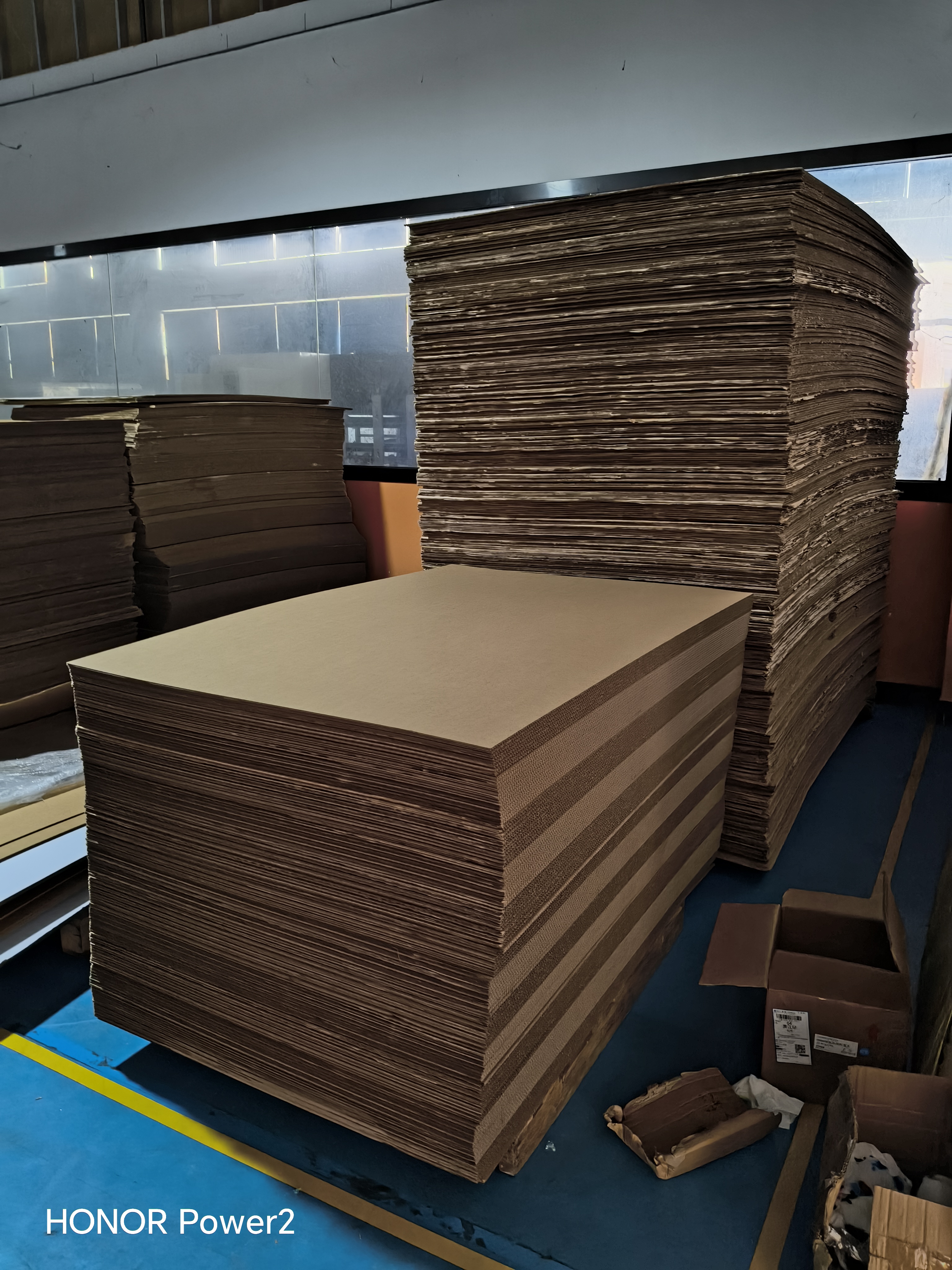
Gift box production uses coated paperboard and white paperboard in short, high-SKU runs. Board is generally flat and cleanly cut, so leading-edge feeding gives the most predictable registration. Semi-automatic leading edge suits operations where an operator is already handling board between jobs.
Corrugated packaging, repeat volume
For dedicated corrugated packaging production, the constraint is usually labour rather than board quality. A fully automatic leading edge removes the operator from the loading cycle and complements the platform's 700 / 1,500 m²/h rated efficiency.
Kraft paper and recycled flute
Recycled kraft stock varies more in stiffness and edge quality. Belt feeding's continuous board support reduces sensitivity to leading-edge condition, which helps on mixed recycled batches.
Large-format and heavy board
When board is long or heavy, belt feeding is the practical route. The platform's print width reaches 2,600 mm, and belt support keeps large sheets stable across that width.
Comparison Table: Leading-Edge vs Belt Feeding
| Comparison criterion | Leading-edge feeding (semi-automatic) | Leading-edge feeding (fully automatic) | Belt feeding |
|---|---|---|---|
| How board is presented | Registered by the board's leading edge | Registered by the board's leading edge | Carried on a belt |
| Automation option per specification | Optional semi-automatic | Optional fully automatic | Listed as a feeding mode, not as an automation tier |
| Rated material thickness | 2–30 mm | 2–30 mm | 2–30 mm |
| Printing platform | Vacuum adsorption | Vacuum adsorption | Vacuum adsorption |
| Colour mode | CMYK (W) | CMYK (W) | CMYK (W) |
| Print width range | 264–2,600 mm | 264–2,600 mm | 264–2,600 mm |
| Printhead count | 8 to 256 | 8 to 256 | 8 to 256 |
| Strongest fit | Mixed short runs, cleanly cut board | Repeat production, reduced operator loading | Long, heavy or unevenly edged board |
| OEM / ODM configurability | Yes | Yes | Yes |
Reading the table: the two leading-edge variants share a feeding principle and differ in labour model; belt feeding differs in how the sheet is supported. Thickness rating, platform, colour mode, width and printhead count are identical across all three columns, so the decision narrows to board profile and operator model.
FAQ
What feeding modes are available on a GOKING corrugated digital press?
GOKING multifunctional digital printing machines list two feeding modes: leading edge feeding and belt feeding. The leading-edge type is offered as an optional semi-automatic or fully automatic configuration. Both modes deliver board to a vacuum adsorption platform, and both are rated for material thickness from 2 mm to 30 mm.
Should I choose a semi-automatic or a fully automatic leading edge?
The specification lists the leading-edge type as optional semi-automatic or fully automatic, so the choice is a workflow decision rather than a technical limit. Semi-automatic keeps an operator in the loading cycle and suits mixed short runs where board is sorted by job. Fully automatic removes the operator from the sheet-by-sheet cycle and aligns with repeat production where the platform's rated efficiency of 700 / 1,500 m²/h is the target.
Is the press CE certified for EU buyers?
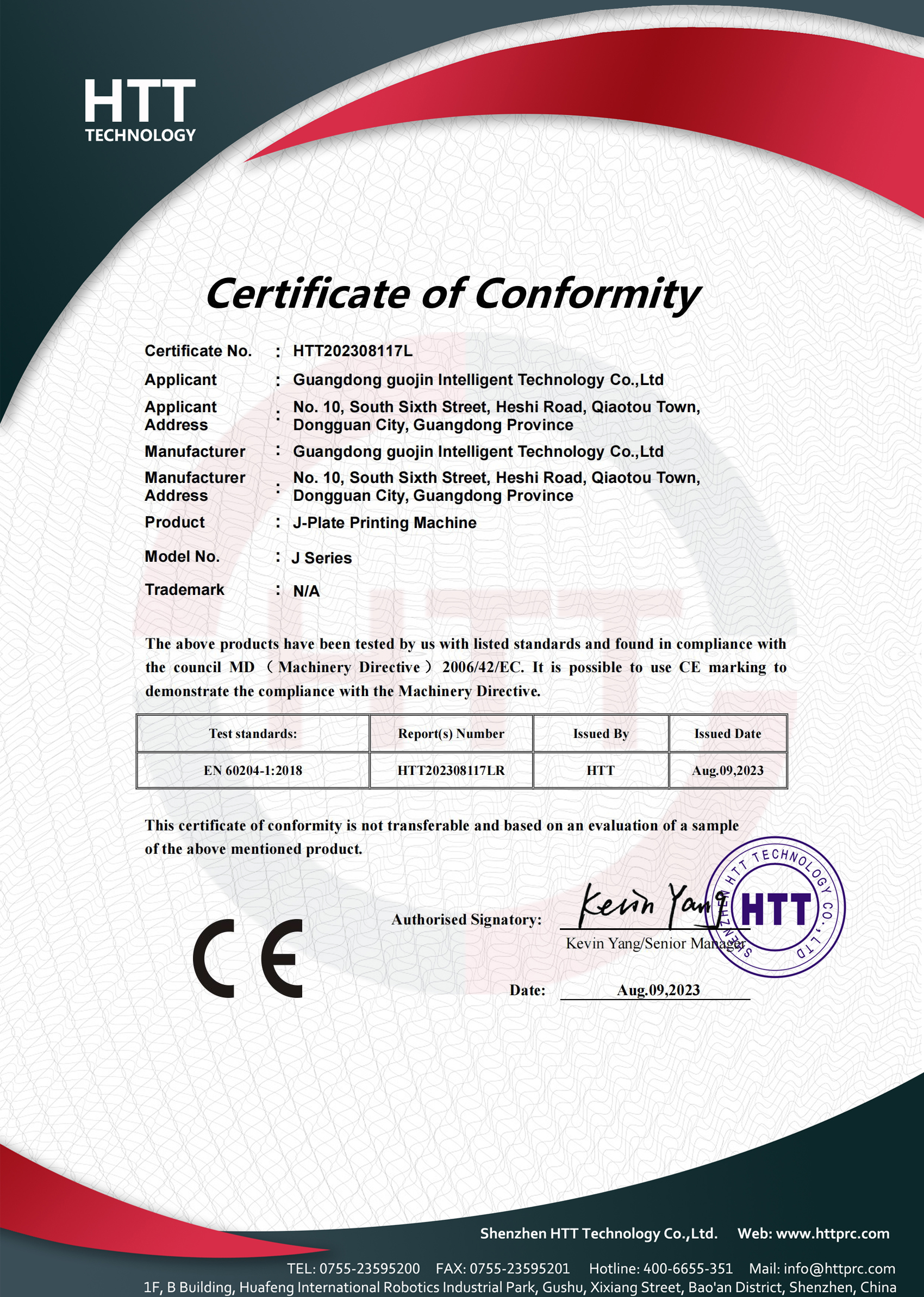
Yes. GOKING holds a CE Certificate of Conformity, certificate number HTT202308117L, issued by Shenzhen HTT Technology Co., Ltd. for the European Union market. The listed standard is EN 60204-1:2018 under Directive 2006/42/EC. The certificate was issued on 2023-08-09 and covers the corrugated cardboard digital printing machine series.
Can I test a feeding configuration on my own board before buying?
GOKING offers free sample printing for global clients, and acceptance arrangements can include sample testing, factory inspection and pre-shipment inspection. Testing both ends of your thickness range — around 2 mm and around 30 mm — is the most useful validation, because feeding behaviour differs most at the extremes of the rated range.
What are the MOQ, lead time and payment terms for a customised feeding configuration?
Minimum order quantity is 1 set. Standard production lead time for standard machines is typically one month; custom and OEM/ODM lead times are confirmed at order stage. Payment terms are a 30% deposit before production and the remaining 70% of the contract amount before shipment. Equipment ships worldwide as a whole machine or as a turnkey line, with four complimentary cartons of ink and wear parts packed together with the machine. To confirm which feeding configuration fits your board range, request a quote or download the 2026 GOKING product catalog.
Conclusion
Leading-edge and belt feeding are not competing quality levels — they are two ways of solving the same problem. Leading-edge feeding, in either semi-automatic or fully automatic form, gives the most controlled registration on cleanly cut board and lets a buyer dial automation to the actual labour model. Belt feeding supports board continuously, which is the safer route for long, thick or uneven material. Because both share the same vacuum adsorption platform, the same 2–30 mm thickness rating, the same 264–2,600 mm print width range and the same CMYK+White colour configuration, the decision can be made on workflow alone.
For buyers at the evaluation and execution stage, the practical sequence is to map board range first, classify run pattern second, and choose the automation level of the leading edge only after those two are settled. GOKING supplies both feeding modes, supports OEM and ODM production with configurable machine structure, printhead type and DPI, and validates the configuration through free sample printing before shipment.
Next step: send your board samples and run profile to GOKING, and confirm whether a semi-automatic leading edge, a fully automatic leading edge or belt feeding matches your line.
Website: www.cmyk-goking.com | Blog: blog.cmyk-goking.com | Catalog: 2026 product catalog
Contact — Cherry Wang: w1250606130@gmail.com / +86 18028205637 | Gloria Yang: qianqian203521@gmail.com / +86 18028204526