Corrugated Jobs: Multifunctional Digital Printing Machine Fit
Machine fit for corrugated packaging is decided by the job mix, not by one headline specification. A packaging factory printing one-off display sheets, a paper mill running coated paperboard, and a converter producing mass-market corrugated cases can all use a multifunctional digital printing machine, but they should not specify it in the same way. The practical matching path is to define order size, board type and thickness, substrate, color and ink requirement, printhead and DPI, floor layout and power, then confirm OEM/ODM support and acceptance terms against the exact model.
GOKING (Guangdong Goking Intelligent Technology Co., Ltd.) is a China-based manufacturer of single-pass and multi-pass 2-in-1 digital printing machines. The company states that its portfolio includes J-series scanning multi-pass, G-series direct-output ONEPASS, and GJ-series scanning direct-output all-in-one machines. Those series names matter for the matching exercise because they describe different production modes, not different marketing tiers.
Problem definition: why corrugated jobs are hard to match
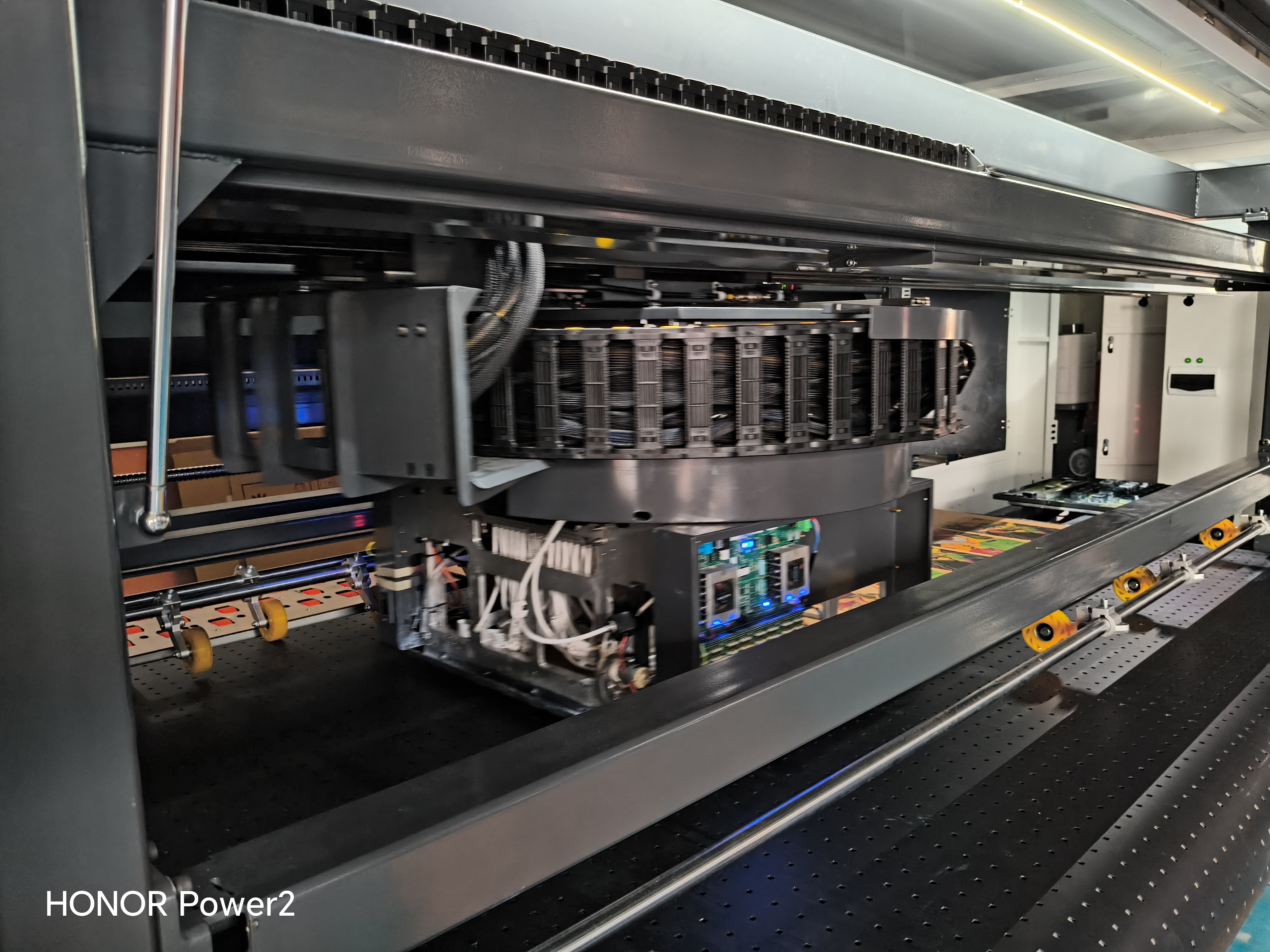
Corrugated work is not one product. It includes single-sheet printing, short-run packaging, urgent rework, mass production, gift boxes, displays, honeycomb board, and oversized industrial packaging. The same plant may handle kraft paper, coated paper, white paperboard, and A, B, C, and E corrugated board. That range creates three common mismatches: a machine bought for one order size that cannot handle the next; a substrate claim that was not tested on the actual board; and a floor layout or power plan that was based on a brochure rather than a model datasheet.
The buyer consequence is simple. A multifunctional digital printing machine should be shortlisted against the work that will run through it next year, not only the sample that looks best in a demonstration room. The rest of this guide turns that principle into checks for order size, substrate, color, printhead, layout, compliance, and OEM/ODM execution.
Industry background: short runs and mass production now coexist
Digital packaging print is expanding, but the growth is uneven by segment. Grand View Research values the global digital printing packaging market at USD 37.5 billion in 2025. Smithers forecasts that digital corrugated packaging value will more than double from 2025 levels to reach USD 8.2 billion by 2030. Those figures describe different scopes—digital printing for packaging overall and digital corrugated packaging specifically—so they should not be added together or used as a machine-level market share claim. They do show why packaging factories, paper mills, and coated paperboard operations are reviewing digital capacity alongside conventional plate-based production.
The operational background is equally important. A case unit supplied for this topic describes an overseas printing and packaging factory using digital printing for short-run packaging, urgent rework, and fragmented e-commerce and print-on-demand orders. The same case describes more than five years of use, improved production efficiency, and reduced production costs. That is a documented case context, not a guarantee that every plant will obtain the same result. It does show the job profile that a multifunctional machine is often asked to solve: small batches, quick changeovers, and a mix of substrates.
What fit means for a corrugated packaging job
Fit means the machine can run the required board, thickness, print width, color set, and order pattern at an acceptable quality and changeover discipline. It also means the site can supply the electrical and physical conditions the model requires. A machine that is oversized for a gift-box workflow, or underspecified for mass production, creates cost without solving the job. The matching decision should therefore be recorded as a job specification, not as a single machine preference.
For a corrugated packaging digital printing machine, the job specification should list: order-size bands, board types, substrate range, target thickness, print width, color and white-ink requirements, expected changeover frequency, available floor space, power supply, compressed air or ventilation needs if any, acceptance tests, and the commercial terms that affect commissioning. The exact model selection follows from that list.
Order-size logic: scanning, direct output, or 2-in-1
Order size determines the production mode. GOKING states that for complex or large-format boards, the scanning method is used; for small boards and small-batch orders, the direct-output mode is used; and a single all-in-one machine can handle both. This is the practical meaning of a single-pass and multi-pass 2-in-1 digital printing machine: the buyer is not choosing between two unrelated machines, but selecting a platform that can switch between production logics.
The series descriptions support that reading. The J-series is described as scanning multi-pass; the G-series as direct-output ONEPASS; the GJ-series as scanning direct-output all-in-one. A converter with a mixed job mix should ask how changeover between modes is handled, how operators are trained, and how sample acceptance is performed in each mode. A plant that only runs small boards and short batches may not need the full 2-in-1 range, while a plant that expects large-format or complex boards alongside small-batch work should not specify a direct-output-only configuration without testing the exception jobs.
This is configuration logic, not a speed guarantee. Output per hour depends on the model, print width, resolution, image coverage, substrate, and operator routine. Ask for a model-level output figure and an acceptance test on your own artwork; do not accept a single headline number as a universal production rate.
Substrate and thickness: kraft, coated paper, and corrugated board
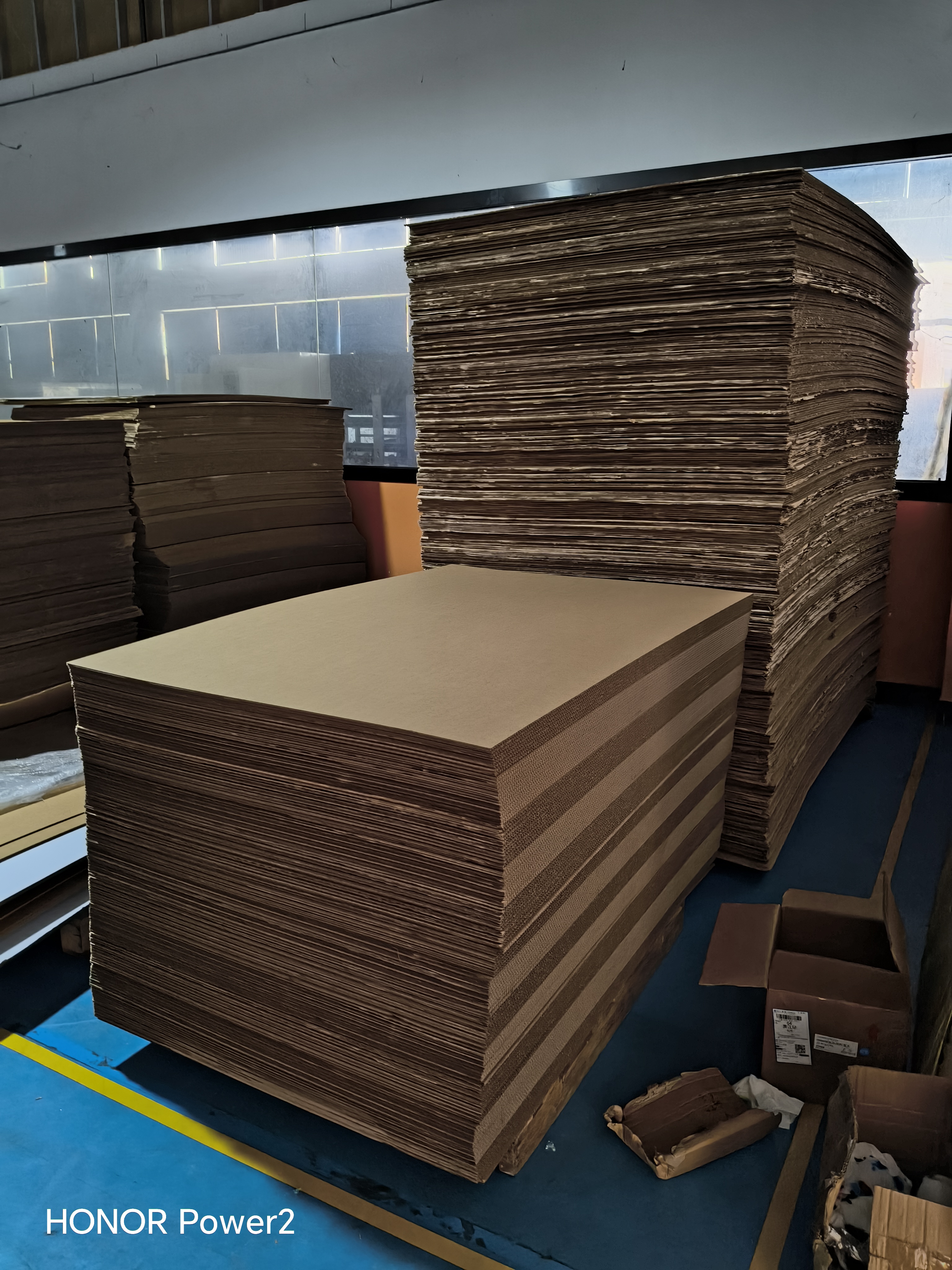
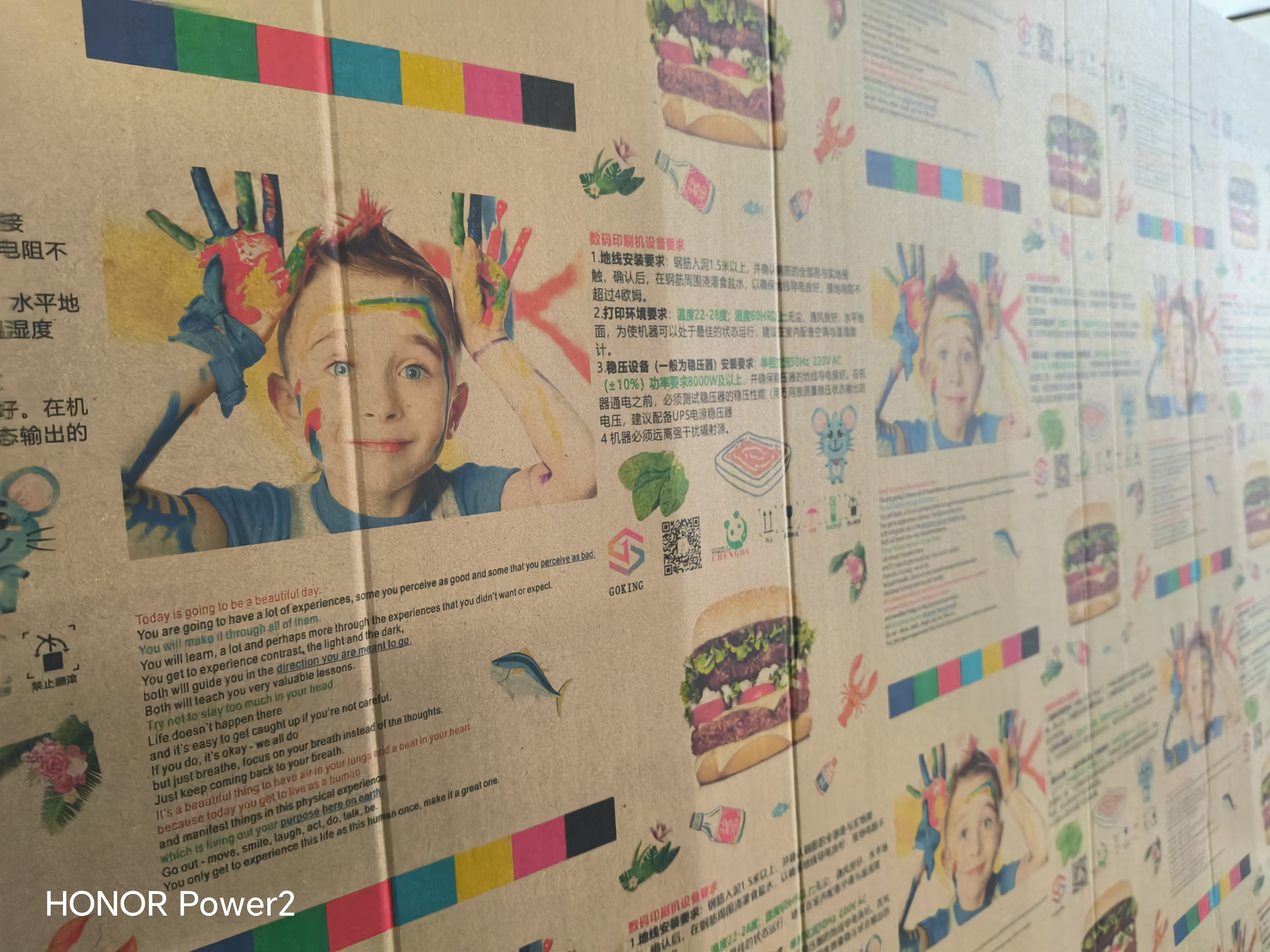
GOKING states that its solutions cover kraft paper through coated paper and range from single-sheet printing to mass production. It also states support for A, B, C, and E corrugated board types. Those claims are the starting point for substrate matching, not the end of it. A paper mill or coated paperboard operation should test ink adhesion, drying, stacking, and surface appearance on the exact coated grade. A corrugated converter should test the actual flute type, liner, and board thickness that will run in production.
Thickness needs its own check. If the job sheet calls for boards across a 2–30 mm band, treat 2–30 mm as a validation target rather than a universal machine rating. Ask for the model's rated thickness range, the board grade used for that rating, and a sample print at the thin and thick ends of your range. A broad substrate statement such as ‘kraft to coated paper’ does not by itself prove a thickness limit. The same discipline applies to white paperboard and honeycomb board: test the exact material, not a similar-looking sample.
Color, white ink, printhead, and DPI
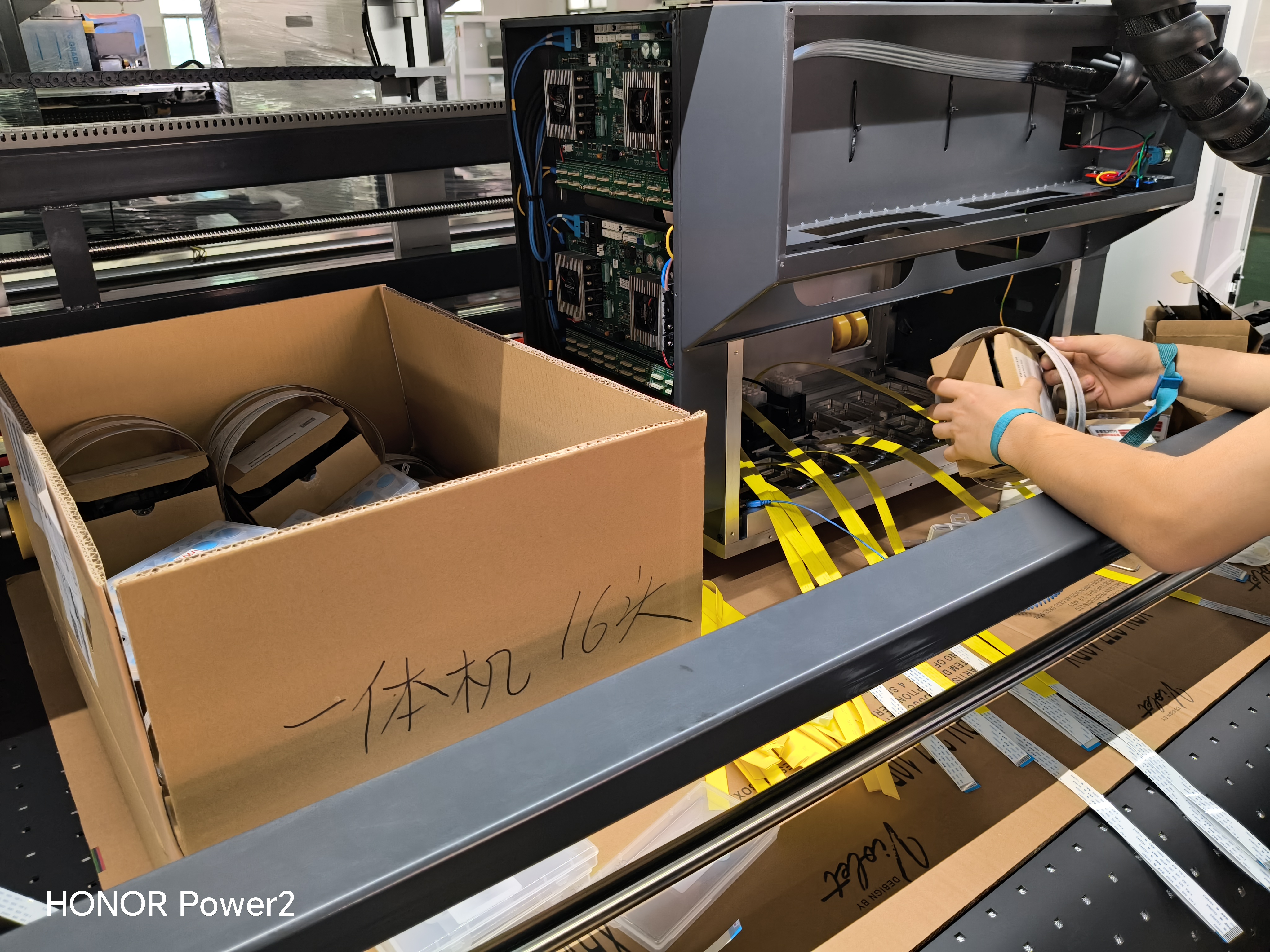
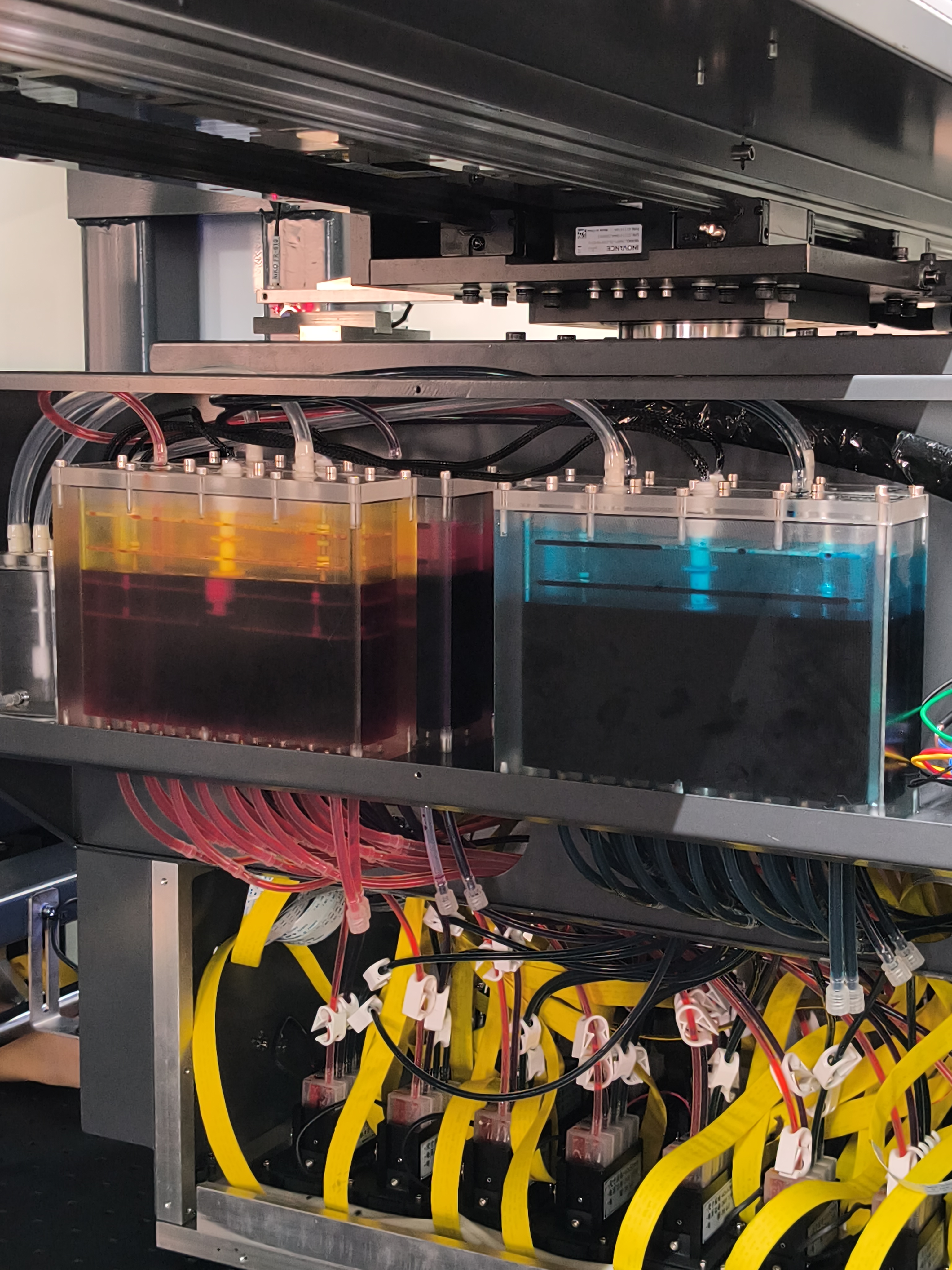
GOKING describes five-color integrated models and multiple DPI configurations with different nozzles. The stated technical range includes 600 DPI and 1200 DPI and Epson nozzles in configurations from 8 to 256 nozzles. Printhead type can also be specified as Epson or Xaar under the customization options. These variables should be matched to the artwork and viewing distance. A shipping carton with large type and simple graphics does not have the same resolution requirement as a gift box with fine detail, small text, and multi-color registration.
White ink is a job-specific requirement. A digital printer with white ink can be relevant for dark or brown substrates, but the buyer should confirm the exact model, ink set, opacity, adhesion, and overprint behavior. Do not assume that a five-color configuration automatically delivers the white-ink result you need. Ask for a sample on the production board with the production ink and the intended top coating or varnish.
Water resistance is another area where the label should not replace the test. A ‘waterproof’ or water-resistant claim should be backed by a defined test method and a result on the specified board and ink. Ask for a water-spot or wash test, including drying time and any post-print treatment. The available technical facts support discussion of water-based dye, water-based pigment, UV, and other environmental ink options; they do not by themselves establish a water-resistance performance level for every substrate.
If automatic nozzle cleaning is on the requirement list, confirm it in the model specification. Do not infer automatic cleaning from a general ‘automatic’ claim. The same applies to automatic color calibration and automatic job switching: these features can reduce setup demands in a mixed job mix, but they should be demonstrated on the model being purchased.
Shop-floor planning: dimensions, power, and compliance
Machine dimensions are model-specific. Request a dimensioned layout drawing that shows overall length, width, and height, plus feed and collection clearance, operator access, ink storage, printhead maintenance access, and floor loading. A brochure image is not a layout drawing. For a corrugated packaging digital printing machine, the material flow around the machine is as important as the machine footprint: board stacking, work-in-progress, finished pallets, and forklift access can determine whether the chosen model fits the bay.
Power planning should also be model-specific. Do not treat 380 V as a universal requirement or a universal guarantee. Confirm voltage, phase, frequency, current, earthing, and any dedicated circuit or isolation requirement in the model's electrical documentation. If the site has a 380 V supply, that is a planning input; it is not a substitute for the datasheet. The same check applies to compressed air, exhaust, humidity, and temperature if the model documentation lists them.
For EU market access, the supplied certificate record is specific: Certificate of Conformity, CE type, certificate number HTT202308117L, issued by Shenzhen HTT Technology Co.,Ltd. on 2023-08-09, under EN 60204-1:2018 and Directive 2006/42/EC, for the European Union. That is more useful than a generic ‘CE-certified’ badge. Check the certificate scope against the exact model and configuration. Also note that the EU Machinery Regulation (EU) 2023/1230 becomes fully applicable on 14 January 2027, replacing the old directive framework; a machine ordered for EU delivery should be reviewed against the applicable regime at the time of shipment.
OEM/ODM: when the standard model is close but not exact
GOKING provides OEM and ODM production services for digital printing machines, including whole-machine R&D and manufacturing. The stated customization scope covers machine structure, printhead type (Epson or Xaar), DPI configuration, five-color scheme, and turnkey line solutions. That matters when the job mix includes a board size, color set, or line integration that is not covered by a standard catalogue configuration.
The company profile adds execution facts that a buyer can use in supplier evaluation: founded in 2020, a 10,000 ㎡ factory, 152 employees, 38 engineers, annual output of 864 sets, and an export ratio of 49% across markets including Europe, Africa, Latin America, Russia, Kazakhstan, and Turkey. These are company-reported facts, not independent audit results. They should be verified through factory inspection, references, and the acceptance process. The capability unit also states a monthly capacity of 38 sets, a MOQ of 1 set, and a standard production lead time of typically one month, with custom and OEM/ODM lead times subject to confirmation.
OEM/ODM is not a promise that any request can be met. The buyer should define the customization boundary: which structure changes are allowed, which printhead and DPI combination is qualified, what sample is required before shipment, and who owns the acceptance criteria. Quality control should be written into the order: 100% aging test, long-time running inspection, and pre-shipment inspection are stated capabilities. After-sales support should also be specified: technical support, spare parts support, and response within 24 hours are stated, with on-site engineering support for installation and commissioning described in the company profile.
Step-by-step matching process
The following sequence keeps the decision tied to evidence rather than impressions.
- Map the job mix. List order-size bands, single-sheet versus mass-production work, board types, substrate range, thickness targets, print width, color requirements, and white-ink needs. Include exception jobs, because they often decide the configuration.
- Choose the production mode. Use scanning multi-pass for complex or large-format boards; use direct output for small boards and small-batch orders; use a 2-in-1 platform when both patterns are real. Confirm the series and mode on the model datasheet.
- Specify printhead, DPI, and color. Match Epson or Xaar printhead choice, 600 or 1200 DPI, nozzle count, and five-color configuration to the artwork. Add white ink only after a sample proves the required opacity and adhesion.
- Validate substrate and thickness. Test kraft paper, coated paper, white paperboard, and the actual A, B, C, or E board. Test the thin and thick ends of the target thickness band. Record ink, drying, and post-print treatment.
- Plan the floor and power. Obtain a dimensioned layout drawing and electrical data. Confirm voltage, phase, current, clearance, floor loading, ink storage, and maintenance access. Check CE scope and the applicable EU regulation date for the delivery market.
- Set acceptance and commercial terms. Use sample testing, factory inspection, pre-shipment inspection, and on-site acceptance per contract. The stated commercial terms are MOQ 1 set, 30% deposit before production, and 70% before shipment. Delivery terms include global shipping, secure packaging, whole-machine delivery, and turnkey line delivery; four complimentary cartons of ink and various wear parts are packed with the equipment.
- Confirm OEM/ODM and after-sales. Write the customization scope, lead time, training, spare parts, and response commitments into the order. Verify the standard one-month lead time or the custom/OEM/ODM confirmation, and check the 38-set monthly capacity against your delivery window.
Use cases that change the configuration
Mixed short-run and mass-production converter
A converter that runs small-batch packaging and occasional larger campaigns should compare a GJ-series scanning direct-output all-in-one with a separated scanning and direct-output plan. The 2-in-1 logic is relevant when both job types are expected to continue. The buyer should test changeover, operator routine, and sample quality in both modes before committing.
Paper mill or coated paperboard operation
A paper mill or coated paperboard operation should put substrate qualification first. The stated range from kraft paper to coated paper is useful for shortlisting, but the exact coated grade, coating weight, surface strength, and drying behavior must be tested. If the plant also handles white paperboard, include it in the sample set. The machine decision should follow the substrate result, not precede it.
Gift box, display, and oversized packaging
Gift box work often needs five-color printing, white ink, and good registration on smaller sheets. Display and oversized industrial packaging may need the scanning method and a wider format. GOKING states a 2.55 m ultra-wide solution for honeycomb boards, oversized industrial packaging, and large-scale display boards. That is a company-reported width claim; verify the exact model, usable width, board handling, and site clearance before planning the bay.
Overseas packaging factory with urgent rework
The supplied case describes an overseas printing and packaging factory using digital printing for short-run packaging, urgent rework, and fragmented e-commerce and print-on-demand orders, with more than five years of use and reported improvements in efficiency and cost. A buyer in a similar position should ask for references in the same application, not only a generic machine demonstration. The case is evidence of a use pattern, not a promise of identical results.
Configuration comparison by job pattern
| Job pattern | Configuration to review | Why it fits | What to verify |
|---|---|---|---|
| Small boards and small-batch orders | G-series direct-output ONEPASS | Direct-output mode is stated for small boards and small-batch orders. | Board thickness, print width, changeover, sample quality. |
| Complex or large-format boards | J-series scanning multi-pass | Scanning method is stated for complex or large-format boards. | Board handling, resolution, layout, production routine. |
| Mixed short-run and mass production | GJ-series scanning direct-output all-in-one | Single-pass and multi-pass 2-in-1 platform covers both modes. | Mode changeover, operator training, acceptance in both modes. |
| Oversized, honeycomb, or display board | 2.55 m ultra-wide solution | Company states a 2.55 m printing width for these applications. | Usable width, substrate, handling, site clearance. |
| Kraft or coated paper packaging | Model with qualified ink and substrate setup | Company states solutions from kraft paper to coated paper. | Ink adhesion, drying, stacking, water test if required. |
| Gift boxes with white or five-color work | Five-color model with white-ink option where required | Five-color integrated models and a white-ink printer are in the capability set. | White opacity, adhesion, registration, overprint, sample. |
FAQ
What should I verify in an OEM multifunctional digital printing machine manufacturer for corrugated packaging?
Verify whole-machine R&D and manufacturing, OEM and ODM services, and the customization scope for machine structure, printhead type (Epson or Xaar), DPI, five-color configuration, and turnkey line support. Confirm MOQ 1 set, the standard lead time of typically one month, custom or OEM/ODM lead time subject to confirmation, and monthly capacity of 38 sets. Check quality control (100% aging test, long-time running inspection, pre-shipment inspection), after-sales response within 24 hours, spare-parts support, and on-site installation and commissioning. For the corrugated job itself, require sample prints on the actual A, B, C, or E board, kraft paper, coated paper, and target thickness. If white ink or water resistance is required, test those specifically. A sample print and the 2026 product catalog are practical next steps.
Conclusion
Matching a multifunctional digital printing machine to corrugated packaging jobs is a chain of evidence: job mix, production mode, substrate and thickness, ink and printhead, floor and power, OEM/ODM scope, and acceptance terms. The machine should be selected against the work that will actually run, not against a single demonstration sample. GOKING's 2-in-1 architecture, J/G/GJ series, five-color configurations, 600/1200 DPI options, 8–256 Epson nozzle configurations, and OEM/ODM services provide a starting point for that review. The final decision should rest on the exact model datasheet, substrate test, electrical layout, CE scope, and contract acceptance.
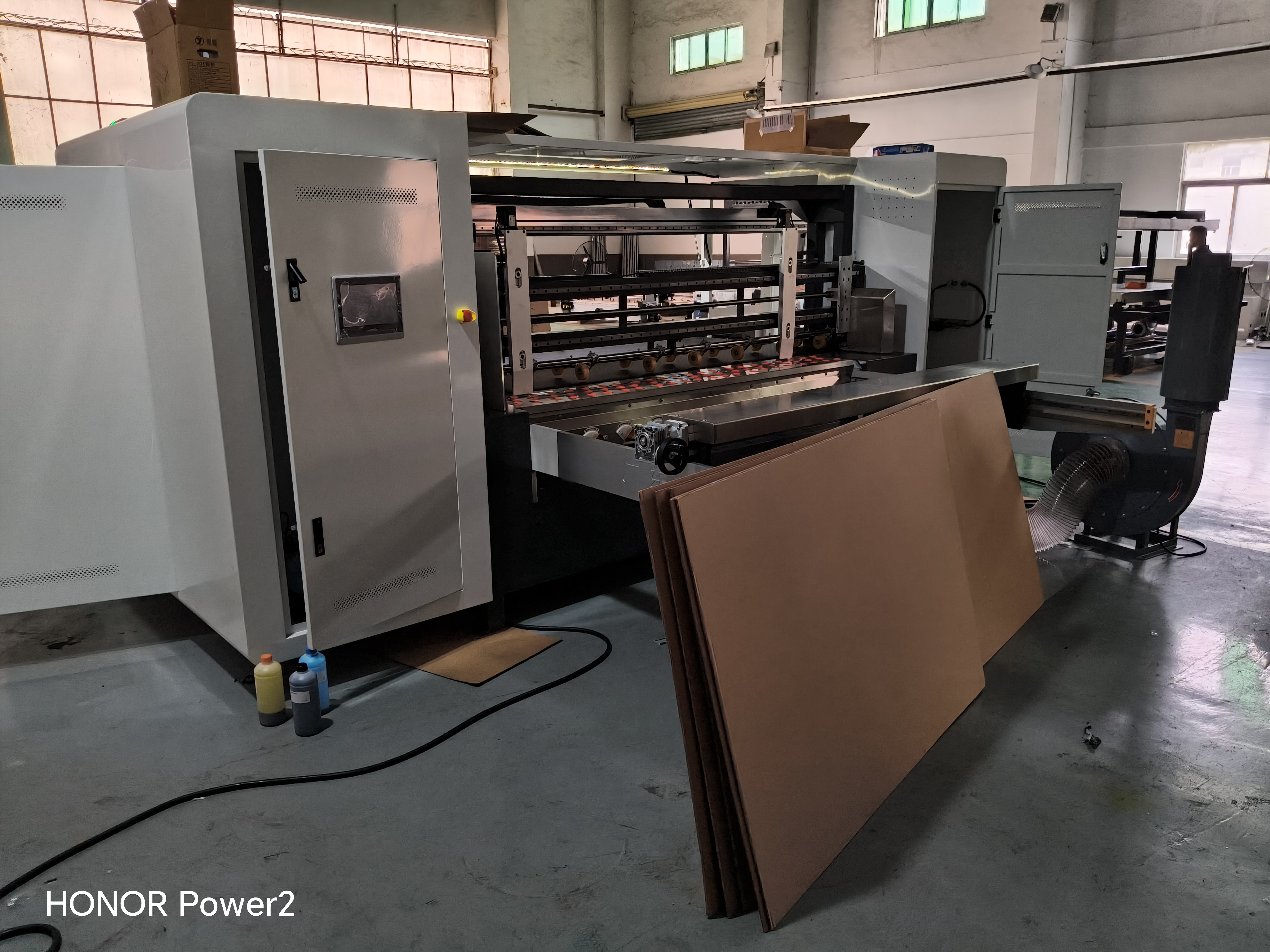
Next step: Use GOKING's free sample printing for global clients to test your board, artwork, and ink requirement before specifying the machine. Download the 2026 product catalog or contact GOKING through www.cmyk-goking.com to discuss a sample and model configuration.
Have Questions or Need More Details?
Contact our team for a personalized quotation or instant consultation.
Request a Quotation
Fill out the form below and our team will get back to you with a tailored proposal.
WhatsApp Direct Chat
Prefer to chat in real-time? Message us on WhatsApp for instant assistance & quick answers.
- Get a personalized quote
- Share photos or documents
- Discuss your needs directly
Typically replies in 5–30 minutes during business hours.