DPI and Nozzle Choices in Multifunctional Digital Printing
DPI and Nozzle Choices in Multifunctional Digital Printing
On corrugated cardboard, DPI and nozzle configuration set two limits at the same time: the finest detail a job can reproduce, and the speed at which it can be produced. A multifunctional digital printing machine that accepts different nozzle families (Epson or Xaar), different nozzle counts (8 to 256 printheads) and different DPI settings lets a packaging printer move between those limits job by job, instead of being locked into one fixed performance point.
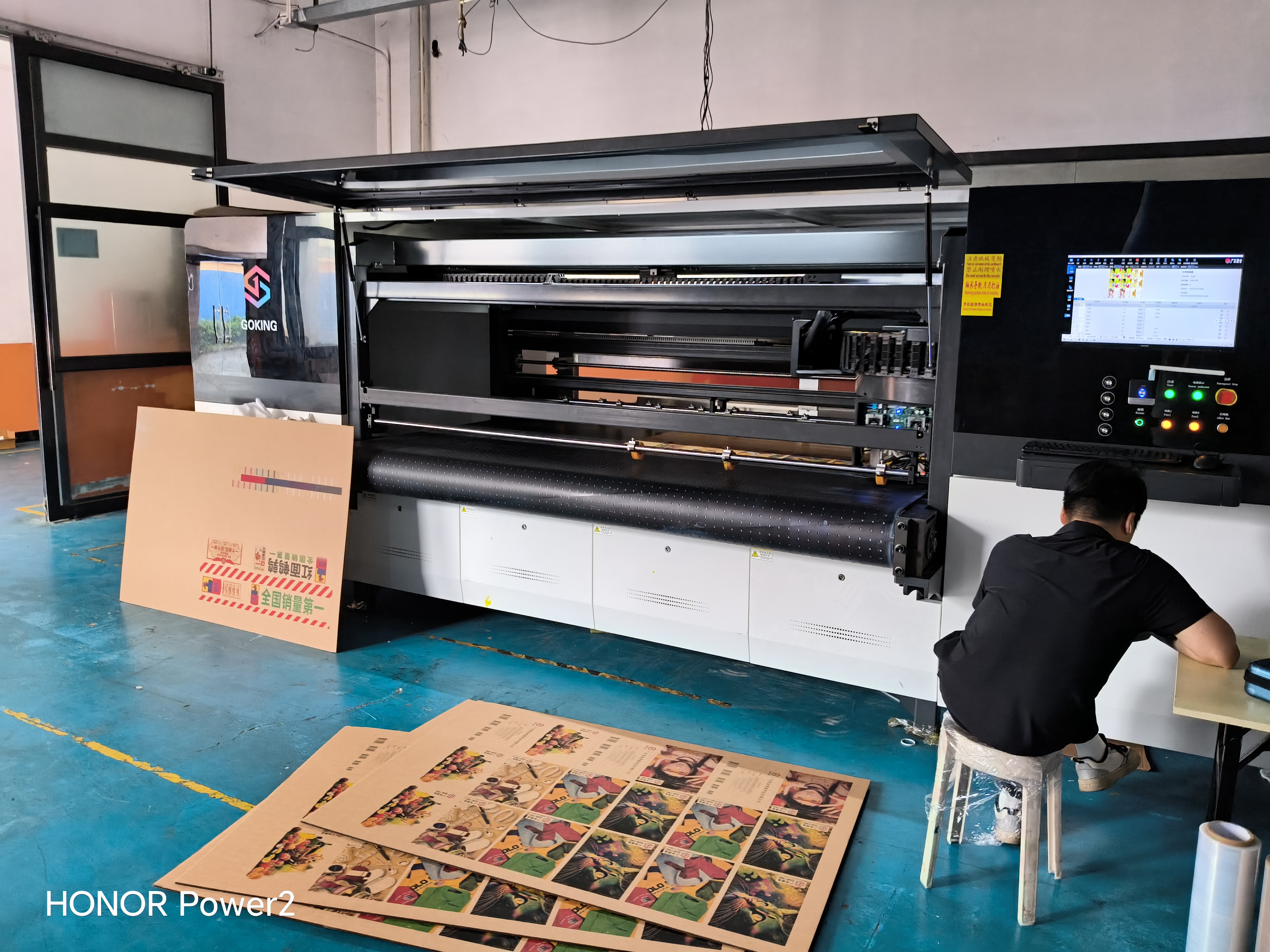
Guangdong Goking Intelligent Technology Co., Ltd. (GOKING) builds single-pass and multi-pass 2-in-1 digital printing machines around exactly that configurability, including five-color integrated models that add white ink to CMYK. This guide explains what DPI and nozzle choices actually change on corrugated board, where the speed-versus-detail trade-off sits, and how to translate a real production mix into a written machine configuration.
Why DPI and Nozzle Configuration Decides the Print Result
A DPI figure on a datasheet describes a capability, not an outcome. On corrugated cardboard the visible result is produced by four variables working together: the printhead type and nozzle count, the DPI setting, the ink chemistry, and the surface of the board. Move one of those variables and the others change with it.
Most specification mistakes start here. A design that prints cleanly on coated paper can lose its fine text when transferred to an absorbent kraft liner. A machine quoted at a high nozzle count can be configured to a DPI level that its ink and substrate cannot visibly use. A white-backed design is planned without a white ink channel and has to be reworked after the sample stage.
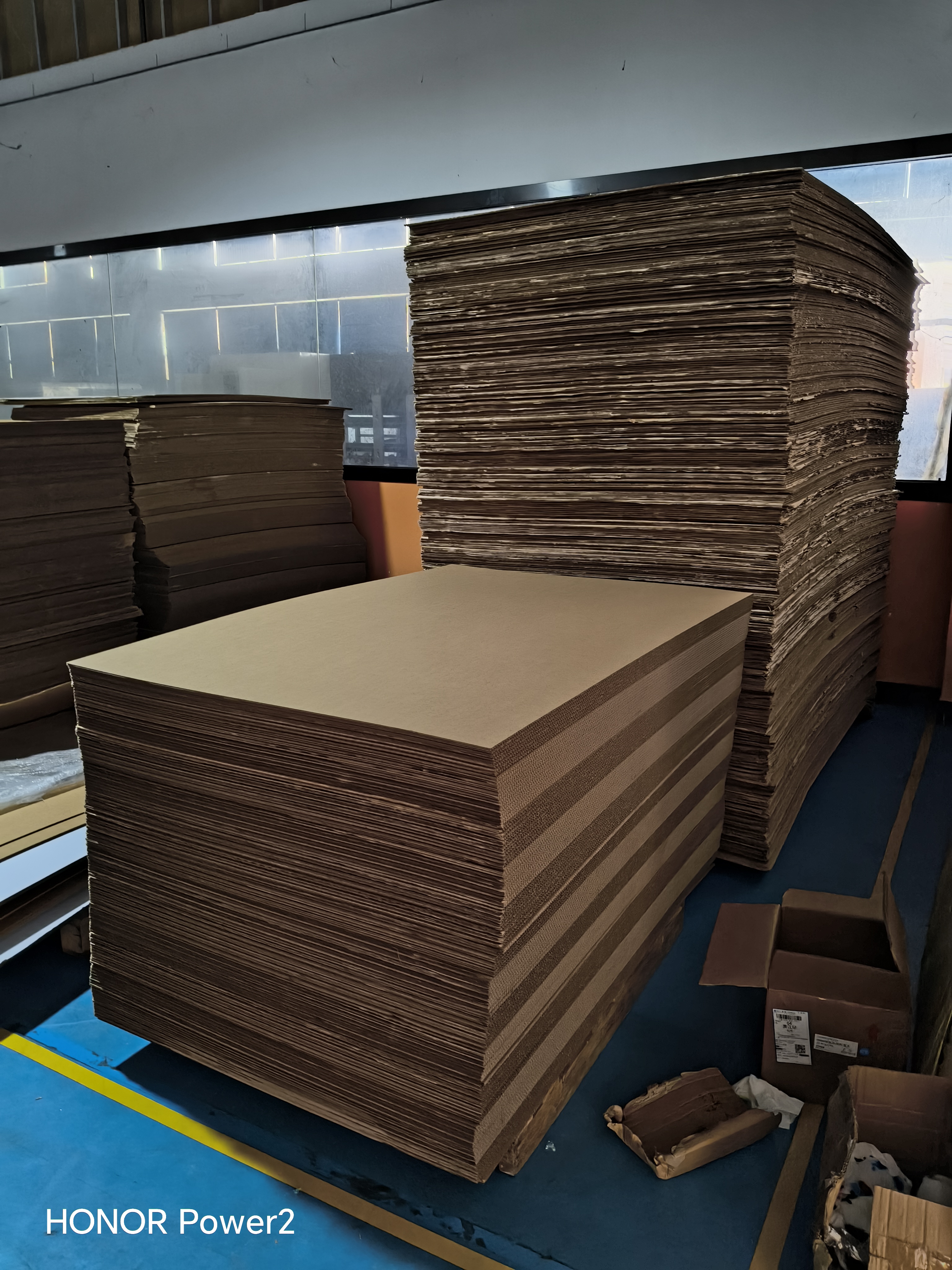
The constraints are physical rather than commercial. Corrugated and honeycomb board processed on these machines runs from 2 mm to 30 mm in thickness, and liner surfaces range from highly absorbent kraft to coated paperboard. Ink spread, dot gain and drying behaviour all shift with the surface. The documented minimum reproducible element on GOKING equipment is digital English text at 1.5 mm, which is a useful anchor: anything below that floor should be validated on a physical sample rather than assumed from a DPI claim.
Three failure patterns appear repeatedly in packaging factories evaluating a digital press:
- DPI specified without the nozzle context. A resolution target is meaningless without the printhead family and printhead quantity that produce it.
- Print mode chosen before the job mix is known. Direct output and scanning modes suit different board formats and batch sizes.
- Ink chemistry treated as an afterthought. In practice the ink set is a configuration decision made at order stage, not a consumable chosen later.
Industry Background: Print Volume Is Moving Toward Packaging
The wider market explains why DPI and nozzle decisions now carry commercial weight. The global digital printing market was valued at USD 38.0 billion in 2023 and is projected to reach USD 57.0 billion by 2030, according to Grand View Research. Within that market, the inkjet technology segment held the largest share at 48.4% in 2023 — the same technology family used in plate-less corrugated printing.
The packaging portion of that volume is expanding from USD 30.2 billion in 2024 toward USD 46.2 billion by 2029 (MarketsandMarkets), and single-pass digital printing machines alone were valued at USD 3.2 billion in 2024, with a projected USD 6.5 billion by 2034 (Reports and Data). Asia-Pacific accounted for approximately 41.6% of digital printing revenue in 2025 (Market Research Future), which aligns with the concentration of digital printing machinery manufacturing in Guangdong province.
Two structural shifts make configuration choices a production issue rather than a purely technical one:
- Variable data printing made runs under 3,000 units economically viable in 2024, in a range that had previously been cost-prohibitive (Market Research Future). Short runs put a premium on changeover speed, which is exactly what a plate-less digital machine provides — and exactly what a mismatched DPI setting removes.
- Hybrid digital-offset architectures are attracting R&D investment from established press builders such as Heidelberger Druckmaschinen (Market Research Future, 2024), which indicates that digital output is being positioned alongside, not instead of, conventional printing for the mid-volume band.
Compliance is moving at the same time. In April 2024 the U.S. EPA declared certain PFAS chemistries used in UV inks hazardous, which directly affects how UV ink formulations are specified for export markets (Mordor Intelligence). Buyers selecting an ink chemistry should confirm the current regulatory position rather than relying on historical assumptions.
How Nozzle Type, Nozzle Count and DPI Interact
Treat these three as one control system. Nozzle type determines what fluid and what speed are practical; nozzle count determines how wide and how fast the beam can lay ink down; DPI determines how the resulting dots are addressed. Changing any single one of the three without the other two produces a machine that is either over-specified or unable to hold the job.
Nozzle type: Epson or Xaar
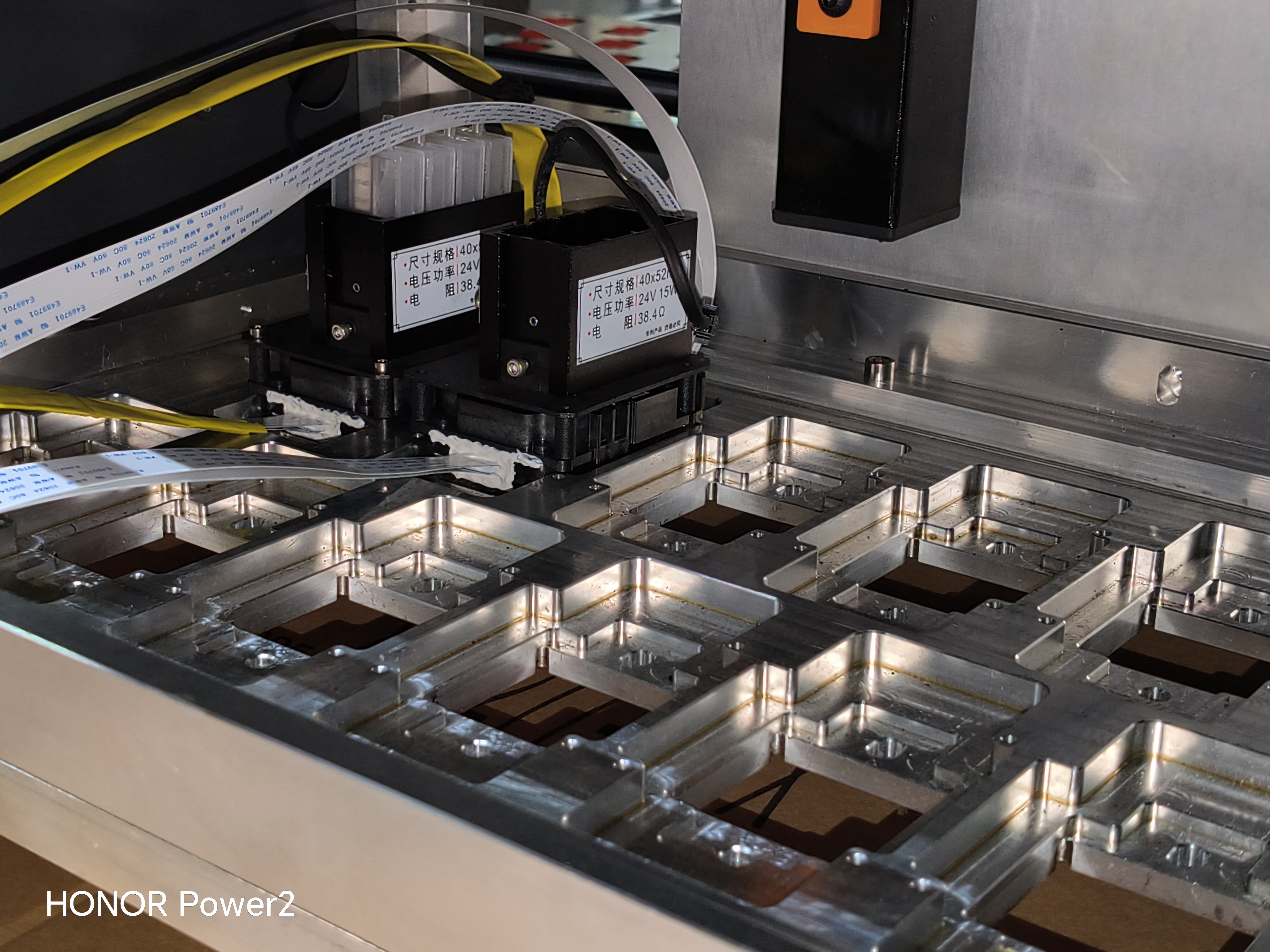
GOKING machines can be configured with either Epson or Xaar printheads, and the choice reflects a production profile rather than a brand preference. Epson micro-piezo printheads, including the Epson I3200, are widely used in Chinese-manufactured digital printers for plate-less, high-quality output. Xaar industrial printheads, including the Nitrox generation, are targeted at high-viscosity fluid applications such as industrial coatings and ceramic printing.
The difference is measurable in GOKING's documented single-pass figures: 60 m/min with Epson nozzles in single-pass printing, and at least 100 m/min with Xaar nozzles in single-pass printing, where Xaar is described as durable and long-lasting with low requirements for the operating environment.
Nozzle count and print width
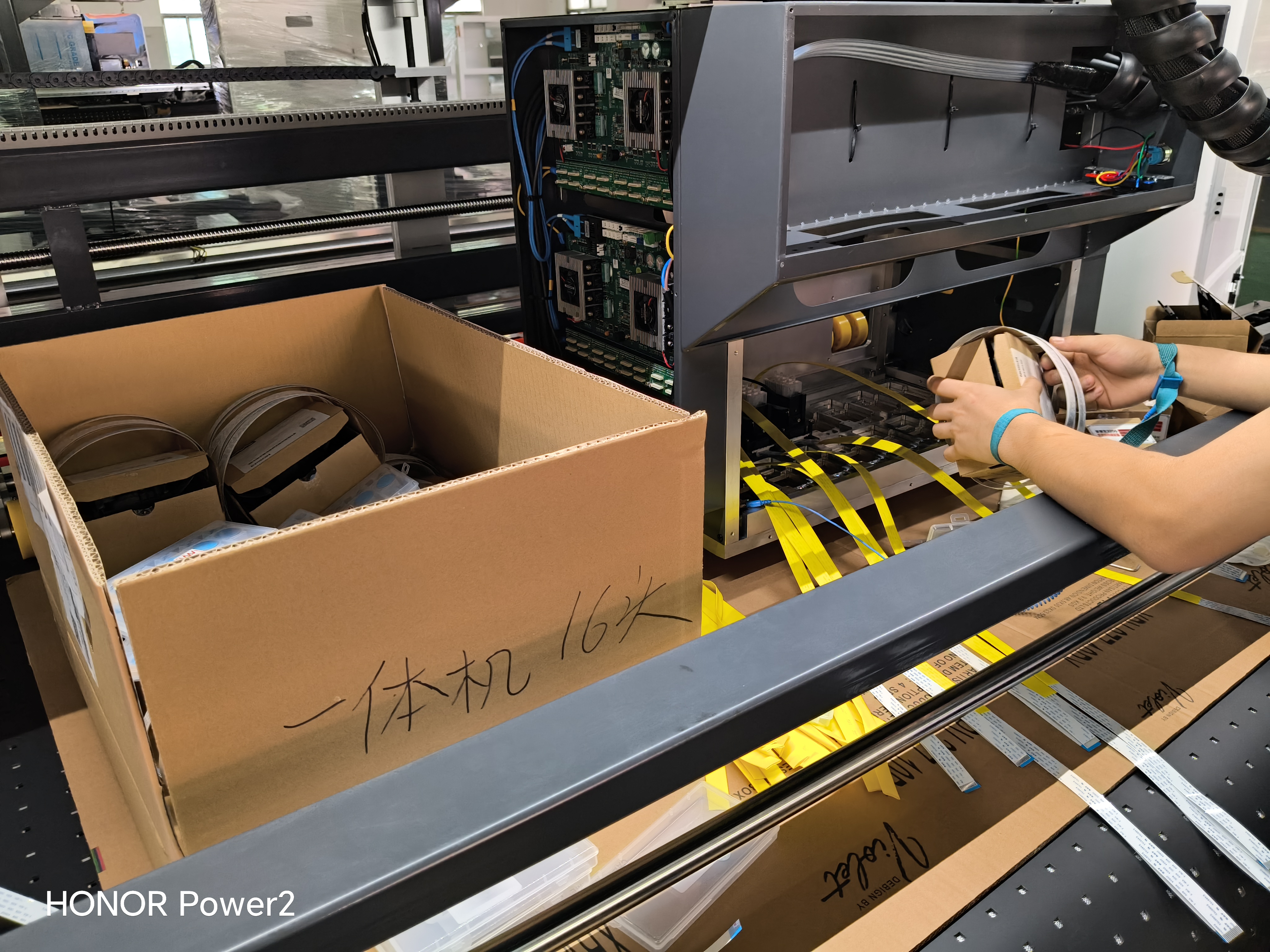
Printhead count is configurable from 8 to 256, and print width from 264 mm to 2600 mm. Printhead quantity is the main lever on both coverage and throughput: more printheads across the beam cover a wider sheet and place more ink per unit of time at a given DPI. Print width determines whether a board is printed in one pass or in several, which is why width and nozzle count should be decided together with the largest board format the factory expects to run.
DPI
DPI converts nozzle density into addressable dots. GOKING's platform is offered with multiple DPI configurations and documented resolutions up to 1200 DPI. Raising DPI increases the number of addressable dots per unit of area, which increases data volume and the time required per board. On absorbent liners there is also a practical ceiling: once ink spreads within the liner, additional DPI produces little visible improvement, so the useful DPI level is set by the substrate and the smallest element in the artwork — not by the largest number available on a specification sheet.
One Platform, Two Modes: the GOKING Single-pass and Multi-pass Design
GOKING's core product is a single-pass and multi-pass 2-in-1 digital printing machine, which means one platform can print in two different ways. In direct-output (single-pass) mode the printhead array is stationary and the board passes beneath it once. In scanning (multi-pass) mode the printhead traverses the board repeatedly. For complex or large-format boards, the scanning method is the appropriate choice; for small boards and small-batch orders, the direct-output mode is used — a single all-in-one machine handles both.
Configuration choices available at order stage include machine structure, printhead type (Epson or Xaar), DPI configuration, color scheme (5-color) and turnkey line solutions. Mechanically, the machines are documented with a magnetic levitation high-precision crossbeam, a vacuum adsorption platform, servo motor drive and Schneider electrical components, built on a carbon steel frame with stainless steel conveying rollers and an aluminum alloy beam. Feeding is by leading edge feeding or belt feeding, and the leading edge type is available as semi-automatic or fully automatic.
Five-Color (CMYK+W) and How Ink Types Behave Under Different Conditions
Color mode on these machines is CMYK with an optional white channel, written as CMYK(W). A white channel extends the range of substrates that can be printed without a pre-printed white layer, since kraft liners and dark boards otherwise shift every color printed on top of them. The supported ink set is water-based dye ink, water-based pigment ink, coating ink and UV eco-friendly ink.
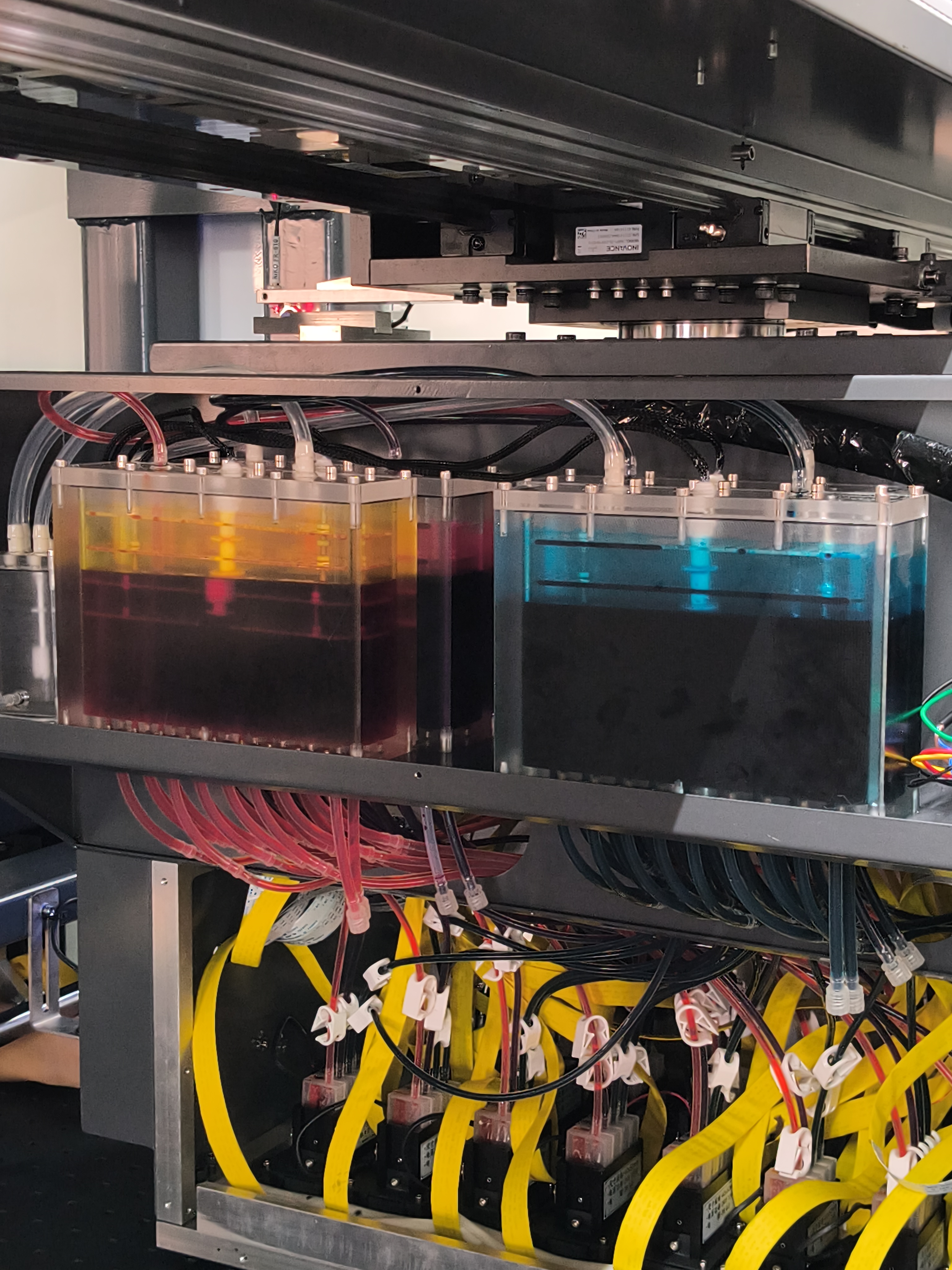
- Water-based dye ink — dye dissolved in a water carrier. Generally vivid on light, absorbent liners, and broadly chosen where color impact matters more than surface durability.
- Water-based pigment ink — pigment particles carried in water, generally more resistant to light and moisture than dye on the same surface. The water-based pigment segment accounted for a significant portion of the eco-friendly digital printing market in 2024 (Custom Market Insights, 2024).
- Coating ink — used to coat or prepare a surface, and relevant where coated paper and coated paperboard are among the substrates printed, alongside corrugated and kraft liners.
- UV eco-friendly ink — cured rather than absorbed, which suits less absorbent surfaces. Formulations should be checked against the current regulatory position, given that the U.S. EPA declared certain PFAS chemistries used in UV inks hazardous in April 2024 (Mordor Intelligence, 2024).
Machine conditions interact with ink behaviour. These machines use two ink supply lines and a fully enclosed ink supply channel, and drying takes place after printing for cartons, with drying behaviour for other materials depending on the material itself. The specified working environment is room temperature of 15–32 °C and around 70% humidity. That range matters most for water-based inks, because humidity and temperature govern how quickly the carrier leaves the liner and how much the dot spreads before it sets.
Step-by-Step: Building a DPI and Nozzle Specification
The sequence below converts a job mix into a machine configuration. Following it in order avoids the common situation where DPI, nozzle count and ink chemistry are decided separately and then have to be reconciled after the machine is built.
- Start from the artwork, not from a DPI target. Identify the smallest element that must reproduce — fine print, a barcode block, thin line art. The documented floor on these machines is digital English text at 1.5 mm.
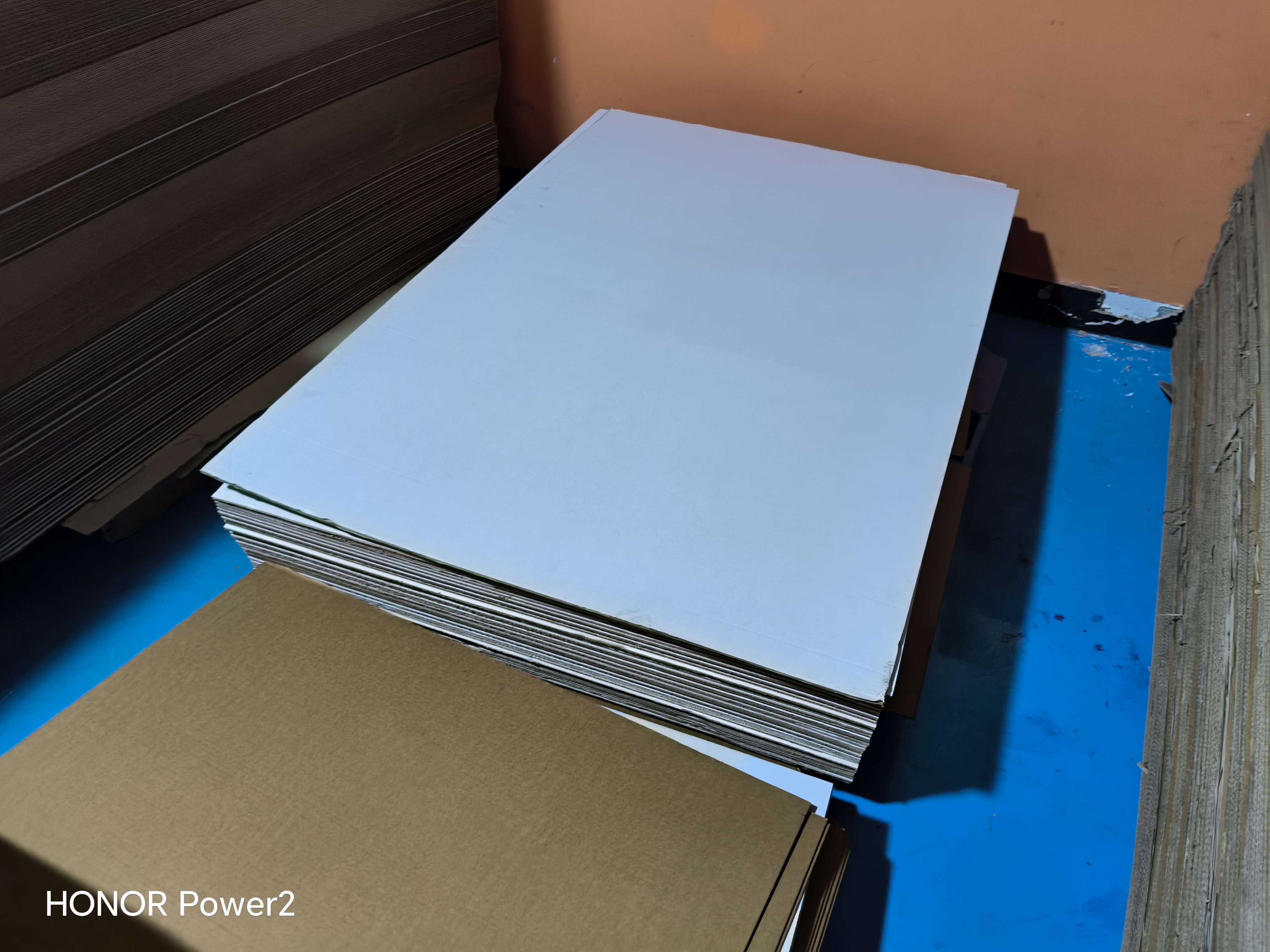
- Fix the substrate and board thickness. Confirm whether the production mix is kraft, white paperboard, coated paperboard or honeycomb board, and confirm thickness within the 2–30 mm range.
- Decide whether white is required. Choose CMYK or CMYK(W) based on whether designs sit on kraft, dark board or non-white surfaces.
- Map the run pattern. Small boards and small-batch orders point to direct-output mode; complex or large-format boards point to the scanning method; a mixed order book points to the 2-in-1 platform.
- Select the printhead family. Documented single-pass speeds are 60 m/min with Epson nozzles and at least 100 m/min with Xaar nozzles, with Xaar described as durable and having low requirements on the operating environment.
- Set printhead number and print width. Printheads are configurable from 8 to 256 and print width from 264 mm to 2600 mm; both should be sized to the largest board the factory expects to run.
- Choose the ink chemistry. Water-based dye, water-based pigment, coating ink or UV eco-friendly ink, matched to substrate absorbency and the durability the finished packaging must hold.
- Confirm feeding and automation level. Leading edge feeding or belt feeding, with the leading edge available as semi-automatic or fully automatic.
- Confirm the prepress workflow. File formats supported are PDF, JPG, BMP and TIF, and the RIP supports direct printing without converting pictures.
- Validate on a physical sample. Free sample printing is provided for global clients. The sample is where the minimum text size, white coverage and ink coverage are checked on the actual board rather than on a screen.
- Check site infrastructure. Electricity is 380 V, 50/60 Hz, three-phase, with rated power of approximately 14 kW. Machine size is 4260 mm × 2300 mm × 1900 mm and weight is 2800 kg, and the room must hold 15–32 °C at around 70% humidity.
- Confirm quality control and delivery. Quality control includes a 100% aging test, long-time running inspection and pre-shipment inspection. Monthly production capacity is 38 sets, the minimum order quantity is 1 set, and standard production lead time is typically one month, with custom lead times available on request and OEM/ODM lead times subject to confirmation.
Where These Configurations Fit: Use Cases
Configuration only pays off when it matches an actual order book. The following use cases are the ones where DPI and nozzle decisions change the outcome most visibly.
- Corrugated shipping and retail packaging. Absorbent kraft liners absorb ink quickly; water-based dye or pigment inks with a moderate DPI setting usually hold brand colors consistently, while a very high DPI setting on a rough liner may not produce visible gains.
- Gift boxes. Gift box work generally involves smaller panels, tighter registration and higher expectations on color richness, which is where a five-color CMYK+W configuration with a higher DPI setting and a larger printhead count earns its cost.
- Kraft paper and coated paper jobs. These substrates sit at opposite ends of the absorbency range. Where a factory runs both, the ability to switch between ink types on one platform avoids splitting production across two machines.
- Short runs, urgent jobs and rework. GOKING's documented case experience with overseas printing and packaging factories covers single-machine deliveries and urgent rework deliveries, with results including improved production efficiency and reduced production costs.
- Small-batch, quick-turnaround business models. The small-batch, quick-turnaround model is the core business strategy for many converters, and it is closely integrated with cross-border e-commerce and print-on-demand workflows that need fragmented orders fulfilled without plates.
GOKING's installed case experience is documented across Spain, Brazil, South Africa, Turkey, South Korea and Australia, with a project duration of more than five years. The recorded highlights are fast response, on-site engineering support and long-term cooperation — the operational side of the configuration decision, which matters when a factory is choosing a machine for a five-year production horizon rather than a single order.
Comparison Table: Printheads, Print Modes and Inks
These three tables summarise the trade-offs that buyers evaluate. Every entry is limited to documented machine specifications or published third-party facts; nothing below is an estimate.
Table 1 — Printhead configuration on the GOKING 2-in-1 platform
| Configuration element | Epson printhead option | Xaar printhead option |
|---|---|---|
| Documented single-pass printing speed | 60 m/min | At least 100 m/min |
| Documented operating-environment note | Not separately specified in the product documentation | Durable and long-lasting, with low requirements for the operating environment |
| Common industry deployment | Epson I3200 printheads are widely used in Chinese-manufactured digital printers for plate-less, high-quality output | Xaar printheads such as the Nitrox generation are targeted at high-viscosity fluid applications, including industrial coatings and ceramic printing |
| Printhead count range | 8 to 256 (configurable) | 8 to 256 (configurable) |
| Print width range | 264 mm to 2600 mm | 264 mm to 2600 mm |
Table 2 — Single-pass (direct output) vs multi-pass (scanning) on one machine
| Dimension | Single-pass / direct output | Multi-pass / scanning |
|---|---|---|
| Head movement | Printhead array is stationary; the board passes once | Printhead traverses the board repeatedly |
| Documented best-fit job | Small boards and small-batch orders | Complex or large-format boards |
| Effect on throughput | Higher output per board, since the substrate is printed in one pass | Lower output per board, because the pass is repeated |
| Effect on detail build-up | Detail is limited to what one pass can deposit | Progressive ink build-up across passes supports finer detail work |
| Machine requirement | Both modes are handled by the same single-pass and multi-pass 2-in-1 machine, so the mode can be chosen per order | |
Table 3 — Ink types and their practical behaviour on board
| Ink type | Carrier / curing | Where it is typically used | Notes |
|---|---|---|---|
| Water-based dye ink | Water carrier, absorbed into the liner | Light, absorbent kraft and paperboard surfaces | Generally vivid color; surface durability is lower than pigment systems |
| Water-based pigment ink | Water carrier with pigment particles | Jobs needing better light and moisture resistance | The water-based pigment segment held a significant share of the eco-friendly digital printing market in 2024 (Custom Market Insights) |
| Coating ink | Applied as a surface coating | Coated paper and coated paperboard, alongside corrugated | Used to prepare or finish a surface before or after the main print |
| UV eco-friendly ink | Cured rather than absorbed | Less absorbent surfaces where immediate setting is required | The U.S. EPA declared certain PFAS chemistries used in UV inks hazardous in April 2024, so formulations should be verified for the destination market (Mordor Intelligence) |
Reading the tables together gives the operating rule: nozzle type sets the achievable speed band, nozzle count sets the width and throughput, DPI sets the detail ceiling, and ink chemistry sets how much of that detail survives on the real substrate. Any configuration that optimises one of these without the others will underperform on at least one of the four.
FAQ
What certifications should a multifunctional digital printing machine carry for EU import?
For the European Union, the relevant document is a CE Certificate of Conformity. GOKING's corrugated cardboard digital printing machine holds CE certification number HTT202308117L, issued on 9 August 2023 by Shenzhen HTT Technology Co., Ltd., valid through 1 January 2099, and covering the European Union market under standard EN 60204-1:2018 and Directive 2006/42/EC. EN 60204-1 (IEC 60204-1) is the harmonised standard governing the electrical equipment of industrial machines, and industrial digital printers are also assessed for risk under EN ISO 12100 as part of CE marking. Buyers should confirm that the certificate number, issuing authority and expiry date appear on the document supplied with the machine.
Which nozzle and DPI configurations can be specified?
The platform is configurable rather than fixed. Printhead type can be specified as Epson or Xaar; printhead count ranges from 8 to 256; print width ranges from 264 mm to 2600 mm; and the machine is offered with multiple DPI configurations with documented resolutions up to 1200 DPI. Documented single-pass printing speed is 60 m/min with Epson nozzles and at least 100 m/min with Xaar nozzles. Color mode is CMYK(W), the ink set covers water-based dye, water-based pigment, coating and UV eco-friendly inks, and material thickness handled is 2–30 mm.
What makes a multifunctional digital printing machine manufacturer trusted?
Trust should be assessed on verifiable evidence rather than claims, using four checks: a traceable certification (for example a CE certificate number with an issuing authority and expiry date), documentation of the configurable specification instead of a single generic model, a defined quality-control process, and a support model that covers installation and spares. GOKING, or Guangdong Goking Intelligent Technology Co., Ltd., was founded in 2020, operates a 10,000 ㎡ manufacturing facility with 152 employees and a 38-engineer R&D team, and produces 864 sets annually with a monthly production capacity of 38 sets and a minimum order quantity of 1 set. Export accounts for 49% of output across the EU, Africa, Latin America, Russia, Kazakhstan and Turkey. Quality control includes a 100% aging test, long-time running inspection and pre-shipment inspection, and after-sales support includes technical support, spare parts support and a response within 24 hours, with engineers travelling to site to assist with installation and commissioning.
Can the DPI and nozzle configuration be tested before ordering?
Yes. GOKING provides free sample printing for global clients. A practical sample test sends the actual artwork in PDF, JPG, BMP or TIF format together with the substrate type and board thickness, so the printed result can be checked against the 1.5 mm minimum digital English text size, the white coverage if a CMYK(W) configuration is being considered, and the ink coverage on the liner actually used in production. Testing on the real board is the only reliable way to confirm whether a higher DPI setting produces a visible improvement on that surface.
What is the lead time, and what drives it?
Standard production lead time for standard machines is typically one month, with custom lead times available on request and OEM/ODM lead times subject to confirmation. Monthly production capacity is 38 sets and the minimum order quantity is 1 set. Lead time is driven mainly by how far the configuration departs from a standard build — printhead type (Epson or Xaar), DPI configuration, color scheme (5-color), machine structure and turnkey line solutions are all made-to-order decisions. To move from specification to a confirmed production slot, request a quotation and a free printed sample through www.cmyk-goking.com, or review the full configuration range in the 2026 product catalog.
Conclusion: Match the Configuration to the Board, Not to the Brochure
DPI and nozzle configuration is the point where a digital printing investment is either aligned with production or permanently mismatched with it. The working sequence is consistent: define the smallest element the artwork must reproduce, confirm the substrate and thickness within the 2–30 mm range, decide whether a white channel is required, then choose printhead family, printhead count, DPI setting and ink chemistry in that order. A single-pass and multi-pass 2-in-1 machine removes the need to compromise between small-board batch work and large-format scanning work, because both modes are available on one platform.
Two constraints should be confirmed rather than assumed. The first is certification for the destination market, where a traceable CE certificate with a number and issuing authority is the standard evidence. The second is the working environment, since water-based ink behaviour depends on holding room temperature at 15–32 °C and humidity around 70%.
Next Step: Test the Configuration on Your Own Board
Free sample printing is available to global clients, so the DPI, nozzle and ink combination can be validated on your actual substrate before a machine is specified. Send your artwork and board details to request a printed sample, or ask for a quotation on the single-pass and multi-pass 2-in-1 configuration that fits your order book.
Website: www.cmyk-goking.com | Catalog: 2026 product catalog (PDF) | WhatsApp: +86 139 2437 1492