How to Match a Multifunctional Digital Printing Machine to Your Carton Packaging Project
How to Match a Multifunctional Digital Printing Machine to Your Carton Packaging Project
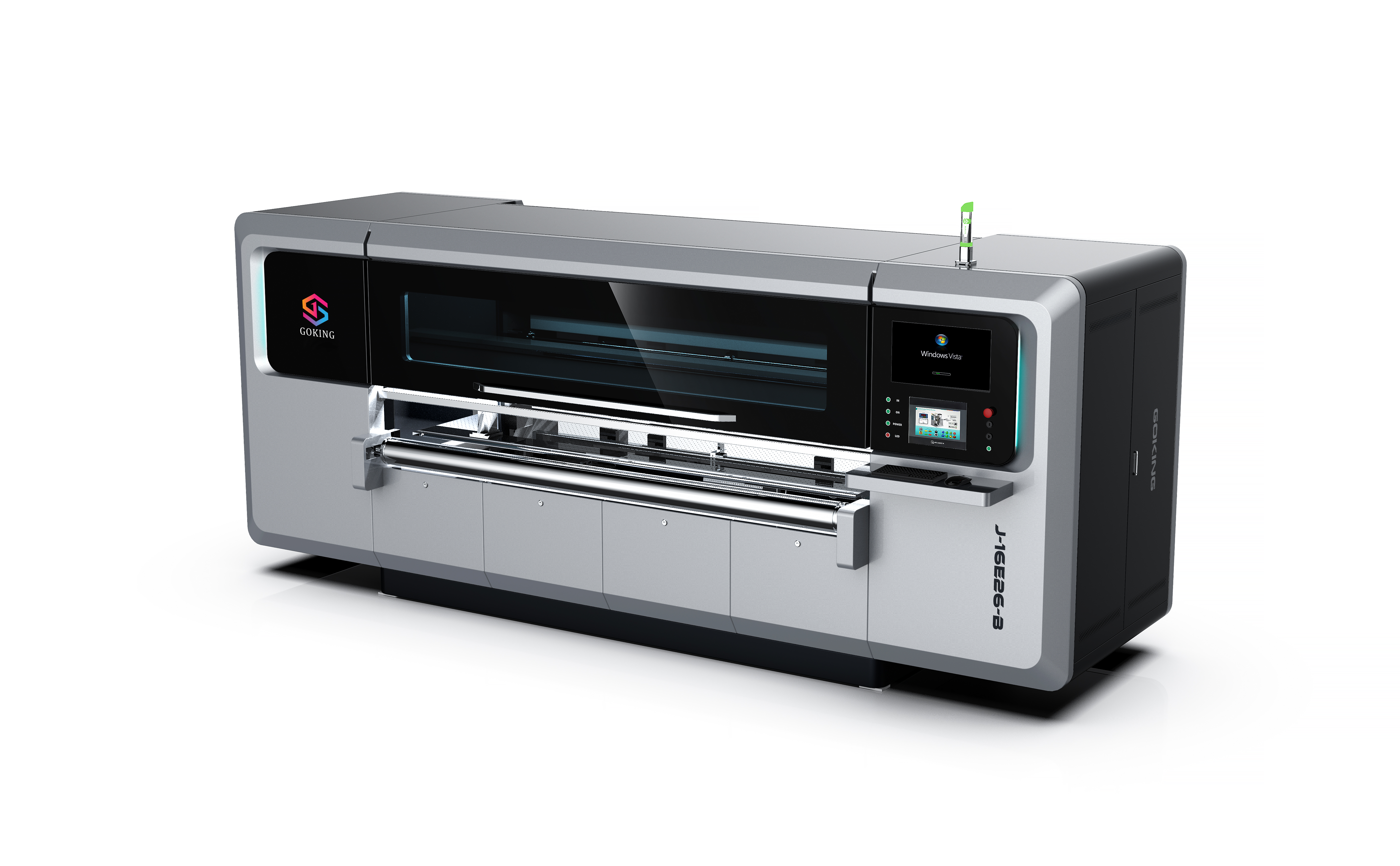
For a multifunctional digital printing machine evaluation, the decisive question is not only which press has the highest rated speed or the largest color gamut. The more useful question is which machine mode, printhead configuration, feeding system, and ink setup can handle the actual mix of packaging jobs in a specific plant. This project-fit view is especially relevant for corrugated carton printers, coated paper suppliers, paper mills, and packaging converters that are deciding between sample validation, short-run production, and continuous high-speed output.
Guangdong Goking Intelligent Technology Co., Ltd. (GOKING), a Dongguan, China-based manufacturer, produces single-pass and multi-pass digital printing machines, including 2-in-1 models that combine direct output and scanning output in one platform. The company serves packaging and carton printing applications and supports OEM/ODM configuration, free sample printing, and turnkey line integration. Its official website is www.cmyk-goking.com.
Problem Definition: Why Project Fit Matters More Than a Single Specification
Packaging and carton printing plants often face a mixed order profile. Some days require mass production under continuous high-speed operation; other days require short-run printing, frequent job change, or urgent sample approval. Plate-based printing is still common in some lines, but it brings plate costs and setup waste. The product used in this scenario is designed to replace plate-based printing and reduce plate costs. In addition, many plants are evaluating factory capacity expansion or equipment upgrade projects, which can include OEM/ODM customized printing lines.
If a buyer chooses a machine based only on maximum print width or nominal DPI, the project can still fail on the floor. A scanner-type multi-pass printer may deliver high-resolution output for premium packaging but may not be the most efficient choice for very long runs. A single-pass direct-output machine may be fast but may be over-configured for a plant that mostly handles proofing and very fragmented orders. A 2-in-1 platform can address both needs, but only if the switching logic, substrate range, and automation level match the actual batch structure.
The project-fit question therefore includes several practical checks: Can the machine handle the plant's typical material thickness? Does it support the required color mode, including white ink where needed? Can it switch between high-definition scanning and fast direct output without a separate line? Is the feeding mode semi-automatic or fully automatic? Can the supplier support sample validation before shipment?
Industry Background: Digital Printing in Packaging Projects
Digital printing is being adopted across packaging operations because it can support shorter runs, faster job changes, and more personalized output. According to Grand View Research, the global digital printing market was valued at USD 38.0 billion in 2023 and is projected to reach USD 57.0 billion by 2030. Within that market, the inkjet segment accounted for 48.4% of digital printing market share in 2023, also reported by Grand View Research.
For packaging-specific buyers, MarketsandMarkets data shows that the digital printing packaging market is expected to reach USD 46.2 billion by 2029 from USD 30.2 billion in 2024. This growth is closely related to the shift toward short-run packaging, direct-to-carton customization, and flexible production. Market Research Future data also indicates that variable data printing is enabling economically viable runs under 3,000 units in 2024, a range that was previously cost-prohibitive in many plate-based production models.
The Asia-Pacific region held approximately 41.6% of digital printing market revenue share in 2025, according to Market Research Future. That regional concentration helps explain why manufacturing clusters in Guangdong Province can support digital printing equipment supply, component availability, and faster after-sales response for export buyers.
Detailed Solution: GOKING Multifunctional Digital Printing Machine
The GOKING Corrugated Cardboard Digital Printing Machine is built around a configurable platform. The product line includes multi-pass digital printers with Epson or Xaar nozzles, single-pass digital printers with Epson or Xaar nozzles, and a 2-in-1 multifunctional digital printing machine with different DPI configurations. That structure allows one platform family to be adapted to different project types rather than forcing every packaging plant into the same mode.
- Printheads: Configurable from 8 to 256 printheads.
- Print width: 264 mm to 2600 mm.
- Material thickness: 2–30 mm.
- Production efficiency: 700 / 1500 m²/h.
- Single-pass speed with Epson nozzle: 60 m/min.
- Single-pass speed with Xaar nozzle: at least 100 m/min.
- Color mode: CMYK(W), supporting white ink where configured.
- Ink types: Water-based dye ink, water-based pigment ink, coating ink, and UV eco-friendly ink.
- Rated power: ≈14KW.
- Feeding mode: Leading edge feeding or belt feeding.
- Platform: Vacuum adsorption.
- Machine size: 4260 mm × 2300 mm × 1900 mm.
- Electricity: 380V, 50/60 Hz, three-phase.
- Crossbeam: Magnetic levitation high-precision crossbeam.
- Leading edge type: Optional semi-automatic or fully automatic.
GOKING equipment supports Epson commercial-grade printheads and Xaar industrial-grade printheads. Epson printheads are specified for high-definition scanning output and precise grayscale performance, making them relevant for premium packaging and fine text. Xaar industrial-grade printheads, including models with TF Technology or true internal ink circulation, are positioned for longer continuous runs and reduced nozzle clogging. The choice between these printhead types is not a simple better-or-worse decision; it depends on whether the project prioritizes ultra-high-definition scanning output or sustained high-speed direct output in a demanding production environment.
Step-by-Step Breakdown: Matching Machine Configuration to the Project
1. Profile the job mix
Start by grouping work into three buckets: short-run or sample-validation jobs, mid-volume orders with frequent job change, and mass production or continuous high-speed batches. This product is suitable for frequent job change scenarios and operates under mass production conditions, so the machine family should be configured around the dominant bucket rather than the exception.
2. Select the machine mode
For high-definition premium packaging, proofing, and intricate patterns, a multi-pass scanning printer with Epson printheads may be the more suitable mode. For high-volume carton output, a single-pass direct-output configuration is designed for efficiency. For plants that need both, a 2-in-1 machine can run standard orders in direct-output mode and then switch to scanning mode for high-precision or short-run proofing.
3. Define substrate and ink requirements
The machine supports printing on corrugated cardboard, honeycomb cardboard, and other packaging materials from 2 mm to 30 mm thickness. GOKING's solution range covers kraft paper and coated paper, from single-sheet printing to mass production. Ink selection matters for project compatibility: water-based dye ink, water-based pigment ink, coating ink, and UV eco-friendly ink are supported. If the project includes coated paper, waterproof-facing applications, or white underbase requirements, the sample phase should confirm ink adhesion and drying behavior on the exact substrate.
4. Confirm automation and integration
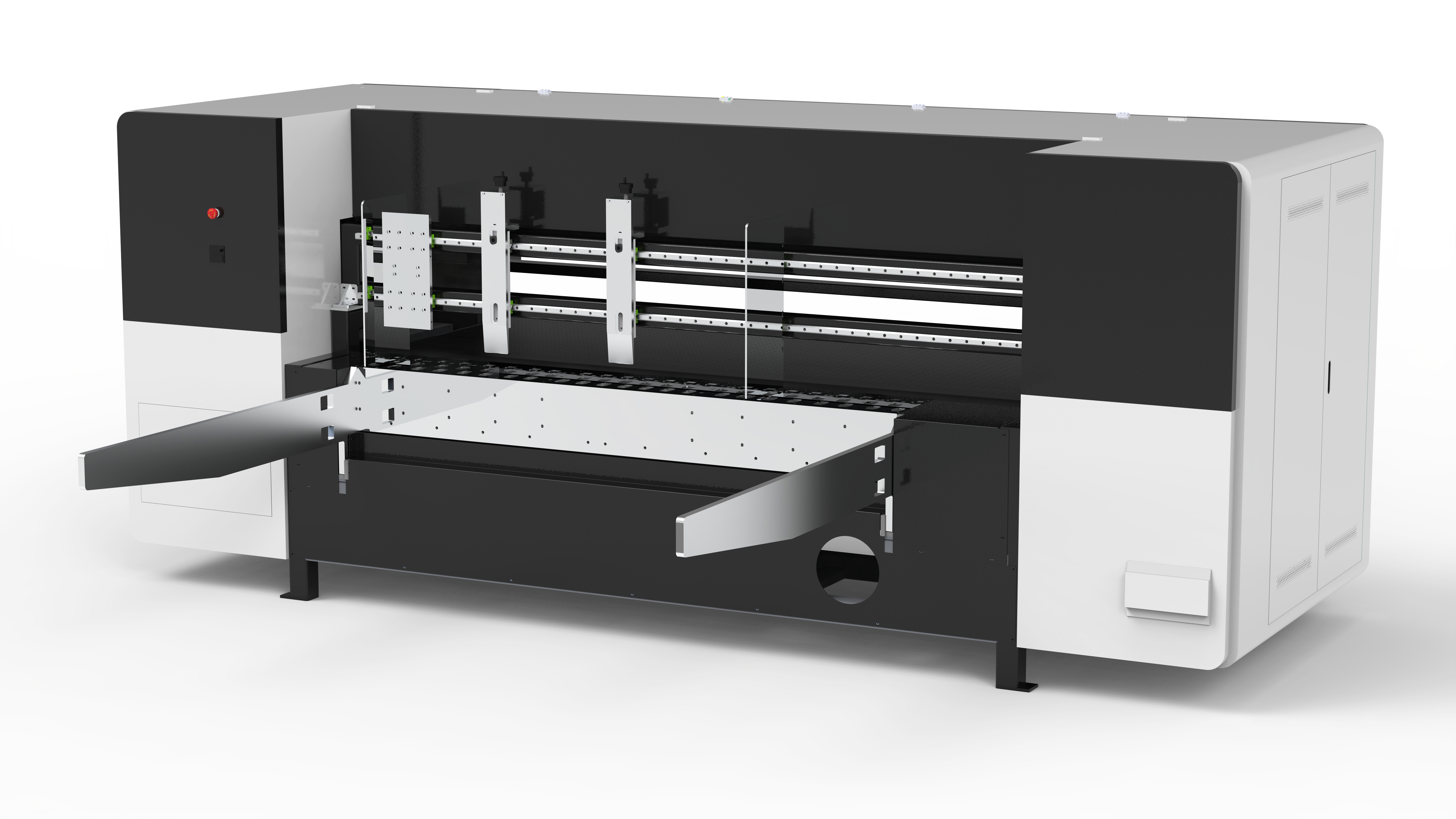
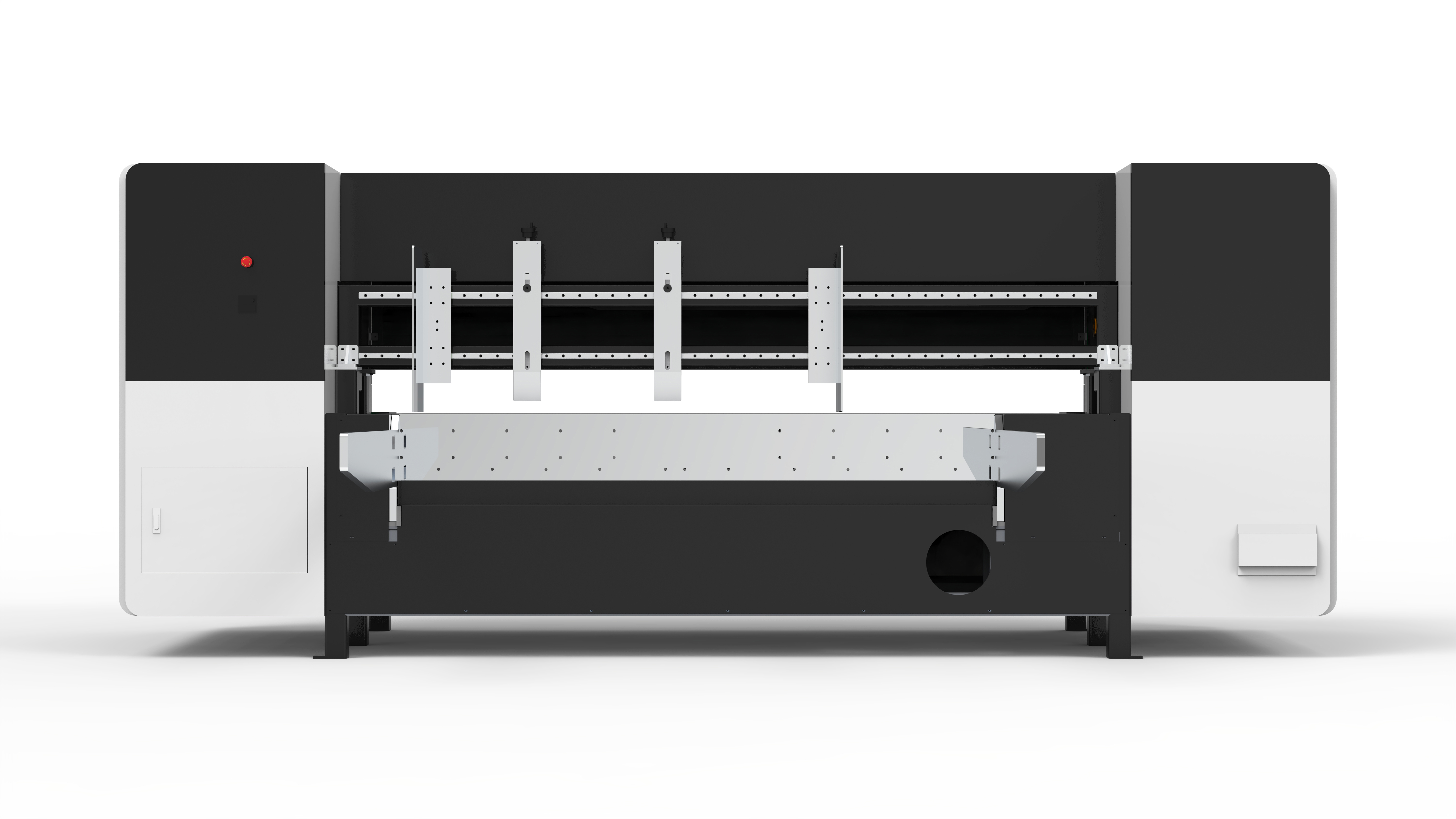
The equipment can be configured with leading edge feeding or belt feeding, and the leading edge type can be semi-automatic or fully automatic. The machine includes vacuum adsorption, a magnetic levitation high-precision crossbeam, and can be delivered as part of a turnkey line. The matched equipment list includes conveyor systems, feeding units, receiving units, drying/curing systems, inspection equipment, an integrated machine featuring automatic lead-edge feeding, magnetic levitation hoisting, automatic scanning-to-print switching, paper receiving rack, voltage stabilizer, humidifier, computer, temperature control system, and a toolkit with consumable spare parts.
5. Validate with samples and compliance documents
Before shipment, buyers should confirm two types of validation. First, product validation: GOKING offers free sample printing for global clients, and the capability unit includes 100% aging test, long-time running inspection, and pre-shipment inspection. Second, compliance validation: for EU-facing projects, confirm technical documentation related to industrial machinery safety. Industrial digital printers must comply with EN ISO 12100 for risk assessment to obtain CE marking, and electrical equipment of industrial machines is governed by IEC 60204-1 (EN 60204-1) for CE compliance. Because certification scope can vary by configuration, request documentation that matches the exact machine build.
Use Cases: Project Scenarios for Multifunctional Digital Printing
Short-run e-commerce and print-on-demand carton printing
In short-run packaging printing, digital large-format printers are used by advertising agencies and in-house printing departments in sectors such as finance and education to enable rapid, flexible graphic and document output. For packaging plants, the small-batch, quick-turnaround model supports fragmented orders and print-on-demand workflows. In this scenario, the machine replaces plate-based printing, reduces plate costs, and shortens setup time.
Factory capacity expansion and equipment upgrade
When a plant adds a new line or replaces an older plate-based press, the project is often classified as factory capacity expansion or equipment upgrade. The GOKING platform can be supplied as a single machine or as an OEM/ODM customized printing line. Because the machine supports 8 to 256 printheads and a 264 mm to 2600 mm print width, the initial build can be matched to current budget and later expanded as production volume grows.
High-volume corrugated packaging production
For plants running continuous high-speed operation on corrugated cardboard, single-pass configuration with Xaar printheads is specified for at least 100 m/min. The vacuum adsorption platform and leading edge feeding are designed for stable transport of larger boards. Material thickness up to 30 mm supports a range of corrugated and honeycomb cardboard grades used in packaging.
High-definition premium packaging and sample validation
For high-value packaging with fine text, QR codes, or detailed graphics, the multi-pass scanning mode can be more appropriate. The min text of digital English is 1.5 mm, and graphics format support includes PDF, JPG, BMP, and TIF. A 2-in-1 machine is particularly useful when a plant must handle both large-format complex boards and small-batch direct-output orders on the same line.
Comparison Table: Mode and Project Fit
| Aspect | Multi-pass scanning printer | Single-pass direct-output printer | 2-in-1 multifunctional printer |
|---|---|---|---|
| Primary project fit | High-definition premium packaging, proofing, fine text, short-run jobs | High-volume carton output, continuous high-speed operation | Plants that need standard direct output plus sample validation or high-precision short-run switching |
| Printhead option | Epson commercial-grade | Epson or Xaar industrial-grade | Epson or Xaar, configurable |
| Speed reference | Slower multi-pass scanning; high clarity output | Epson: 60 m/min; Xaar: at least 100 m/min | Switchable based on selected mode |
| Configuration range | 8 to 256 printheads; 264 mm to 2600 mm width; 2–30 mm material thickness | Same platform range | Same platform range |
| Typical use | Premium packaging, short-run jobs, image-quality-sensitive work | Mass production, long-run corrugated packaging | Mixed job shops, capacity expansion, OEM/ODM lines |
FAQ
For EU-facing projects, verify that the machine configuration is covered by the required industrial machinery documentation. The safety standard EN ISO 12100 applies to risk assessment for CE marking, while IEC 60204-1 (EN 60204-1) governs electrical equipment of industrial machines. Because compliance depends on the exact machine build, automation options, and electrical configuration, request documentation and declaration details that match the specific printhead count, feeding system, and machine version you are purchasing.
Yes, if the project uses a 2-in-1 multifunctional digital printing machine. The platform supports a direct-output mode for standard small-board and small-batch orders and a scanning method for complex or large-format boards. The same product family operates under mass production conditions and in continuous high-speed operation mode. For high-volume carton output, single-pass mode with Xaar printheads is specified for at least 100 m/min, while high-definition scanning mode can be used for precise proofing and short-run jobs.
The main budget drivers are printhead type, printhead quantity, print width, DPI configuration, color scheme, automation level, and whether the line is delivered as a standard machine or as an OEM/ODM turnkey solution. GOKING machines support 8 to 256 printheads, 264 mm to 2600 mm print width, CMYK(W) color mode, and semi-automatic or fully automatic leading edge feeding. A plant that starts with a smaller printhead configuration can later expand as order volume grows. Budget planning should also account for ink type, drying/curing requirements, and spare parts support.
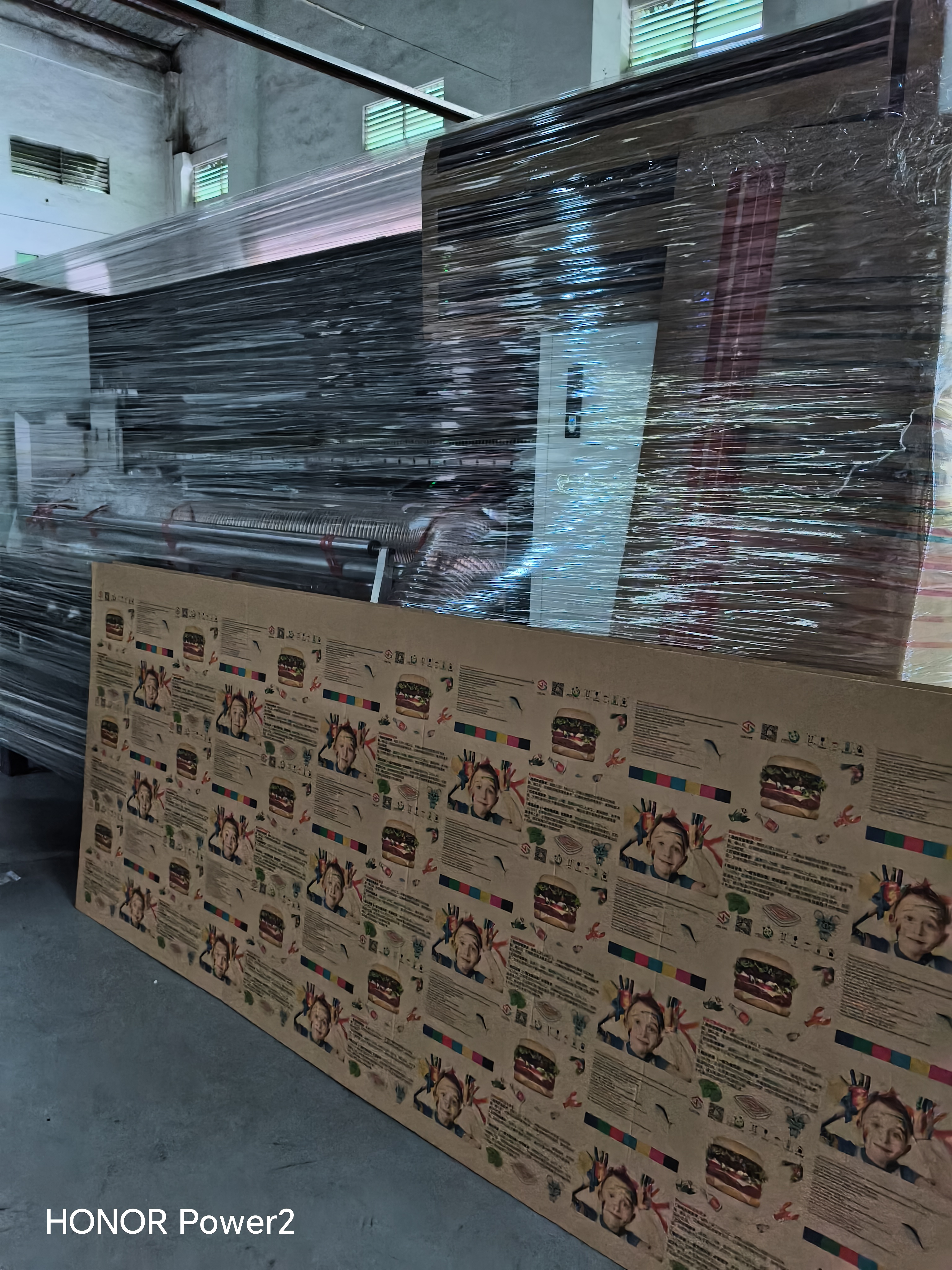
Yes. GOKING offers free sample printing for global clients, and sample printing is part of the pre-sales validation process. For a reliable sample, provide the actual substrate, file format, color requirements, and expected print width. The equipment supports graphics formats including PDF, JPG, BMP, and TIF, and the sample should be reviewed for ink adhesion, color output, and drying behavior on your exact paperboard or corrugated material.
The standard production lead time for standard machines is typically one month. Custom configurations can have different lead times, and OEM/ODM lead times are subject to confirmation based on the exact project scope. The minimum order quantity is 1 set. For project planning, it is best to confirm lead time after the machine configuration, printhead type, automation level, and compliance documentation are finalized. If you are ready to move from evaluation to a project-specific sample or quote, contact Jake Dong at dongjake402@gmail.com or request a sample/quote through the GOKING contact channels.
Conclusion
A multifunctional digital printing machine should be evaluated as a project-fit decision, not as a list of isolated specifications. The most useful comparison is between the plant's actual job mix, substrate range, required speed, switchover frequency, and the machine's configurable mode, printhead type, feeding automation, and ink system. GOKING's platform can be tailored to mass production, short-run printing, frequent job change, factory capacity expansion, equipment upgrade, and OEM/ODM customized printing lines.
For a more detailed comparison or sample validation, download the 2026 product catalog. To discuss machine configuration, sample printing, or a quote, contact Jake Dong at dongjake402@gmail.com or via WhatsApp.
Source references: Global digital printing market and inkjet segment: Grand View Research. Single-pass digital printing machine market: Reports and Data. Digital printing packaging market: MarketsandMarkets. Asia-Pacific share and variable data printing runs: Market Research Future. Industrial machinery standards: EN ISO 12100 and IEC 60204-1 (EN 60204-1). All GOKING specifications and process details are from company-provided product, capability, application, and case documentation.