Multifunctional Digital Printing Machine: Long-Term Partnership & Service FAQ
Multifunctional Digital Printing Machine: Long-Term Partnership & Service FAQ
Buyer FAQ · Research to Evaluation · Corrugated & Packaging Converting

Buying a multifunctional digital printing machine is a multi-year commitment disguised as a one-time purchase. The specification discussion, the quotation and the delivery schedule usually close within a few weeks; the service relationship that starts on installation day runs for the life of the asset. Guangdong Goking Intelligent Technology Co., Ltd. (GOKING), a Dongguan-based manufacturer of single-pass and multi-pass 2-in-1 digital printing machines for corrugated and honeycomb cardboard, builds its commercial offer around that longer timeline: documented pre-shipment testing on every machine, engineers who travel to the customer's plant for installation and commissioning, spare-parts support, and a technical response commitment within 24 hours.
This article is written as a buyer FAQ rather than a product tour. It answers the questions that surface between research and evaluation: what the purchasing terms actually are, how acceptance should be handled, what after-sales coverage includes, where OEM/ODM customization fits, and how sample validation works before a purchase order is signed.
The Real Risk Is Not the Purchase Price
Most evaluation spreadsheets compare printheads, resolution, print width and speed. Those are the right first filters, but they are all settled before the machine arrives. What often stays unresolved in a project is who is responsible after the crate is opened.
Three gaps account for most of the friction in packaging projects:
- Acceptance criteria are never written down. The buyer assumes "inspection" means a full production trial; the supplier means a functional check. The disagreement appears at the worst possible moment.
- Support is assumed rather than specified. Who commissions the machine, who supplies the first spare nozzles, and how fast a technical question is answered are rarely in the quotation.
- Customization scope is discovered late. Printhead type, color configuration and line integration are cheaper to decide before the build starts than after.
The pattern matters most in plants that change jobs often. A machine running continuous high-speed production on a handful of repeat SKUs can absorb a day of downtime. A plant switching between short runs, urgent reprints and mixed board grades cannot, because every stopped hour pushes a queue of dated orders. On a multifunctional digital printing machine, availability is a commercial variable, not a maintenance detail.
Industry Background: Why the Service Load Is Rising
Digital production in packaging has moved from sampling work into mainstream volume. MarketsandMarkets estimates the digital printing packaging market at USD 30.2 billion in 2024, rising to USD 46.2 billion by 2029. Grand View Research recorded inkjet as the largest technology segment of the wider digital printing market in 2023, with a 48.4% share.
The economics explain the shift. Market Research Future notes that variable data printing now makes runs under 3,000 units economically viable, a band that was previously cost-prohibitive on conventional equipment. Work that used to be batched into long plate runs now moves in smaller, more frequent blocks.
For a converter, the operational consequence is straightforward: more job changes per shift, more setups, shorter production windows, and therefore more dependence on a machine that stays available and on a supplier who answers quickly when it does not. Replacing plate-based printing to cut plate costs and setup waste is as much a service question as a technology question, because the savings only materialise if the press keeps running.
What a Partnership-Grade Supply Arrangement Contains
A partnership arrangement is not a slogan; it is a set of named, checkable commitments. The five below are the ones worth writing into a purchase agreement.
1. Quality control that happens before shipment, not after arrival
GOKING runs three documented checkpoints on every machine: a 100% aging test, a long-time running inspection, and a pre-shipment inspection. The purpose is to move defect discovery to the factory floor, where correction is fast and cheap, rather than to the customer's plant, where it costs a production window plus freight. For the buyer, these three checkpoints are also the natural backbone of an acceptance protocol: ask for them by name and ask for the record of each.

2. Installation and commissioning by engineers who travel to site
Once overseas customers receive the machine, dedicated engineers travel to the site to assist with installation, commissioning and start-up. A machine of roughly 2,800 kg with a 4,260 × 2,300 × 1,900 mm footprint is not plug-and-play equipment; alignment, ink-system checks and first-job calibration are commissioning work, not operator work. Whether that commissioning is included, and who performs it, is one of the clearest dividing lines between a supplier and a partner.
3. Technical support and spare parts with a 24-hour response commitment
After-sales coverage combines technical support, spare-parts support and a response within 24 hours. At evaluation stage the distinction that matters is between an answer and a part. A 24-hour response commitment defines the escalation path for a technical problem; spare-parts support defines the physical recovery path once the cause is known. Both are needed, and both should be confirmed in writing.
4. OEM/ODM and configuration flexibility
Customization covers machine structure, printhead type (Epson or Xaar), DPI configuration, five-color schemes and turnkey line solutions. Configurations span 8 to 256 printheads and print widths from 264 mm to 2,600 mm, which means a project can be matched to its actual job mix instead of being forced onto a single stock specification. Where the mix is genuinely mixed, a single-pass and multi-pass 2-in-1 machine covers both directions: scanning mode for complex or large-format boards, direct output for small boards and small-batch orders.
5. Free sample printing before commitment
GOKING offers free sample printing to global clients. Sending actual artwork and the actual board grade turns a specification sheet into evidence: minimum English text at 1.5 mm, color behaviour on coated paper versus kraft paper, and how the image holds on a 2–30 mm board. Sample validation is the cheapest risk-reduction step in the whole project.
From Inquiry to Steady Production: Seven Steps
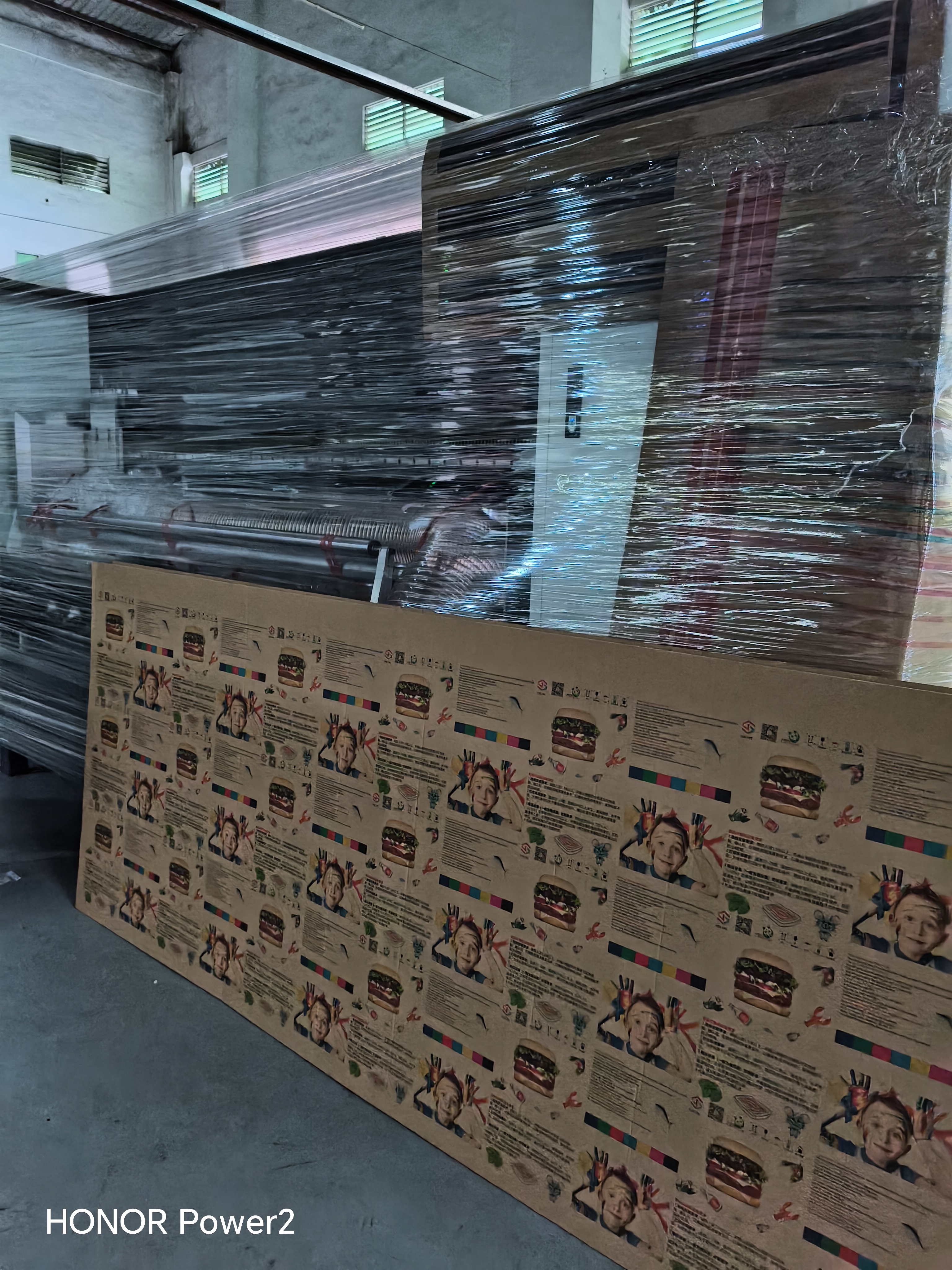
The sequence below is the practical order in which a corrugated packaging project is de-risked. Each step produces a document or a decision that the next step depends on.
- Define the job mix in production terms. List the materials you actually run — corrugated and honeycomb cardboard, coated paper, kraft paper — the board thickness range you handle (the reference band is 2–30 mm), the smallest English text in your artwork (1.5 mm is the documented minimum), and how many job changes a shift typically involves.
- Match the configuration to that mix. Single-pass for volume, multi-pass scanning for high-definition packaging and label work, 2-in-1 for mixed demand. Then fix printhead type (Epson commercial-grade or Xaar industrial-grade), printhead count between 8 and 256, DPI, color mode (CMYK or CMYK+W), feeding method (leading-edge or belt), and whether the leading edge is semi-automatic or fully automatic.
- Validate on your own artwork with free sample printing. Send the artwork file and the board you intend to use. Supported graphic formats are PDF, JPG, BMP and TIF, and the RIP supports direct printing without converting pictures.
- Agree the commercial terms. The minimum order quantity is 1 set. Standard production lead time for standard machines is typically one month; custom lead times are available on request, and OEM/ODM lead times are subject to confirmation. Documented monthly production capacity is 38 sets, which matters if you plan phased or repeat orders.
- Run pre-shipment acceptance against the three quality gates. Aging test, long-time running inspection, pre-shipment inspection. Agree in advance which print jobs count as the acceptance reference.
- Prepare the site. The machine requires a 380 V, 50/60 Hz three-phase supply with rated power of approximately 14 kW, a working environment of 15–32 °C and humidity around 70%, and a vacuum adsorption platform area sized to the 4,260 × 2,300 × 1,900 mm frame. Site preparation is the buyer's scope, and it is the most common reason a start-up date slips.
- Complete installation, commissioning and ramp-up. Dedicated engineers handle installation and commissioning on site for overseas customers; from that point, technical support and spare-parts support operate with a response within 24 hours.
Where This Model Fits: Four Project Scenarios
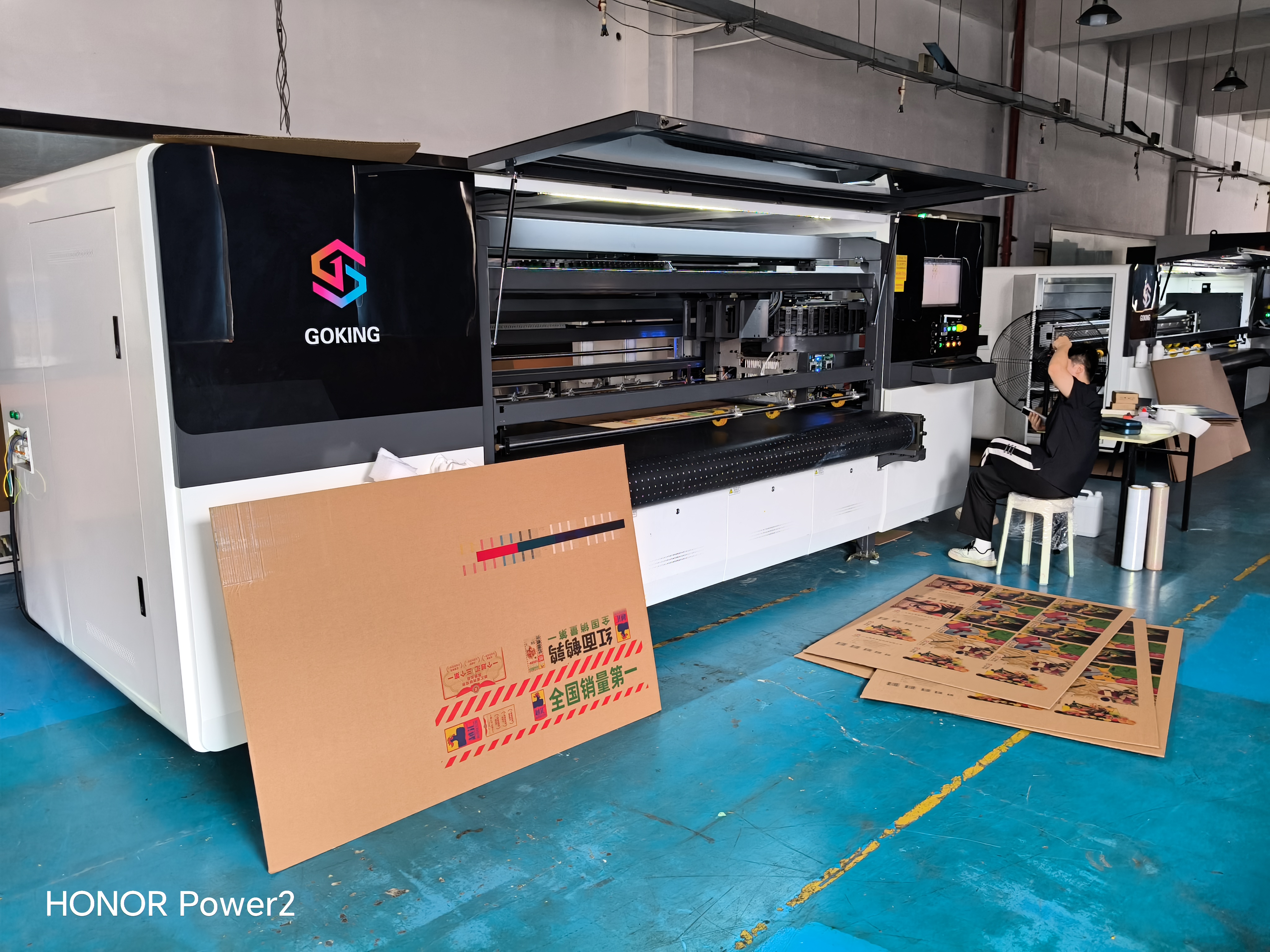
The same machine and the same service package serve quite different projects. What changes is the acceptance emphasis.
Factory capacity expansion. The buyer is adding output rather than replacing a process, so throughput and lead time dominate. Here the documented monthly production capacity of 38 sets and a standard lead time of about one month keep the expansion plan on schedule, while installation support shortens the gap between arrival and first sellable output.
Equipment upgrade, including the move away from plate-based printing. The objective is to reduce plate costs and setup waste while keeping quality acceptable on existing accounts. In this case the acceptance test should run the buyer's current best-selling jobs and compare against the existing reference print, with the aging test and long-time running inspection confirming that the machine holds stability beyond a single shift.
OEM/ODM customized printing line. Projects with special requirements — machine structure changes, a specific printhead family, a defined DPI or five-color configuration, or integration into a turnkey line — should treat the OEM/ODM conversation as part of the evaluation, not as a post-order adjustment. OEM/ODM lead times are subject to confirmation and should be scheduled before downstream commitments are made.
Sample validation ahead of a larger commitment. Many first purchases begin as a single set validated on real artwork. Because free sample printing is available to global clients and the minimum order quantity is 1 set, a converter can verify print quality on coated paper, kraft paper or corrugated board before committing a line.
In application terms, these scenarios share one profile: packaging and carton printing with frequent job changes, running under mass production conditions and continuous high-speed operation. Typical output covers cardboard packaging, gift boxes, coated paper and kraft paper — the short-run, urgent and personalized orders that plate-based workflows handle least economically.
Purchasing and Service Terms at a Glance
The table below converts the questions buyers actually ask into documented positions, so they can be checked line by line before a contract is issued.
| Buyer question | Documented position | What it means for your project |
|---|---|---|
| Minimum order quantity | 1 set | A single-machine evaluation is possible before a line-level commitment. |
| Lead time | Standard machines typically one month; custom lead times on request; OEM/ODM subject to confirmation | Site works and operator planning can run in parallel with production. |
| Production capacity | Monthly output of 38 sets | Relevant for phased rollouts and repeat orders across several plants. |
| Pre-shipment quality control | 100% aging test; long-time running inspection; pre-shipment inspection | Three named checkpoints to write into the acceptance protocol. |
| Installation and commissioning | Dedicated engineers travel to site for overseas customers | Start-up is handled on your floor rather than remotely. |
| Technical support and spare parts | Technical support, spare-parts support, response within 24 hours | A defined escalation path for both diagnosis and parts recovery. |
| Customization scope | Machine structure, printhead type (Epson/Xaar), DPI, five-color scheme, turnkey line solutions | Configuration follows the job mix instead of a fixed catalogue spec. |
| Sample validation | Free sample printing for global clients | Print quality is confirmed on real artwork and board before ordering. |
| Export experience | Export ratio of 49%; markets include the EU, Africa, Latin America, Russia, Kazakhstan and Turkey | Familiarity with voltage, documentation and shipping requirements in these regions. |
Frequently Asked Questions
What acceptance criteria should a buyer test before signing off the machine?
Build the acceptance protocol on the three documented checkpoints: the 100% aging test, the long-time running inspection and the pre-shipment inspection. Ask for the record of each, then run one production job on your own board stock and compare it with the approved sample. For EU-bound shipments, request the CE documentation package and confirm that risk assessment follows EN ISO 12100 and electrical compliance follows EN 60204-1.
What after-sales coverage is included once the machine is installed?
Coverage combines on-site installation and commissioning by dedicated engineers for overseas customers, technical support, spare-parts support, and a response within 24 hours. In practice this means a named escalation path for technical questions and a defined route for parts, rather than relying on informal contact with a sales person.
Can the machine be customized to our product line, and what does OEM/ODM cover?
Customization can cover machine structure, printhead type (Epson or Xaar), DPI configuration, five-color schemes and turnkey line solutions. Configurations range from 8 to 256 printheads with print widths from 264 mm to 2,600 mm, and a 2-in-1 machine can switch between scanning mode for large-format or complex boards and direct output for small boards and small batches. The minimum order quantity is 1 set; OEM/ODM lead times are subject to confirmation.
Can we get printed samples on our own board before placing an order?
Free sample printing is available to global clients. Send the artwork file in PDF, JPG, BMP or TIF together with the board grade you intend to run. The RIP supports direct printing without converting pictures, so the sample reflects the file you will actually produce from, and it tests minimum English text at 1.5 mm as well as colour behaviour across coated paper, kraft paper and corrugated board.
What are the purchasing terms, and how does a project start?
The minimum order quantity is 1 set. Standard production lead time for standard machines is typically one month, custom lead times are available on request, and OEM/ODM lead times are subject to confirmation. A project typically starts with a job-mix review and a free printed sample, followed by configuration sign-off and pre-shipment acceptance. To begin, contact Cherry Wang at w1250606130@gmail.com or +86 18028205637 (WhatsApp +86 18475532220), or Gloria Yang at qianqian203521@gmail.com or +86 18028204526.
Conclusion: Evaluate the Relationship, Not Only the Specification
The specification decides whether a multifunctional digital printing machine can do the work. The service arrangement decides whether it keeps doing the work in year two and year five. Buyers comparing suppliers should therefore treat quality control records, commissioning responsibility, spare-parts access and response commitments as part of the technical evaluation, not as contract boilerplate to be negotiated at the end.
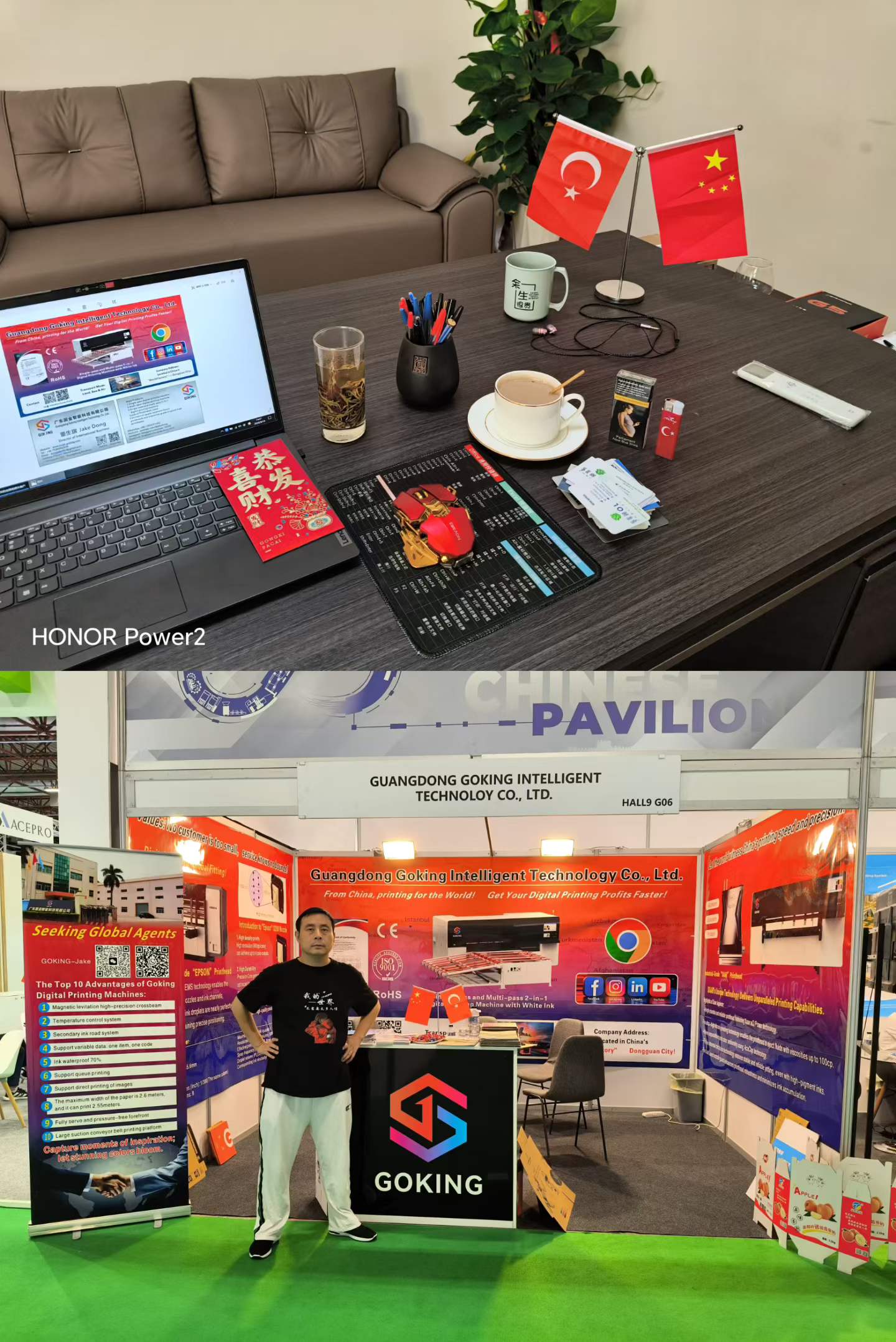
GOKING builds single-pass and multi-pass 2-in-1 digital printing machines in a 10,000 m² facility in Dongguan, with a 38-engineer R&D team, documented monthly output of 38 sets and an export ratio of 49% across the EU, Africa, Latin America, Russia, Kazakhstan and Turkey. Installation and commissioning support, technical support and spare-parts support with a response within 24 hours, free sample printing and OEM/ODM configuration are the practical terms behind the partnership framing.
Next step: send your artwork and board grade for a free printed sample, or request a configuration proposal for your job mix. Review the full machine range in the 2026 product catalog, or visit www.cmyk-goking.com.
Cherry Wang — w1250606130@gmail.com · Tel +86 18028205637 · WhatsApp +86 18475532220
Gloria Yang — qianqian203521@gmail.com · Tel +86 18028204526 · WhatsApp +86 18028204526
No. 1, Fuxiang Street, Huangniupu, Huangjiang Town, Dongguan City, China
Have Questions or Need More Details?
Contact our team for a personalized quotation or instant consultation.
Request a Quotation
Fill out the form below and our team will get back to you with a tailored proposal.
WhatsApp Direct Chat
Prefer to chat in real-time? Message us on WhatsApp for instant assistance & quick answers.
- Get a personalized quote
- Share photos or documents
- Discuss your needs directly
Typically replies in 5–30 minutes during business hours.