
Multifunctional Digital Printing Machine: Power, Humidity, Ink
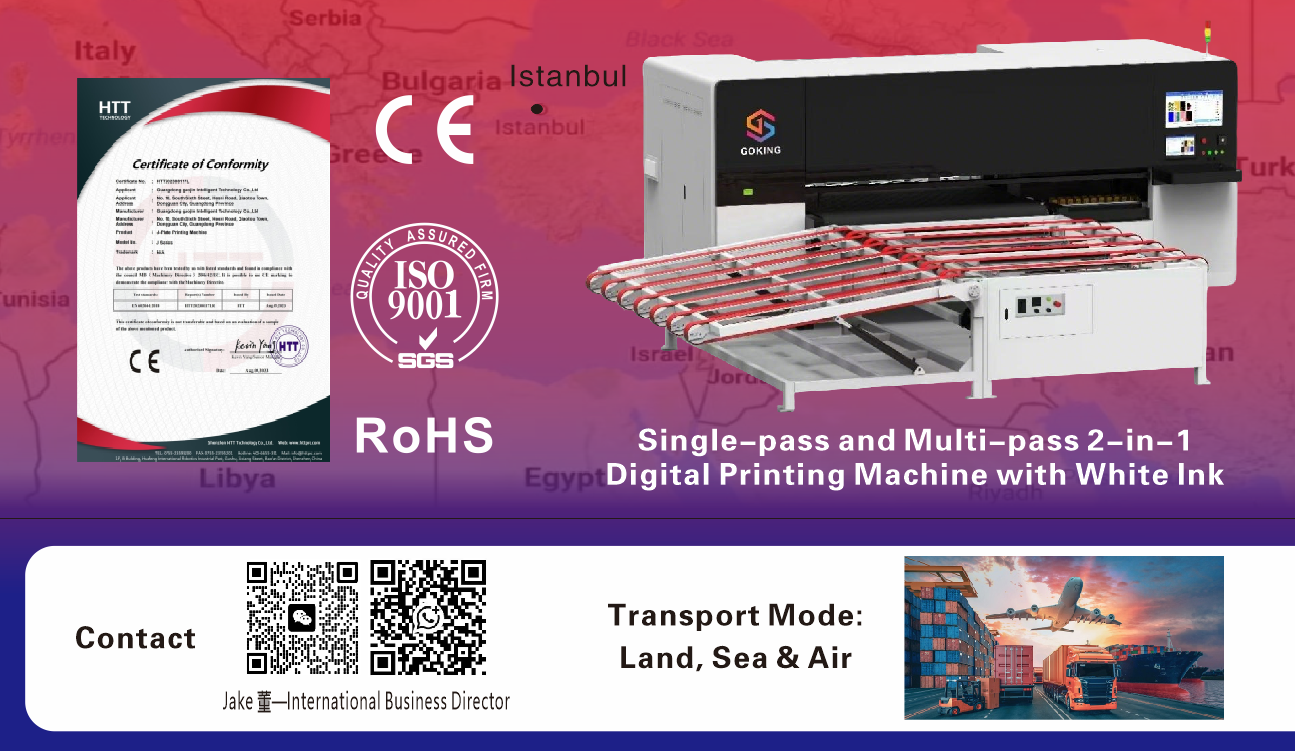
A multifunctional digital printing machine in this class is specified for a 380 V, 50/60 Hz three-phase supply drawing approximately 14 kW, a room held at 15–32 °C with humidity around 70%, material from 2 mm to 30 mm thick, and one of four ink chemistries: water-based dye, water-based pigment, coating, or UV eco-friendly. Those figures — voltage, frequency, temperature, humidity and thickness — decide whether a machine that passed its factory test will also produce saleable board in your plant.
That is why compliance is better handled as a pre-purchase checklist than as a certificate list. A CE certificate answers a legal question about the machine. It does not answer whether your building has the right supply, whether your hall holds the specified climate in February, whether your board actually measures what the pallet ticket says, or whether the ink you choose will survive the way your customer handles the finished box.
What a compliance file covers, and what it leaves to you
The first document most buyers ask for is the CE certificate, and for this machine the file records a Certificate of Conformity numbered HTT202308117L, issued on 9 August 2023 by Shenzhen HTT Technology Co., Ltd., scoped to the European Union and citing EN 60204-1:2018 together with Directive 2006/42/EC. That pairing — an electrical equipment of machinery safety standard plus the machinery directive — is a specific and useful scope, and a narrow one.
It tells you that the electrical equipment was assessed against a named standard under a named directive. It does not tell you:
- what your site voltage actually is at the hour the machine starts up;
- whether your hall stays inside the 15–32 °C and 70% humidity window across the year;
- whether your corrugated board measures what your own specification says;
- whether your chosen ink satisfies the rules the brand owner applies to the printed packaging;
- what the printed result will look like on your substrate at your speed.
Those five questions belong to the buyer, and all of them are answerable before the purchase order rather than after installation. The sections below turn them into checks with numbers attached.
Site power: 380 V, 50/60 Hz, three-phase, about 14 kW
What the specification states
The machine is specified for a 380 V, 50/60 Hz three-phase supply at a rated power of approximately 14 kW. It weighs 2,800 kg and occupies 4,260 × 2,300 × 1,900 mm, so the electrical question and the floor-plan question arrive together. Electrical components are listed as Schneider, the drive system uses servo motors, and the crossbeam is a magnetic levitation high-precision type. Material construction is a carbon steel frame with stainless steel conveying rollers and an aluminium alloy beam.
What to check before you sign
- Measure the supply, do not read it off a drawing. Take voltage and frequency readings at the proposed machine position during a production shift, with the rest of the plant running. A quiet Sunday measurement is not the condition the machine will work in.
- Confirm three-phase with a proper earth. Ask your electrician to record phase-to-phase and phase-to-neutral values, earthing resistance and phase rotation, and keep the record with the machine file.
- Size the circuit against 14 kW plus margin, including starting loads, cable run and breaker rating. This is a plant electrician's calculation, not a supplier's assumption.
- Ask what is inside the delivery scope. The turnkey matched-equipment list for this machine class includes a voltage stabilizer, a humidifier, a temperature control system, a computer, a paper receiving rack and a toolkit with consumable spare parts. Confirm line by line which of these are in your quotation and which you provide locally.
- Confirm the frequency configuration. The specification reads 50/60 Hz; ask the supplier to confirm in writing that the machine will be set for your site frequency rather than assuming the machine adapts on its own.
- Plan the access route. A 2,800 kg machine at 4,260 mm long has to enter the building before it can be commissioned, and door widths and floor loading are part of site readiness.
A voltage stabilizer appearing on the matched-equipment list is a signal about supply-quality expectations. It is not a substitute for measuring your own supply, and it is not automatically part of every quotation.
Working environment: 15–32 °C and 70% humidity
The stated working environment is a room temperature of 15–32 °C and humidity of 70%. The specification gives humidity as a single figure without stating whether it means relative humidity, so confirm the definition with the supplier before designing a room around it.
These two numbers are not administrative. Inkjet output depends on how the ink behaves at the nozzle and on how the drop lands and dries on the board. Room temperature shifts ink viscosity and drying rate; humidity shifts evaporation and static behaviour; board moisture shifts the sheet's dimensions and flatness, which is exactly what registration and vacuum hold-down depend on. A hall that feels comfortable to operators can still sit outside the window at six in the morning in winter, or beside an open dock door in summer.
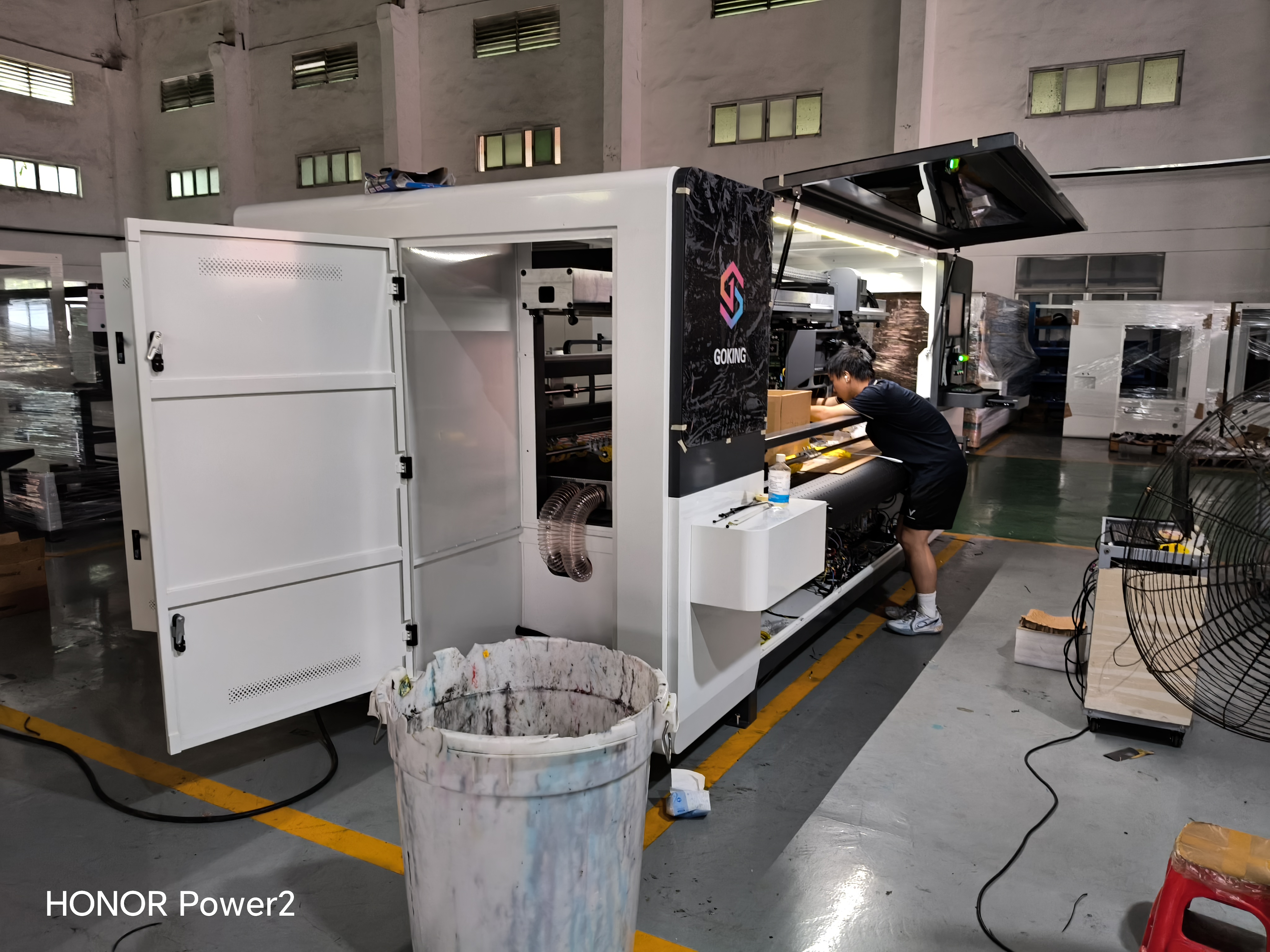
- Log the intended position for a week. Use a data logger at the machine footprint, not a wall thermometer in the office, and include at least one full production day.
- Check seasonal extremes on both sides. The lower bound matters in unheated or partially heated halls; the upper bound matters where drying ovens, compressors or roof glazing push local temperature up.
- Check the neighbours. Dock doors, forklift traffic, kilns and finishing equipment all move local temperature and humidity.
- Confirm the climate equipment in scope. A humidifier and a temperature control system both appear on the matched-equipment list for this machine class; decide whether they are part of your order or your building work.
- Separate printhead tolerance from room tolerance. The supplier describes its XAAR-nozzle single-pass configuration as durable and long-lasting with low requirements for the operating environment. That is a company statement about printhead tolerance; the machine's stated room window still applies to the installation as a whole.
Substrate range: 2–30 mm and the numbers around it
Material thickness is stated as 2–30 mm. Around that single figure sit several other numbers that decide whether a specific job fits: print width from 264 mm to 2,600 mm depending on configuration, 8 to 256 printheads, and stated production efficiency of 700 to 1,500 m²/h.
Thickness is where most surprises happen, because 2–30 mm describes the machine, not your pallet. Corrugated caliper varies within a stack, and warped or damp board behaves differently on a vacuum adsorption platform than flat, dry board.
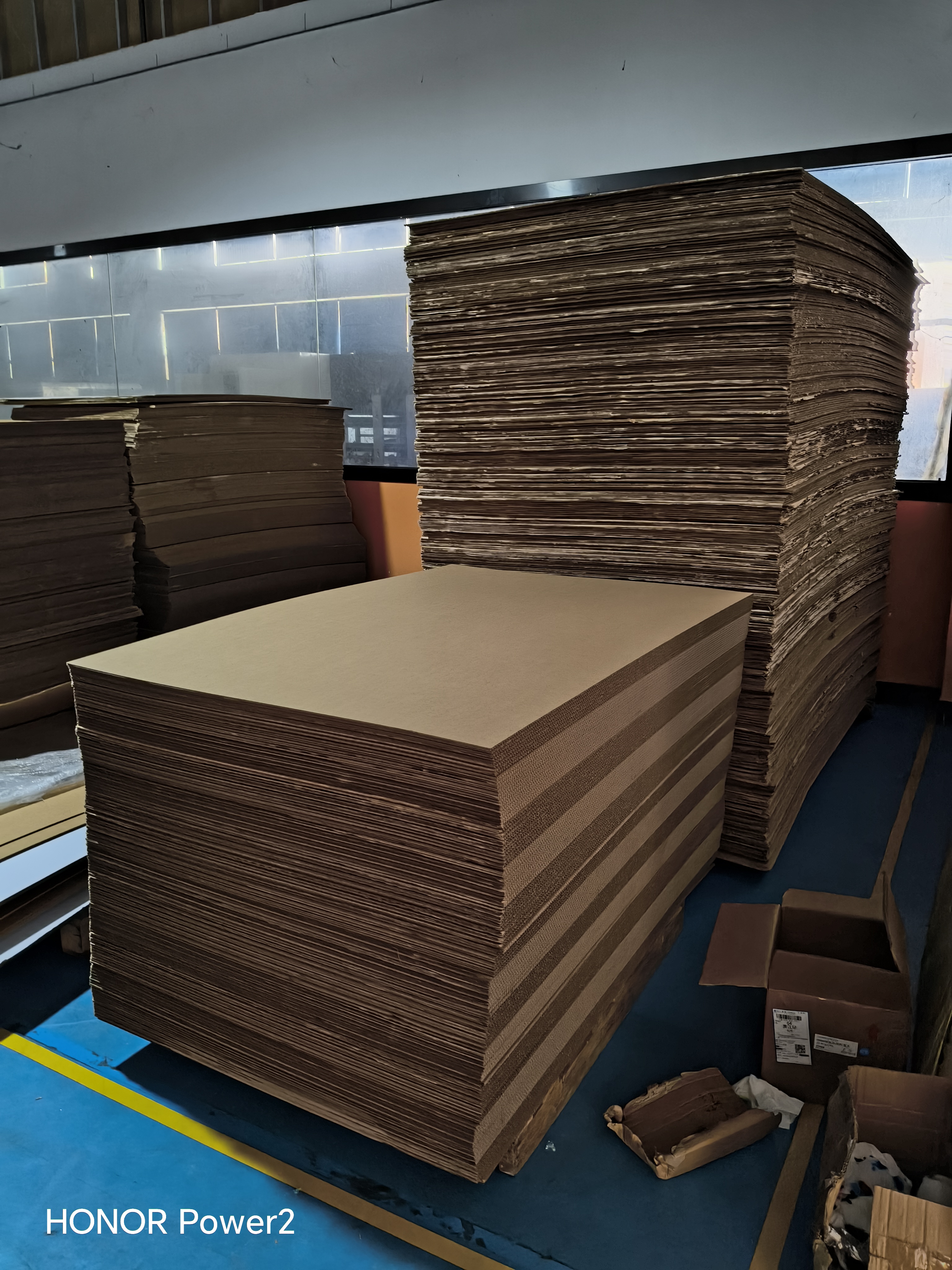
- Caliper across the pallet, not one sheet. Measure several points on several sheets from different depths in the stack.
- List the flute mix you actually run. The supplier states support for A, B, C and E corrugated board types; if your work is concentrated in one flute, say so and test on it.
- State the substrate family. Solutions are described as covering kraft paper through coated paper, and sheet printing through mass production; the practical question is which of those your order is being configured for.
- Match board width to usable print width. The 264–2,600 mm span covers different configurations, so the number that matters is the usable width of the model you are quoting.
- Ask separately about large format. A 2.55 m ultra-wide solution is described for honeycomb board, oversized industrial packaging and large display board; if that is your job, confirm the model rather than the series.
- Confirm the feed method. Leading-edge feeding and belt feeding are both listed, with semi-automatic and fully automatic leading edge as options; feed method interacts with board stiffness and job length.
Ink chemistry: four options, four different questions
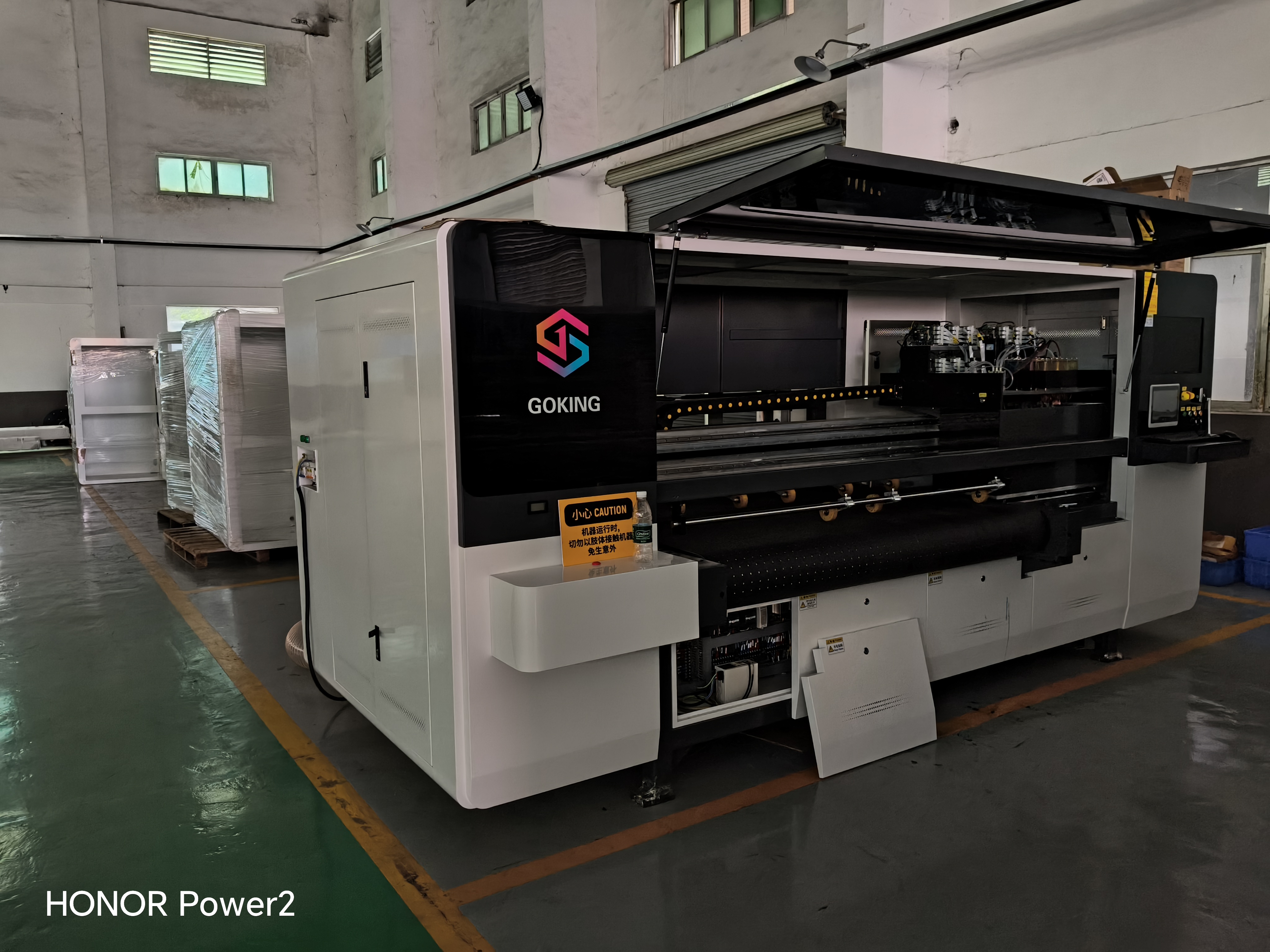
Four ink types are listed for the machine: water-based dye ink, water-based pigment ink, coating ink and UV eco-friendly ink, with a CMYK(W) colour mode and a two-supply, fully enclosed ink channel. The specification lists the categories; it does not rank them, and the right choice depends on the printed piece rather than on the machine alone.
- Water-based dye ink: ask how the print behaves on your specific board grade and what the ink supplier documents for the finished packaging. Colour behaviour on absorbent liners is the first thing to test.
- Water-based pigment ink: the useful question is not which category sounds stronger but what the printed piece must survive in service — handling, abrasion, moisture, light — and what evidence exists for that combination of ink, substrate and drying.
- Coating ink: the specification lists it as a separate category. Ask the supplier what role it plays in your job, and what it changes about drying and downstream handling, rather than assuming a function.
- UV eco-friendly ink: ask about curing arrangements, energy demand and odour, and ask what documentation the ink carries for the market where the packaging will be sold.
Two further points belong on the checklist. First, colour mode includes white, and white on brown kraft is a different test from CMYK on white liner — ask for a sample on the exact kraft grade you buy. Second, the technical material states the ink categories but does not include a water-resistance test method or result for these inks on these substrates. That is not a defect in the machine file; it simply means water resistance must be established by a test you define, on board you supply.
Ink compliance is also a separate question from machine compliance. The CE certificate on file addresses electrical safety under the machinery directive. It says nothing about what the ink contains or whether the printed packaging meets a brand owner's specification, and those answers have to come from the ink documentation and your own testing.
Export destination questions: six markets, six conversations
Export destination changes the question, not the machine. GOKING lists the EU, Africa, Latin America, Russia, Kazakhstan and Turkey among its main markets, with exports at 49% of output, so most of these conversations have been had before — but the answers differ by market.
European Union. The certificate on file cites Directive 2006/42/EC. Regulation (EU) 2023/1230 replaces that directive and becomes fully applicable in January 2027, so which legal text a declaration of conformity cites depends on when the machine is placed on the market. For an order shipping around that transition, ask which text the declaration references and whether the technical file has been updated. Also confirm the language of the instructions and the nominal voltage at your site.
Africa. The questions tend to be about the supply rather than the certificate: nominal voltage and frequency at the site, whether a stabilizer is included in the order, the spare-parts route and the stated response time. Ask what the local service arrangement is and how long consumables take to reach you.
Latin America. Frequency comes first. The machine is specified for 50/60 Hz, so confirm the configuration for your grid in writing rather than assuming it. Then ask about documentation language, voltage at the plant and the spare-parts route.
Russia and Kazakhstan. Ask what documentation package ships with the machine in the form your customs broker expects, and confirm the spare-parts route. Cold-weather sites should re-check the 15–32 °C room window against winter conditions in an unheated or partially heated hall; the climate equipment list exists for that reason.
Turkey. GOKING participates in overseas printing and packaging exhibitions, including in Turkey, and Turkish clients appear among its site cases. Ask for the reference and the service arrangement closest to your city, and ask which configuration is most commonly delivered into the Turkish market.
Across all six, three questions repeat: what is the site voltage and frequency, what documentation package ships with the machine, and who attends the installation and commissioning.
Compliance checklist: requirement, stated figure, and what to verify
| Requirement area | Stated specification | Pre-purchase check | Status of the evidence |
|---|---|---|---|
| Power supply | 380 V, 50/60 Hz, three-phase; rated power about 14 kW | Measure site voltage and frequency under load; confirm breaker, cable and earth; confirm stabilizer scope | Machine specification |
| Room climate | Room temperature 15–32 °C; humidity 70% | Log the hall for a week; confirm whether 70% means relative humidity; confirm humidifier and temperature control scope | Machine specification |
| Material thickness | 2–30 mm | Caliper-check your board across the pallet; confirm usable print width for the quoted model | Machine specification |
| Ink chemistry | Water-based dye, water-based pigment, coating, UV eco-friendly; CMYK(W) | Match ink to substrate and service exposure; request ink documentation; define a water-resistance test | Categories stated; no water-resistance test data supplied |
| Electrical safety, EU | CE Certificate of Conformity HTT202308117L; EN 60204-1:2018; Directive 2006/42/EC | Check the declaration of conformity and which directive or regulation it cites for your shipment date | Certificate on file, issued 9 August 2023 |
| Output expectation | Print width 264–2,600 mm; 8–256 printheads; stated efficiency 700 / 1,500 m²/h | Request a printed sample on your own board at your target speed and keep it as the acceptance reference | Company-stated figures |
| Installation | 2,800 kg; 4,260 × 2,300 × 1,900 mm | Confirm floor loading, door widths and the access route before delivery | Machine specification |
Step by step: preparing a site before the machine arrives
- Record the electrical baseline. Voltage, frequency, phase rotation and earthing at the machine position, taken during production, signed by your electrician.
- Log the room climate. One week of temperature and humidity data at the footprint, including the coldest and hottest hours your hall experiences.
- Caliper the board. Thickness across several pallets, plus flute type, board width and moisture condition written down rather than estimated.
- Fix the ink and the acceptance test together. Choose the ink category, then define what the printed sample must pass — a rub test, a water or humidity exposure, an adhesion check — and write the pass criterion before the sample is made.
- Confirm the documentation package for your destination. Certificate, declaration of conformity, manual language, and the directive or regulation text the declaration cites.
- Agree the installation scope. Who attends commissioning, who supplies the stabilizer, humidifier and temperature control, and what the response commitment is after handover.
- Prepare the floor and the services. Footprint, weight, clearance for feeding and receiving, drying space and the ink storage area.
- Print the acceptance sample and keep it. Free sample printing on customer board is offered before order; keep the accepted sample as the reference for the machine you receive.
Where these requirements bite: typical applications
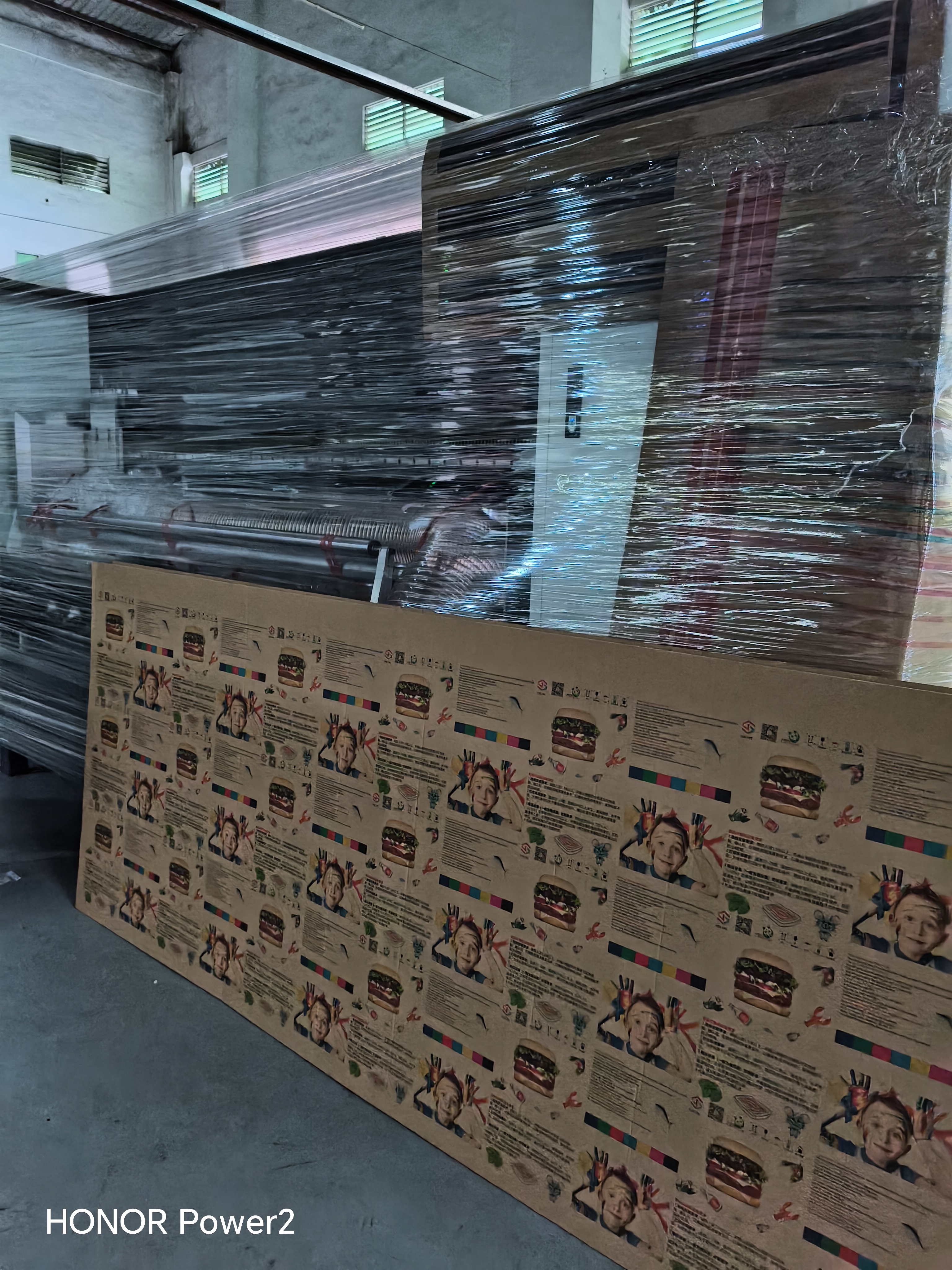
The working conditions described for this machine class — mass production, short-run printing, frequent job change and continuous high-speed operation — explain why the checklist matters more than it does for a single-job press. A machine that changes jobs often is also a machine that is measured against a different climate and substrate condition on almost every shift.
- Corrugated shipping cartons. Flute mix and caliper variation dominate here; the A, B, C and E board types stated by the supplier should be matched against the flutes you run most.
- Kraft retail packaging with white ink. White on brown board is the case where sample printing on your own kraft grade is worth more than any specification sheet.
- Coated paper and display board. Surface and drying behaviour change with the coating, so the ink category and the drying arrangement should be decided together.
- Oversized and honeycomb board. The 2.55 m ultra-wide solution is described for large display and industrial packaging work; confirm the model, not the series, if this is your job.
- Short-run and reprint work. Frequent job change puts the emphasis on setup time and on stable room conditions, because a hall that drifts between jobs produces drift between jobs.
How GOKING supports the pre-purchase stage
Guangdong Goking Intelligent Technology Co., Ltd. is a Dongguan-based manufacturer of single-pass and multi-pass 2-in-1 digital printing machines, founded in 2020, operating a 10,000 ㎡ facility with 152 employees, 38 engineers and an annual output of 864 sets. Exports account for 49% of output, with the EU, Africa, Latin America, Russia, Kazakhstan and Turkey listed as main markets.
For a compliance conversation, four company facts are directly useful. Monthly capacity is stated at 38 sets with a minimum order of one set, and the standard production lead time for standard machines is typically one month, with custom and OEM/ODM lead times confirmed at order. Quality control covers a 100% aging test, long-time running inspection and pre-shipment inspection. After-sales support includes technical support, spare parts and a stated response within 24 hours, with engineers travelling to site to assist with installation and commissioning. Free sample printing on customer material is offered before order, which is the practical way to settle the substrate and ink questions raised above.
The 2026 product catalogue, including model and configuration detail, can be downloaded here: GOKING 2026 product catalog (PDF).
FAQ
What power supply does a multifunctional digital printing machine need?
The machine is specified for a 380 V, 50/60 Hz three-phase supply with a rated power of approximately 14 kW. Before ordering, measure voltage and frequency at the intended position during a production shift, confirm three-phase with a proper earth and phase rotation, size the circuit and breaker with a plant electrician, and confirm in writing which items — including the voltage stabilizer listed among matched equipment — are inside the delivery scope.
What room temperature and humidity should the print room hold?
The stated working environment is a room temperature of 15–32 °C and humidity of 70%. Because the specification gives humidity as a single figure without defining it, confirm whether 70% refers to relative humidity. Log temperature and humidity at the machine footprint for a week, including seasonal extremes, and confirm whether the humidifier and temperature control system listed among matched equipment are part of your order or your building works.
How should I evaluate waterproof multifunctional digital printing machine manufacturers?
Separate the claim from the test. The machine specification lists four ink chemistries — water-based dye, water-based pigment, coating and UV eco-friendly — but the supplied technical material does not include a water-resistance test method or result for these inks on these substrates. Ask each supplier for a printed sample on your own board, state the test you will apply (for example a water soak, a wet rub, a tape adhesion check or a humidity exposure) and the pass criterion, ask which ink and which drying arrangement the sample used, and request the ink supplier's documentation for your market. A supplier that answers with a tested sample on your substrate is giving you something a specification sheet cannot.
What material thickness and width can the machine handle?
Material thickness is stated as 2–30 mm, with print width from 264 mm to 2,600 mm and 8 to 256 printheads depending on configuration. The practical check is to caliper your own board across several pallets, list the flute types you run, and confirm the usable print width of the specific model being quoted rather than the range across the whole series.
Which of the four ink types should I choose?
Choose against the printed piece, not the machine. Identify what the packaging must survive in service, whether white ink is required on brown kraft, what documentation your market requires from the ink, and how the ink behaves on your board grade. Then test: free sample printing on customer material is offered before order, and the accepted sample becomes the reference for the machine delivered. To discuss a configuration for your market, contact GOKING at w1250606130@gmail.com or +86 18028205637.
Conclusion
Compliance for a multifunctional digital printing machine comes down to five figures and one document. The figures are 380 V three-phase at 50/60 Hz drawing about 14 kW, 15–32 °C room temperature, 70% humidity, 2–30 mm material thickness, and four ink chemistries — water-based dye, water-based pigment, coating and UV eco-friendly. The document is the CE Certificate of Conformity HTT202308117L citing EN 60204-1:2018 and Directive 2006/42/EC, which covers electrical safety and does not cover your grid, your hall, your board or your ink.
Check the five figures against your own site before the purchase order, add the destination question — which directive a declaration cites in the EU, which frequency your grid runs in Latin America, which documentation your broker expects in Russia or Kazakhstan — and settle the ink question with a printed sample on your own board. That sequence turns compliance from a folder of certificates into a decision you can defend.
Next step: send your board grade, site voltage and frequency, and destination market to GOKING and ask for a configuration review plus a printed sample on your own material.
Email: w1250606130@gmail.com | Tel: +86 18028205637 | www.cmyk-goking.com
Have Questions or Need More Details?
Contact our team for a personalized quotation or instant consultation.
Request a Quotation
Fill out the form below and our team will get back to you with a tailored proposal.
WhatsApp Direct Chat
Prefer to chat in real-time? Message us on WhatsApp for instant assistance & quick answers.
- Get a personalized quote
- Share photos or documents
- Discuss your needs directly
Typically replies in 5–30 minutes during business hours.