Plate-less vs. Plate-Based Corrugated Printers: A Buyer's Comparison Guide
Plate-less vs. Plate-Based Corrugated Printers: A Buyer's Comparison Guide
Corrugated packaging production has reached a decision point. Plate-based flexo printing is a mature and reliable process for high-volume orders, but plate-less digital corrugated printers are increasingly used when job sizes shrink or artwork changes quickly. This guide compares the two technologies to help buyers evaluate setup time, order flexibility, substrate handling, color requirements and throughput before choosing a production line.
For buyers in printing and packaging, the core question is not which technology is newer, but which one fits their real order mix. The answer affects capital investment, operating cost, job turnaround time and the types of work a shop can accept. This article walks through the comparison using a concrete example: the GOKING single-pass/multi-pass 2-in-1 digital printing machine for corrugated cardboard.
The problem: Plate-based workflow constraints on short-run corrugated work
Conventional corrugated printing usually begins with a physical image carrier, commonly called a printing plate. Each design change means creating or mounting plates, adjusting color registration, and using setup time before the first saleable box is produced. On long runs, those costs are spread across a large number of boxes, so the unit cost can remain low. On short runs, however, plate cost and setup waste become large relative to the order quantity.
Buyers see this pressure when customers ask for product-launch cartons in quantities below a full production shift, regional versions of one corrugated box design, e-commerce packaging with variable or personalized elements, quick reprints after a design revision, or orders that mix several SKUs on one production day. A plate-based workflow can handle all of these jobs, but the margin is squeezed by changeover time and plate expenses. That core mismatch is one reason plate-less digital systems have moved from niche to mainstream in packaging plants.
Industry background: The digital packaging printing market is expanding
The adoption of plate-less digital printing in packaging is not an isolated trend. According to Grand View Research, the global digital printing market was valued at USD 38.0 billion in 2023 and is projected to reach USD 57.0 billion by 2030. More specific data from MarketsandMarkets estimates that the digital printing packaging market will grow from USD 30.2 billion in 2024 to USD 46.2 billion by 2029. Reports and Data also valued the single-pass digital printing machine segment at USD 3.2 billion in 2024, with a projected increase to USD 6.5 billion by 2034.
These figures point to a practical signal for corrugated printers: plate-less technology now includes not only slower high-detail scanning machines but also high-throughput single-pass systems. When a packaging plant adds or replaces a corrugated printing line, the choice between plate-based and plate-less is no longer a question of capability only; it has become a question of production strategy, substrate mix and order-profile economics.
What plate-less digital printing changes
Plate-less digital printing replaces physical plates with inkjet printheads driven by digital files. A RIP accepts the artwork and sends the image data directly to the machine. If the substrate is positioned correctly, printing can begin without a separate plate-mounting step. This removes plate purchasing, plate mounting and some setup waste from the workflow.
For corrugated board, two operating methods are common. Single-pass digital printing moves the substrate under fixed printheads in one pass, giving very high productivity for digital production. Multi-pass or scanning digital printing moves the printheads across the substrate repeatedly, giving the system more time to build density and fine detail. Some plate-less printers are engineered as 2-in-1 machines that support both modes.
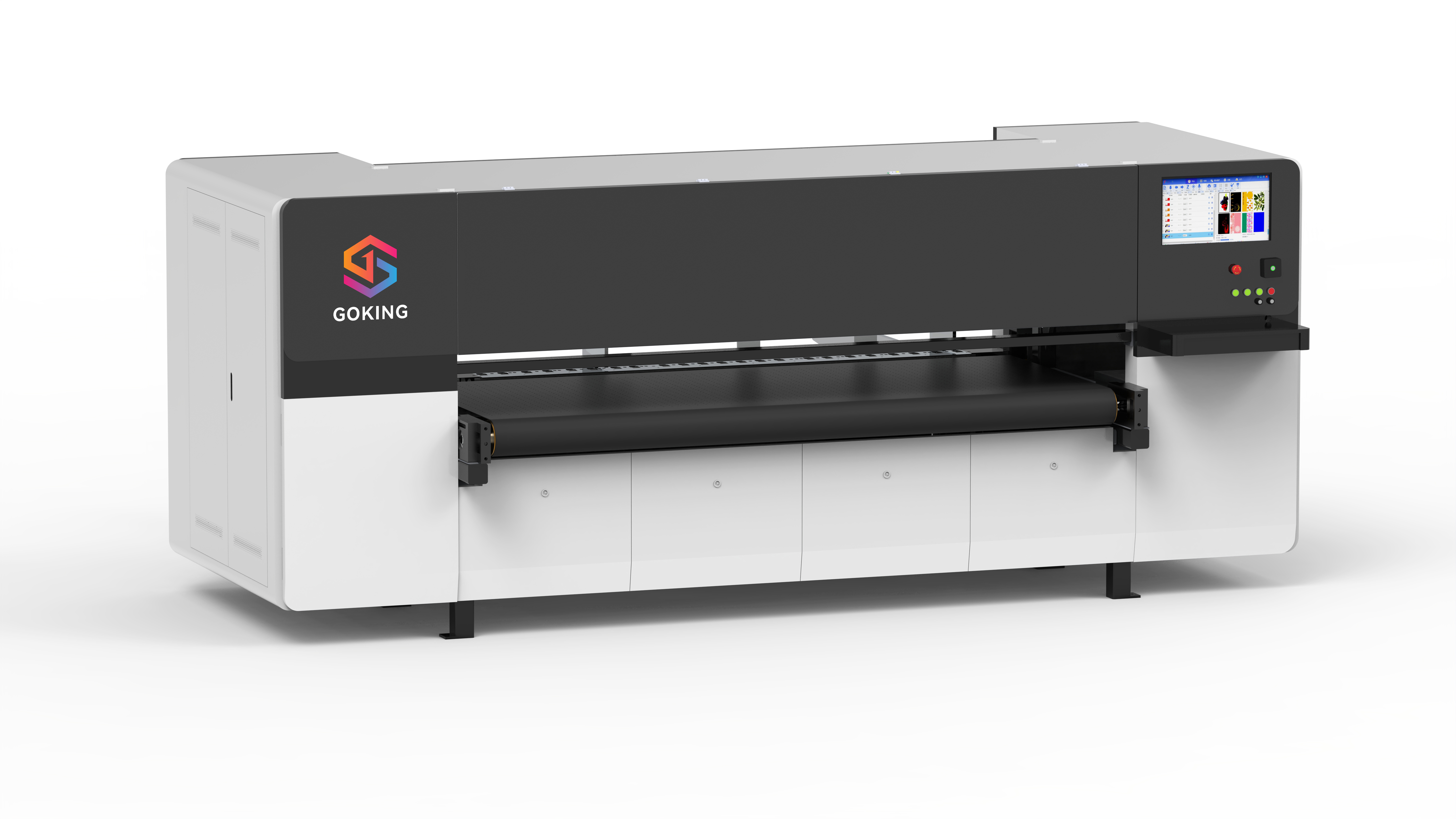
GOKING's Corrugated Cardboard Digital Printing Machine is such a plate-less unit. It can be configured as a single-pass digital printer with a XAAR printhead, or as a multi-pass digital printer with Epson or Xaar nozzles, or as a 2-in-1 system with both single-pass and multi-pass operation. In a hybrid workflow, the same machine can run high-speed single-pass jobs for standard orders and then switch to scanning mode for proofing or high-detail short runs.
Key specifications to compare when choosing a plate-less corrugated printer
When evaluating a plate-less digital system, buyers need to compare specifications against their own substrate and order mix. GOKING publishes a detailed specification set for its Corrugated Cardboard Digital Printing Machine, and the following points are especially relevant for corrugated packaging.
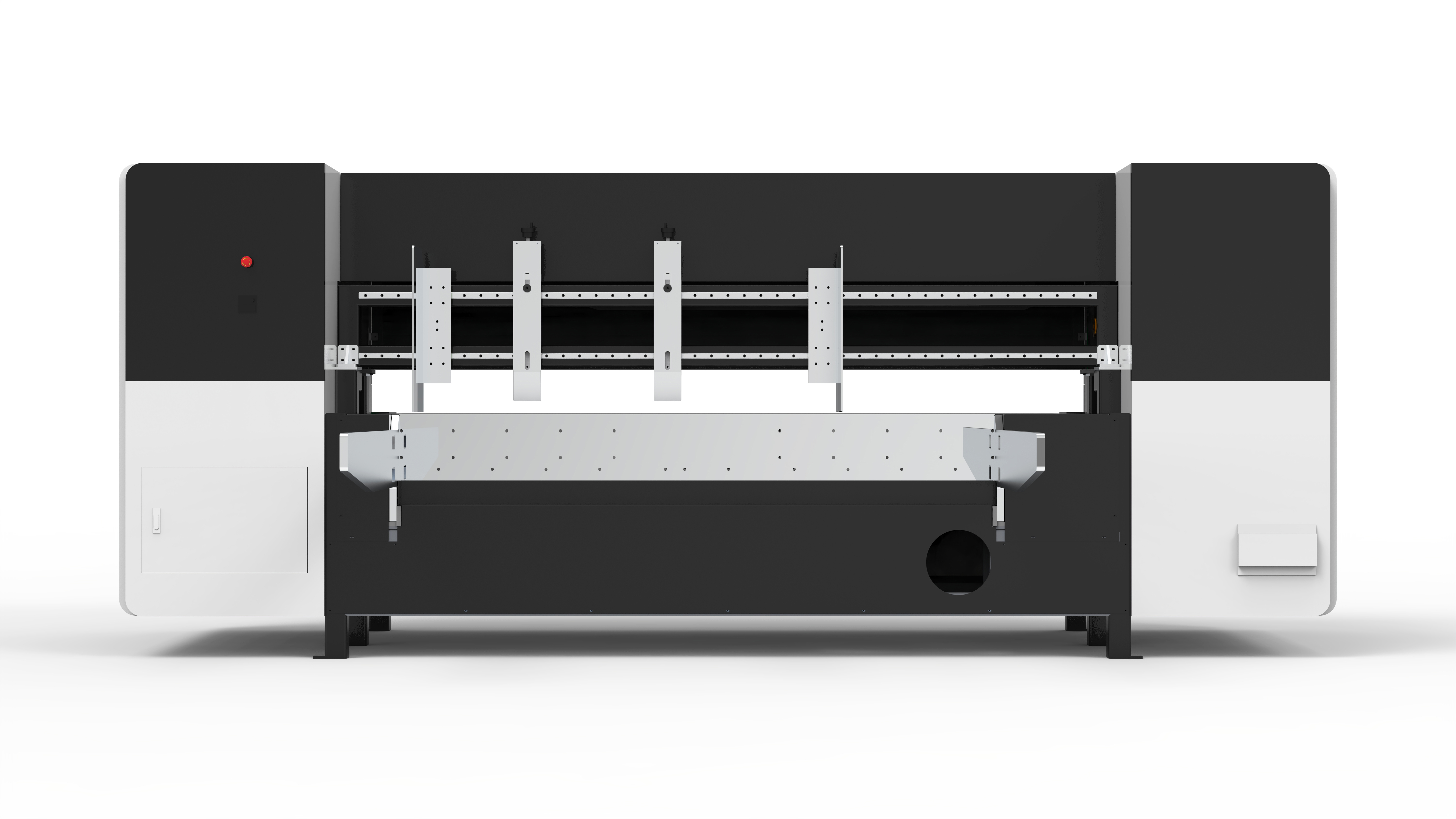
- Micro-piezo high-precision printheads: The machine supports 8 to 256 printheads depending on configuration. Epson commercial-grade printheads are selected for precision and grayscale smoothness; Xaar industrial-grade printheads are selected for long production life and reduced nozzle clogging.
- Material thickness: The equipment handles corrugated board and paperboard in a 2–30 mm thickness range. This allows a plant to move between thin coated board and thicker corrugated sheets without a separate machine in many cases.
- Vacuum adsorption platform: The printing table uses vacuum adsorption to hold sheets flat and stable during inkjet printing, which is important when the board has natural curvature or varying surface stiffness.
- Production efficiency: The machine offers efficiency ratings of 700 m²/h or 1500 m²/h depending on configuration. In single-pass mode, speed with Epson nozzles is 60 m/min; with XAAR nozzles, single-pass speed is at least 100 m/min.
- Color and ink: Color mode supports CMYK or CMYK plus white ink in five-color integrated models. Ink choices include water-based dye ink, water-based pigment ink, coating ink and UV eco-friendly ink, allowing the user to match the chemical system to the end application.
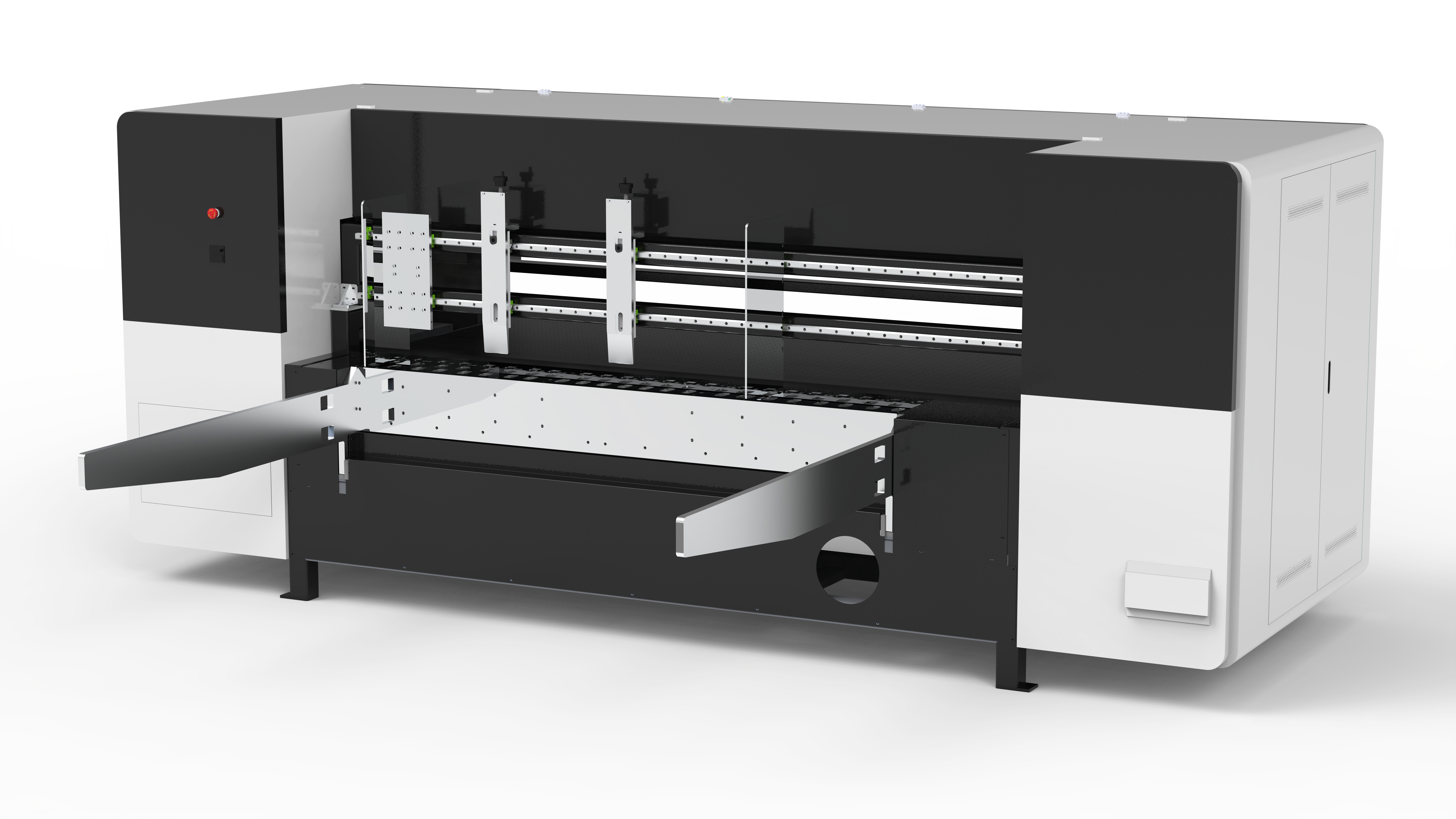
- Feeding options: Both leading-edge feeding and belt feeding are available. The leading-edge type can be specified as semi-automatic or fully automatic.
- File handling: The RIP supports direct printing for PDF, JPG, BMP and TIF; the minimum text height for English characters is 1.5 mm, which offers a useful reference point for packaging codes and fine copy.
- Machine construction: The frame uses carbon steel, conveying rollers are stainless steel, and the beam is aluminum alloy. The crossbeam is a magnetic-levitation high-precision unit, and electrical components are Schneider with servo motor drives.
For packaging buyers, the most important rule is to compare these values against the heaviest, thickest board and the fastest expected job cycle. A machine that prints 2–30 mm thick board will not necessarily handle every double-wall construction, so the material test remains a required step.
Step-by-step decision framework for plate-less vs. plate-based
Buyers can use the following six-step process to structure a comparison before they request quotes or schedule factory trials.
- Segment the order book. Separate jobs by total quantity, number of design versions, expected repeat count, and target color quality. Plate-based economics generally reward long runs of stable artwork; plate-less economics reward lower setup dependency and faster changeover.
- Map setup cost and setup waste. Identify how much time and substrate is lost on the current plate-based press for typical order changes. This number, even approximate, reveals whether plate-less could deliver a shorter payback.
- Review substrate range. Check caliper range, flute type, surface absorbency and whether the plant regularly prints both paperboard and corrugated. A plate-less machine with a 2–30 mm thickness range and vacuum table may consolidate several substrate categories.
- Define required throughput. For pure high-volume work, compare a plate-based line with a single-pass digital system in each partner's configuration. If speed ratings such as 60 m/min with Epson or at least 100 m/min with XAAR are published, use them for first-pass capacity checks.
- Test color and detail on actual board. Print a sample containing small text, gradients, barcodes and brand colors. Check whether the plate-less engine holds registration and color consistency across the full printed sheet.
- Build a future scenario. Will the plant need faster proofing, versioned boxes, regional SKUs or short production windows next year? A 2-in-1 machine that can switch between single-pass and scanning modes may provide more flexibility than two dedicated machines.
Typical use cases for plate-less and plate-based corrugated printing
Plate-based corrugated presses remain a logical choice for plants that run the same design for very long periods, especially where the customer requires a consistent solid color across a high volume of identical boxes. The plate cost is amortized, and the line can be optimized for the specific repeat job.
Plate-less digital corrugated printers are a stronger fit for short runs, urgent orders, personalized packaging, pre-production samples and jobs where artwork changes between orders. The GOKING 2-in-1 machine supports both sample-testing and batch-production modes, which means a packaging factory can use the same digital line for customer approvals and for live production.
Digital also suits packaging plants that want to reduce plate costs and setup waste. Because digital workflows start from a file, a new design can be printed immediately after the file is checked in the RIP. That speed is valuable in today's supply chain, where corrugated box orders often arrive with shorter lead times than in the past.
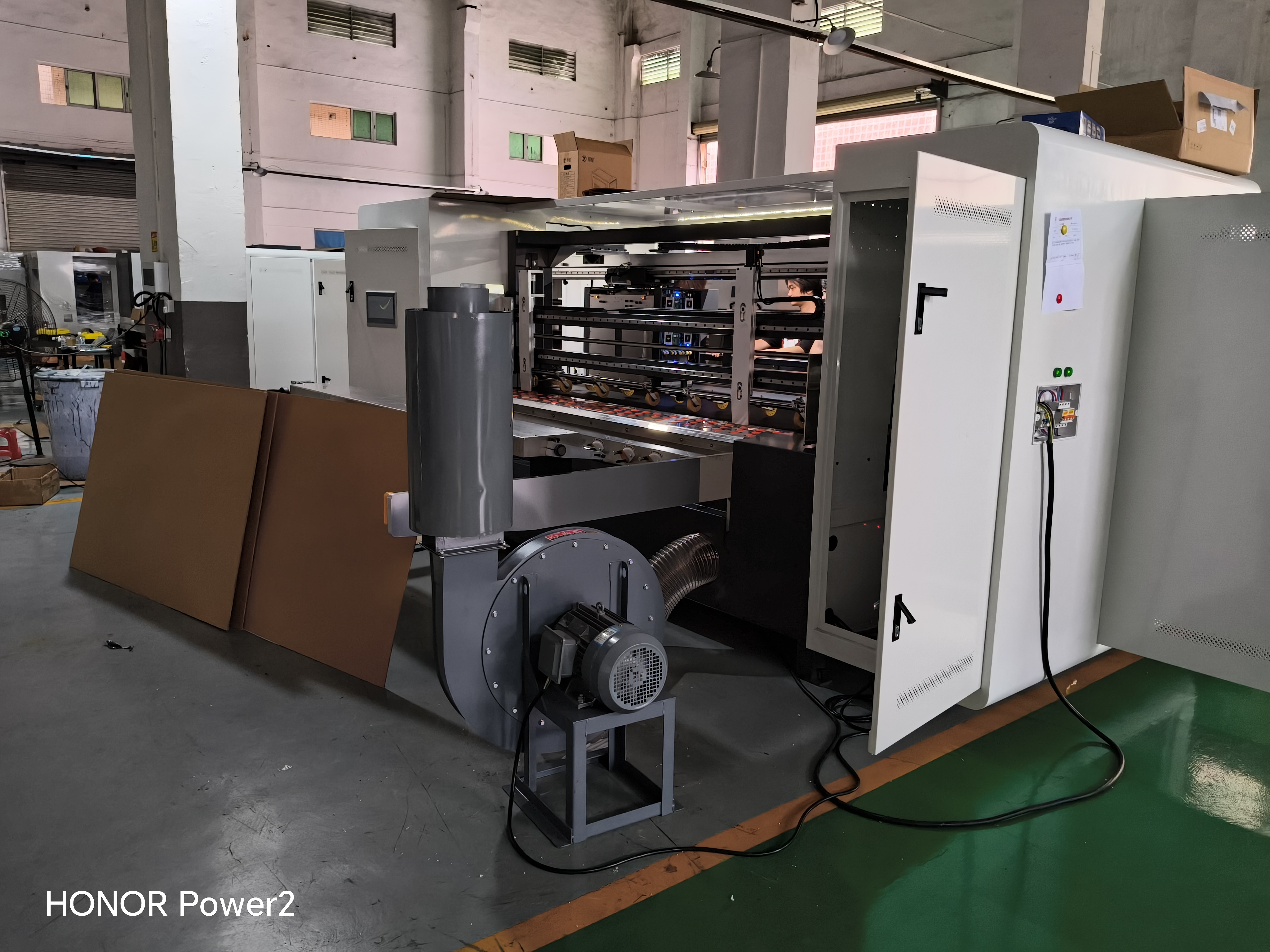
Side-by-side comparison: Plate-less vs. plate-based corrugated printing
| Comparison criterion | Plate-less digital corrugated printer | Conventional plate-based press |
|---|---|---|
| Plate or image carrier | No physical plate; digital file sent through RIP | Physical plates needed for each design |
| Typical job profile | Short runs, variable design, frequent changeovers, samples | Long repeat runs with stable graphics |
| Changeover speed | Setup tied mainly to file handling and substrate positioning | Includes plate mounting, registration and setup waste |
| Operating modes | Can be single-pass, multi-pass or 2-in-1 on one machine | Press speed is continuous after setup |
| Substrate thickness range | GOKING model: 2–30 mm; vacuum-adsorption platform | Varies by press model and line configuration |
| Printhead technology | Micro-piezo high precision; Epson or Xaar nozzles | Not applicable |
| Efficiency example | GOKING: 700 or 1500 m²/h; single-pass speed with XAAR at least 100 m/min | Varies by press width and line speed |
| Color and ink | CMYK or five-color with white; water-based, coating and UV eco-friendly inks | Dependent on press, plate, anilox and ink system |
| Cost logic | Removes plate cost and setup waste; attractive for short-run and variable work | Plate cost is spread over long runs; can deliver very low unit cost at high volume |
Several cells deliberately say varies because no one can set a credible specification for every plate-based press without naming a model. Buyers should replace varies cells with the actual data for their current press or the press they are comparing.
FAQ
Are plate-less digital corrugated printers subject to safety standards?
Yes. Industrial digital printers sold into regulated markets must meet applicable machinery safety requirements. CE marking is based on documented risk assessment under EN ISO 12100, and the electrical equipment of the machine is governed by IEC 60204-1. Buyers should ask the manufacturer for compliance documentation that matches the exact configuration they plan to purchase.
What substrates and thicknesses can a GOKING plate-less machine handle?
The GOKING Corrugated Cardboard Digital Printing Machine handles corrugated cardboard and paperboard in a 2–30 mm thickness range. It uses a vacuum adsorption platform to hold sheets during printing, which helps maintain image placement stability on board that may have slight curl or surface variation.
When is plate-less printing more economical than plate-based for corrugated boxes?
There is no universal cutoff that fits every factory. Industry research reported in 2024 showed that variable-data digital printing is enabling economically viable runs below 3,000 units, a range that was often cost-prohibitive in older analog workflows. Plate-less printing removes plate costs and reduces setup waste, but very long and stable repeat runs can still favor a plate-based press. The real decision point is the buyer's order mix.
Can I ask for sample prints before purchasing a GOKING digital printer?
Sample validation is a practical and recommended step. GOKING prints samples for customers free of charge, and buyers can use those samples to evaluate color, detail, text legibility and board handling before committing to a machine. To arrange a sample run with your own artwork, contact GOKING directly with details about your target substrates and expected order sizes.
Bottom line
Plate-based corrugated printing is not going to disappear; it remains cost-efficient for long, stable, high-volume work. Plate-less digital printing changes the economics of short runs, urgent orders and versioned packaging by removing plate creation and making setup more flexible. A machine such as the GOKING 2-in-1 digital corrugated printer allows a packaging plant to use high-speed single-pass output when volume is high and switch to scanning/multi-pass mode when detail or proofing matters more.
Before making a purchase decision, compare the concrete substrate thickness range, throughput ratings, printhead type, color capability and feeding system against your own box portfolio. Use a sample print as evidence, ask for compliance documentation, and then choose the technology that matches your customer demand rather than the technology name alone.
Want to test a plate-less digital corrugated printer against your current box orders? Contact GOKING to arrange a sample print or download the 2026 product catalog for configuration details.
Download the 2026 GOKING product catalog
Email: dongjake402@gmail.com | Phone: +86 15382862836 | WhatsApp: +86 139-2437-1492