Solving Color Consistency in Corrugated Packaging Printing
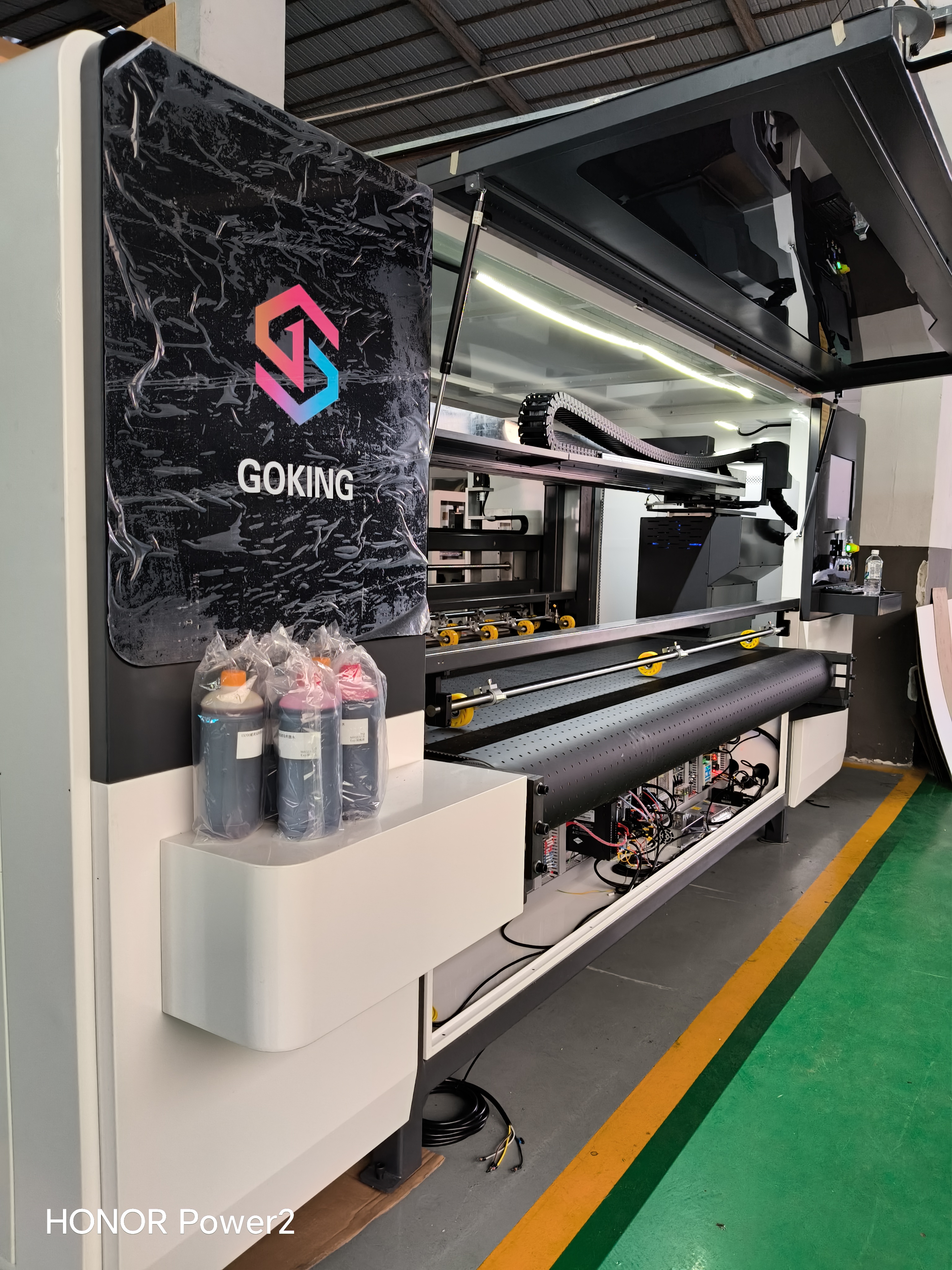
Answer first: Color consistency on corrugated packaging is a system result, not a single press setting. It depends on how the board is held, how ink reaches the printhead, how white ink is layered, how the file is processed, and how the press is calibrated between jobs. The GOKING multifunctional digital printing machine addresses these variables with a CMYK+White ink configuration, a fully enclosed two-channel ink supply, a vacuum adsorption platform, automatic color calibration, and multiple printhead and DPI configurations.
This article is written for packaging printers, converters, brand owners, and procurement teams that are evaluating a multifunctional digital printing machine for corrugated packaging. It defines the color-consistency problem, explains why it appears on kraft and coated board, shows how the GOKING Corrugated Cardboard Digital Printing Machine is specified to reduce it, and provides a step-by-step validation path before a purchase decision.
Problem Definition: What “Color Consistency” Means on Corrugated Board
Color consistency means that the same job looks the same across sheets, across batches, and across production days. On corrugated packaging, that definition is harder to meet than on coated paper or film because the substrate is not a neutral canvas. The liner surface, fiber absorption, board thickness, and the presence of fluting all influence how ink sits on the sheet. A color that is acceptable on one pallet of board can look different on the next pallet even when the digital file and ink set are unchanged.
The problem usually appears in six places:
- Substrate variation: kraft, colored, and coated boards absorb ink differently, so the same CMYK values can produce different visual results.
- White-ink layering: on brown or colored board, CMYK alone may shift toward the board tone; a white base can change how the final color reads.
- Media movement: a warped or lightweight sheet that lifts or shifts in the print zone changes dot placement and registration.
- Ink delivery: unstable ink supply, clogged nozzles, or density drift can show up as banding or batch-to-batch color change.
- Job setup and calibration: frequent job changes increase the risk of operator-dependent reset and inconsistent first articles.
- Environmental variation: temperature and humidity affect ink behavior, drying, and board dimensions.
The commercial cost appears as remakes, approval delays, extra inspection, and wasted board. For a packaging printer, color consistency is therefore not a finishing detail. It is a qualification criterion for the press, the ink set, and the production workflow.
Industry Background: Why Color Consistency Is Now a Buying Criterion
Digital printing is no longer a niche proofing tool in packaging. Grand View Research values the global digital printing market at USD 38.0 billion in 2023 and projects USD 57.0 billion by 2030. The inkjet segment held 48.4% technology share in 2023. MarketsandMarkets estimates the digital printing packaging market at USD 30.2 billion in 2024, rising to USD 46.2 billion by 2029. Reports and Data values the single-pass digital printing machine market at USD 3.2 billion in 2024, with a projected USD 6.5 billion by 2034.
These figures describe a market moving toward shorter runs, faster job changes, and more versioned packaging. Market Research Future notes that variable data printing is enabling economically viable runs under 3,000 units, a range that was previously cost-prohibitive. Custom Market Insights reports that water-based pigment ink accounted for a significant portion of the eco-friendly digital printing market in 2024. For corrugated packaging, the commercial implication is direct: if a printer can accept short runs, it must also be able to repeat color across those runs.
The Asia-Pacific region is part of this shift. Market Research Future reports that Asia-Pacific dominated the digital printing market with approximately 41.6% revenue share in 2025. For buyers sourcing equipment from Chinese manufacturers, that scale matters because it supports a deep supply chain for printheads, inks, and spare parts. It also raises the bar for documentation: a buyer needs specifications, certification, and sample validation, not only a machine demonstration.
Detailed Solution: How the GOKING Multifunctional Digital Printing Machine Is Configured for Color Consistency
Guangdong Goking Intelligent Technology Co., Ltd. (GOKING) is a Dongguan-based manufacturer of industrial digital printing solutions. The company was founded in 2020 and operates a 10,000 ㎡ manufacturing facility with 152 employees, including 38 engineers. GOKING reports an annual output of 864 sets and a 49% export ratio, with main markets in the EU, Africa, Latin America, Russia, Kazakhstan, and Turkey. Its core product is a single-pass and multi-pass 2-in-1 digital printing machine, including 5-color integrated models with multiple DPI configurations and different nozzles.
The product discussed here is the Corrugated Cardboard Digital Printing Machine, a plate-less 2-in-1 multifunctional digital printing machine for corrugated cardboard and cardboard packaging. It supports both single-pass and multi-pass printing with XAAR or Epson printheads. The model designation is: Digital Printing Machine——CMYK and Five Colors, Different Nozzles, Different DPI, Different Printhead Numbers, Different Printing Width and Speed.
CMYK+White Ink Configuration: Controlling the Base Layer
The machine’s color mode is CMYK with optional W. The white ink channel is relevant to corrugated packaging because brown kraft and colored liners can shift the appearance of CMYK inks. By laying down a white base before CMYK, the operator can reduce the influence of the board color on the final image. This does not remove the need to test the actual board, but it gives the printer a controllable layer that a CMYK-only digital workflow may not have.
GOKING also supports water-based dye ink, water-based pigment ink, coating ink, and UV eco-friendly ink. Ink choice must match the substrate, the desired hand-feel, and the finishing process. A white-ink strategy on kraft board is therefore a joint decision between ink, board, and print mode, not a standalone setting.
Fully Enclosed Two-Channel Ink Supply: Stable Ink Delivery Across the Run
The specification lists a fully enclosed two-channel ink supply for efficiency. In practical terms, an enclosed ink path limits exposure of ink to the workshop environment, while two channels support controlled delivery to the printhead. For color consistency, the relevant question is not only how much ink the system holds, but whether ink condition remains stable from the first sheet to the last sheet of a long run.
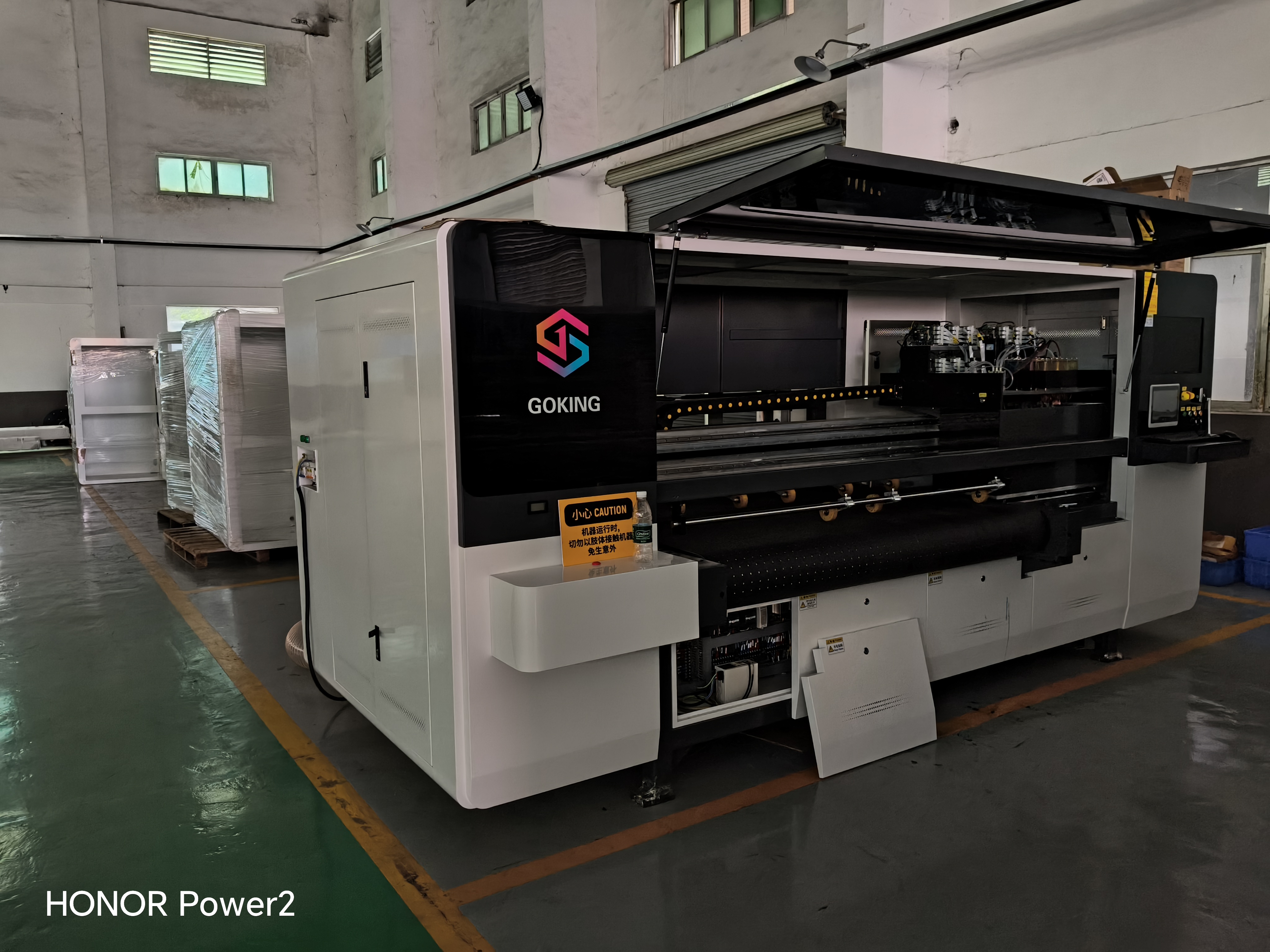
Unstable ink delivery can appear as density shifts, missing nozzles, or visible banding. GOKING pairs the ink supply with micro-piezo printheads and XAAR industrial printheads that use patented True Internal Circulation technology. GOKING lists XAAR models such as the Xaar 5601 and 1003 series, where ink circulates continuously behind the nozzles to reduce clogging and support stability during prolonged, high-speed production.
Vacuum Adsorption Platform: Holding the Board Still
The platform is a vacuum adsorption platform. On corrugated board, sheet movement is a direct color-consistency risk because any lift, warp, or shift changes the distance and position between the printhead and the substrate. That changes dot placement, registration, and perceived color density. A vacuum platform holds the media during printing, which is why it belongs in a color-consistency discussion and not only in a feeding discussion.
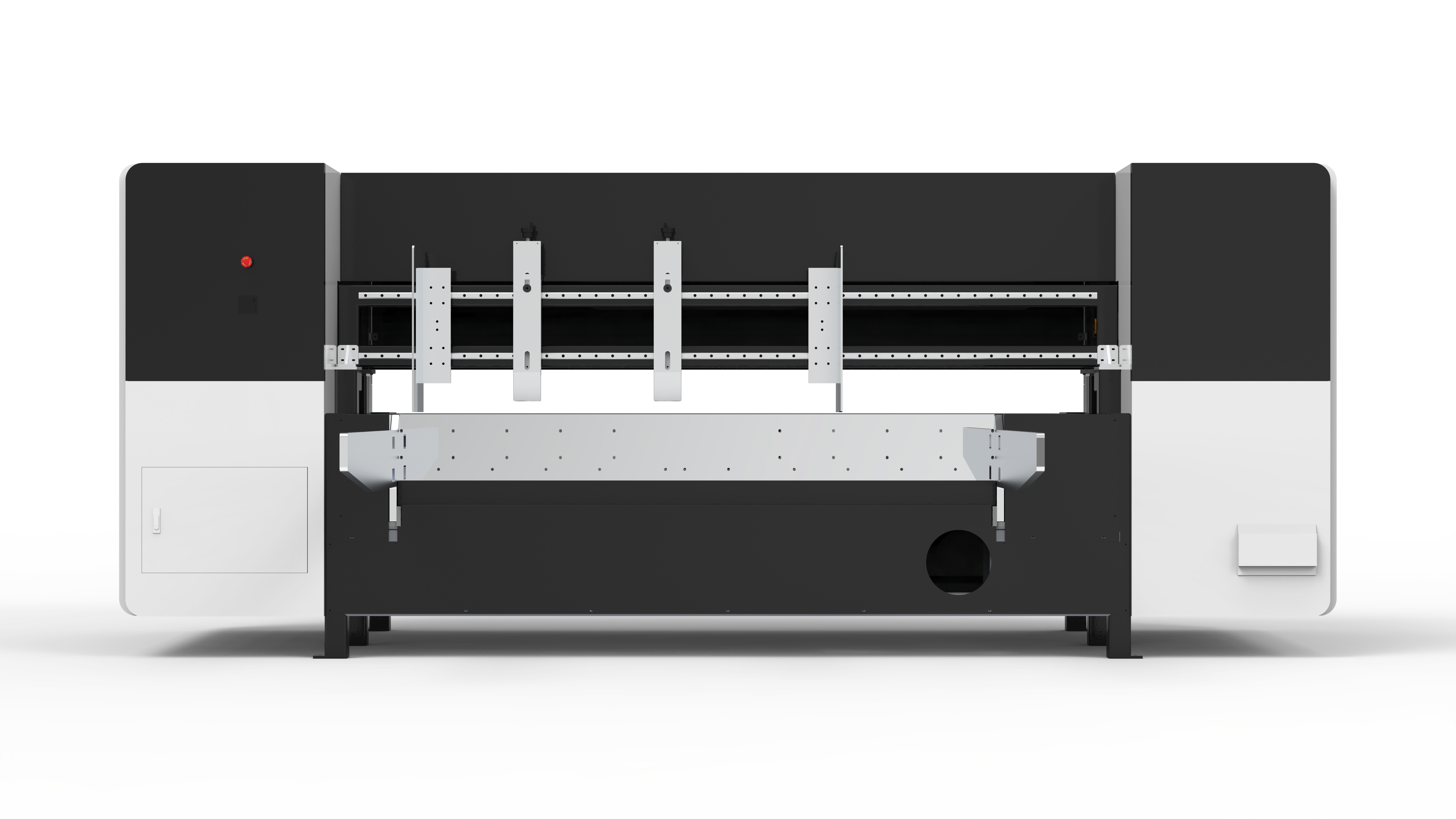
The machine supports material thickness from 2 mm to 30 mm and print widths from 264 mm to 2600 mm. Feeding can be leading edge or belt feeding, and the leading edge type is available as semi-automatic or fully automatic. These options matter because a heavier or warped board may need a different hold-down and feeding setup from a thin sheet.
Printhead and DPI Choices: Matching Detail to the Job
The printhead configuration ranges from 8 to 256 printheads. Epson commercial-grade printheads are specified for high precision and nuanced grayscale performance, particularly in high-definition scanning printers that demand image quality. XAAR industrial-grade printheads are specified for longer, high-speed production with reduced clogging. The machine supports multiple DPI configurations, and the 2-in-1 design allows single-pass and multi-pass printing on the same machine.
For color consistency, the practical rule is to lock one printhead set, one DPI, and one print mode for a given job, then validate that combination on the actual board. The single-pass printing speed is 60 m/min with an Epson nozzle and at least 100 m/min with a XAAR nozzle. Production efficiency is 700 or 1500 m²/h depending on configuration. These are configuration data, not universal settings for every board.
Automatic Color Calibration and Job Switching
GOKING specifies automatic color calibration and automatic job switching. Both functions reduce the amount of manual reset between jobs. In a packaging plant that handles frequent job changes, the risk is not only the first sheet; it is the repeatability of the fifth or tenth job after several setup changes. Automated calibration and job switching help standardize the reset process, but they still depend on a defined target and an approved first article.
Precision Motion and Electrical Control
The machine uses a magnetic levitation high-precision crossbeam, servo motor, and Schneider electrical components. These specifications support stable carriage motion and repeatable dot placement. A high-precision crossbeam is relevant to color consistency because small variations in carriage movement can change dot position and overlap, which the eye reads as a change in tone or sharpness.
Environment and File Workflow
The specified work environment is room temperature 15–32 °C and humidity 70%. A temperature control system is also listed. Ink viscosity, drying, and substrate dimension can respond to temperature and humidity, so a controlled room is part of the color-consistency system. On the file side, the RIP supports direct printing without converting pictures, and the machine accepts PDF, JPG, BMP, and TIF. The minimum digital text is 1.5 mm in English. Fewer file conversions reduce the chance of unintended color or resolution changes before printing.
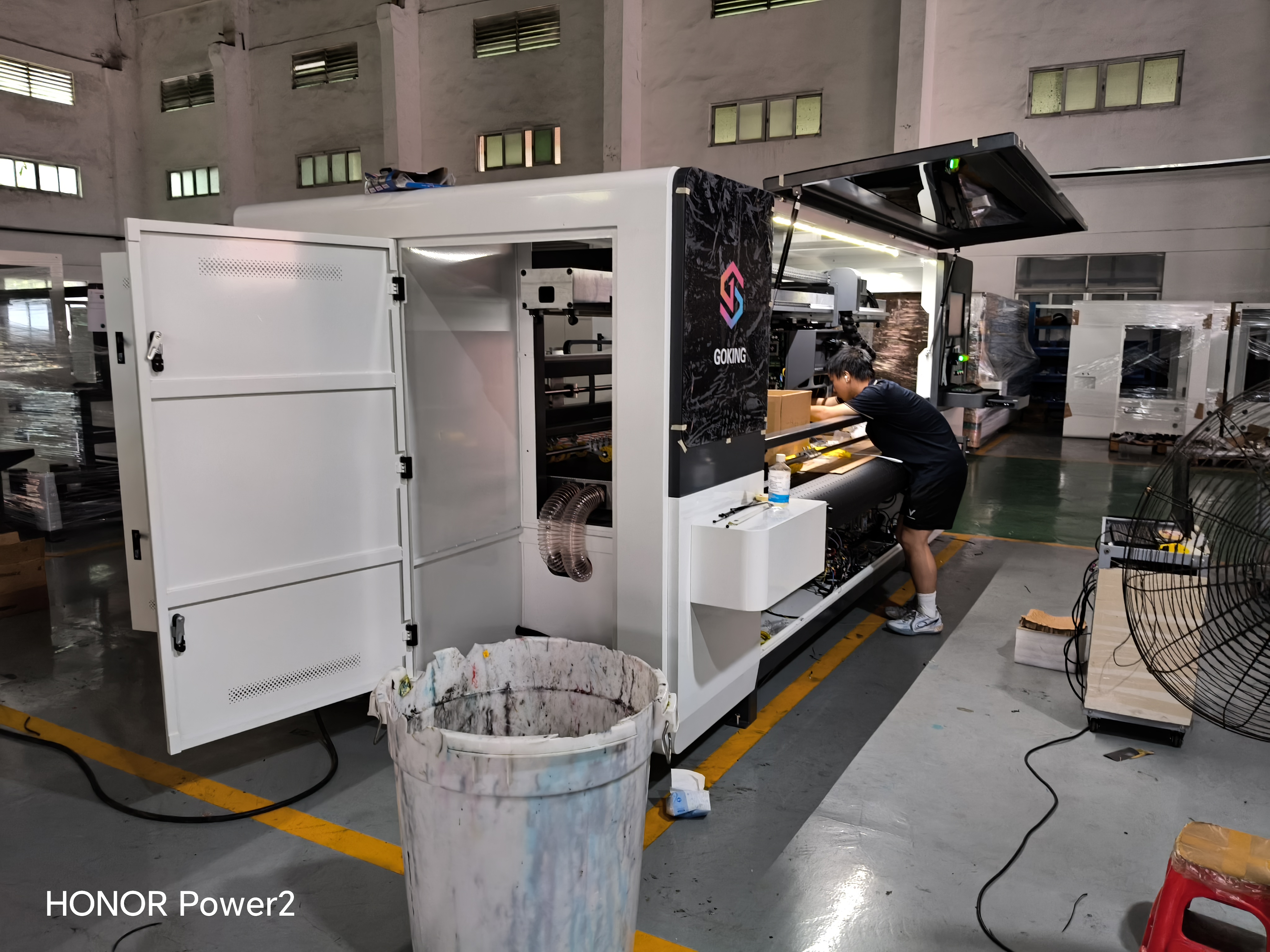
What the machine does not replace: No digital press can guarantee color consistency without correct ink-to-substrate matching, a defined color target, first-article approval, and routine maintenance. The GOKING specifications reduce the mechanical and ink-delivery variables; the printer still has to control the process.
Step-by-Step Breakdown: Validating Color Consistency Before and During Production
Use the following workflow to evaluate a multifunctional digital printing machine against your own corrugated packaging jobs. The steps are written for a trial that includes kraft, coated paper, and white paperboard, because the same press can behave differently on each.
Step 1: Map Every Substrate and Color Target
List the boards you actually run: kraft, colored, coated paper, white paperboard, and different board thicknesses. The machine supports material thickness from 2 mm to 30 mm. Assign a target for each substrate and each brand color. Keep the target separate from the press settings so that a change in board does not silently become a change in color.
Step 2: Select the Ink Set and White-Ink Strategy
Choose from water-based dye ink, water-based pigment ink, coating ink, or UV eco-friendly ink according to the substrate and finishing requirement. Decide where white ink will be used. On brown kraft, a white base can make CMYK behavior more predictable, but the white layering itself must be validated for opacity, drying, and adhesion.
Step 3: Prepare the File and RIP Output
Test PDF, JPG, BMP, and TIF files if those are part of your workflow. The RIP supports direct printing without converting pictures. Confirm that fine text, barcodes, and QR codes remain legible at the selected DPI. The machine’s minimum digital text is 1.5 mm in English, so job specifications should be checked against that limit.
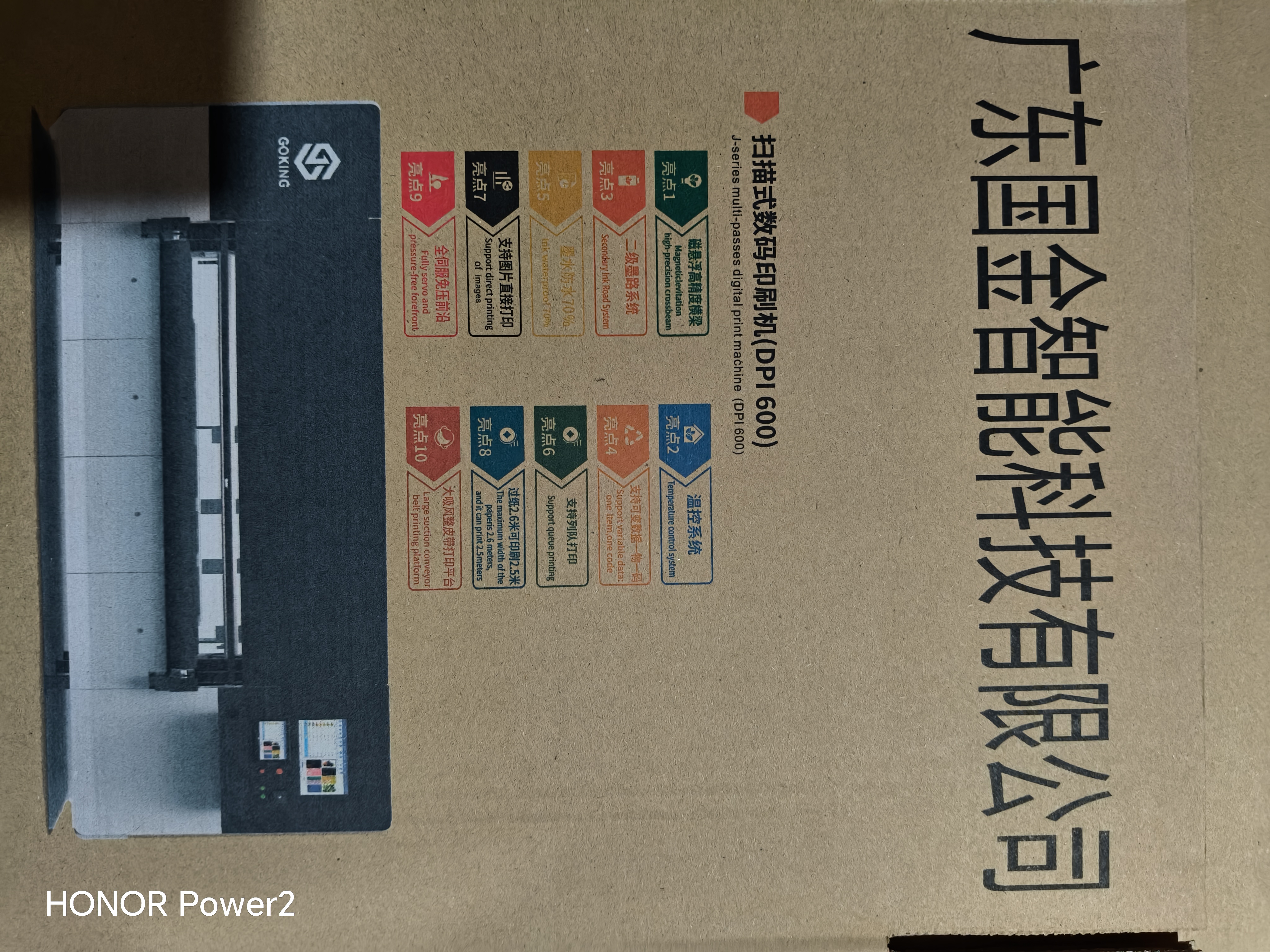
Step 4: Set Feeding and Vacuum Adsorption
Select leading edge or belt feeding for the board. Confirm that the vacuum adsorption platform holds the sheet flat through the print zone. Run a warped board and a thin board, not only a flat sample. If the sheet moves, color registration and density will move with it.
Step 5: Calibrate and Approve the First Article
Use automatic color calibration, then print a first article on the production board. Compare it with the approved target under the same lighting conditions. Check solid areas, gradients, white layering, fine text, and QR codes. Record the printhead count, DPI, print mode, ink set, and substrate.
Step 6: Lock Parameters and Run the Job
Once approved, lock the parameters for that job. For reference, single-pass speed is 60 m/min with an Epson nozzle and at least 100 m/min with a XAAR nozzle; production efficiency is 700 or 1500 m²/h depending on configuration. Do not change speed, DPI, or print mode mid-job unless the change is part of an approved procedure.
Step 7: Inspect During the Run
Inspect at defined intervals for density drift, missing nozzles, registration, and white-ink opacity. Keep the inspection sample from the start, middle, and end of the run. If a shift appears, stop and correct the cause rather than adjusting color by eye on the press.
Step 8: Maintain the Ink System and the Room
Follow the ink-system maintenance schedule and keep the room within the specified 15–32 °C and 70% humidity window. GOKING lists after-sales response within 24 hours and on-site engineering support for installation and commissioning after overseas delivery. Document every change so that a repeat job can return to the same approved condition.
Use Cases: Where Color Consistency Matters Most
Short-Run Corrugated Packaging with Frequent Job Changes
Packaging plants that handle short runs, urgent orders, and frequent job changes need a press that can switch between jobs without losing the approved color. The 2-in-1 design supports single-pass and multi-pass printing on one machine. GOKING lists mass production, short-run printing, frequent job change, and continuous high-speed operation as working conditions for packaging and carton printing.
Kraft and Colored Board with a White Ink Base
For kraft paper and colored board, the white ink option gives the operator a base layer before CMYK. This is relevant for brand colors that must remain recognizable on a brown surface. The same machine also supports coated paper and white paperboard, so a printer can keep one process window across multiple packaging substrates rather than treating each as a separate press.
Premium Packaging, Gift Boxes, and High-Detail Work
For premium packaging, gift boxes, and high-detail work, the multi-pass scanning mode is intended for high-definition output. GOKING describes the high-definition scanning digital press as suitable for premium packaging and luxury goods labels, with photo-quality imagery and fine text. The vacuum platform and micro-piezo printheads support the registration and dot placement that this work depends on.
Large-Format or Complex Boards vs Small Boards
GOKING recommends the scanning method for complex or large-format boards, and the direct-output mode for small boards and small-batch orders. This is a practical color-consistency advantage because the operator can match the print mode to the board instead of forcing every job through one configuration.
Overseas Packaging Factories and Export Projects
GOKING’s case unit describes overseas printing and packaging factories with more than five years of cooperation, including single-machine deliveries and urgent rework deliveries; exact order quantities are not disclosed. The same case unit lists fast response, on-site engineering support, and long-term cooperation. For a buyer in an export market, local support matters because color consistency is maintained after installation, not only during the demo.
Comparison Table: Color-Consistency Variables and GOKING Specifications
The table below uses only GOKING product specifications and approved certification facts. It is a buyer’s checklist, not a ranking against other brands.
| Color-consistency variable | GOKING specification or design response | What to verify in a trial |
|---|---|---|
| Substrate base | Color mode CMYK with optional W; white ink option | White layering on kraft, colored, and coated board |
| Ink delivery | Fully enclosed two-channel ink supply | Ink condition and density stability across a long run |
| Media hold-down | Vacuum adsorption platform | Thin, warped, and heavy board through the print zone |
| Printhead | Micro-piezo; Epson or XAAR; 8 to 256 printheads | Printhead set matched to detail and speed targets |
| Print mode | Single-pass and multi-pass 2-in-1; multiple DPI | Mode and DPI locked for each approved job |
| Motion | Magnetic levitation high-precision crossbeam; servo motor; Schneider electrical components | Registration and repeatability after job changes |
| Calibration | Automatic color calibration and automatic job switching | First-article approval and repeat-job reset |
| Environment | 15–32 °C, humidity 70%; temperature control system | Room control during production |
| Compliance | CE Certificate of Conformity HTT202308117L; EN 60204-1:2018; Directive 2006/42/EC | Certificate scope for the EU market |
FAQ
Is the GOKING corrugated cardboard digital printing machine CE certified?
Yes. The Corrugated Cardboard Digital Printing Machine is certified to CE standards. The Certificate of Conformity number is HTT202308117L, issued by Shenzhen HTT Technology Co.,Ltd. The applicable standards listed are EN 60204-1:2018 and Directive 2006/42/EC, and the certification applies to the EU market.
How does the machine support color consistency on kraft and coated corrugated board?
The machine uses a CMYK+White ink configuration, a fully enclosed two-channel ink supply, a vacuum adsorption platform, automatic color calibration, and multiple printhead and DPI configurations. The white channel provides a base layer on kraft and colored board; the vacuum platform holds the sheet during printing; and the enclosed ink supply supports stable ink delivery. Final consistency still depends on the ink set, substrate, calibration, and first-article approval.
What configuration factors drive the cost of a multifunctional digital printing machine for corrugated packaging?
The main configuration variables are printhead count from 8 to 256, printhead type Epson or XAAR, DPI, color scheme including 5-color and white-ink options, print width from 264 mm to 2600 mm, feeding mode, and the level of automation. These variables should be matched to the actual job mix before a budget is compared, because a specification that is oversized for the work adds cost without improving color consistency.
Can we test our own corrugated board before ordering?
Yes. GOKING provides free sample printing for global clients, and print samples are offered to customers free of charge. A sample trial should include the actual board, the intended ink set, the white-ink strategy, and the final print mode. This is the most direct way to check color consistency on kraft, coated paper, or white paperboard before a purchase decision.
What is the MOQ and standard lead time?
The MOQ is 1 set. The standard production lead time for standard machines is typically one month. Custom lead times are available upon request, and OEM/ODM lead times are subject to confirmation. To start a sample or quote request, contact GOKING through www.cmyk-goking.com or download the 2026 product catalog.
Conclusion
Color consistency in corrugated packaging printing is a process problem with mechanical, ink, substrate, and environmental inputs. The GOKING multifunctional digital printing machine addresses the controllable inputs with a CMYK+White ink configuration, a fully enclosed two-channel ink supply, a vacuum adsorption platform, automatic color calibration, and Epson or XAAR printhead options across 8 to 256 printheads. The 2-in-1 single-pass and multi-pass design lets a packaging printer match the print mode to the job instead of forcing every board through one setting.
For buyers in the research and evaluation stage, the next step is not a generic demo. It is a trial on your own kraft, coated, and white board, with your own color target and your own white-ink requirement. Request a sample print or quote from GOKING, and use the product catalog to build the specification list.
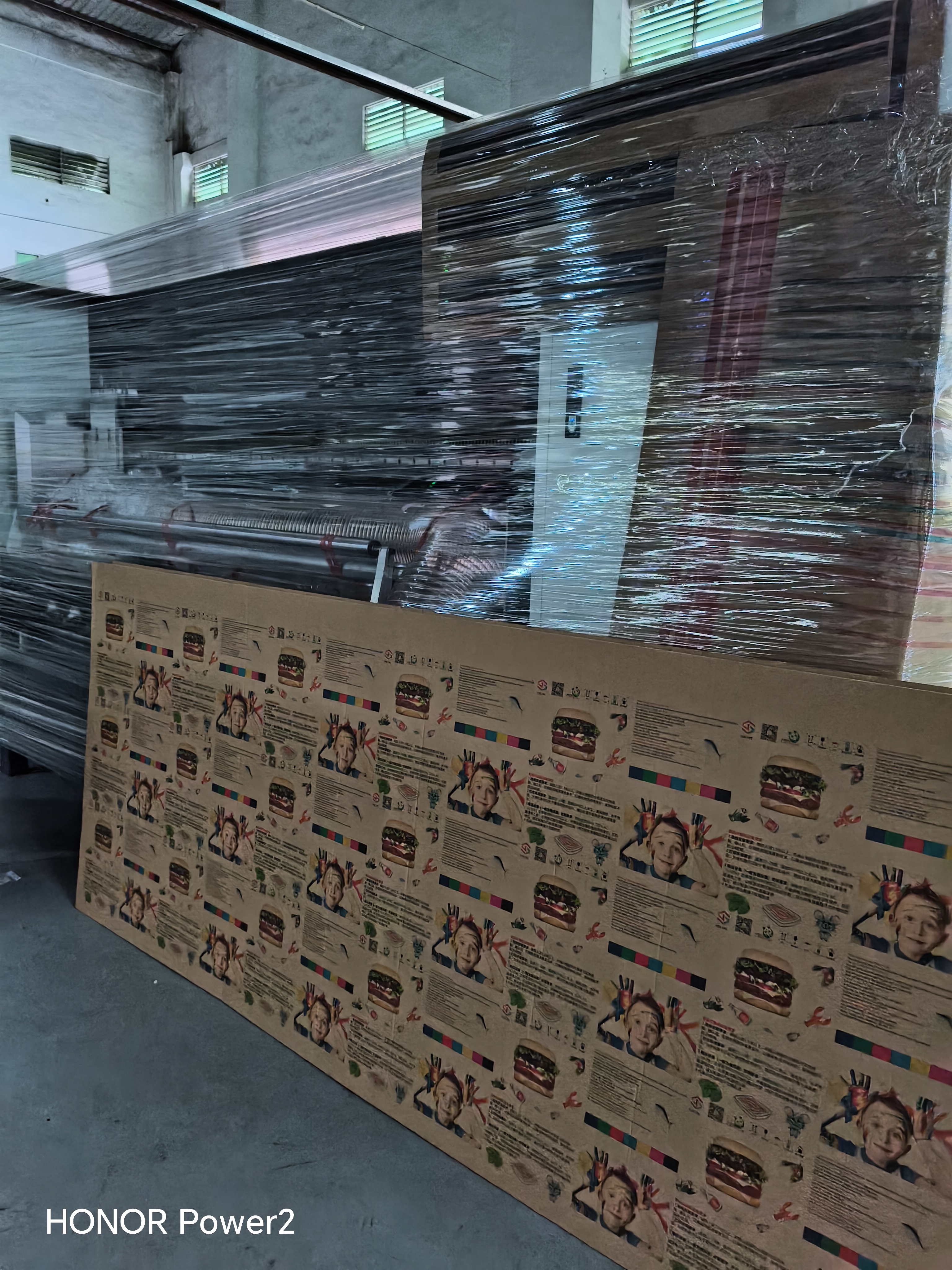
Next step: Send GOKING your board type, target color, white-ink requirement, and expected order profile. The team can confirm the printhead and DPI configuration, arrange a sample print, and provide a quotation.
Have Questions or Need More Details?
Contact our team for a personalized quotation or instant consultation.
Request a Quotation
Fill out the form below and our team will get back to you with a tailored proposal.
WhatsApp Direct Chat
Prefer to chat in real-time? Message us on WhatsApp for instant assistance & quick answers.
- Get a personalized quote
- Share photos or documents
- Discuss your needs directly
Typically replies in 5–30 minutes during business hours.