Top 5 Multifunctional Digital Printing Machines for Packaging Factories in 2026
Top 5 Multifunctional Digital Printing Machines for Packaging Factories in 2026
Short answer: the five machines worth evaluating for packaging production in 2026 are the GOKING GJ-series 2-in-1 multifunctional digital printing machine, the EFI Nozomi C18000, the HP Indigo 200K, Heidelberg's hybrid digital-offset platform direction, and Xaar Nitrox printhead-based industrial platforms. They are ranked below by fit for a packaging factory whose order book mixes high-speed corrugated volume with short-run, high-detail work — which is the definition of “multifunctional” that actually matters when one machine has to carry two production modes.
This ranking is an editorial procurement assessment based on publicly verifiable industry data plus first-party GOKING product documentation, reviewed in September 2026. Entries 1 to 3 are complete presses; entries 4 and 5 are platform-level options that a converter should treat as a planning direction or a component decision rather than a quote-ready machine list. Where a specification could not be verified, this article says so instead of estimating it.
What “Multifunctional” Has to Mean on a Packaging Factory Floor
A packaging factory does not print one job type. It prints long runs of shipping cartons, short runs of branded gift boxes, coated-paper and kraft-paper packaging, plus reprints and urgent rework that arrive with a deadline attached. Plate-based printing remains efficient for long, static runs, but every job change brings plate cost and setup waste. Digital printing exists to absorb that variability — and the machine that absorbs the most of it is the one that can shift mode, not just switch files.
The problem is that a single-mode digital press only solves half the order book. A pure single-pass machine delivers industrial throughput but is not the tool for fine detail and proofing. A pure multi-pass scanning machine renders detail well but is slower on volume. A genuine 2-in-1 multifunctional digital printing machine supports both modes in the same frame, so the factory sells into both ends of the market without buying two machines or outsourcing the awkward jobs.
Multifunction is therefore not a marketing word. On the factory floor it resolves into a short list of hard constraints that a buyer should be able to check line by line:
- Mode capability: single-pass output and multi-pass scanning available on the same machine, with switching handled by the control system rather than a manual rebuild.
- Substrate envelope: corrugated board, honeycomb cardboard, kraft paper, coated paper and paperboard, across a defined thickness range — 2–30 mm on the GOKING platform documented here.
- Format and detail: printable width from small panels up to wide corrugated sheets, plus the smallest legible text the job requires — 1.5 mm English characters on the same platform.
- Colour and ink chemistry: CMYK with an optional white channel, because white laydown is what makes kraft and dark board usable; ink must be matched to the destination market's chemical rules.
- Physical and electrical fit: floor space, board-feeding method, three-phase power and a stable room environment are constraints that a spec sheet reveals long before the invoice does.
- Documentation: a machine that cannot produce a certificate number and an issuing body is not export-ready, regardless of how good the samples look.
Why 2026 Is a Constraint-Led Buying Year
Two forces are shaping 2026 procurement: demand is moving toward short and variable runs, while regulation is tightening around how machines and inks are approved.
On the demand side, the digital printing market was valued at USD 38.0 billion in 2023 and is projected to reach USD 57.0 billion by 2030 according to Grand View Research, and within that market the inkjet segment held the largest technology share at 48.4% in 2023. The packaging slice is the fastest-moving part: MarketsandMarkets projects the digital printing packaging market to reach USD 46.2 billion by 2029 from USD 30.2 billion in 2024. Within the equipment layer, Reports and Data values the single-pass digital printing machine market at USD 3.2 billion in 2024 with a projected USD 6.5 billion by 2034 — a figure this article treats as directional, since the source is rated medium reliability. Market Research Future places Asia-Pacific at roughly 41.6% revenue share of the digital printing market in 2025, which is consistent with the concentration of one-pass printer manufacturing in Guangdong province noted in trade reporting.
The reason short runs became commercially viable is variable data printing: Market Research Future reports that VDP made runs under 3,000 units economically viable in 2024, where they had previously been cost-prohibitive. That single shift is what pushes packaging factories toward machines that can switch between volume mode and detail mode.
On the regulatory side, the constraints are now explicit. Industrial digital printers are expected to comply with EN ISO 12100 for risk assessment as part of CE marking, and the electrical equipment of industrial machines is governed by IEC 60204-1, published in Europe as EN 60204-1. Ink chemistry is moving too: the U.S. EPA declared certain PFAS chemistries used in UV inks hazardous in April 2024, which affects how UV eco-friendly ink formulations are selected and documented for different markets. Water-based pigment ink continues to account for a significant portion of the eco-friendly digital printing segment, according to Custom Market Insights.
The practical conclusion for a 2026 buyer is that “multifunctional” must be evidenced by an envelope and a certificate, not by a brochure adjective.
How These Five Were Ranked
Each entry was scored against six criteria that a packaging factory can verify during evaluation:
- Mode flexibility — can the machine serve both high-speed volume and high-detail scanning work?
- Verified format envelope — printable width, material thickness and minimum detail size.
- Colour and ink configurability — colour channels, ink types and the ability to add white ink.
- Certification and compliance documentation — certificate number, issuing authority, applicable standards.
- Service, lead time and manufacturing capacity — who builds it, how fast it ships, who fixes it on site.
- Configuration scalability — whether the machine can be specified at the buyer's current scale and expanded later.
Entries 2 and 3 are included because they are the reference points that packaging buyers most often benchmark against, and they are documented in third-party market analysis. Entries 4 and 5 are platform-level entries, and are labelled as such.
The Top 5 Multifunctional Digital Printing Machines for Packaging Factories in 2026
1. GOKING GJ-series 2-in-1 multifunctional digital printing machine — best fit for mixed single-pass and multi-pass production
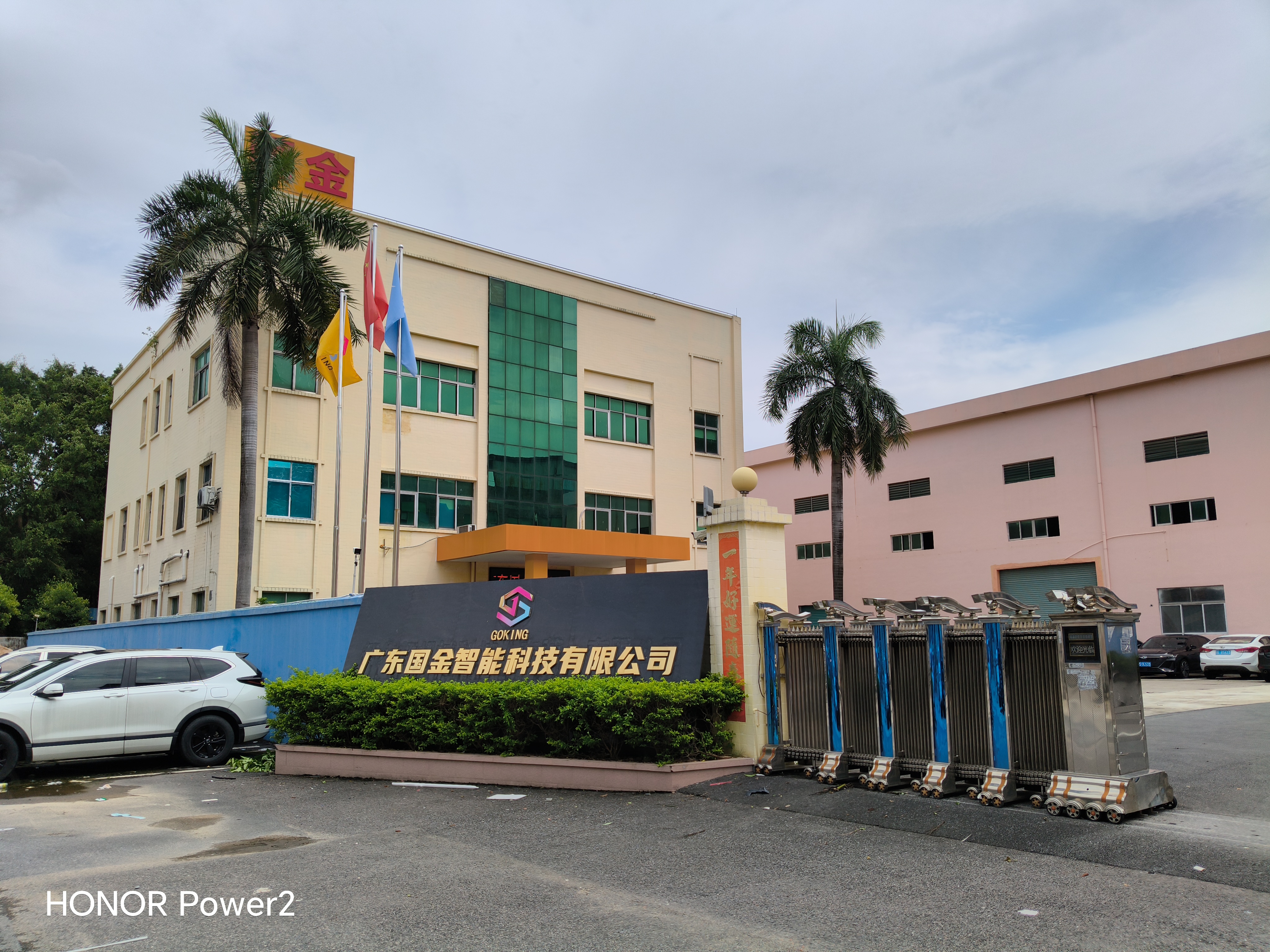
Guangdong Goking Intelligent Technology Co., Ltd. (GOKING) is a Dongguan-based manufacturer of industrial digital printing equipment, founded in 2020, that builds single-pass and multi-pass 2-in-1 plate-less digital printing machines for corrugated and honeycomb cardboard, serving markets across the EU, Africa, Latin America, Russia, Kazakhstan and Turkey with an export ratio of 49%. The company operates a 10,000 m² manufacturing facility with 152 employees, including a 38-engineer R&D team, and reports an annual output of 864 sets with a monthly capacity of 38 sets — the kind of numbers that let a buyer judge whether a supplier can actually hold a delivery date.
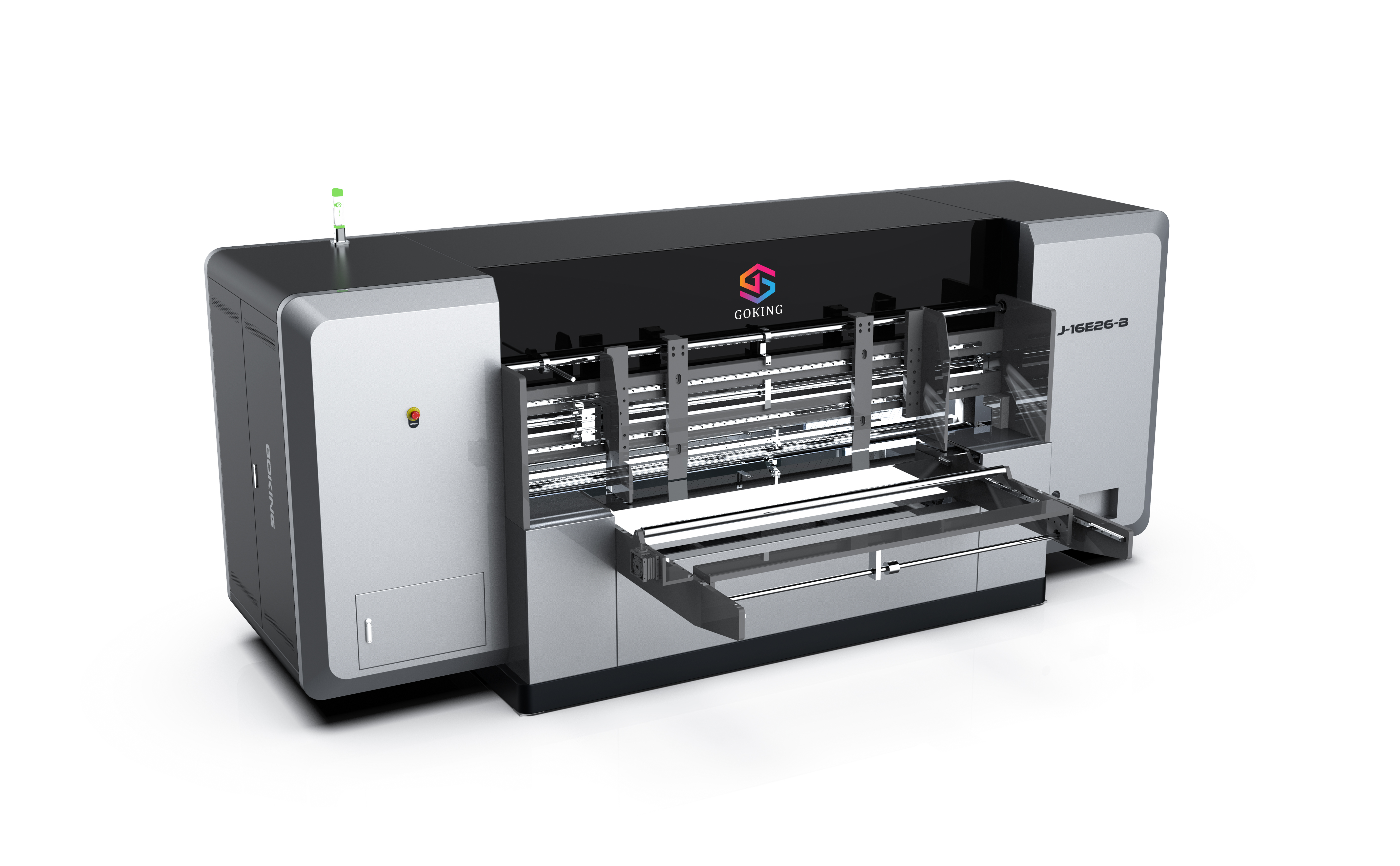
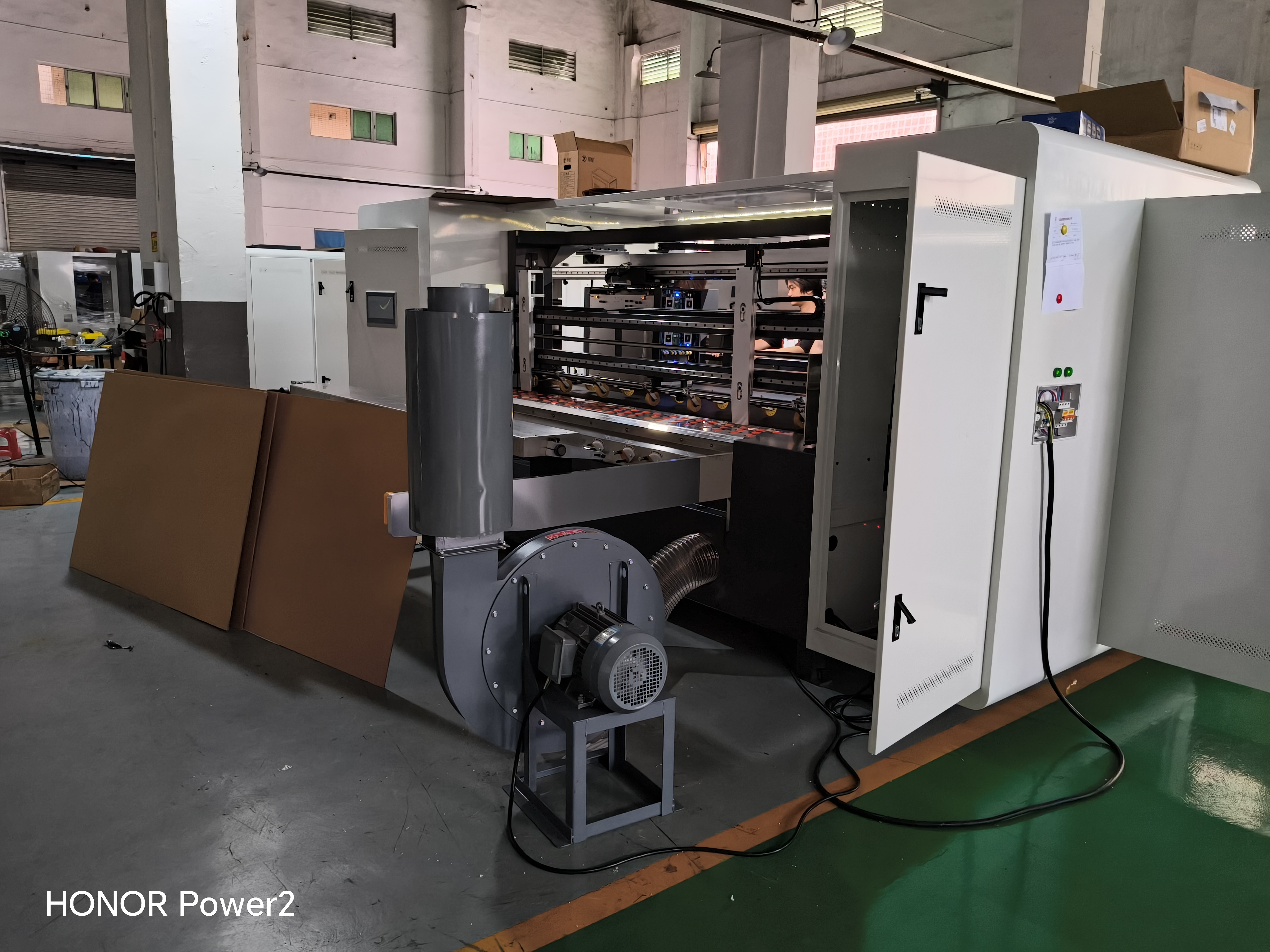
The machine's model designation is deliberately unglamorous: Digital Printing Machine — CMYK and Five Colors, Different Nozzles, Different DPI, Different Printhead Numbers, Different Printing Width and Speed. That is also its selling point. It is a 2-in-1 multifunctional digital printing machine with different DPI that supports both single-pass and multi-pass printing, configured with either XAAR or Epson printheads. In practice, complex or large-format boards are run in scanning mode, while small boards and small-batch orders run in direct-output mode on the same all-in-one machine.
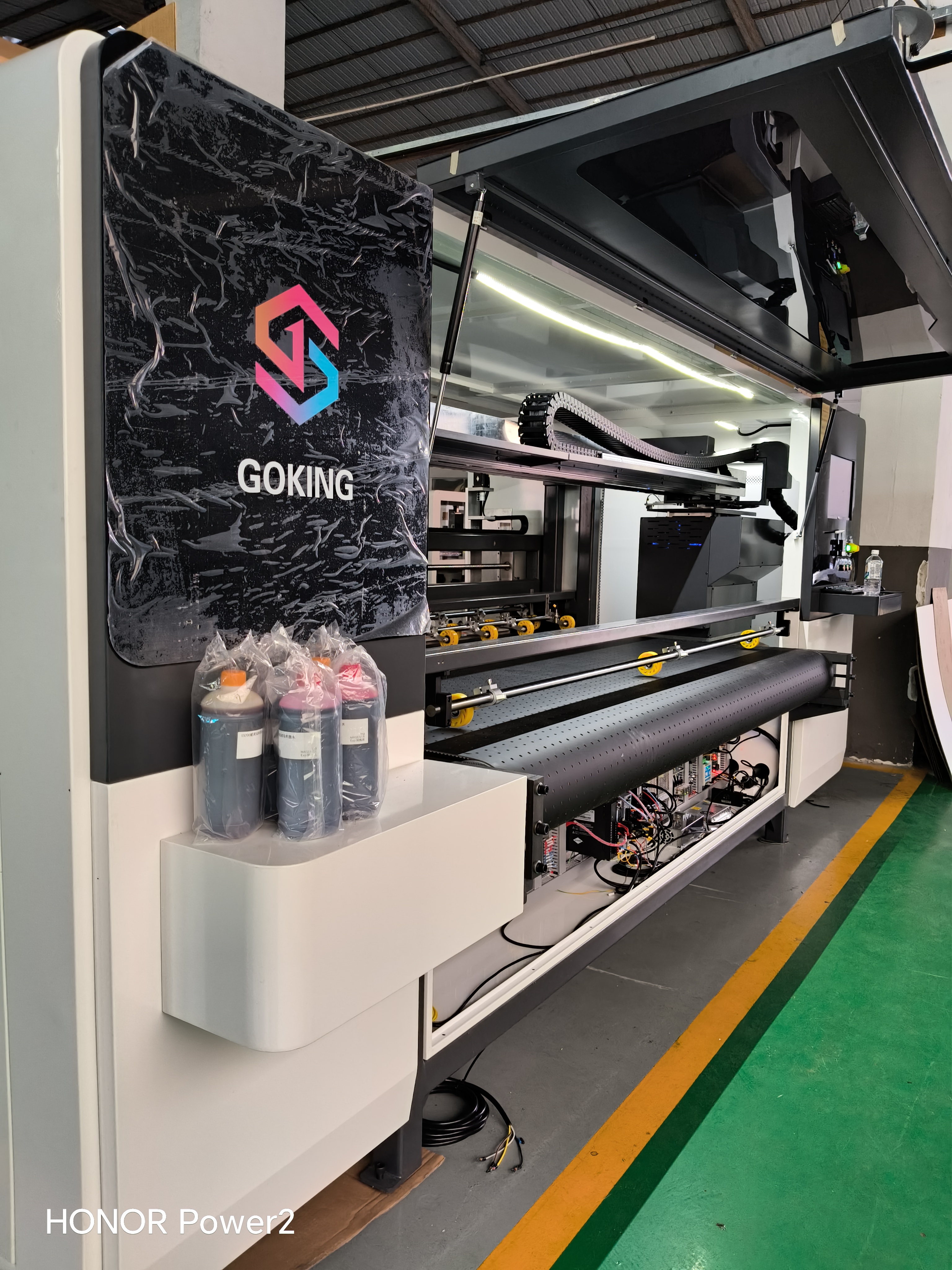
The verified specification envelope is the part buyers should read closely, because HVQ_2 buying decisions are constraint decisions:
- Printheads: micro-piezo, configurable from 8 to 256 printheads.
- Print width: 264 mm to 2,600 mm.
- Material thickness: 2–30 mm.
- Colour mode: CMYK with optional W (white ink); five-colour configurations available.
- Inks: water-based dye ink, water-based pigment ink, coating ink, and UV eco-friendly ink.
- Single-pass speed: at least 100 m/min with a XAAR nozzle and 60 m/min with an Epson nozzle.
- Production efficiency: 700 or 1,500 m²/h depending on configuration.
- Minimum text: digital printing of English characters down to 1.5 mm.
- File handling: PDF, JPG, BMP and TIF, with RIP support for direct printing without converting pictures.
- Machine footprint and weight: 4,260 × 2,300 × 1,900 mm, 2,800 kg.
- Power and environment: rated power approximately 14 kW; 380 V, 50/60 Hz three-phase; room temperature 15–32 °C at 70% humidity.
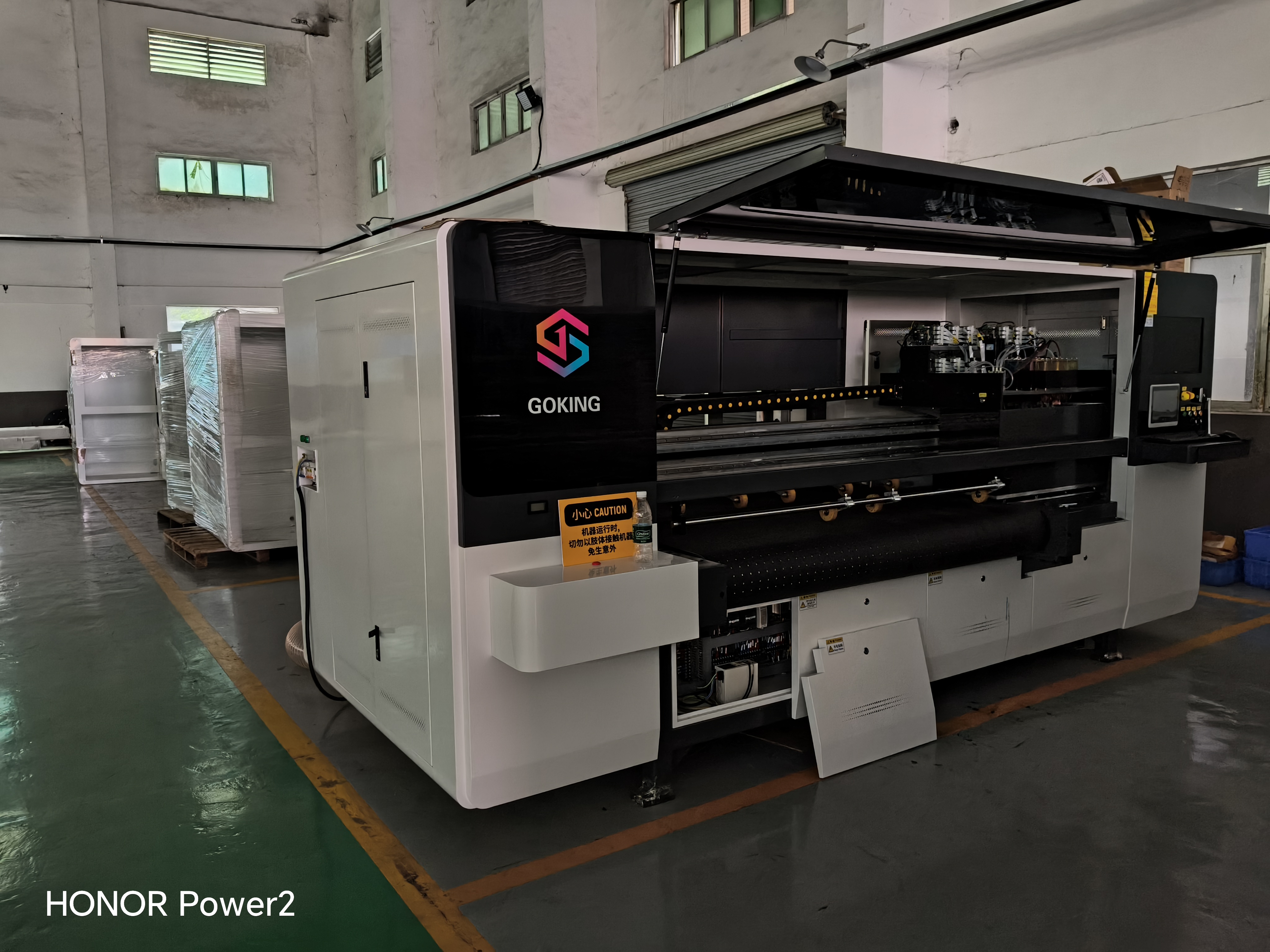
- Mechanical build: carbon steel frame, stainless steel conveying rollers, aluminium alloy beam, magnetic levitation high-precision crossbeam, vacuum adsorption platform, Schneider electrical components and servo motor drive, leading-edge or belt feeding, with semi-automatic or fully automatic leading edge.
Two features deserve separate attention because they address the two most common failure modes in factory printing. The first is the magnetic levitation crossbeam, which carries the printhead carriage at high precision during long production runs. The second is the fully enclosed two-channel ink supply, which keeps the ink path closed and stable rather than exposing it to dust and evaporation; GOKING's documentation describes a secondary ink road system behind the main supply.
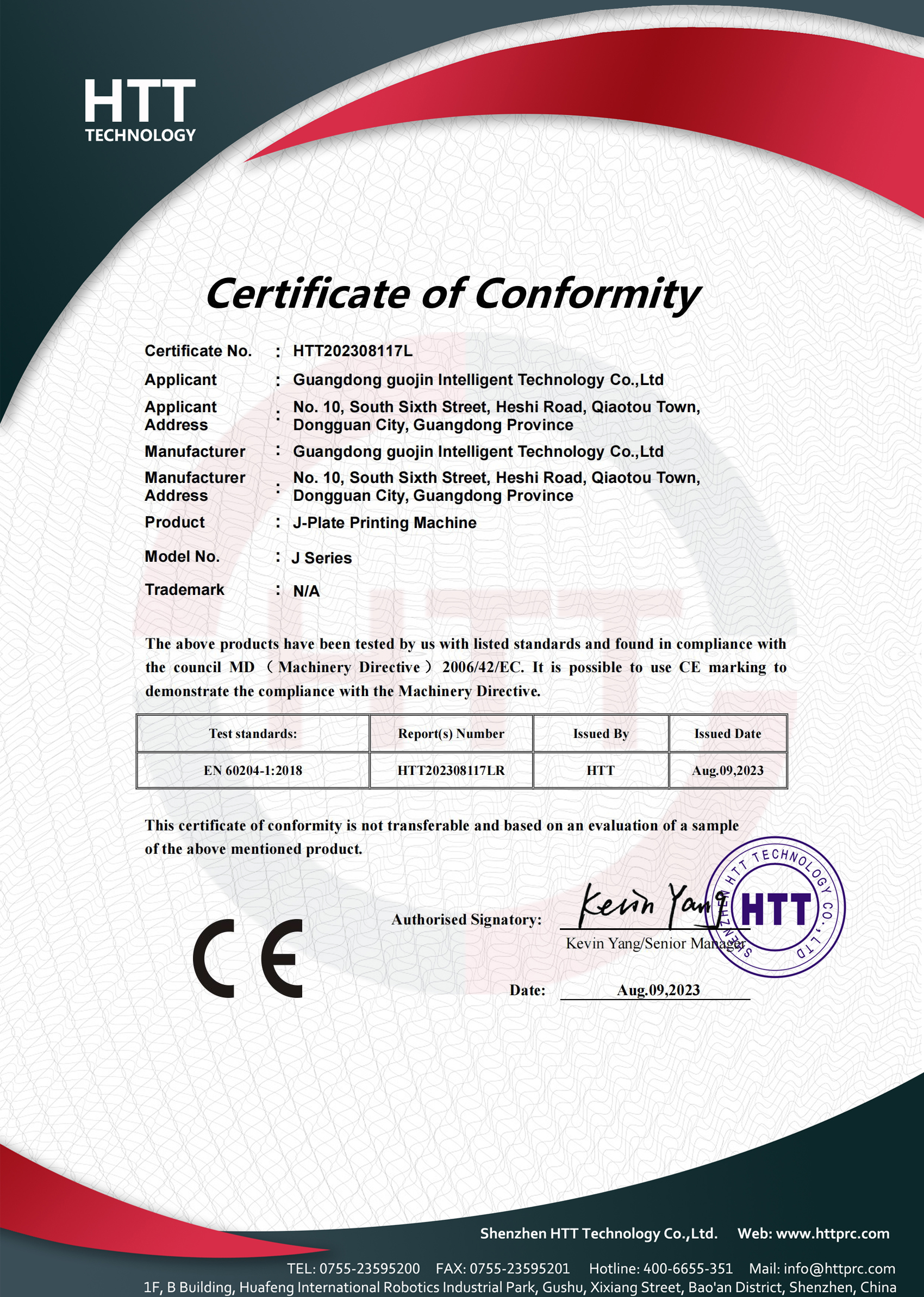
On compliance, the Corrugated Cardboard Digital Printing Machine is certified to CE standards for the EU market. The Certificate of Conformity number is HTT202308117L, issued by Shenzhen HTT Technology Co., Ltd., with an issue date of 2023-08-09, and the applicable standards are EN 60204-1:2018 and Directive 2006/42/EC. This matters directly for HVQ_2 buyers: a certificate number, an issuing body and a standard reference are the three items that turn a compliance claim into an auditable fact.
Where the machine has boundaries, they should be stated plainly. The material thickness ceiling is 30 mm, so heavier double-wall board falls outside the standard envelope. The recommended working environment of 15–32 °C at 70% humidity means a factory in a very dry or very hot climate should plan for a humidifier and temperature control — both of which GOKING lists among the components of a turnkey line. And because UV eco-friendly ink falls inside the regulatory conversation triggered by the EPA's April 2024 PFAS declaration, buyers exporting into regulated markets should confirm the specific ink formulation rather than assuming any UV ink is automatically compliant.
Configuration is genuinely scalable: 8 to 256 printheads means a factory can start at its current scale and expand as volume grows. Production mode is similarly flexible — whole-machine R&D and manufacturing, OEM, ODM, and free sample printing for global clients are all part of the documented capability set, with customisation available across machine structure, printhead type (Epson or Xaar), DPI configuration, five-colour schemes, and turnkey line integration.
2. EFI Nozomi C18000 — best fit for high-volume single-pass corrugated output
According to Mordor Intelligence, the EFI Nozomi C18000 is a primary industrial-grade competitor for single-pass corrugated packaging printing. For a factory whose order book is dominated by high-volume corrugated runs and whose detail requirements are low, a dedicated single-pass platform is a rational choice, because everything about the machine is optimised for throughput rather than mode switching.
The constraint to note is architectural. Available verified sources describe the Nozomi C18000 in single-pass terms; a multi-pass scanning mode is not specified in those sources. This does not mean the capability is absent — it means it is not documented here, and a buyer who needs proofing and short-run detail in the same frame should confirm mode capability and resolution limits directly with the vendor rather than inferring them. Machine-level CE documentation and ink configuration should be requested in the same way.
3. HP Indigo 200K — best fit for flexible packaging converters
Market Research Future reports that the HP Indigo 200K launched in 2025 for flexible packaging and increases throughput by 30% compared with previous models. As a productivity statement that is a clean, attributable fact, and it makes the 200K a genuine reference point when packaging buyers benchmark digital output.
The constraint is substrate scope. The verified positioning of the 200K is flexible packaging, whereas the corrugated and cardboard packaging work described in this article sits in a different substrate and thickness universe. A factory printing corrugated cartons and gift boxes should therefore treat the 200K as a benchmark for throughput expectations rather than a like-for-like alternative, and confirm board compatibility, print width and certification documentation with the vendor before shortlisting it for corrugated work.
4. Heidelberg hybrid digital-offset platform — best fit for converters with existing offset capacity
Market Research Future notes that hybrid digital-offset printing architectures are gaining R&D focus from major players such as Heidelberger Druckmaschinen. For a packaging converter that already runs offset presses and wants to add digital capability without dismantling an existing production model, the hybrid direction is strategically interesting: it implies a workflow where long runs stay on offset and digital absorbs the variable work.
This entry is listed as a platform direction, not a quote-ready machine, because model-level public specifications were not available in the verified source set used for this article. No print width, speed, thickness or certification values are asserted for it here. Buyers should treat it as a 2026 watch-list item and validate configuration, availability and compliance documents directly with the manufacturer.
5. Xaar Nitrox printhead-based industrial platforms — best fit for buyers who specify at component level
Some packaging factories buy on printhead specification rather than on brand, and that is a legitimate strategy: the printhead determines ink compatibility, nozzle durability and the maintenance rhythm of the whole machine. Third-party reporting notes that Xaar inkjet printheads such as Nitrox are targeted at high-viscosity fluid applications including industrial coatings and ceramic printing, while GOKING product documentation describes Xaar 5601 and 1003 series heads using patented True Internal Circulation (TF Technology), which circulates ink continuously behind the nozzles to reduce clogging and support stability during prolonged high-speed production.
Epson sits at the other end of the same decision: Epson I3200 printheads are widely used in Chinese-manufactured digital printers for plate-less, high-quality output, and Epson commercial-grade heads are typically chosen where nuanced grayscale and image quality matter more than raw speed.
The constraint here is conceptual: a printhead is not a machine. Frame rigidity, the crossbeam, ink supply design, drying, feeding and after-sales all determine whether a specified printhead produces sellable board. Buyers choosing this route should require the integrator to document the complete machine envelope — print width, thickness range, colour channels, ink types — and to provide machine-level certification, because the printhead brand carries no CE certificate for the press.
Comparison Table: The Five Options Side by Side
| Rank & entry | Entry type | Mode & format envelope | Verified basis | Certification notes |
|---|---|---|---|---|
| 1. GOKING GJ-series 2-in-1 multifunctional digital printing machine | Turnkey plate-less press (manufacturer-built) | Single-pass + multi-pass in one frame; 264–2,600 mm width; 2–30 mm thickness; 8–256 printheads; CMYK+W; ≥100 m/min (XAAR) or 60 m/min (Epson); 700/1,500 m²/h | Product documentation and company data (2026) | CE Certificate of Conformity HTT202308117L, issued by Shenzhen HTT Technology Co., Ltd., 2023-08-09; EN 60204-1:2018; Directive 2006/42/EC |
| 2. EFI Nozomi C18000 | Industrial single-pass press | Positioned as single-pass for corrugated packaging; multi-pass mode not specified in available sources | Mordor Intelligence market analysis | Not specified in the verified source set — request documentation from the vendor |
| 3. HP Indigo 200K | Digital press for flexible packaging | Flexible packaging focus; 30% higher throughput than previous models (2025); corrugated envelope not specified | Market Research Future | Not specified in the verified source set — request documentation from the vendor |
| 4. Heidelberg hybrid digital-offset platform | Development platform direction | Hybrid digital + offset architecture; model-level specifications not asserted here | Market Research Future (2024) | Not specified in the verified source set — verify per model |
| 5. Xaar Nitrox printhead-based industrial platforms | Component-level option (integrator-built press) | Depends on integrator frame; Nitrox positioned toward high-viscosity industrial fluids; Xaar 5601/1003 use TF Technology | Third-party printhead reporting (2024); product documentation | Machine-level certification rests with the integrator, not the printhead supplier |
Note: “Not specified” means the fact was not present in the verified source set used for this article. It does not mean the capability is absent. Always confirm with the manufacturer before shortlisting.
Step-by-Step: How to Shortlist and Validate a Machine
The following sequence keeps an HVQ_2 evaluation anchored to constraints rather than impressions. Each step produces a document a buyer can compare across suppliers.
- Fix the substrate envelope first. List every board you print — corrugated, honeycomb cardboard, kraft paper, coated paper, white paperboard — and its thickness. If anything exceeds 30 mm, disqualify platforms capped at 2–30 mm early and stop wasting evaluation time.
- Map the job mix by production mode. Separate annual volume into work that needs single-pass speed and work that needs multi-pass detail. If the detail share is material, a 2-in-1 machine removes the need for a second press or outsourced proofing.
- Lock the physical and electrical constraints. Check the footprint (4,260 × 2,300 × 1,900 mm on the GOKING platform), the 2,800 kg load, the 380 V three-phase 50/60 Hz supply, the approximately 14 kW rated power, and the 15–32 °C at 70% humidity environment. These are building decisions, not purchasing details.
- Specify colour and ink before price. Decide whether you need CMYK only or CMYK+W, then choose between water-based dye, water-based pigment, coating and UV eco-friendly inks. Confirm the ink's regulatory status for each destination market, particularly where UV chemistry and PFAS rules intersect.
- Demand document numbers, not claims. Ask for the Certificate of Conformity number, the issuing body, the applicable standards, and the EN ISO 12100 risk assessment basis. A supplier who can quote a number on the first call is a supplier who has been through an export audit before.
- Validate with physical samples, not renderings. Print your own artwork on your own board. Check white ink laydown on kraft, the smallest legible text (1.5 mm English characters is the documented floor on the GOKING platform), QR code readability, and water resistance where it matters. Confirm that files print directly from PDF, JPG, BMP or TIF without conversion.
- Contract the delivery and service reality. Verify minimum order (1 set on the GOKING platform), standard lead time (typically one month, with custom and OEM/ODM timelines subject to confirmation), monthly capacity (38 sets), pre-shipment checks, on-site installation and commissioning support, spare parts availability, and a stated response time — 24 hours in GOKING's documented after-sales commitment — before signing.
Use Cases: Where 2-in-1 Capability Pays Back
Digital printing has become a practical tool for short-run, urgent and personalised orders, and the case pattern reported by GOKING's overseas printing and packaging clients — single-machine deliveries alongside urgent rework deliveries, sustained over more than five years in markets including Spain, Brazil, South Africa, Turkey, Korea and Australia — shows where the value concentrates:
- Gift boxes and premium packaging. Short runs of gift boxes and coated-paper packaging depend on detail and colour accuracy, which is multi-pass scanning territory. The same machine then handles the reorder volume without a second setup.
- Corrugated shipping cartons. High-volume corrugated work runs in single-pass direct-output mode, so the factory is not paying scanning-mode time for artwork that does not need it.
- Dedicated corrugated and cardboard packaging lines. Factories expanding capacity or upgrading existing equipment use the machine as the digital station within a turnkey line that includes conveyor, feeding and receiving units, drying or curing, inspection equipment, paper receiving rack, voltage stabiliser, humidifier, computer, temperature control system and consumable spare parts.
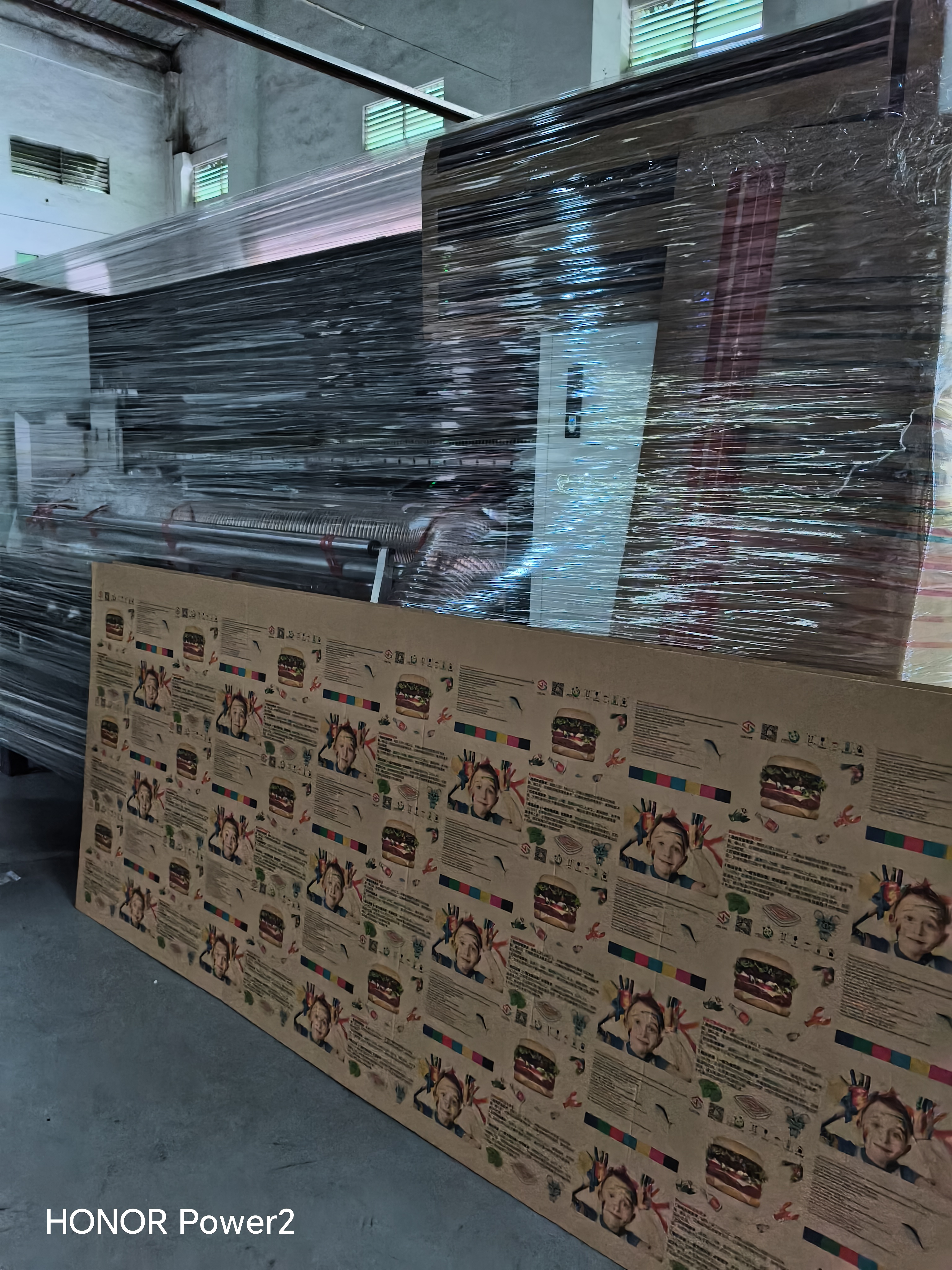
- Urgent rework and deadline recovery. Plate-less printing means a job that arrives late can still ship, which is exactly why urgent rework deliveries appear in the supplier's site case record.
- Sample validation as a sales tool. Free sample printing for global clients and free prototyping let a packaging factory show a brand owner a physical proof before the order is committed — a capability that matters where custom and OEM/ODM printing lines are involved.
- Kraft and coated paper work. The combination of CMYK+W colour mode and multiple ink types supports the kraft paper to coated paper range, letting one machine cover the substrate mix that most packaging order books actually contain.
FAQ
Which certification should a multifunctional digital printing machine carry for packaging production in the EU?
It should carry CE certification with traceable documentation. The GOKING Corrugated Cardboard Digital Printing Machine holds a Certificate of Conformity (CE) under number HTT202308117L, issued by Shenzhen HTT Technology Co., Ltd. on 2023-08-09, citing the standards EN 60204-1:2018 and Directive 2006/42/EC for the EU market. Because EN 60204-1 governs the electrical equipment of industrial machines and EN ISO 12100 governs risk assessment for CE marking, a complete compliance pack should include both the certificate and the underlying risk assessment. Buyers should ask for the certificate number and the issuing authority in writing before purchase, not after delivery.
Who manufactures waterproof multifunctional digital printing machines?
GOKING (Guangdong Goking Intelligent Technology Co., Ltd.) manufactures plate-less 2-in-1 multifunctional digital printing machines that support water-based dye ink, water-based pigment ink, coating ink and UV eco-friendly ink, with CMYK colour mode plus optional white. Water resistance is a function of ink chemistry and substrate rather than of the machine frame: pigment-based and UV eco-friendly formulations are generally chosen where water resistance is a priority, while water-based dye ink is used where colour vibrancy matters more. No independent water-resistance rating for this machine is verified in the source material, so the correct approach is physical validation — GOKING provides free sample printing for global clients, which allows a buyer to test water resistance on their own board and ink choice before ordering. Note also that UV ink chemistry is subject to changing regulation, including the EPA's April 2024 PFAS declaration, so buyers should confirm the specific formulation for their destination market.
What drives the price of a multifunctional digital printing machine?
Configuration, and specifically four variables. First, printhead quantity, which is scalable from 8 to 256 heads on the GOKING platform. Second, printhead type — Xaar industrial-grade heads with True Internal Circulation versus Epson commercial-grade heads for grayscale precision — which changes both cost and the production profile the machine suits. Third, DPI configuration and colour scheme, including whether a fifth colour or white channel is required. Fourth, scope: a single machine, or a turnkey line including conveyor system, feeding and receiving units, drying or curing system, inspection equipment, paper receiving rack, voltage stabiliser, humidifier, computer, temperature control system and spare-parts toolkit. OEM/ODM content adds further variables. Because configuration drives price so heavily, the useful comparison is between two fully specified quotes at your own envelope — printable width, thickness, colour requirement and volume — rather than between headline figures quoted for different machines. Minimum order quantity on the GOKING platform is one set.
Can we test print samples before placing an order?
Yes. GOKING provides free sample printing and free prototyping for global clients, and comprehensive print sample inspection is part of the documented workflow. Sample validation is also listed as a standard project type, alongside factory capacity expansion, equipment upgrade and OEM/ODM customised printing lines. In practical terms the buyer supplies artwork and board, and the machine's RIP supports direct printing from PDF, JPG, BMP and TIF without converting pictures, so files can be tested in the format the factory already uses. Useful checks at this stage include white ink laydown on kraft, colour consistency across a batch, QR code readability, and the minimum legible text size — 1.5 mm English characters is the documented capability. Because sample results are the most reliable evidence a factory can hold before committing capital, this step should precede any contract discussion.
What is the lead time, and what after-sales support is included?
For standard machines the production lead time is typically one month. Custom lead times are available on request, and OEM/ODM timelines are subject to confirmation, so these should be fixed in writing. Monthly capacity is 38 sets and the minimum order quantity is one set. Quality control before shipment includes a 100% aging test, long-time running inspection and pre-shipment inspection. After sales, GOKING's documented commitment covers technical support, spare parts support and a response within 24 hours, and for overseas customers dedicated engineers travel to the site to assist with installation and commissioning — a practical requirement when a machine is being commissioned alongside a turnkey line. As a next step, the full 2026 product catalog is available for download here: 2026 GOKING product catalog (PDF). Buyers who want the envelope checked against their own board can request free sample printing through the same channel.
Conclusion: What to Do Next
The 2026 shortlist in this article is not a list of the fastest machines or the cheapest ones. It is a list organised around the constraint that decides most packaging investments: whether one machine can serve both the volume work and the detail work on your floor.
On that criterion, the GOKING GJ-series 2-in-1 multifunctional digital printing machine ranks first for mixed production, because it combines single-pass output and multi-pass scanning in one frame, covers a 264–2,600 mm width and 2–30 mm thickness envelope, runs CMYK with optional white across four ink families, is configurable from 8 to 256 printheads with either Epson or Xaar heads, and carries a traceable CE Certificate of Conformity (HTT202308117L) issued by Shenzhen HTT Technology Co., Ltd. under EN 60204-1:2018 and Directive 2006/42/EC. Behind that machine sits a 10,000 m² facility, 152 employees including 38 R&D engineers, 38 sets of monthly capacity and a one-month standard lead time — the manufacturing evidence that determines whether a specification turns into delivered equipment.
The EFI Nozomi C18000 and HP Indigo 200K remain the benchmark references for single-pass corrugated volume and flexible packaging throughput respectively, and buyers should keep them in the comparison. Heidelberg's hybrid digital-offset direction and Xaar Nitrox printhead platforms are worth tracking where offset capacity already exists or where specification happens at component level, provided the missing model-level details are confirmed with each vendor.
Next step for packaging factories
Define your substrate envelope, colour requirement and mode split, then test them on physical board rather than on a specification sheet. GOKING manufactures single-pass and multi-pass 2-in-1 digital printing machines in Dongguan, supports OEM/ODM customisation, and provides free sample printing for global clients. Learn more at www.cmyk-goking.com, or download the 2026 product catalog.
Contact — Cherry Wang, email: w1250606130@gmail.com, Tel: +86 18028205637, WhatsApp: +86 18475532220. Gloria Yang, email: qianqian203521@gmail.com, Tel/WhatsApp: +86 18028204526. Address: No. 1, Fuxiang Street, Huangniupu, Huangjiang Town, Dongguan City, China.