
What “2-in-1” Truly Means in Multifunctional Corrugated Digital Printing
A 2-in-1 multifunctional digital printing machine is a single press frame that prints corrugated board in both single-pass (direct output) mode and multi-pass (scanning) mode, using one shared ink system and one shared control platform, with selectable DPI settings and nozzle configurations. The term describes an architecture, not an accessory and not a software preset. It is verified by asking what physically changes when the machine switches modes, not by checking whether a brochure uses the words.
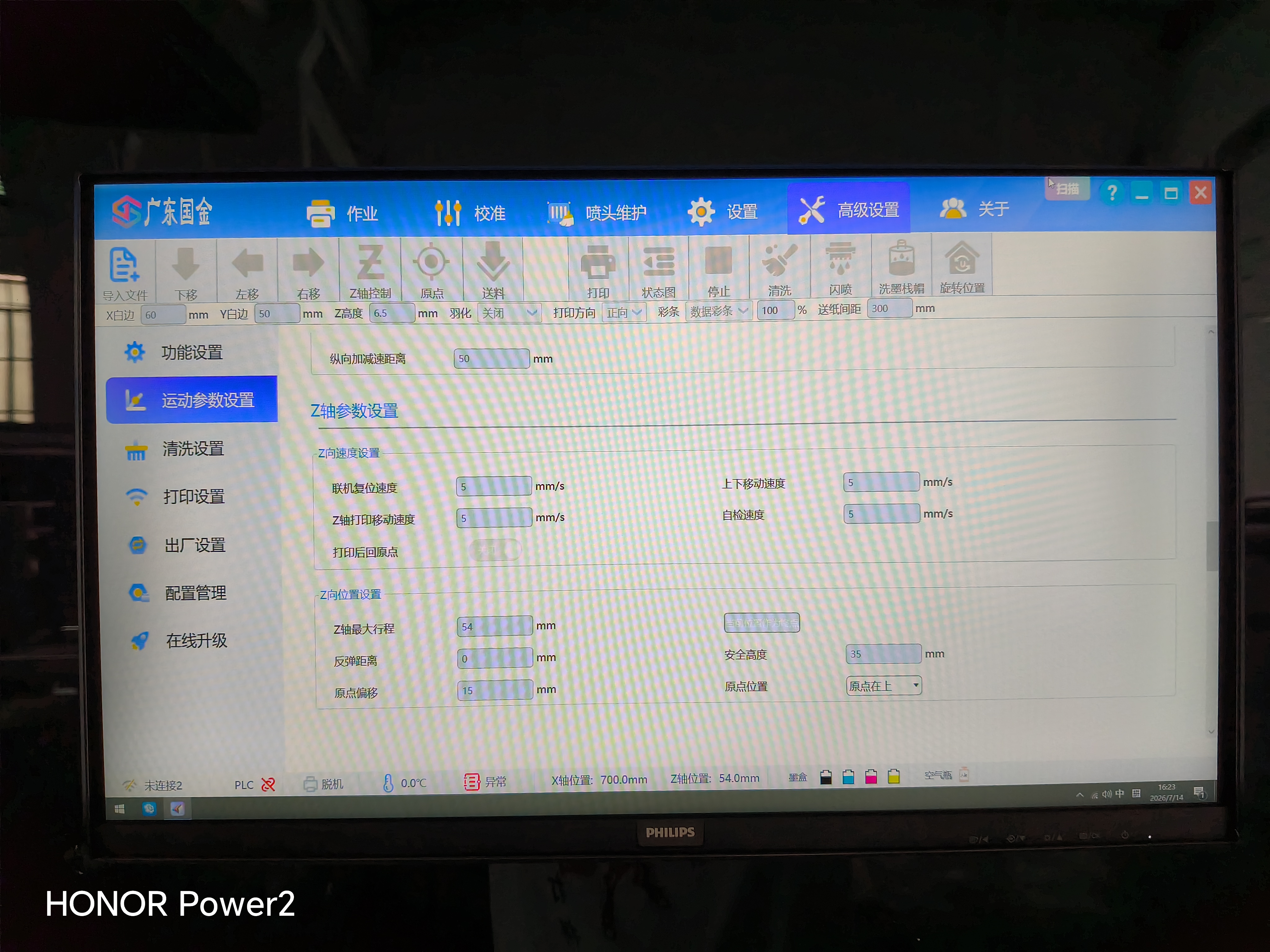
Final rigorous testing and inspection before shipment on the GOKING production floor.
Ask five suppliers what makes their machine 2-in-1 and you will usually get five different answers. One will describe a printhead bar that a technician swaps between jobs. Another will describe a resolution preset buried in the RIP software. A third will describe a machine as “multifunctional” simply because it can feed more than one board grade.
For a packaging factory that has already shortlisted suppliers and is preparing to commit capital, that ambiguity is expensive. The machine lands on the production floor and stays there for years. Whether it can genuinely move between a fast single-pass production profile and a fine-detail multi-pass profile determines how the plant routes work, how many operators it needs, how much floor space it dedicates to digital, and what spare parts it must stock.
This article removes the ambiguity. It defines 2-in-1 for corrugated packaging, explains which mechanical systems make a dual-mode claim technically possible, walks through how a job moves through each mode, and sets out what to check before signing.
The Problem: One Label, Three Different Machines
“Two-in-one” is currently used in the corrugated equipment market to describe at least three different things, and only one of them delivers the operational benefit buyers think they are paying for.
- Swappable hardware. The machine is single-mode by design. Converting it between print processes means changing a printhead bar, a mounting plate, or an ink set. The change is performed by a technician and takes the machine out of production.
- Software-only variation. The machine has one physical print process. The operator can change DPI, speed, or colour profile, but nothing about how ink reaches the board changes. This is a resolution setting, not a second printing mode.
- Dual-mode architecture. The same frame, the same printheads, the same ink delivery, and the same controller run two distinct print processes: single-pass and multi-pass. Switching is a production routing decision, not a maintenance event.
Only the third meaning changes capacity planning, operator training, consumable stock, and machine lifetime. That is why it belongs in the technical evaluation checklist rather than in the marketing section of a quotation.
The practical test takes one question: what physically changes when the machine moves from one mode to the other? If the answer involves tooling, planned downtime, or a service technician, the machine is not a true 2-in-1.
Industry Background: Why Corrugated Printers Now Need Both Modes
The digital printing market was valued at USD 38.0 billion in 2023 and is projected to reach USD 57.0 billion by 2030, according to Grand View Research. Within that market, the inkjet technology segment held the largest share at 48.4% in 2023. The single-pass machine segment specifically was valued at USD 3.2 billion in 2024 and is projected to reach USD 6.5 billion by 2034, according to Reports and Data. Packaging-related digital printing is forecast to grow from USD 30.2 billion in 2024 to USD 46.2 billion by 2029, per MarketsandMarkets, and Asia-Pacific accounted for approximately 41.6% of digital printing revenue in 2025, according to Market Research Future.
The structural reason two print modes now coexist inside the same plant is that corrugated jobs have split into two production profiles that pull in opposite directions:
- Volume-driven work. Shipping cases, e-commerce boxes, retail-ready trays, and repeat distribution packaging, where speed and cost per board dominate and graphics are simple to moderate.
- Detail-driven work. Gift boxes, premium branded packaging, coated paper and kraft paper jobs, white ink layering, and prototypes, where resolution, colour accuracy, and colour gamut dominate.
Two market shifts widened the gap. First, variable data printing made production runs below 3,000 units economically viable from 2024 onward, a range that traditional plate-based equipment was never built to serve. Second, China’s digital printing machinery exports are supported by a concentrated industrial cluster in Guangdong province, which is where GOKING — Guangdong Goking Intelligent Technology Co., Ltd. — designs and manufactures its presses.
A plant that owns only a single-pass machine must decline or outsource the second category of work. A plant that owns only a multi-pass machine loses the speed economics on the first category. The 2-in-1 category exists to close that gap without requiring two separate machines, two service relationships, and two consumable inventories.
A Working Definition of 2-in-1 for Corrugated Packaging
Definition
A 2-in-1 multifunctional digital printing machine is a single corrugated press that supports, on the same frame:
- Single-pass printing, where the printhead bar is fixed and the board passes beneath it once in a continuous motion;
- Multi-pass printing, where the printhead carriage traverses across the board while the board is indexed forward between passes;
- Selectable DPI settings and nozzle configurations matched to each mode and each job type;
- One shared ink system and one shared control platform across both print processes.
On the GOKING platform, this is expressed as a single-pass and multi-pass 2-in-1 digital printing machine range that includes 5-colour integrated models, multiple DPI configurations, and different nozzle options. The manufacturer states that its equipment supports both Epson printheads (8–256 nozzles) and industrial printheads, with resolutions up to 1200 DPI.
What actually separates single-pass from multi-pass
In single-pass mode, the board travels once under a stationary printhead bar and the full image is laid down in that single continuous motion. Throughput per hour is high and the print process is simple to control, which suits volume work where artwork is stable and detail requirements are moderate.
In multi-pass mode, the printhead carriage scans repeatedly across the board while the board indexes forward between passes. Because each area of board receives multiple passes of ink, higher effective resolution is achievable — configurations reaching up to 1200 DPI — but the process is inherently slower per board. This is the mode used for fine text, small codes, smooth gradients, and white ink layering.
Because both processes live inside one chassis, the buyer acquires one machine, one service relationship, and one consumable set instead of two.
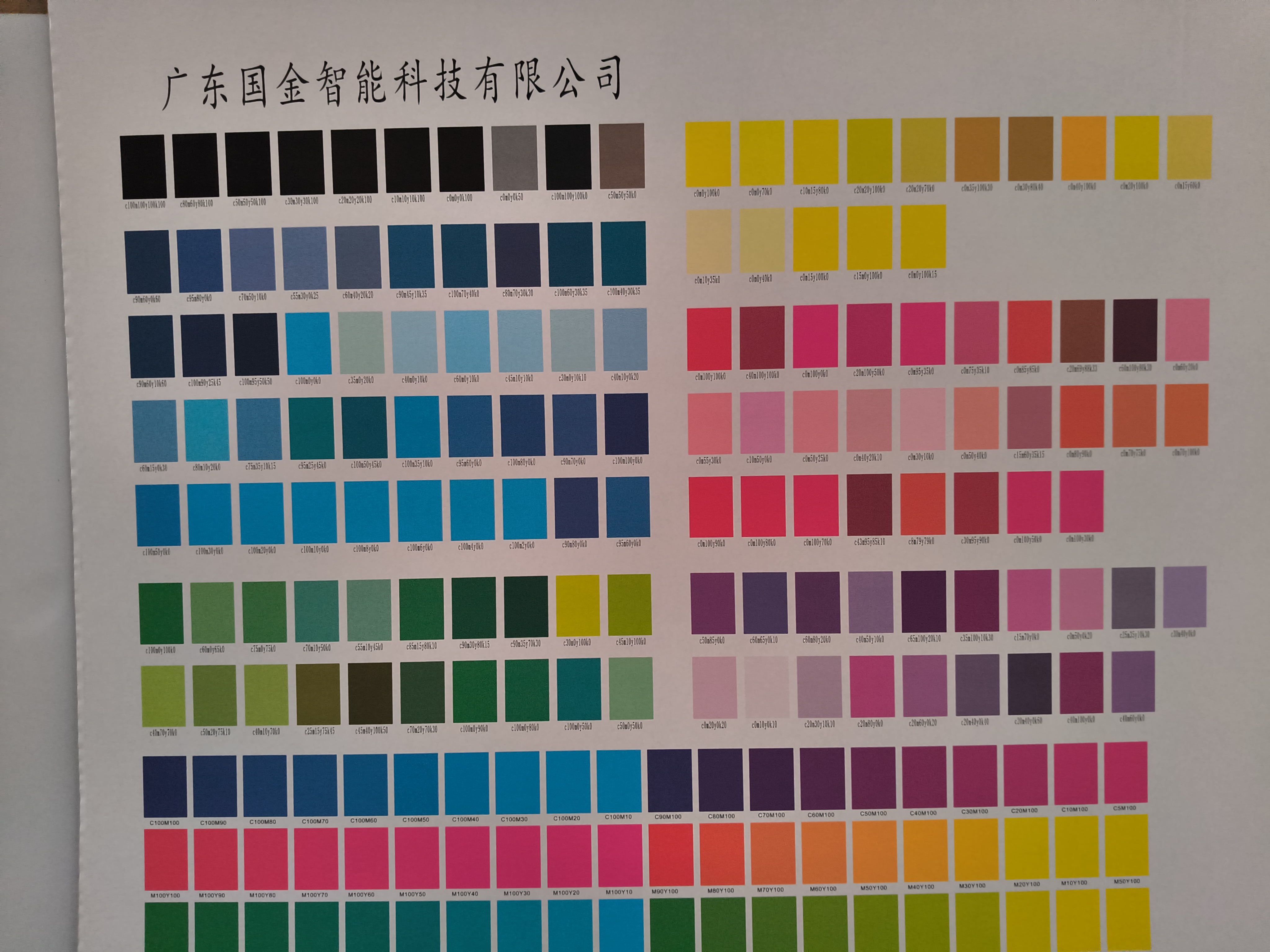
Colour mixing analysis underpins the digital calibration used across both print modes.
The Hardware That Makes a Genuine 2-in-1 Possible
Two mechanical systems decide whether a dual-mode claim survives daily production: the crossbeam that carries and positions the printhead assembly, and the platform that holds the board. On the GOKING machine, these are the magnetic levitation crossbeam and the vacuum platform.
The magnetic levitation crossbeam
The crossbeam is the axis along which the printhead carriage moves in multi-pass mode, and the reference structure against which the printhead bar is fixed in single-pass mode. In a 2-in-1 machine the same beam has to satisfy two different motion profiles at once: precise, repeated bidirectional scanning at multi-pass resolution, and absolute positional stability while the board travels at speed beneath it during single-pass output.
A magnetic levitation crossbeam reduces mechanical contact between the moving carriage and the beam. Less contact means less friction, less vibration transferred into the print zone, and more consistent traverse behaviour across long production hours. For a buyer, that translates into three practical consequences:
- Repeatability. The carriage returns to the same position pass after pass, which is what keeps multi-pass registration tight when the same board area is printed several times.
- Stability at speed. Reduced mechanical interference lets the assembly hold position while the board moves quickly underneath in single-pass mode.
- Wear profile. Fewer contact surfaces means the motion system degrades more slowly — relevant when the machine is expected to serve as the plant’s primary digital asset across multiple years rather than one product cycle.
The vacuum platform
Corrugated board is not flat. Single-face, warped, or humidity-affected sheets lift at the edges, and any lift during printing shows up as banding, misregistration, or head strikes. In multi-pass mode, where the same area is printed repeatedly, small registration errors compound from pass to pass.
A vacuum platform holds the sheet down across its full surface rather than clamping it only at the edges. In 2-in-1 operation this matters to both modes:
- In multi-pass mode, it keeps the board locked between passes so each successive scan lands exactly on the previous one.
- In single-pass mode, it prevents the board from shifting during high-speed transit under the fixed bar.
- Across substrates, it allows the same platform to handle corrugated board, coated paper, and kraft paper without changing feed hardware.
Together, the crossbeam and the vacuum platform are the reason one frame can serve two print processes instead of one compromised process.
Adjustable DPI settings and nozzle configuration
Dual-mode printing is only useful if image quality can be matched to the job. The GOKING 2-in-1 range supports multiple DPI configurations and different nozzles, and works with both Epson printheads (8–256 nozzles) and industrial printheads at resolutions up to 1200 DPI. Epson I3200 printheads are widely used in Chinese-manufactured digital printers for plate-less, high-quality output, and heads such as the Xaar Nitrox series are engineered for demanding, higher-viscosity industrial fluid applications.
For the buyer, the useful question is not “what is the maximum DPI” but “which DPI and nozzle combination is configured for each of my job types.” A machine specified with the right nozzle set for the shop’s actual packaging mix will outperform one quoted only at a single headline resolution.
One ink system, one controller
A machine that requires a different ink set for each mode is not 2-in-1 in any operational sense — it is two machines sharing a frame. GOKING’s 2-in-1 platform uses 5-colour integrated models, so the same ink channels serve both print modes, and the same controller manages mode selection, digital colour calibration, and registration. Digital colour calibration and inkjet operation replace the plate-making, plate mounting, and wash-up steps that plate-based presses require.
High-definition lettering output — the detail level that drives multi-pass mode selection.
Step-by-Step: How a Job Moves Through a 2-in-1 Machine
- Job assessment. Before a file is released, production decides which mode the job belongs in: single-pass for volume and speed, multi-pass for resolution and detail. This is a routing decision, not a machine conversion.
- Board loading and registration. The sheet is placed onto the vacuum platform, which holds it flat and registered across the full print area.
- Mode, DPI, and nozzle selection. The operator selects the print mode and the matching DPI and nozzle profile from the controller. No tooling change and no technician intervention is required.
- Image preparation. The file is processed without plate making, and digital colour calibration aligns output to the target colour profile.
- Printing in single-pass mode. The board passes once beneath the fixed printhead bar and the complete image is laid down in one continuous motion.
- Printing in multi-pass mode. The printhead carriage traverses across the board repeatedly while the board indexes forward between passes, building the image at a higher effective resolution.
- Output and inspection. The printed sheet exits for drying and inspection. Switching from a single-pass job to a multi-pass job is a matter of job setup, not the multi-step prepress cycle that plate-based printing requires.
Measured difference against plate-based production
Compared with traditional plate printing machines, the digital platform reduces prepress time by more than 75% and job switching time by 80%. Traditional devices are economical only for batches above roughly 3,000 copies, while the digital machine supports cost-effective production starting from a single copy — which is what makes small-batch, cross-border print-on-demand orders viable.
Use Cases: Which Mode Fits Which Job
Jobs that belong in single-pass mode
- High-volume shipping cases and e-commerce boxes with simple to moderate graphics
- Retail-ready packaging and trays where turnaround time beats graphic complexity
- Repeat jobs where the same artwork runs frequently and setup time must stay near zero
- Plants serving customers who need fast replenishment rather than versioned artwork
Jobs that belong in multi-pass mode
- Gift boxes and premium branded packaging where fine detail, gradients, and sharp text matter
- Coated paper and kraft paper digital printing work
- White ink jobs and special colour work that requires layered output
- Prototypes, samples, and small-batch print-on-demand orders
- Jobs carrying variable data — versioned codes, regional text, or personalised graphics
Operations that need both
- A corrugated converter running a mix of long-run distribution packaging and short-run premium work
- A print service provider that currently refuses urgent, low-volume jobs because plate costs erase the margin
- A brand owner’s in-house packaging operation that wants prototyping and production on one machine
- A plant shifting short-run jobs from offset to digital without adding a second press footprint
Comparison Table: Two Modes, One Machine, One Alternative
The table below compares the two print modes available on a 2-in-1 machine against the traditional plate-based press that most converters are replacing or supplementing.
| Dimension | Single-pass mode (2-in-1 machine) | Multi-pass mode (2-in-1 machine) | Traditional plate-based press |
|---|---|---|---|
| Plate making | Not required | Not required | Required for every job change |
| Print process | Board passes once under a fixed printhead bar | Printhead carriage scans; board indexes between passes | Ink transferred from a mounted plate |
| Resolution profile | Optimised for speed; moderate resolution | Higher effective resolution, configurations up to 1200 DPI | Dependent on plate and press setup |
| Prepress time | Reduced by more than 75% versus plate process | Reduced by more than 75% versus plate process | Baseline |
| Job switching | Fast digital setup; switching time reduced by 80% | Fast digital setup; no plate change | Plate mounting, registration, and machine wash-up |
| Minimum economical run | From 1 copy | From 1 copy | Typically above 3,000 copies |
| Substrates | Corrugated board, coated paper, kraft paper | Corrugated board, coated paper, kraft paper, premium detail work | Depends on plate and press configuration |
| Ink configuration | 5-colour integrated models | 5-colour integrated models | Plate-based ink system |
| Capabilities | Variable data; printable over creases; ERP integration; digital colour calibration | Variable data; printable over creases; ERP integration; digital colour calibration | No plate-less workflow; limited variable data |
| Best suited to | High-volume, speed-driven packaging | High-detail, short-run, premium packaging | Long runs of one stable design |
| Footprint | One machine covers both modes | One machine covers both modes | Separate prepress and press footprint |
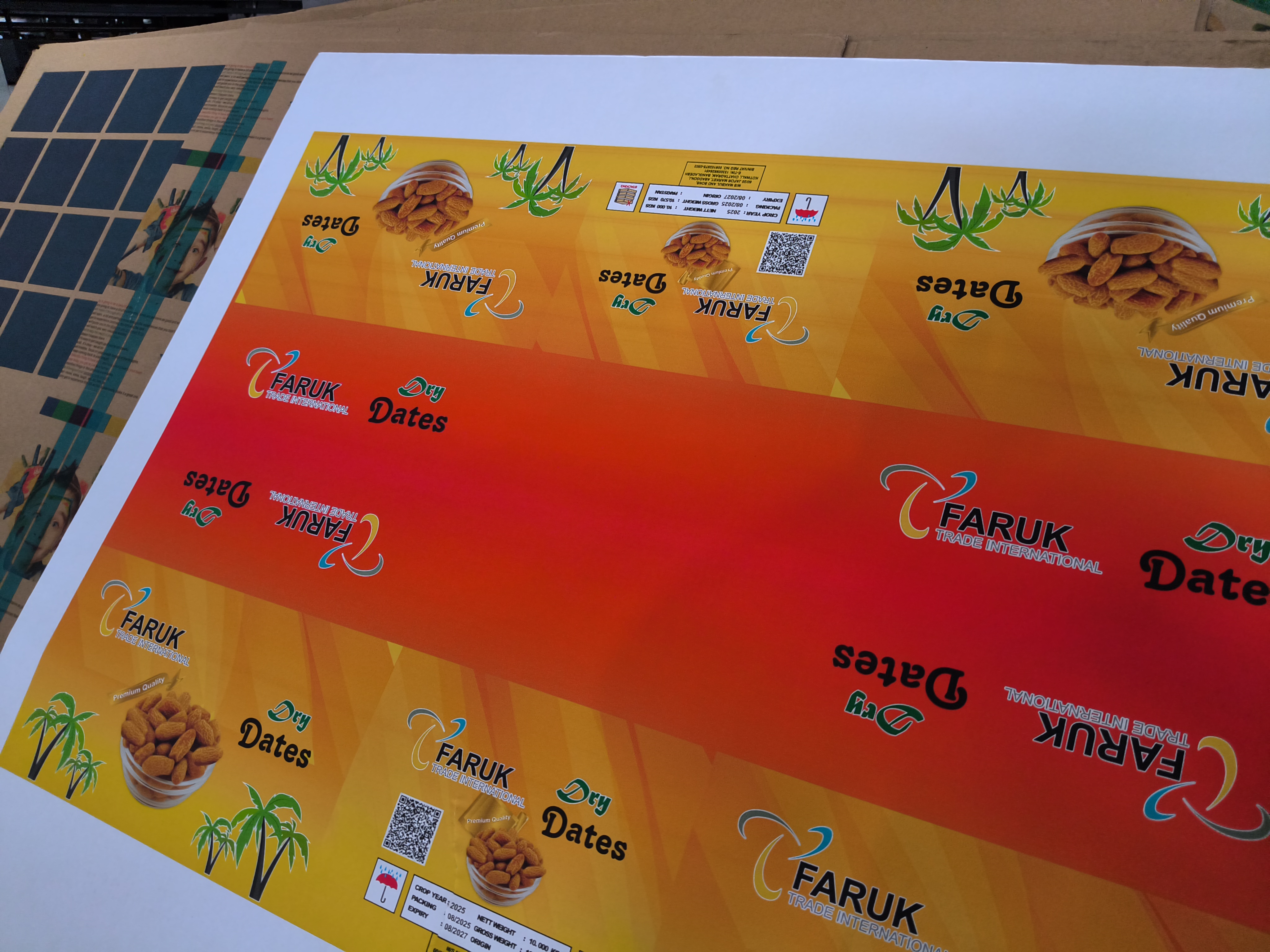
A variety of high-quality printed samples covering both production profiles.
What 2-in-1 Means for Long-Term Ownership and Supply
A 2-in-1 press is a multi-year capital decision, so the specifications matter less than whether the supplier can keep both modes running at the same standard for the life of the asset. Because the platform shares one ink system and one controller, long-term consumable and spare-part planning is simpler than running two separate machines — but only if the manufacturer can support that platform over time.
GOKING manufactures in Dongguan, China, at a 10,000-square-metre facility, with approximately 152 employees, an annual production capacity of approximately 864 sets, and a 38-engineer R&D team. The company was founded in 2020 by a team with more than a decade of industry experience, and exports account for roughly 49% of output, with main markets including the EU, Africa, Latin America, Russia, Kazakhstan, and Turkey. The product line includes J-series scanning multi-pass machines and G-series direct output one-pass machines alongside the GJ-series, and the company operates as an OEM/ODM partner for global brands.
Documented control measures applied to this equipment class include a 100% aging test, long-time running inspection, pre-shipment inspection, secure transport packaging, engineering support with rapid response, and on-site commissioning support. In procurement terms, the minimum order quantity is 1 set; delivery is by global shipping with secure packaging and either whole-machine or turnkey line delivery; four complimentary cartons of ink plus various wear parts are packed together with the equipment for shipment; acceptance is by sample testing, factory inspection, pre-shipment inspection, and optionally on-site acceptance per contract; and payment terms are a 30% deposit before production with the remaining 70% payable before shipment.
For a converter planning a multi-year digital transition, those terms determine how quickly the machine can be absorbed into production and how predictable the service relationship will be. A 2-in-1 machine only pays back if both of its modes can be trusted for the life of the asset.
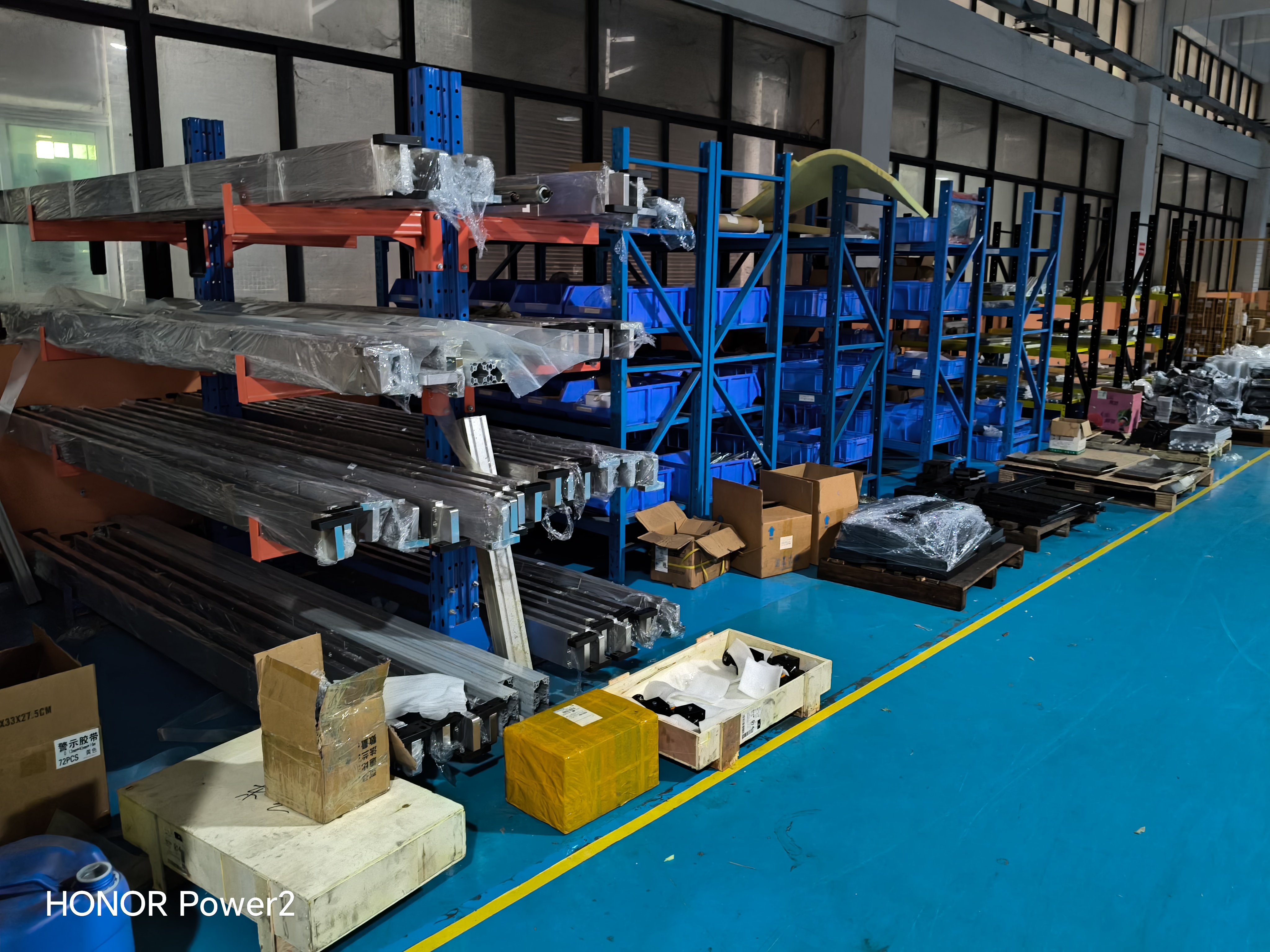
Spare parts and consumable stock held to support long-term machine supply.
Frequently Asked Questions
Does a 2-in-1 multifunctional digital printing machine need CE marking, and which standards apply?
Industrial digital printers placed on the EU market must carry CE marking. Two standards commonly apply to this equipment category: EN ISO 12100, which governs risk assessment for machinery, and IEC 60204-1 (EN 60204-1), which covers the electrical equipment of industrial machines. Buyers should request the declaration of conformity and confirm which standards it references. Ink chemistry is a separate compliance track — the U.S. EPA declared certain PFAS chemistries used in UV inks hazardous in April 2024, so ink formulation should be confirmed independently of machine certification.
Can one machine really print in both single-pass and multi-pass mode without hardware changes?
Yes, when the machine is built as a dual-mode platform rather than a single-mode press with an option. GOKING’s single-pass and multi-pass 2-in-1 digital printing machine runs both processes on one frame with a shared ink system and controller, covering 5-colour integrated models, multiple DPI configurations, and different nozzle options. Mode selection is a job setup decision. The magnetic levitation crossbeam and the vacuum platform are the mechanical systems that allow one chassis to serve both motion profiles.
What is the minimum order quantity, and how are payments structured?
The minimum order quantity is 1 set. Payment terms are a 30% deposit before production, with the remaining 70% of the contract amount payable before shipment. Delivery is by global shipping with secure packaging, as either whole-machine delivery or turnkey line delivery. Four complimentary cartons of ink and various wear parts are packed together with the equipment for shipment.
Can we validate print quality before accepting the machine?
Acceptance criteria include sample testing, factory inspection, pre-shipment inspection, and on-site acceptance per contract. Sample testing allows the buyer to check both print modes on their own board stock and artwork before shipment. Pre-shipment inspection follows a 100% aging test and long-time running inspection, which is where mode stability is confirmed under sustained operation.
Can GOKING support long-term supply for a multifunctional digital printing machine?
GOKING operates a 10,000-square-metre manufacturing facility in Dongguan, China, with approximately 152 employees and an annual production capacity of approximately 864 sets, supported by a 38-engineer R&D team. Long-term supply covers the machine, spare and wear parts, and engineering support: wear parts ship together with the equipment, and the company provides rapid response and on-site commissioning support. Buyers can review the machine range in the 2026 GOKING product catalog before opening a long-term supply conversation.
Conclusion: Verify the Architecture, Not the Label
“2-in-1” is a description of machine architecture. It means one frame, one ink system, one controller, and two genuinely distinct print processes — a fixed-bar single-pass mode for volume, and a scanning multi-pass mode for detail, with DPI and nozzle settings selectable between them. Everything else sold under the label is either a reconfiguration the buyer pays for in downtime, or a resolution preset that changes nothing mechanical.
For a factory at the decision and execution stage, the evaluation therefore comes down to four checks: confirm that no tooling or technician is required to change modes; confirm that the ink system and controller are shared; confirm that the motion and board-holding systems — the crossbeam and the vacuum platform — can actually serve both profiles; and confirm that the supplier can support the platform with parts, engineering, and capacity for the years the machine will run.
Next Step: Test Both Modes on Your Own Board
Machine specifications only prove so much. The useful validation is a sample test run on your own corrugated, coated paper, or kraft stock, in both single-pass and multi-pass mode, using your own artwork.
Download the full specifications: 2026 GOKING product catalog
Website: www.cmyk-goking.com
Guangdong Goking Intelligent Technology Co., Ltd.
No. 1, Fuxiang Street, Huangniupu, Huangjiang Town, Dongguan City, China
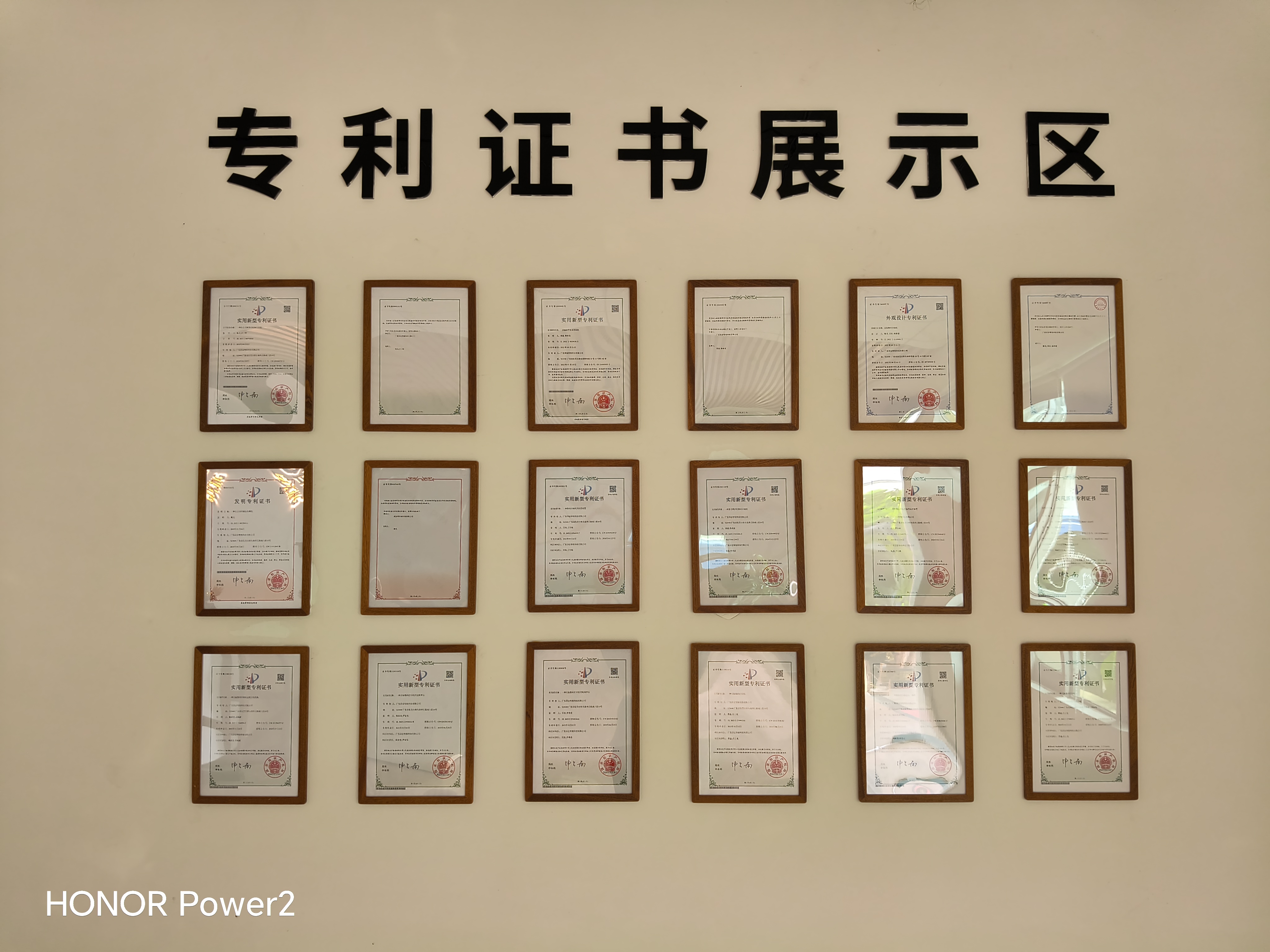
Manufacturing and service standards recognised by relevant institutions.
Have Questions or Need More Details?
Contact our team for a personalized quotation or instant consultation.
Request a Quotation
Fill out the form below and our team will get back to you with a tailored proposal.
WhatsApp Direct Chat
Prefer to chat in real-time? Message us on WhatsApp for instant assistance & quick answers.
- Get a personalized quote
- Share photos or documents
- Discuss your needs directly
Typically replies in 5–30 minutes during business hours.