Hybrid Solar Inverter Guide: Types, How It Works and Buying Considerations for 2026
Hybrid Solar Inverter Guide: What It Is, How It Works and What to Check Before Buying
A hybrid solar inverter is a power conversion device that sits between solar panels, battery storage, AC loads, grid or generator input. It combines inverter, battery charger and solar charge controller functions into one unit. Buyers use it when they want solar generation to charge batteries, power loads, keep sensitive equipment running during grid failure and sometimes feed surplus solar power back to the grid.
Not every hybrid inverter has identical terminology or capability. Some are designed primarily for off-grid systems and also provide grid feed-in, while others are grid-tied with battery backup. Understanding the category first helps importers, distributors, RV integrators and commercial project buyers avoid specification mismatches.
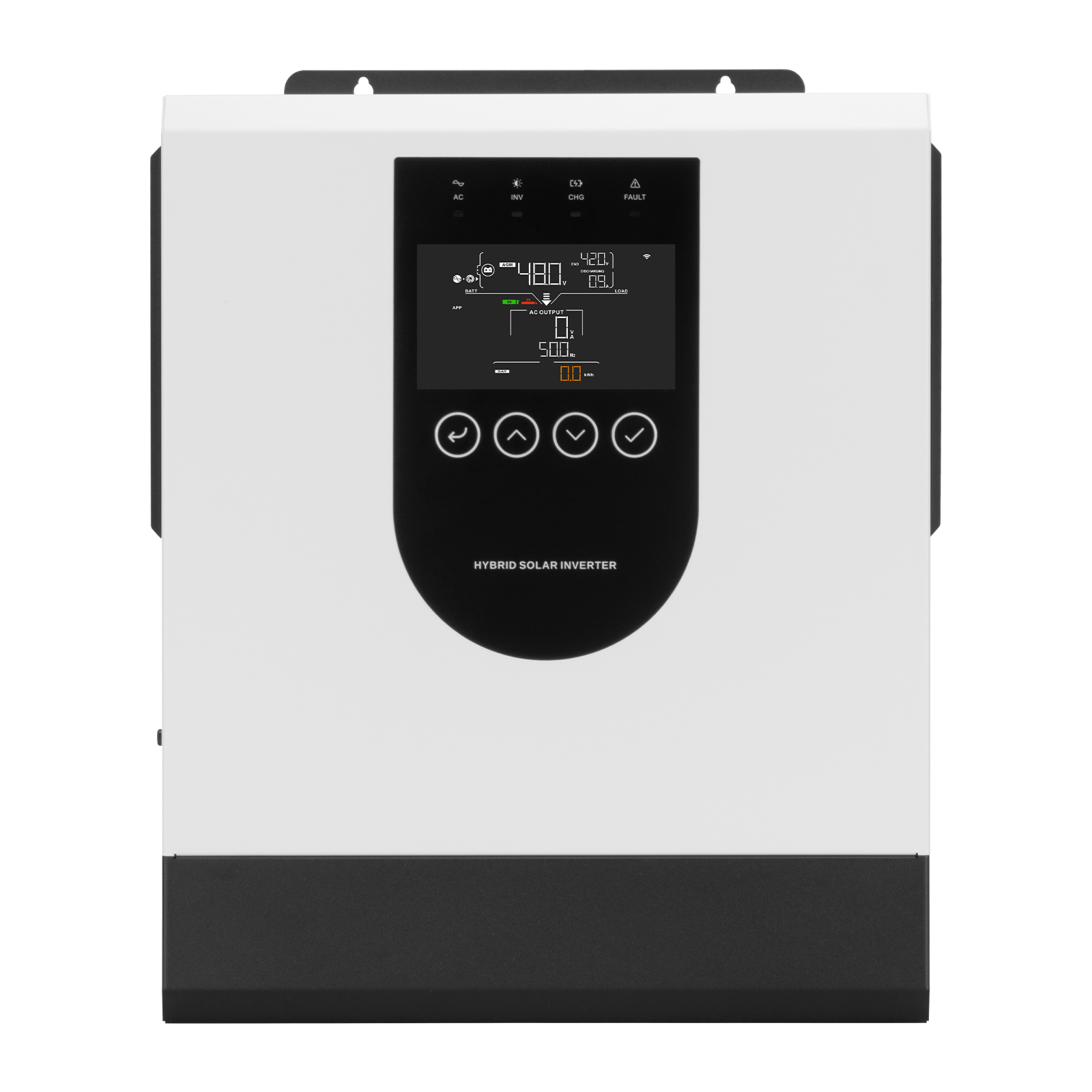
GOTOSOLAR SYP6.5KW48V hybrid solar inverter
Problem Definition: Why Hybrid Solar Inverter Terminology Can Be Confusing
The first problem buyers meet is vocabulary. The market uses labels such as off-grid inverter, on-grid inverter, off-grid on-grid hybrid inverter, solar hybrid inverter and energy storage inverter. These words overlap but do not mean exactly the same thing.
A true hybrid inverter should combine solar charging and battery conversion in one cabinet. In many product listings, however, the word hybrid is used loosely. A model may support battery backup but cannot feed power to the grid; another may export to the grid but cannot manage a large backup battery bank well.
The second problem is voltage mismatch. Low-voltage battery systems are common in residential, RV and small commercial installations. A 48V low-voltage platform is easier to connect to lithium or lead-acid batteries and is widely used in the 6 kW single-phase segment. If a buyer chooses a model with the wrong battery voltage, MPPT range or AC input range, the whole energy system may become unreliable.
The third problem is long delivery and quality risk. Hybrid inverters are electrical products that run continuously. Without a manufacturer that performs aging tests, full-function testing and after-sales support, a distributor can inherit unacceptable return rates. This article therefore covers both category fundamentals and supplier-level evaluation.
Industry Background: Hybrid Solar Inverter Market in 2026
Hybrid solar inverters have grown from an off-grid niche into a mainstream solar component. According to Grand View Research, the global solar hybrid inverter market was valued at about USD 10.7 billion in 2024. The residential segment was already estimated at USD 4.55 billion in 2023 by Markets and Data.
Three-phase hybrid inverters held a dominant revenue share of more than 61.3 percent in 2024 according to Grand View Research. For smaller residential and RV projects, however, single-phase hybrid inverters remain important because many homes in Africa, the Middle East, Southeast Asia and Latin America use single-phase 220V-240V service.
Competition in the inverter industry is concentrated. Wood Mackenzie reported that Huawei and Sungrow together accounted for 55 percent of the global PV inverter market in 2024. This makes it harder for smaller buyers to receive fast technical responses from the two largest suppliers. It also explains why mid-size specialist manufacturers can be useful partners for private-label projects, off-grid programmes and markets where flexible communication matters.
For importers, certification language is also part of market positioning. UL 1741 is the primary safety standard for grid-connected inverters in North America, while IEC 62109 is the general international safety standard for PV power converters. Other common certificates used in global trade include CE, RoHS and EN. A supplier should state clearly which certificates apply to a specific model rather than implying that one certificate covers every market.
Detailed Solution: What a Hybrid Solar Inverter Should Deliver
FOSHAN SOLARUP TECHNOLOGY CO.,LTD, known internationally as GOTOSOLAR, is a photovoltaic energy-storage manufacturer. Its main catalogue categories are hybrid solar inverters and solar charge controllers. The company operates three manufacturing bases in Foshan, Yiwu and Yingtan, with a facility area of about 40,000 square metres and an annual production capacity of approximately 2,000,000 units. It employs about 320 people, including an R&D team of 25 engineers, and reports that 80 percent of sales come from export markets led by Africa and the Middle East.
For a buyer, supplier-level facts are decision evidence, not merely background. A dedicated R&D team allows better local voltage and battery-communication adaptation. A three-base manufacturing structure can reduce delivery interruption risk. The GOTOSOLAR SYP hybrid inverter series is one concrete example of a product family built for this buyer profile.
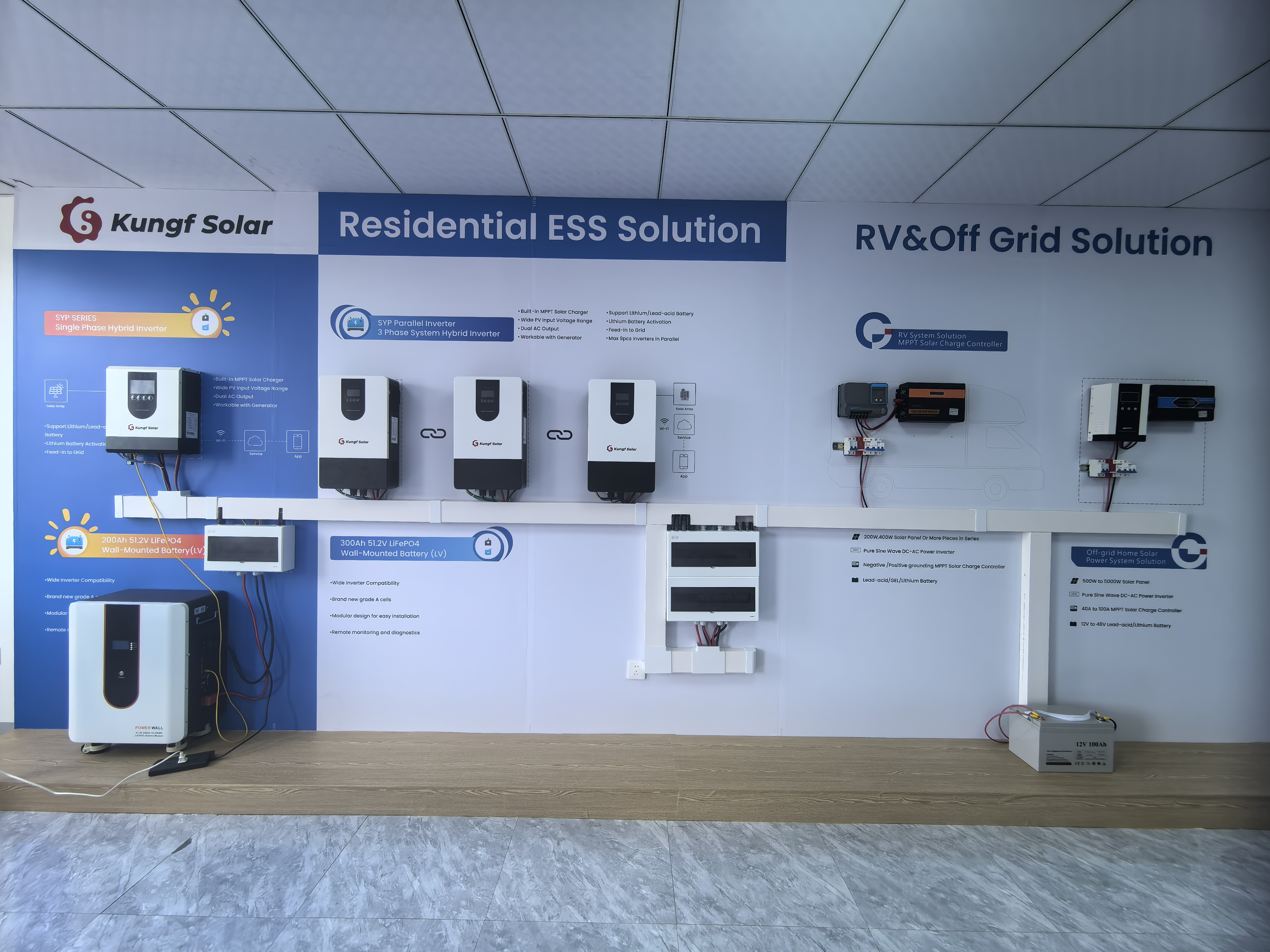
GOTOSOLAR showroom displays residential solar and battery configurations
GOTOSOLAR SYP Series Model Family
The SYP series includes SYP1.5KW12V, SYP2.5KW12V, SYP4.0KW24V, SYP6.5KW48V, SYP12.0KW48V and SYP12.0KW48V/P. The model code indicates rated power and nominal battery voltage. The range extends from 1.5 kW systems using a 12V battery platform to 12 kW systems using a 48V platform.
Representative Model: SYP6.5KW48V
The SYP6.5KW48V is described as a 6.5 kW rated hybrid inverter with 12 kVA surge capacity. It accepts 208/220/230/240 VAC input and supports an AC voltage range of 90-280 Vac in normal mode and 170-280 Vac in UPS mode. Frequency is 50/60 Hz with auto-adaptive support. The output waveform is pure sine wave, and the product documentation lists switch time of 10 ms in both normal and UPS modes.
Its solar charging section uses an MPPT solar charger with a maximum PV input current of 27 A, maximum PV input power of 9000 W, MPPT voltage range of 60-450 VDC and maximum PV open-circuit voltage of 500 VDC. For battery charging, the maximum PV charge current is 120 A, maximum AC charge current is 120 A, and total maximum charge current from PV plus AC is 120 A.
The unit supports lithium batteries and lead-acid batteries and includes lithium battery activation. It also supports a generator input, which is valuable for sites where grid backup is weak. Communication includes RS232, RS485 and USB ports, while WiFi monitoring is offered as an optional internal or external module. The human-machine interface is an LCD display.
The product is made with IGBT, MOSFET and PCB components. Maximum efficiency in battery mode is specified as 94 percent at 48 VDC. The 6.5 kW model provides dual AC output and supports feed-in to grid. Its protection class is IP21, meaning it is intended for indoor or protected installation. Buyers who require higher ingress protection for outdoor or industrial enclosures should ask the supplier for models such as the separately listed GOTOSOLAR 8.2KVA/8200W/48V single-phase hybrid inverter with IP65 and parallel-function capability.
Key Features Explained: Pure Sine Wave, MPPT, Dual Output and Monitoring
Pure Sine Wave Output
Pure sine wave inverters provide clean AC power comparable to utility power. This reduces the risk of malfunction in sensitive loads such as refrigerators with electronic control boards, induction cooktops, televisions and telecommunication equipment. The GOTOSOLAR SYP6.5KW48V is specified as pure sine wave.
Built-in MPPT Solar Charger
MPPT means maximum power point tracking. The solar charger continuously adjusts the PV operating point to harvest more energy from the solar array. A wide MPPT range from 60 to 450 VDC gives installers more freedom in choosing panel voltage configuration. The SYP6.5KW48V includes a built-in MPPT solar charger, so there is no need to buy a separate solar charge controller for the inverter function.
UPS Backup and 10 ms Switch Time
In grid failure conditions, the switch from AC source to battery mode can be measured in milliseconds. The SYP6.5KW48V lists a 10 ms switch time in both normal and UPS modes. Fast switching helps computers, network equipment and security systems continue operating during brief outages.
Lithium and Lead-Acid Battery Support
Lithium batteries are popular because of their energy density and longer service life. However, lead-acid batteries are still common in price-sensitive markets. The GOTOSOLAR SYP series supports both lithium and lead-acid batteries and includes lithium battery activation. This flexibility is useful for distributors who need one inverter model for different battery types.
Dual AC Output and Feed-in to Grid
Dual AC output gives installers the ability to split loads into priority and non-priority outputs. Feed-in to grid allows surplus solar energy to be exported where local regulations and metering arrangements permit. This is the feature set that makes an off-grid inverter usable in a wider on-grid solar project.
Generator Compatibility
Generator compatibility matters in rural residential, commercial and telecommunication sites. When solar and battery energy are depleted, a backup generator can charge the battery or support the load, avoiding a complete power shutdown.
Optional WiFi Monitoring
Monitoring is no longer optional in modern solar service. The SYP series supports optional WiFi monitoring through internal or external modules. Serial interfaces RS232, RS485 and USB are also available for local connection, field service and integration with third-party monitoring systems.
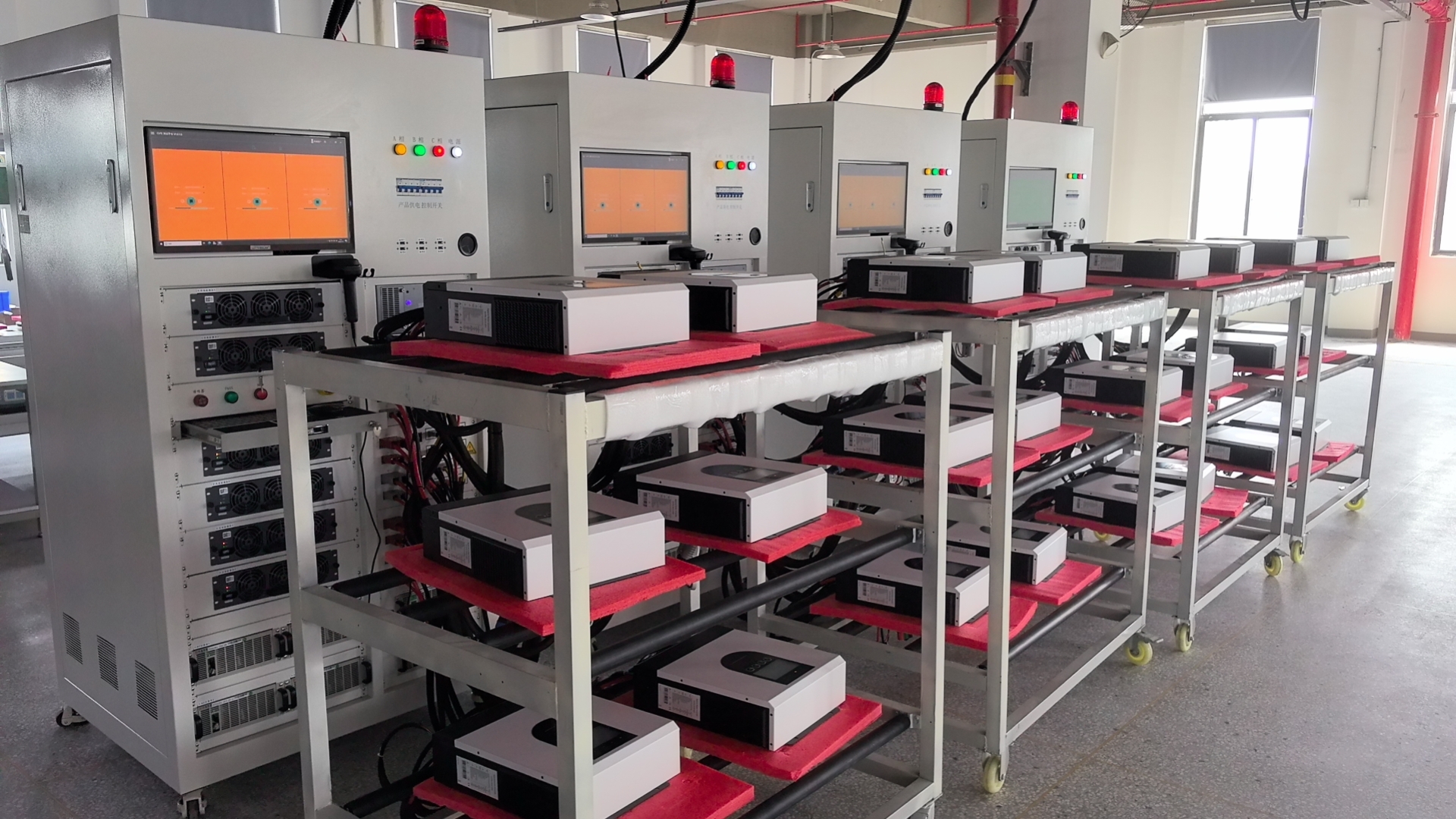
100 percent aging test inside GOTOSOLAR manufacturing facility
Step-by-Step Breakdown: How a Hybrid Solar Inverter Works in a Solar Day
Step 1: Solar PV Generation
During daylight, solar panels generate DC electricity. The inverter monitors PV voltage and current through its MPPT solar charger.
Step 2: Battery Charging
The MPPT section charges the battery according to the selected battery type and charging profile. In systems using lithium batteries, the inverter can activate the battery management system and bring the battery out of protection mode.
Step 3: Powering AC Loads
The inverter converts DC battery energy into AC power. Loads connected to the AC output receive power from solar first when available, from battery when solar is scarce and from the AC source when grid or generator is present.
Step 4: Grid Failure or AC Source Weakness
When the grid fails, the inverter switches to battery mode within 10 ms for the SYP6.5KW48V. During this interval, lights, computers and communication equipment can continue operation without an extended blackout.
Step 5: Grid Feed-in and Generator Support
If solar electricity exceeds the load demand and the battery is full, the inverter can feed surplus power to the grid where allowed. If the battery is low and no grid is available, a generator can charge the battery or support the load.
Step 6: Monitoring and Maintenance
WiFi or RS485 monitoring lets technicians verify charging status, load consumption, battery voltage and faults. This remote view is important for distributors who support installations in other cities or countries.
Use Cases: Where a Hybrid Solar Inverter Adds Value
Residential Hybrid Solar Inverter
Residential rooftop solar projects use hybrid inverters to keep essential household loads running during grid outage and to increase self-consumption from the solar array. A 48V low-voltage system such as the SYP6.5KW48V is suitable for many single-family home installations.
Commercial and Light Industrial Projects
Small commercial solar projects often need backup for lighting, security, computing and refrigeration. Single-phase hybrid inverters are useful where the site has limited load and a 48V battery bank is easier to maintain than a larger three-phase system.
RV and Marine Mobile Power
Recreational vehicles and marine installations need quiet, pure sine wave power and flexible battery charging from shore power, generator and solar. The hybrid inverter replaces separate charger and inverter units, reducing weight and installation complexity.
Off-Grid Villages and Remote Sites
Remote off-grid power supply systems, telecommunication towers and rural clinics need continuous operation in high-temperature and variable weather conditions. Hybrid inverters that support lithium and lead-acid batteries and generator input give project technicians a practical energy management path.
Comparison Table: Single-Phase 48V Hybrid Inverter Selection Checklist
| Evaluation Point | Why It Matters | Example: GOTOSOLAR SYP6.5KW48V |
|---|---|---|
| Output waveform | Clean power for sensitive AC loads | Pure sine wave |
| Switch time | Fast backup transition during grid failure | 10 ms in normal and UPS modes |
| MPPT solar charging | Better energy harvest from PV array | MPPT, max PV input power 9000 W, MPPT range 60-450 VDC |
| AC input tolerance | Stability in areas with voltage fluctuation | 90-280 Vac normal mode; 170-280 Vac UPS mode |
| Battery voltage | Common 48V low-voltage platform for lithium and lead-acid | Rated voltage 48 VDC, lithium and lead-acid compatible |
| Charging current | Faster recovery from generator or AC source | Max PV charge current 120 A, max AC charge current 120 A |
| Generator support | Backup when grid and PV are unavailable | Workable with generator |
| Dual AC output | Separate priority and non-priority loads | Dual AC output |
| Grid feed-in | Surplus solar export capability | Supports feed-in to grid |
| Monitoring | Remote service and fault diagnosis | Optional WiFi internal/external; RS232/RS485/USB |
| Efficiency | Lower loss in battery mode | Max efficiency 94% at 48 VDC in battery mode |
| Ingress protection | Installation environment matching | IP21 indoor-rated; higher IP65 models available separately |
Quality, Testing and Certification Considerations
Hybrid inverter quality is visible not only in the technical specification but in the production process. GOTOSOLAR says that all goods undergo 100 percent full-function testing before delivery. For its hybrid inverters, it also reports a 100 percent aging test before shipment to improve stability. The company provides a standard 2-year warranty for hybrid inverters and supplies 1 percent free spare parts or backup units with bulk orders to reduce downtime for replacements.
On paper qualifications, FOSHAN SOLARUP TECHNOLOGY CO.,LTD states that products have received ISO9001:2015, CE, RoHS, EN and IEC certifications. A buyer who intends to sell in North America should additionally ask the supplier for UL 1741 documentation for the exact model, because UL certification is not automatic from CE or IEC presence.
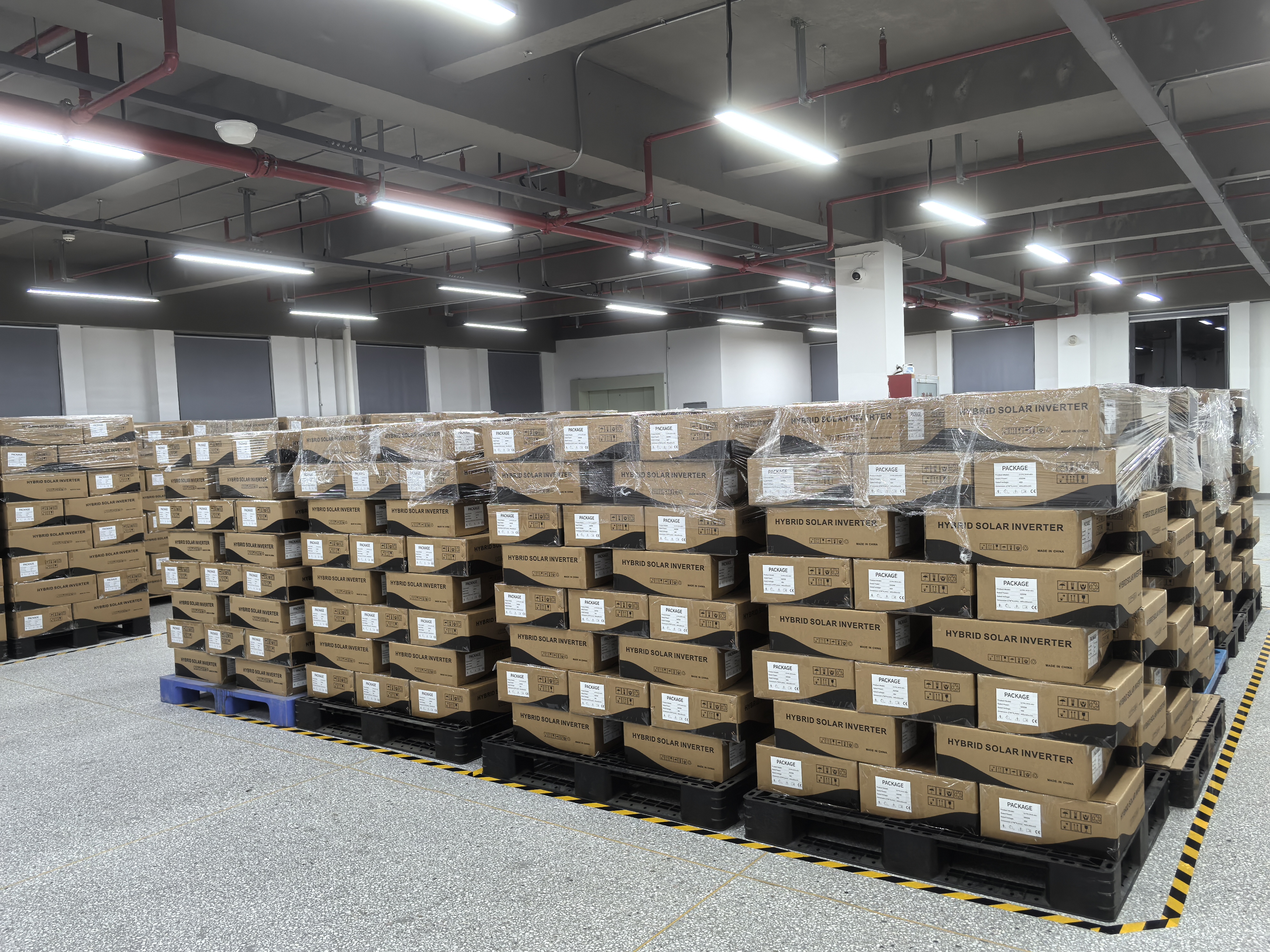
GOTOSOLAR warehouse and hybrid inverter stock
What to Check When Choosing a Hybrid Solar Inverter Supplier
The first check is model compatibility. Ask for a clear datasheet showing AC input voltage range, UPS switch time, MPPT voltage range, maximum PV input power, battery voltage and charging current. The second check is range width. A supplier that makes both solar charge controllers and hybrid inverters can simplify the Bill of Materials for an off-grid project. The third check is export experience. GOTOSOLAR serves nearly 2,000 clients worldwide and reports that export business accounts for 80 percent of total sales, with major markets in Africa and the Middle East.
The fourth check is customisation service. Distributors and OEM customers may need different display languages, power cords, packaging or private-label branding. GOTOSOLAR states that OEM and ODM customization services are available. The fifth check is after-sales support. A standard two-year warranty, aging-test records, spare parts and accessible communication channels create a practical safety net for international buyers.
FAQ
What certifications and test procedures apply to GOTOSOLAR hybrid inverters?
FOSHAN SOLARUP TECHNOLOGY CO.,LTD reports that its products are certified to ISO9001:2015, CE, RoHS, EN and IEC standards. In addition, the company performs 100 percent full-function testing and 100 percent aging tests before delivery. Hybrid inverters carry a standard 2-year warranty, and bulk orders include 1 percent free spare parts or backup units. Buyers selling in North America should request UL 1741 documentation for the specific model.
Can the SYP hybrid inverter use lithium batteries?
Yes. The SYP series supports lithium and lead-acid batteries and includes lithium battery activation. The SYP6.5KW48V is designed for a 48V battery platform. For any project, the correct charging profile and BMS compatibility should be confirmed with the manufacturer datasheet before installation.
What do pure sine wave and 10 ms switch time mean for connected loads?
Pure sine wave output provides stable AC power similar to grid power, which is safer for sensitive electronics such as computers, refrigeration controllers and telecommunication equipment. The 10 ms switch time in normal and UPS modes means that when grid power fails, the inverter can change to battery power quickly enough to avoid a noticeable interruption for many loads.
Can the hybrid solar inverter be monitored remotely?
The GOTOSOLAR SYP series supports optional WiFi monitoring through internal or external modules. It also provides RS232, RS485 and USB communication interfaces. This allows installers or system owners to check battery voltage, PV charging and load status from remote locations.
Are samples and quotations available for distributors and OEM projects?
Samples and project quotations can be requested directly from GOTOSOLAR. The company supports OEM and ODM customization services. For inquiries, contact Wilson by email at wilson@gtsolar.cn or by phone and WhatsApp at +86 153-0713-5737.
Conclusion
The hybrid solar inverter market is large and still growing, but a successful purchase depends less on vague marketing labels and more on concrete specifications. Buyers should compare output waveform, switch time, MPPT range, battery voltage, charging current, communication options, enclosure class and manufacturer quality process.
GOTOSOLAR is an example of a specialist manufacturer with three production bases, about 320 employees, 25 R&D engineers and export focus on Africa and the Middle East. Its SYP hybrid inverter family covers 1.5 kW to 12 kW models, and the representative SYP6.5KW48V offers pure sine wave output, MPPT solar charging, 48V lithium or lead-acid battery support, dual AC output, grid feed-in and optional WiFi monitoring.
If you are evaluating a hybrid solar inverter line for residential, RV, commercial or off-grid projects, download the GOTOSOLAR inverter catalogue or contact Wilson directly: GOTOSOLAR Inverter Catalogue 2025.
Email: wilson@gtsolar.cn | Tel / WhatsApp: +86 153-0713-5737
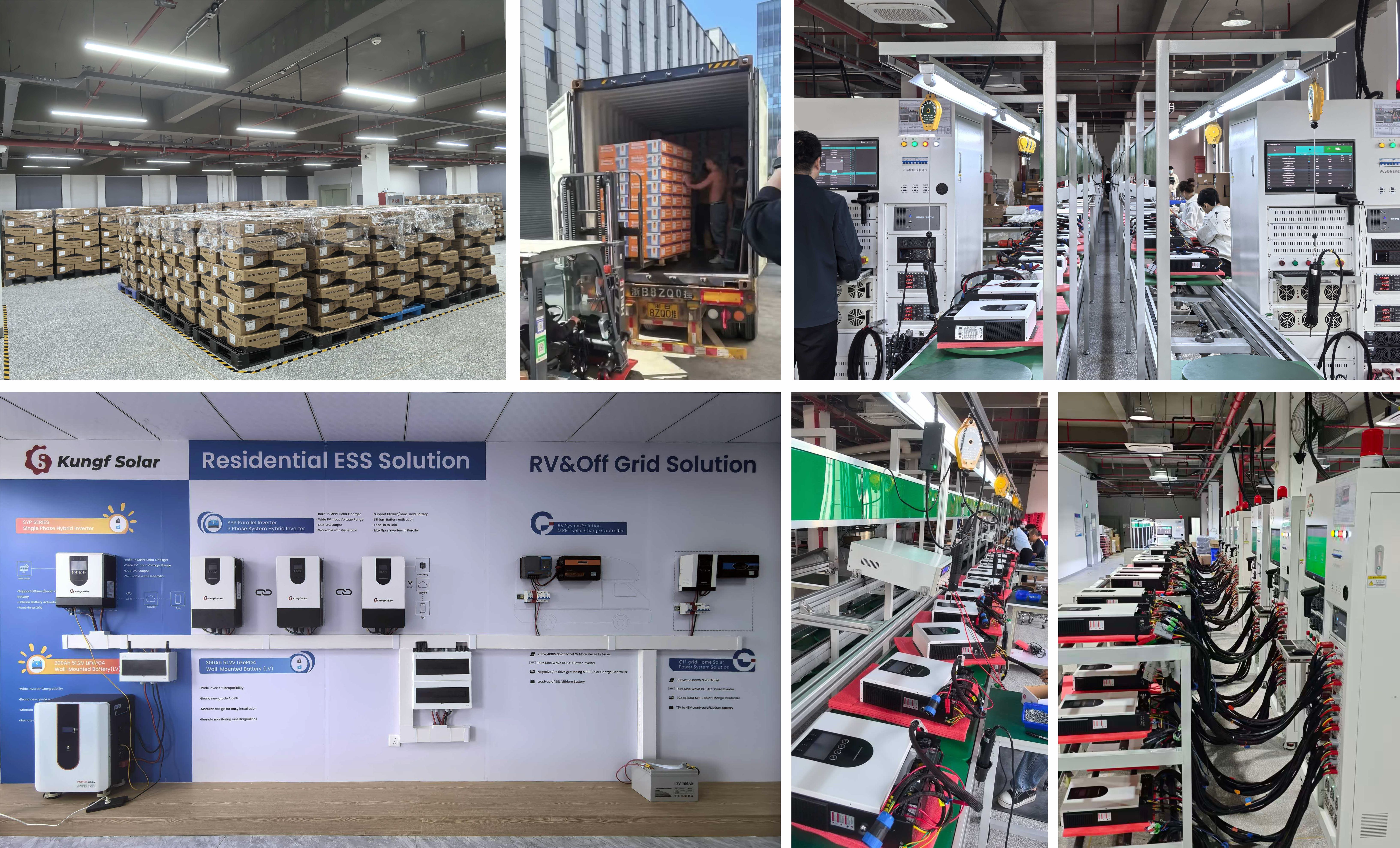
GOTOSOLAR export warehouse and container loading area
Have Questions or Need More Details?
Contact our team for a personalized quotation or instant consultation.
Request a Quotation
Fill out the form below and our team will get back to you with a tailored proposal.
WhatsApp Direct Chat
Prefer to chat in real-time? Message us on WhatsApp for instant assistance & quick answers.
- Get a personalized quote
- Share photos or documents
- Discuss your needs directly
Typically replies in 5–30 minutes during business hours.