
Hybrid Solar Inverter Long-Term Partnership FAQ: Quality, Order Terms and After-Sales Support
Introduction
A first sample order answers a technical question: does the hybrid solar inverter hold up under the load profile it was selected for? A repeat order answers a harder question — will the same quality, the same acceptance criteria and the same support still be there in the next production batch. That shift is where long-term partnerships begin, and it is exactly the point where most distributors and installers want a written answer rather than a verbal reassurance.
This article uses the GOTOSOLAR SYP series hybrid solar inverter range as its reference point. GOTOSOLAR, operated by FOSHAN SOLARUP TECHNOLOGY CO.,LTD, runs three production bases in Foshan, Yiwu and Yingtan dedicated to solar charge controllers and hybrid inverters, and exports to distributors across Africa, the Middle East, Southeast Asia, South America and CE-certified European markets. The questions below are ordered the way a buyer moves through them: quality control, order terms, after-sales structure, and how to build a repeat-order agreement around the same hybrid inverter and solar charge controller platforms instead of switching suppliers each season.
From Sample Order to Repeat Partnership: What Actually Changes
A sample order validates a product. A repeat order validates a supplier.
At the sample stage, buyers evaluate technical specifications — rated capacity, surge power, charge current, MPPT tracking range. At the repeat-order stage, buyers evaluate reproducibility: whether the acceptance criteria match the previous test results, whether spare parts arrive within the promised timeline, and whether the same configuration and tuning carry across batches. For distributors selling into markets where a mid-season failure creates truck-roll costs, installer rework and end-customer trust damage, this reproducibility matters more than a marginal price difference per unit.
Four things therefore need to be structured before the second purchase order is placed:
- A documented quality-control process that produces evidence, not claims
- Order terms and acceptance criteria both sides can agree on before a dispute exists
- An after-sales structure that covers spare parts, diagnostics and escalation
- A repeat-order agreement built around the same product platform, so nothing has to be re-certified or re-tuned each quarter
Industry Background: Why Supplier Stability Now Decides Hybrid Inverter Sourcing
The hybrid inverter category is no longer a niche. Industry research from Grand View Research estimated the global solar hybrid inverter market at approximately USD 10.7 billion in 2024, while Markets and Data valued the global residential sub-segment at approximately USD 4.55 billion in 2023. That scale brings more suppliers into the market — and more noise into the buyer's shortlist.
On the customs side, solar inverters are classified under HS Code 8504.40 as static converters, a heading that covers both off-grid and hybrid units and therefore cannot be used on its own to separate the two. On the compliance side, IEC 62109 is the international standard for PV power converters, while UL 1741 is the primary safety standard for grid-connected inverters in North America. For distributors selling into the EU, CE marking — covering both the Low Voltage Directive and the EMC Directive — is an entry requirement, not an optional extra.
This is why supplier-level stability has become a purchasing criterion in its own right. A lower-priced SKU is of little value if the model listed on the invoice does not match the certified configuration actually shipped.
GOTOSOLAR Long-Term Partnership FAQ: Five Questions That Decide the Repeat Order
1. How is product quality controlled and verified?
Quality claims are cheap at the quotation stage; what matters is whether a paper trail exists. The documented quality-control flow behind the SYP hybrid inverter series runs through IQC (Incoming Quality Control), IPQC (In-Process Quality Control), a 100% aging test, FQC (Final Quality Control) and OBA (Out-of-Box Audit), with burn-in testing applied to high-power units.
The single most useful step for buyers to verify is the aging test. A 100% aging test of 4–8 hours is applied before shipment to all goods, not only to sampled units. Test data can be confirmed by video, and third-party inspection by SGS or TUV is welcomed at the buyer's request. So the answer to "will quality be consistent next quarter" is a process answer: consistency comes from test coverage, not from luck.
At component level, the SYP series hybrid inverters are built around IGBT, MOSFET and PCB construction. That combination matters for long-term support, because IGBT and MOSFET behaviour under load and thermal stress is what service teams ultimately need to diagnose — and that diagnosis depends on the interfaces the unit exposes.
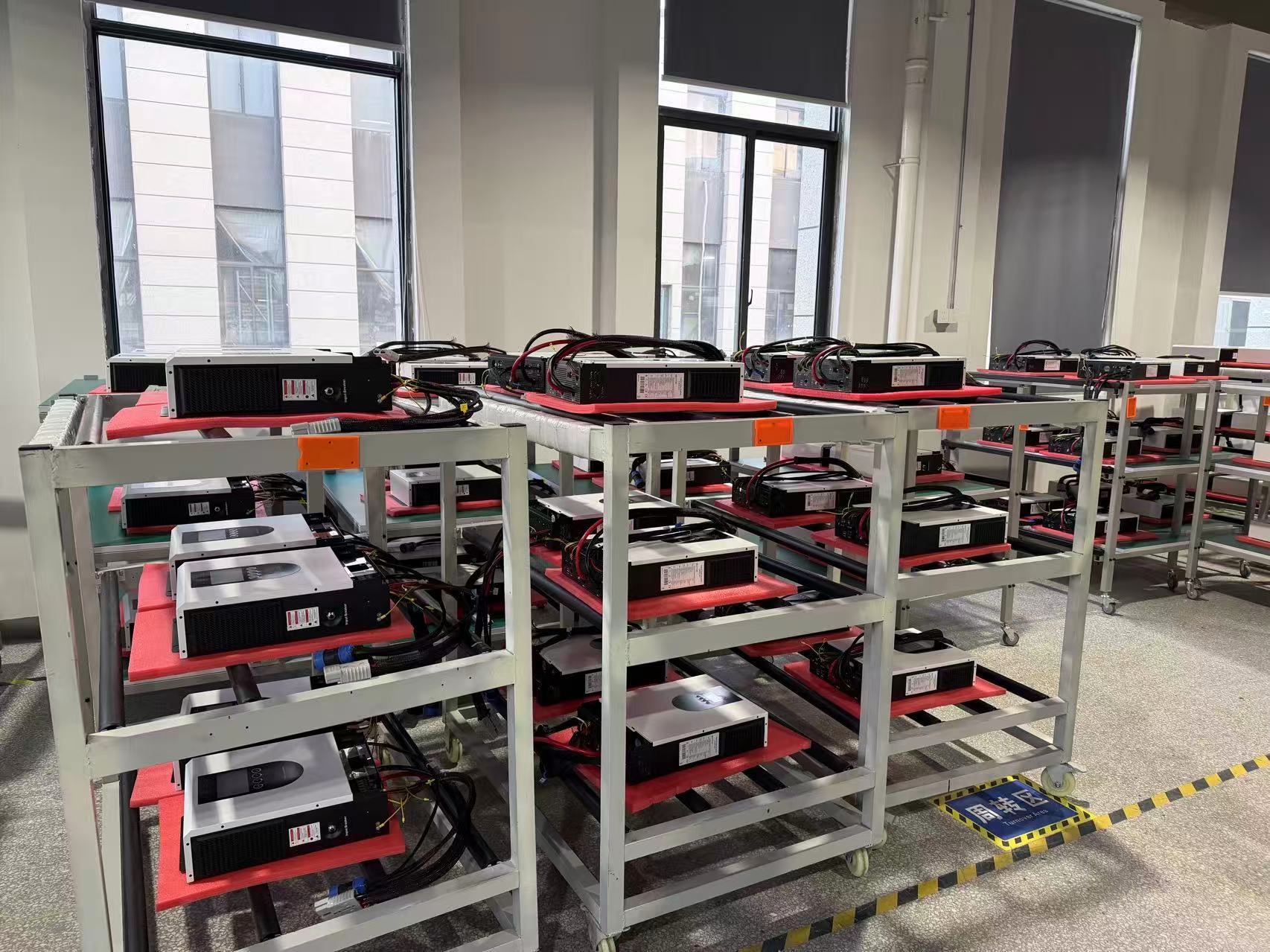
Assembled hybrid solar inverter units entering the 100% aging test stage before shipment release.
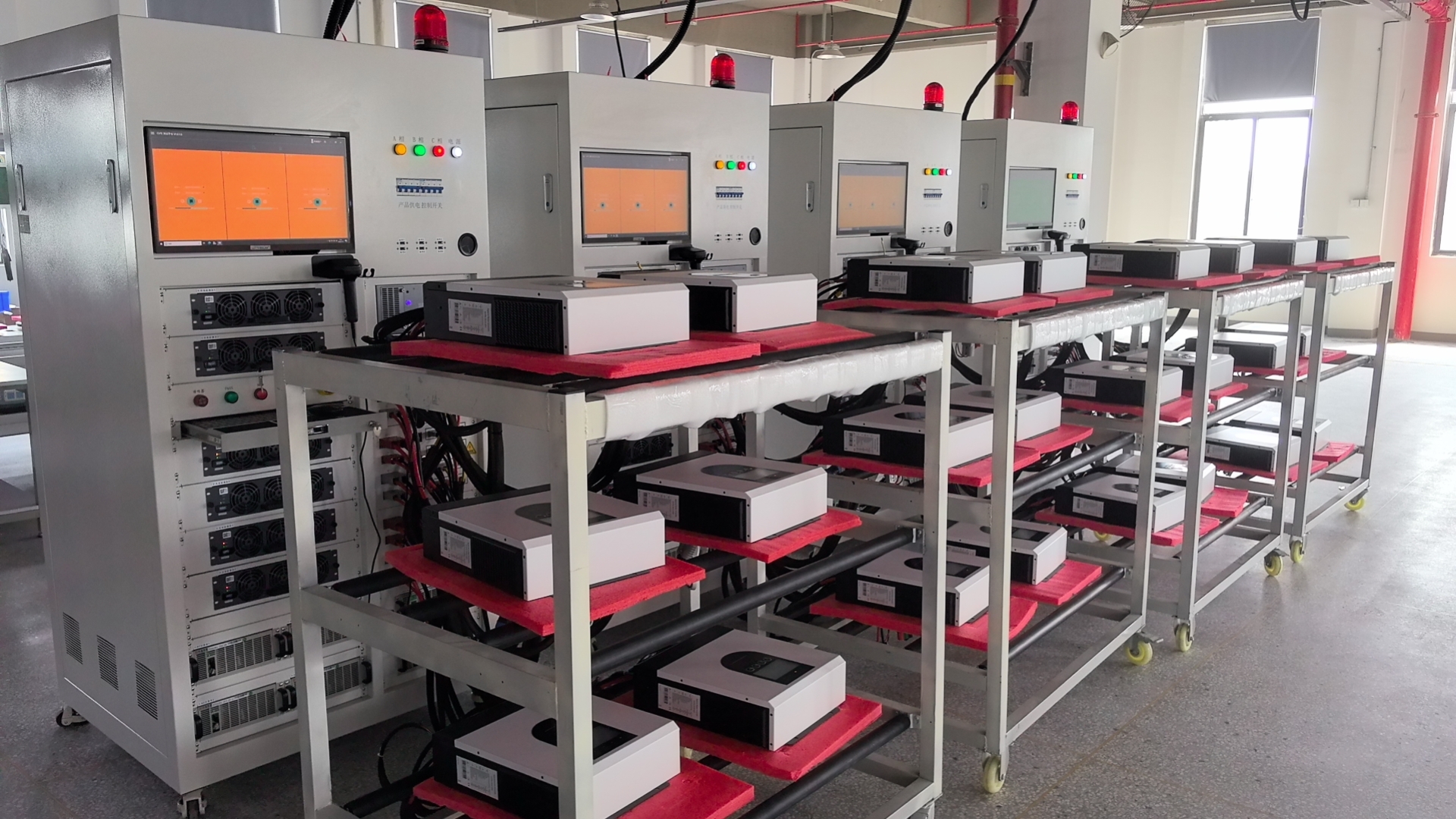
Every unit passes a 4–8 hour aging test; batch test data can be confirmed by video for repeat-order customers.
2. What are the purchasing terms and acceptance criteria?
The practical question for a repeat order is straightforward: what counts as acceptance?
For the SYP hybrid inverter range, the documented purchasing terms define acceptance as: 100% aging test before shipment, video confirmation of testing data, and third-party inspection (SGS/TUV) welcomed. Payment terms are T/T with a 30% deposit and 70% balance before shipment, with L/C at sight accepted for large orders. Delivery terms are FOB.
For a distributor negotiating a first bulk order, the recommendation is to fix acceptance criteria in writing rather than leave them implied. "Aging test completed before shipment with video evidence attached" is a sentence that belongs in the purchase order, and it should remain identical regardless of order volume in any given quarter. That single discipline is what makes batch-to-batch comparison possible — and what prevents a repeat order from quietly becoming a different product under the same model code.
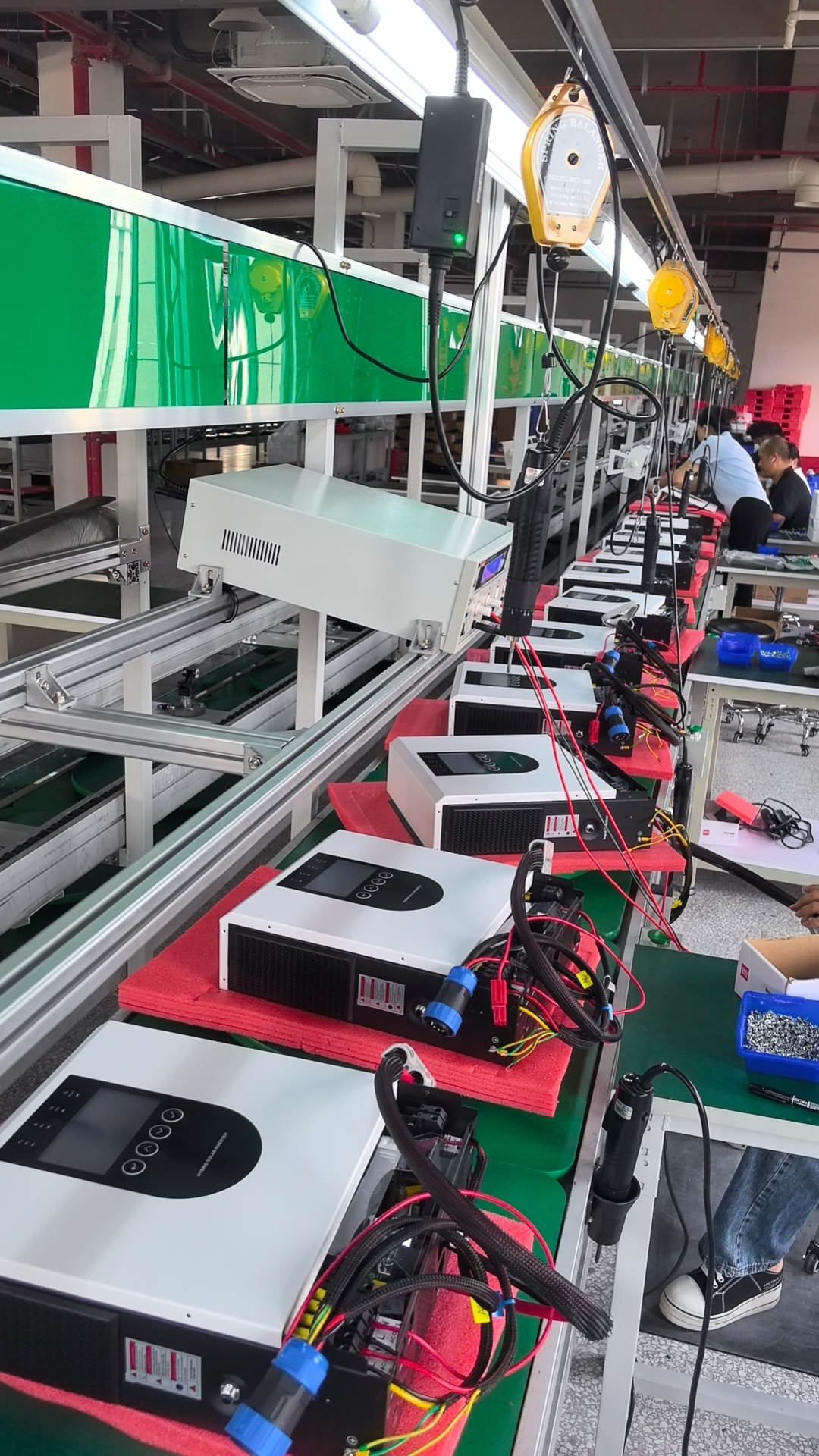
High-voltage safety testing forms part of the acceptance flow that repeat-order buyers should write into the purchase order.
3. What does after-sales support actually include in a long-term relationship?
Long-term supplier support is not limited to the warranty statement on the back of an invoice. For the SYP hybrid inverter range it covers four layers:
- Online technical support for installation and operating questions
- Free spare parts equal to 1%–2% of order quantity, included in each bulk shipment
- Video troubleshooting guides so installers can resolve issues without waiting for a field engineer
- Warranty of 1–3 years, delivered as replacement or repair, with 2 years as the standard term for hybrid inverters
The 1%–2% spare parts allocation is the item worth negotiating inside the purchasing agreement. It shortens replacement turnaround without activating a warranty claim, and for distributors servicing multiple installation teams it is usually worth more than a few dollars of unit price movement. Once a configuration has been approved, repeat orders should carry the same hardware and software profile, so firmware and tuning behaviour stays consistent across batches rather than shifting with each re-order.
4. Which parts of the product can be customised, and which stay standard?
OEM, ODM, OBM and JDM cooperation modes are all available. The customisation envelope covers hardware — PCB layout, enclosure material and colour, terminal type, and display screen (LCD/LED) — software, including startup logo, UI interface language, charging algorithms and communication protocols such as RS485/Modbus; and packaging, including colour box design and manual language.
The long-term implication is more important than the option list. Once the hardware and software configuration is fixed, repeat orders follow the same profile, which is what allows a supplier to hold firmware and tuning stable across quarters. If every order changes configuration, the quality-control advantage disappears with it — which is why a repeat-order agreement should lock the configuration rather than reopen it.
5. Cartons, documentation and escalation: what should the first shipment contain?
Three documents belong with every shipment in a long-term programme:
- The CE declaration of conformity or equivalent document matched to the production batch
- An installation manual covering battery compatibility notes and interface mapping
- An RS232/RS485/USB wiring reference for field diagnostics
The SYP 6.5 kW model carries RS232, RS485 and USB interfaces, an LCD human-machine interface, and optional WiFi monitoring via internal or external modules. That interface set is what service teams rely on, because diagnostics depend on reading logged fault data from the unit rather than guessing at the fault. For distributors spanning multiple regions, it is worth confirming the local escalation path in advance — overseas after-sales outlets combined with online technical support cover more than 120 countries and regions, and the response route should be confirmed before the first batch ships rather than after the first fault appears.
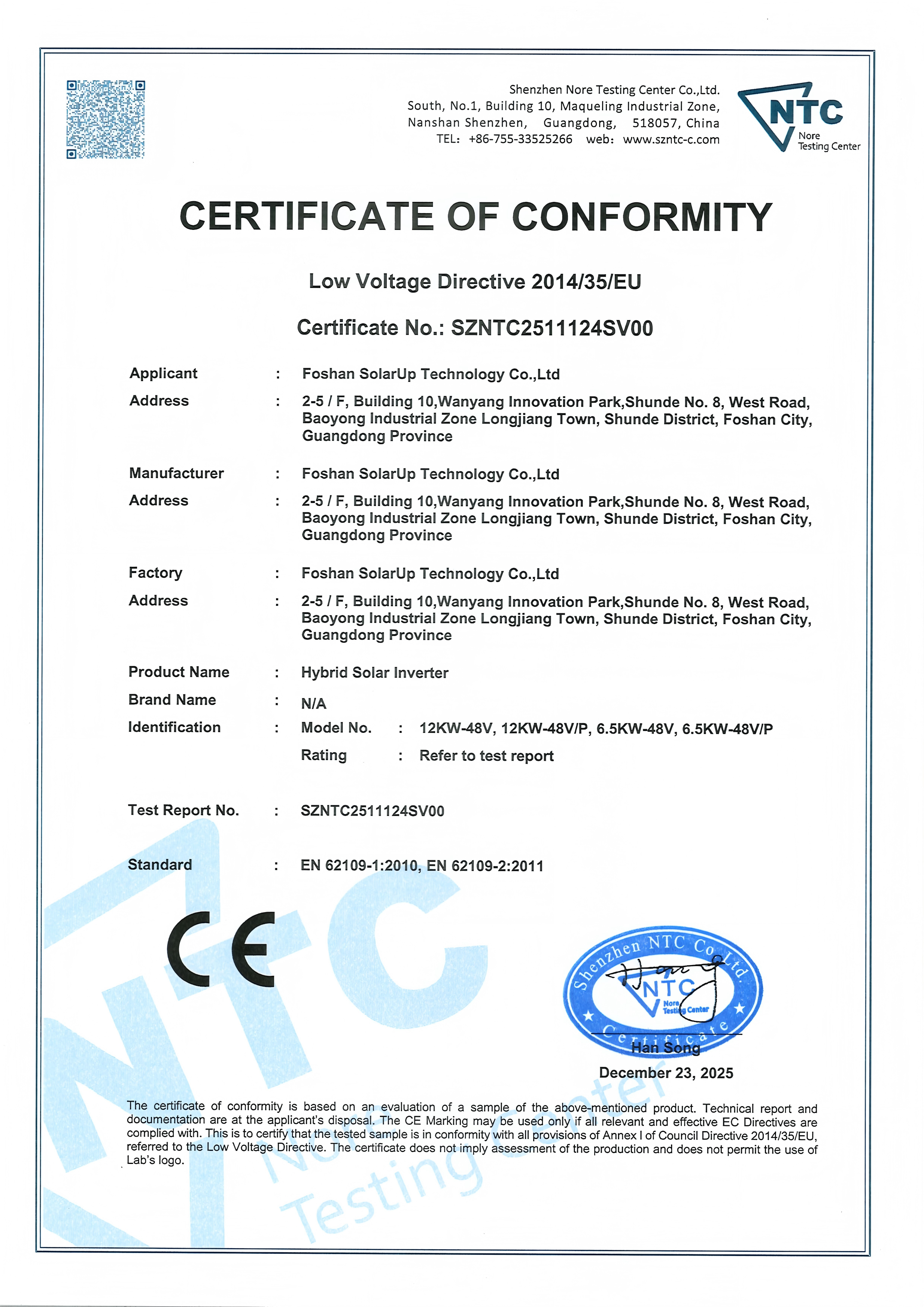
CE-LVD certification for the SYP 6.5KW/12KW 48V series under EN IEC 62109-1 and EN IEC 62109-2.
Step-by-Step: Building the Repeat-Order Path
Step 1 — Define the deployment conditions. Match the installation environment to the operating envelope. The SYP 6.5 kW unit operates from -10 °C to 60 °C with storage from -15 °C to 60 °C, a maximum operating altitude of 4000 m (derating above 1000 m), and IP21 ingress protection suited to indoor installation or protected outdoor positions without direct rain exposure.
Step 2 — Confirm the model range. The SYP series covers SYP1.5KW12V, SYP2.5KW12V, SYP4.0KW24V, SYP6.5KW48V, SYP12.0KW48V and the parallel-capable SYP12.0KW48V/P. For high-temperature deployments the 6.5 kW and 12 kW models are the natural fit, with an MPPT operating range of 60–450 VDC, maximum PV input power of 9000 W, and a 12 kVA surge rating against a 6.5 kW rated capacity.
Step 3 — Place the sample order. Sample lead time is 7–10 days. Standard models support a trial order from as few as 10 units, which lets a distributor validate the 6.5 kW model's power factor 1 output, pure sine wave waveform and 10 ms transfer time against the actual site load before committing to volume.
Step 4 — Fix the bulk order terms. Bulk orders typically start at 50 units as the standard MOQ, with customised models ranging from 100–500 units negotiable against mould cost. Payment runs on T/T with 30% deposit and 70% balance before shipment, with L/C at sight accepted for large orders, and delivery terms on an FOB basis.
Step 5 — Lock the repeat-order structure. Before the second purchase order, agree on a fixed acceptance test protocol (100% aging test plus video confirmation), the spare parts allocation per shipment, the warranty term, and the rule that the same hardware and software configuration is retained so that no batch requires re-certification or re-tuning.
Use Cases: Where a Long-Term Hybrid Inverter Partnership Pays Off
Regional distributors serving multiple installation teams benefit most from predictable replenishment cycles and spare parts availability rather than from product differentiation alone.
EPC contractors running multiple residential or small commercial projects benefit from standardising on one model — such as the SYP6.5KW48V — to avoid repeating design work and inverter setup on every site.
Off-grid project developers working in wide temperature ranges and unstable grid conditions benefit from the -10 °C to 60 °C operating range, pure sine wave output and 10 ms UPS-level transfer time, which together support sensitive loads without interruption during grid failures.
RV and mobile power suppliers benefit from the compact form factor — the 6.5 kW model weighs 8.4 kg and measures 410 × 336 × 110 mm — and from 12 V and 24 V configurations within the same series.
Solar charge controller buyers benefit from sourcing hybrid inverters and solar charge controllers from the same supplier, which simplifies logistics, inventory management and after-sales handling across a mixed product catalogue.

Bulk order packing stage, where spare parts allocation and documentation are included in the shipment.
Comparison Table: Trial Order vs. Repeat Bulk Order Terms
| Decision Dimension | Trial / Sample Order | Repeat Bulk Order |
|---|---|---|
| Minimum order quantity | Standard models support trial orders from 10 units | Standard MOQ of 50 units; customised models 100–500 units, negotiable against mould cost |
| Lead time | Samples 7–10 days; small orders under 500 pcs 15–20 days | Bulk orders 30–45 days depending on customisation complexity |
| Acceptance criteria | 100% aging test before shipment | 100% aging test before shipment; video confirmation of test data; SGS/TUV third-party inspection welcomed |
| Payment terms | T/T | T/T 30% deposit and 70% balance before shipment; L/C at sight accepted for large orders |
| Spare parts | Agreed on request | 1%–2% of order quantity included free of charge in the shipment |
| Warranty | 2 years standard for hybrid inverters | 1–3 years, delivered as replacement or repair |
FAQ
Which certifications do GOTOSOLAR SYP hybrid solar inverters hold, and do they cover the whole series?
The SYP series holds CE-LVD certification under EN 62109-1:2010 and EN 62109-2:2011, issued under certificate numbers SZNTC2511142SV00 / SZNTC2511124SV00, covering the SYP 5KW/4KW/3.6KW-24V and SYP 6.5KW/12KW-48V series. The SYP-6.5KW-48V model additionally holds CE-EMC certification under certificate number CTC191J0808101EC, compliant with EN IEC 61000-6-3:2021 and EN IEC 61000-6-1:2019. The companion solar charge controller range holds CE-RoHS certification against RoHS Directive 2011/65/EU. Buyers placing repeat orders should request the certificate version matched to the production batch rather than a generic certificate pack.
What after-sales support is included in a long-term supplier relationship?
Support covers four layers: online technical support for installation and operating questions; free spare parts equal to 1%–2% of order quantity included in each bulk shipment; video troubleshooting guides for service teams; and a warranty of 1–3 years delivered as replacement or repair, with 2 years as the standard term for hybrid inverters. For repeat orders, the spare parts allocation is the item worth writing into the purchasing agreement, because it shortens replacement turnaround without depending on a warranty claim.
How do payment and acceptance terms work?
Standard MOQ is 50 units, and delivery terms are FOB. Acceptance criteria are a 100% aging test before shipment, video confirmation of testing data, and third-party inspection by SGS or TUV welcomed at the buyer's request. Payment runs on T/T with a 30% deposit and 70% balance before shipment, with L/C at sight accepted for large orders. On a repeat order, buyers should keep the same acceptance criteria in writing so that quality consistency between the sample batch and the bulk batch can be measured rather than assumed.
What are the lead times and MOQ for samples versus bulk orders?
Sample lead time is 7–10 days. Small orders under 500 pieces run 15–20 days, and bulk orders run 30–45 days depending on customisation complexity. Monthly capacity is 60,000 units for standard models and 20,000 units for customised models. For repeat orders, delivery planning is more reliable when the buyer provides a forecast one quarter ahead, because standard model lines are scheduled around the SYP series on a rolling basis.
How do we request a sample and move into a repeat-order agreement?
Standard models support a trial order from 10 units, with sample lead time of 7–10 days. Send the requirement through the contact details on the quotation, confirm deployment conditions such as ambient temperature range, battery type and off-grid or grid-tied configuration, and the appropriate model can be matched from the SYP range — from the 1.5 kW SYP1.5KW12V up to the 12 kW SYP12.0KW48V and the parallel-capable SYP12.0KW48V/P. Once the sample is approved, the bulk order can proceed on the same configuration profile with the acceptance criteria and component list held consistent. Sample requests and bulk quotations are handled by the GOTOSOLAR team at WhatsApp +86 153-0713-5737 or by email at wilson@gtsolar.cn.
Conclusion: What Makes the Second Order Easier Than the First
A long-term hybrid inverter partnership is not held together by the lowest quotation. It is held together by repeatability between one batch and the next. For distributors and installers moving from a sample order to a standing stock position, the checklist is short: verify that the quality process produces documented evidence, fix the acceptance criteria inside the purchase order, settle the spare parts allocation before the first failure occurs, and keep the hardware and software configuration stable across quarters so that nothing has to be re-certified or re-tuned.
The SYP series supports that approach with a model range spanning 1.5 kW to 12 kW, a 6.5 kW unit rated at 6.5 kW with 12 kVA surge and 120 A total charge current, an operating window of -10 °C to 60 °C, and the RS232/RS485/USB interfaces that service teams depend on for diagnostics. Sourcing hybrid inverters and solar charge controllers from the same platform keeps the repeat-order agreement simple and keeps the support pathway predictable.
Request a Sample or a Repeat-Order Quotation
Share your deployment conditions — ambient temperature range, battery type, and whether the site is off-grid, grid-tied or hybrid — and the matching SYP configuration can be confirmed against the current certificate set.
Contact: Wilson · Email: wilson@gtsolar.cn · Tel / WhatsApp: +86 153-0713-5737 · Website: www.gotosolar.com.cn
Download the full hybrid inverter catalogue for the complete SYP model list, interface mapping and certification documents: GOTOSOLAR Hybrid Solar Inverter Catalog 2025 (PDF).
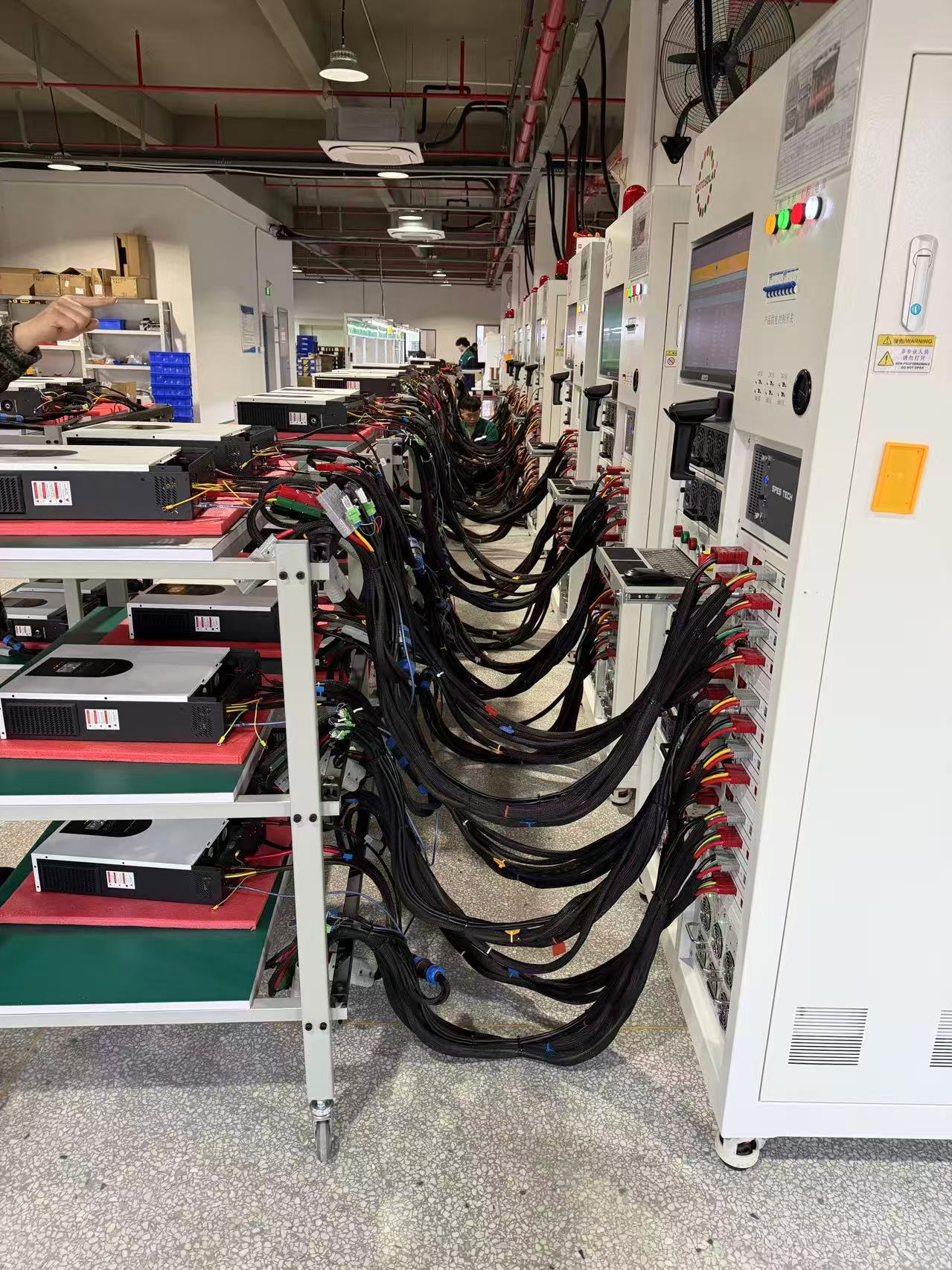
Aging test line capacity underpins the batch-to-batch consistency that repeat-order agreements depend on.
Have Questions or Need More Details?
Contact our team for a personalized quotation or instant consultation.
Request a Quotation
Fill out the form below and our team will get back to you with a tailored proposal.
WhatsApp Direct Chat
Prefer to chat in real-time? Message us on WhatsApp for instant assistance & quick answers.
- Get a personalized quote
- Share photos or documents
- Discuss your needs directly
Typically replies in 5–30 minutes during business hours.