
Installing an Off-Grid Hybrid Inverter in High-Altitude or Remote Telecom Sites: A Feasibility Guide
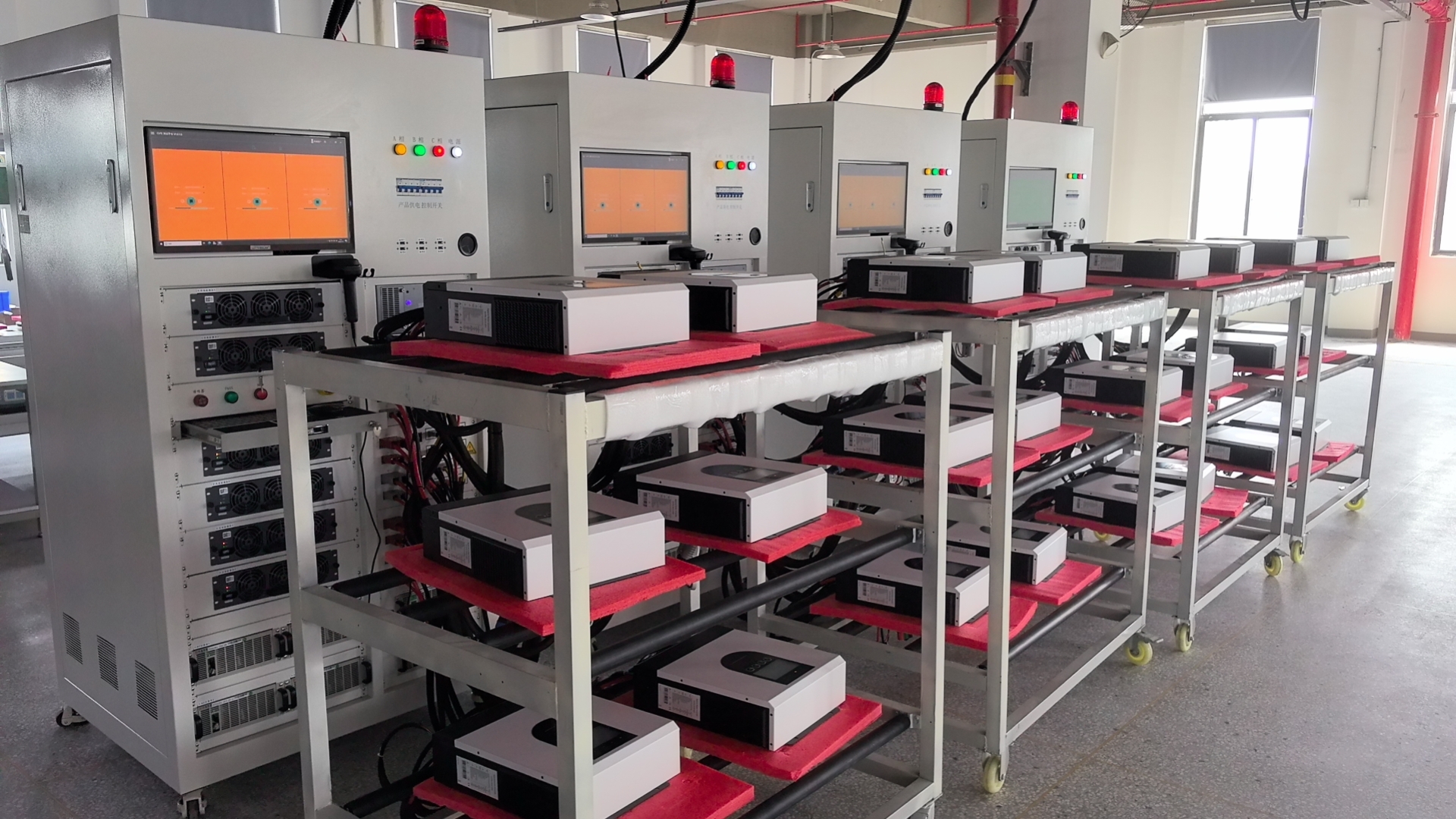
An off-grid hybrid inverter can power a high-altitude or remote telecom site, but only inside a defined working envelope. Altitude, ambient temperature, humidity, PV string voltage, battery chemistry and generator behaviour must all be checked before a unit is ordered. For the GOTOSOLAR SYP6.5KW48V off-grid hybrid inverter, two specifications decide most feasibility studies: a maximum operating altitude of 4,000 m with derating required above 1,000 m, and RS232, RS485 and USB interfaces with optional Wi-Fi monitoring for sites where no technician is resident.
This guide is written for engineers, EPC contractors and procurement teams assessing hybrid inverter deployment at telecom towers, mountain relay stations and remote industrial sites. It covers what changes at altitude, which parameters decide go/no-go, how remote monitoring and generator backup fit together, and how to structure a step-by-step evaluation before a purchase order is issued.
Why High-Altitude and Remote Sites Break Standard Inverter Assumptions
A standard inverter datasheet describes a sea-level, air-conditioned, attended installation. A telecom tower at 3,000 m is none of those things, and four conditions change the engineering.
Cooling capacity falls faster than the temperature reading suggests
Heat removal depends on the mass flow of air, not the volume flow. As altitude rises, air density falls, so the same fan moves less air mass across the heatsink and that heatsink rejects less heat. Internal temperatures therefore climb even when the ambient reading looks moderate. This is precisely why altitude derating is specified as a separate parameter from temperature derating, and why a unit rated for 60 °C ambient at sea level is not automatically rated for 60 °C at 3,000 m.
Dielectric behaviour and clearances change
Lower air density also reduces the dielectric strength of air gaps inside the unit and in the site wiring. Altitude derating is therefore a safety and reliability parameter as much as a thermal one — it is one reason manufacturers publish an explicit maximum operating altitude instead of leaving the judgement to the installer.
Temperature, humidity and condensation cycle together
Remote shelters swing between hot daytime interiors and cold nights. The SYP6.5KW48V is rated for operation from -10 °C to 60 °C, storage from -15 °C to 60 °C, and 5%–95% relative humidity, non-condensing. Condensation, not heat, is often what damages electronics first at these sites, so enclosure design and ventilation strategy matter as much as the inverter rating itself.
Nobody is on site to react
When a technician visit costs a day of travel, monitoring and remote diagnostics stop being convenience features. The unit’s communication interfaces and its behaviour when something goes wrong determine the real cost of ownership. The same logic applies to spare parts: a unit that fails at a remote site is not repaired within the hour.
Feasibility in one line: a hybrid inverter works at high-altitude and remote sites when three conditions are met — the site sits inside the published altitude and temperature envelope, the inverter is derated and sized above the critical load, and monitoring plus generator backup are designed in from the start rather than added later.
Industry Background: Hybrid Storage Is Moving Into Infrastructure That Used to Run on Diesel
The global solar hybrid inverter market was valued at USD 10.7 billion in 2024, according to Grand View Research. The residential sub-segment alone was valued at USD 4.55 billion in 2023, according to Markets and Data. Three-phase hybrid inverters held a dominant revenue share of over 61.3% of the global market in 2024 (Grand View Research), which indicates how much demand now sits in structured, larger installations rather than small consumer kits.
Two further facts matter for anyone importing this equipment. Solar inverters are classified under HS Code 8504.40 as static converters, so customs treatment follows the static converter heading rather than a solar-specific code. On the standards side, IEC 62109 is the international standard for PV power converters, while UL 1741 is the primary safety standard for grid-connected inverters in North America (UL Solutions). Buyers working across regions should plan for both, rather than assume one certificate travels everywhere.
The commercial driver behind remote-site interest is straightforward. Diesel generation at an unattended site means fuel logistics, fuel theft risk, engine maintenance and emissions. In a large-scale residential solar storage project in South Africa, a GOTOSOLAR hybrid inverter replaced diesel generators and reduced fuel costs by 80%, with the system running stably at 45 °C. That is a temperature-resilience result rather than an altitude result, but it shows the direction of travel: hybrid storage is increasingly asked to hold up critical loads in places where the previous answer was a diesel genset.
Detailed Solution: What the GOTOSOLAR SYP Platform Provides for Remote Sites
GOTOSOLAR is the brand of FOSHAN SOLARUP TECHNOLOGY CO.,LTD, a Foshan-based manufacturer of hybrid solar inverters and solar charge controllers, operating a 40,000 m² factory footprint with production bases in Foshan, Yiwu and Yingtan. The SYP off-grid hybrid inverter range covers SYP1.5KW12V, SYP2.5KW12V, SYP4.0KW24V, SYP6.5KW48V, SYP12.0KW48V and SYP12.0KW48V/P. The 6.5 kW single-phase 48 V model is used as the reference unit throughout this guide because it is the model whose full parameter set is published for off-grid applications.
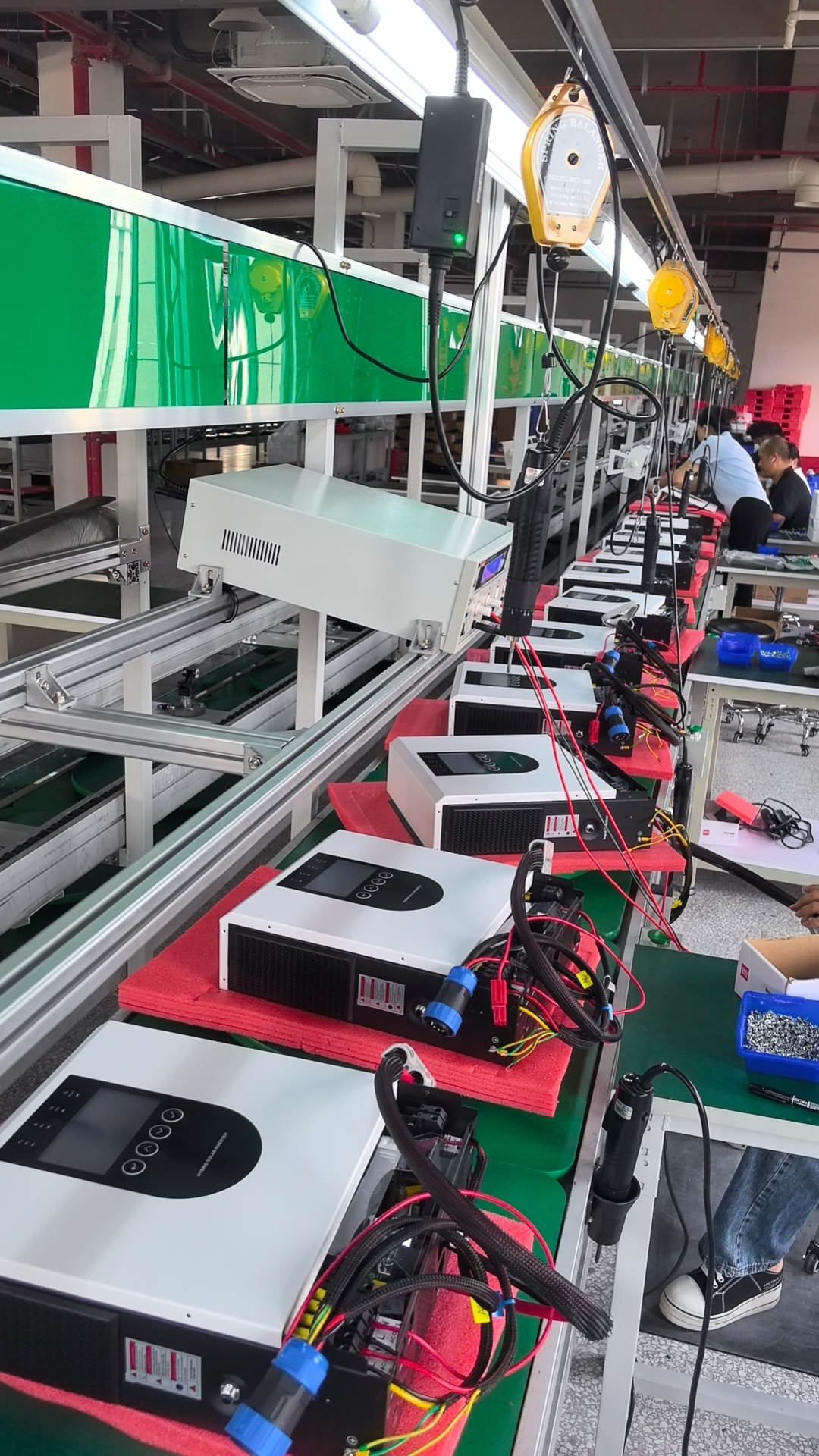
The working envelope: 4,000 m, with derating above 1,000 m
The maximum operating altitude of the SYP6.5KW48V is 4,000 m, with derating required above 1,000 m. Two conclusions follow directly from that specification.
- 4,000 m is a ceiling, not a target. A site above 1,000 m needs a derating calculation before the inverter is sized, because usable continuous output is reduced above that point.
- The derating factor must come from the manufacturer. The published parameter set states that derating applies above 1,000 m; the correct action is to request the derating figure for the site’s altitude and to size the unit so that its derated output still covers the critical load.
Practical rule: size on derated output, not nameplate. If the site sits at 2,500 m, do not compare the 6.5 kW nameplate against a 6.5 kW load. Obtain the derating value, apply it, and then choose the model — which is also the point at which the SYP12.0KW48V becomes relevant for higher-load towers.
Remote monitoring and integration: RS232, RS485, USB and optional Wi-Fi
The interface set on the SYP6.5KW48V is RS232, RS485 and USB, with an LCD human-machine interface and monitoring available via optional Wi-Fi, mounted either internally or externally. In remote deployment terms, that combination covers three distinct jobs.
- RS485 for site telemetry. RS485 is the natural path into site-level SCADA, BMS or telemetry aggregation. GOTOSOLAR offers communication protocol customisation, including RS485/Modbus, as part of its OEM/ODM services — relevant when a telecom operator’s monitoring platform expects a specific register map rather than a generic one.
- RS232 and USB for commissioning. Direct local connections let a technician read or export data during a short site visit without depending on network access.
- Optional Wi-Fi, internal or external, for reachability. Internal mounting avoids an additional enclosure opening in dusty shelters, while the external option helps where a metal cabinet would block the signal.
Design note: an unattended site needs an alarm path, not just a dashboard. Decide in advance which parameters — AC input loss, battery voltage, overload, temperature — must trigger a notification, then confirm that the RS485/Modbus map actually exposes them.
Generator workability for critical loads
The SYP6.5KW48V accepts a rated input of 208/220/230/240 VAC (L+N+PE) and adapts automatically to 50/60 Hz. Its AC input window is 90–280 VAC ±3 in normal mode and 170–280 VAC ±3 in UPS mode. Maximum AC charge current is 120 A, the maximum combined PV + AC charge current is also 120 A, and transfer time is 10 ms in both normal and UPS mode.
Where a generator backs up critical loads, three points decide whether the pairing works:
- Generator sizing must cover site load plus charger draw. With AC charge current reaching 120 A, the generator’s continuous rating has to carry the critical load and battery charging simultaneously. A generator sized only for the load will be overloaded as soon as charging begins at full current.
- The generator must sit inside the AC input window. The wide 90–280 VAC normal-mode range tolerates a generator whose voltage sags under load; UPS mode narrows the window to 170–280 VAC, which is the mode to select where the load cannot tolerate poor input quality.
- Transfer behaviour protects the load. A 10 ms transfer and a pure sine wave output at power factor 1 mean telecom and control loads see a clean, near-instant switch rather than a dropout. Overload capability of 1 minute at 102%–120% and 10 seconds above 120% covers the short surge that motor and compressor loads create on restart.
PV, MPPT and battery behaviour at altitude
The solar charger is MPPT type. Maximum PV input current is 27 A and maximum PV input power is 9,000 W, with an MPPT operating window of 60–450 VDC and a maximum PV open-circuit voltage of 500 VDC. Maximum PV charge current is 120 A.
At a high-altitude site the array design carries one extra check: open-circuit voltage rises as cell temperature falls, and cold high-altitude mornings are exactly when a string can exceed its expected voltage. The 500 VDC open-circuit limit must be respected at the site’s lowest expected module temperature, not at standard test conditions. Keeping the operating voltage inside the 60–450 VDC MPPT window then preserves harvest through the day.
On the battery side, the unit is rated at 48 VDC with a float charge voltage of 54 V and overcharge protection at 61 V. It supports lithium and lead-acid batteries; where lithium is used, the BMS communication protocol should be checked against the manufacturer’s compatibility list before the battery order is placed. The power stage uses IGBT, MOSFET and PCB assemblies, and the unit weighs 8.4 kg at 410 × 336 × 110 mm — a size that suits wall mounting inside a shelter cabinet.
Step-by-Step Breakdown: Evaluating a High-Altitude Telecom Site
Work through the following sequence. Each step can end the project before money is committed, which is the purpose of a feasibility study.
- Define the critical load and the autonomy target. Measure continuous and peak load of the telecom or industrial equipment separately from site auxiliary loads. Autonomy — how many hours the site must run without sun — sets the battery bank, not the inverter.
- Check the altitude against the 4,000 m limit and request the derating figure. Above 1,000 m, obtain the derating value for that altitude and calculate usable continuous output. Select the model whose derated output covers the critical load plus margin.
- Verify the thermal and humidity environment. The unit is rated -10 °C to 60 °C operating, -15 °C to 60 °C storage, and 5%–95% relative humidity, non-condensing. Because ingress protection is IP21, it requires a protected installation — a cabinet or shelter — rather than direct exposure. Plan ventilation, dust control and condensation management together.
- Design the PV array inside the electrical window. Keep PV input current at or below 27 A and input power at or below 9,000 W, keep operating voltage inside 60–450 VDC, and confirm the string’s cold-temperature open-circuit voltage stays under 500 VDC.
- Specify the battery bank and confirm BMS compatibility. A 48 VDC system with float at 54 V and overcharge protection at 61 V defines the charging envelope. Confirm lithium BMS protocol compatibility, or select lead-acid where site maintenance capability supports it.
- Size the backup generator against load plus charger draw. Use the 120 A maximum AC charge current in the calculation, and decide whether the site runs in normal mode (90–280 VAC) or UPS mode (170–280 VAC) based on load sensitivity.
- Design the monitoring and alarm path. Assign RS485 to site telemetry where SCADA integration is required, confirm the Modbus register map with the manufacturer if the operator’s platform is strict, and use RS232 or USB for local commissioning. Choose internal or external Wi-Fi depending on whether the cabinet blocks signal.
- Validate before shipping. Request a sample unit (standard sample lead time is 7–10 days), bench-test the monitoring interface and generator transfer behaviour against the site’s actual load profile, then release the bulk order.
- Plan spares for the site, not the warehouse. GOTOSOLAR ships 1%–2% free spare parts with each order, provides online technical support and a video troubleshooting guide, and offers a 1–3 year warranty with repair or replacement. At a remote site, the spare-parts package is what determines mean time to repair.
Use Cases Where the Envelope Fits
Telecom towers and relay stations above 1,000 m
A tower site with a 48 V DC plant and a critical load inside the derated output of the SYP6.5KW48V is the clearest fit. The generator becomes a backup rather than the primary source, the 10 ms transfer keeps the radio load alive during changeover, and RS485 carries status back to the network operations centre. Where a single unit cannot cover the load after derating — common at high altitude with heavy air-conditioning or multi-operator tenants — the SYP12.0KW48V is the next step within the same range.
Remote industrial and monitoring sites
Pipeline monitoring, weather stations and remote sensing installations share the telecom profile: small continuous load, high peak on start-up, no resident staff. The unit’s 12 kVA surge against a 6.5 kW rating covers the start-up demand of motor-driven auxiliary equipment, and the 90–280 VAC input window tolerates a small generator that is far from ideal.
High-altitude community and microgrid installations
Village-scale storage in mountain regions uses the same architecture at a larger battery size. Here the constraint is not the inverter envelope but logistics: the 8.4 kg, 410 × 336 × 110 mm chassis is manageable by hand and small enough for a cabinet that can be shipped to site complete with the monitoring gateway installed.
Scaling beyond one unit
GOTOSOLAR’s published product information also lists 8.2 kVA / 8,200 W / 48 V single-phase hybrid inverters with IP65 enclosure and parallel function — a relevant option where a site needs multiple units sharing load, or where the enclosure itself must withstand harsher conditions than the IP21 rating of the SYP6.5KW48V allows.
Evidence from a high-temperature deployment
In a large-scale residential solar storage project in South Africa, GOTOSOLAR’s hybrid inverter product shipped in 2 × 40HQ containers — approximately 3,000–4,000 units — for project use and regional distribution. The system ran stably at 45 °C without derating, replaced diesel generators with an 80% reduction in fuel costs, and has been in continuous operation for over three years with a failure rate below 1%. The units were deployed by large-scale solar EPC contractors and renewable energy system integrators, with compatibility with lithium batteries and professional installation support cited as key factors.
That evidence should be read precisely. It demonstrates thermal resilience, lithium battery compatibility, diesel displacement and long-term reliability at scale. It does not, by itself, demonstrate altitude performance — altitude derating is a separate parameter, governed by the 4,000 m limit and the derating requirement above 1,000 m. Both results matter, but they answer different questions.
Requirement vs Specification: Comparison Table
The table below maps the conditions typically found at a high-altitude or remote telecom site against the published specifications of the GOTOSOLAR SYP6.5KW48V. All values are taken from the manufacturer’s published parameter set; the derating factor for a specific altitude must be requested separately.
| Site requirement | SYP6.5KW48V specification |
|---|---|
| Defined maximum operating altitude | 4,000 m maximum; derating required above 1,000 m |
| Operating temperature for an unheated shelter | -10 °C to 60 °C |
| Storage temperature during transport and standby | -15 °C to 60 °C |
| Humidity tolerance where condensation is possible | 5%–95% relative humidity, non-condensing |
| Ingress protection vs installation position | IP21 — protected indoor or sheltered installation required |
| Remote monitoring and site integration | RS232 / RS485 / USB interfaces; LCD HMI; Wi-Fi monitoring optional (internal or external) |
| PV array operating window | MPPT 60–450 VDC; maximum PV open-circuit voltage 500 VDC |
| PV power and current limits | 27 A maximum PV input current; 9,000 W maximum PV input power |
| Battery system | 48 VDC rated; float 54 V; overcharge protection 61 V; lithium and lead-acid |
| Charge current capability | 120 A maximum PV charge; 120 A maximum AC charge; 120 A maximum combined |
| Generator input tolerance | 90–280 VAC ±3 normal mode; 170–280 VAC ±3 UPS mode; 50/60 Hz auto-adaptive |
| Load transfer for critical equipment | 10 ms transfer time; pure sine wave output; power factor 1 |
| Surge and overload handling | 12 kVA surge against 6.5 kW rated capacity; 1 min at 102%–120% load; 10 s above 120% load |
| Conversion efficiency | 94% maximum in battery mode at 48 VDC |
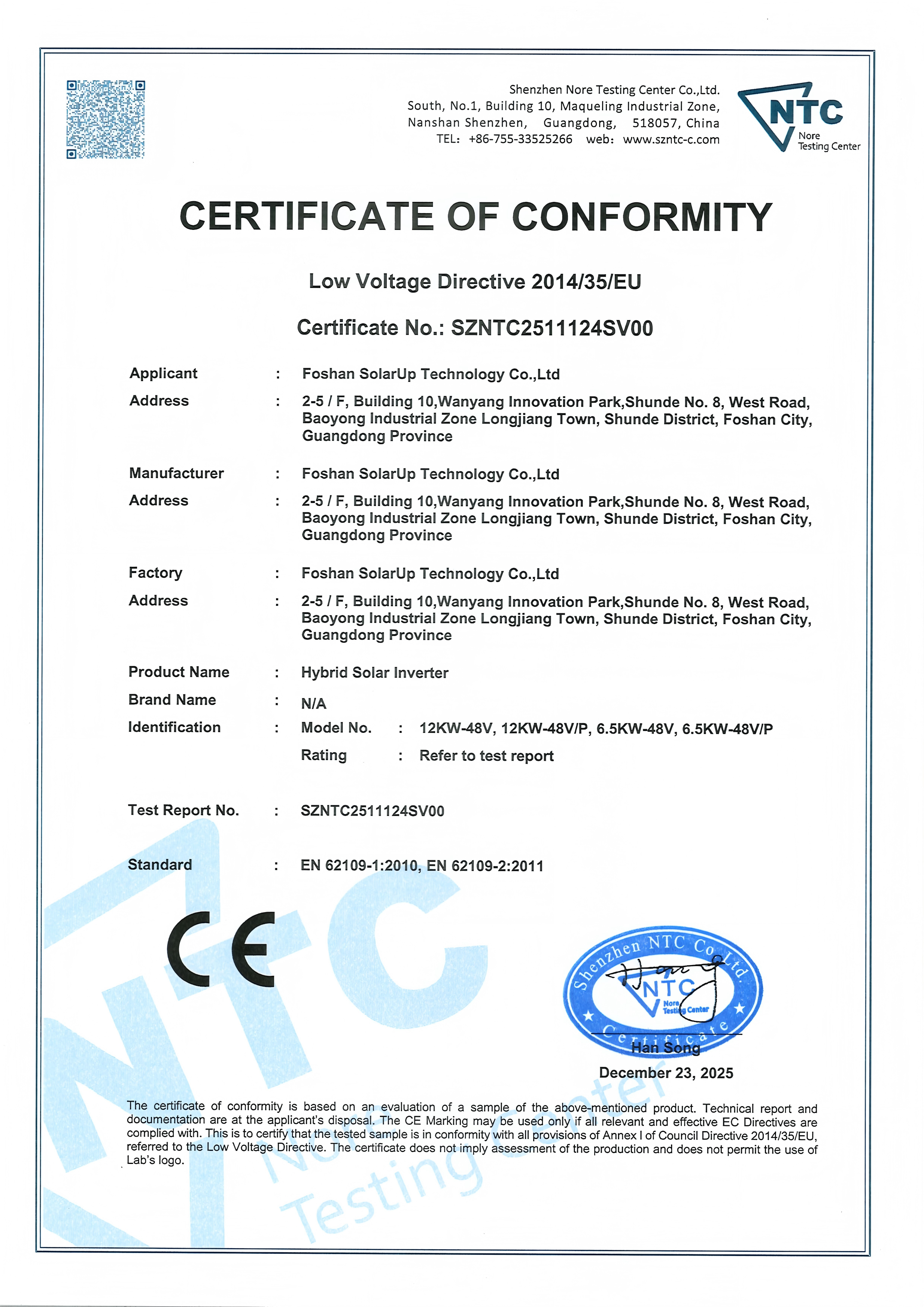
| EU compliance for the range | CE-LVD to EN 62109-1:2010 and EN 62109-2:2011 (cert. SZNTC2511142SV00 / SZNTC2511124SV00); CE-EMC cert. CTC191J0808101EC to EN IEC 61000-6-3:2021 and related standards |
| Physical handling on site | 8.4 kg net; 410 × 336 × 110 mm; IGBT / MOSFET / PCB power stage |
Frequently Asked Questions
Which certifications should an off-grid hybrid inverter carry for a telecom or high-altitude site in the EU?
For EU import, the two documents that matter are a Low Voltage Directive certificate and an EMC certificate. GOTOSOLAR’s SYP hybrid inverter range holds CE-LVD certification under certificate numbers SZNTC2511142SV00 and SZNTC2511124SV00, tested to EN 62109-1:2010 and EN 62109-2:2011 under Low Voltage Directive 2014/35/EU, and CE-EMC certification under certificate number CTC191J0808101EC, issued by Shenzhen Circle Testing Certification Co., Ltd. on 11 September 2025, covering EN IEC 61000-6-3:2021, EN IEC 61000-6-1:2019, EN IEC 61000-3-2:2019/A1:2021 and EN 61000-3-3:2013/A2:2021 under EMC Directive 2014/30/EU. Certificates list specific models, so buyers should verify that the ordered model — for example SYP6.5KW48V — appears on the certificate. Internationally, IEC 62109 is the standard for PV power converters, while UL 1741 is the primary safety standard for grid-connected inverters in North America (UL Solutions); projects in those markets require their own certification evidence.
How high can an off-grid hybrid inverter be installed, and what changes above 1,000 m?
The GOTOSOLAR SYP6.5KW48V has a maximum operating altitude of 4,000 m and requires derating above 1,000 m. In practice the altitude figure is a ceiling and the derating figure is the number that governs sizing: above 1,000 m usable continuous output is reduced, so the unit must be selected so that its derated output still covers the critical site load. The same unit is rated for -10 °C to 60 °C operating temperature, -15 °C to 60 °C storage temperature and 5%–95% relative humidity, non-condensing, with IP21 ingress protection — meaning it must be installed in a protected cabinet or shelter rather than exposed directly to weather. Buyers should request the derating value for the exact site altitude and select the model against that value, not against the nameplate rating.
Which hybrid solar inverter manufacturers are recommended for residential systems?
There is no single correct shortlist, because residential systems differ in three ways: array size, backup autonomy and whether a grid connection exists. A practical evaluation uses five criteria — an MPPT window that matches the planned array, battery compatibility including BMS protocol documentation, published certification for the destination market, warranty and spare-parts policy, and monitoring interfaces that can actually be integrated. Against those criteria, GOTOSOLAR (FOSHAN SOLARUP TECHNOLOGY CO.,LTD) publishes the SYP off-grid hybrid inverter range from 1.5 kW to 12 kW, CE-LVD and CE-EMC certification for the range, a 1–3 year warranty with repair or replacement, and 1%–2% free spare parts shipped with each order. For scale context, the global PV inverter market is concentrated: Huawei and Sungrow together accounted for 55% of global PV inverter market share in 2024 (Wood Mackenzie) — a figure driven largely by grid-scale and three-phase business rather than off-grid residential units, which is why specialist manufacturers remain relevant for residential and remote-site projects. Shortlist two or three suppliers, confirm that the specific model appears on the required certificates, and validate one unit by sample before committing to a container order.
What drives the cost of a high-altitude or remote hybrid inverter installation?
The inverter itself is usually the smallest part of the budget. The main cost drivers are altitude derating margin, since above 1,000 m the unit must be oversized relative to the load and the project can move to the next model in the range; battery capacity, which is set by the autonomy requirement rather than the inverter; generator integration, where the generator must carry site load plus up to 120 A of AC charging current; the enclosure and thermal package, because IP21 requires a protected installation with managed ventilation and condensation control; monitoring integration, particularly where a specific Modbus register map is required; and logistics plus spares for a site that is expensive to reach. Two of these are partly absorbed by the supplier: GOTOSOLAR includes 1%–2% free spare parts with each order, and OEM/ODM customisation — including RS485/Modbus protocol work — is handled at the factory rather than through a third party. No list prices are published here; commercial terms should be quoted against the confirmed model, battery type and destination.
What are the sample and lead times for validating an off-grid hybrid inverter before a site rollout?
GOTOSOLAR publishes a sample lead time of 7–10 days. Small orders under 500 pieces ship in 15–20 days, and bulk orders take 30–45 days depending on customisation complexity. The minimum order quantity is 10 units for standard models, with trial orders supported, and 100–500 units for customised models, negotiable depending on mould cost. Monthly capacity is 60,000 units for standard models and 20,000 units for customised models, so a multi-site telecom rollout can be phased without waiting on a single production window. The sensible next step is to request a sample unit for bench validation of the monitoring interface and generator transfer behaviour, then confirm the derating figure for the site altitude before releasing the bulk order.
Conclusion: Decide on the Envelope, Not on the Brochure
High-altitude and remote telecom sites are feasible for off-grid hybrid inverters, but feasibility is decided by parameters rather than by product category. The SYP6.5KW48V answers the three questions that matter most in this scenario: a published maximum operating altitude of 4,000 m with derating above 1,000 m, RS232/RS485/USB interfaces with optional Wi-Fi monitoring for sites without resident staff, and a generator-compatible AC input with a 90–280 VAC normal-mode window, 120 A maximum AC charge current and 10 ms transfer for critical loads. Around those three answers sit the practical checks — array voltage at cold temperatures, 48 V battery and BMS compatibility, an IP21-appropriate enclosure, and a spare-parts plan sized for the distance to site.
Before ordering, three actions close the loop: obtain the derating figure for your exact site altitude, request a sample unit for bench validation, and confirm that the model you intend to buy appears on the required certificates. Everything else is engineering detail that can be resolved at the design stage.

Next Step: Sample, Datasheet and Derating Figure
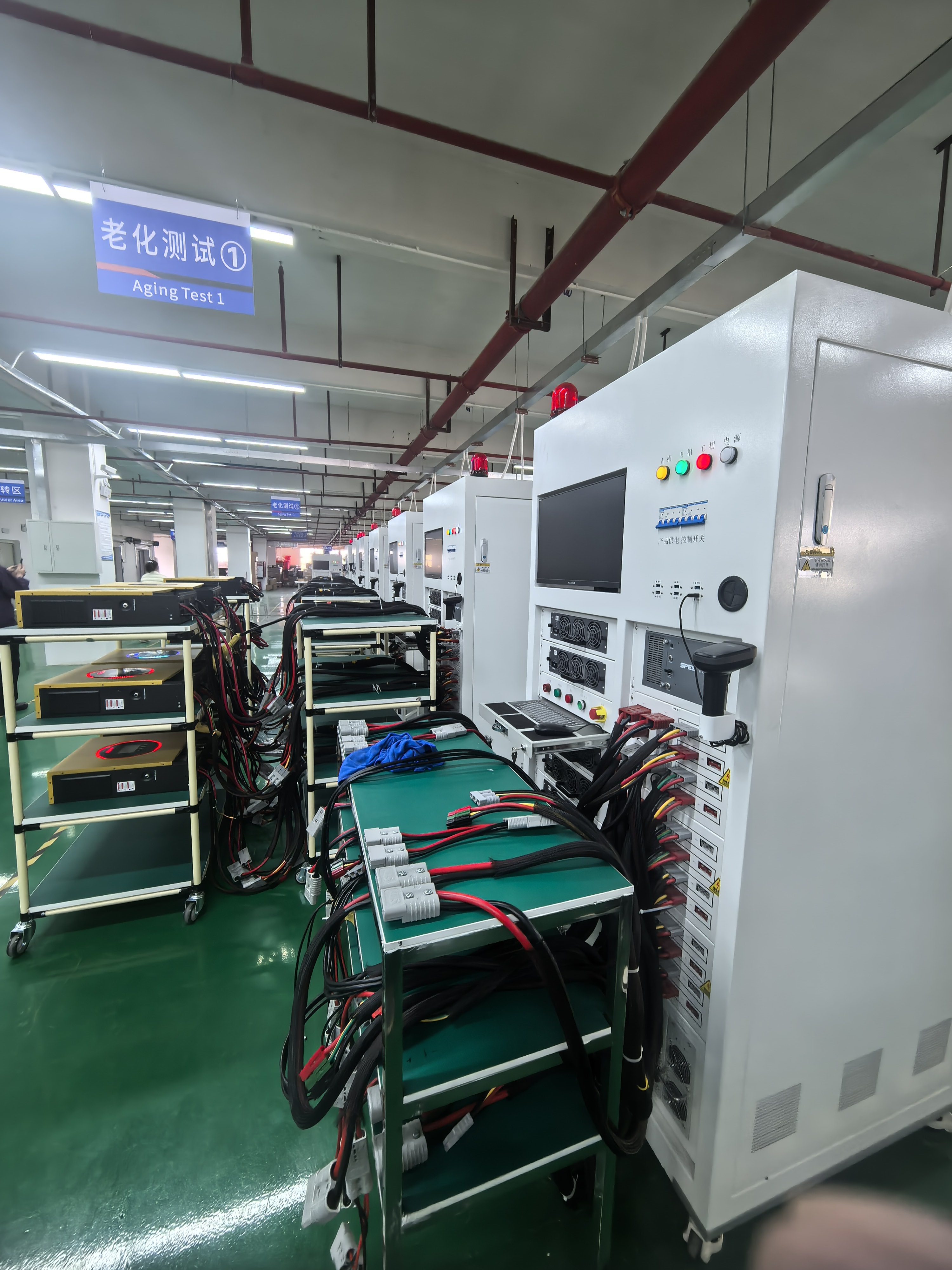
GOTOSOLAR (FOSHAN SOLARUP TECHNOLOGY CO.,LTD) supplies hybrid solar inverters from a range covering 1.5 kW to 12 kW, with CE-LVD and CE-EMC certification for the SYP series, 1%–2% free spare parts per order and a 1–3 year warranty with repair or replacement.
For high-altitude and remote site projects, request the derating figure for your site altitude, a sample unit for bench validation, or the full inverter catalogue:
- Inverter catalogue (PDF): GOTOSOLAR Hybrid Solar Inverter Catalogue 2025
- Website: www.gotosolar.com.cn
- Contact: Wilson — wilson@gtsolar.cn | Tel / WhatsApp: +86 153-0713-5737
Have Questions or Need More Details?
Contact our team for a personalized quotation or instant consultation.
Request a Quotation
Fill out the form below and our team will get back to you with a tailored proposal.
WhatsApp Direct Chat
Prefer to chat in real-time? Message us on WhatsApp for instant assistance & quick answers.
- Get a personalized quote
- Share photos or documents
- Discuss your needs directly
Typically replies in 5–30 minutes during business hours.