
Cold Storage Panel Thickness and Core Material: 50mm vs 100mm, PU vs PIR Explained
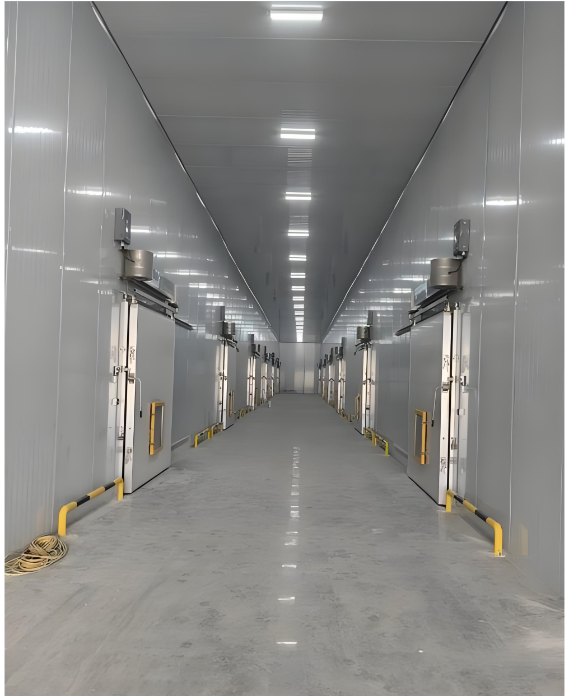
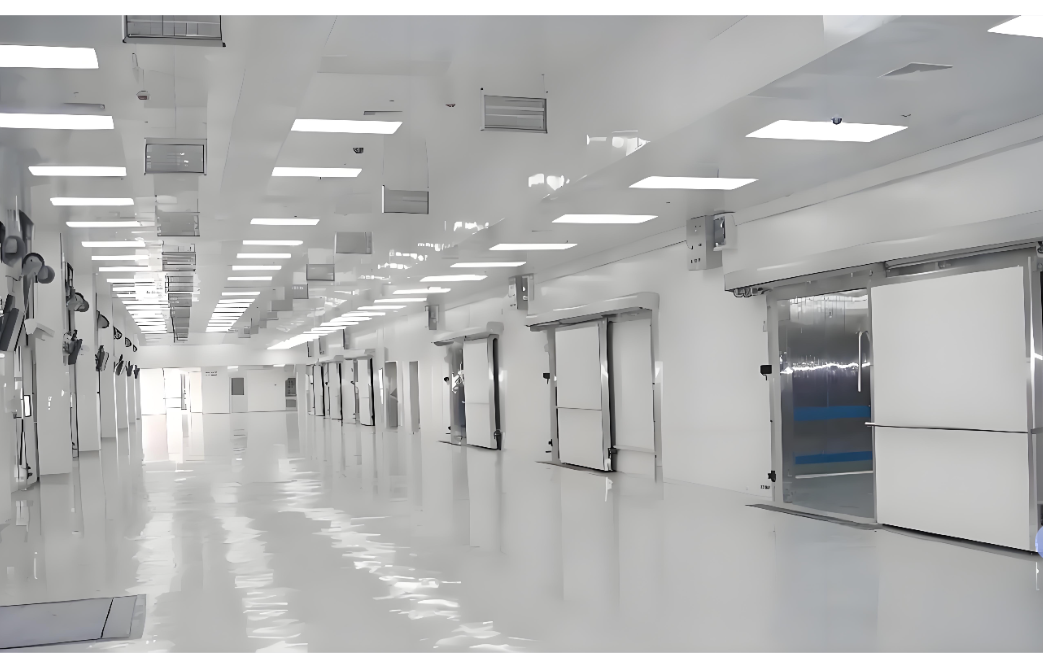
Figure 1 — Cold storage panels in a documented food processing installation.
Two specification decisions determine how a cold room performs for the next decade: the core thickness of the panel (50mm or 100mm) and the core material (PU or PIR). Thickness controls how much heat enters the room at a given temperature difference. Core material controls the fire behaviour and the compliance position of the envelope. Everything else — panel width, steel sheet, cam-locks, refrigeration unit and air cooler sizing — is built around those two choices.
This guide is written for engineers, cold chain contractors and procurement teams finalising a panel specification. It uses the documented parameters of the GREEN BIO JSGREEN001 cold storage panel: PU or PIR core material, 50mm or 100mm core thickness, thermal conductivity of ≤0.024 W/(m·K), fire rating options of B1 or B2, effective panel width of 960mm or 1100mm, and 0.5mm steel sheet as an example outer layer.
Why Thickness and Core Material Cannot Be Revisited Later
Cold storage panels are cut to the room dimensions, jointed with cam-locks and sealed on site. Once the room is standing, changing core thickness means rebuilding the envelope, and changing core material means replacing panels. The decision is effectively permanent, and it is made at the specification stage — usually months before installation begins.
Cold rooms are also continuously loaded. These panels are specified for 24/7 continuous operation, so the envelope sits under a permanent temperature gradient rather than an intermittent one. That is what makes a specification error expensive:
- Under-specified thickness increases heat ingress, forces the refrigeration unit and air cooler to work beyond their design point, raises energy consumption across the life of the room, and increases the risk of condensation and ice build-up at joints and door openings.
- Over-specified thickness adds material cost, adds structural load, and consumes usable floor area or net room volume in a fixed footprint — a real cost in high-rent distribution centres and in rooms with tight racking and door layouts.
- The wrong core material can fail the project fire strategy or an insurance condition even when the thermal performance is acceptable.
Joint quality is the other half of the equation. Documented project outcomes for these panels emphasise precise temperature control achieved with seamless joints that prevent cold air leakage — a reminder that insulation performance is a system result, not a single figure on a datasheet.
The Green Building Context Behind Cold Storage Panel Specification
Panel specification is no longer only a refrigeration cost decision. Cold chain facilities are increasingly assessed inside green building frameworks, and the envelope is one of the measurable elements.
China's green building materials market was valued at USD 216.3 billion in 2025 and is projected to reach USD 484.9 billion by 2034, according to IMARC Group. Published estimates for this market differ substantially — Grand View Research and Markets and Data report considerably smaller figures — because analysts define the segment differently, with some measuring raw materials and others measuring integrated project revenue. That divergence is a caution about using market size as a planning input, not a reason to doubt the direction of travel.
The regulatory driver is clearer. Under the 14th Five-Year Plan, China has mandated that 100% of new urban buildings meet green building standards by 2025, according to the International Trade Administration. The national standard GB/T 50378-2019, Assessment Standard for Green Building, issued through the Ministry of Housing and Urban-Rural Development (MOHURD), defines four certification grades: Basic, 1-Star, 2-Star and 3-Star. Infrastructure programmes follow the same direction: the Third Belt and Road Energy Ministerial Conference in October 2024 adopted the Green Energy Cooperation Action Plan (2024–2029) to scale green infrastructure across Belt and Road markets.
For a cold storage project this means the envelope contributes to energy performance scoring, and the documentation behind the panel — insulation performance, fire rating, certified management systems — becomes part of the project file. Cold storage panels are therefore an energy-efficient green building envelope solution and a refrigeration component at the same time, which is why 50mm versus 100mm is a question about performance targets rather than about millimetres.
How the JSGREEN001 Cold Storage Panel Is Specified
GREEN BIO (JIANGSU GREEN BIO-ENVIRONMENTAL PROTECTION TECHNOLOGY CO.,LTD) is a China-based manufacturer of cold storage panels, insulated sandwich panels and building envelope materials. Founded in 2015, the company operates a 10,000 ㎡ factory with 25 R&D engineers, produces 120,000 units annually, and serves customers in more than 120 countries and regions, with roughly 70% of output going to overseas markets — principally Southeast Asia, Central Asia, Russia, South America and Africa, alongside Europe and the Middle East. The JSGREEN001 cold storage panel is the reference product in this guide.
Core material: PU versus PIR
JSGREEN001 is offered with either a PU or a PIR core. Both are rigid polyurethane-family foams, and the panel carries a documented thermal conductivity of ≤0.024 W/(m·K). The practical difference between the two cores lies in fire behaviour, and that is where the decision should be made.
In industry practice, PIR — an isocyanurate-modified polyurethane — generally delivers better fire performance than conventional PU and tends to char rather than flow when exposed to heat. GREEN BIO supplies PIR panels as fire-retardant B1-grade panels, and the documented fire rating options across the product are B1 or B2. Because the achieved rating depends on the specific core formulation and panel construction, the core-and-rating combination should be confirmed in writing on the order specification rather than assumed from the material name.
In practice the decision runs like this: where the fire strategy, insurer or local building code requires a defined rating, specify the core that carries that rating and record the evidence; where the room stores high-value or temperature-critical goods, make the core decision with the fire consultant at the same time as the thickness decision. Thermal conductivity is not the differentiator here — the thickness choice is what moves heat ingress.
Thickness: what actually changes between 50mm and 100mm
Core thickness sets the depth of the insulation layer. For the same core material, a thicker core produces a higher thermal resistance and therefore lower heat ingress at a given temperature difference. That relationship is the physics; the actual figures come from the room load calculation, not from a rule of thumb, which is why a supplier should be asked to confirm the final thickness against the project's own numbers.
Five inputs decide which side of the 50mm/100mm choice a project falls on:
- Room set point and temperature differential. Documented application types for these panels include low-temperature freezers at -18°C, chiller rooms at 0–4°C, and multi-temperature distribution centres. The larger the differential between the room and the space on the other side of the panel, the more the specification benefits from a thicker core.
- Duty cycle. These rooms are specified for continuous 24/7 operation. Continuous low-temperature duty accumulates energy cost faster than intermittent use, which shifts the balance towards the thicker option.
- Door traffic and infiltration. Frequent openings, dock doors and personnel movement increase the load the envelope has to help absorb.
- Energy target and equipment sizing. The refrigeration unit and air cooler are sized against the envelope load. A thinner panel does not only consume more energy; it can push equipment selection towards a larger unit.
- Footprint and structure. A thicker panel reduces net usable volume in a fixed footprint and changes door and structural detailing.
50mm and 100mm are the documented standard options for JSGREEN001. Where a project's load calculation falls between the two, or where the room needs a specific thermal target, panel thickness can be customized across a 50mm to 200mm range under the manufacturer's OEM/ODM service.
Panel width, steel sheet and joints
Effective panel width is specified at 960mm or 1100mm. The choice affects how many joints a room has per square metre and how fast it can be installed: a wider panel means fewer joints to seal and less on-site labour, while a narrower panel can be more practical in layouts with many openings, columns or partitions. In a documented project, the standardized modular design of these panels increased on-site installation speed by 30% — a measurable schedule benefit on a large cold store.
The outer layer is steel sheet, with 0.5mm given as an example panel thickness and high-strength double-sided colour steel sheets used in documented installations. Steel sheet colour and material are customizable. Panel-to-panel connection uses cam-locks, and cam-lock types are also customizable, so the joint detail can be matched to the room's pressure and hygiene requirements. The expected outcome at the joint line is documented in project results as seamless joints that prevent cold air leakage — the most common point of failure in cold room envelopes.
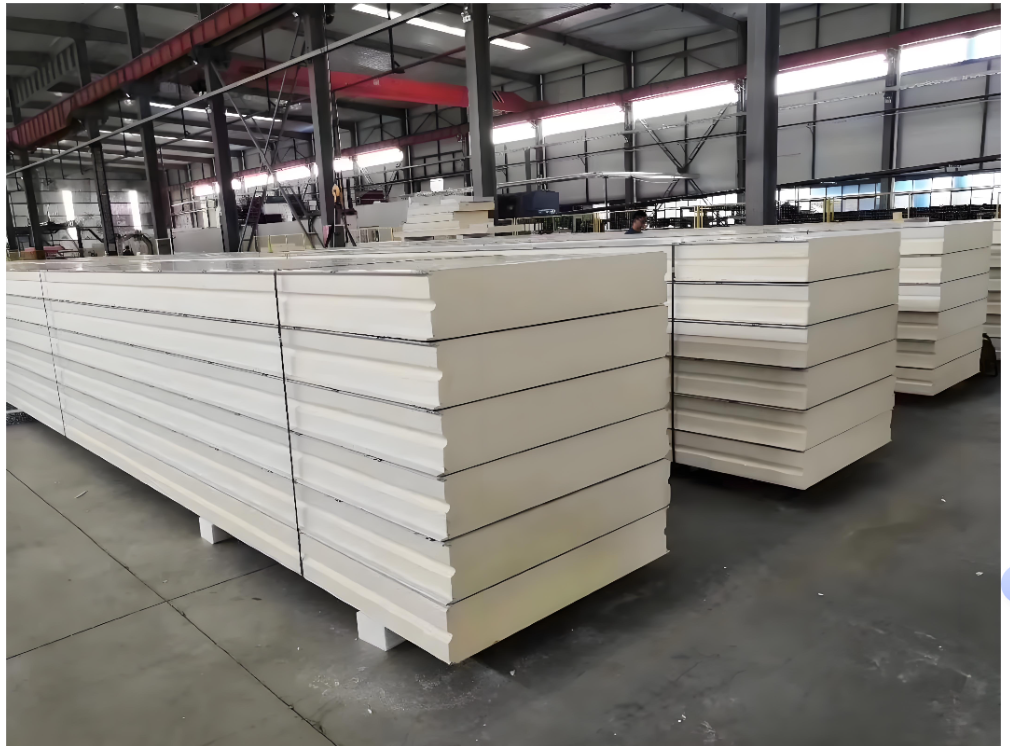
Figure 2 — OEM/ODM production capability behind customized panel thickness, steel sheet and cam-lock options.
Operating envelope and supporting equipment
The panel system is specified for a temperature range of -50°C to +15°C and for 24/7 continuous operation. Two supporting components belong in the same specification discussion: the refrigeration unit and the air cooler. Both are sized against the envelope's heat ingress, so selecting the panel and sizing the equipment is one calculation. A specification that fixes the panel first and the equipment afterwards usually ends with equipment that short-cycles or cannot hold the set point under full load.
Step-by-Step: Specifying the Right Panel for a Project
- Define the room duty and temperature zones. Record the set point, the temperature on every face of the envelope, whether the room runs continuously, and expected door traffic. Multi-temperature facilities with frozen, chilled and ambient zones are documented application types, and each zone may need its own thickness even when the same core material is used throughout the building.
- Choose the core material against the fire strategy. Decide PU or PIR with the fire consultant, insurer and local code in view, using the documented B1 or B2 rating options. Confirm the core-and-rating combination in writing.
- Choose the thickness against the load calculation. Compare 50mm and 100mm on heat ingress, equipment loading, energy use across the operating period, and usable volume. Confirm the result with the manufacturer, and use the 50–200mm customization range where the project requires it.
- Fix the geometry. Select effective width (960mm or 1100mm), panel lengths, cam-lock type and door openings. Fewer joints are easier to seal; narrower panels can be more flexible around complex layouts.
- Specify the steel sheet. Confirm steel sheet thickness (0.5mm as an example), material and colour, taking the operating environment into account.
- Coordinate the envelope with the refrigeration unit and air cooler. Size the equipment against the specified panel performance, not a generic assumption.
- Verify compliance documentation. Check certificate numbers, scope and validity dates against the project file. GREEN BIO holds ISO 9001:2015, ISO 14001:2015 and ISO 45001:2018 certificates issued by Jiangsu Taiding Certification Co., Ltd.; the individual certificate numbers and validity dates are listed in the FAQ below.
- Confirm quality control. Documented controls are incoming raw material inspection, in-process patrol inspection, full inspection of finished product density and dimensions, and pre-shipment photo confirmation. Request these records as part of the order file.
- Confirm commercial and delivery terms. MOQ of 100 square metres or one 20-foot container; lead time of 15–25 days after receiving deposit; delivery terms FOB, EXW, CIF or DDP; payment terms of 30% advance and 70% before shipment; acceptance against a pre-shipment inspection and test report.
- Plan installation and after-sales. Installation guidance videos, remote technical support, and free replacement of damaged parts during the warranty period form the documented support package.
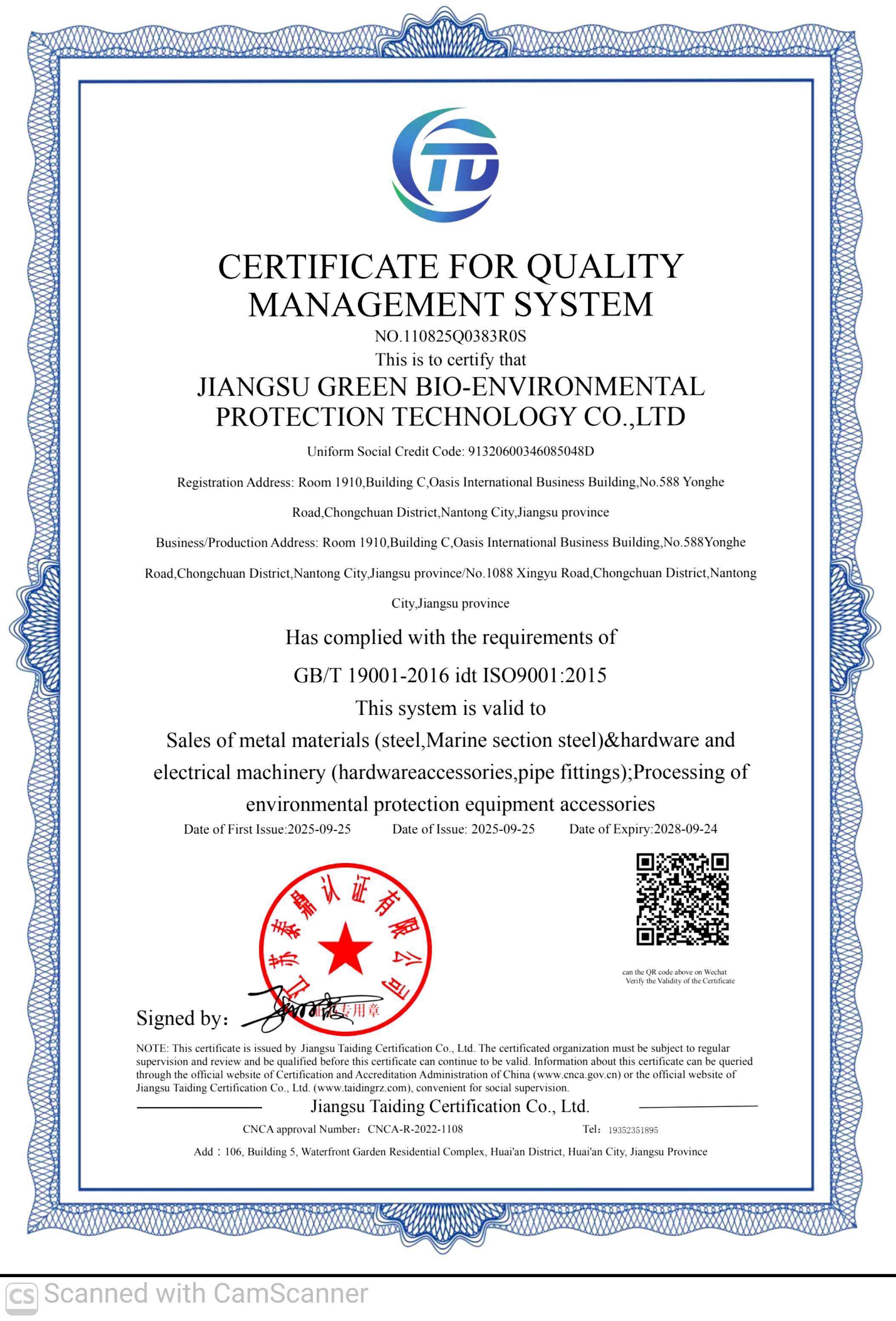
Figure 3 — Documented quality management system certificate supporting the compliance file.
Where These Cold Storage Panels Are Used
Documented applications for cold storage panels cover five industry groups:
- Food & Beverage: meat, seafood, dairy, fruit, vegetable and beverage processing.
- Pharmaceuticals: vaccines, medicines and biological products requiring strict temperature control.
- Logistics & Warehousing: cold chain logistics centres, distribution hubs and supermarkets.
- Chemical: storage of low-temperature chemical raw materials.
- Agriculture: seed storage and agricultural product preservation.
Two documented projects show how the specification plays out in practice. In Australia, a food processing and meat processing plant installed 5,000 sqm of cold storage panels with 2,000 tons capacity, covering a low-temperature freezer at -18°C and a chiller room at 0–4°C; the installation achieved precise temperature control with seamless joints preventing cold air leakage, passed GSP certification, and has operated stably for five years. In Vietnam, a 3PL cold chain logistics and supermarket distribution centre installed 12,000 sqm of panels in a large-scale sorting centre running a multi-temperature distribution layout (frozen, chilled and ambient); the project was delivered on schedule, installation was straightforward, and cargo turnover efficiency improved measurably in the first year of operation.
Both projects share the same technical highlight: high-strength double-sided colour steel sheets combined with precision foaming deliver panel flatness and load-bearing capacity, and the standardized modular design increases on-site installation speed by 30% — which shortens the project timeline on large cold stores where every day of commissioning matters.
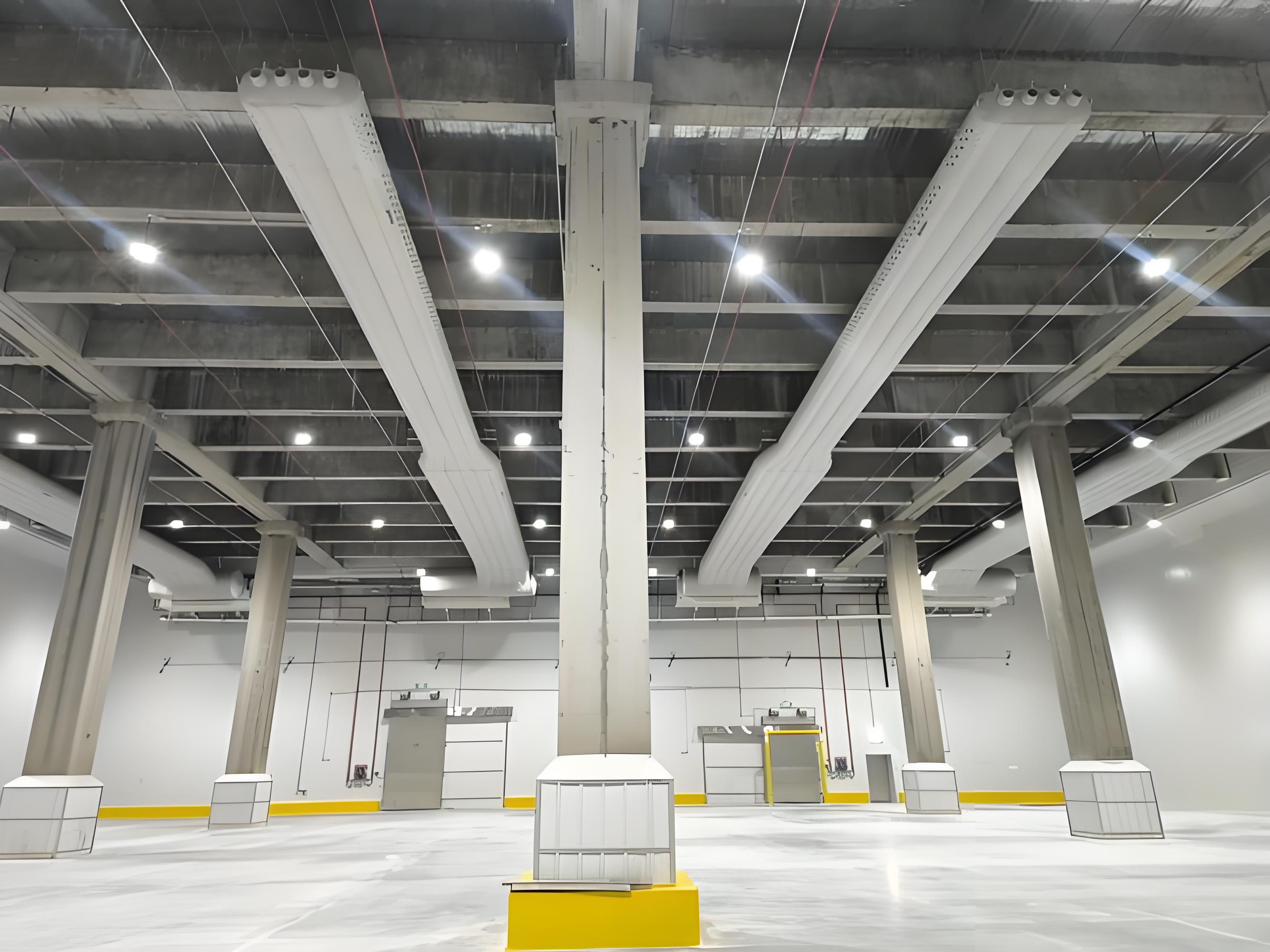
Figure 4 — Multi-temperature distribution centre envelope, a documented application type.
Comparison Table: 50mm vs 100mm and PU vs PIR
The tables below use documented product parameters only. They describe what changes between the options; they do not replace a project load calculation. Thickness guidance in particular must be confirmed against the room's own duty and equipment sizing.
| Parameter | 50mm core option | 100mm core option |
|---|---|---|
| Core material available | PU or PIR (rigid polyurethane) | PU or PIR (rigid polyurethane) |
| Thermal conductivity (panel) | ≤0.024 W/(m·K) | ≤0.024 W/(m·K) |
| Fire rating options | B1 or B2 | B1 or B2 |
| Effective width | 960mm / 1100mm | 960mm / 1100mm |
| Steel sheet (example) | 0.5mm | 0.5mm |
| Relative thermal resistance (same core) | Lower | Higher |
| Relative heat ingress at a given differential | Higher | Lower |
| General fit (confirm by load calculation) | Smaller differentials, space-constrained layouts, shorter duty cycles | Larger differentials, continuous low-temperature rooms, higher energy targets |
| Customization range | Panel thickness customizable from 50mm to 200mm under OEM/ODM | |
| Parameter | PU core | PIR core |
|---|---|---|
| Material family | Rigid polyurethane | Rigid polyurethane, isocyanurate-modified |
| Documented fire rating options | B1 or B2 | B1 or B2; PIR panels supplied as fire-retardant B1-grade |
| Fire behaviour in industry practice | Conventional polyurethane behaviour | Generally better fire performance; tends to char rather than flow |
| Thermal conductivity (panel) | ≤0.024 W/(m·K) | ≤0.024 W/(m·K) |
| Typical selection driver | Thermal duty where the fire strategy allows | Projects with a defined fire rating requirement or higher fire risk |
Frequently Asked Questions
GREEN BIO holds three certified management systems issued by Jiangsu Taiding Certification Co., Ltd., all valid from 2025-09-25 to 2028-09-24: ISO 9001:2015 Quality Management System (certificate NO.110825Q0383R0S), ISO 14001:2015 Environmental Management System (certificate NO.110825E0251R0S), and ISO 45001:2018 Occupational Health and Safety Management System (certificate NO.110825S0254R0S). The certified scopes cover the sales of metal materials and hardware and electromechanical products and the processing of environmental protection equipment, and the certificates relate to the Cold Storage Panels product line (JSGREEN001). Per-order documents such as a pre-shipment inspection and test report are issued against the acceptance criteria in the contract.
GREEN BIO provides OEM and ODM production services for cold storage panels. Documented customization options cover panel thickness (50mm–200mm), steel sheet colour and material, fire rating, custom dimensions and lengths, and cam-lock types. Monthly production capacity is 50,000 square metres, supported by 25 R&D engineers and a 10,000 ㎡ factory. This matters for importers, contractors and brand owners who need the panel to match an existing room layout, a local fire rating requirement, or a private-label programme rather than a standard catalogue item.
The minimum order quantity is 100 square metres or one 20-foot container. Available delivery terms are FOB, EXW, CIF and DDP. Payment terms are 30% advance with 70% before shipment. Acceptance is against a pre-shipment inspection and test report.
Documented quality control runs through four checkpoints: incoming raw material inspection, in-process patrol inspection, full inspection of finished product density and dimensions, and pre-shipment photo confirmation. Buyers can request the pre-shipment inspection and test report as the acceptance document. Because panel performance depends on foam density and dimensional accuracy as much as on the datasheet conductivity figure, these records — not visual inspection alone — are what keep the thickness and core decision verifiable after delivery.
Typical production lead time is 15–25 days after receiving the deposit, and the minimum order quantity is 100 square metres or one 20-foot container. For projects with fixed installation windows, the practical sequence is to lock the thickness and core decision, confirm the load calculation, then place the order against a documented specification. To move forward, request a sample panel or a project-specific quote for the JSGREEN001 cold storage panel, or download the GREEN BIO product catalog for the full specification set.
Conclusion
The 50mm versus 100mm decision is driven by the temperature differential, the duty cycle and the energy target; the PU versus PIR decision is driven by the fire strategy and the compliance framework. Neither can be reversed after installation, and both belong in the same conversation as the refrigeration unit and air cooler sizing, because the envelope and the equipment are one system.
Once the thickness and core are fixed, the remaining specification work is procedural: confirm the width (960mm or 1100mm), steel sheet (0.5mm as an example) and cam-lock detail; verify the documented quality control steps; check the ISO certificates and their validity dates; and agree the commercial terms, lead time and acceptance documents before production starts. For an OEM programme, the 50–200mm thickness range, custom steel sheet and custom cam-locks provide the flexibility to match an existing room or a local fire requirement.
Specifying a cold storage panel for a live project?
Send the room set point, dimensions and fire rating requirement to GREEN BIO and request a specification-matched quote or a sample panel. Full specifications are in the Green Bio Professional Catalog 2026.
Website: www.greenlvgreen.com
Email: sunnylvgreen@163.com
Telephone: +86-159-0629-8828
WhatsApp: +852 55715742
Address: Room 902-2, Building 2, Nantong Foreign Trade Center, No. 166, North Street, Chongchuan District, Nantong City, Jiangsu Province, China
Have Questions or Need More Details?
Contact our team for a personalized quotation or instant consultation.
Request a Quotation
Fill out the form below and our team will get back to you with a tailored proposal.
WhatsApp Direct Chat
Prefer to chat in real-time? Message us on WhatsApp for instant assistance & quick answers.
- Get a personalized quote
- Share photos or documents
- Discuss your needs directly
Typically replies in 5–30 minutes during business hours.