
Supplier Evaluation for Green Building Materials: A Capability and Delivery Checklist
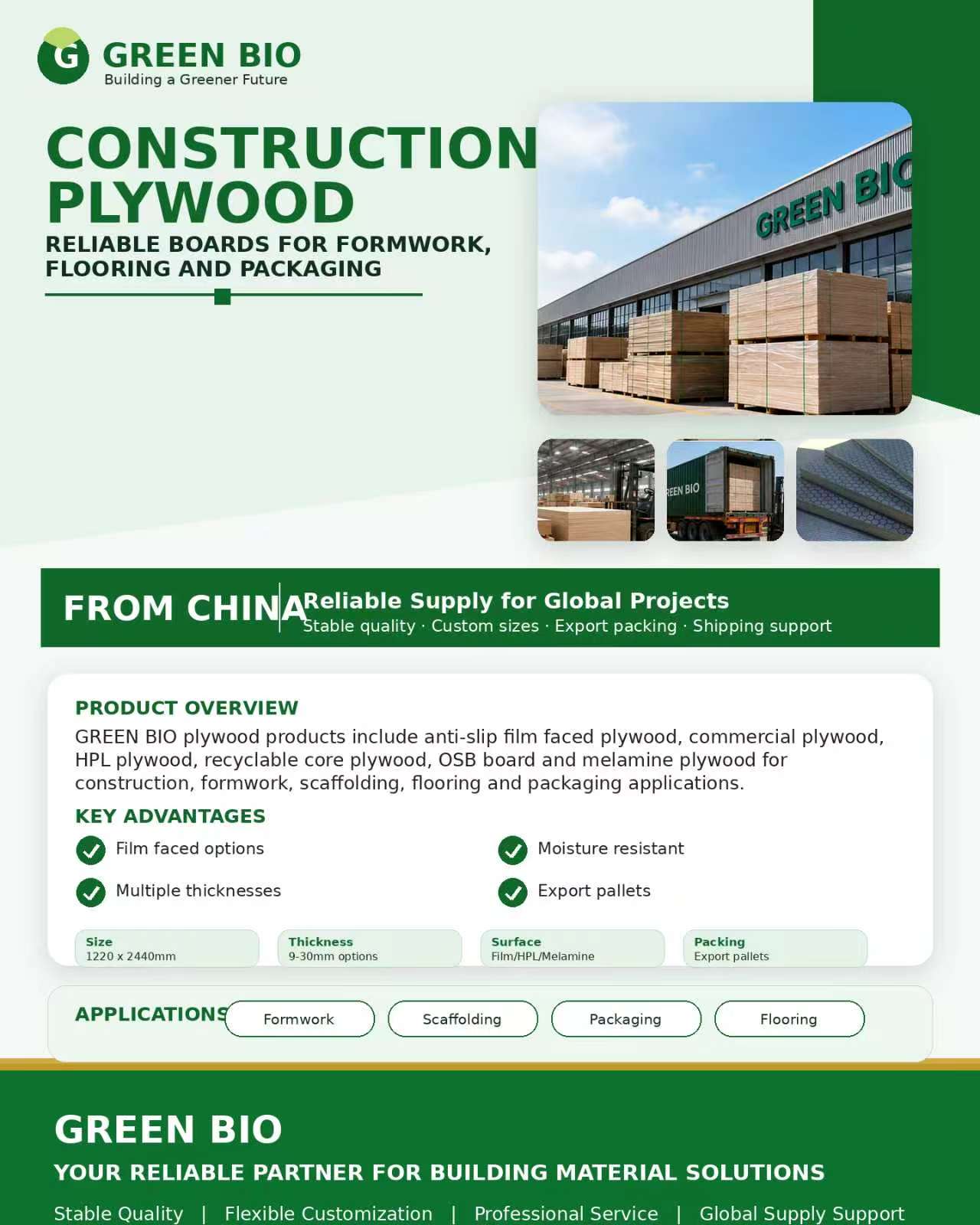
Production facility reference: capability claims should always be tied to a plant, a capacity figure and an inspection record.
Green building material procurement rarely fails at the specification stage. It fails at the evidence stage. A supplier statement that sounded verifiable inside a quotation turns out to be a logo, a brochure sentence, or a number with no document behind it, and the buyer discovers this only after the deposit has been paid or the first container has shipped.
Scale is part of the problem. The China green building materials market reached USD 216.3 billion in 2025 and is projected to reach USD 484.9 billion by 2034, according to IMARC Group, while China has required 100% of new urban buildings to meet green building standards by 2025 as part of the 14th Five-Year Plan, according to the International Trade Administration. A market this large attracts both established manufacturers and opportunistic traders, and the two can look almost identical on a well-designed website.
This article gives procurement teams a working checklist for evaluating a green building material supplier across the two axes that decide most projects: capability verification and delivery assurance. It uses GREEN BIO (JIANGSU GREEN BIO-ENVIRONMENTAL PROTECTION TECHNOLOGY CO.,LTD.), a manufacturer of PIR Sandwich Panel, plywood, steel support, cable bracket and Aluminum profiles for global construction and industrial projects, as a concrete reference point, and it shows how each checklist item maps to a document a buyer can request, file and audit.
Problem Definition: Why Green Claims Are the Hardest to Audit
Three evidence systems sit behind the word green, and buyers regularly confuse them. Treating one as proof of another is the single most common evaluation error in sustainable green building construction solutions.
- Management-system evidence. Organisation-level processes covering quality, environmental management or occupational health and safety. It says something about how a factory is run, not about the measured performance of a specific panel.
- Product-level evidence. Measured parameters for a named product and model, such as thermal conductivity, fire rating, thickness or steel grade.
- Project-level assessment evidence. The standard against which a completed building is graded, which is the responsibility of the project team, not of the material supplier alone.
An auditable claim is therefore not the strongest-sounding sentence a supplier can write. It is a statement that names its document: the certificate number and scope, the test report, the drawing revision, the packing specification, the shipment record. If a supplier cannot name the document, the claim should be treated as marketing until proven otherwise.
China's national framework shows how structured project-level assessment has become. GB/T 50378-2019, the Assessment Standard for Green Building issued under the Ministry of Housing and Urban-Rural Development (MOHURD), establishes four certification grades: Basic, 1-Star, 2-Star and 3-Star. Buyers who borrow this vocabulary can ask a supplier a precise question instead of a general one, and they can separate what a material can contribute from what only the project design can achieve.
The second failure mode is delivery. Prefabricated green building material systems and structural support products sit on the critical path of a construction programme. A cold storage panel that arrives two weeks late does not simply delay a delivery; it delays the refrigeration commissioning sequence behind it, and the pharma or food client downstream is the one who absorbs the cost. Capability without delivery assurance is an incomplete evaluation, which is why the checklist below treats them as one exercise.
Industry Background: A Large Market With Inconsistent Definitions
Procurement teams should know that published market figures for green building materials do not measure the same thing, and should not be combined. The divergence is definitional rather than factual.
- IMARC Group sizes the China green building materials market at USD 216.3 billion in 2025, projecting USD 484.9 billion by 2034.
- Markets and Data sizes the China green building market (integrated systems and services) at USD 69.13 billion in 2024, projecting USD 147.86 billion by 2032.
- Global Market Insights values China's bio-based construction materials segment at USD 6.4 billion in 2024, with a 7.2% CAGR forecast through 2034.
Reading note. These three figures use different segment definitions, ranging from raw materials to integrated project revenue. They are useful for understanding direction and scale, not for comparing suppliers or for building a cost model.
Policy is moving in the same direction as demand. The Third Belt and Road Energy Ministerial Conference in October 2024 adopted the Green Energy Cooperation Action Plan (2024-2029) to scale green infrastructure, according to the Belt and Road Environmental Big Data Platform. For suppliers and buyers active in green building solutions for Belt and Road markets, this signals a multi-year pipeline of projects where green criteria are written into procurement documents rather than added as an afterthought.
Competitive structure matters too. Global Market Insights identifies Holcim (with a 10.8% share), Dasso Group, Suzano, Covestro and China Resources Cement among the top-tier players in the eco-friendly materials sector. A realistic shortlist for a construction project often mixes large diversified material groups with specialised manufacturers, and a checklist must therefore work for both types of supplier rather than assuming one profile.
Detailed Solution: The Six-Part Capability and Delivery Checklist
The checklist below is designed to be sent to a supplier as a single evidence request. Each part states what to ask for, what the answer proves, and where GREEN BIO's disclosed data sits as a reference point for comparison.
1. Legal Entity and Operating Base
Ask for the registered company name, year of establishment, plant location and workforce size. This is the baseline that makes every other document traceable; a quotation from an unregistered trading name cannot be enforced in the same way as one from a manufacturing entity. GREEN BIO is registered as JIANGSU GREEN BIO-ENVIRONMENTAL PROTECTION TECHNOLOGY CO.,LTD., established in 2015, operating from Nantong City, Jiangsu Province, with approximately 50 staff. Buyers should record the registered name exactly as it appears on the business licence and use it on the purchase contract.
2. Manufacturing Capacity and Engineering Depth
Ask for facility area, annual production capacity, engineering headcount and the main production equipment. Capacity numbers matter only when they are paired with the engineering function that supports customisation and problem-solving. GREEN BIO operates a manufacturing facility covering 10,000 square meters, reports an annual production capacity of 120,000 units, and maintains an R&D team of 25 engineers. For a buyer, the practical question is not the headline capacity but whether the supplier can hold that capacity across the months in which your order is scheduled.
3. Compliance Documentation and Traceability
Ask for certificate copies with issuing body, certificate number, scope and validity dates, plus product-level test data. Three management-system standards are commonly requested in international construction procurement: ISO 9001:2015 for quality management, ISO 14001:2015 for environmental management, and ISO 45001:2018 for occupational health and safety. Each covers a different risk. ISO 9001:2015 speaks to process control and consistency, ISO 14001:2015 to environmental management of operations, and ISO 45001:2018 to worker safety systems. A logo on a homepage is not evidence of any of them; the certificate scope is what tells you whether your product category is actually covered.
Where the destination project is in China or references Chinese green building criteria, GB/T 50378-2019 provides the assessment grades against which the building itself will be judged. Suppliers should be able to explain which material parameters they contribute to that assessment rather than implying that a material certificate equals a building rating.
4. Product Data Integrity
Ask for a datasheet per model and cross-check it against the quotation, the drawing and the packing list. Inconsistent thickness, width or grade between documents is one of the earliest warning signs of a supplier who is reselling rather than manufacturing. For reference, the Cold Storage Panel model JSGREEN001 is made of rigid polyurethane with a core material of PU or PIR, a 0.5 mm steel sheet, thickness options of 50 mm and 100 mm, effective widths of 960 mm or 1100 mm, thermal conductivity of no more than 0.024 W/(m·K), and a fire rating of B1 or B2. Those are the kinds of parameters a buyer can verify against a delivered panel.
5. Export and Delivery Record
Ask what share of production is exported, which markets are served, and how goods are packed for sea freight. Export share is a proxy for how much friction a supplier has already absorbed: documentation, labelling, container loading, port handling and customs queries. Approximately 70% of GREEN BIO products are exported to markets in Southeast Asia, Central Asia, Russia, South America and Africa, which are countries along the Belt and Road Initiative. Packing options on the Galvanized Steel Support Series include Loose Packing, Steel Strip or Pallet, and buyers should confirm the option that matches their unloading capability rather than leaving it to default.
6. Commercial Terms and Scalability
Ask for minimum order quantity, lead-time structure, panel size selection and how variations are priced. The Galvanized Steel Support Series carries a disclosed minimum order quantity of 500 pieces. Plywood products are supplied across several models, including Eco-Friendly Melamine Plywood, High-strength Commercial Plywood, Recyclable Core Plywood, High-pressure HPL Plywood, Stable Commercial Plywood and Anti-Slip Film Faced Plywood, with support for panel size selection and jobsite handling requirements. A supplier who can describe how a specification change flows through production, packing and shipment is usually a supplier who has done it before.
Step-by-Step: How to Run the Evaluation
The sequence below keeps the exercise to a manageable number of rounds and prevents a supplier from answering everything at once with marketing material.
- Build the evidence request list. Convert the six checklist parts above into a numbered table and send it as one document. A single structured request filters unqualified suppliers faster than a series of emails.
- Match stated capacity to your own schedule. Compare the supplier's annual capacity with the volume and delivery window you actually need, and ask which production lines would run your order.
- Validate the compliance file. Confirm that each management-system certificate you receive shows a scope covering your product category, a valid date, and an issuing body you can look up independently.
- Cross-check product data against drawings. Compare the datasheet, quotation and technical drawing line by line, focusing on thickness, width, grade, surface finish and fire rating.
- Test export readiness. Ask for the packing method, container loading plan and the documents issued at shipment, then confirm the packing suits your receiving site.
- Lock delivery accountability into the contract. Convert delivery commitments into named milestones, inspection points and document obligations rather than general assurances.
- Start with a scoped first order. Use a first order that reflects your real specification but a limited volume, then evaluate the paperwork and the physical product before scaling.
Decision rule. A supplier that answers five of six checklist parts with documents and the sixth with a verbal explanation is worth progressing. A supplier that answers all six with adjectives and none with documents is not, regardless of price.
Use Cases: Applying the Checklist to Three Product Categories
Cold Storage Panels for Temperature-Controlled Projects
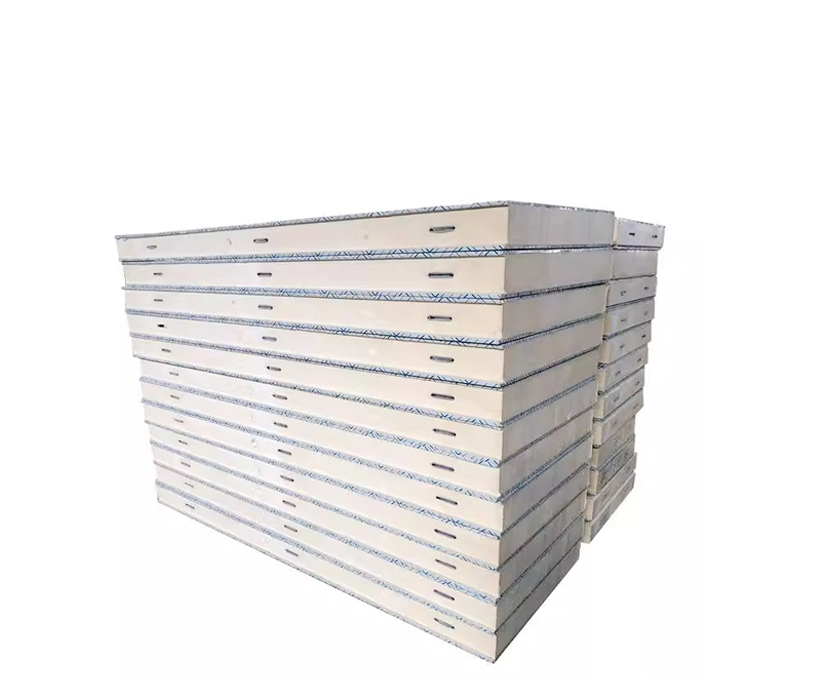
Cold Storage Panels (model JSGREEN001): verify thickness, effective width, thermal conductivity and fire rating against the delivered panel.
For cold chain projects, the evaluation question is whether the supplier's data survives the operating condition. The application data for this category covers a temperature range from -50 degrees C to +15 degrees C, relative humidity up to 90%, and continuous 24/7 operation, including coastal high-salt spray areas and clean room storage. The same data indicates an energy saving rate above 30% for the refrigeration system and a food shelf life extension of more than 50% under controlled conditions, along with a closed-cell structure designed to limit water vapour penetration and CFC-free foaming agent. Typical project types include large cold chain logistics parks, food processing cold storage, pharmaceutical GSP cool storage, supermarket and catering refrigerated rooms, and agricultural pre-cooling facilities. Documented deployments span food cold chain warehousing in Germany and pharmaceutical and biological product storage applications in the United States. When evaluating a supplier on these categories, request the panel data, the sealing and fastener list, and the surface finish specification together, because envelope performance depends on the whole assembly rather than the panel alone.
Plywood for Formwork and General Building Work
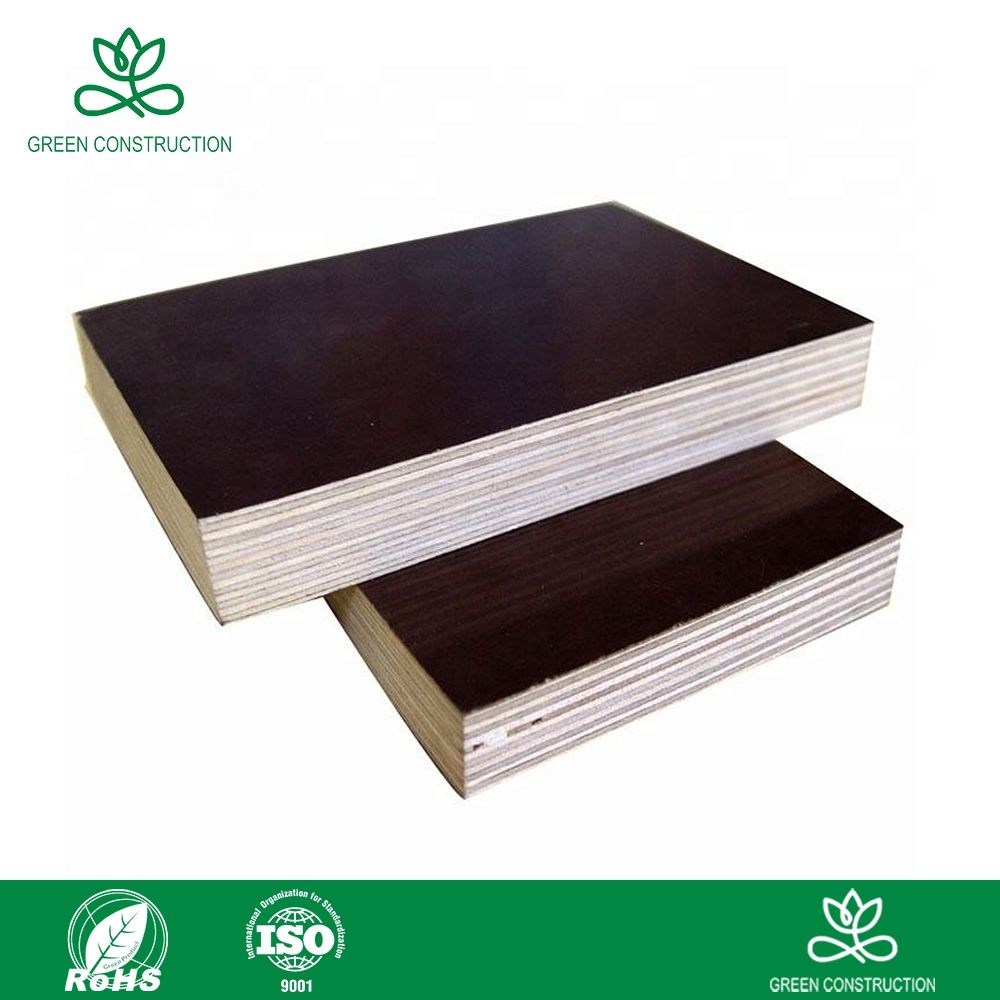
Plywood: stable panels, consistent thickness, easy cutting and fastening for formwork and site assembly.
Plywood sits in a different risk profile. It is a wood-based panel material used in formwork, packaging and general building applications, judged less on certification theatre and more on dimensional consistency, cutting behaviour and how the panel performs through repeated site handling. The product range covers several models, and each model should be evaluated against the specific use: formwork systems, general construction, industrial buildings, or slab and beam formwork projects. The verifiable characteristics to request are stable panels, consistent thickness, and confirmation that the panel supports easy cutting and fastening along with panel size selection. Buyers running low-carbon green building materials from China programmes should also ask how panel sizing is optimised to reduce offcut waste on site, since cutting efficiency is often where the material cost actually lands.
Galvanized Steel Support Series for Structural and Underground Works
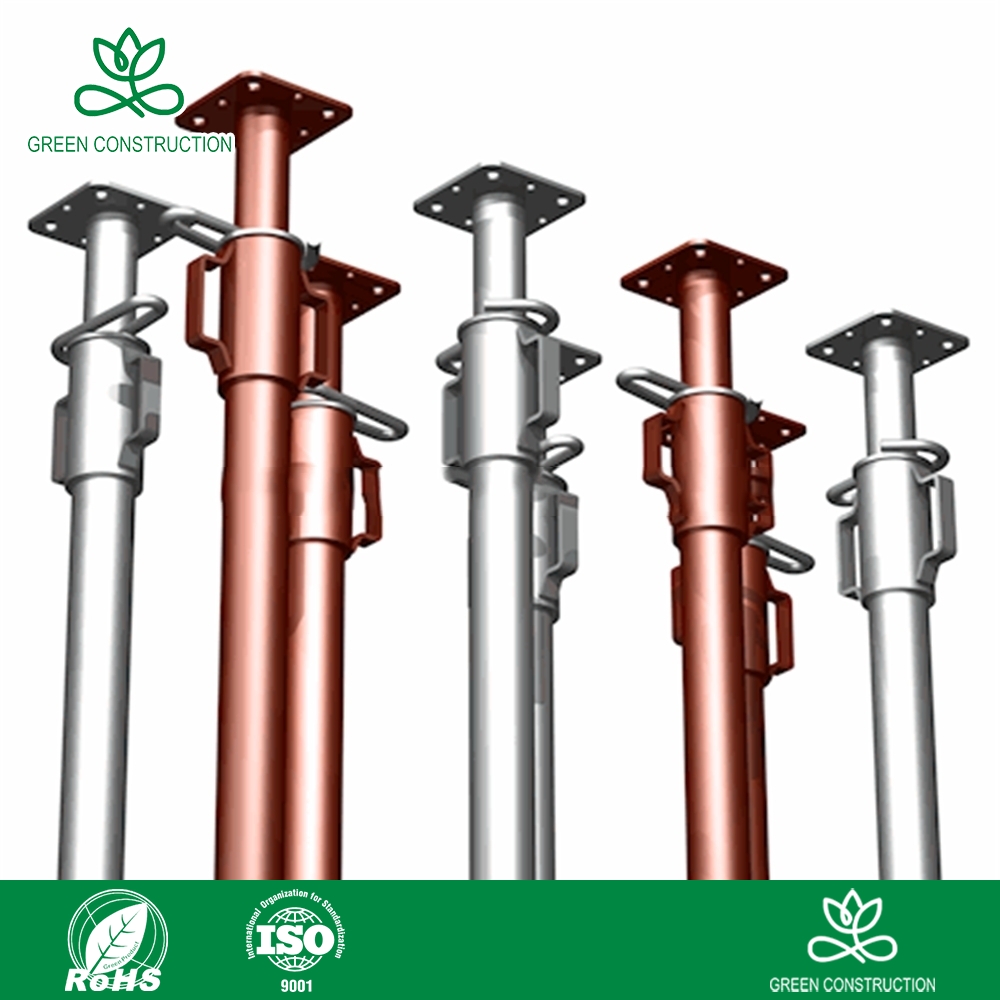
Galvanized Steel Support Series (Adjustable Steel Prop / Telescopic Steel Prop): confirm steel grade, height range, surface finish and MOQ before pricing.
The Galvanized Steel Support Series, model Adjustable Steel Prop / Telescopic Steel Prop, belongs to the Steel Support / Scaffolding Props category and is intended for deep foundation pits, tunnels and large-scale structural construction, including subway construction, bridges, pipe galleries and underground works. Verifiable specifications include Q195 or Q235 steel grade, maximum height options from 3 m to 5 m, tube thickness of 1.5-2.5 mm or 1.5-3.5 mm, and surface finish in Painted, Powder Coated, E-Galvanized or HDG. Available types include Spanish Type, Italian Type and Middle East Type, with Cup Nut or Cast Nut, plate options of Square / Flower Base Plate and U-Head, and pin options of G Pin, Line Pin or Wire Pin. Because this is a safety-related product, the evaluation should confirm the steel grade on the mill certificate and the surface finish actually applied, not only the finish named in the quotation.
Comparison Tables
The first table consolidates the product-level facts a buyer can verify. The second converts the six checklist parts into a working evidence request.
Table 1: Product Facts Across Three Categories
| Category | Model / Type | Key Verifiable Parameters | Typical Application |
|---|---|---|---|
| Cold Storage Panels | JSGREEN001 | PU or PIR core; rigid polyurethane; 50 mm and 100 mm thickness; effective width 960 mm or 1100 mm; 0.5 mm steel sheet; thermal conductivity no more than 0.024 W/(m·K); fire rating B1 or B2 | Food cold chain warehousing; pharmaceutical and biological product storage; logistics and warehousing; agriculture |
| Plywood | Eco-Friendly Melamine, High-strength Commercial, Recyclable Core, High-pressure HPL, Stable Commercial, Anti-Slip Film Faced | Wood-based panel material; stable panels; consistent thickness; easy cutting and fastening; panel size selection supported | Formwork systems; construction; general building; packaging |
| Galvanized Steel Support Series | Adjustable Steel Prop / Telescopic Steel Prop | Q195 or Q235 steel; maximum height 3 m to 5 m; tube thickness 1.5-2.5 mm or 1.5-3.5 mm; Painted, Powder Coated, E-Galvanized or HDG; MOQ 500 pieces | Deep foundation pits; tunnels; large-scale structural construction |
Table 2: Checklist Mapping for a Supplier Evaluation
| Evaluation Part | Evidence to Request | Reference Data (GREEN BIO) |
|---|---|---|
| Legal entity and operating base | Business licence, registered name, plant address, year established, workforce | Registered as JIANGSU GREEN BIO-ENVIRONMENTAL PROTECTION TECHNOLOGY CO.,LTD.; established 2015; approximately 50 staff; Nantong City, Jiangsu Province |
| Manufacturing capacity | Plant area, annual capacity, engineering headcount, equipment list | 10,000 square meter facility; 120,000 units annual capacity; R&D team of 25 engineers |
| Compliance documentation | Certificates with scope, issuer, number and validity; product test data | Commonly requested management-system standards: ISO 9001:2015, ISO 14001:2015, ISO 45001:2018; project-level reference GB/T 50378-2019 (Basic, 1-Star, 2-Star, 3-Star) |
| Product data integrity | Datasheet per model, cross-checked against quotation and drawing | Cold Storage Panel JSGREEN001: PU or PIR core, 50 mm and 100 mm thickness, 960 mm or 1100 mm effective width, thermal conductivity no more than 0.024 W/(m·K), B1 or B2 fire rating |
| Export and delivery record | Export share, destination markets, packing specification, shipment documents | Approximately 70% of products exported to Southeast Asia, Central Asia, Russia, South America and Africa; packing options Loose Packing, Steel Strip or Pallet |
| Commercial terms and scalability | MOQ, size options, variation pricing, production scheduling | Galvanized Steel Support Series MOQ 500 pieces; plywood supports panel size selection and jobsite handling |
Supporting diagrams and process images are available in the GREEN BIO professional catalog linked at the end of this article.
Frequently Asked Questions
Which compliance documents should a procurement team request from a China green building material solutions supplier?
Request three groups. First, management-system certificates with the issuing body, certificate number, validity dates and, most importantly, the scope, since the scope determines whether your product category is covered. The standards most commonly requested in international construction procurement are ISO 9001:2015 for quality management, ISO 14001:2015 for environmental management and ISO 45001:2018 for occupational health and safety. Second, product-level test or inspection data for the exact model being purchased. Third, where the project is graded in China, a clear explanation of how the material contributes to GB/T 50378-2019, the MOHURD assessment standard that defines the Basic, 1-Star, 2-Star and 3-Star grades. A logo is not a document, and a material certificate is not a building rating.
What manufacturing capability data should be verified before placing a first order?
Verify four figures in writing: facility area, annual production capacity, engineering headcount and year of establishment, then ask how your specific order would be scheduled against that capacity. For reference, GREEN BIO operates a manufacturing facility covering 10,000 square meters with a reported annual production capacity of 120,000 units, a workforce of approximately 50 staff, an R&D team of 25 engineers, and has been established since 2015. The purpose of the exercise is not to compare headline numbers between suppliers but to establish that the numbers are documented, consistent across documents, and large enough to absorb your order without displacing other commitments.
What does a 70% export share actually tell a buyer about delivery reliability?
It indicates that the supplier routinely handles the parts of an order that domestic-only suppliers often underestimate: export documentation, labelling, packing for sea freight, container loading and destination requirements. GREEN BIO exports approximately 70% of its products, to markets in Southeast Asia, Central Asia, Russia, South America and Africa, which are countries along the Belt and Road Initiative. Export share should still be paired with concrete delivery evidence, so ask for the packing specification of your product category, such as the Loose Packing, Steel Strip or Pallet options used on the Galvanized Steel Support Series, and confirm which option suits your unloading conditions.
Is there a minimum order quantity for green building materials ordered from China?
It depends on the product, and the buyer should obtain the figure per category rather than per supplier. On the Galvanized Steel Support Series (Adjustable Steel Prop / Telescopic Steel Prop), the disclosed minimum order quantity is 500 pieces. For Cold Storage Panels and plywood, the relevant commercial variables are specification-driven rather than a single published MOQ figure: for the Cold Storage Panel model JSGREEN001 these include thickness options of 50 mm and 100 mm and effective widths of 960 mm or 1100 mm, while plywood supplies several models and supports panel size selection and jobsite handling requirements. Confirming sizes first usually produces a more accurate commercial answer than asking for a generic minimum.
How should a procurement team start a technical review with GREEN BIO?
Start with the published technical material. The GREEN BIO professional catalog is available for download and contains the product range, including PIR Sandwich Panel, plywood, steel support, cable bracket and Aluminum profiles, together with the specifications referenced in this checklist. From there, send your project scope, destination market and required specification to the team by email at sunnylvgreen@163.com or by WhatsApp at +852 55715742, and expect the discussion to move quickly to datasheets, packing options and order scope rather than general sales material.
Conclusion: Turn Claims Into a File You Can Audit
Evaluating a supplier of green building solutions is not a test of how convincing the supplier sounds. It is a documentation exercise with a delivery component attached. The checklist in this article reduces to a simple discipline: for every claim, name the document, then check that the document covers your product, your volume and your destination.
On capability, the verifiable facts are concrete. GREEN BIO was established in 2015, operates a 10,000 square meter manufacturing facility with approximately 50 staff and an R&D team of 25 engineers, and reports an annual production capacity of 120,000 units. On delivery, approximately 70% of products are exported to markets along the Belt and Road Initiative across Southeast Asia, Central Asia, Russia, South America and Africa. Those figures are useful precisely because they can be checked against a licence, a plant visit, a packing list or a shipment record.
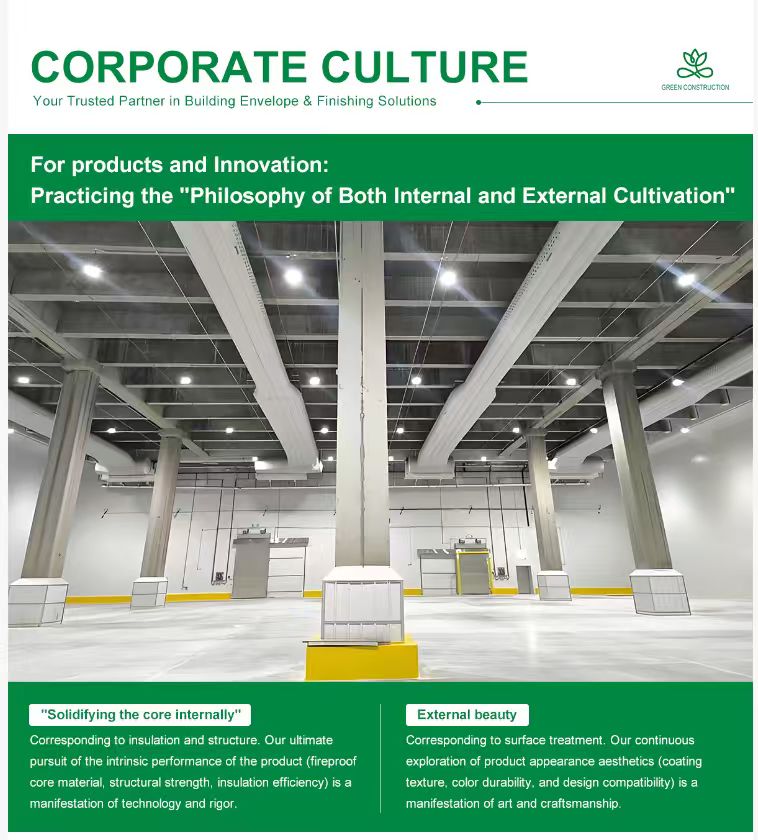
Delivery assurance is built from records, not promises. Reference projects and shipment documentation should be part of any supplier evaluation file.
Next Step
Download the GREEN BIO professional catalog for the full product range and specifications, then send your project scope for a technical and commercial response.
Download the GREEN BIO Professional Catalog (PDF)
Website: greenlvgreen.com | Email: sunnylvgreen@163.com | Telephone: +86-159-0629-8828 | WhatsApp: +852 55715742
Address: Room 902-2, Building 2, Nantong Foreign Trade Center, No. 166, North Street, Chongchuan District, Nantong City, Jiangsu Province
Have Questions or Need More Details?
Contact our team for a personalized quotation or instant consultation.
Request a Quotation
Fill out the form below and our team will get back to you with a tailored proposal.
WhatsApp Direct Chat
Prefer to chat in real-time? Message us on WhatsApp for instant assistance & quick answers.
- Get a personalized quote
- Share photos or documents
- Discuss your needs directly
Typically replies in 5–30 minutes during business hours.