
Latching Relay Supplier Evaluation: Meter-Specific Capability and Delivery Assurance
Supplier due diligence for meter-grade switching
A meter-grade latching relay supplier should be evaluated on four evidence layers, not on catalog breadth alone: model coverage, installation and form factor, compliance documentation, and delivery and acceptance terms. For a smart-meter or prepaid-meter project, the supplier must be able to connect a named model such as GRT508BJ, GRT508BG, GRT508BV or GRT508BW to a datasheet, a dimensional drawing, a compliance statement and a repeatable pre-shipment test.
GRT Relay is the brand used by Zhejiang Great Electrical Co., Ltd., a manufacturer established in 2003 in Zhejiang, China, producing latching relays, current transformers and manganese copper shunts for smart meters, smart homes, EV charging, photovoltaic and energy-storage equipment. The company reports 50,000 m² of factory space, 500 employees and 60 engineers, with 55% of output exported to markets that include the EU and India.
This article sets out a due-diligence framework for buyers who have moved from product discovery to decision and execution. It does not rank suppliers by reputation. It shows what to verify, which questions to ask, and how to turn a latching relay supplier claim into an approval file that a meter project can defend.
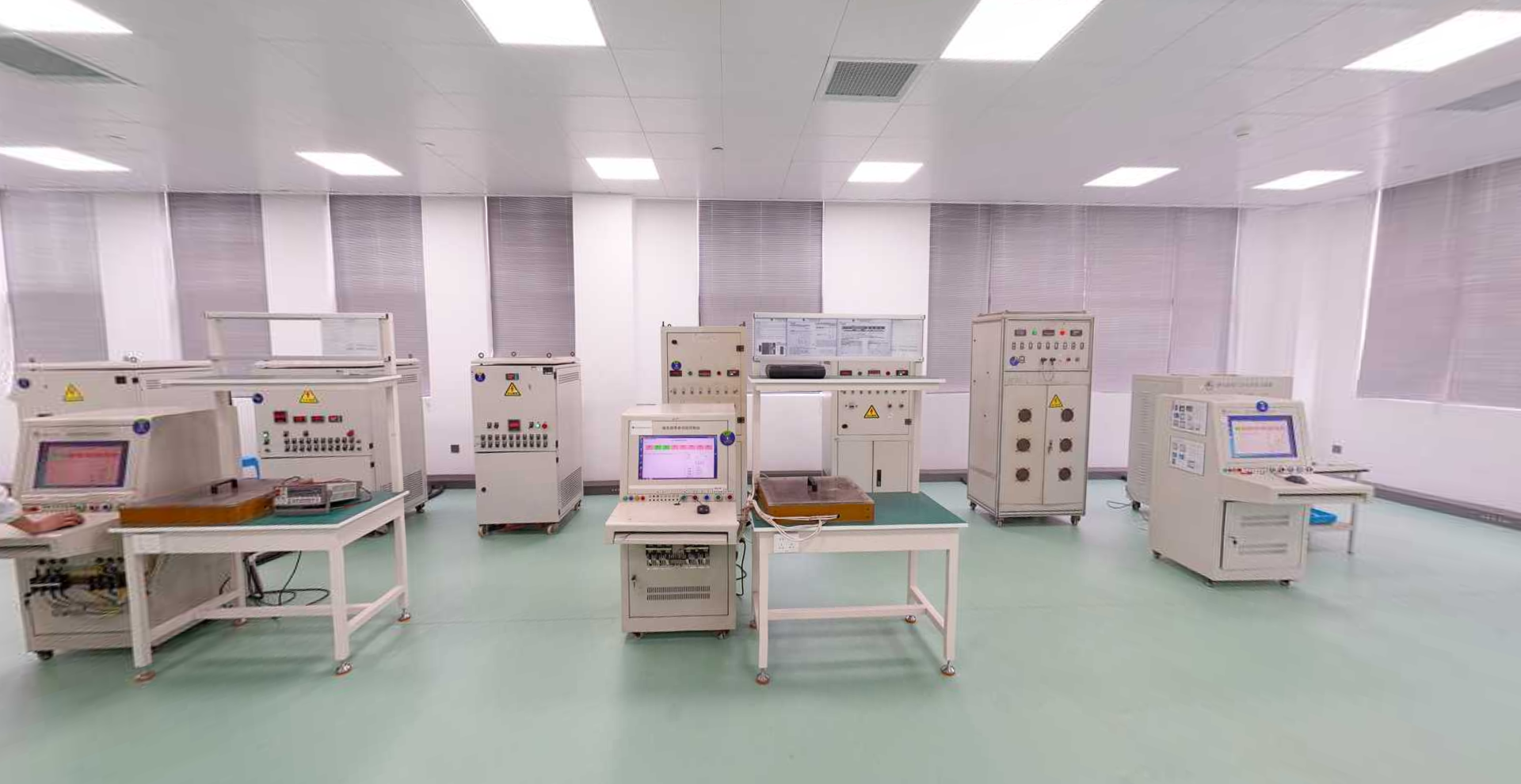
Verification capability belongs in the supplier evidence file: lab, production and stock images should be tied to the models and tests being approved.
Problem Definition: Why Latching Relay Supplier Evaluation Is Different
A latching relay is a bistable switching component. It changes state on a pulse and holds that state without continuous coil power. That operating principle is an advantage in metering, but it changes the supplier evaluation task. The buyer is not only checking a contact rating. The buyer is checking whether the pulse drive, contact system, insulation, dimensions and compliance file will survive the meter’s life cycle and the utility’s acceptance process.
A catalog page that lists many models does not prove that a specific model is suitable. For a meter project, the approval file must connect the model number to the terminal style, coil voltage range, contact configuration, short-circuit withstand, dielectric strength and certificate or declaration. A supplier that cannot make that connection at model level creates rework at sample approval, pilot production and incoming inspection.
Delivery assurance is part of the same problem. A supplier may quote a competitive unit price and still fail at the execution stage if the purchasing terms, minimum order quantity, pre-shipment test and custom assembly drawing are not agreed in writing. In latching relay procurement, commercial terms and technical evidence are not separate workstreams. They meet at the acceptance criteria.
The practical question is therefore not “who has the widest latching relay range?” It is “which supplier can provide a meter-specific evidence pack for the models we intend to approve, and then repeat that performance order after order?” That is the question this framework answers.
Industry Background: Standards, Applications and the Meter Context
Latching relays are used where a circuit must be switched and then held without continuous coil current. GRT states that its products are mainly used in smart meters, smart homes, new energy charging piles, photovoltaic and energy-storage equipment. That application spread matters for supplier evaluation because the same relay family can be specified under different load, installation and compliance conditions.
In payment metering, IEC 62055-31:2022 is the relevant standard family for payment metering systems. It defines utilization categories UC2, UC3 and UC4 for latching relays used in payment meters. For buyers, the standard reference is not a logo to place on a brochure. It is a document set that should identify the model, the utilization category and the test basis. A supplier statement such as “IEC 62055-31 UC2 compliant” is useful only when it can be tied to the exact model and the certificate or declaration behind it.
RoHS is the second compliance layer. EU Directive 2011/65/EU, known as RoHS 2, restricts the use of certain hazardous substances in electrical and electronic equipment placed on the EU market. A latching relay supplier serving EU meter customers should be able to provide a model-specific RoHS declaration or test report. The document should match the ordered part number and should not be a generic portfolio statement.
The wider relay market is large and growing. The global relay market is projected to reach USD 15.65 billion by 2031 from USD 11.75 billion in 2026, according to MarketsandMarkets. That figure covers relays broadly, not latching relays alone. It is useful as background for supply planning, but it should not be used to estimate latching-relay demand or supplier market share.
Latching relay economics also differ from conventional meter electromagnetic relays. A commonly cited comparison in GRT product material states that a bistable latching relay uses pulse current only for switching, retains status after power loss and draws zero coil current at steady state. The same comparison states a unit price premium of 30% to 80%, an extra H-bridge pulse drive circuit on the PCB, lower total life-cycle cost, electrical life of 6,000 to 10,000 operations, power consumption only within a 10 to 50 ms pulse, failure mainly from contact arcing, very low coil burnout risk, and a maintenance warning that load status remains after power cut.
Those facts shape the supplier evaluation. A low steady-state power draw is valuable in metering, but it depends on a correct pulse drive and a contact system that can handle the switching duty. The buyer should evaluate the relay together with the drive circuit, the maintenance procedure and the acceptance test, not as an isolated component.
Detailed Solution: A Four-Layer Supplier Evaluation Framework
The most reliable way to evaluate a latching relay supplier is to build a four-layer evidence file and require the supplier to populate each layer at model level. The layers are model coverage, installation and form factor, compliance evidence, and commercial and delivery assurance. A supplier that can complete all four layers is easier to qualify, audit and repeat-order than one that answers only with a catalog.
Layer 1: Model coverage across GRT508BJ, GRT508BG, GRT508BV and GRT508BW
Start with the exact models under consideration. For this meter-specific evaluation, the buyer should verify GRT508BJ, GRT508BG, GRT508BV and GRT508BW separately. A family statement is not enough. Each model should have its own datasheet, dimensional drawing, compliance statement and sample record.
For GRT508BG, the model-specific text states RoHS compliance and IEC 62055-31 UC2 compliance. That is a useful starting point, but the buyer should still attach the declaration or certificate and the dimensional drawing to the approval file. Compliance without a drawing does not confirm fit; a drawing without compliance does not confirm market access.
For GRT508BV, the model text states 100,000 mechanical operations, a maximum short-circuit current of 2,500 A/10 ms and 4,500 A/10 ms without explosion, an ambient temperature range of -40°C to +85°C and 4 kV dielectric strength between coil and contacts. These are relevant meter-grade facts. The buyer should ask for the RoHS and UC2 declaration for GRT508BV if those are required by the project, because the selected model text does not itself state them.
For GRT508BW, the model text states fast connection, outline dimensions of 55.6 × 30 × 16.5 mm, copper and plastic as primary materials, AgSnO2 contact material, an ambient range of -40°C to +85°C, RoHS compliance and IEC 62052-31 UC2 compliance. It also states that custom assemblies are available with flexible wire, copper straps or an integrated shunt, and that the product image set covers 2×80A, 2×90A and 2×100A pole configurations. Because the BW text cites IEC 62052-31 rather than IEC 62055-31, the buyer should ask the supplier to confirm the correct standard number on the declaration before the meter project accepts it.
For GRT508BJ, the approval file should begin with the model datasheet, declaration and dimensional drawing. Do not approve GRT508BJ on sibling-model data. The same discipline applies to any model that appears in a product image set but not in a model-specific specification block.
Layer 2: PCB-mount and fast-connect installation options
Installation form is a primary filter in meter design. A relay that is electrically suitable but mechanically wrong will fail at the PCB or terminal interface. GRT’s portfolio includes both PCB-mount and fast-connect options, and the buyer should match the installation form to the meter assembly, the current level and the service procedure.
PCB-mount examples include GRT508Y-50A and GRT508Y-90A. GRT508Y-50A is documented as a 1-pole relay with 39 × 30.2 × 15 mm outline dimensions, PCB mounting, AgSnO2 contact material, copper and plastic construction, impulse excitation for single-coil and double-coil versions, and RoHS compliance. GRT508Y-90A is documented with the same 39 × 30.2 × 15 mm outline, PCB mounting, copper and plastic construction, AgSnO2 contact material, impulse excitation and RoHS compliance. These are compact PCB options for designs that need board-level mounting rather than a fast-connect terminal interface.
Fast-connect examples include GRT508BW, GRT508M and GRT508FA3B. GRT508M is documented with 110 × 52 × 24 mm outline dimensions, fast connection, an ambient range of -40°C to +85°C, 4 kV coil-to-contact dielectric strength, RoHS compliance and IEC 62055-31 UC2 compliance. GRT508FA3B is documented with fast connection, 10,000 electrical operations at 60 A/250 VAC and 6,000 operations at 80 A/250 VAC, 100,000 mechanical operations, a maximum short-circuit current of 2,500 A/10 ms and 4,500 A/10 ms without explosion, an ambient range of -40°C to +85°C, RoHS compliance and IEC 62055-31 UC2 compliance, with custom assemblies available.
For higher-current fast-connect designs, the portfolio includes a 100 A contact switching relay with a rated resistive load of 120 A, a maximum switching current of 120 A, a maximum switching voltage of 250 VAC, a coil voltage range of 5–24 VDC, 100,000 mechanical operations, 10,000 electrical operations at 100 A/250 VAC and 6,000 operations at 120 A/250 VAC, a maximum short-circuit current of 3,000 A/10 ms and 6,000 A/10 ms without explosion, an ambient range of -40°C to +85°C, 4 kV coil-to-contact dielectric strength and 52 × 43 × 22 mm dimensions. The buyer should confirm the exact model number that maps to these figures before design release.
Layer 3: Compliance evidence that survives meter qualification
Compliance evidence should be model-specific and document-specific. The buyer should ask for a RoHS declaration or test report and an IEC 62055-31 UC2 certificate or declaration that names the ordered model. The document should show the standard number, the utilization category and the issue or validity information that the meter project’s quality team requires.
GRT’s published model texts show that compliance statements vary by model. GRT508BG states RoHS and IEC 62055-31 UC2 compliance. GRT508BW states RoHS and IEC 62052-31 UC2 compliance. GRT508BV states ratings and endurance but not a model-specific compliance statement in the selected text. Some other model texts also state UC3: for example, GRT508FN is stated to be compliant with IEC 62052-31 UC2 and UC3, GRT508HK with IEC 62052-31 UC3, and GRT508MH with IEC 62052-31 UC3. These variations are exactly why a buyer should not accept a portfolio-level “UC2 compliant” statement for all models.
There is also a standards-reference detail that buyer quality teams should catch. IEC 62055-31 is the payment metering standard relevant to UC2, UC3 and UC4. If a model declaration cites IEC 62052-31 instead, the buyer should ask the supplier to confirm whether the correct reference is 62055-31 for the intended application and to issue a corrected declaration if needed. This is not a paperwork exercise. A mismatch between the standard on the declaration and the standard in the meter specification can delay type approval or customer acceptance.
Layer 4: Delivery assurance, purchasing terms and acceptance criteria
Delivery assurance in latching relay procurement is built from agreed commercial terms and a repeatable acceptance test. For GRT latching relays, the stated purchasing terms are MOQ 100 units, delivery terms FOB, acceptance criteria pre-shipment test and payment terms T/T. These terms should be written into the purchase order and the supplier quality agreement, not left in an email quotation.
Sample policy is part of the same evaluation. GRT states that 3–5 free samples of standard models are available for testing, with the buyer covering freight, and that custom products require further confirmation. A sample is not a shortcut around the evidence file. The sample should be tested against the same dimensions, pulse drive, contact load and acceptance criteria that will be used in mass production.
Custom assembly capability should be reviewed at drawing level. GRT states that custom assemblies are available with flexible wire, copper straps or an integrated shunt across several product texts, including GRT508BW, GRT508FA3B, GRT508HC, GRT508MH and GRT508F. The buyer should request the assembly drawing, the wire and copper strap specification, the shunt integration details and a sample that matches the production intent. A custom assembly is only as reliable as its drawing control.

Factory evidence supports capability review, but it does not replace model-level datasheets, declarations and acceptance tests.
Step-by-Step Breakdown: How to Run the Evaluation
The following sequence turns the four-layer framework into a repeatable buyer workflow. It is written for a meter project that is moving from decision to execution.
- Freeze the meter interface. Define single-phase or three-phase operation, contact configuration, expected load current, impulse coil voltage, PCB-mount or fast-connect installation, and the available outline dimensions. Use the GRT508Y-50A and GRT508Y-90A 39 × 30.2 × 15 mm PCB examples and the GRT508BW 55.6 × 30 × 16.5 mm fast-connect example as reference points, not as automatic substitutes for the final drawing.
- Build a model-level file for each candidate. Create a separate file for GRT508BJ, GRT508BG, GRT508BV and GRT508BW. Each file should contain the datasheet, dimensional drawing, compliance declaration, sample record and commercial terms. Do not merge models into one approval file.
- Verify installation and dimensions. Check the terminal style, footprint, height and coil connection against the meter assembly. For PCB variants, confirm the 39 × 30.2 × 15 mm outline and the impulse excitation requirement. For fast-connect variants, confirm the terminal drawing and the panel or busbar interface.
- Match compliance documents to the model and the standard. Ask for a RoHS declaration or test report and an IEC 62055-31 UC2 certificate or declaration for each model that requires it. Check that the model number and standard number are correct. For GRT508BW, resolve the IEC 62052-31 reference before approval if the project requires IEC 62055-31.
- Check ratings against the application. Compare the stated contact switching capability, rated resistive load, maximum switching voltage, coil voltage range, electrical endurance, mechanical endurance, short-circuit withstand, dielectric strength and ambient range with the meter specification. Use the model-specific text, not a family summary.
- Approve the custom assembly drawing. If flexible wire, copper straps or an integrated shunt are required, request the assembly drawing and a sample. Confirm the wire and strap materials, the shunt integration method, the terminal finish and the inspection points. GRT508BW, GRT508FA3B, GRT508HC, GRT508MH and GRT508F product texts state that custom assemblies are available; the drawing is what makes that statement usable.
- Convert commercial terms into acceptance criteria. Write MOQ 100 units, FOB delivery, T/T payment and pre-shipment test into the purchase order. Define the pre-shipment test record, the sample size, the pass/fail criteria and the document that must accompany each shipment. If the project uses a custom assembly, add the drawing revision to the acceptance criteria.
- Run a sample and pilot lot. Use the 3–5 free standard samples for the first technical check, with the buyer covering freight, and confirm custom samples separately. Then run a pilot lot against the pre-shipment test. Keep the sample and pilot records in the supplier approval file for the next order.
Use Cases: Where the Evaluation Framework Applies
Smart metering and prepaid metering
Smart and prepaid meters need a switching component that can hold state without continuous coil power and can be tested against the meter’s acceptance process. The relevant GRT examples include GRT508BG with RoHS and IEC 62055-31 UC2 statements, GRT508BV with 100,000 mechanical operations and 2,500 A/10 ms and 4,500 A/10 ms short-circuit withstand, and GRT508BW with 2×80A, 2×90A and 2×100A pole configurations in its image set. A three-phase meter evaluation should also review three-contact configurations; the portfolio text describes a relay with three sets of contacts and 80 A switching capability.
Smart home
Smart-home designs often need a compact PCB-mount relay with low power consumption. The GRT508Y-50A and GRT508Y-90A are documented as PCB-mount relays with 39 × 30.2 × 15 mm dimensions, AgSnO2 contacts and impulse excitation for single-coil and double-coil versions. The buyer should still verify the coil voltage, load current and RoHS declaration for the exact model, because compact dimensions alone do not confirm the switching duty.
EV charging
EV charging and high-current switching designs need contact and short-circuit evidence, not only a low-power coil. The portfolio includes a 100 A contact switching relay with 120 A rated resistive load, 120 A maximum switching current, 3,000 A/10 ms and 6,000 A/10 ms short-circuit withstand, 4 kV coil-to-contact dielectric strength and a 52 × 43 × 22 mm fast-connect package. The buyer should confirm the exact model and the load category before design release.
Solar and energy storage
Solar and energy-storage equipment can require high-current switching plus a custom assembly. GRT states that custom assemblies are available with flexible wire, copper straps or an integrated shunt, and the GRT508MH text adds a 5–48 VDC coil range, impulse excitation, an optional auxiliary contact and 3,000 A/10 ms and 6,000 A/10 ms short-circuit withstand. These are useful evaluation points for a project that needs a relay plus shunt or strap integration rather than a stand-alone component.

Production evidence should be reviewed together with model-level drawings, compliance documents and pre-shipment test records.
Comparison Table: Documented Model Evidence and Buyer Checks
The table below compares documented examples from the supplied product information. It is an evidence map for supplier evaluation, not a performance ranking. A cell marked “request” means the buyer should obtain the document or confirmation before approval; it is not a negative performance finding.
| Model or example | Documented installation | Documented ratings or endurance | Documented compliance statement | Custom assembly | Buyer evidence to request |
|---|---|---|---|---|---|
| GRT508BG | Request drawing | Request model datasheet | RoHS; IEC 62055-31 UC2 | Request confirmation | Datasheet, drawing, RoHS and UC2 declaration |
| GRT508BV | Request drawing | 100,000 mechanical operations; 2,500 A/10 ms and 4,500 A/10 ms short-circuit without explosion; -40°C to +85°C; 4 kV | Request model declaration | Request confirmation | Datasheet, drawing, RoHS and UC2 declaration if required |
| GRT508BW | Fast connection; 55.6 × 30 × 16.5 mm | Image set covers 2×80A, 2×90A and 2×100A; AgSnO2 contact; -40°C to +85°C | RoHS; IEC 62052-31 UC2 | Flexible wire, copper straps or integrated shunt | Corrected standard reference if 62055-31 is required; drawing; sample |
| GRT508BJ | Request drawing | Request model datasheet | Request model declaration | Request confirmation | Model datasheet, declaration, drawing and sample |
| GRT508Y-50A | PCB mounting; 39 × 30.2 × 15 mm | 1-pole; impulse excitation; AgSnO2 contact | RoHS | Request confirmation | PCB footprint; sample; RoHS declaration |
| GRT508Y-90A | PCB mounting; 39 × 30.2 × 15 mm | Impulse excitation; AgSnO2 contact | RoHS | Request confirmation | PCB footprint; sample; RoHS declaration |
| GRT508M | Fast connection; 110 × 52 × 24 mm | -40°C to +85°C; 4 kV | RoHS; IEC 62055-31 UC2 | Request confirmation | Terminal drawing; compliance declaration |
| GRT508FA3B | Fast connection | 10,000 at 60 A/250 VAC; 6,000 at 80 A/250 VAC; 100,000 mechanical; 2,500 A/10 ms and 4,500 A/10 ms short-circuit; -40°C to +85°C | RoHS; IEC 62055-31 UC2 | Flexible wire, copper straps or integrated shunt | Custom drawing; sample; pre-shipment test plan |
| 100 A fast-connect example | Fast connection; 52 × 43 × 22 mm | 100 A contact; 120 A rated and maximum switching current; 5–24 VDC coil; 100,000 mechanical; 10,000 at 100 A and 6,000 at 120 A; 3,000 A/10 ms and 6,000 A/10 ms short-circuit; 4 kV | Request model declaration | Request confirmation | Exact model number; datasheet; drawing; sample |
The comparison shows why model-level review matters. GRT508BG and GRT508BW both carry compliance statements, but the standard references differ. GRT508BV has strong endurance and short-circuit figures in the selected text, but the buyer should still request the model-specific compliance declaration. GRT508BJ should not be approved until its own file is complete.
FAQ: Latching Relay Supplier Evaluation
Which compliance documents should a smart-meter latching relay supplier provide?
Ask for a model-specific RoHS declaration or test report and an IEC 62055-31 UC2 certificate or declaration. For GRT508BG, the model text states RoHS and IEC 62055-31 UC2 compliance. For GRT508BW, the text states RoHS and IEC 62052-31 UC2 compliance, so confirm the standard number on the declaration. For GRT508BV, request the model-specific compliance document if UC2 or RoHS is required.
Can GRT Relay support both PCB-mount and fast-connect latching relay requirements?
Yes. The portfolio includes PCB-mount examples GRT508Y-50A and GRT508Y-90A, both documented with 39 × 30.2 × 15 mm dimensions, impulse excitation and RoHS compliance. Fast-connect examples include GRT508BW at 55.6 × 30 × 16.5 mm, GRT508M at 110 × 52 × 24 mm and GRT508FA3B. The buyer should confirm the exact terminal drawing and model-specific ratings before design release.
What are the purchasing terms and acceptance criteria?
For GRT latching relays, the stated purchasing terms are MOQ 100 units, delivery terms FOB, acceptance criteria pre-shipment test and payment terms T/T. These terms should be written into the purchase order and the supplier quality agreement, with a defined pre-shipment test record and pass/fail criteria.
Can buyers obtain samples before a bulk order?
Yes. GRT states that 3–5 free samples of standard models are available for testing, with the buyer covering freight, and that custom products require further confirmation. Sample requests can be sent to sales5@great-relay.com with the model, coil voltage, installation form and required compliance documents.
How should buyers assess long-term supply continuity for smart-meter latching relays?
Use a repeatable supplier file: model coverage for GRT508BJ, GRT508BG, GRT508BV and GRT508BW; model-level RoHS and IEC 62055-31 UC2 evidence; confirmed PCB or fast-connect drawings; custom assembly drawings where needed; and written purchasing terms covering MOQ 100 units, FOB, T/T and pre-shipment test. Keep the sample and pilot-lot records with the approval file so the next order can be checked against the same criteria. To start a sample or quote review, contact GRT Relay at sales5@great-relay.com or review the catalog at the link below.
Conclusion: Approve the Evidence, Not the Catalog
A latching relay supplier for smart-meter projects should be judged by the quality of its model-level evidence. The buyer needs to see GRT508BJ, GRT508BG, GRT508BV and GRT508BW as separate approval items, with their own datasheets, drawings, compliance statements and sample records. The supplier should also show a clear installation path across PCB-mount and fast-connect options, and a custom assembly process for flexible wire, copper straps or an integrated shunt where the meter design requires it.
Delivery assurance is the final filter. MOQ 100 units, FOB delivery, T/T payment and pre-shipment test are not administrative details. They are the terms that determine whether the approved sample can be repeated in mass production. A supplier that can connect those terms to a model-specific technical file is a stronger long-term partner than one that offers a broader catalog without model-level proof.
GRT Relay, operated by Zhejiang Great Electrical Co., Ltd., presents a portfolio that covers meter-oriented latching relays, current transformers and shunts, with documented examples for PCB-mount, fast-connect, high-current and custom assembly requirements. The next step is to request the model file, test the sample and write the acceptance criteria.
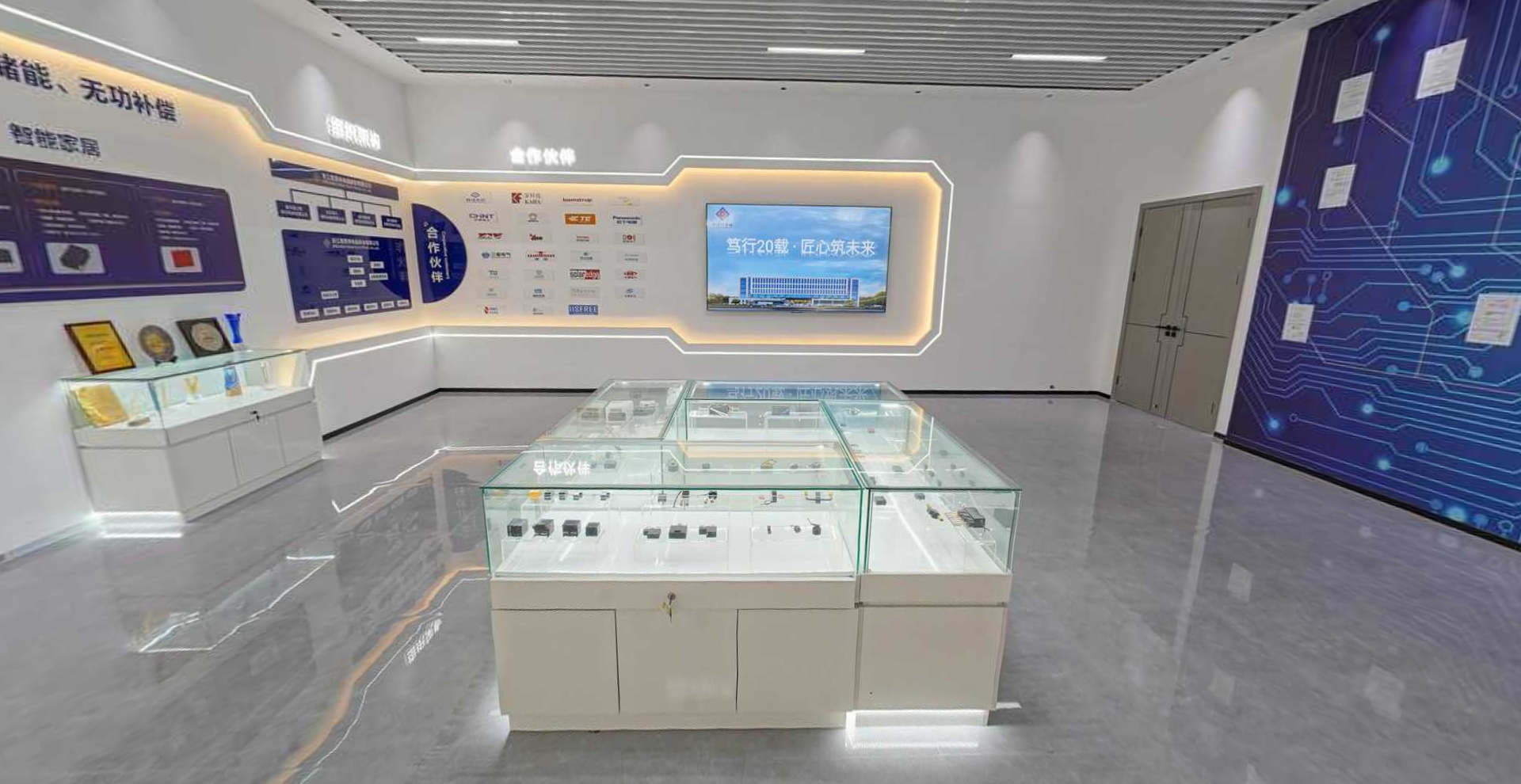
Portfolio review is useful at the shortlist stage; approval should still be based on the model-specific evidence file.
Next step: request a model file, sample or quotation.
GRT Relay / Zhejiang Great Electrical Co., Ltd.
Contact: Annie
M: +86 13626734569
WhatsApp: +86 18057329886
Email: sales5@great-relay.com
Website: en.grtrelay.com
Address: No.9 Linhu Avenue, Yaozhuang Town, Jiashan County, Jiaxing City, Zhejiang Province, China
Download the catalog for model and portfolio review: Catalogs of Great-relay [2025]

Delivery assurance should be confirmed through written purchasing terms, pre-shipment test records and repeat-order acceptance criteria.
Have Questions or Need More Details?
Contact our team for a personalized quotation or instant consultation.
Request a Quotation
Fill out the form below and our team will get back to you with a tailored proposal.
WhatsApp Direct Chat
Prefer to chat in real-time? Message us on WhatsApp for instant assistance & quick answers.
- Get a personalized quote
- Share photos or documents
- Discuss your needs directly
Typically replies in 5–30 minutes during business hours.