
What Is a Latching Relay? A Practical Buyer's Guide
A latching relay is an electromechanical relay that changes contact position when a short voltage pulse is applied to its coil, and then holds that position after the pulse ends, without continuous coil current. GRT Relay, the relay brand of Zhejiang Great Electrical Co., Ltd., manufactures latching relays, current transformers and manganese copper shunts used in smart meters, prepaid meters, smart home controls, charging piles, and photovoltaic and energy storage equipment.
Most explanations of a latching relay stop at the principle. The questions that actually decide a design come later: how the holding force is produced, which rating governs the choice between a 40 A and a 120 A part, why two relays with the same current rating have different endurance, and what documentation a buyer should hold before approving a supplier. This guide is published by the manufacturer, uses GRT product data and certificate records, and separates third-party verified facts from company-reported specifications wherever the difference affects a design or procurement decision.
Problem Definition: The Cost of Holding a Contact Closed
A conventional relay keeps its contacts closed only while current flows through the coil. In a smart meter, a prepaid meter or a remote-controlled load switch, the closed state may need to last for years. Holding a coil energised across that period creates three design problems: continuous current draw from a small auxiliary supply, heat generated inside a sealed enclosure, and a defined state that exists only while the control supply exists.
A latching relay removes the holding current from that equation. GRT latching relays need only impulse excitation, for both single-coil and double-coil versions, and they maintain contact position without continuous coil energisation. Energy is consumed for the duration of the switching pulse, not for the duration of the connected load.
That does not remove the engineering work; it relocates it. Because operation is pulse-driven rather than continuously energised, the control circuit has to generate the switching impulse and match the coil configuration in use. The holding force then comes from the relay's magnetic circuit rather than from the driver, so the specification effort moves to contact rating, endurance, short-circuit behaviour and compliance evidence.
Deployment conditions set the outer boundary. GRT's published working conditions for metering applications are an ambient temperature of -40 °C to +85 °C, relative humidity of 5% to 85% RH non-condensing, altitude up to 2,000 m, no corrosive gas or explosive dust in the surroundings, resistive load, and PCB soldering or screw mounting. A relay selected outside that envelope is outside its documented conditions regardless of what the current rating suggests.
Industry Background: Where Latching Relays Are Specified
The relay category itself is large and standardised. MarketsandMarkets projects the global relay market growing from USD 11.75 billion in 2026 to USD 15.65 billion by 2031. That figure covers electromechanical, solid-state and latching relays together. It is not a latching-relay-specific number and should not be presented as one; demand for latching relays is driven by the equipment they switch, not by the category total.
The application list is more concrete. GRT states that its products are mainly used in smart meters, smart homes, new energy charging piles, and photovoltaic and energy storage equipment. Metering is the application with the tightest electrical requirements, because the relay is the component that physically disconnects a customer's supply.
Compliance in this category is layered rather than singular. IEC 61810-1 is the general and safety standard for electromechanical elementary relays. IEC 62055-31 covers payment metering systems and defines utilisation categories UC2, UC3 and UC4 for load switching, including short-circuit current carrying capacity and fault current making. For the European market, Directive 2011/65/EU (RoHS 2) restricts hazardous substances in electrical and electronic equipment. A supplier can hold one of these and not the others, which is why a certificate list carries more weight than a general statement of compliance.
Trade classification adds a bookkeeping layer that buyers often overlook. Under HS 2022, heading 8536 splits relays into 8536.41 for voltages not exceeding 60 V and 8536.49 for other relays. There is no separate HS code for latching relays, so any import analysis built on customs data measures a relay basket that contains latching relays alongside other types.

How a Latching Relay Works
Relay manufacturers describe the mechanism consistently: the magnetic field generated by permanent magnets is used to attract or release the contacts, so the contact state is retained without a continuous coil supply. The coil pulse momentarily overcomes the magnet's hold and moves the armature between two stable positions — which is why the same device is also called a bistable relay.
The vocabulary matters when reading catalogues, because one device appears under several names. Latching relay, bistable latching relay, magnetic latching relay and impulse relay describe the same principle. Power latching relay and high-current latching relay indicate contact ratings in the high-current part of the range. Installation form adds another descriptor: PCB mount latching relay, fast-connection types, and DIN meter types. Pole count adds the last one — single-phase and three-phase latching relays are one-pole and three-pole devices respectively.
Coil configuration is a driver decision rather than a contact decision. GRT offers both single-coil and double-coil versions across the range, and both require only impulse excitation. What changes is how the control board delivers the pulse, so coil type should be fixed at the same time as the driver circuit, not afterwards.
The specification set that actually decides a design:
- Contact material — GRT uses AgSnO2 across the latching relay range.
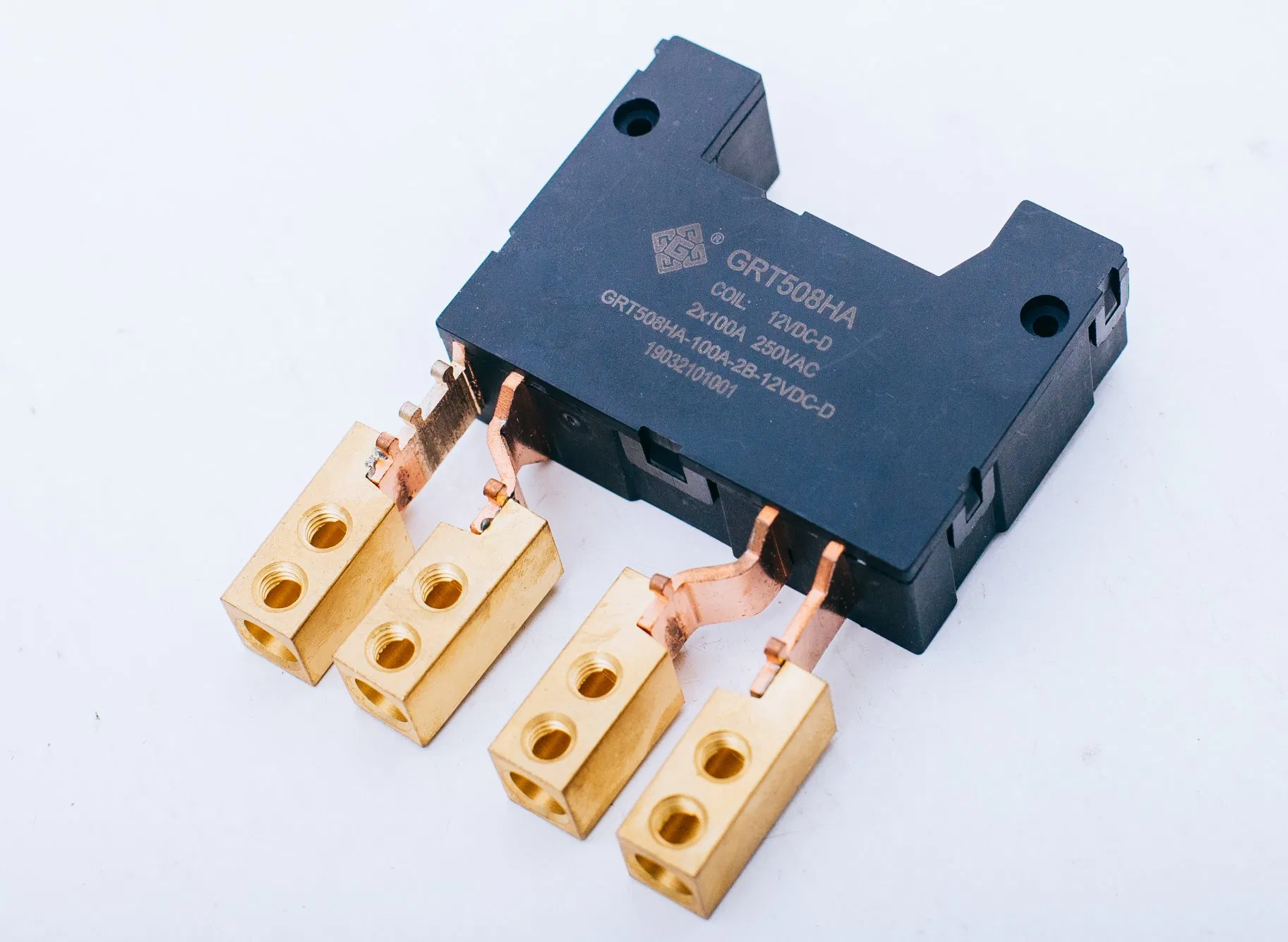
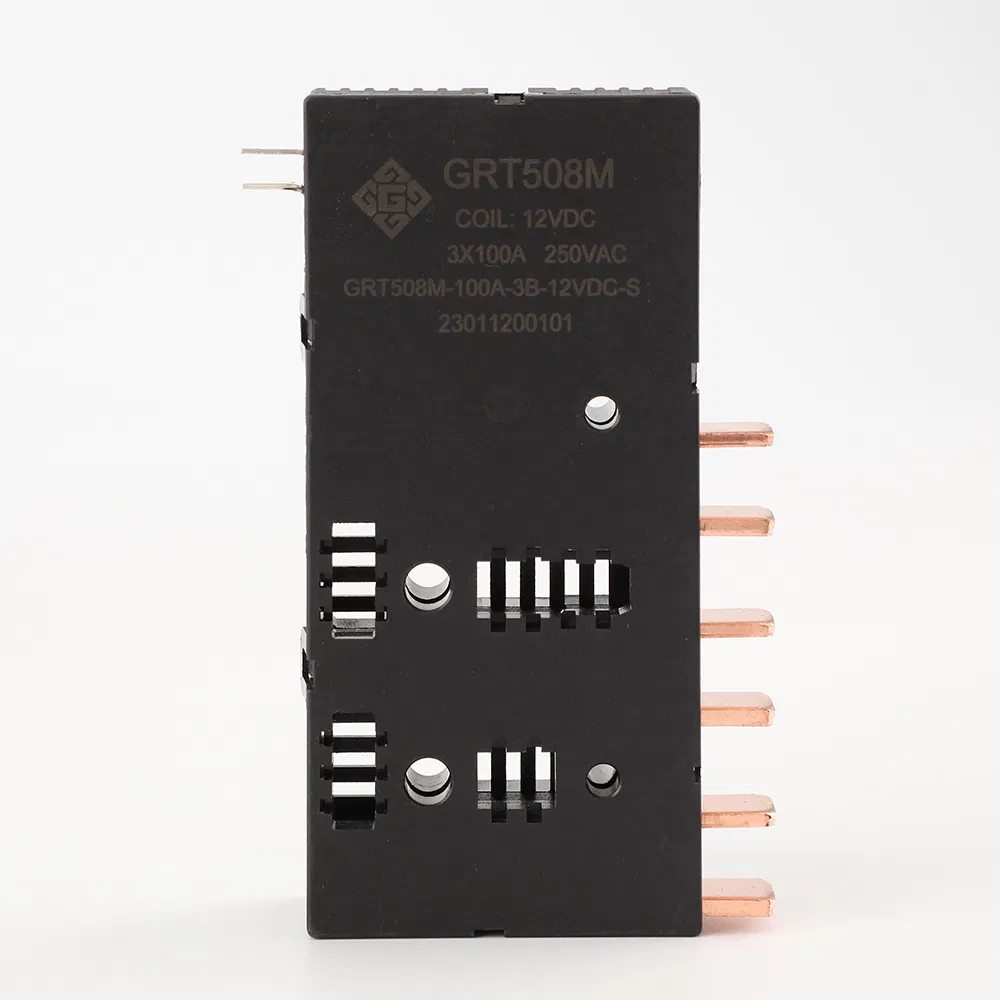
- Rated load and maximum switching voltage — resistive rating, for example 100 A at 250 VAC for GRT508HA and 120 A at 380 VAC for GRT508M.
- Dielectric strength — 4 kV between coil and contacts on multiple GRT models.
- Endurance — mechanical and electrical operation counts, which differ substantially inside one product family.
- Short-circuit current — 3000 A/10 ms and 6000 A/10 ms without explosion on GRT508HA, against 750 A/10 ms on GRT508Y-40A/25A.
- Coil voltage — 5 to 48 VDC, 5 to 24 VDC or 6 to 24 VDC depending on model.
- Installation form — PCB soldering, fast connection, or custom assembly with wire, copper straps or an integrated shunt.
Inside the GRT Relay Latching Relay Range
GRT Relay is operated by Zhejiang Great Electrical Co., Ltd., established in 2003 in Yueqing, Wenzhou, and relocated in 2010 to Yaozhuang Town, Jiashan County, Jiaxing City, Zhejiang Province. The company is a national high-tech enterprise and a national-level specialised and new "little giant" enterprise, listed on the New Third Board in 2016 and in the innovation layer since 2017 under stock code 838484. It reports a 50,000 m² factory, approximately 500 employees, a 60-engineer R&D team and an annual output of about 50,000,000 units, with 55% of output exported and the EU and India as main markets.
The latching relay portfolio is organised by pole count and current, which is the fastest way for a buyer to narrow a shortlist:
- One-pole, 20 A to 150 A. PCB and fast-connection types. GRT508E carries 20 A at 277 VAC with 100,000 electrical operations at 16 A/250 VAC and 60,000 at 20 A/250 VAC. GRT508B covers 60 A/90 A. GRT508F reaches 120 A at 250 VAC, and GRT508HK and GRT508HE extend to 150 A with 440 VAC/28 VDC and 253 VAC maximum switching voltage respectively.
- Two-pole, 80 A to 100 A. GRT508BV and GRT508BW are rated 80 A at 250 VAC, GRT508BJ 90 A, GRT508HA 100 A at 250 VAC with a 5 to 48 VDC coil, and GRT508FH 100 A at 250 VAC.
- Three-pole, 80 A to 120 A. GRT508FL and GRT508FA3B are 80 A at 380 VAC, while GRT508M, GRT508MH, GRT508FN and GRT508G-3B reach 120 A at voltages from 250 VAC to 380 VAC. GRT508MH and GRT508M can be supplied with an auxiliary contact.
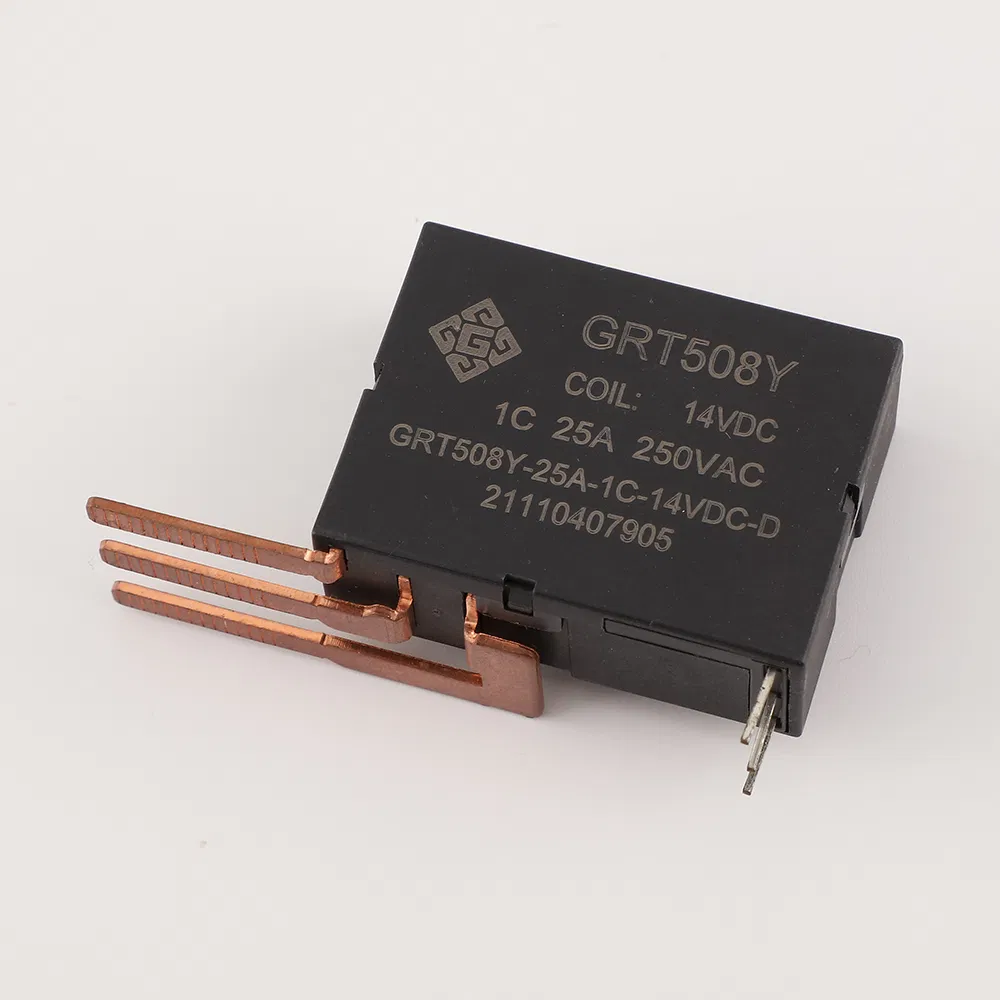
- PCB-specific families. GRT508Y-40A/25A, GRT508Y-50A and GRT508Y-90A are PCB types rated 40 A, 50 A and 90 A, with maximum switching voltages up to 440 VAC and mechanical endurance up to 1,000,000 operations.
- DIN meter types. GRT508AD is a one-pole latching relay for DIN meter applications, rated 60 A/80 A at 250 VAC in a 32 × 30 × 15 mm housing, with a 5 to 48 VDC coil range.
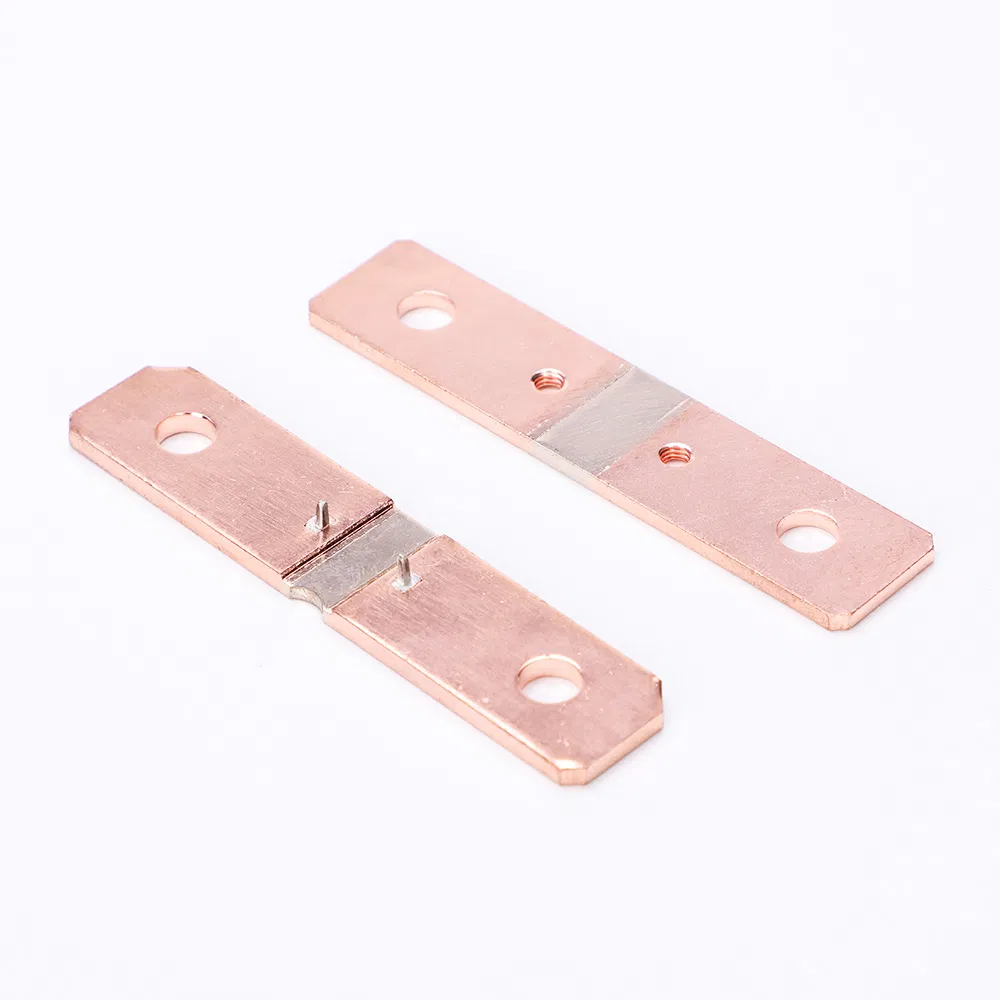
Two design details recur across the range and are worth checking on any datasheet. First, custom assemblies are available with flexible wire, copper straps, or an integrated shunt, which matters when the relay, the current path and the measurement element are assembled as one sub-assembly rather than three separate purchases. Second, GRT also produces the surrounding measurement components: miniature current transformers and the GRT505 manganese copper shunt resistor, a 3 W part with resistance values from ≤100 μΩ to ≥500 μΩ, tolerances of ±1%, ±5% or ±10%, a temperature coefficient of resistance of ≤±50 ppm, 1.0 to 2.0 mm thickness, and Manganin construction with E-beam welding.
Step-by-Step: How to Specify a Latching Relay
- Fix the switching duty first. Establish the resistive current and voltage the contacts will carry, plus any inrush the load presents. GRT publishes resistive ratings, so an inductive or capacitive load requires a separate conversation rather than a direct reading of the table.
- Choose pole count and contact configuration. One-pole for single-phase switching, three-pole where all phases are disconnected together, two-pole where both lines are switched. Where status feedback is needed, specify a model that accepts an auxiliary contact, such as GRT508MH or GRT508M.
- Set the coil specification with the driver. Coil voltage windows differ by model — 5 to 24 VDC, 5 to 48 VDC or 6 to 24 VDC — and single-coil or double-coil versions change the pulse logic on the control board. Confirm both values in the same review.
- Read endurance at your actual load, not at the headline rating. GRT508HA delivers 10,000 electrical operations at 80 A/250 VAC but 6,000 operations at 100 A/250 VAC. GRT508Y-50A reaches 30,000 electrical operations with 1,000,000 mechanical operations. The difference between these numbers is the difference between a ten-year and a shorter service life in the field.
- Match short-circuit capability to the fault level of the installation. Values in the GRT range run from 750 A/10 ms on GRT508Y-40A/25A, through 1500 A/10 ms and 1800 A/10 ms, to 2500 A/10 ms and 4500 A/10 ms, and up to 3000 A/10 ms and 6000 A/10 ms without explosion on GRT508HA, GRT508F, GRT508M and GRT508MH.
- Confirm the compliance documents for the destination market. A UC3 certificate, a CE declaration, a VDE certificate, a CQC certificate and a UL Recognized Component record answer different questions. Request the certificate number and the applicable standard for each market you ship into.
- Decide the mechanical interface. PCB soldering, fast connection, or a custom assembly with wire, copper straps or an integrated shunt. This choice sets tooling, assembly time and incoming inspection scope.
- Validate on samples with the real driver and the real load. Pulse shape, coil voltage tolerance and load characteristics interact. A bench test with the production driver is more informative than a catalogue comparison.
Use Cases: Where Latching Relays Are Applied
Smart and prepaid electricity meters
This is the core application for the GRT latching relay range, and the reason the models carry smart meter and prepaid meter classifications. The relay disconnects and reconnects the customer circuit on command, then holds that state without drawing coil current from the meter supply for the following months.
DIN-rail and DIN meter designs
GRT508AD is configured specifically for DIN meter applications: one pole, 60 A/80 A at 250 VAC, a 5 to 48 VDC coil, and a 32 × 30 × 15 mm outline. Its small footprint is the main selection argument in DIN housings where board area is fixed by the enclosure standard.
Smart home switching
Lower-current PCB types serve smart home switching, where the load is small, the board is dense and the mechanical endurance figure dominates. GRT508Y-40A/25A, GRT508Y-50A and GRT508Y-90A are classified for smart home as well as smart meter use, with maximum switching voltages up to 440 VAC.
Charging piles and higher-current switching
GRT lists new energy charging piles among its main application fields. Where the switching duty sits in the 120 A to 150 A band at mains voltage, the relevant models are the one-pole GRT508F, GRT508H, GRT508HK and GRT508HE, subject to the fault level and endurance requirement of the specific charger design.
Photovoltaic and energy storage equipment
Three-phase disconnection maps onto the three-pole family: GRT508M, GRT508MH, GRT508FN, GRT508G-3B, GRT508FL and GRT508FA3B, rated from 80 A to 120 A at 250 VAC to 380 VAC. GRT lists photovoltaic and energy storage equipment among the main application fields for its relay, transformer and shunt products.
Integrated measurement assemblies
Because GRT also manufactures current transformers and manganese copper shunts, a metering assembly can be sourced as a relay plus measurement element plus shunt combination, with custom assemblies available using flexible wire, copper straps or an integrated shunt.
Latching Relay Comparison: GRT Families at a Glance
| Model | Poles | Rated load (resistive) | Max. switching voltage | Coil voltage | Mounting | Mechanical endurance | Certification record |
|---|---|---|---|---|---|---|---|
| GRT508HA | 2 | 100 A | 250 VAC | 5–48 VDC | Fast connection | 100,000 OPS | TÜV UC3, AK 50231893 0001 |
| GRT508MH | 3 | 120 A | 276 VAC | 5–48 VDC | Fast connection | 100,000 OPS | TÜV UC3, AK 50667902 0001 |
| GRT508M | 3 | 120 A | 380 VAC | 5–24 VDC | Fast connection | 100,000 OPS | IEC 62055-31 UC2 (product data) |
| GRT508F | 1 | 120 A | 250 VAC | 5–24 VDC | Fast connection | 100,000 OPS | TÜV UC3, AK 50637099 0002; CE TTC-23-1307/02/03 |
| GRT508BW | 2 | 80 A | 250 VAC | 5–24 VDC | Fast connection | 100,000 OPS | TÜV UC3, AK 50594930 0001; CE TTC-23-1307/02/02 |
| GRT508B | 1 | 60 A / 90 A | 250 VAC | 5–24 VDC | Fast connection | 100,000 OPS | CE TTC-23-1307/02/01; TÜV UC3, AK 50407879 0001 |
| GRT508E | 1 | 20 A | 277 VAC | 5–24 VDC | PCB | 100,000 OPS | UL Recognized, UL-CA-L340054-512-92406102-1 |
| GRT508Y-40A/25A | 1 | 40 A | 250 VAC | 5–24 VDC | PCB | 500,000 OPS | VDE 40039308 |
| GRT508Y-50A | 1 | 50 A | 440 VAC | 5–48 VDC | PCB | 1,000,000 OPS | CQC24002437513; TÜV R 50554055 001 |
| GRT508AD | 1 | 60 A / 80 A | 250 VAC | 5–48 VDC | Fast connection | 100,000 OPS | RoHS compliant |
Source: GRT product data and certificate records. All ratings shown are resistive-load values at the stated voltage. Figures are not comparable across models without confirming load category, contact configuration, electrical endurance and test method — a 100 A rating at 6,000 operations and a 100 A rating at 20,000 operations describe different products.
The second comparison that matters in procurement is not between products but between compliance documents. Each requirement answers a different question, and a supplier may hold one without the others.
| Requirement | What it covers | What to request from a supplier |
|---|---|---|
| IEC 61810-1 | General and safety requirements for electromechanical elementary relays | Test report or certificate referencing the edition and amendment used |
| IEC 62055-31 UC2 / UC3 | Load switching capability for payment metering, including short-circuit current carrying and fault current making | Certificate number, issuing body, and the exact utilisation category per model |
| Directive 2011/65/EU (RoHS 2) | Restriction of hazardous substances in electrical and electronic equipment placed on the EU market | Declaration of conformity or test report covering the specific model |
| HS 8536.41 / 8536.49 | Tariff classification of relays split at 60 V; no separate code exists for latching relays | Confirmed classification per part number before landed-cost calculation |
How to Evaluate Latching Relay Manufacturers
Supplier evaluation in this category is less about brand recognition than about evidence that maps to a specific load profile. Six checks separate a workable shortlist from a catalogue list.
- Portfolio fit, not portfolio size. A supplier whose range covers 20 A PCB types and 150 A fast-connection types can serve both a smart home board and a charger design. GRT's range spans one-pole 20 A to 150 A, two-pole 80 A to 100 A and three-pole 80 A to 120 A, which is the practical test of coverage.
- Certificate evidence per model, not per company. Ask for the certificate number and standard for the exact part. GRT models carry distinct records: TÜV UC3 certificates on GRT508HA, GRT508MH, GRT508F and GRT508BW; TÜV UC2 on GRT508FA and GRT508FA3B; VDE 40039308 on GRT508Y-40A/25A; CQC24002437513 on the GRT508Y series; UL Recognized Component certification on GRT508E; CE certificates issued by INTEGRA96 on GRT508B, GRT508BW, GRT508FA and GRT508F series.
- Documented electrical data at the derated point. A supplier that can state endurance at more than one load condition is easier to qualify than one that only publishes a headline rating.
- Custom assembly capability. Flexible wire, copper straps and integrated shunt options determine how much of the current path you outsource. This is where an integrated relay, current transformer and shunt portfolio reduces the number of suppliers to audit.
- Capacity and continuity signals. Reported plant area, headcount, engineering team size and annual output are indicators, not proof. GRT reports 50,000 m², approximately 500 employees, 60 R&D engineers and about 50,000,000 units per year; treat these as company-reported figures and confirm them against the audit scope you require.
- A working sample process. The shortest path from shortlist to approval is a sample tested with your own driver and load, not a comparison of catalogue pages.
Frequently Asked Questions
What certifications and standards apply to GRT latching relays?
Model-level certificate records include TÜV Rheinland UC3 certificates under IEC 62052-31:2015 and EN 62052-31:2016 on GRT508HA, GRT508MH, GRT508F and GRT508BW, and UC2 certificates under IEC 62055-31:2005 and EN 62055-31:2005 on GRT508FA and GRT508FA3B. GRT508Y-40A/25A holds VDE certificate 40039308 to DIN EN 61810-1 and EN 61810-1 series standards. The GRT508Y series holds CQC certificate CQC24002437513 to GB/T 21711.1-2023, valid from 2024-07-08 to 2029-07-07, and GRT508Y-50A holds TÜV certificate R 50554055 001 to EN 61810-1:2015+A1 and IEC 61810-1:2015+A1. GRT508E holds UL Recognized Component certification UL-CA-L340054-512-92406102-1 under CSA C22.2 NO. 14-18. CE certificates issued by INTEGRA96 cover the GRT508B, GRT508BW, GRT508FA and GRT508F series, and GRT states RoHS compliance across the latching relay range.
Does a latching relay need continuous coil power to hold its contact state?
No. A GRT magnetic latching relay needs only pulse signals for status switching, holds the contact position without continuous coil power supply, and operates with low power consumption. Both single-coil and double-coil versions require only impulse excitation. The relay then maintains position on its own until the next pulse, which is the property that makes it suitable for metering circuits where the connected state persists for long periods.
How do I evaluate and shortlist latching relay manufacturers?
Start from the switching duty and work backwards. Confirm that the manufacturer's range covers your current band and pole configuration — GRT covers one-pole 20 A to 150 A, two-pole 80 A to 100 A, three-pole 80 A to 120 A, plus PCB types from 25 A to 90 A and the GRT508AD for DIN meters. Then request the certificate number and applicable standard for the exact model and destination market, ask for endurance data at your operating load rather than at the headline rating, and confirm whether custom assemblies with flexible wire, copper straps or an integrated shunt are available. GRT also manufactures current transformers and manganese copper shunts, which reduces the number of separate suppliers in a metering assembly. Finally, validate with samples driven by your production electronics.
Can I get free samples of a GRT latching relay?
Yes. Three to five free samples of standard models are available for testing, with the buyer covering the freight cost. Custom configurations require further confirmation before a sample can be scheduled, because coil type, lead configuration and assembly options change the build. Sample requests can be sent to sales5@great-relay.com or through the WhatsApp contact published on the GRT website.
What determines cost and lead time for a latching relay order?
Cost is driven by the current rating and pole count, the contact material and coil configuration, the certification the part must carry, and whether the delivery is a standard model or a custom assembly with flexible wire, copper straps or an integrated shunt. GRT does not publish list prices, so a written quotation against a defined part number and annual volume is the correct basis for comparison. Lead time follows the same split: standard models and custom assemblies are scheduled differently, and custom tooling or assembly configuration has to be confirmed before a delivery date can be committed. The practical next step is to send the load profile, pole count, coil voltage and target market on the enquiry form at en.grtrelay.com and ask for a quotation with a confirmed schedule.
Next Step: Match a Relay to Your Load Profile
Selecting a latching relay is a four-variable decision: current and voltage, pole count, coil configuration, and the compliance record for the destination market. GRT Relay publishes the electrical data needed to run that comparison across one-pole, two-pole and three-pole families, and supports custom assemblies with flexible wire, copper straps or an integrated shunt.
Download the full latching relay, current transformer and shunt specifications in the GRT product catalogue (PDF), or request three to five free samples of a standard model for bench testing.
Contact: Annie · M +86 13626734569 · WhatsApp +86 18057329886 · sales5@great-relay.com · No.9 Linhu Avenue, Yaozhuang Town, Jiashan County, Jiaxing City, Zhejiang Province, China.
Conclusion
A latching relay holds its contact state through a permanent-magnet circuit instead of a continuously energised coil, which is why it is described as bistable. The principle is simple; the selection is not. Current rating, pole count, coil configuration, endurance at the real load, short-circuit capability and the certificate record for the destination market each eliminate options independently, and a relay that satisfies five of those six conditions is still the wrong part.
The practical rule for buyers is to specify against evidence rather than against a category description. Ask for the endurance figure at your operating current, the short-circuit rating in amperes and milliseconds, the certificate number and standard for the exact model, and the mechanical interface of the assembly you will actually build. Those four answers determine whether a latching relay will hold for the life of the equipment it controls.
Have Questions or Need More Details?
Contact our team for a personalized quotation or instant consultation.
Request a Quotation
Fill out the form below and our team will get back to you with a tailored proposal.
WhatsApp Direct Chat
Prefer to chat in real-time? Message us on WhatsApp for instant assistance & quick answers.
- Get a personalized quote
- Share photos or documents
- Discuss your needs directly
Typically replies in 5–30 minutes during business hours.