
How to Match PVC Vinyl Materials to Low-VOC Automotive Interior Projects
Matching PVC vinyl materials to a low-VOC automotive interior project is a four-part decision followed by a verification step. You choose the resin route (PVC paste resin or blend resin powder), you choose the primary plasticizer (Acetyl Tributyl Citrate ATBC, BASF Hexamoll® DINCH or DOTP), you specify a phenol-free Ca/Zn stabilizer for the coated or slush-molded part, and you add a viscosity modifier such as Eastman TXIB only when the paste needs it. None of those four choices is decided by a single data sheet. Each one is confirmed by grade-specific documents and a trial on the actual line.
This guide is written for formulation engineers, technical buyers and procurement teams who already have an emission target from the interior program and now have to turn it into a material list. It follows the order in which the decisions actually have to be made, and it separates what a material supplier can document from what only the part maker can validate.
Guangdong Baoshan Trading Co., Ltd (www.baoshancl.cn) is a Dongguan-based supplier of PVC vinyl materials — paste resins, blend resins, plasticizers, viscosity reducers and stabilizers — serving children's vinyl toys, medical supplies, food packaging, automotive interiors, wallpaper, flooring, inks and coatings. Its portfolio includes BASF Hexamoll® DINCH and Eastman TXIB, which the company distributes in China.
Low-VOC Is a Property of the Finished Part, Not of the Drum
An interior skin or coated fabric can be built from individually compliant raw materials and still fail an odour or fogging evaluation. Volatile contributions in a PVC interior part are commonly traced to several places at once: residual monomer in the resin, the volatile fraction of the plasticizer system, solvent or carrier carried in by a thinning additive, by-products of the stabilizer package, and residues left by pigments and fillers. Because those sources stack, substituting only the plasticizer rarely closes the gap on its own.
The second common failure is a documentation mismatch. A buyer receives a REACH or RoHS statement that names one plasticizer grade, then orders a different grade or a different resin lot, and the declaration no longer describes what is in the part. Low-VOC programs therefore need documents tied to grade and lot, not to a product family.
The third failure is process-driven. When a filled plastisol is too thick, the fastest fix on the shop floor is extra thinner. That solves viscosity and damages the emission profile at the same time. A viscosity modifier chosen for the formulation avoids that trade-off. The rest of this guide shows how to sequence these decisions so that the process fix does not undo the material work.
Why Interior Programs Are Re-Specifying Plasticizers and Stabilizers Now
Two pressures are moving at the same time. The first is cabin air quality, where interior programs set their own emission, fogging and odour expectations and push those requirements down the material chain. The second is regulation. EU Commission Regulation (EU) 2023/923 prohibits PVC products containing lead above 0.1% by weight, effective November 2024, which removes lead-bearing stabilizer options from any interior part intended for that market.
The supply side has responded with non-phthalate chemistry at commercial scale. MarketsandMarkets valued the global eco-friendly plasticizer market at USD 5.03 billion in 2024. DataVagyanik projects that the market for high-flow PVC powders for slush molding will reach USD 277 million by 2034, a figure that reflects how much interior and toy skin production still depends on paste-based PVC rather than on alternative polymers.
What the market data does not tell a project team is which grade to put in which part. That still has to be matched part by part. Manufacturer positioning is a starting point rather than an answer: BASF describes Hexamoll DINCH as a non-phthalate plasticizer developed for applications with close human contact, and recommends it for soft PVC articles such as medical devices, toys and food packaging. Those statements support a first-pass shortlist. They do not replace the vehicle manufacturer's own emission and odour validation of the finished interior part.
The Four Material Decisions That Set the Emission and Compliance Profile
Every low-VOC interior formulation resolves into the same four slots. Treat them in this order, because a change in the resin route changes the plasticizer dosage, and a change in the plasticizer changes the viscosity window.
1. Resin Route: PVC Paste Resin, Blend Resin Powder or PVC Resin Powder
PVC paste resin (emulsion PVC) is the base for the plastisols used in slush molding and in spread coating on fabric. It has to form a stable paste with the plasticizer at the filler load the part needs, and it drives how the paste gels in the mould or under the knife. Blend resin powder is used where a drier, more filler-tolerant mix is wanted, typically in coating and dry-blend routes. PVC resin powder (suspension grade) is the general-purpose base for extrusion and calendering and is not the first choice for a slush skin. These are starting rules, not absolutes; the grade and its K value still have to be matched to the equipment.
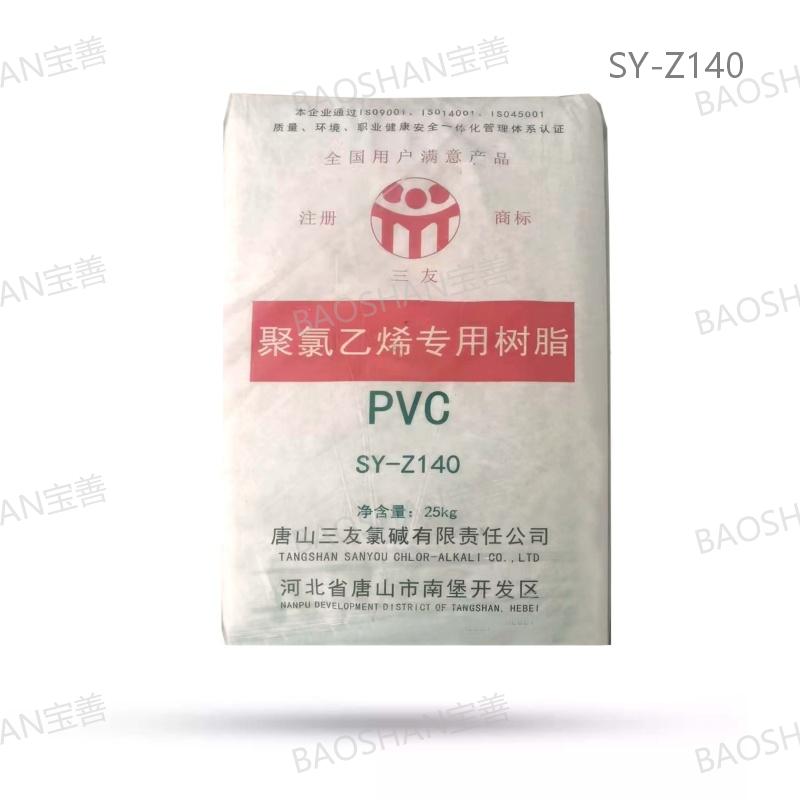
Baoshan covers all three routes, including PVC paste resin grades such as Kaneka PSM-31, Kaneka PSH-10S, KANEVINYL PASTE SH-14, SY-Z140, TPM-31, LF-51 and LF-71G, blend resin powders such as SB-100C, Zhongtai PB-1000, Kaneka PBM-B5F and BJ-65, and PVC resin powders such as TG-1000S and DG-1000S.
2. Primary Plasticizer: ATBC, Hexamoll DINCH or DOTP
ATBC (Acetyl Tributyl Citrate), supplied as the product grade ATBC, is a citrate-ester plasticizer. Buyers shortlist it when the project wants a citrate chemistry rather than a phthalate or a terephthalate, and it is commonly grouped with bio-based plasticizer options in sourcing discussions. Its documentation has to be checked grade by grade against the project requirements, including REACH, RoHS, FDA-related references where applicable, and GB 4806 where the part is food-contact-adjacent.
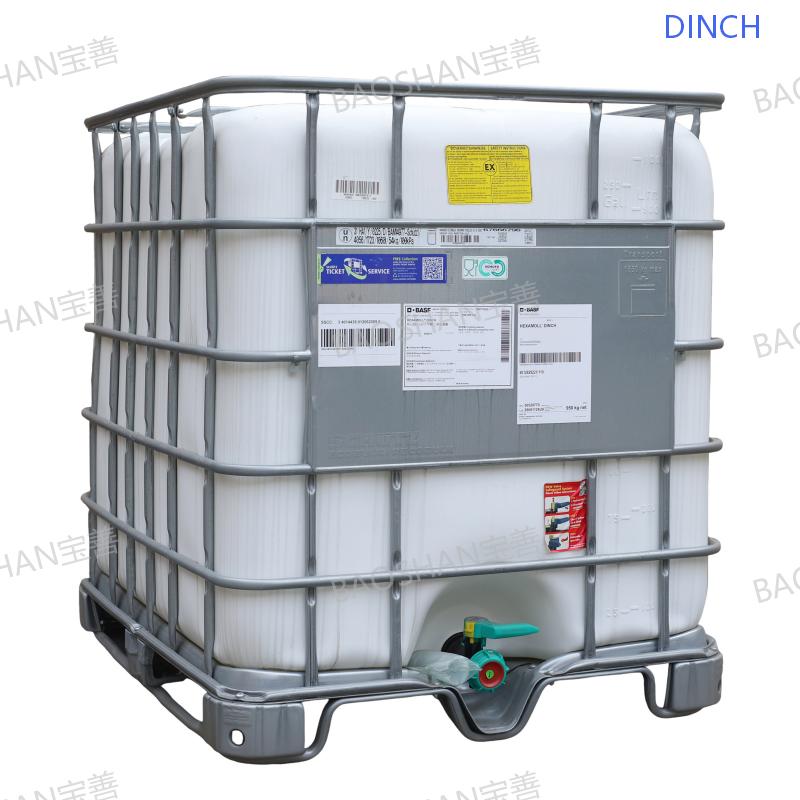
BASF Hexamoll® DINCH is described by BASF as a non-phthalate plasticizer developed for applications with close human contact. BASF also states that the product can be used in PVC production processes including extrusion, calendering, molding and spread coating, and recommends it for soft PVC articles such as medical devices, toys and food packaging. For an interior program, that combination of close-contact positioning and multi-process compatibility is why DINCH appears on shortlists for slush skins and coated fabric alike.
DOTP (Dioctyl Terephthalate) is supplied as an Environmentally Friendly Plasticizer grade and functions as a general non-phthalate terephthalate option. Where a project is comparing cost bases rather than contact sensitivity, DOTP is normally the grade that gets benchmarked against DINCH and ATBC on the same formulation.
A polymeric polyester plasticizer, such as GLOBINEX W-2050, is a further route where volatility is the binding constraint. Polymeric esters are generally lower in volatility than monomeric esters, which is why they appear in low-fogging discussions even though they cost more per kilogram at the same dosage.
3. Viscosity Modifier: Eastman TXIB
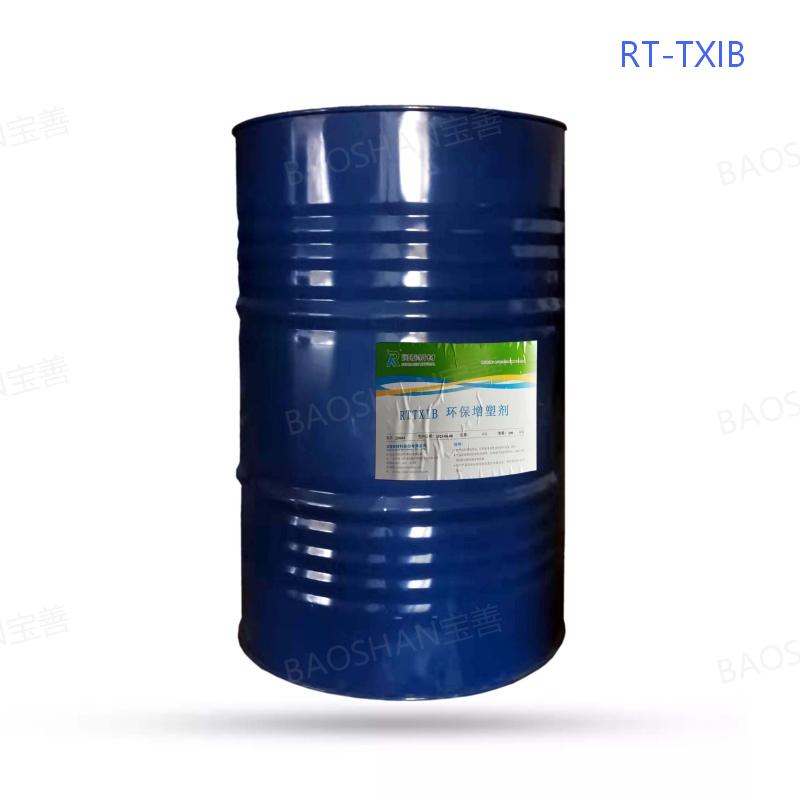
Eastman TXIB is supplied as a viscosity reducer and film-forming additive. Eastman's technical data reports a Brookfield viscosity of 9 cps on a No. 1 spindle at 25°C. That low viscosity is the reason it is used in small additions to bring a highly filled plastisol into the processing window, instead of adding solvent that would have to be driven off and would add to the emission load.
The practical rule is to treat TXIB as a formulation tool, not a default ingredient. Fix the resin, filler and plasticizer first, measure where the paste lands, and then use the modifier to close the remaining gap. Adding it before the base is settled hides the real viscosity problem and produces pastes that drift during pot life.
4. Stabilizer: Phenol-Free Ca/Zn Systems
Calcium-zinc stabilizers are the standard non-lead route for flexible PVC. Phenol-free Ca/Zn grades remove the phenolic component, which is associated with odour and colour development in coated fabrics and artificial leather. For an interior part, that matters twice: once in the emission and odour evaluation, and once in appearance after heat history in the mould or the oven.
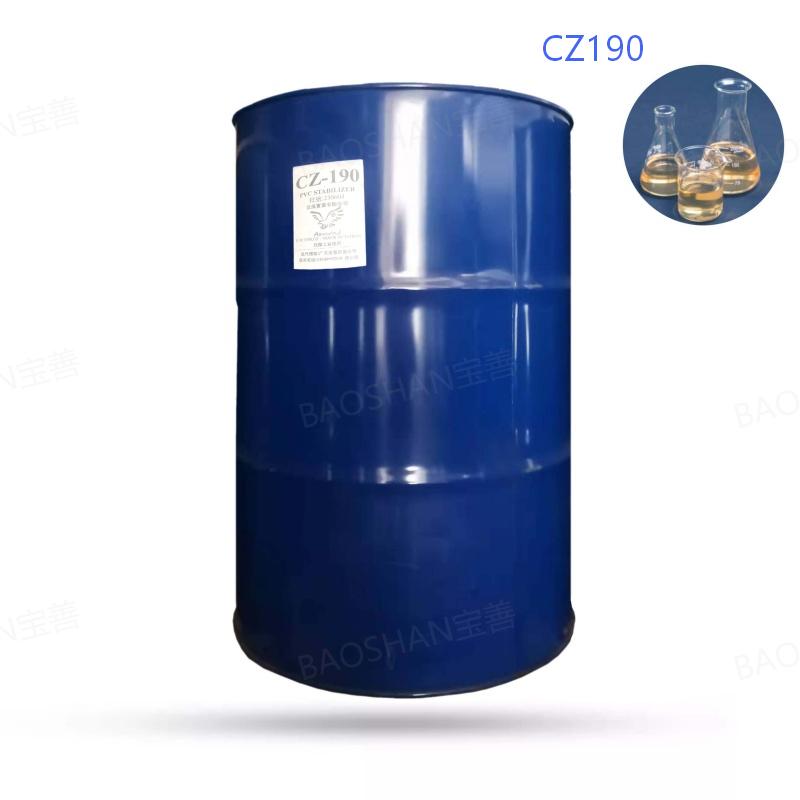
Baoshan supplies phenol-free Ca/Zn stabilizer grades including CT303TX (BAEROSTAB CT 303 TX), CZ-190, CZ-2756, SC-135 and SC-1600C, positioned for PVC coated material and artificial leather. Epoxidized soybean oil (ESO) is commonly used alongside a Ca/Zn system as a co-stabilizer to support heat stability, where the stabilizer package allows it.
The regulatory floor is not negotiable. Under EU Commission Regulation (EU) 2023/923, PVC products containing lead above 0.1% by weight are prohibited, effective November 2024. A phenol-free Ca/Zn system that is also confirmed lead-free keeps an interior part inside that limit without a separate exemption argument.
A Seven-Step Matching Workflow for an Automotive Interior Project
The sequence below is the order that keeps rework to a minimum. Each step produces a decision that the next step depends on, so skipping ahead usually means repeating the trial.
Step 1 — Write down the project envelope
Record four things before contacting any supplier: the emission, fogging and odour expectations the interior program applies to the part; the markets the vehicle is sold in; whether the part touches skin or food-adjacent surfaces; and the process route the plant will use. This envelope decides which documents are mandatory and which material options are simply out of scope.
Step 2 — Map the part to a resin route
A slush-molded skin points to PVC paste resin. A spread-coated fabric points to paste resin, or to blend resin powder where a drier mix and higher filler load are wanted. Extruded or calendered trim points to PVC resin powder. Naming the route first prevents the common mistake of shortlisting plasticizers for a resin system the plant does not run.
Step 3 — Select the primary plasticizer against the envelope
Use the envelope, not habit. Close-contact positioning plus multi-process flexibility points to Hexamoll DINCH. A citrate chemistry requirement points to ATBC. A general non-phthalate benchmark on a cost basis points to DOTP. A volatility-limited fogging target puts a polymeric polyester plasticizer such as GLOBINEX W-2050 into the comparison.
Step 4 — Set the viscosity window with a modifier
Measure the paste without modifier first, then add Eastman TXIB in small increments until the target is reached. Record the initial viscosity and the viscosity after the intended pot life, because a paste that meets the number at mixing time and drifts afterwards will still cause defects on the line.
Step 5 — Fix the stabilizer system
Specify a phenol-free Ca/Zn grade and confirm that the grade is lead-free under the EU 0.1% by weight limit. Confirm the dosage with the supplier against the heat history of your process, and decide whether an ESO co-stabilizer belongs in the package.
Step 6 — Verify analytically, then on the line
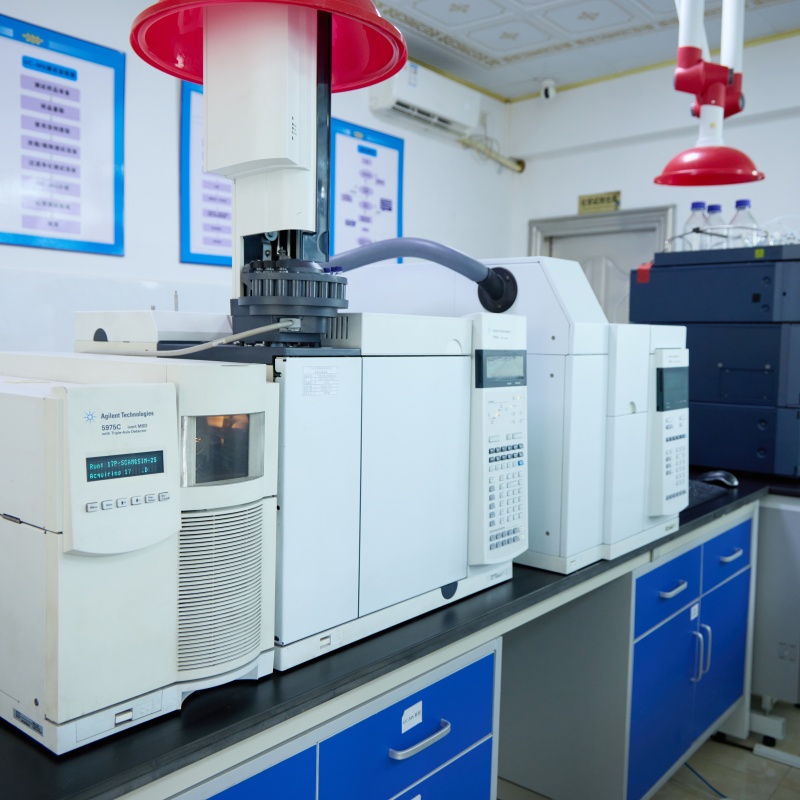
Analytical screening comes before the line trial. Baoshan's laboratory uses Agilent GC-MS, ICP-MS and Waters LC-MS/MS equipment and provides free testing for phthalates, heavy metals, bisphenol A and organotin, which covers the substance classes an interior program is most likely to question. After screening, run the trial on the actual slush or coating equipment and retain samples from every lot.
Step 7 — Lock the specification and the supply plan
Write the specification with grade names, not product categories: resin model, plasticizer grade, stabilizer model, modifier level. Then attach the supply terms — packaging, MOQ, lead time, delivery term and documentation per lot — so that the approved formulation stays reproducible when the next purchase order is placed.
Matching common project conditions to a material route
| Project condition | Material route to evaluate first | Why |
|---|---|---|
| Slush-molded skin for instrument panel or door trim | PVC paste resin + Hexamoll DINCH or ATBC + phenol-free Ca/Zn | Paste-based process with close-contact and odour expectations |
| Coated fabric or artificial leather with a fogging target | Paste or blend resin + DINCH or ATBC + phenol-free Ca/Zn + TXIB | Viscosity control at the coating head without solvent addition |
| Highly filled paste that thickens during pot life | TXIB addition after the base formulation is fixed | 9 cps Brookfield viscosity allows small-dose adjustment |
| EU-bound part with a lead restriction | Lead-free phenol-free Ca/Zn grade | EU 2023/923 limits lead to 0.1% by weight from November 2024 |
| Volatility-limited fogging result | Polymeric polyester plasticizer such as GLOBINEX W-2050 | Polymeric esters are generally lower in volatility than monomeric esters |
Comparison Table: Plasticizer and Stabilizer Options for Low-VOC Interior PVC
| Material | Role in the formulation | Documented basis | Typical fit in an interior project |
|---|---|---|---|
| ATBC (Acetyl Tributyl Citrate) | Primary plasticizer | Citrate-ester grade in the portfolio; declarations must be confirmed per grade | Projects that require a citrate, non-phthalate chemistry |
| BASF Hexamoll® DINCH | Primary plasticizer | BASF: non-phthalate, developed for close human contact; compatible with extrusion, calendering, molding and spread coating; recommended for soft PVC including medical devices, toys and food packaging | Slush and coated parts that need multi-process flexibility |
| DOTP (Dioctyl Terephthalate) | Primary plasticizer | Supplied as Environmentally Friendly Plasticizer grade | General non-phthalate benchmark in cost comparisons |
| Eastman TXIB | Viscosity reducer and film-forming additive | Eastman: Brookfield viscosity 9 cps, No. 1 spindle at 25°C | Filled pastes that need a controlled viscosity window |
| Polymeric polyester plasticizer (GLOBINEX W-2050) | Primary plasticizer with volatility control | Grade in the portfolio; polymeric esters are generally lower in volatility than monomeric esters | Fogging targets where volatility is the limiting factor |
| Phenol-free Ca/Zn stabilizer | Heat stabilizer | Grades CT303TX, CZ-190, CZ-2756, SC-135, SC-1600C; EU 2023/923 lead limit 0.1% by weight | Coated fabric and artificial leather with odour and colour requirements |
| ESO (Epoxidized Soybean Oil) | Co-stabilizer | Commonly used alongside Ca/Zn systems | Supporting heat stability where the package allows it |
Where Each Route Fits: Three Interior Use Cases
Slush-molded interior skins
Instrument panel and door-upper skins are the clearest case for PVC paste resin. The paste has to fill the mould detail, gel consistently and release without surface defects, while the finished skin carries the odour and fogging expectations of the cabin. A paste resin such as PSH-10S or PSM-31 paired with Hexamoll DINCH or ATBC and a phenol-free Ca/Zn stabilizer is the base configuration to evaluate.
PVC coated fabric and artificial leather
Seat bolsters, headliners and door inserts made from PVC coated material put the viscosity question at the coating head. Here the resin choice may be paste resin or blend resin powder depending on the line, and the plasticizer system carries the contact and odour requirements. TXIB earns its place in this use case more often than in slush work, because coating pastes are usually more heavily filled.
Low-emission trim and coated flooring
Trim parts with a strict fogging result are the case where DOTP is benchmarked against polymeric polyester options. The decision usually comes down to whether volatility or cost per kilogram of paste is the binding constraint, and that answer changes with filler load and part thickness rather than with a catalogue.
Slush-molding support is not theoretical in this portfolio. A PVC vinyl toy manufacturer in Vietnam, running 300 vinyl machines, uses these materials for stable molding and consistent toy quality, with a stated two-year shelf life under cool and dry storage. That is toy evidence rather than automotive approval, but the paste handling, viscosity control and stabilizer logic carry over directly to interior skin production.
How Guangdong Baoshan Trading Supports the Matching Process
The matching workflow above depends on three supplier capabilities: being able to supply the resin, plasticizer, modifier and stabilizer as one coordinated set; being able to test for the substance classes that interior programs question; and being able to adjust a formulation rather than only ship a catalogue grade. Baoshan provides customization services that include formula design, formula optimization and customized production, and after-sales services that include testing services and technical support.
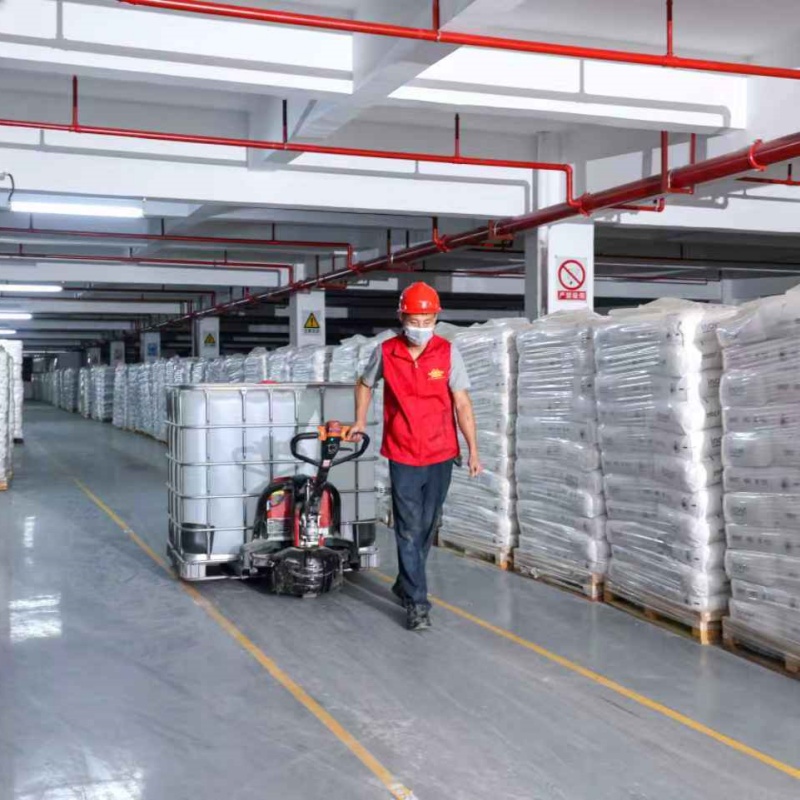
Operationally, MOQ starts from 20 kg with standard packing of 200 kg per drum or 20 kg per bag, standard lead time is 3-5 days, and monthly sales volume is around 4,000 tons. The company operates a 20,000-square-meter warehouse with 16 liquid storage tanks and holds more than three months of safety stock for bulk European materials, which is what allows an approved formulation to be repeated on schedule rather than re-sourced each quarter.
Next step: send the part description, the emission target and the annual volume, and request a sample set covering paste resin, plasticizer and phenol-free Ca/Zn stabilizer for a lab trial.
Email misscheng1984@163.com or WhatsApp +84 865388399.
FAQ
Which documents should we request to confirm low-VOC and regulated status?
Request a grade-specific document set rather than a generic company certificate. A practical package includes a REACH SVHC statement, a RoHS statement, FDA-related references where skin or food contact applies, a GB 4806 declaration for food-contact-adjacent parts, and batch reports for phthalates, heavy metals, bisphenol A and organotin. The documents must name the exact grade and lot, because a declaration issued for one plasticizer grade does not cover another.
Can a supplier adjust the resin and plasticizer combination to our process?
Customization services include formula design, formula optimization and customized production, so the resin and plasticizer combination can be adjusted within the available portfolio. Process compatibility still has to be confirmed on your own equipment. BASF states that Hexamoll DINCH can be used in extrusion, calendering, molding and spread coating, but slush and coating behaviour also depends on resin grade, filler load and paste viscosity.
How should we budget for a low-VOC formulation?
Budget at formulation level, not at single-component level. Plasticizer dosage, resin grade, filler load and the amount of viscosity modifier all change the cost per kilogram of paste, and the delivery term changes the landed cost. Ask for quotations on the same basis — same resin grade, same plasticizer, same packaging — so that ATBC, Hexamoll DINCH and DOTP options can be compared without hidden mix differences.
Can we test samples before committing to a production order?
Yes. MOQ starts from 20 kg, standard packing is 200 kg per drum or 20 kg per bag, and standard lead time is 3-5 days. Run a lab trial for paste viscosity, gelation and film formation first, then a line trial on the actual slush or coating equipment, and keep a retained sample of every lot so that fogging or odour results can be traced later.
What lead time and delivery terms apply to repeat orders?
Standard lead time is 3-5 days, delivery terms are CIF and FOB, payment is before shipment, and acceptance is by the customer. Monthly sales volume is around 4,000 tons, and the company holds a 20,000-square-meter warehouse with 16 liquid storage tanks and more than three months of safety stock for bulk European materials. To start a matching project, send the part description, emission target and annual volume to misscheng1984@163.com or WhatsApp +84 865388399 to request a sample and a quotation.
Conclusion
Matching PVC vinyl materials to a low-VOC automotive interior project is not a search for one compliant plasticizer. It is a sequence: define the project envelope, pick the resin route, select the plasticizer against that envelope, control viscosity with a modifier instead of solvent, fix a phenol-free and lead-free Ca/Zn stabilizer system, and then prove the whole package analytically and on the line.
Projects that fail usually fail at the handover between those steps — a plasticizer approved for one grade applied to another, or a viscosity problem solved with thinner after the emission work was finished. Projects that hold up are the ones where the material set, the documents and the process window were locked together and repeated lot after lot.
Have Questions or Need More Details?
Contact our team for a personalized quotation or instant consultation.
Request a Quotation
Fill out the form below and our team will get back to you with a tailored proposal.
WhatsApp Direct Chat
Prefer to chat in real-time? Message us on WhatsApp for instant assistance & quick answers.
- Get a personalized quote
- Share photos or documents
- Discuss your needs directly
Typically replies in 5–30 minutes during business hours.