
How to Read PVC Paste Resin Specs: K Value, Particle Size, and Viscosity for Formulators
A PVC paste resin data sheet is not a list of independent numbers. K value fixes the fusion and mechanical baseline. Average particle diameter and apparent density fix how much plasticizer the powder absorbs and how the paste flows. Volatile matter and residual vinyl chloride monomer fix how much gas and compliance headroom the formulation carries. Read any one of these in isolation and the plastisol will be mis-set, even when every individual specification looks acceptable.
This guide is written for formulators and material engineers who already have a resin data sheet in front of them and need to convert it into a working formulation decision — for slush molding, spread coating, drip molding, or foaming. It uses published grade data from Guangdong Baoshan Trading Co., Ltd's PVC vinyl materials portfolio to show how each parameter behaves, and how plasticizer and stabilizer choices change the reading of the same resin.
Why Reading a Single Number Fails
The most common formulating error is treating K value as a synonym for "grade quality" and stopping there. K value tells you where the resin sits on the molecular-weight ladder; it does not tell you the plasticizer demand, the initial paste viscosity, the viscosity retention over a shift, or how the paste will behave in a 200 μm coating versus a 3 mm slush skin.
Three practical consequences follow:
- Two pastes, one resin. The same paste resin can produce a workable 3,000 mPa·s plastisol or an unusable gelled mass, depending on plasticizer type and dosage — not on the resin grade.
- Declared viscosity is a test condition, not a formulation. Where a grade does publish paste viscosity, it is measured under a specific plasticizer system and temperature. Kaneka PSH-10S, for example, is published at approximately 2,000 mPa·s at 25 °C as a low-viscosity grade; LF-71G is published only as "medium" paste viscosity. Those two statements are not directly comparable.
- Hidden failure modes sit in the smallest numbers. A 0.4% volatile figure looks trivial next to a K value, but in a thick slush skin it is the difference between a dense part and one with porosity or surface defects.
What Changed in the Market That Makes Spec Literacy Urgent
Two structural shifts have made resin specifications harder — and more important — to read than they were a decade ago.
Regulatory pressure on stabilizers. EU Commission Regulation (EU) 2023/923 sets a 0.1% by weight limit on lead in PVC articles, effective from November 2024. Stabilizer substitution is no longer optional for exporters, and the replacement system (typically phenol-free Ca/Zn) brings its own viscosity, acid value and thermal-stability characteristics into the formulation. Baoshan's CZ-2756 grade, for example, reports phenolic substances as not detected, a density of 1.02–1.08 g/cm³, and a viscosity of 200–250 mPa·s at 30 °C — numbers that feed directly into paste rheology.
Plasticizer substitution. MarketsandMarkets valued the global eco-friendly plasticizer market at USD 5.03 billion in 2024, reflecting how far non-phthalate systems have moved into mainstream formulations. Substituting DINCH or ATBC for a phthalate is not a drop-in swap at the rheology level: DINCH is published at 44–60 mPa·s, ATBC at a purity of ≥99.0% with a freezing point of ≤-80 °C and a flash point of ≥204 °C. Each substitution re-opens the question of what plasticizer percentage the resin actually needs.
Guangdong Baoshan Trading Co., Ltd is a Dongguan-based supplier of PVC vinyl materials founded in 1994, distributing PVC paste resins, blend resins, plasticizers, viscosity reducers and stabilizers into China and Southeast Asian markets. BASF (China) Co., Ltd. has issued the company authorized-distributor certificates for Hexamoll® DINCH under certificate numbers BCN-CPA-20140305-1 and BCN-CPA-20150401-1, and Eastman Chemical Ltd. recognized it as a high-performing distributor of TXIB in China in 2024. That portfolio position matters here for a simple reason: reading a resin spec correctly requires reading it against the plasticizer and stabilizer it will actually be paired with.
The Five Numbers That Control a Plastisol
1. K Value: The Fusion and Strength Baseline
K value describes the molecular weight of the PVC chain, and it predicts two things a formulator cares about: how much heat is needed to fuse the paste, and how much tensile strength and elongation the fused part will carry.
The relationship between K value and degree of polymerization is visible in published grade data. Blend resin powder BJ-65 is listed at K value 65 with a polymerization degree of approximately 1000. Hanwha Ningbo HG-1000F is listed at K value 66–68 with a degree of polymerization of 1000 ± 50, and Tianjin Dagu DG-1000S at K value 65–68 with 950–1050. These are consistent: K value and polymerization degree move together.
At the upper end, paste resin LF-71G sits at K value approximately 71 with a viscosity number of 115–125 mL/g, and Kaneka PSH-10S at K value 70. Higher K values generally require more thermal energy to reach full fusion, but reward the formulator with better mechanical properties and lower migration tendency in the finished article. Blend resin powder SB-100C spans K value 62–67, giving a wider processing window with faster fusion.
What K value does not tell you is plasticizer demand. A K 65 resin and a K 71 resin can both be brought to a workable paste viscosity — with different plasticizer levels, different fusion schedules, and different resulting hardness.
2. Average Particle Diameter: Absorption Rate and Surface Finish
Average particle diameter controls how quickly the plasticizer wets the powder, how much air is trapped during mixing, and — for blend resins — how strongly the material mattes the finished surface.
BJ-65 is specified as a medium powder at 20–40 μm average particle diameter, and SB-100C at 20 μm. Both are described as blend resin powders intended for partial replacement of paste resin, with published effects including reduced paste viscosity, plasticizer consumption reduction of 10–20% for BJ-65, and matte surface development. Finer powders generally wet faster and matte more strongly; coarser powder distributions tend to de-aerate more readily.
Particle size also interacts with K value. A fine, high-K powder can produce a paste that looks acceptable at mixing but climbs steeply in viscosity during storage, because the wetted surface area is high and the polymer chains are long.
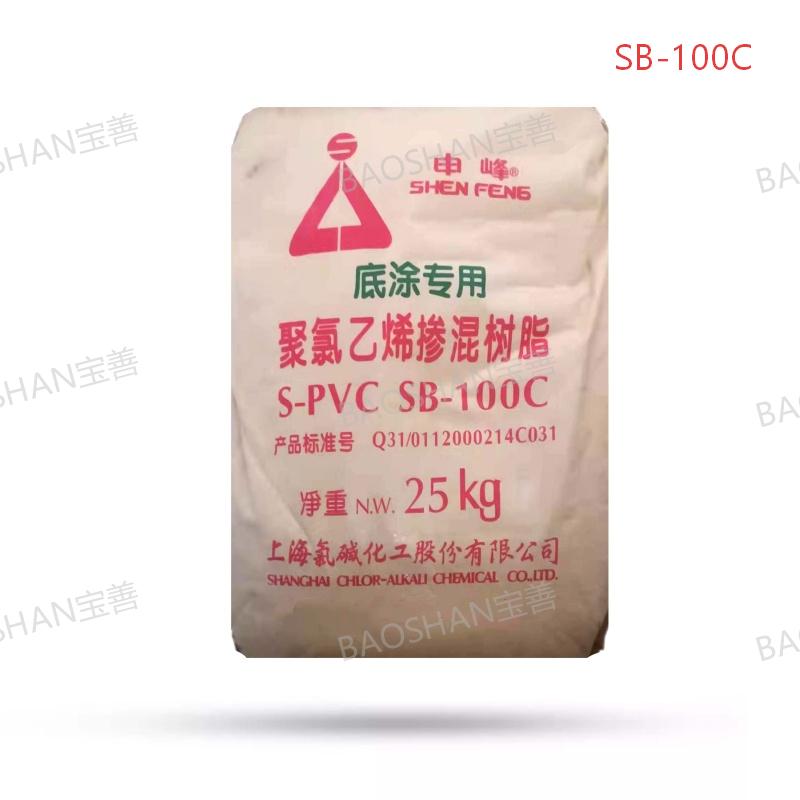
SB-100C blend resin powder: 20 μm average particle diameter, 0.50–0.55 g/cm³ apparent density, volatiles ≤0.4%, residual VCM ≤5 ppm.
3. Apparent Density: The Plasticizer Demand Multiplier
Apparent density is the number formulators most often skip, and it is the one that most directly changes plasticizer consumption per unit volume of paste.
The spread across Baoshan's portfolio is wide and deliberate. BJ-65 sits at 0.45–0.52 g/cm³ and SB-100C at 0.50–0.55 g/cm³ — both medium-density blend powders. The microsuspension paste resins sit much lower: LF-71G at 0.30–0.33 g/cm³ and PSH-10S at approximately 0.30 g/cm³. Lower apparent density means more void volume per kilogram, which generally means more plasticizer is required to reach a given viscosity, and a paste that is more prone to air entrapment.
This is where the BJ-65 claim of 10–20% plasticizer reduction comes from in practice: a higher-density, medium-particle blend powder displaces paste resin in the formulation and reduces the total plasticizer the system demands.
One useful contrast: suspension-grade resins such as HG-1000F publish a plasticizer absorption value of approximately 26.5 g per 100 g of resin. Paste resins are normally characterised by paste viscosity instead, because the property that matters in a plastisol is the rheology of the dispersion, not the absorption of a dry blend.
4. Volatile Matter: The Bubble and Porosity Control
Volatile matter sets an upper bound on how much gas the compound can release during fusion, and therefore on how thick a section can be processed without porosity, pinholes, or surface blistering.
Published limits in the portfolio range from ≤0.4% (BJ-65, SB-100C) through ≤0.5% (LF-71G) to ≤0.8% (PSH-10S). The ordering is not arbitrary: the tighter limits appear on grades aimed at automotive underbody coatings, coated fabrics and general slush molding, while the 0.8% limit sits on a food-grade cap-gasket grade where the very low paste viscosity and high transparency are the dominant requirements.
For a formulator, the practical rule is that volatile matter must be read against section thickness and oven profile. A 0.4% volatile grade processed into a 3 mm slush skin is not equivalent to the same grade in a 150 μm coating.
5. Residual VCM: The Compliance and Odour Floor
Residual vinyl chloride monomer is both an odour variable and a compliance variable, and it is reported separately from volatile matter for that reason. BJ-65 and SB-100C are both specified at ≤5 ppm. HG-1000F is specified at ≤1.0 ppm, and DG-1000S at ≤5 μg/g — the same order of magnitude expressed in different units, which is a reminder to normalise units before comparing two data sheets.
For toy, food-contact and medical applications, this figure should be read together with the additive package: a low-VCM resin paired with a phenol-free Ca/Zn stabilizer is a very different compliance position from a low-VCM resin paired with an undocumented stabilizer.
6. Paste Viscosity: A Derived Property, Not a Grade Attribute
Paste viscosity is the number formulators want most and can trust least as a standalone figure, because it is a system property. It depends on resin K value, particle size distribution, apparent density, plasticizer type and dosage, stabilizer viscosity, filler loading, and time since mixing.
Where a grade does publish it, the test condition matters. PSH-10S is published at approximately 2,000 mPa·s at 25 °C and explicitly described as low viscosity. LF-71G is published only as "medium" paste viscosity with "moderate" plasticizer absorption. Neither figure can be transferred to a formulation that uses a different plasticizer blend.
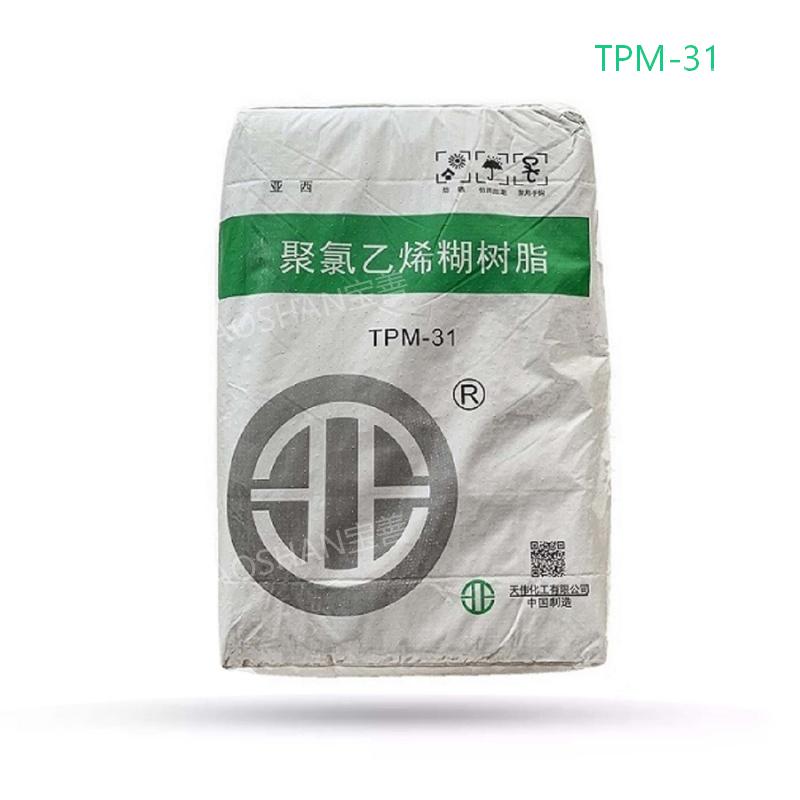
PVC paste resin TPM-31 (CAS 9002-86-2), supplied in 25 kg bags for vinyl toy, medical consumable, automotive interior, wallpaper, flooring, ink and coating applications.
How Plasticizer Choice Rewrites the Same Resin Spec
The same resin reads differently depending on which plasticizer it is paired with. Three systems illustrate the point.
BASF HEXAMOLL® DINCH is a non-phthalate plasticizer with a published viscosity of 44–60 mPa·s. As a primary plasticizer it sets the base paste viscosity and the gelation behaviour; it does not usually reduce viscosity. Pairing a high-K, low-density paste resin with DINCH therefore requires the formulator to control viscosity through resin blend and filler, not through the plasticizer alone.
Acetyl Tributyl Citrate (ATBC) is a citrate ester specified at a purity of ≥99.0%, a freezing point of ≤-80 °C and a flash point of ≥204 °C. The high flash point is a processing benefit in open coating lines; the low freezing point keeps the plasticizer pourable in cold storage. ATBC is typically used where a bio-based, non-phthalate primary plasticizer is required, and it brings its own contribution to paste viscosity that must be measured, not assumed.
Eastman TXIB™ formulation additive is the opposite tool: a viscosity reducer rather than a primary plasticizer. Its published Brookfield viscosity is 9 cP at 25 °C, with a freezing point of -70 °C, a Cleveland open cup flash point of 143 °C, an assay of ≥98.6 wt% minimum, acidity as isobutyric acid of 0.05 wt% maximum, and hydrolysis of 0.003% after 96 hours at 98–99 °C. In practice TXIB is used to pull down the viscosity of a filled or high-K paste, to improve flow characteristics and reduce wave marks in high-shear coating, and to accelerate bubble release — which is why it is commonly dosed alongside a primary plasticizer rather than replacing one.
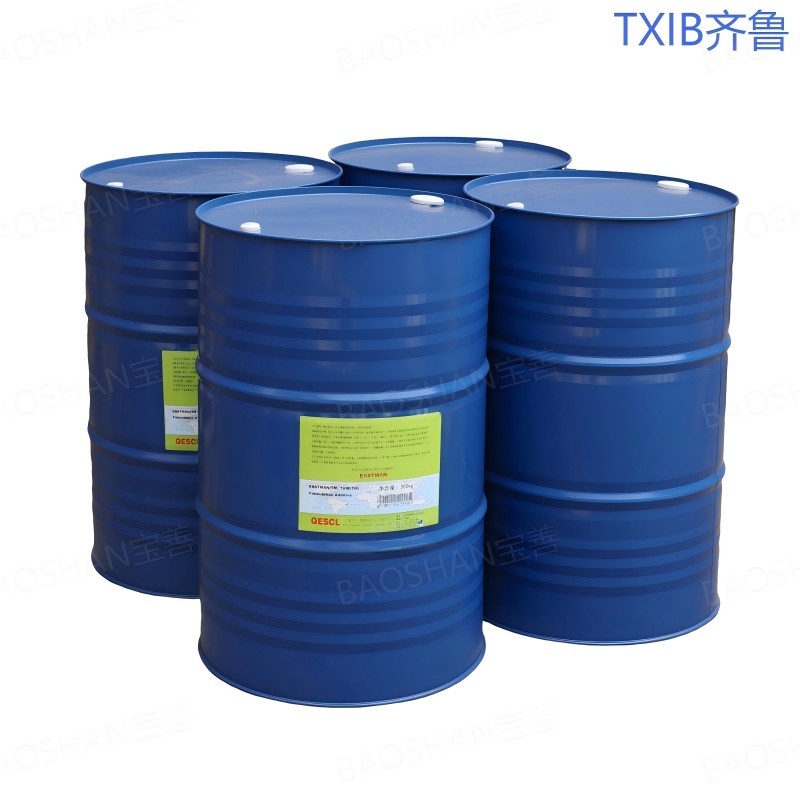
Eastman TXIB™ is used as a viscosity reducer: Brookfield viscosity 9 cP at 25 °C, assay ≥98.6 wt% minimum.
The reading rule is simple. Choose the primary plasticizer to satisfy compliance and long-term performance, then choose the reducer to fix the viscosity the process requires, then re-check whether the resin's K value still gives the fusion and strength you need at that plasticizer level.
Why the Stabilizer Belongs in the Same Reading
A phenol-free Ca/Zn stabilizer is not a neutral addition to a plastisol. Its own viscosity, acid value and thermal stability change both the processing window and the paste's behaviour over time.
CZ-2756 illustrates the parameters worth checking. Density is 1.02–1.08 g/cm³ and viscosity at 30 °C is 200–250 mPa·s — a liquid of moderate viscosity that adds to the total viscosity of the paste. Acid value is ≤0.5 mgKOH/g and moisture is ≤0.1%, both of which relate to how much hydrogen chloride the system can scavenge without side reactions. Flash point is ≥180 °C (COC), thermal stability is ≥30 minutes at 180 °C by Congo red, and VOC is ≤0.5%. Phenolic substances are reported as not detected.
The practical consequence is that stabilizer dosage and stabilizer viscosity must be read together with the paste viscosity target. A formulator who tunes viscosity by adjusting plasticizer alone, then adds the stabilizer, will overshoot. CZ-2756 is recommended for a processing range of 160–185 °C and is described as compatible with DINCH, DOTP and DOP without exudation.
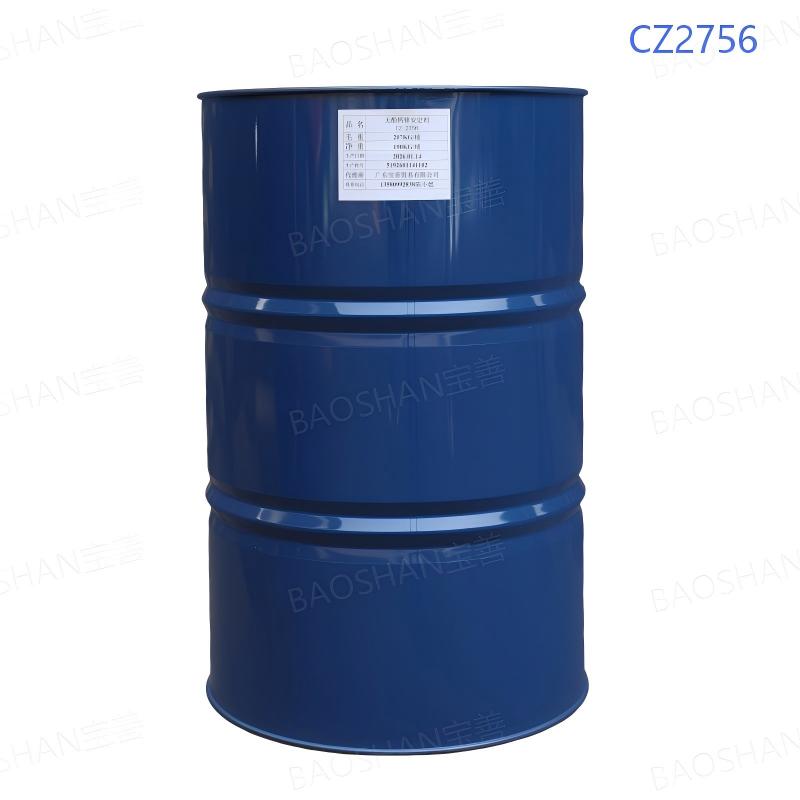
CZ-2756 phenol-free Ca/Zn stabilizer: density 1.02–1.08 g/cm³, viscosity 200–250 mPa·s at 30 °C, acid value ≤0.5 mgKOH/g, thermal stability ≥30 min at 180 °C.
A Seven-Step Reading Protocol
The following sequence converts a data sheet into a formulation decision without trial-and-error on the line.
- Fix the process window first. Slush molding, spread coating, drip molding and foaming each impose a different viscosity ceiling and a different fusion profile. Nothing on the data sheet can be judged until this is fixed.
- Read K value against the fusion schedule. Match the resin's K value to the oven or mould temperature you can actually run. LF-71G at K ≈71 and PSH-10S at K 70 sit at the higher end; BJ-65 at K 65 and SB-100C at K 62–67 sit lower and fuse faster.
- Read particle size and apparent density as a pair. Together they determine plasticizer demand and de-aeration behaviour. A 20–40 μm powder at 0.45–0.52 g/cm³ is a different formulating proposition from a 20 μm powder at 0.50–0.55 g/cm³.
- Check volatile matter against section thickness. Set the thickest section you intend to mould against the volatile limit before you finalise the oven profile.
- Normalise residual VCM units. ppm and μg/g are the same magnitude; confirm which the supplier used before you compare two grades.
- Set the plasticizer system, then re-measure viscosity. Select the primary plasticizer (DINCH at 44–60 mPa·s, or ATBC at ≥99.0% purity), then use a reducer such as TXIB at 9 cP to reach the target viscosity. Measure both initial viscosity and viscosity after standing.
- Add the stabilizer and re-check. Confirm acid value, thermal stability and the stabilizer's own viscosity contribution, then run a fusion trial before releasing the formulation.
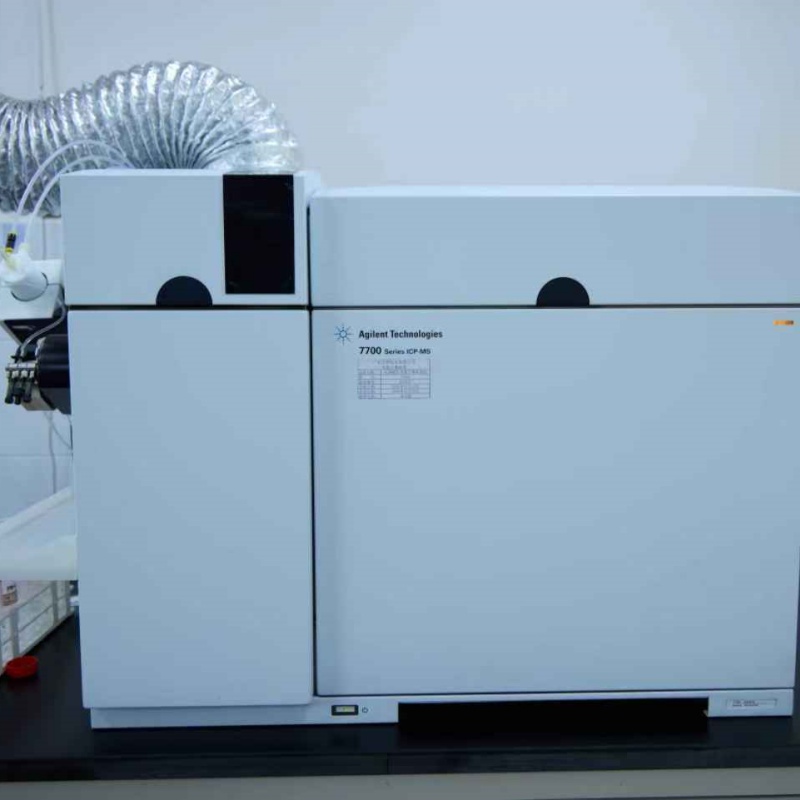
Spec reading is verified in the lab: viscosity, thermal stability and high-risk substance testing are the three checks that confirm a data sheet in practice.
Where Each Reading Fits: Application Walk-Through
Slush-molded vinyl toys. The priority order is compliance, then surface, then cycle time. SB-100C (K 62–67, 20 μm, ≤0.4% volatiles, ≤5 ppm VCM) or BJ-65 (K 65, 20–40 μm) provide the matte surface and viscosity reduction that slush molding benefits from, and pairing them with a phenol-free Ca/Zn stabilizer such as CZ-2756 — described as suitable for vinyl toys and teething toys and as passing REACH, RoHS, PAHS and EN71-3 — keeps the compliance position readable.
Coated fabrics and artificial leather. Paste stability over a shift matters more than peak strength. LF-71G at K ≈71, with published paste stability, film-forming behaviour and low migration and blooming, is the grade profile that suits continuous coating; its 0.30–0.33 g/cm³ apparent density means plasticizer demand will be higher than with a blend powder.
Drip molding (PVC dripping glue). CZ-2756 is explicitly listed for drip-molded labels and coated fabrics, and TXIB is used to keep the paste flowable in fine dispensing without sacrificing the fused film's surface quality.
Food-contact cap gaskets and high-clarity paste products. PSH-10S at K 70, approximately 2,000 mPa·s at 25 °C and ≤0.8% volatiles is positioned for food-grade cap gaskets, sealing products and high-transparency paste articles. Here the 0.8% volatile limit is accepted because the section is thin and the transparency requirement dominates.
Foamed wallpaper and automotive underbody coating. BJ-65 and SB-100C are both listed for automotive underbody coatings, welding-area coatings, foamed wallpaper, flooring and canvas coating, where the viscosity-reduction and matting behaviour of the blend powder is the deciding factor.
Spec Comparison Tables
The comparison below uses only published specification values for the grades named. Where a grade does not publish a parameter, the cell is marked with a dash rather than filled with an estimate.
| Grade | Type | K value | Polymerisation degree | Average particle diameter | Apparent density | Volatile matter | Residual VCM |
|---|---|---|---|---|---|---|---|
| BJ-65 | Blend resin powder (medium powder) | 65 | ~1000 | 20–40 μm | 0.45–0.52 g/cm³ | ≤0.4% | ≤5 ppm |
| SB-100C | Blend resin powder | 62–67 | 850–1100 | 20 μm | 0.50–0.55 g/cm³ | ≤0.4% | ≤5 ppm |
| LF-71G | Paste resin (microsuspension) | ~71 | Viscosity number 115–125 mL/g | — | 0.30–0.33 g/cm³ | ≤0.5% | — |
| PSH-10S | Paste resin (microsuspension homopolymer) | 70 | — | — | ~0.30 g/cm³ | ≤0.8% | — |
All values as published for each grade; a dash indicates the parameter is not published for that grade.
The second table covers the additives that change how the resin reads. These are not interchangeable commodities: they act at different points in the viscosity and stability chain.
| Additive | Function in a plastisol | Published specification values |
|---|---|---|
| Acetyl Tributyl Citrate (ATBC) | Non-phthalate primary plasticizer | Purity ≥99.0%; freezing point ≤-80 °C; flash point ≥204 °C |
| BASF HEXAMOLL® DINCH | Non-phthalate primary plasticizer for close-human-contact applications | Viscosity 44–60 mPa·s |
| Eastman TXIB™ | Viscosity reducer and secondary plasticizer | Brookfield viscosity 9 cP at 25 °C; freezing point -70 °C; flash point 143 °C (COC); assay ≥98.6 wt%; acidity ≤0.05 wt% |
| CZ-2756 | Phenol-free Ca/Zn stabilizer | Density 1.02–1.08 g/cm³; viscosity 200–250 mPa·s at 30 °C; acid value ≤0.5 mgKOH/g; thermal stability ≥30 min at 180 °C; phenolics not detected |
Specification values as published for each product; dosing ratios depend on the individual formulation and must be confirmed by trial.
Frequently Asked Questions
Does a phenol-free Ca/Zn stabilizer remove the need to check the resin's compliance parameters?
No. Stabilizer and resin carry separate compliance parameters and both must be read. CZ-2756 is reported as free of phenols, lead, cadmium and heavy metals and as passing EU REACH, RoHS, PAHS and EN71-3, but the finished article also depends on the resin's residual vinyl chloride monomer figure — ≤5 ppm for BJ-65 and SB-100C — and on the pigment and filler package. Separately, EU Commission Regulation (EU) 2023/923 sets a 0.1% by weight limit on lead in PVC articles effective from November 2024, which applies to the article as placed on the market, not to one input alone.
What laboratory support is available to confirm that a data sheet matches the delivered batch?
Guangdong Baoshan Trading Co., Ltd maintains a chemical analysis laboratory equipped with Agilent GC-MS, ICP-MS and Waters LC-MS/MS instruments, and provides free testing for high-risk substances including phthalates, heavy metals, bisphenol A and organotin. Quality control is by sampling inspection, and the company also supports formula design, formula optimization and customized production. Its quality system has been through a joint audit by BASF's Petrochemical Division, Quality Management Department, and Environment, Health, and Safety Department.
Which specification changes have the largest effect on formulation cost?
Plasticizer demand is usually the dominant cost variable, and it is driven by apparent density and particle size rather than by K value. BJ-65, for example, is published as reducing plasticizer consumption by 10–20% when blended with paste resin, and as being able to partially replace higher-cost paste resin while maintaining product quality. Resin grade and plasticizer selection then set the remaining cost base: a K 71 paste resin at 0.30–0.33 g/cm³ apparent density and a K 62–67 blend powder at 0.50–0.55 g/cm³ are not cost-equivalent per kilogram of finished paste.
How should a formulator validate a specification before committing to a production order?
Start with a small trial quantity — the minimum order quantity is 20 kg — and test the three properties that a data sheet cannot fully predict: initial paste viscosity, viscosity after standing, and fusion behaviour at your actual oven profile. Request the batch test report alongside the sample. For reference, a Vietnamese PVC vinyl toy manufacturer operating 300 vinyl machines has run on this supply route with stable molding and consistent toy quality, with a stated shelf life of 2 years under cool and dry storage.
What lead time and supply continuity should a buyer expect?
Quoted lead time is 3–5 days, supported by a 20,000 m² self-built warehouse and 16 liquid storage tanks, with a safety stock of over 3 months for bulk European materials. Monthly sales volume is 4,000 tons, and export coverage extends across Vietnam, Indonesia and other Southeast Asian markets. For formulators running continuous coating or slush lines, the practical check is whether the safety stock covers your plasticizer and stabilizer consumption as well as the resin — because a resin delivery on time is not useful if the paired additive is not.
Conclusion
Reading PVC paste resin specifications is a sequence, not a scan. K value sets the fusion and strength baseline; average particle diameter and apparent density together set plasticizer demand and de-aeration behaviour; volatile matter sets the thickest section you can run without porosity; residual VCM sets the compliance floor. Paste viscosity is the output of all of these plus the plasticizer and stabilizer system — which is why it should be measured in your own formulation rather than copied from a data sheet.
The grades used as examples in this guide — BJ-65, SB-100C, LF-71G and PSH-10S, alongside ATBC, BASF HEXAMOLL® DINCH, Eastman TXIB™ and CZ-2756 — are all specified with published values, which is the only reliable basis for comparison. When two data sheets disagree, the disagreement is usually a unit, a test condition, or a plasticizer system, not a quality difference.
Next Step: Test the Reading Against Your Own Formulation
Guangdong Baoshan Trading Co., Ltd supplies PVC paste resins, blend resins, plasticizers, viscosity reducers and phenol-free stabilizers with batch test reports and free high-risk substance testing. Trial quantities start from 20 kg, with a quoted lead time of 3–5 days.
Send your current formulation and target paste viscosity for a spec review, or request a sample and batch test report: www.baoshancl.cn · Email: misscheng1984@163.com · Tel: +86 13580992838 · WhatsApp
Address: Building 1, No. 26, Yingguang Road, Chang'an Town, Dongguan City, Guangdong Province, China.
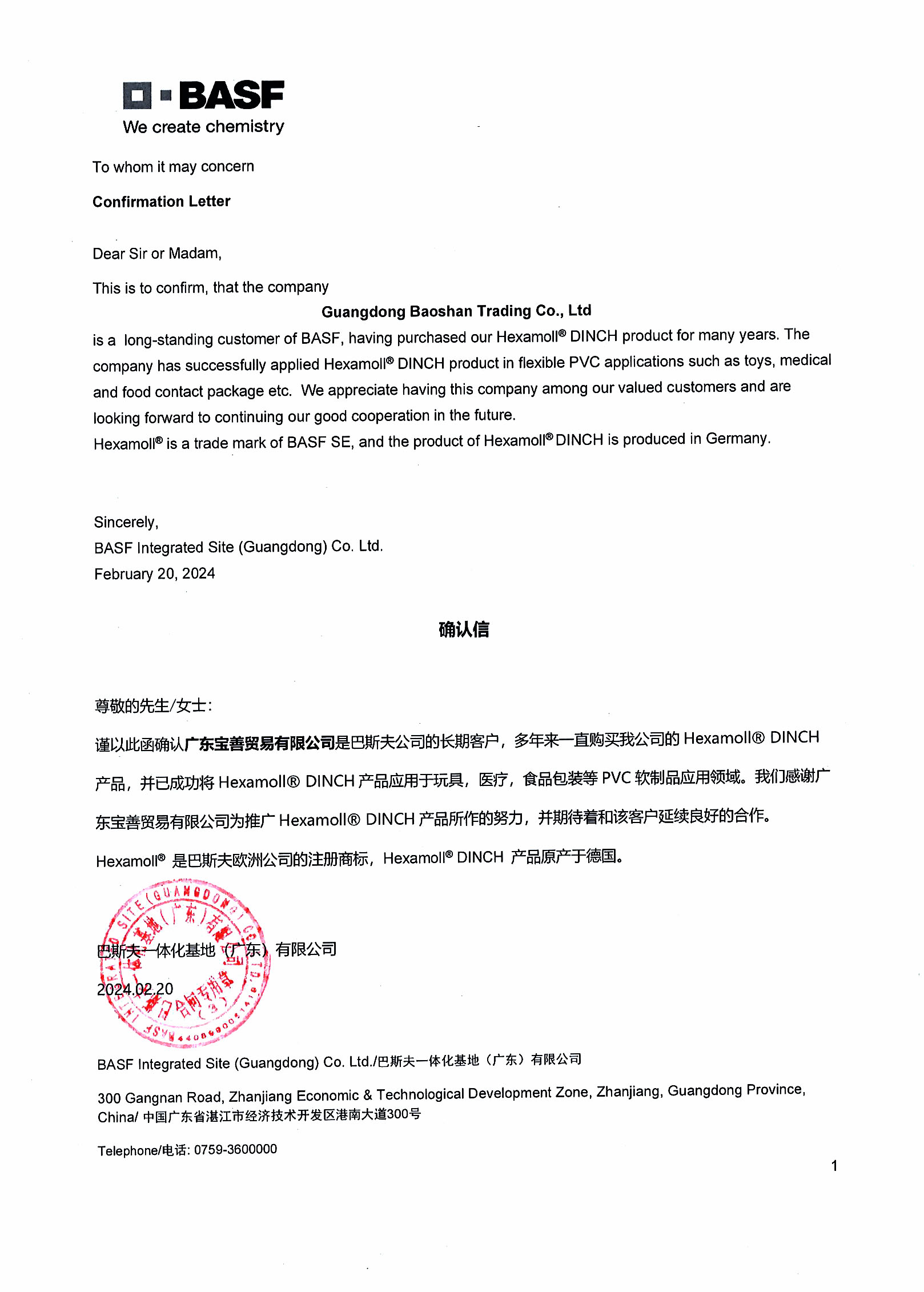
BASF (China) Co., Ltd. authorized-distributor documentation for Hexamoll® DINCH, held under certificate numbers BCN-CPA-20140305-1 and BCN-CPA-20150401-1.
Have Questions or Need More Details?
Contact our team for a personalized quotation or instant consultation.
Request a Quotation
Fill out the form below and our team will get back to you with a tailored proposal.
WhatsApp Direct Chat
Prefer to chat in real-time? Message us on WhatsApp for instant assistance & quick answers.
- Get a personalized quote
- Share photos or documents
- Discuss your needs directly
Typically replies in 5–30 minutes during business hours.