
PVC Vinyl Compliance Guide: Resin to Regional Readiness
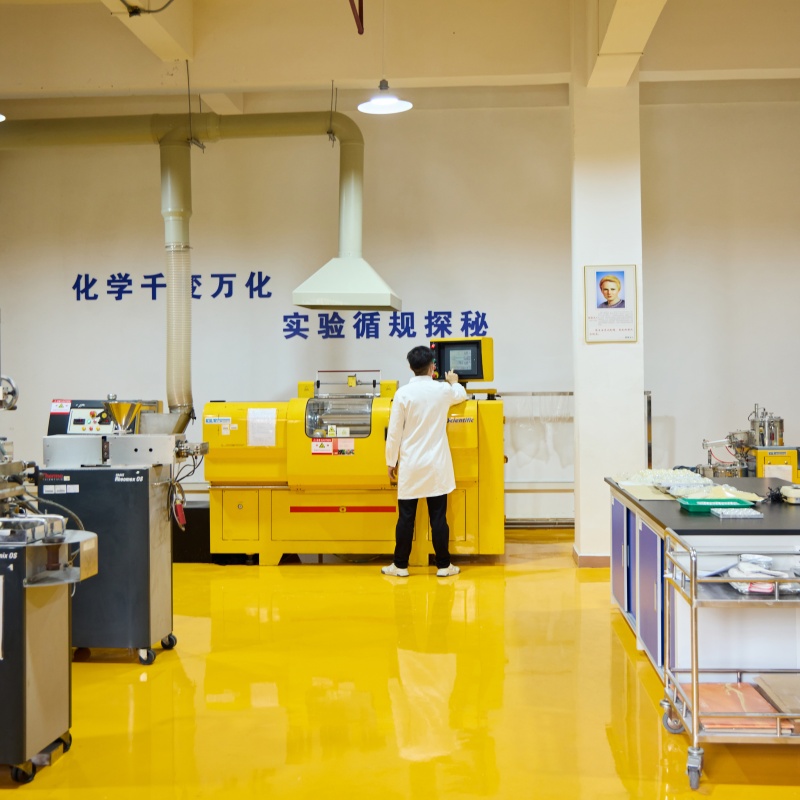
Compliance starts with a traceable file, not a folder of undated PDFs.
PVC Vinyl materials compliance is a document trail, not a single certificate. A buyer evaluating a resin, plasticizer or stabilizer needs to connect four things: the finished article, the exact material grade, the batch test record and the destination market. When those four do not match, a supplier can hold many PDFs and still leave the buyer unable to release a lot.
This guide is written for procurement, quality and product teams at the research and evaluation stage. It explains how to build a practical compliance file for PVC Vinyl materials, which documents to request for food-contact, medical, toy and automotive uses, and where regional checks must happen before an order is placed. It also separates what a quality certificate proves from what it does not.
What a PVC Vinyl compliance file must prove
The usual problem is not a missing certificate. It is a certificate that does not apply. A REACH statement may cover a company rather than a grade. An ISO 9001 certificate may cover a quality system but not a food-contact approval. A heavy-metal test may be from a previous lot. A regional authorization may have expired before the purchase order date. Each of these gaps can turn a compliance review into a false sense of security.
Build the file around three questions: What is the exact material? What is the exact article and market? What evidence exists for the exact batch? The answer determines the documents, not the other way around. A buyer should be able to point to a document and say which grade, which lot and which market it supports.
Industry background: why one folder does not fit every PVC Vinyl project
PVC Vinyl materials are formulations. PVC resin provides the polymer matrix; plasticizers provide flexibility; stabilizers support thermal processing; and other additives adjust viscosity, foaming, color or surface performance. The portfolio in this guide includes PVC paste resin, PVC resin powder, blend resin powder, ATBC, DINCH, DOTP, TXIB, polymeric polyester plasticizer and phenol-free Ca/Zn stabilizers. Applications include children's vinyl toys, medical supplies, food packaging, automotive interiors, wallpaper, flooring, inks and coatings.
Because the application changes the risk profile, a single generic compliance folder is weak. A toy file and a medical file may share a resin grade, but they do not share the same document set. A food-contact film and an automotive skin may use different plasticizers and different test priorities. The file must be application-led, not supplier-led.
Build the file in four layers
Use a four-layer file. Layer one is supplier identity and quality system evidence. Layer two is product-level compliance for the exact grade. Layer three is batch-level test data for the lot. Layer four is regional readiness for the destination market. Each layer answers a different question and none replaces another.
- Supplier layer: legal name, site, quality management certificate, scope, validity and authorization letters.
- Product layer: REACH, RoHS, FDA, GB 4806, EN71-3, PAHs, heavy metals, phthalates, migration or extractables as applicable.
- Batch layer: lot ID, test method, detection limit, numeric result, test date and laboratory.
- Market layer: current regulation, restricted substances, food-contact or toy rules, and customer-specific requirements.
Step-by-step: how to assemble the compliance file
- Lock the finished article and market. Write the intended use, country, customer specification and any end-product standard. A food-contact cap gasket is not the same as a toy doll even if both use paste resin.
- Build a bill of materials with exact grades. List resin, plasticizer, stabilizer, viscosity reducer and any pigment. Use model names such as TPM-31, PR-G, SY-Z140, PB-1000, SC-135, ATBC, DINCH, DOTP or TXIB only where they are actually in the formula.
- Collect supplier quality evidence. Request the ISO 9001 certificate, scope, issue date and expiry date. The supplied ISO 9001 record for Baoshan is certificate U23Q2GZ8027959R0S under GB/T19001-2016/ISO9001:2015, issued by Guardian Independent Certification Ltd on 2023-08-22 with expiry 2026-08-22. At the date of this guide, that expiry has passed, so a buyer should request the renewed certificate before relying on it.
- Request product documents for each grade. Ask for the current safety data sheet, REACH and RoHS statements, food-contact or medical statement where relevant, and the test reports that support the claim. Check the product name, model and scope.
- Require batch-level testing. Specify lot ID, test method, detection limit, result, test date and laboratory. For heavy metals and phthalates, a pass or fail line is weaker than a report with numeric results.
- Check validity and scope. A certificate can be current but cover the wrong market or product family. A certificate can be authentic but expired. Both checks are needed.
- Complete regional readiness. Check the destination market before order. The EU lead restriction is one example: Commission Regulation (EU) 2023/923 prohibits PVC products containing lead above 0.1% by weight, effective 29 November 2024. This is a material restriction, not a complete compliance file.
- Approve and maintain. Keep the approved file by grade and lot; set review dates for certificates and regulations.
Resin documents: identity, grade and quality consistency
Resin documents should prove polymer identity, grade and quality consistency. For PVC paste resin TPM-31, the supplied data lists CAS No. 9002-86-2. For PVC Paste Resin PR-G, the record lists K-value 77.5-81.0, polymerization degree 1700±100, paste viscosity 2,000-3,000 mPa·s, volatile matter ≤0.5%, apparent density 0.30±0.05 g/cm³ and residual VCM ≤5 ppm. These are technical identity and quality parameters. They are not food-contact or toy approvals.
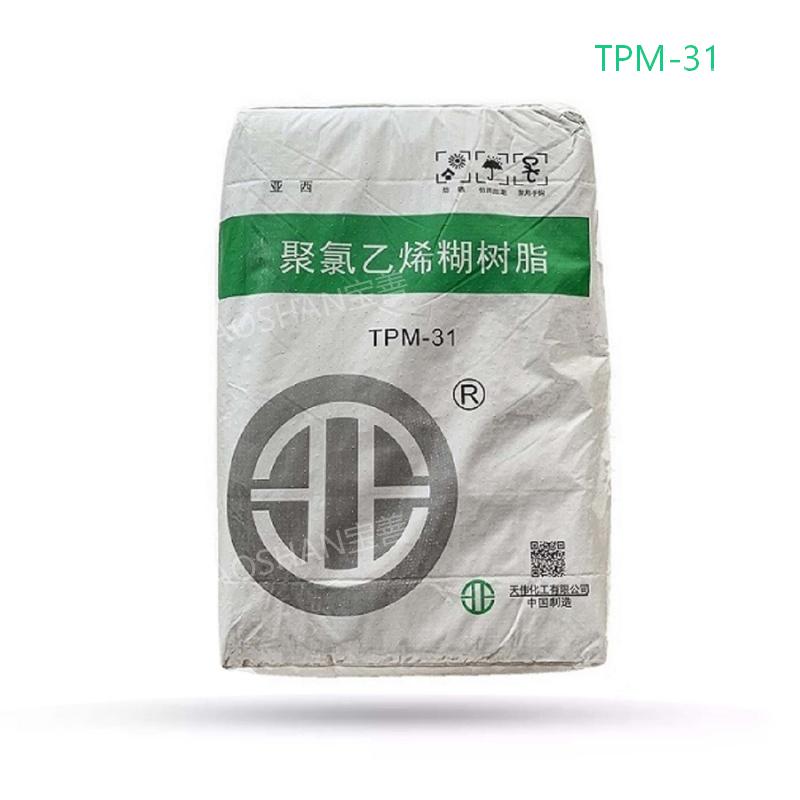
Grade identity is the first compliance anchor: product name, model, CAS number and technical parameters.
For PVC resin powder HG-1000F, the record lists K value 66-68, residual VCM ≤1.0 ppm, and a statement of compliance with EU REACH and domestic GB 5761, free of heavy metals such as lead and cadmium. A buyer should still request the current test report and confirm that the statement applies to the exact grade and lot. Resin identity is the anchor; application approvals are separate.
Blend resin powder also needs grade-level documents. PB-1000 is described as a PVC blending resin and viscosity reducing resin with K value 65 and volatile matter ≤0.5%. In a compliance file, its role in the formula should be declared because a processing aid can change the additive package and the test scope.
Plasticizer documents: ATBC, DINCH, DOTP and TXIB
Plasticizers carry the highest documentation load in many flexible PVC projects because they are the component most often associated with phthalate, migration and food-contact questions. The file should name the exact plasticizer and grade.
ATBC, or Acetyl Tributyl Citrate ATBC, is listed as a product in the portfolio and appears within the ISO 9001 certificate scope. That does not prove REACH, RoHS, FDA or GB 4806 compliance for a specific grade. For a food-contact or medical project, request the current REACH and RoHS statements, the FDA food-contact or medical-device statement where applicable, and the GB 4806 statement for the exact grade. Ask for the batch test report too. ISO 9001 is a quality-system certificate; it is not a food-contact approval.
This distinction matters because buyers often accept a portfolio list as a compliance file. A portfolio list answers what a supplier can offer. It does not answer whether a lot meets a restricted-substance limit or a migration test.
BASF Hexamoll® DINCH is described by BASF as a non-phthalate plasticizer developed for applications with close human contact, and BASF recommends it for soft PVC articles such as medical devices, toys and food packaging. Those are manufacturer application statements. They support a first-pass material shortlist, not final approval for a finished article. A BASF brochure also references EU Regulation 10/2011, USP Monograph 88 Class VI and FDA Medical Device Master File references; the verified data flags these as requiring current official validation. Treat them as documents to verify, not automatic clearance.
DOTP product data lists REACH and RoHS compliance and low toxicity, with application fields including cable, construction, automotive, medical devices, films and plastisols. Request the grade-specific report and confirm the test scope. For TXIB, the technical data sheet is strong on viscosity and processing, but a technical additive data sheet is not a food-contact or medical approval. Request compliance documents only where the grade is intended for those uses.
Stabilizer documents: phenol-free Ca/Zn and the PAH and EN71 gap
Phenol-free Ca/Zn stabilizers are often selected for toy, food-contact, medical and transparent PVC applications. The SC-135 product record states phenol-free and eco-friendly positioning and lists compliance with REACH, RoHS and FDA standards. It also describes applications in food-contact PVC, medical-grade PVC, children's toys, eco-friendly wires and cables, and high-end soft PVC.
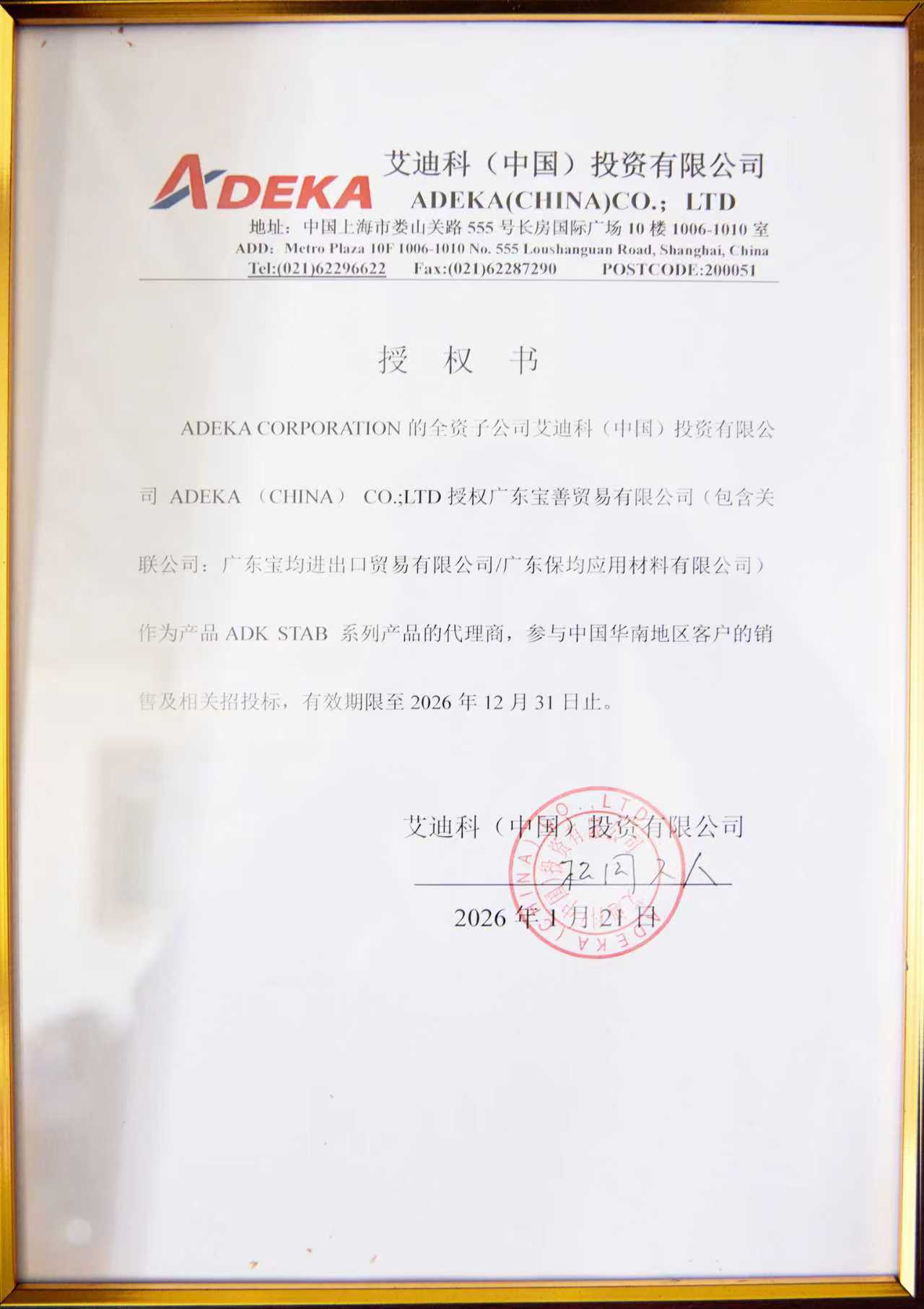
A current agency certificate can support supply authorization, but the grade and market scope still need checking.
Those claims should be matched to the application. The application scope for the PVC materials portfolio lists control requirements for heavy metals, phthalates, PAHs, brominated flame retardants, BPA, PFAS, REACH, RoHS and EN71. That is a testing and control framework, not a certificate for every grade. For a toy project, request the current EN71-3 report and PAH report for the exact stabilizer grade and lot. For a food-contact project, request the food-contact statement and migration data. Do not assume that a REACH, RoHS or FDA line on a product page covers EN71-3 or PAHs.
Batch-level testing: the difference between a claim and a lot release
Batch-level testing is the difference between a material claim and a lot release. The supplier profile states that the laboratory is equipped with Agilent GC-MS, ICP-MS and Waters LC-MS/MS and provides testing for phthalates, heavy metals, bisphenol A and organotin. That supports testing capability. It does not prove that every lot was tested.
A useful batch report should include the product name and model, lot or batch ID, test method, detection limit, numeric result, test date, laboratory and the specification limit. For heavy metals, the report should identify which metals were tested. For phthalates, it should identify the phthalate group or individual substances and the limit. For PAHs, it should identify the test method and the number of PAHs covered. A certificate that says compliant without a lot ID is not a batch record.
Sampling inspection is listed in the capability record. Sampling is useful, but the buyer should agree on the sampling plan and the batch definition before the order. If the supplier tests a composite sample, ask whether the result represents the lot or only the sample. If the buyer needs lot release, the acceptance criteria should be written into the purchase specification.
Application-specific document sets
Food-contact PVC
Food-contact PVC can include cap gaskets, films, hoses and transparent containers. The file should include the exact resin and additive grades, REACH and RoHS statements, FDA food-contact statement, GB 4806 statement for China, and a check of the current EU food-contact framework, including Regulation (EU) No 10/2011 where applicable. Request migration or extraction data for the intended use. ATBC and DINCH may be shortlisted because of their market positioning, but the final approval must be grade-specific and application-specific.
Medical PVC
Medical PVC includes catheters, infusion bags, hoses and sterile accessories. The file should include the supplier quality certificate, product-level medical statements, and batch extractables or migration data where the device specification requires it. USP Class VI and FDA Medical Device Master File references may be requested where the grade claims them, but a brochure reference is not a current approval. Confirm the exact grade and the device regulatory path.
Toy PVC
Toy PVC includes slush-molded dolls, soft toys and vinyl figures. The file should include EN71-3, PAHs, phthalates, heavy metals, REACH and RoHS for the exact materials. The application data for PVC paste resin SY-Z140 includes rotational molding toys such as slush-molded dolls and car models. A supplied case record describes a PVC vinyl toy manufacturer in Vietnam using 300 vinyl machines, with a two-year shelf life under cool and dry storage and stable molding for consistent toy quality. That case supports production experience; it does not replace a toy compliance report.
Automotive PVC
Automotive interior PVC may need PAHs, heavy metals, phthalates, odor or VOC statements and OEM-specific material requirements. The application scope lists automotive interiors among PVC uses and includes PAHs and other high-risk substance controls. Request the OEM specification and the exact test methods. A generic REACH or RoHS statement is not enough for an automotive material approval.
Application readiness matrix
| Application | Documents to request | Batch data to require | Regional check |
|---|---|---|---|
| Food-contact | Grade SDS; REACH; RoHS; FDA food-contact statement; GB 4806 statement; EU food-contact framework check where applicable | Heavy metals; phthalates; migration or extraction; lot ID | China GB 4806; US FDA; current EU framework |
| Medical | Quality certificate; medical-device statement; USP Class VI or FDA DMF reference only where claimed; extractables data | Heavy metals; phthalates; extractables; lot ID | Device market requirements and current official validation |
| Toy | EN71-3; PAHs; phthalates; heavy metals; REACH; RoHS | EN71-3; PAHs; phthalates; heavy metals; lot ID | Destination toy rules and customer specification |
| Automotive | PAHs; heavy metals; phthalates; VOC statement where OEM requires; OEM material specification | PAHs; heavy metals; phthalates; VOC; lot ID | OEM and market-specific requirements |
Plasticizer and stabilizer document map
| Material | Supplied evidence | What to request next |
|---|---|---|
| ATBC | Portfolio listing and ISO 9001 scope | Grade-specific REACH, RoHS, FDA and GB 4806 statements; batch report |
| Hexamoll® DINCH | BASF positioning for close human contact; application recommendations | Current grade-specific food-contact and medical statements; official validation of brochure references |
| DOTP | Product data stating REACH and RoHS compliance; application fields | Grade-specific report; batch heavy metals and phthalates |
| SC-135 Ca/Zn stabilizer | Product data stating REACH, RoHS and FDA; application scope lists PAHs and EN71 controls | EN71-3 and PAH reports for the exact grade and lot; food-contact migration data |
| TXIB | Technical data sheet for viscosity and processing | Compliance statement only where the grade is intended for food-contact or medical use |
Regional readiness checks before ordering
Regional readiness is a pre-order check, not a post-shipment repair. The EU lead restriction is a concrete example: Commission Regulation (EU) 2023/923 prohibits PVC products containing lead above 0.1% by weight, effective 29 November 2024. A buyer shipping to the EU should confirm the stabilizer system and the lead test report against that limit. This single rule does not cover REACH, RoHS, food-contact, toy or medical requirements, so it must sit inside a wider market check.
For Southeast Asia, the supplied ADK agency certificate is issued by ADEKA (CHINA) CO.;LTD for ADK calcium zinc stabilizers, with issue date 2026-01-21, expiry 2026-12-31, and market coverage of Vietnam, Indonesia and other Southeast Asian countries and regions. The buyer should confirm that the exact grade and market are within the certificate scope. For China, request GB 4806 for food-contact and GB/T19001-2016/ISO9001:2015 quality evidence. For the United States, request the current FDA statement for the exact grade. For each market, check the official text before order because requirements change.
Certificate validity and scope: the silent failure points
Certificate validity is a silent failure point. The supplied records include an ISO 9001 certificate with expiry 2026-08-22, a BASF Hexamoll® DINCH authorized distributor certificate with expiry 2024-12-31, and an Eastman TXIB authorized distributor certificate with expiry 2025-05-31. These dates matter. A historical authorization can show a past relationship, but it does not prove current authorization at the order date. The ADK agency certificate runs to 2026-12-31 and is current at the date of this guide, but its scope and related products still need checking.

An ISO 9001 certificate supports quality-system evidence, but its date and scope must be checked at the order date.
Use a simple validity table in the file: document, issuer, product or scope, market, issue date, expiry date, and status at order date. If a certificate is expired, request the renewal. If the scope does not name the grade, request a scope confirmation. Do not accept a certificate just because the file name looks correct.
Supplier evidence: what Baoshan can and cannot prove
Supplier evidence should be read at three levels. The first is the legal entity. GUANGDONG BAOSHAN TRADING CO.,LTD is described in its company profile as a Dongguan-based PVC Vinyl materials trading and distribution company founded in 1994, with a product portfolio that includes PVC paste resins, blending resins, eco-friendly plasticizers, viscosity reducers and stabilizers.
The second is capability. The profile states a laboratory with Agilent GC-MS, ICP-MS and Waters LC-MS/MS, testing support for phthalates, heavy metals, bisphenol A and organotin, a 20,000-square-meter warehouse, 16 liquid storage tanks, and a safety stock of more than three months for bulk European materials. The capability record lists monthly sales of 4,000 tons, MOQ 20KG and lead time 3-5 days. These are supplier-provided operational facts; confirm them per grade and order.
The third is authorization and quality evidence. The profile describes authorized distributorships for BASF Hexamoll® DINCH in China and Eastman TXIB in China, including a BASF audit and ISO 9001 adherence. The certificate records still require date and scope checks. ISO 9001 evidence supports a quality system; it does not replace product compliance. A distributor authorization supports a supply relationship; it does not replace a batch test. Both are useful, but neither is a food-contact or toy approval.
Frequently asked questions
Which documents should a PVC Vinyl buyer request first?
Start with four layers: supplier quality certificate with scope and expiry; product-level statements for the exact grade, such as REACH, RoHS, FDA, GB 4806 or EN71-3 where relevant; batch-level test reports with lot ID and numeric results; and a regional readiness check for the destination market. A product brochure alone is not a compliance file.
Does ATBC automatically comply with REACH, RoHS, FDA and GB 4806?
No. ATBC is listed as a product and appears within the ISO 9001 certificate scope, but that does not prove grade-specific compliance. For a food-contact or medical project, request current REACH, RoHS, FDA and GB 4806 documents for the exact ATBC grade, plus the batch test report. Check the product name, model, scope and date.
What does the SC-135 phenol-free Ca/Zn stabilizer document show?
The SC-135 product record states phenol-free and eco-friendly positioning and lists compliance with REACH, RoHS and FDA standards. The broader application scope lists PAHs and EN71 among control requirements, but a toy project should still request current EN71-3 and PAH reports for the exact grade and lot. Do not assume that a REACH, RoHS or FDA line covers every toy or automotive requirement.
How should batch-level heavy-metal and phthalate testing be specified?
Require the product name and model, lot or batch ID, test method, detection limit, numeric result, test date, laboratory and specification limit. For heavy metals, list the metals tested. For phthalates, identify the substances or group and the limit. A pass or fail statement without a lot ID and method is not a batch record.
Which regional checks are needed before ordering?
Check the destination market before the purchase order. For the EU, Commission Regulation (EU) 2023/923 limits lead in PVC products to 0.1% by weight, effective 29 November 2024. Also check REACH, RoHS, food-contact, toy and medical requirements for the exact application. For China, request GB 4806 for food-contact. For the United States, request the current FDA statement for the exact grade. Confirm every requirement against the current official text.
What supplier capability and cost evidence matters?
Supplier capability evidence includes quality-system certification, laboratory equipment, testing scope, warehouse and stock capability, MOQ and lead time. The capability record lists monthly sales of 4,000 tons, MOQ 20KG and lead time 3-5 days. Cost is not quoted here because no verified price data is provided; the buyer should ask for a quotation that separates material grade, test scope, batch frequency and documentation. A deeper compliance file can add testing and review work, so the quotation should show what is included.
Can a buyer request a sample and the current compliance file before placing an order?
Yes. A practical next step is to request a sample and the current compliance file for the exact grade, including the renewed quality certificate, grade-specific compliance statements and a recent batch report. Confirm the MOQ and lead time for that grade, and agree on the batch definition and acceptance criteria before the order.
Conclusion
A PVC Vinyl compliance file is ready for evaluation when every material claim can be traced to an exact grade, an exact lot and an exact market. Resin identity, plasticizer documents, stabilizer reports, batch-level heavy-metal and phthalate testing, certificate validity and regional checks all belong in the same file. The strongest supplier evidence is not the thickest folder; it is the folder that survives a scope and date check.
Have Questions or Need More Details?
Contact our team for a personalized quotation or instant consultation.
Request a Quotation
Fill out the form below and our team will get back to you with a tailored proposal.
WhatsApp Direct Chat
Prefer to chat in real-time? Message us on WhatsApp for instant assistance & quick answers.
- Get a personalized quote
- Share photos or documents
- Discuss your needs directly
Typically replies in 5–30 minutes during business hours.