
Ranking Low-VOC PVC Materials for Toys & Medical
Ranking Low-VOC PVC Materials for Toys & Medical Production
A practical ranking starts with a documented system, not a single grade. For low-VOC toy and medical PVC, ATBC ranks first for a high-purity citric-acid ester route, BASF HEXAMOLL® DINCH ranks second for broad non-phthalate process fit, and Eastman TXIB™, CZ-2756 and BJ-65 complete the formulation and compliance package.
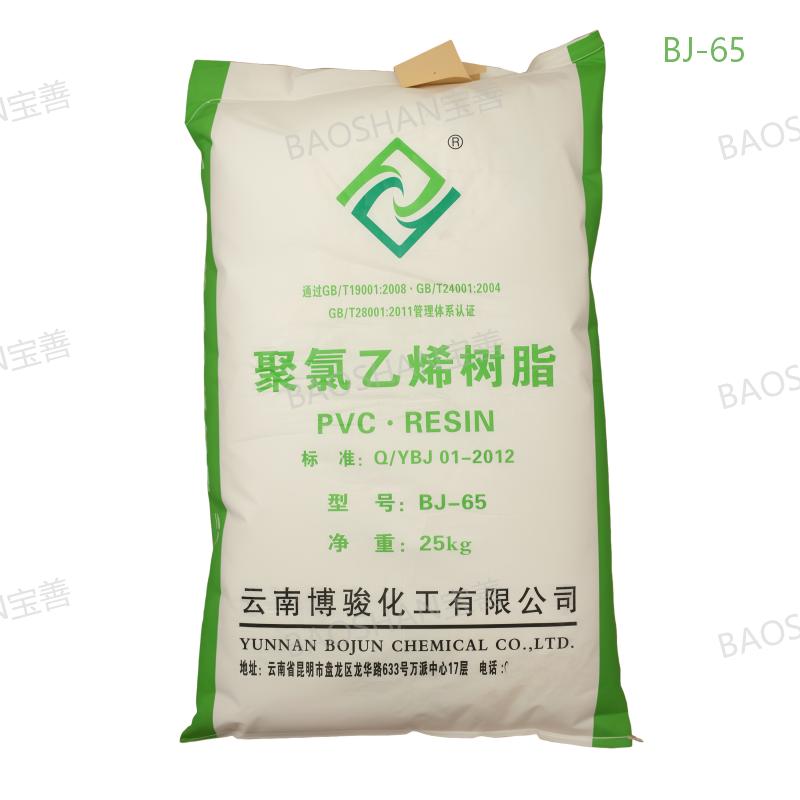
Cover: Blend resin powder BJ-65, a K value 65 component for low-VOC PVC paste and slush-molding systems.
Problem Definition: What Makes a Low-VOC PVC System Hard to Select
Low-VOC is not a single property that can be read from one data sheet. In toy and medical PVC, it is a formulation and documentation target shaped by plasticizer choice, stabilizer package, viscosity modifiers, resin grade, processing temperature and batch control. A material can be non-phthalate and still fail a buyer's low-VOC screening if the stabilizer, carrier or low-molecular-weight additive package is not controlled.
The selection problem is therefore threefold. First, the finished article must meet the buyer's regulatory and internal limits. Second, the paste or dry blend must run in the available process, whether slush molding, coating, dipping or film formation. Third, the supplier must provide repeatable batches, traceable documents and workable MOQ and lead-time terms. A ranking that considers only price per kilogram or a single compliance logo will miss these dependencies.
This article ranks five material choices by their role in a low-VOC toy and medical PVC system. The ranking is an editorial decision framework, not a claim that a plasticizer, a stabilizer and a blend resin are interchangeable commodities. They are ranked by how directly they support compliance, process fit and supplier support.
Industry Background: Why Low-VOC PVC Is Moving Toward Documented Systems
Regulatory pressure is no longer limited to phthalate bans. The verified data package cites EU Commission Regulation (EU) 2023/923, which prohibits PVC products containing lead above 0.1% by weight, effective November 2024. That limit makes lead-free and heavy-metal-free stabilizer selection a market-access issue, not only a product-preference issue. For toy and medical buyers, the practical response is to request stabilizer and batch documentation before formulation trials.
Demand for non-phthalate and bio-based plasticizers is also visible in market research. MarketsandMarkets data included in the verified package values the global eco-friendly plasticizer market at USD 5.03 billion in 2024. DataVagyanik projects the high-flow PVC powders for slush molding market to reach USD 277 million by 2034. These figures do not prove any single supplier's capability, but they show why buyers are asking for low-VOC options with clearer material identities.
Guangdong Baoshan Trading Co., Ltd is a PVC vinyl materials supplier established in 1994, with main markets in China and Southeast Asia and export business at approximately 20% of total sales. The company operates a 30,000 m² facility with about 30 employees and a five-engineer R&D team. It is an authorized distributor of BASF Hexamoll DINCH and Eastman TXIB in China, and it operates under ISO 9001:2015 quality management. Its 20,000 m² warehouse, 16 liquid storage tanks and more than three months of safety stock for bulk European materials are relevant to supply continuity, but they do not replace finished-article compliance testing.
Detailed Solution: Ranking Five Low-VOC PVC Material Choices
The ranking below follows three criteria: documented compliance positioning, process fit, and supplier support. The order reflects combined fit for low-VOC toy and medical production. A lower rank does not mean a material is optional; it means the material solves a narrower or supporting role in the system.
Rank 1 — Acetyl Tributyl Citrate ATBC
ATBC is an acetyl tributyl citrate plasticizer. The specified grade carries ≥99.0% purity, a freezing point of ≤-80°C and a flash point of ≥204°C. Its compliance positioning includes REACH, RoHS, FDA and GB 4806. For a toy or medical program, these are useful screening data: high purity reduces the need to explain unknown minor components, the low freezing point supports cold-flexibility evaluation, and the high flash point is relevant to processing and storage discussions.
ATBC ranks first because it gives formulators a citric-acid ester route that can be presented as a bio-based plasticizer option with a clear compliance narrative. It is especially relevant when the buyer wants a non-phthalate plasticizer and is prepared to validate the formulation through sample trials. The watch-out is that ATBC is not a drop-in replacement for every plasticizer in every resin system. The buyer should confirm solvation, viscosity drift, migration and finished-article test results with the selected paste resin and stabilizer.
Supplier support matters here. Guangdong Baoshan Trading Co., Ltd includes ATBC in its PVC vinyl materials portfolio and supports customers with formulation optimization and product upgrading technical support. The company's laboratory provides testing for phthalates, heavy metals, bisphenol A and organotin, which helps buyers build a batch-level evidence file rather than relying on a single certificate.
Rank 2 — BASF HEXAMOLL® DINCH
BASF HEXAMOLL® DINCH is a non-phthalate plasticizer. The specified data are 44–60 mPa.s at 20°C and 0.944–0.954 g/cm³ at 20°C. BASF describes DINCH as a plasticizer developed for applications with close human contact and recommends it for soft PVC articles such as medical devices, toys and food packaging. BASF also states that DINCH can be used in PVC production processes including extrusion, calendering, molding and spread coating.
DINCH ranks second because it offers broad process fit and a manufacturer application positioning that is easy for buyers to understand. For a low-VOC toy or medical project, it is a strong candidate when the formulation needs a non-phthalate plasticizer with documented process breadth across molding and coating. The watch-out is that a manufacturer recommendation is a screening input, not a finished-article compliance certificate. The buyer still needs current jurisdiction-specific documents and finished-article migration or extractable testing.
As an authorized distributor of BASF Hexamoll DINCH in China, Guangdong Baoshan Trading Co., Ltd can support grade selection, sample coordination and batch documentation. The company's warehouse and liquid storage capacity support bulk supply discussions, while the laboratory supports high-risk substance testing. These are supplier-support advantages, not substitutes for the buyer's own qualification protocol.
Rank 3 — Eastman TXIB™ Formulation Additive
Eastman TXIB™ is a formulation additive used as a viscosity reducer and film-forming agent. Eastman technical data lists a Brookfield viscosity of 9 cps on No. 1 spindle at 25°C. In a PVC plastisol or paste system, TXIB is not ranked as a primary plasticizer replacement. It is ranked as a rheology and film-formation tool that can change how the paste behaves during slush molding, coating or dipping.
TXIB ranks third because it solves a specific process problem: viscosity control without losing the film-forming behavior of the system. For low-VOC toy and medical production, this matters when a high-filler paste, a pigment dispersion or a coating line needs a lower-viscosity window. The watch-out is dosage. TXIB should be evaluated against the selected paste resin, plasticizer and stabilizer because excessive viscosity reduction can affect mechanical balance, migration or surface quality.
Guangdong Baoshan Trading Co., Ltd is an authorized distributor of Eastman TXIB in China. This is relevant for buyers who want a documented additive source alongside the plasticizer and stabilizer package. The company's application support can help buyers compare TXIB against other viscosity-reduction routes, such as blend resin addition, before locking a formulation.
Rank 4 — PVC Phenol-Free Ca/Zn Stabilizer CZ-2756
CZ-2756 is a PVC phenol-free Ca/Zn stabilizer positioned as phenol-free, lead-free, cadmium-free and heavy-metal-free. Its compliance positioning includes REACH, RoHS, PAHS and EN71-3. These attributes are directly relevant to toy and medical PVC because stabilizer chemistry can become a compliance bottleneck even when the plasticizer is non-phthalate. A phenol-free Ca/Zn stabilizer supports the shift away from heavy-metal and phenolic stabilizer systems.
CZ-2756 ranks fourth because it is used at relatively low loading but performs a compliance-critical role. It supports heat stability during processing and helps the formulator build a stabilizer package that matches the buyer's regulatory file. The watch-out is that the stabilizer must be validated in the final formulation. Dosage, compatibility with the plasticizer, initial color, long-term heat stability and migration behavior all need confirmation through a trial batch.
The portfolio positioning for phenol-free Ca/Zn stabilizers covers slush-molded toys, teething toys, food packaging films, medical cables, coated fabrics and related applications. Buyers should request the grade-specific technical data sheet, safety data sheet and compliance declaration for CZ-2756 before approving the formulation.
Rank 5 — Blend Resin Powder BJ-65
BJ-65 is a blend resin powder with a K value of 65, an average particle diameter of 20–40 μm, an apparent density of 0.45–0.52 g/cm³, a volatile matter content of ≤0.4%, a residual vinyl chloride monomer content of ≤5 ppm and a polymerization degree of approximately 1000. It is used in slush-molded toys, soft toys, artificial leather, vinyl flooring, wallpaper, automotive underbody coatings and related coating applications.
BJ-65 ranks fifth because it is an enabling component rather than the primary compliance driver. It can lower paste viscosity, improve matting and reduce plasticizer consumption by 10–20% when blended with paste resin. For low-VOC toy production, that can help reduce the total plasticizer load while maintaining processing flow. The watch-out is that blend resin changes the matte/mechanical balance. A trial should confirm tensile strength, elongation, surface appearance and viscosity stability before the grade is fixed.
BJ-65 is one of several paste resin and blend resin options in the portfolio. The correct choice depends on the process: slush molding, coating, dipping or film formation. The buyer should not select a K value or particle size in isolation; the resin must be matched to the plasticizer system and the target film thickness.
Step-by-Step Breakdown: Building a Low-VOC Toy or Medical PVC Trial
Step 1 — Define the finished article and target market. Write down the article type, the market, the applicable compliance file and the buyer's internal limits. For toys, include EN71-3 where relevant. For medical or food-contact programs, include the buyer's migration, extractable and documentation requirements. Do not start with a material name; start with the acceptance criteria.
Step 2 — Shortlist the plasticizer. Compare ATBC and DINCH against the target. ATBC offers a high-purity citric-acid ester route with REACH, RoHS, FDA and GB 4806 positioning. DINCH offers a non-phthalate route with BASF process compatibility across extrusion, calendering, molding and spread coating. Use sample trials to compare viscosity, gelation, color and mechanical balance.
Step 3 — Set the viscosity window with TXIB and BJ-65. Decide whether the paste needs a viscosity reducer, a blend resin or both. TXIB is a film-forming additive with a Brookfield viscosity of 9 cps at 25°C. BJ-65 is a K value 65 blend resin with 20–40 μm particle size. Evaluate the combination against the actual processing equipment, not only a Brookfield reading.
Step 4 — Select the stabilizer. Use CZ-2756 when the program requires a phenol-free, lead-free, cadmium-free and heavy-metal-free Ca/Zn stabilizer with REACH, RoHS, PAHS and EN71-3 positioning. Confirm dosage, initial color, heat stability and compatibility with the chosen plasticizer.
Step 5 — Run a laboratory batch and test the high-risk substances. The company laboratory is equipped with Agilent GC-MS, ICP-MS and Waters LC-MS/MS and provides testing for phthalates, heavy metals, bisphenol A and organotin. Use batch-level testing to verify that the trial matches the proposed formulation and that the material source is traceable.
Step 6 — Confirm MOQ, packaging and lead time. MOQ is not one number across the portfolio. It is confirmed by grade and packaging. The portfolio includes 20KG/BAG and 25KG/BAG resin packaging and 160KG/DRUM or 200KG/DRUM stabilizer packaging. Lead time depends on grade, stock position and order size. The company's 20,000 m² warehouse and more than three months of safety stock for bulk European materials support supply continuity discussions.
Step 7 — Lock batch traceability and change control. Approve the specification, the batch record format, the COA requirements and the change-notification rule. A low-VOC program is only as strong as its weakest batch. Batch-level testing and document control should be written into the supply agreement before commercial release.
Use Cases: Where the Ranking Applies
Slush-molded toys and soft toys. ATBC or DINCH can be evaluated as the plasticizer, with BJ-65 used to adjust viscosity and matte appearance. CZ-2756 supports a phenol-free Ca/Zn stabilizer package. The application pattern is common in Vietnam and Indonesia, where toy and consumer PVC production is active.
Medical consumables, hoses and related PVC articles. DINCH is relevant because BASF recommends it for medical devices and because it is compatible with molding and coating processes. ATBC is relevant when a citric-acid ester route is preferred. CZ-2756 supports a heavy-metal-free stabilizer strategy. Finished-article testing remains mandatory.
Food-contact packaging films and sheets. ATBC carries FDA and GB 4806 positioning in the specified grade. DINCH is recommended by BASF for food packaging. CZ-2756 is positioned for food-contact PVC applications. The buyer should confirm the exact grade, migration limits and local food-contact declaration.
Coated fabrics, flooring, wallpaper and technical surfaces. TXIB can be used to adjust viscosity and film formation, while BJ-65 can reduce paste viscosity and plasticizer demand. The portfolio's application coverage includes PVC leather, flooring, wallpaper, tarpaulin, conveyor belts, coatings and printing inks. These are process-fit use cases, not automatic compliance approvals.
Comparison Table: Five Material Choices at a Glance
| Rank | Material | Primary role | Key data | Compliance positioning | Strongest fit |
|---|---|---|---|---|---|
| 1 | Acetyl Tributyl Citrate ATBC | Citric-acid ester plasticizer | ≥99.0% purity; ≤-80°C freezing point; ≥204°C flash point | REACH, RoHS, FDA, GB 4806 | Low-VOC toy and medical programs needing a high-purity bio-based plasticizer route |
| 2 | BASF HEXAMOLL® DINCH | Non-phthalate plasticizer | 44–60 mPa.s at 20°C; 0.944–0.954 g/cm³ at 20°C | BASF positions DINCH for close human contact and recommends it for medical devices, toys and food packaging | Molding, calendering and spread-coating programs needing broad process fit |
| 3 | Eastman TXIB™ | Viscosity reducer and film-forming agent | Brookfield viscosity 9 cps on No. 1 spindle at 25°C | Formulation additive; evaluate against final article requirements | Plastisol, coating and dipping systems needing viscosity control |
| 4 | PVC Phenol-Free Ca/Zn Stabilizer CZ-2756 | Heat stabilizer | Phenol-free, lead-free, cadmium-free and heavy-metal-free | REACH, RoHS, PAHS, EN71-3 | Toy, medical and food-contact PVC needing a non-phenolic stabilizer package |
| 5 | Blend Resin Powder BJ-65 | Blend resin / viscosity and matte modifier | K value 65; 20–40 μm; 0.45–0.52 g/cm³; volatile ≤0.4%; residual VCM ≤5 ppm | Grade-specific documents required | Slush-molded toys, soft toys, artificial leather and coating pastes |
FAQ: Low-VOC PVC Material Selection
What compliance documents should I request for ATBC, DINCH, CZ-2756 and BJ-65?
Request the grade-specific technical data sheet, safety data sheet, compliance declaration and batch COA. For ATBC, confirm REACH, RoHS, FDA and GB 4806 positioning. For DINCH, confirm the current BASF product documentation and the application recommendation. For CZ-2756, confirm REACH, RoHS, PAHS and EN71-3 positioning. For BJ-65, confirm K value, volatile matter, residual VCM and batch test results. The buyer should also request finished-article migration or extractable testing where the application requires it.
How do TXIB and BJ-65 change plastisol viscosity and film formation?
TXIB is a viscosity reducer and film-forming agent with a Brookfield viscosity of 9 cps at 25°C. BJ-65 is a K value 65 blend resin with 20–40 μm particle size that can lower paste viscosity, improve matting and reduce plasticizer consumption by 10–20%. TXIB and BJ-65 work in different ways. TXIB is an additive for rheology and film formation; BJ-65 is a resin component that changes the paste matrix. Both need trial confirmation against the selected paste resin and stabilizer.
How should I compare cost when MOQ and grade differ?
Do not compare only price per kilogram. Compare the full formulation cost: plasticizer loading, TXIB dosage, BJ-65 addition rate, stabilizer dosage, batch testing and packaging. MOQ is confirmed by grade and packaging, and the portfolio includes 20KG/BAG and 25KG/BAG resin packaging and 160KG/DRUM or 200KG/DRUM stabilizer packaging. A lower-priced grade that increases testing or rework is not a lower-cost system.
Can I evaluate samples and batch test reports before placing an order?
Yes. A sample and document request is the normal next step for a low-VOC PVC trial. Ask for the grade, packaging, COA format and test scope. The company laboratory provides testing for phthalates, heavy metals, bisphenol A and organotin, which supports batch-level verification. Define the sample size and the test method before the trial so the results can be compared with the commercial batch.
What lead-time and stock factors affect a low-VOC PVC program?
Lead time depends on grade, packaging, stock position and order size. The company maintains a 20,000 m² warehouse, 16 liquid storage tanks and more than three months of safety stock for bulk European materials, which supports supply continuity discussions. For a new low-VOC program, the critical path is usually sample approval and document review rather than transport alone. Send the grade, target application, packaging and required documents to start a quotation and sample request.
Conclusion: Choose the System, Then the Ranked Components
For low-VOC toy and medical PVC, the ranking is a starting point for a documented system. ATBC ranks first for a high-purity citric-acid ester route with REACH, RoHS, FDA and GB 4806 positioning. BASF HEXAMOLL® DINCH ranks second for non-phthalate process fit and manufacturer application positioning. Eastman TXIB™ ranks third as a viscosity reducer and film-forming agent. CZ-2756 ranks fourth as a phenol-free Ca/Zn stabilizer with REACH, RoHS, PAHS and EN71-3 positioning. BJ-65 ranks fifth as a K value 65 blend resin for viscosity and matte control.
Guangdong Baoshan Trading Co., Ltd supports this system as a PVC vinyl materials supplier, authorized distributor of BASF Hexamoll DINCH and Eastman TXIB in China, and an ISO 9001:2015 quality-managed operation with laboratory testing and bulk stock support. To move from ranking to trial, request a sample, quotation and batch test report for the specific grade and application. Contact: Email misscheng1984@163.com; Tel +86 13580992838; WhatsApp +84 865388399; Address Building 1, No. 26, Yingguang Road, Chang'an Town, Dongguan City, Guangdong Province.
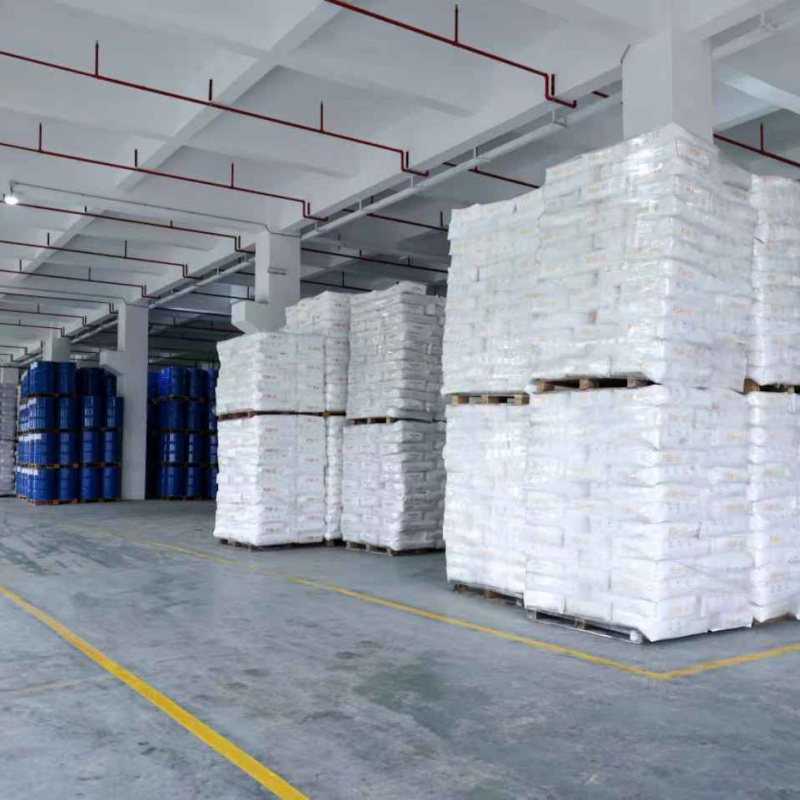
CTA: Warehouse stock and batch documentation support sample and quotation requests for PVC vinyl material systems.
Have Questions or Need More Details?
Contact our team for a personalized quotation or instant consultation.
Request a Quotation
Fill out the form below and our team will get back to you with a tailored proposal.
WhatsApp Direct Chat
Prefer to chat in real-time? Message us on WhatsApp for instant assistance & quick answers.
- Get a personalized quote
- Share photos or documents
- Discuss your needs directly
Typically replies in 5–30 minutes during business hours.