
Supplier Evaluation Checklist: PVC Paste Resin Capability & Delivery
Supplier Evaluation Checklist: PVC Paste Resin Capability & Delivery
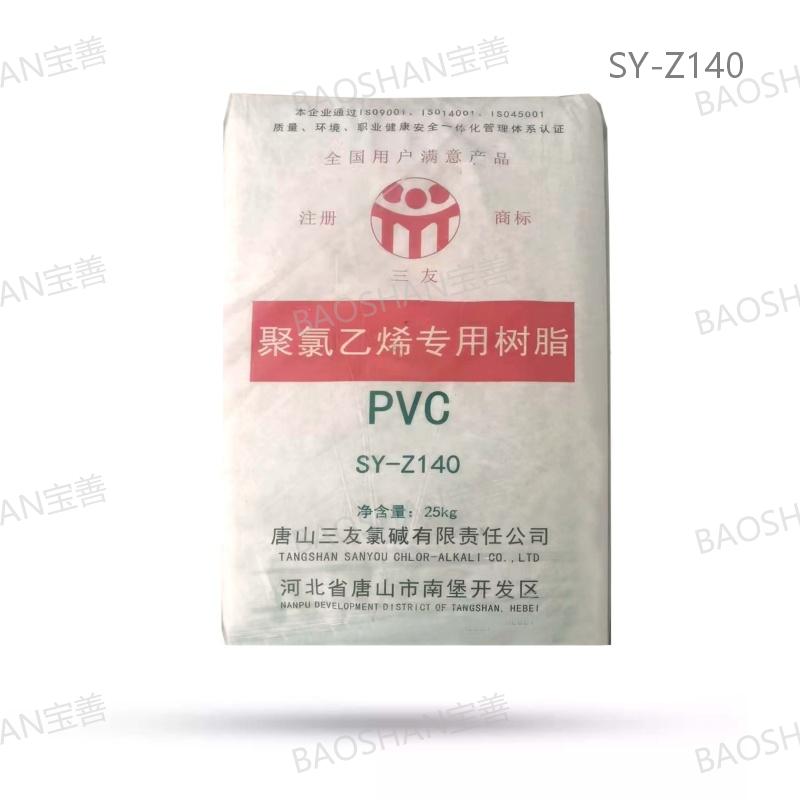
SY-Z140 foam paste resin, one of the paste grades a buyer should specify by grade, origin and parameter window before comparing suppliers.
A PVC paste resin supplier should be evaluated on evidence that can be filed, not on a grade list that cannot be checked. This checklist turns the evaluation into eight steps across six gates, grade fit, technical documentation, quality system and batch testing, authorization and traceability, commercial terms, and delivery execution, and it states the document to request and the condition that counts as a pass at each gate.
The three grades most often quoted in this segment do not behave alike in a plastisol. BJ-65 is recorded as a blend resin powder, PSM-31 as a PVC paste resin and SY-Z140 as a PVC foam paste resin, so one generic questionnaire applied to all three hides the differences that appear at the mould, the coating head or the foaming oven.
Guangdong Baoshan Trading Co., Ltd is a Dongguan-based supplier of PVC vinyl materials founded in 1994 that operates as a general agent and trading company across PVC paste resins, blending resins, eco-friendly plasticizers, viscosity reducers and stabilizers. Its stated commercial terms are used throughout this article as worked examples of what a buyer should verify rather than assume: MOQ at 200 kg per drum or 20 kg per bag, CIF and FOB delivery terms, payment before shipment, and a 3-5 day lead time.
Why paste resin supplier evaluations fail in practice
A paste resin is a formulation input, so the purchase decision is really a decision about process behaviour. K value, particle size and volatile matter move plastisol viscosity, gelation, fusion and defect rates, and none of them is visible in a price quotation. When suppliers are compared only on price and grade name, the specification that decides yield is never written down.
The first structural mistake is confusing supply-chain capability with manufacturing ownership. A general agent and trading supplier contributes stock, document control, laboratory access, formulation support and logistics. Judged against a polymerization-plant checklist, this model fails for the wrong reason; judged with no checklist at all, it passes for the wrong reason. The useful question is not whether the supplier owns reactors, but which links of the chain it can evidence.
The second mistake is treating certificates as permanent attributes. Every authorization letter and quality certificate has an issuer, a scope and a validity window. The ISO 9001:2015 certificate in this supplier's file, for example, is numbered U23Q2GZ8027959R0S, was issued by Guardian Independent Certification Ltd against GB/T19001-2016/ISO9001:2015 on 22 August 2023, and carries an expiry date of 22 August 2026. That is a document with a date on it, so the checklist should confirm the version that covers the shipment rather than the copy in an old email.
The third mistake is leaving acceptance undefined. The stated acceptance criterion here is customer acceptance, which places the burden on the buyer to attach a written specification, a sampling plan and a remedy to the purchase order. Without that attachment, customer acceptance is not a term; it is an intention.
What the current buying environment adds to the checklist
The move away from phthalates in sensitive applications has made the document pack as important as the drum. BASF describes Hexamoll® DINCH as a non-phthalate plasticizer developed for applications involving close human contact, recommends it for soft PVC articles including medical devices, toys and food packaging, and states that it can be used in PVC processes such as extrusion, calendering, molding and spread coating. Those are manufacturer statements about a product; they are not a certificate for a finished article, and the checklist should treat them accordingly.
Regulatory pressure now falls on the rest of the formulation as well. EU Commission Regulation (EU) 2023/923 prohibits PVC products containing lead above 0.1% by weight, effective 29 November 2024. A buyer who audits only the plasticizer and never asks about the stabilizer package, including a phenol-free Ca/Zn stabilizer, has audited half the material.
Market context supports the direction of travel but not any individual supplier's capability. MarketsandMarkets estimated the global eco-friendly plasticizer market at USD 5.03 billion in 2024. That figure describes a category; it should never be used to imply that a particular supplier, grade or shipment is compliant, available or superior.
The six-gate evaluation protocol
Run the gates in order, because each one must be able to stop the purchase. A gate that cannot stop a purchase is not a gate.
- Gate 1, grade fit: does the supplier carry the exact grade and the origin your formulation was validated on?
- Gate 2, technical documentation: is there grade-level data for K value, particle size and volatile matter, plus a batch certificate of analysis?
- Gate 3, quality system and batch testing: is the quality certificate current, and can sampling inspection results be traced to a batch?
- Gate 4, authorization and traceability: are distributor or agency claims backed by a document with a scope and a date?
- Gate 5, commercial terms: are MOQ, Incoterms, payment and acceptance fixed before the trial?
- Gate 6, delivery execution: is lead time defined end to end, and is there buffer stock behind it?
Step-by-step: the eight-step checklist
Step 1, lock the grade, origin and process route first
Write down the grade and the manufacturer before contacting anyone. The same designation can appear from more than one origin: this supplier's range lists PSM-31 both under a Kaneka model reference and as a Shenyang paste-resin entry, and blend grades such as BJ-65, PBM-B5F, PB-1000, SB-100C and 266EF sit alongside paste grades such as PSH-10S, TPM-31, PR-G, LF-51, LF-71G, SH-14 and the high-thixotropic EH-251. Origin and route belong in the specification because a blend resin powder and a paste resin are not interchangeable inputs to the same plastisol.
Pass condition: the enquiry names grade, origin, process route (slush molding, spread coating or foaming) and the parameter windows you will accept.
Step 2, verify the supply model honestly
Confirm what kind of counterparty you are dealing with. This supplier operates as a general agent and trading company with product technology R&D, testing and logistics, supported by a stated monthly sales volume of 4,000 tons and export coverage of Vietnam, Indonesia and other Southeast Asian markets. A throughput figure of that scale indicates the ability to hold and move stock; it does not guarantee an allocation of your specific grade in a tight month.
Pass condition: the supplier states in writing which grades are held in stock, which are ordered in, and what allocation you can expect for your volume.
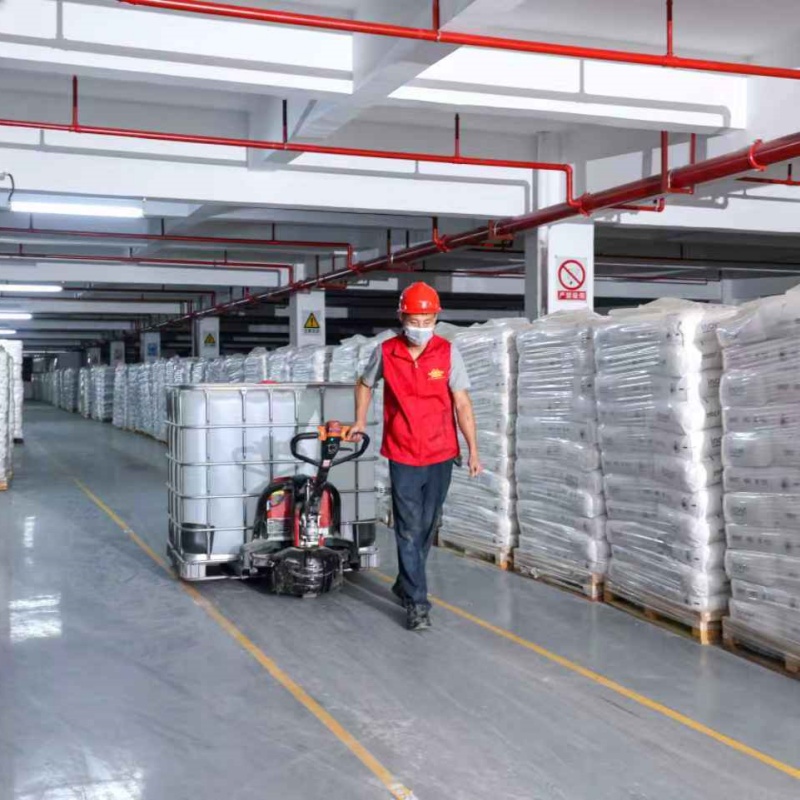
Stock position by grade, not warehouse size in general, is what a delivery-assurance gate should test.
Step 3, demand grade-level data on the three parameters that decide processability
K value describes the molecular size of the resin and therefore how the plastisol gels, flows and fuses; a grade validated at one K value cannot be assumed to behave the same at another. Particle size and its distribution govern paste rheology, plasticizer absorption and storage stability, and a coarse or poorly distributed powder changes how the paste drains on a mould. Volatile matter indicates residual moisture and volatiles that can become bubbles, surface defects or inconsistent fusion at the oven. None of the three can be verified from a catalogue headline: they have to come from the technical data sheet for the exact grade and from the certificate of analysis for the batch.
| Grade as recorded | Product type in the range | Documents to request before sampling | Parameters to write into the order |
|---|---|---|---|
| BJ-65 | Blend resin powder | Grade TDS, batch COA, blend-route compatibility note for your formulation | K value and volatile matter for the blend route |
| PSM-31 | PVC paste resin, listed with Kaneka and Shenyang references | Origin and manufacturer confirmation, grade TDS, batch COA | K value, particle size and volatile matter, plus origin |
| SY-Z140 | PVC foam paste resin | Grade TDS, batch COA, foaming-process guidance | Volatile matter, particle size and K value for the oven profile |
Pass condition: TDS values with tolerances rather than typical-only figures, a COA per batch, and an agreed acceptance window written into the order. Where a supplier cannot produce grade-level data, the grade is not yet a specification.
Step 4, audit the quality system and the batch evidence
Separate the system certificate from the batch evidence and ask for both. The quality system here is documented under ISO 9001:2015 by Guardian Independent Certification Ltd, and the company states it has passed a joint audit by BASF's Petrochemical Division, Quality Management Department and Environment, Health and Safety Department. Batch evidence is described as sampling inspection, backed by an in-house laboratory equipped with Agilent GC-MS, ICP-MS and Waters LC-MS/MS instruments and offering testing for phthalates, heavy metals, bisphenol A and organotin.
Three verification points matter more than the equipment list. Ask for the COA of the actual batch rather than a representative report. Ask which tests run in-house and which are sent out, because a testing service only helps if the method and reporting limit fit your regulated market. Keep manufacturer literature in its place as well: references such as EU Regulation 10/2011, USP Monograph 88 Class VI or FDA Medical Device Master File numbers appear in supplier and manufacturer brochures as positioning, and must be validated against the official source and against the finished article before being treated as compliance.
Pass condition: certificate current for the shipment date, COA traceable to batch, and a named technical contact for test reports.
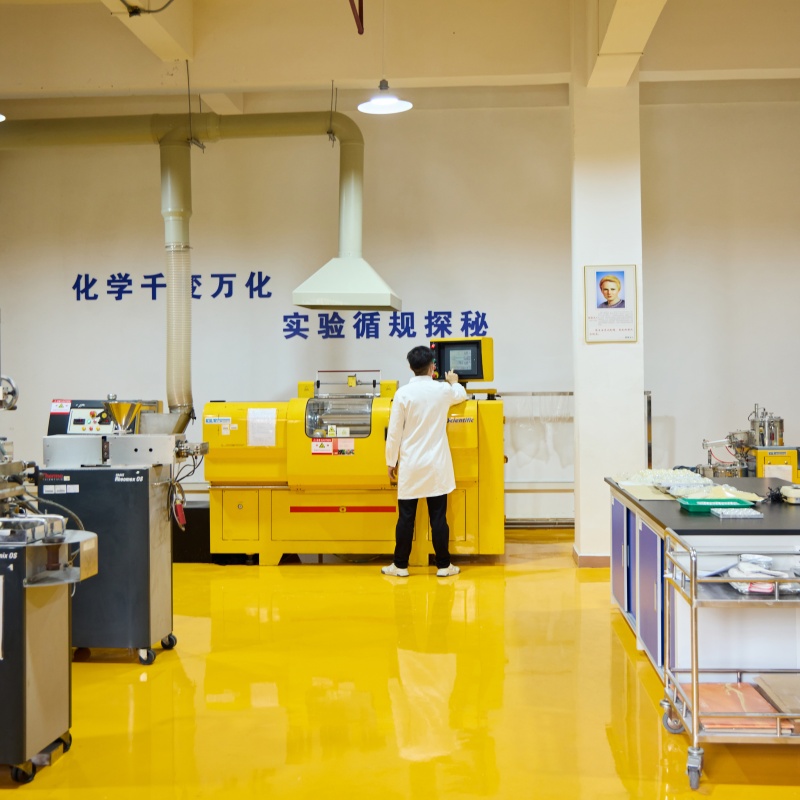
In-house laboratory capability shortens the loop between a suspect batch and a decision, provided the method fits the target market.
Step 5, verify authorization and traceability
Authorization is a document, not an adjective. This supplier states it is an authorized distributor of BASF's Hexamoll® DINCH in China and of Eastman TXIB in China, and the certificates supplied for evaluation carry defined scopes and dates: BASF DINCH certificates BCN-CPA-20140305-1 and BCN-CPA-20150401-1, issued 1 March 2014 and expiring 31 December 2024, covering China, Vietnam, Indonesia and other Southeast Asian markets; and an Eastman Plasticizer High Performing Distributor in China Region certificate dated 1 June 2024 and expiring 31 May 2025. For stabilizers, an ADK agency certificate covering CT303TX (BAEROSTAB CT 303 TX) and CZ-190 in Vietnam, Indonesia and other Southeast Asian markets is dated 21 January 2026 and valid to 31 December 2026.
The lesson is procedural rather than promotional. The buyer's file should hold the authorization that covers the order date and the destination market, because a lapsed certificate does not prove a current relationship and a current certificate does not by itself prove that a specific drum is in scope.
Pass condition: authorization current, destination inside scope, and the material's origin recorded on the invoice and on the COA.
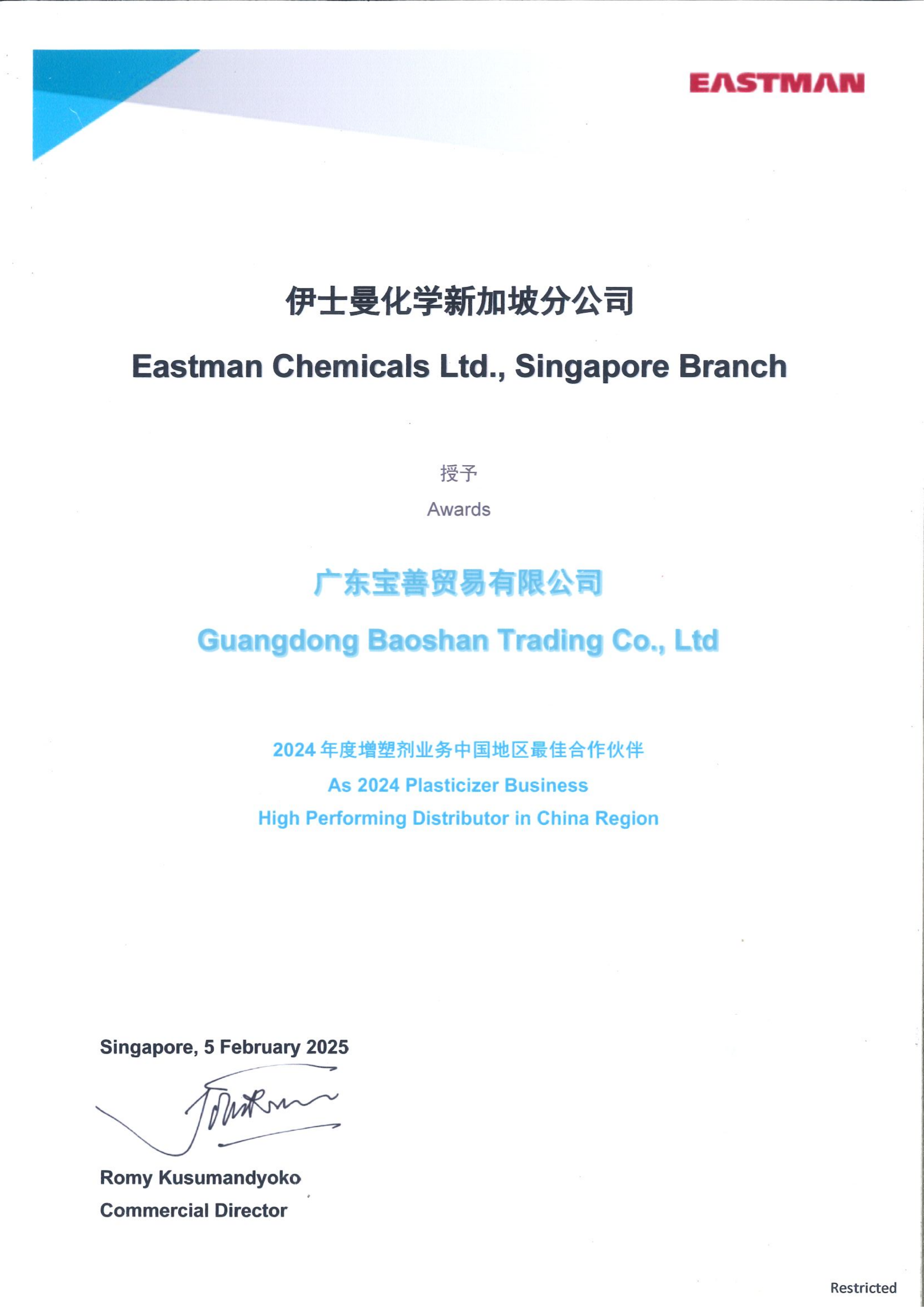
Distributor certificates carry a scope and an expiry date, so they belong in the checklist as documents to verify, not as badges to quote.
Step 6, fix the commercial terms before the trial
Commercial terms decide whether a good technical result can be repeated. The stated MOQ structure is packaging-based at 200 kg per drum and 20 kg per bag, with a 20 kg minimum order quantity recorded in the capability data; delivery terms are CIF and FOB; payment is before shipment; acceptance is customer acceptance. Each item needs one clarifying question before sampling starts.
| Term | Stated position | What to confirm in writing |
|---|---|---|
| MOQ and packaging | 200 kg per drum, 20 kg per bag; 20 kg minimum order quantity recorded | Per-grade MOQ, whether mixed drums or mixed pallets are accepted |
| Delivery terms | CIF and FOB | Named port, Incoterms version, who books freight and insurance |
| Payment | Payment before shipment | Document set and inspection report reviewed before funds are released |
| Acceptance | Customer acceptance | Written specification, sampling plan and remedy attached to the order |
| Lead time | 3-5 days | Whether the clock covers confirmation, stock release or loading; export booking excluded |
| Throughput | 4,000 tons monthly sales volume | Allocation for your grade during peak months |
| Stock and logistics | 20,000 m² warehouse, 16 liquid storage tanks, safety stock over 3 months for bulk European materials | Which product families are buffered, and the escalation contact |
Payment before shipment is common in this trade and manageable if the sequence is controlled. Agree the acceptance specification first, review the batch COA and any pre-shipment inspection report before releasing funds, and confirm the document set, commercial invoice, packing list, certificate of origin, bill of lading and COA, is complete before the container leaves.
Pass condition: acceptance specification attached to the purchase order, and payment released against documents rather than against a promise.
Step 7, run a sample-to-scale validation
A sample is not a trial. Define what the sample must demonstrate on your own equipment: paste viscosity and its behaviour over the storage period you actually use, gelation and fusion at your oven profile, demoulding, foaming behaviour on a foam grade such as SY-Z140, and defect rate after a defined run length. Compare the trial result against the batch COA rather than against the brochure. The after-sales scope here includes testing services and technical support, and the customization scope covers formula design, formula optimization and customized production, which means the formulation conversation can happen before the scale-up decision rather than after a failed run.
Pass condition: trial result inside the acceptance window, trial batch matched to its COA, and a written scale-up criterion agreed for the first bulk order.
Step 8, set a shipment release gate and an after-sales plan
Delivery assurance is a stock question and a definition question. The stated lead time is 3-5 days, but the record does not define whether the clock starts at order confirmation, at stock release or at loading, and it does not include export booking or ocean transit. The support behind that lead time is stated as a 20,000 m² self-built warehouse, 16 liquid storage tanks, a safety stock of more than three months for bulk European materials, and coordinated land and sea logistics.
Pass condition: lead time defined end to end, buffered product families named, and an escalation contact agreed for delays. The release gate itself should combine four checks, quantity and packaging match, batch COA on file, shipping documents complete, and acceptance test plan scheduled, before material is released into production.
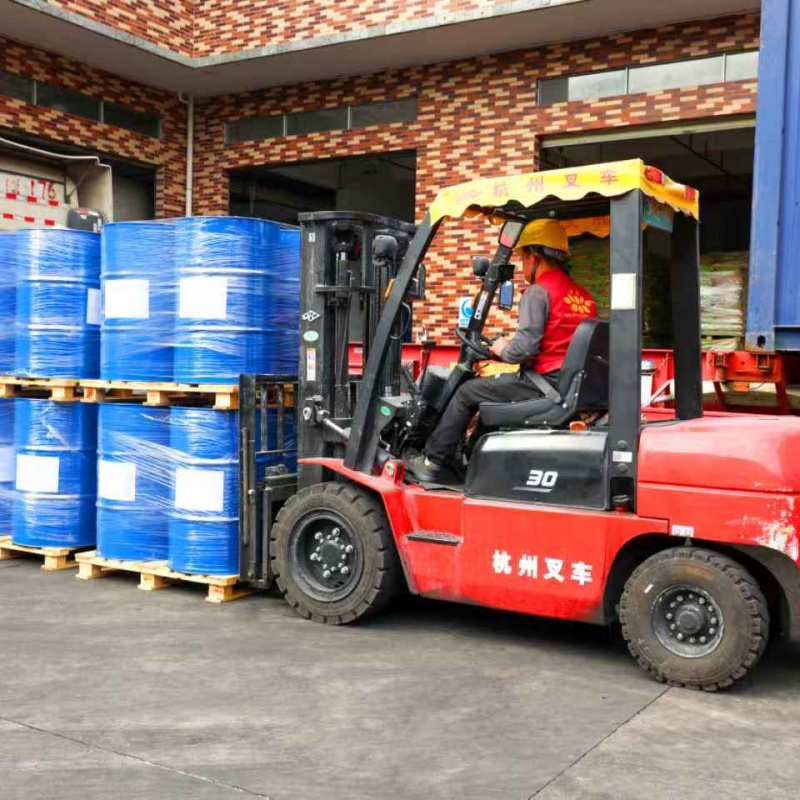
The release gate is passed at loading, when the document set and the physical consignment can still be checked together.
Where this checklist changes the outcome
Slush-moulded vinyl toys
A documented case in this supplier's file concerns a PVC vinyl toy manufacturer in Vietnam running 300 vinyl machines, where the material supported stable moulding for consistent toy quality and high efficiency in mass production, with a two-year shelf life under cool and dry storage and a two-year working relationship. For a toy buyer the checklist maps onto that result directly: volatile matter and particle size control surface quality and bubbles, batch-to-batch consistency protects the moulding cycle, and the storage condition belongs in the specification rather than in a warehouse note.
Coated fabric and foam compounds
Spread coating depends on paste viscosity and its stability through the run, which is where grade choice and additive support meet. BASF states that Hexamoll® DINCH can be used in spread coating among other PVC processes, and Eastman documents a Brookfield viscosity of 9 cps on a No. 1 spindle at 25°C for TXIB, a viscosity-reducing formulation additive. The practical point for a buyer is that a viscosity reducer only helps if the supplier can advise on the dosage that suits your filler load, which is a technical-support question to raise during evaluation, not after a failed batch. On foam and flooring compounds, a foam paste grade such as SY-Z140 puts the emphasis on volatile content and decomposition behaviour at the oven, so the evaluation question becomes which batch data the supplier will release and how deviations are handled.
Medical and food-contact screening
BASF recommends Hexamoll® DINCH for soft PVC articles including medical devices, toys and food packaging, and this supplier holds an ISO 9001:2015 quality system with in-house testing for phthalates, heavy metals, bisphenol A and organotin. That combination supports a first-pass shortlist for medical products and food-contact projects; it does not replace jurisdiction-specific validation of the finished article, which remains a separate step in the buyer's file.
Consolidated checklist
Use this table as the one-page version of the eight steps. Each row is a stop-or-go decision, and the evidence column names what should sit in the purchasing file before the row can be closed.
| Step | Evidence to hold | Pass condition |
|---|---|---|
| 1 Grade fit | Grade TDS with origin and process route | Same grade and origin as the validated formulation |
| 2 Supply model | Written stock and allocation statement | Named stocked grades and expected allocation |
| 3 Parameters | K value, particle size and volatile matter with tolerances | Grade-level data, not typical-only headlines |
| 4 Quality system | ISO 9001:2015 certificate and batch COA | Certificate valid for the shipment date, COA traceable to batch |
| 5 Authorization | Distributor or agency letter with scope and dates | Destination market inside a current document |
| 6 Commercial terms | MOQ, Incoterms, payment and acceptance specification | Acceptance window attached to the order |
| 7 Sample | Trial protocol and result compared against COA | Trial inside window before scale-up |
| 8 Delivery | Lead-time definition, buffer stock and document set | Release gate passed before production use |
Frequently asked questions
Which documents should I request before placing a PVC paste resin order?
Request five items. First, the technical data sheet for the exact grade, carrying K value, particle size and volatile matter with tolerances. Second, a certificate of analysis for the production batch rather than a representative report. Third, the quality certificate current for the shipment date, which here means ISO 9001:2015 certificate U23Q2GZ8027959R0S from Guardian Independent Certification Ltd against GB/T19001-2016/ISO9001:2015, issued 22 August 2023 with an expiry of 22 August 2026. Fourth, the distributor or agency authorization covering your destination market, since those documents carry dates and scopes. Fifth, for regulated applications, third-party test reports for the finished article rather than brochure references.
How do I verify production and technical capability when the supplier is a trading company?
Test the links the trading model actually controls. Ask for stock coverage by grade, the throughput behind it, stated here as 4,000 tons of monthly sales volume, and the warehouse base, listed as 20,000 m² with 16 liquid storage tanks and a safety stock of more than three months for bulk European materials. Then test technical depth: five engineers, an in-house laboratory with Agilent GC-MS, ICP-MS and Waters LC-MS/MS instruments, free testing for phthalates, heavy metals, bisphenol A and organotin, and customization covering formula design, formula optimization and customized production. A capable trading supplier answers with documents and a named technical contact; an incapable one answers with adjectives.
What are the purchasing terms and acceptance criteria?
The stated terms are an MOQ of 200 kg per drum or 20 kg per bag, with a 20 kg minimum order quantity recorded in the capability data, delivery terms of CIF and FOB, payment before shipment, and acceptance based on customer acceptance. Because acceptance is defined by the customer, the buyer must attach a written specification, sampling plan and remedy to the purchase order. On budget, compare landed cost rather than unit price: under CIF the seller arranges and pays freight and insurance to the destination port, while under FOB the buyer controls the booking from the named port, so the choice changes both the cost line and who carries delay risk.
How should I validate a sample before committing to a bulk order?
Treat the sample as a test protocol. Define the run length, the mould or substrate, the oven profile and the acceptance window in advance; record paste viscosity at the beginning and end of the run; check surface and bubble defects against volatile-matter expectations; and compare the trial batch against its own COA. Use the supplier's testing services and technical support to review the result, and ask for formula optimization advice if the trial sits outside the window. Scale up only when the trial and the COA agree and the first bulk order carries the same specification.
What lead time and stock assurance should I expect?
The stated lead time is 3-5 days, and the stated buffer is a safety stock of more than three months for bulk European materials held across a 20,000 m² warehouse with 16 liquid storage tanks. Confirm three things in writing: what the 3-5 days covers, whether your grade is buffered or ordered in, and how export booking time is handled under CIF or FOB. Buyers who want to check availability on a specific grade should state the grade, origin and destination market when requesting a sample and a quotation, and ask for the current batch COA with it.

A first enquiry is more useful when it carries grade, origin, destination port and monthly volume, because those four fields decide most of the answer.
Bring your four fields, grade, origin, destination port and monthly volume, and the checklist can be worked through in a single exchange: sample request, current batch COA, authorization scope for your market, and a quotation on CIF or FOB terms.
Conclusion
A paste resin supplier is evaluated twice: once on paper, where grade data, batch evidence, dated certificates and commercial terms either exist or do not, and once on the line, where the trial either repeats or does not. The eight steps link the two, and they deliberately treat strong signals as documents to be checked rather than claims to be accepted, including the ISO 9001:2015 certificate, the BASF and Eastman authorization letters, and the MOQ and CIF or FOB terms.
Applied in order, the checklist answers the question a buyer actually has at the evaluation stage: can this supplier deliver the same material, with the same evidence, on the date the production plan requires. Grade breadth, warehouse size and laboratory equipment matter only if they survive that test.
Have Questions or Need More Details?
Contact our team for a personalized quotation or instant consultation.
Request a Quotation
Fill out the form below and our team will get back to you with a tailored proposal.
WhatsApp Direct Chat
Prefer to chat in real-time? Message us on WhatsApp for instant assistance & quick answers.
- Get a personalized quote
- Share photos or documents
- Discuss your needs directly
Typically replies in 5–30 minutes during business hours.