
ATBC vs. DINCH vs. TXIB: Comparing PVC Vinyl Plasticizer and Additive Options
ATBC, DINCH and TXIB are not three interchangeable versions of the same purchasing decision. ATBC (acetyl tributyl citrate) and DINCH (di-isononyl cyclohexane-1,2-dicarboxylate) are primary plasticizers that carry the bulk of a flexible PVC formulation. TXIB (2,2,4-trimethyl-1,3-pentanediol diisobutyrate) is a low-viscosity formulation additive and film-forming agent that also plasticizes, but it is normally used alongside a primary plasticizer rather than in place of one.
That single distinction explains most of the confusion in non-phthalate PVC vinyl material sourcing. Buyers who compare the three on a datasheet line by line can end up with a shortlist that looks clean on paper and fails at the first trial batch, because a viscosity reducer and a primary plasticizer do different jobs in the plastisol. This guide compares the documented profile of each material, shows where each one fits in food-contact, medical, toy, coated and low-VOC automotive PVC work, and sets out the verification steps that a technical data sheet cannot replace.
Problem Definition: The Interchangeability Trap
Three specific failure patterns recur in project reviews:
- Replacing a primary plasticizer with TXIB at equal loading. TXIB is used in combination with other primary plasticizers specifically to reduce the amount of plasticizer in the formula. Substituting it one-for-one for ATBC or DINCH changes hardness, flexibility and hand feel, and it is not a substitution that a formulation can absorb without re-balancing.
- Choosing on viscosity alone. A low Brookfield viscosity of 9 cP at 25 °C is a genuine advantage in high-filler or high-shear coating work, but it says nothing about long-term flexibility or extraction behaviour in the finished article.
- Treating supplier documentation as finished-article compliance. A plasticizer's own REACH, RoHS, FDA or GB 4806 references support the material, not the article. The article passes or fails on the full formulation, including stabilizer choice and pigment and filler load, and on the jurisdiction where it is sold.
Industry Background: Why the Non-Phthalate Question Keeps Returning
The shift away from ortho-phthalates in flexible PVC vinyl materials has moved from a marketing preference to a documentation requirement in several end markets. MarketsandMarkets valued the global eco-friendly plasticizer market at USD 5.03 billion in 2024, which reflects how much formulating capacity has already been redirected toward non-phthalate and bio-based options. In the toy and automotive interiors segment, commercial research cited in our verified data projects the high-flow PVC powders for slush molding market to reach USD 277 million by 2034, a reminder that the plasticizer decision sits inside a much larger material system.
Regulation continues to tighten around the additives that sit next to the plasticizer. EU Commission Regulation (EU) 2023/923 restricts lead in PVC articles to 0.1 % by weight, with effect from November 2024, which puts pressure on stabilizer selection at the same time as plasticizer selection. A buyer who screens only the plasticizer and leaves the Ca/Zn stabilizer unverified has solved half of the problem.
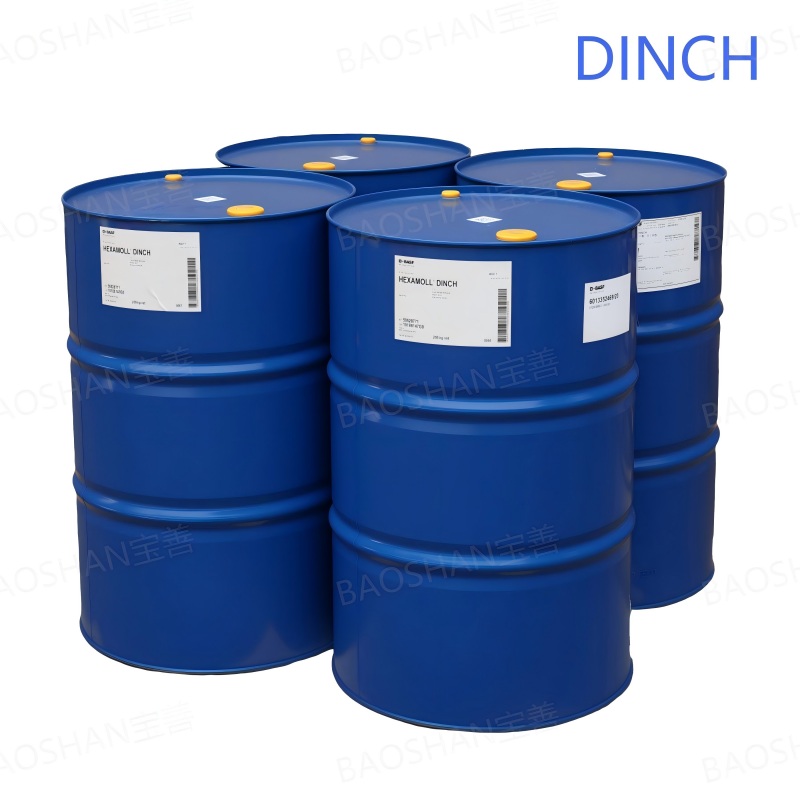
Manufacturer positioning has also matured. BASF describes HEXAMOLL® DINCH as a non-phthalate plasticizer developed for applications involving close human contact, and states that it can be used in PVC processes including extrusion, calendering, molding and spread coating. That combination — a defined material identity plus a stated process window — is what makes a genuine three-way comparison possible in the first place.
Detailed Solution: What Each Material Actually Is
ATBC — Acetyl Tributyl Citrate
ATBC is a citrate ester supplied as a colorless, transparent, odorless oily liquid. Its documented identity is CAS 77-90-7, molecular formula C20H34O8 and molecular weight 402.43, with an ester content of at least 99.0 %.
- Relative density at 25/25 °C: 1.045–1.055 g/cm³
- Acid value: ≤ 0.2 mg KOH/g; moisture: ≤ 0.15 %
- Refractive index at 25 °C/D: 1.4410–1.4425
- Flash point (COC): ≥ 204 °C; freezing point: ≤ −80 °C
- Heavy metal as Pb: ≤ 10 mg/kg
- Compliance references: REACH; RoHS, FDA and GB 4806 certification
ATBC's documented application map covers food-contact PVC (cling film, packaging film, heat-shrinkable film, bottle-cap gaskets, disposable containers, drinking straws), medical-grade PVC (infusion tubes, blood transfusion bags, catheters, drainage bags, gloves, breathing masks, medical hoses and packaging), children's toys and baby products (vinyl toys, soft dolls, teething toys, rattles, play mats), PVC paste resin and soft products (artificial leather, transfer stickers, yoga mats, waterproof rolls, sealants), and automotive interior low-VOC work. Its stated advantages include non-phthalate composition, low migration and low volatility, high transparency, and compatibility with extrusion, injection molding, calendering and slush molding.
DINCH — Di-isononyl Cyclohexane-1,2-dicarboxylate
DINCH is a cyclohexanoate diester, not a citrate and not a terephthalate. Its documented identity is di-isononyl cyclohexane-1,2-dicarboxylate at ≥ 99.5 % content, CAS 474919-59-0 in the USA and 166412-78-8 outside the USA, with a molar mass of 424.7 g/mol.
- Dynamic viscosity at 20 °C: 44–60 mPa·s (ASTM D 7042)
- Density at 20 °C: 0.944–0.954 g/cm³
- Ester content: ≥ 99.5 %; phthalate content: ≤ 0.01 %; water: ≤ 0.1 %
- Acid value: ≤ 0.07 mg KOH/g; Pt-Co color: ≤ 40
- Pour point: −54 °C; surface tension at 20 °C: 30.7 mN/m
- Compliance references: EU REACH, RoHS and PAHS; food-contact permits from Germany's BFR and Japan's Hygienic PVC Association (manufacturer-stated)
BASF's stated application areas for DINCH are medical devices, toys and food packaging, alongside automotive interiors where low haze and low VOC matter and PVC paste products such as artificial leather, drip plastic trademarks, slush molding toys and coated fabrics. BASF data also indicate that in PVC paste resins the initial viscosity is reduced by 10–20 % and the storage period extended by 20–30 %, and that volatility is roughly 50 % lower than DOP. DINCH is described as fully compatible with DOP, DOTP and DINP in any ratio, which matters for plants running legacy formulations in parallel with new ones.
TXIB — A Film-Forming Agent and Viscosity Reducer
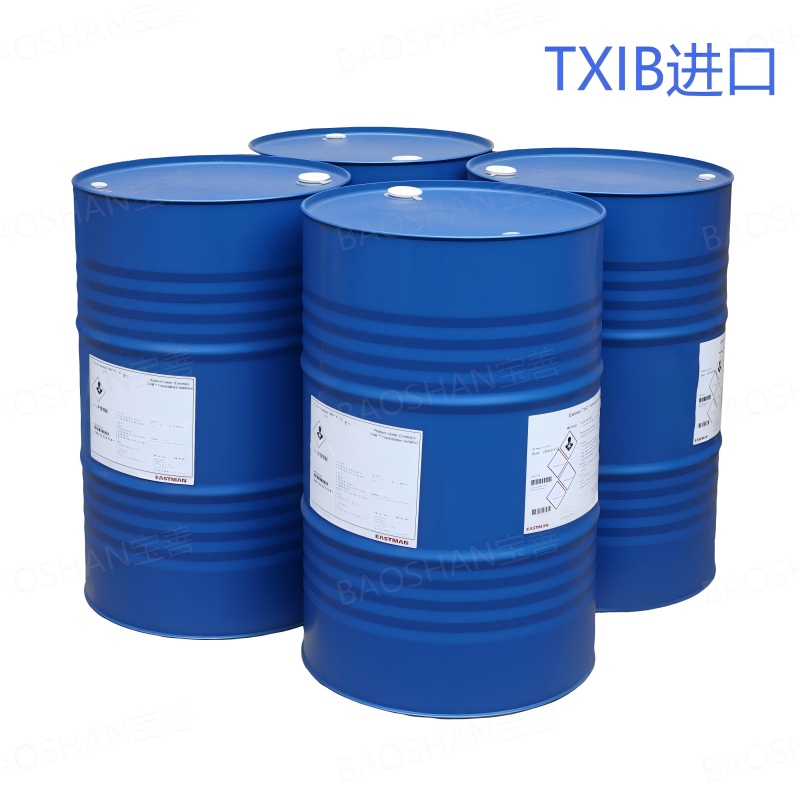
TXIB is 2,2,4-trimethyl-1,3-pentanediol diisobutyrate, CAS 6846-50-0, molecular formula C16H30O4, molecular weight 286.4, with a minimum assay of 98.6 wt %.
- Brookfield viscosity at 25 °C: 9 cP
- Specific gravity at 20/20 °C: 0.942–0.948
- Freezing point: −70 °C; boiling point at 760 mmHg: 281 °C
- Flash point (COC): 143 °C; fire point: 152 °C; autoignition: 424 °C
- Surface tension at 25 °C: 27.56 dynes/cm; water solubility: 0.42 g/L
- Hydrolysis after 96 h at 98–99 °C: 0.003 %; evaporation rate at 100 °C: 0.674 (g/1000 cm²)/h
- Acidity as isobutyric acid: ≤ 0.05 wt %; Pt-Co color: ≤ 10
TXIB performs three documented roles in PVC paste work: it is used in combination with primary plasticizers to reduce the total plasticizer requirement; it acts as a viscosity reducer that lowers initial plastisol viscosity, holds viscosity stability, reduces bubble entrainment and allows higher filler loading; and it is used as a special-purpose additive that gives a drier, more attractive surface, improves printability and wipeability, and raises surface abrasion resistance. It is described as free of phthalates and benzene rings, non-VOC, low odor and compatible with general-purpose plasticizers including DINCH, DOTP and ATBC, with a synergistic effect alongside calcium-zinc stabilizers.
Comparison Table: Documented Profiles Side by Side
| Decision point | ATBC | DINCH | TXIB |
|---|---|---|---|
| Chemical identity | Acetyl tributyl citrate, CAS 77-90-7, C20H34O8 | Di-isononyl cyclohexane-1,2-dicarboxylate, CAS 166412-78-8 (474919-59-0 in USA) | 2,2,4-trimethyl-1,3-pentanediol diisobutyrate, CAS 6846-50-0, C16H30O4 |
| Role in a PVC formulation | Primary plasticizer | Primary plasticizer | Viscosity reducer, film-forming agent and co-plasticizer |
| Purity / assay | Ester content ≥ 99.0 % | Ester content ≥ 99.5 %; phthalate content ≤ 0.01 % | Assay ≥ 98.6 wt % |
| Density | 1.045–1.055 g/cm³ (25/25 °C) | 0.944–0.954 g/cm³ (20 °C) | Specific gravity 0.942–0.948 (20/20 °C) |
| Viscosity | Not specified in the data sheet | 44–60 mPa·s (20 °C, ASTM D 7042) | 9 cP (Brookfield, 25 °C) |
| Low-temperature indicator | Freezing point ≤ −80 °C | Pour point −54 °C | Freezing point −70 °C |
| Thermal indicator | Flash point (COC) ≥ 204 °C | Not stated in the data sheet extract | Flash point (COC) 143 °C; fire point 152 °C |
| Compliance references in source data | REACH; RoHS, FDA, GB 4806 | REACH, RoHS, PAHS; BFR and Japan Hygienic PVC Association food-contact permits (manufacturer-stated) | REACH and RoHS; phthalate-free and benzene-ring-free; non-VOC |
| Documented strongest fit | Food-contact film and gaskets, medical PVC, toys, low-VOC automotive interiors | Medical devices, toys, food packaging, automotive low-haze interiors, paste and coated products | Plastisol viscosity control, higher filler loading, surface printability and abrasion, PU, EVA, inks |
| Main qualification point | Article-level compliance still needs batch testing across the full formulation | Finished-article approval is jurisdiction- and formulation-specific, regardless of manufacturer positioning | Not a drop-in replacement for a primary plasticizer; lower flash point changes storage and handling planning |
Application Fit: Matching the Option to the Project
Food-Contact PVC
For cling film, packaging film, cap gaskets and disposable food containers, the practical shortlist is ATBC or DINCH, both of which carry food-contact references in their source data. ATBC lists FDA and GB 4806 certification alongside REACH and RoHS. DINCH carries manufacturer-stated food-contact permits from Germany's BFR and Japan's Hygienic PVC Association. TXIB enters this discussion as a processing aid: it improves film formation, reduces bubbles and allows higher filler load, but the primary plasticizer decision is still made between the two esters.
Medical-Grade PVC
Infusion tubes, blood bags, catheters, drainage bags, medical gloves and breathing masks appear in the application data for both ATBC and DINCH, and TXIB is listed in medical consumables such as examination gloves and catheters. The differentiator here is not the plasticizer name but the volatility and migration profile over the device's service life, plus the extractables testing your notified body expects. Whichever route is chosen, the Ca/Zn stabilizer must also be phenol-free and heavy-metal-free to keep the whole formulation coherent.
Toys and Slush-Molded Vinyl
Rotomolded dolls, car models, soft toys and play mats are the classic slush molding application, and the corpus explicitly links PVC Slush Molding Toy Material to this segment. ATBC references EN71-3 and RoHS; DINCH is described by BASF as suitable for toys, including toys for children under three years old. TXIB's contribution is rheological: it stabilises plastisol viscosity during long slush cycles and helps release bubbles, which shows up as fewer surface defects and less rework.
PVC Paste Resin, Coated Fabric and Drip Glue
In artificial leather, coated fabric, wallpaper, floor leather and drip-molded trademarks, viscosity is the controlling variable. A typical starting point is a paste resin such as KANEVINYL PASTE SH-14 (K-value 77) or Formosa Plastics PR-G, combined with a primary plasticizer and, where the paste is too heavy for the coating line, a TXIB addition. Where the objective is cost reduction rather than viscosity alone, a blending resin such as SB-100C or BJ-65 can cut plasticizer consumption by 10–20 % according to the corpus, and it delivers a matte finish at the same time.
Automotive Low-VOC Interiors
Instrument panel skins, seat leather, door weatherstripping and low-odor soft parts are named in both the ATBC and DINCH application data, with low haze, low VOC and low odor as the governing criteria. DINCH is described as almost odorless with volatility about 50 % lower than DOP; ATBC is listed under automotive interiors and low-VOC materials with low migration and low volatility. TXIB's role in this segment is mainly as a formulation additive for sealants and coatings rather than as the main softener.
Step-by-Step Breakdown: How to Run the Selection
- Fix the regulated end-use first. Write down the destination market, the product category and the test list the buyer will demand — for example EN71-3 for toys, GB 4806 for food contact, or an extractables package for a medical device. This step decides whether ATBC and DINCH are both viable or whether one is eliminated before any technical discussion.
- Define the process and the target paste rheology. Slush molding, coating, dipping, spreading and extrusion all run as heating-processing, continuous-production operations with different shear profiles. Record the target initial viscosity, the viscosity stability window over your storage period, and the filler load the line can tolerate.
- Select the primary plasticizer on performance, not on viscosity. Compare ATBC and DINCH on plasticizing efficiency at your target hardness, volatility, migration and low-temperature behaviour. Note that DINCH brings a documented 10–20 % initial viscosity reduction and 20–30 % longer storage period in paste resins, which may remove the perceived need for an additional thinner.
- Add TXIB only against a defined problem. Introduce it when the plastisol is too viscous for the line, when bubbles are causing surface defects, when filler loading must rise for cost reasons, or when the surface needs to be drier and more abrasion resistant. Then re-check hardness and flexibility, because the plasticizer total has changed.
- Validate at batch level, then scale. Request heavy-metal and phthalate testing on the actual delivered lots, run a trial batch through the real process, and only then release the formulation for volume production. This is the step where most compliance surprises are caught.

Where Each Option Fits — and Where It Does Not
- ATBC fits projects that need a citrate-based primary plasticizer with documented food-contact and toy references and a very low freezing point for cold-weather handling. It does not fit as a viscosity-control tool: the data sheet does not position it that way.
- DINCH fits medical, toy and food-packaging work where a non-phthalate primary plasticizer with a defined process window, low odor and low volatility is required. It does not replace the jurisdiction-specific approval work for the finished article.
- TXIB fits high-filler, high-shear or long slush cycles where viscosity and surface quality decide yield. It does not fit as a stand-alone softener at equal loading, and its 143 °C flash point should be reflected in storage and handling planning.
- A fourth option sits outside this comparison. Where extremely low volatility and extraction resistance govern — for instance long-service cable, industrial or medical parts — a polymeric polyester plasticizer such as GLOBINEX W-2050 (viscosity 2300–3500 mPa·s at 25 °C) is the usual candidate, and its own data state low migration and low volatility.
Batch-Level Verification: What Datasheets Cannot Cover
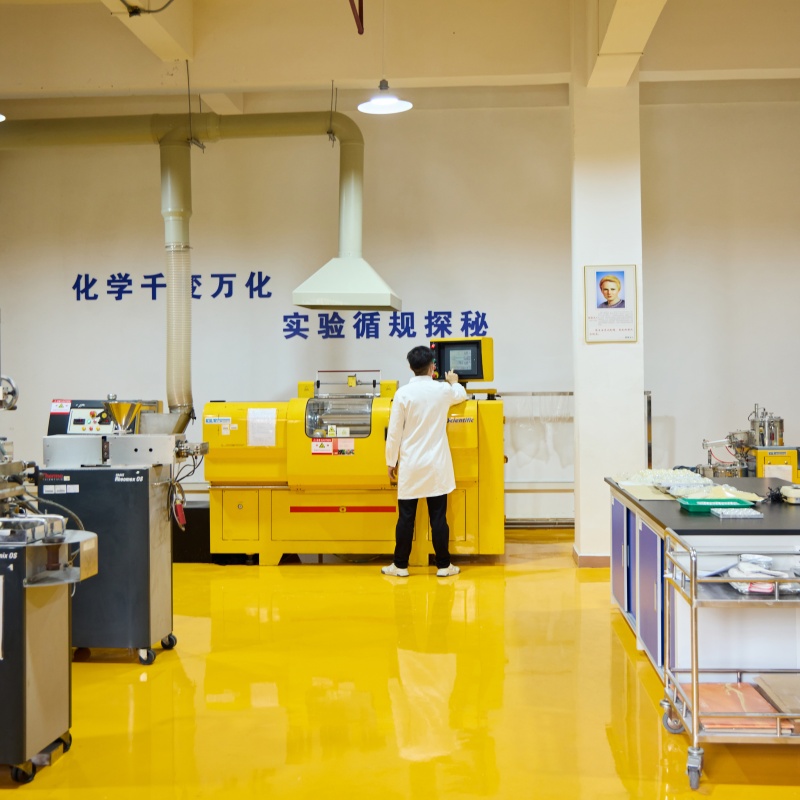
A plasticizer data sheet describes a material, not a delivery. Phthalate content, heavy metals, bisphenol A and organotin have to be confirmed on the lots you actually receive, because a compliant material handled or blended outside its specification can still put a shipment at risk. Guangdong Baoshan Trading Co., Ltd — a PVC vinyl material supplier headquartered in Dongguan, Guangdong, with roots back to 1994 — operates an in-house chemical analysis laboratory equipped with Agilent GC-MS, ICP-MS and Waters LC-MS/MS instruments, and provides testing for phthalates, heavy metals, bisphenol A and organotin at no charge to support customer compliance work. Sampling inspection is applied as standard quality control, and the laboratory also supports formula optimisation and product upgrading.
For buyers in Vietnam, Indonesia and wider Southeast Asia, this matters more than a certificate PDF. The 300-machine vinyl toy manufacturer case documented by the company is built on stable molding and consistent toy quality over a two-year shelf life under cool, dry storage — outcomes that depend on incoming-material consistency as much as on the plasticizer grade itself.
Sourcing Through an Authorized Channel
Brand authorization changes what a distributor can actually commit to. Baoshan is an authorized distributor of BASF's Hexamoll® DINCH in China — the company states it has ranked first in Asia-Pacific sales for its DINCH business for consecutive years — and an authorized distributor of Eastman TXIB in China, where it has been recognized as Best Partner in Plasticizer Business in China. The company also assists BASF with DINCH application development in the Asia-Pacific region. Its quality system adheres to ISO 9001 and has passed a joint audit by BASF's Petrochemical Division, Quality Management Department, and Environment, Health and Safety Department.
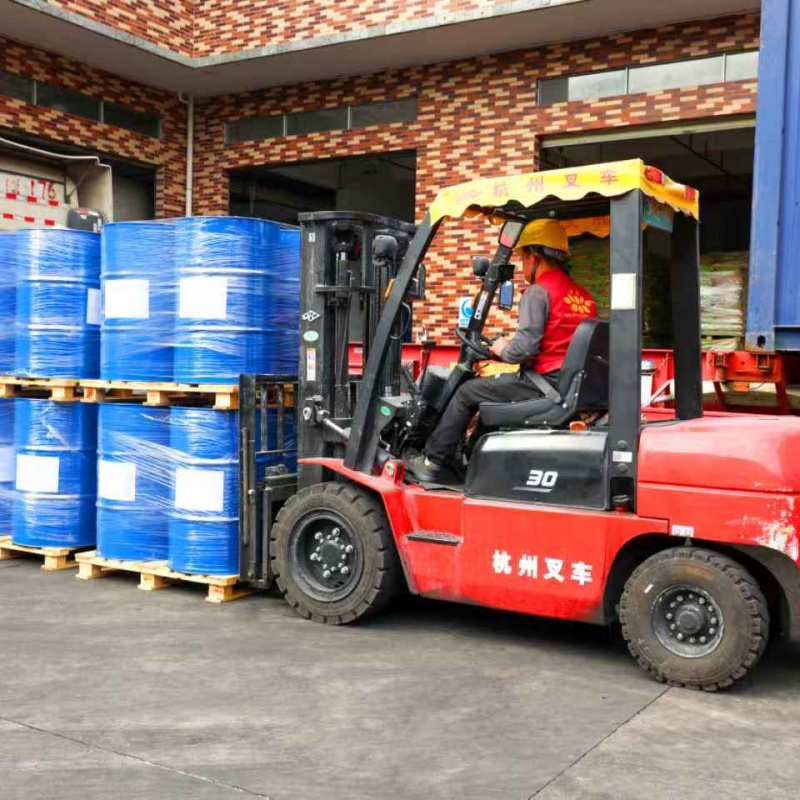
Operationally, the company reports monthly sales of 4,000 tons, a 20,000 m² self-built warehouse, 16 liquid storage tanks and a safety stock of more than three months for bulk European materials, with a stated lead time of 3–5 days and a minimum order quantity of 20 kg. For a project evaluating ATBC against DINCH and TXIB at the same time, that combination of authorized supply and short dispatch windows is what makes a parallel trial realistic rather than a quarterly exercise.

Next Step: Test the Shortlist on Your Own Line
Comparing ATBC, DINCH and TXIB on paper narrows the field; a trial batch settles it. Baoshan supplies ATBC, BASF HEXAMOLL® DINCH and Eastman TXIB™ from stock, supports sample requests from 20 kg, and can run phthalate and heavy-metal testing on the material you receive.
Send your target hardness, process type and destination market to misscheng1984@163.com, call +86 13580992838, or message WhatsApp at +84 865388399. Product information is available at www.baoshancl.cn.
Frequently Asked Questions
1. Are ATBC, DINCH and TXIB all compliant for food-contact and medical PVC?
Compliance attaches to the finished article, not to the additive name. ATBC is documented as compliant with REACH, RoHS, FDA and GB 4806. DINCH carries EU REACH, RoHS and PAHS references plus manufacturer-stated food-contact permits from Germany's BFR and Japan's Hygienic PVC Association. TXIB is documented as compliant with EU REACH, RoHS and Chinese environmental regulations, and is described as phthalate-free and non-VOC. In every case, the article must still be validated for its own formulation, dosage, stabilizer system and destination market, which is why batch-level heavy-metal and phthalate testing is part of the process rather than an optional extra.
2. Can TXIB replace ATBC or DINCH directly in an existing formula?
No. TXIB is documented as a viscosity reducer, film-forming agent and co-plasticizer used in combination with primary plasticizers to reduce the total plasticizer requirement. ATBC and DINCH are primary plasticizers selected for plasticizing efficiency, volatility and migration. Swapping TXIB in at equal loading changes hardness and flexibility, so any substitution has to be re-balanced and re-tested rather than dropped in. Where TXIB is genuinely useful is when the plastisol is too viscous, bubbles are causing defects, or filler loading needs to rise.
3. How should I compare cost between ATBC, DINCH and TXIB?
Compare cost per finished part, not cost per kilogram, because the three materials act at different levels and for different reasons. Four cost levers dominate: the loading needed to reach target hardness, the density of the material, whether an extra viscosity-control additive is required at all, and how much filler the paste can carry. TXIB reduces initial viscosity and allows higher filler loading, and blending resins such as SB-100C and BJ-65 are documented as reducing plasticizer consumption by 10–20 %. Actual pricing is quotation-based and depends on grade, volume and delivery terms, so the practical approach is to request a quote against your real formulation rather than benchmark list prices.
4. Can I evaluate these materials on a small sample before committing to volume?
Yes. The minimum order quantity is 20 kg, which is sufficient for a laboratory trial and a short production run on most slush molding and coating lines. Sampling inspection is applied as standard quality control, and the in-house laboratory provides testing for phthalates, heavy metals, bisphenol A and organotin at no charge, so the sample you evaluate can be screened on the same parameters your customer will test later.
5. What lead time and stock position should a project plan for?
The stated lead time is 3–5 days, supported by a 20,000 m² self-built warehouse, 16 liquid storage tanks and a safety stock of more than three months for bulk European materials, with monthly sales of 4,000 tons. For a project running parallel ATBC, DINCH and TXIB trials, that means the three materials can be evaluated on the same schedule instead of sequentially. Sharing your trial plan and target dates in advance is the simplest way to confirm availability against your production calendar.
Conclusion
ATBC, DINCH and TXIB belong in one project discussion but not in one substitution table. ATBC and DINCH are primary plasticizers with documented food-contact, toy and medical application data, and the choice between them comes down to your performance targets and the regulatory file your customer will demand. TXIB is a formulation tool — a low-viscosity, film-forming additive that changes how the plastisol behaves on the line. Treating it as a third interchangeable softener is the most common and most expensive misreading of the three.
The reliable sequence is to fix the regulated end-use, define the process and rheology target, choose the primary plasticizer on performance, add TXIB only against a defined problem, and validate on real batches. Done in that order, the plasticizer decision stops being a datasheet comparison and becomes a line-level result you can defend to a customer, an auditor and a notified body alike.
Have Questions or Need More Details?
Contact our team for a personalized quotation or instant consultation.
Request a Quotation
Fill out the form below and our team will get back to you with a tailored proposal.
WhatsApp Direct Chat
Prefer to chat in real-time? Message us on WhatsApp for instant assistance & quick answers.
- Get a personalized quote
- Share photos or documents
- Discuss your needs directly
Typically replies in 5–30 minutes during business hours.