
Blending Resins vs Paste Resins: A Side-by-Side Performance Guide for Coating Applications
Blending Resins vs Paste Resins: A Side-by-Side Performance Guide for Coating Applications
Blending resin powder is a co-resin for PVC paste resin, not a substitute for it. On a coating line running artificial leather, floor leather or coated fabric, the plastisol normally keeps PVC paste resin as the continuous, film-forming phase and adds 20-30% blending resin powder to lower paste viscosity, reduce plasticizer demand and control surface gloss. The practical decision is therefore not “blend or paste” but the ratio — how much blend resin a given coating weight, gloss target and compliance profile will tolerate.
This guide compares the two families on the properties that decide coating outcomes: particle size and morphology, K-value and degree of polymerization, plastisol viscosity and viscosity drift, fusion behaviour, surface finish, and cost per kilogram of usable formulation. The analysis is anchored on named, published grades — PVC paste resins such as SY-Z140 and Kaneka PSH-10S on one side, and blend resin powders such as Kaneka PBM-B5F (B5F) and BJ-65 on the other — so the comparison can be checked against a datasheet rather than accepted on trust.
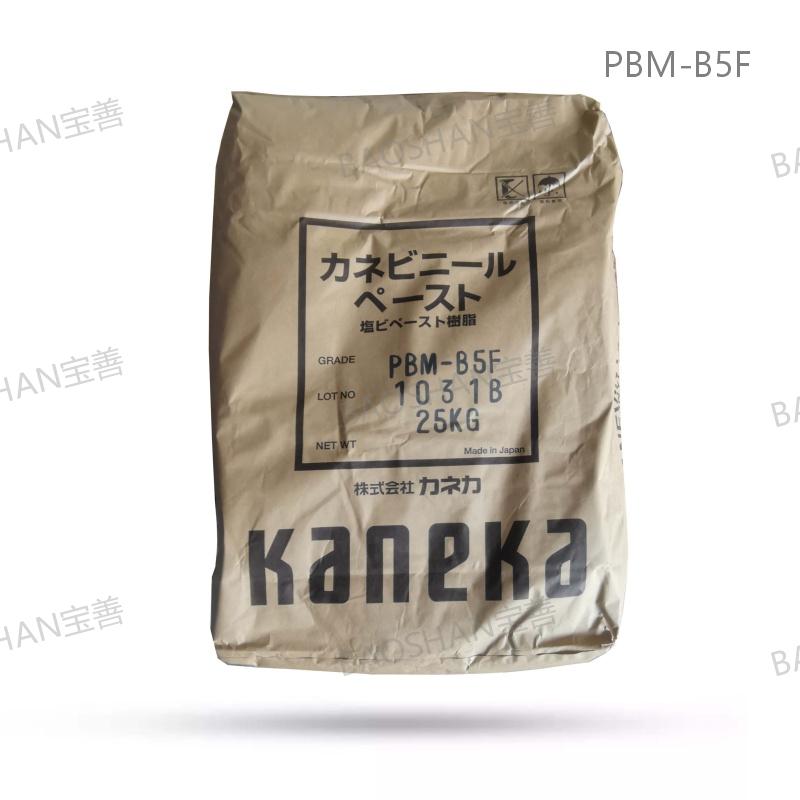 Blend resin powder such as Kaneka PBM-B5F (B5F) is dosed as a co-resin in PVC coating plastisols, typically at 20-30% of total resin content.
Problem Definition: Where the Wrong Resin Ratio Shows Up on the Line
Resin balance problems rarely present themselves as resin problems. They surface as process symptoms further down the line, and they are usually first noticed by the coating operator rather than the formulator.
- Viscosity drift within a shift. When the plastisol thickens over several hours, coat weight changes at a fixed knife or roll setting, and dry film thickness drifts with it.
- Wave marks and flow lines under high-shear coating. Reverse-roll and knife-over-roll heads impose high shear; if the plastisol lacks flow under shear, the coating head leaves visible tracks.
- Surface mismatch. Either excessive gloss where the product specification calls for a matte face, or a chalky, under-fused surface when coarse blend particles never fully gelled into the film.
- Mechanical shortfall. Reduced elongation, tear strength or flex life, almost always traceable to extender loading that has crowded out the film-forming paste resin.
- Cost creep. Extra plasticizer or extra viscosity reducer added to fix a viscosity symptom that a better resin balance would have solved more cheaply.
These symptoms pull against one another. Adding plasticizer lowers viscosity but raises cost and can increase migration. Adding a viscosity reducer works at low dosage but is a purchased additive with its own cost line. Adding blend resin powder lowers viscosity and reduces plasticizer demand while simultaneously changing gelation behaviour and surface gloss. A formulator is always trading three variables at once: viscosity, surface, and cost.
The decision rule in one sentence: keep paste resin as the continuous film-forming phase, use blend resin powder to buy viscosity and matte performance, and use a viscosity reducer such as Eastman TXIB to fine-tune viscosity stability rather than to correct an overloaded formulation.
Industry Background: Why Resin Balance Has Become a Cost and Compliance Question
Two market movements have pushed the paste-versus-blend decision from a technical detail to a procurement-level question. The first is volume growth in paste-grade PVC. The second is the accelerating substitution of phthalate plasticizers, which changes plastisol rheology in ways that resin selection can partly offset.
- The global PVC paste resin market was estimated at USD 2.67 billion in 2024, with a projection of USD 4.473 billion by 2035 (Market Research Future).
- Asia-Pacific accounts for over 60% of global paste-grade PVC volume, and China alone represents more than 45% of consumption.
- The global market for eco-friendly plasticizers was valued at USD 5.03 billion in 2024 and is projected to reach USD 7.55 billion by 2030, at a 7.0% CAGR (MarketsandMarkets).
- Regulatory pressure is concrete: EU REACH restricts DEHP, DBP and BBP to concentrations below 0.1% in toys and childcare articles.
- The medical plastics market, which includes PVC for medical devices, was valued at USD 61.4 billion in 2025 with a projected 6.0% CAGR (Grand View Research).
Note on market figures: published estimates for paste-grade PVC differ materially between research houses because “paste grade” and “emulsion PVC” are sometimes defined differently. The figures above are attributed to their named sources and should be read as directional rather than precise.
The practical consequence for a coating formulator is straightforward. When a phthalate plasticizer is replaced by DINCH, DOTP or ATBC, the plasticizer's own viscosity, solvation strength and gelation temperature change, and the plastisol's viscosity profile changes with them. Formulations that previously ran comfortably at a given paste resin loading may now need either a low-viscosity additive, a different paste resin grade, or a blend resin fraction to bring the coating window back into range. That is why the resin ratio and the plasticizer system have to be evaluated together, never separately.
The Two Material Families in Coating Formulations
PVC Paste Resin (P-PVC): The Film-Forming Phase
PVC paste resin is produced by micro-suspension or emulsion polymerization, which yields very fine primary particles. In a plastisol these particles are dispersed in plasticizer rather than dissolved, and the coating is formed when heat gels and then fuses the dispersion into a continuous film. Paste resin therefore determines tensile strength, elongation, transparency and surface continuity.
Published grades span a wide molecular-weight band, which is why grade selection matters as much as the paste-versus-blend decision:
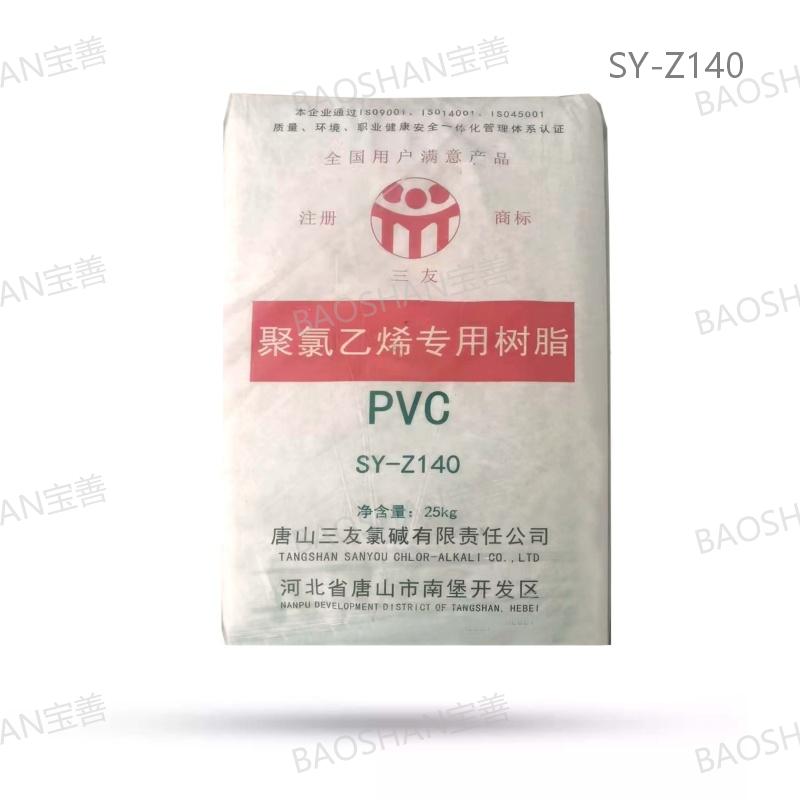 SY-Z140 is a medium molecular weight PVC paste resin produced by micro-suspension polymerization, noted for low paste viscosity, good viscosity stability, excellent foaming and outstanding thermal stability.
- SY-Z140 (Tangshan Sanyou) — medium molecular weight paste resin, micro-suspension polymerization; characterized by low paste viscosity, good viscosity stability, excellent foaming property and outstanding thermal stability. Used in foamed wallpaper, floor leather, artificial leather, rotational moulding toys and bottle cap gaskets.
- Kaneka PSH-10S — microsuspension PVC homopolymer paste resin, K-value 70, paste viscosity approximately 2,000 mPa·s at 25°C, volatile matter ≤0.8%, apparent density approximately 0.30 g/cm³. Positioned for food-grade cap gaskets and high-transparency paste products.
- Shenyang PSH-10 — micro-suspension polymerization, degree of polymerization 1,580-1,780 (typical 1,680), K-value 72-75, average particle size 1-2 µm, Type B viscosity 1,000-2,500 mPa·s at 30°C at a resin-to-plasticizer ratio of 100:65. Documented as compatible with DINCH, DOTP, ATBC and TXIB.
- Kaneka PSM-31 — K-value 72, paste viscosity approximately 3,500 mPa·s (medium viscosity), noted for sol defoaming and fine particle size.
- Formosa Plastics PR-G — microsuspension homopolymer, K-value 77.5-81.0, degree of polymerization 1,700±100, low paste viscosity in the 2,000-3,000 mPa·s range, residual VCM ≤5 ppm.
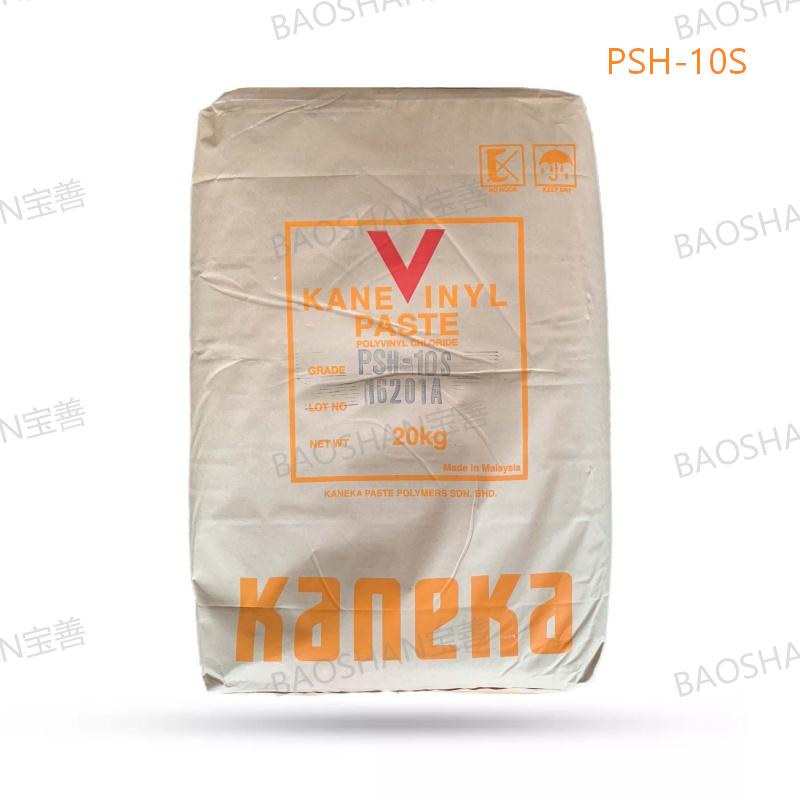 Fine-particle paste resins such as Kaneka PSH-10S (K-value 70, approximately 2,000 mPa·s paste viscosity) carry the film-forming role in a coating plastisol.
Blend Resin Powder: The Viscosity-Reducing Co-Resin
Blend resin powder is a suspension-polymerized vinyl chloride homopolymer that has been processed into a relatively coarse, dense powder. Because the particles are larger and absorb less plasticizer at room temperature, blend resin can lower plastisol viscosity without consuming the plasticizer budget that paste resin needs for dispersion. Its lower molecular weight also means it fuses at a different point in the oven curve, which is what produces the characteristic matte surface.
A representative specification set makes the contrast with paste resin clear:
- BJ-65 — degree of polymerization approximately 1,000, K-value 65, average particle diameter 20-40 µm (medium powder), apparent density 0.45-0.52 g/cm³, volatile matter ≤0.4%, residual vinyl chloride monomer ≤5 ppm. Documented benefits include highly efficient viscosity reduction when blended with paste resin, improved processing flowability, a 10-20% reduction in plasticizer consumption, excellent matting, and strong compatibility with paste resins, plasticizers and stabilizers.
- Kaneka PBM-B5F (B5F) — PVC blending resin, K-value 65-68, volatile matter ≤0.5%, apparent density 0.32-0.35 g/cm³. Documented as improving melt flow and reducing melt viscosity, enhancing impact resistance and elongation, with low migration and low blooming, and effective at low addition rates.
- SB-100C — degree of polymerization 850-1,100, K-value 62-67, average particle diameter around 20 µm, apparent density 0.50-0.55 g/cm³, residual VCM ≤5 ppm. Positioned for partial replacement of higher-cost paste resin while maintaining matte performance.
- Zhongtai PB-1000 — K-value 65, apparent density 0.32-0.35 g/cm³, narrow particle size distribution and low plasticizer absorption at room temperature; the recommended dosage band is 20-30%.
- BIOVYN™ 266EF — extender homopolymer with K-value 66, low haze property, apparent density approximately 0.55-0.60 g/cm³, volatile content ≤0.30%, residual VCM ≤1.0 ppm. Positioned for applications with VOC-control requirements.
The important engineering consequence is that blend resin changes two things at once. It reduces viscosity, which helps coating flow and allows higher filler loading; and it introduces a coarser particle population that must still fuse. If the oven curve is unchanged and the blend fraction is raised too far, the second effect overtakes the first and the coating shows a rough or under-fused surface with reduced elongation.
The Additive Layer That Determines the Final Answer
Neither resin family works in isolation. In coating formulations the resin ratio is usually adjusted together with a viscosity-control additive and a stabilizer, and the additive choice can change which resin ratio is optimum.
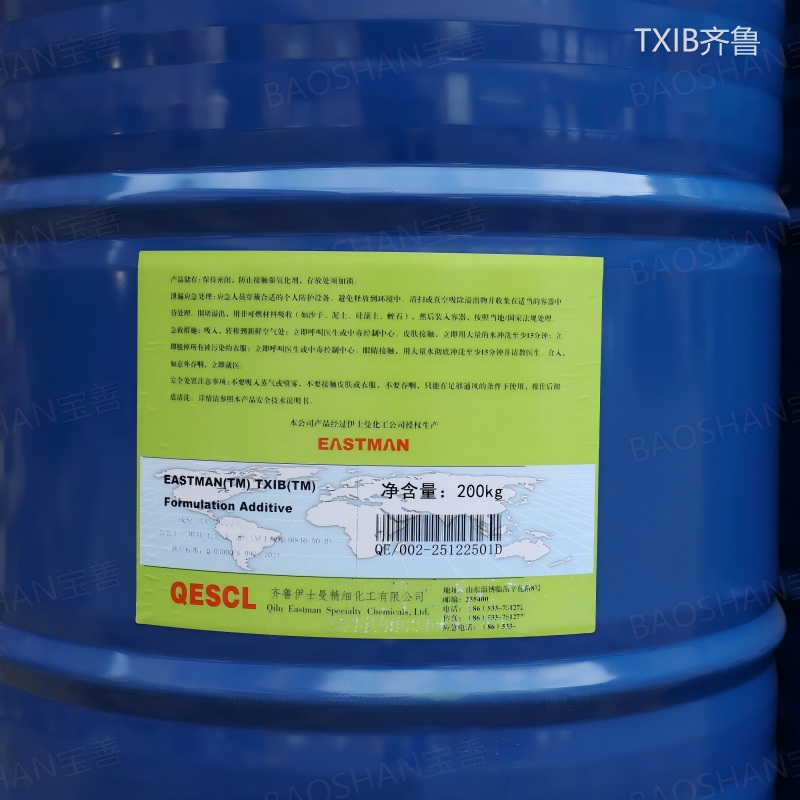 Eastman TXIB is used as both a plasticizer and a viscosity reducer; its Brookfield viscosity of 9 cP at 25°C is the lowest among the additives described here.
- Eastman TXIB (2,2,4-trimethyl-1,3-pentanediol diisobutyrate, CAS 6846-50-0) — specific gravity 0.942-0.948 at 20°C, Brookfield viscosity 9 cP at 25°C, assay 98.6 wt% minimum. Its dual function is efficient plasticization plus powerful viscosity reduction: it lowers the initial viscosity of PVC plastisols and maintains viscosity stability, reduces bubble entrainment, improves coating processing and flow characteristics, reduces wave marks caused by high-shear coating, and allows higher filler loading to reduce cost. It also produces a drier, cleaner surface layer with better printability and wipeability, improved wear resistance and improved foam resilience. It is documented as compatible with general-purpose plasticizers such as DINCH, DOTP and ATBC, and as synergistic with calcium-zinc stabilizers.
- BASF Hexamoll® DINCH (CAS 474919-59-0 in the USA, 166412-78-8 elsewhere) — dynamic viscosity 44-60 mPa·s at 20°C, density 0.944-0.954 g/cm³, pour point -54°C, ester content 99.5% minimum, phthalate content 0.01% maximum. In PVC paste resins such as Kaneka EH251 and Shenyang PSH-10 it is documented to reduce initial viscosity by 10-20%, improve viscosity stability and extend storage period by 20-30%, with volatility approximately 50% lower than DOP. It holds food-contact and medical-device approvals.
- DOTP (dioctyl terephthalate, CAS 6422-86-2) — purity ≥99.5%, density 0.981-0.985 g/cm³, flash point ≥210°C, freezing point -48°C. In plastisols it reduces viscosity and extends storage life, and its volume resistivity is 10-20 times that of DOP.
- ATBC (acetyl tributyl citrate, CAS 77-90-7) — purity ≥99.0%, freezing point ≤-80°C, flash point ≥204°C, compliant with REACH, RoHS, FDA and GB 4806. Useful where low-temperature flexibility matters.
- Phenol-free Ca/Zn stabilizers — for example CT303TX (BAEROSTAB CT 303 TX), CZ-190 (specific gravity 0.950-1.050 at 25°C, flash point >250°C), SC-135, SC-1600C and CZ-2756, which shows thermal stability ≥30 minutes at 180°C by Congo red test and a recommended processing window of 160-185°C.
Authorized distribution matters at this layer because the additive's identity is part of the formulation record. Guangdong Baoshan Trading Co., Ltd, headquartered in Dongguan, Guangdong, has operated since 1994 and is an authorized distributor of BASF's Hexamoll® DINCH in China as well as an authorized distributor of Eastman TXIB in China. For a coating line that must document its raw material sourcing, buying a viscosity reducer or plasticizer through the authorized channel keeps the compliance trail intact.
Step-by-Step: How to Compare Both Resins on Your Own Coating Line
The comparison below is written as a laboratory and pilot protocol rather than a theory section, because resin balance decisions are usually settled by viscosity data measured on the actual line rather than by datasheet reading.
- Fix the target before touching the resin ratio. Define dry film thickness, gloss level at the required angle, elongation at break, and the substrate. A matte requirement and a high-gloss requirement lead to opposite resin ratios, so the target must be stated first.
- Set a paste-to-blend starting ratio. Begin at 80:20 paste resin to blend resin powder and prepare a 70:30 variant. The 20-30% band is the documented recommended dosage range for viscosity-reducing resin such as Zhongtai PB-1000, and it is a sensible bracket for the first trial.
- Build the plasticizer system deliberately. Select a base plasticizer (DINCH, DOTP or ATBC depending on the compliance target) and decide separately whether a viscosity reducer is needed. Do not use the viscosity reducer to compensate for a plasticizer level that has already been set too high.
- Dose the viscosity reducer and measure viscosity over time. TXIB lowers initial viscosity and maintains viscosity stability; its effect should be checked as a viscosity-versus-time curve, not a single reading, since the purpose is to prevent drift through a shift.
- Select the stabilizer and set the processing window. Phenol-free Ca/Zn stabilizers in this range are generally recommended for a 160-185°C processing window, with thermal stability verified by Congo red testing at 180°C.
- Validate gelation and fusion of the blend fraction. This is the step most often skipped. Cut a cross-section, inspect surface roughness, and run elongation and tear tests. Coarse blend particles that have not fully fused will show up here, not in the viscosity data.
- Confirm compliance on the finished film. Test for phthalates, heavy metals, bisphenol A and organotin against the destination market requirement. Guangdong Baoshan Trading operates an in-house R&D and chemical analysis laboratory equipped with Agilent GC-MS, ICP-MS and Waters LC-MS/MS instruments, and provides testing for these high-risk substance groups to support customer compliance work.
- Scale up with a written acceptance protocol. Agree the acceptance basis in advance — customer acceptance is the stated acceptance mode for the supplier described here — alongside delivery terms such as CIF or FOB, and payment before shipment.
 Bench validation of viscosity, gelation and fusion behaviour is the step that separates a workable resin ratio from an under-fused coating.
Use Cases: Where Each Resin Combination Fits
The same two families are combined differently depending on the coating end product, and the differences are driven by whether the priority is surface appearance, mechanical performance or cost.
- Artificial leather and coated fabric. Paste resin forms the surface layer for flexibility, wear resistance and clarity; blend resin powder is introduced into base coats and backing coats where matte appearance and viscosity control matter more than optical clarity.
- Floor leather and vinyl flooring. Wear resistance and stain resistance drive paste resin selection, while blend resin supports matte surface control and formulation cost management.
- Foamed wallpaper and wall covering. SY-Z140 is positioned specifically around foaming behaviour, so the paste resin choice sets the foam structure and the blend fraction controls the viscosity of the coating paste.
- Automotive underbody and weld-seam coatings. BJ-65, SB-100C, PB-1000 and BIOVYN™ 266EF all list automotive undercoating among their documented application processes; the low-haze variant is relevant where VOC control is a requirement.
- Canvas coating, conveyor belts and protective gloves. Documented for both families, where adhesion and weather resistance of the impregnated or coated layer are the governing properties.
- Bottle cap gaskets and food-contact sealing. This is a paste-resin-led application: PSH-10S is positioned for food-grade cap gaskets with high transparency and low blooming, and the formulation normally avoids a heavy blend resin fraction.
- Slush-moulded toys and rotational moulding. A neighbouring process that shares the same resin families. A PVC vinyl toy manufacturer in Vietnam running 300 vinyl machines is documented as using this material combination with stable moulding for consistent toy quality and a two-year shelf life under cool, dry storage.
Performance Comparison Table
The table below compares the two families on the parameters that a coating formulator actually specifies. Figures are drawn from the published specifications of the named grades and are not averaged across the market.
| Parameter | PVC Paste Resin (e.g., SY-Z140, Kaneka PSH-10S) | Blend Resin Powder (e.g., Kaneka PBM-B5F, BJ-65) |
|---|---|---|
| Polymerization route | Micro-suspension / emulsion polymerization | Suspension polymerization, processed to a coarser powder |
| Typical K-value | 70 (PSH-10S); 72-75 (Shenyang PSH-10); 77.5-81.0 (PR-G) | 65 (BJ-65); 65-68 (PBM-B5F); 62-67 (SB-100C); 66 (266EF) |
| Degree of polymerization | 1,300±100 (LF-51); 1,580-1,780 (PSH-10); 1,700±100 (PR-G) | ~1,000 (BJ-65); 850-1,100 (SB-100C) |
| Particle size | Approximately 0.2-0.5 µm (EH-251); 1-2 µm (PSH-10) | 20-40 µm medium powder (BJ-65); ~20 µm (SB-100C) |
| Apparent density | Approximately 0.30 g/cm³ (PSH-10S, PSM-31); 0.30±0.05 (PR-G) | 0.45-0.52 g/cm³ (BJ-65); 0.32-0.35 (PBM-B5F, PB-1000); 0.50-0.55 (SB-100C) |
| Role in the coating | Continuous film-forming phase; sets strength, elongation and clarity | Co-resin; reduces viscosity and plasticizer demand, controls matte level |
| Effect on plastisol viscosity | High plasticizer demand to reach a workable viscosity | Documented efficient viscosity reduction; BJ-65 reduces plasticizer consumption by 10-20% |
| Surface finish | Gloss and clarity, subject to formulation | Uniform matte finish without additional matting agents (BJ-65, SB-100C, 266EF) |
| Mechanical contribution | Primary tensile and elongation performance | PBM-B5F documented to enhance impact resistance and elongation at low addition |
| Typical loading | Majority of total resin | 20-30% of total resin (PB-1000 recommended band) |
| Residual VCM reference | ≤5 ppm (PR-G); ≤5.0 mg/kg (PSH-10, EH-251) | ≤5 ppm (BJ-65, SB-100C); ≤1.0 ppm (266EF) |
| Main risk if overused | Higher plasticizer cost and possible migration increase | Under-fused, coarse surface and reduced elongation |
The additive layer can be compared on the same basis, since these products are frequently the deciding variable once the resin ratio is fixed.
| Additive | Key published figure | Function in a coating plastisol |
|---|---|---|
| Eastman TXIB | Brookfield viscosity 9 cP at 25°C; specific gravity 0.942-0.948; assay 98.6 wt% min. | Plasticizer and viscosity reducer; lowers initial viscosity, maintains viscosity stability, reduces bubble entrainment and high-shear wave marks, allows higher filler loading |
| BASF Hexamoll® DINCH | Dynamic viscosity 44-60 mPa·s at 20°C; pour point -54°C | Non-phthalate primary plasticizer with food-contact and medical approvals; documented to cut initial viscosity 10-20% and extend storage period 20-30% in paste resins |
| DOTP | Purity ≥99.5%; freezing point -48°C; flash point ≥210°C | Reduces paste viscosity and extends storage life; volume resistivity 10-20x DOP |
| ATBC | Purity ≥99.0%; freezing point ≤-80°C | Bio-based plasticizer for low-temperature flexibility; REACH, RoHS, FDA and GB 4806 compliant |
| Phenol-free Ca/Zn stabilizer | CZ-2756: thermal stability ≥30 min at 180°C; recommended 160-185°C | Prevents thermal degradation and yellowing without phenol, lead, cadmium or organotin |
Frequently Asked Questions
Does adding blend resin powder change the compliance status of a coated PVC product?
Blend resin powders are polyvinyl chloride homopolymers, CAS 9002-86-2, so the resin itself does not introduce phthalate, heavy metal or phenol content. Compliance risk in a coating formulation sits with the plasticizer and stabilizer selection, not with the resin ratio. For coated products destined for regulated markets, the relevant constraint is that EU REACH restricts DEHP, DBP and BBP to below 0.1% in toys and childcare articles. Choosing a non-phthalate plasticizer such as DINCH, DOTP or ATBC alongside a phenol-free Ca/Zn stabilizer keeps the formulation inside that limit, and the finished film should still be tested for phthalates, heavy metals, bisphenol A and organotin as part of batch release.
Can a supplier adjust the paste-to-blend ratio for a specific coating line?
Yes, and this is normally the point of working with a formulation-capable supplier rather than a spot trader. Customization services in this material category include formula design, formula optimization and customized production, offered alongside general agency and trading supply. In practice the supplier runs the viscosity-versus-time and fusion checks described above against the buyer's target film thickness and gloss level, then proposes a starting ratio and plasticizer system. Guangdong Baoshan Trading Co., Ltd, based in Dongguan, Guangdong and operating since 1994, provides this customization work together with after-sales testing services and technical support, and has documented application experience with a PVC vinyl toy manufacturer in Vietnam running 300 vinyl machines.
How much cost does blend resin powder actually remove from a formulation?
The cost benefit comes from two places, and both should be quantified rather than assumed. First, blend resin partially replaces higher-cost paste resin: SB-100C is positioned explicitly as a partial replacement for paste resin with a stated cost advantage. Second, it reduces plasticizer demand: BJ-65 is documented to reduce plasticizer consumption by 10-20% when blended with paste resin, and the recommended dosage band for a comparable viscosity-reducing resin is 20-30%. The correct comparison metric is cost per square metre of finished coating at the required gloss and elongation, not cost per kilogram of resin, because a formulation that is cheaper per kilogram but needs extra stabilizer or produces rejects at the fusion stage will not be cheaper in production.
Can I evaluate samples before committing to a full order?
Sampling is the normal first step for this category, and the quantities involved are small enough to run a genuine bench trial. Minimum order quantities start at 20 kg for powdered grades, with standard packaging at 20 kg per bag for paste resins and blend resin powders, and 200 kg per drum for liquid additives such as plasticizers, viscosity reducers and stabilizers. A sample trial should measure initial viscosity, viscosity after 24 hours, gelation and fusion behaviour, surface gloss, and elongation, using the same substrate and oven profile as production. Technical support and testing services are available during this evaluation stage.
What lead time and stock position should a coating plant plan for?
For stocked grades the supply lead time is documented at 3-5 days, supported by a monthly sales volume of 4,000 tons and a 20,000-square-metre self-built warehouse holding a safety stock of more than three months for bulk European materials, together with 16 liquid storage tanks. Business coverage extends across Southeast Asia through group entities including Vietnam Baoshan Co., Ltd, with Vietnam and Indonesia listed among the main markets. To move from evaluation to execution, the practical next step is to send your coating specification — substrate, dry film thickness, gloss target, compliance market and current formulation — and request a matched sample set together with a quotation on CIF or FOB terms. Contact the team at misscheng1984@163.com or via WhatsApp.
Conclusion: A Practical Rule for Resin Selection in Coating
The two materials are not competitors. Paste resin supplies the film; blend resin powder supplies the process window. A coating formulator should hold paste resin as the continuous phase and treat blend resin as a controlled addition, typically starting at 20% and testing upward toward 30%, while watching three signals: viscosity drift over the working shift, surface gloss against the specification, and elongation after fusion.
The additives decide how much room the resin ratio has. A viscosity reducer such as Eastman TXIB at 9 cP can pull initial viscosity down and hold it stable, which sometimes removes the need to push the blend fraction higher and therefore protects the mechanical properties. A non-phthalate plasticizer such as DINCH or DOTP sets the compliance baseline and, in the case of DINCH in paste resins, is itself documented to reduce initial viscosity by 10-20% and extend storage life by 20-30%. A phenol-free Ca/Zn stabilizer closes the loop on thermal stability and colour retention.
The fastest way to settle the comparison is not more desk research but a two-point trial: one sample at an 80:20 paste-to-blend ratio and one at 70:30, each run through the same viscosity, gloss, fusion and elongation measurements. That single experiment answers more than any general recommendation, because the optimum ratio depends on the coating head, the oven curve and the market's compliance requirement — three variables that only the producer's own line can define.
Request a Coating Formulation Sample Set
Guangdong Baoshan Trading Co., Ltd supplies PVC paste resins, blend resin powders, environmentally friendly plasticizers, viscosity reducers and phenol-free Ca/Zn stabilizers, with formula design, formula optimization and customized production support, plus in-house testing for phthalates, heavy metals, bisphenol A and organotin.
Contact: Chen Bingbing | Email: misscheng1984@163.com | Tel: +86 13580992838 | WhatsApp: +84 865388399
Address: Building 1, No. 26, Yingguang Road, Chang'an Town, Dongguan City, Guangdong Province | Website: www.baoshancl.cn
Send your substrate, dry film thickness, gloss target and compliance market, and we will return a matched sample set with a CIF or FOB quotation.
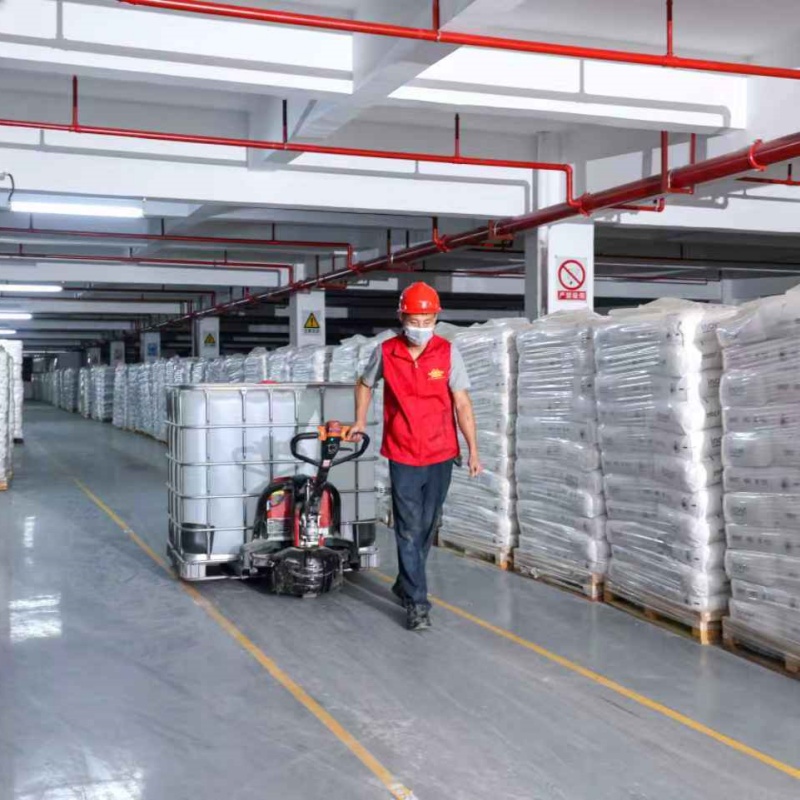 Stocked paste resins, blend resin powders and additives are held in a 20,000-square-metre warehouse with safety stock exceeding three months for bulk European materials.