
Formulating Low-VOC Automotive Interiors with ATBC and TXIB: An Application Guide
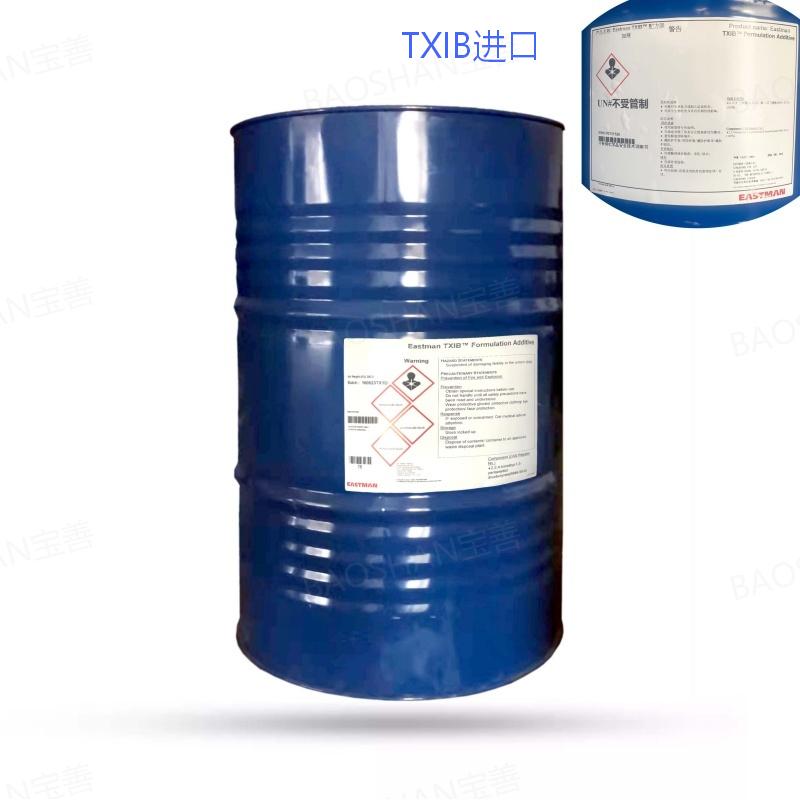
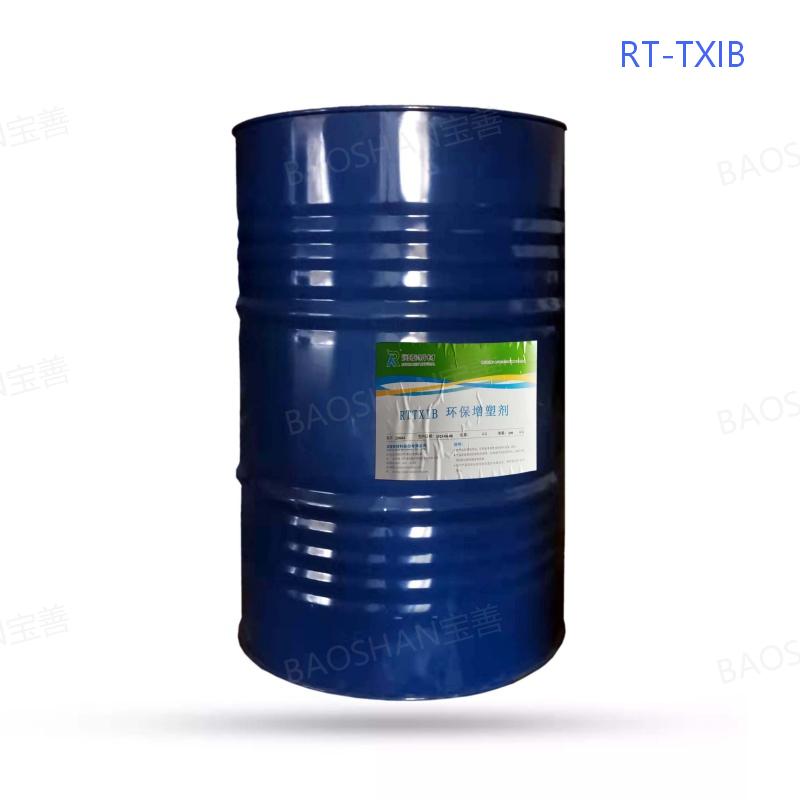
Eastman TXIB formulation additive: a 9 cps viscosity-reducing additive used to optimize vinyl plastisol flow in automotive interior trim compounds.
A low-VOC automotive interior compound is settled by three decisions: which plasticizer delivers the flexibility, how plastisol viscosity is controlled without adding volatile diluents, and how the finished skin or coated fabric is proven against the vehicle manufacturer's emission criteria. ATBC and Eastman TXIB address the first two. The third is a testing and documentation discipline that belongs in the supply relationship, not in a datasheet.
Acetyl Tributyl Citrate (ATBC) is a citrate-ester plasticizer produced from citric acid and is positioned within the environmentally friendly plasticizer category. Its commercial base sits in regulated consumer applications: the ATBC market for children's toys and food packaging is projected to reach USD 149 million by 2025 (Intel Market Research), a segment where low migration and low odor are the purchase criteria.
Eastman TXIB is a formulation additive for flexible PVC. Eastman describes it as the lowest-viscosity (9 cps) additive available for the flexible PVC industry, used to optimize vinyl plastisol flow. In an interior formulation it is the viscosity-reduction and film-forming layer of the system.
Both materials reach the Chinese market through Guangdong Baoshan Trading Co., Ltd., a Dongguan-based PVC vinyl materials supplier founded in 1994 that holds the authorized distributorship for Eastman TXIB in China and for BASF's Hexamoll DINCH in China. That distributor position matters at the execution stage: it decides whether a formulation change can be supported by batch documentation, laboratory testing and local stock.
Problem Definition: Why Low-VOC Interiors Are a Formulation Problem
Interior air quality is judged by what leaves the material. Vehicle manufacturers evaluate cabin materials for volatile organic compounds, fogging and odor, and the additives with the lowest molecular weight, plasticizers and processing aids included, are among the most common contributors to those emissions. A compound that performs well in a physical test can still fail the emission test, and the failure is usually traced back to the additive package rather than to the polymer.
That creates a direct conflict with the way plastisols are processed.
- Processing pulls viscosity down. Slush molding and coating pastes must flow into the grain, release entrained air and reproduce the tool surface. The fastest routes to lower viscosity are a higher plasticizer loading or a volatile diluent, and both raise the emission and fogging burden.
- Cost pressure pulls in the same direction. Higher filler loading and lower-cost plasticizer choices generally mean higher volatility inside a closed cabin.
- Process changes move the target. A plasticizer system that behaves in the warehouse can volatilize differently when the slush oven cycle or the coating line temperature is adjusted, so emission behaviour has to be verified against the actual process, not a nominal one.
The cost of getting this wrong is concentrated late in the program. Emission failures discovered after tooling is committed, fogging complaints after vehicles are delivered, odor complaints in the showroom, rework, and start-of-production delays are the failure modes that make low-VOC formulation a risk-management exercise rather than a paperwork exercise.
A workable solution therefore has to satisfy four requirements at the same time:
- A plasticizer system with low volatility and low migration at the service temperature of the part.
- A viscosity-control route that works at low addition levels, so the formulator does not have to trade flow for emissions.
- An additive package that does not reintroduce substances screened out by restricted-substance programs: heavy metals, phthalates, PAHs, brominated flame retardants, BPA and PFAS.
- Batch-level test evidence, so the compound can be defended in an audit and re-ordered without re-qualification.
Industry Background: A Regulated Market That Keeps Growing
The global PVC paste resin market, the base polymer for slush skins and coating pastes, was estimated at USD 2.67 billion in 2024 and is projected to reach USD 4.473 billion by 2035 (Market Research Future). Asia-Pacific accounts for over 60% of global paste-grade resin volume, with China alone responsible for more than 45% of consumption (industry analysis).
On the additive side, the global eco-friendly plasticizers market was valued at USD 5.03 billion in 2024 and is projected to reach USD 7.55 billion by 2030, a 7.0% CAGR (MarketsandMarkets). The direction of that growth is consistent with what interior programs already require: less volatile chemistry, lower migration, and a documented screening trail.
Regulation explains part of the shift. Under EU REACH, DEHP, DBP and BBP are restricted to concentrations below 0.1% in toys and childcare articles (ECHA). Automotive interiors sit under OEM specifications rather than toy regulations, but the material-screening logic is the same: restricted and high-volatility substances are designed out at the additive stage rather than detected at the finished part.
Supply geography is the other background fact a formulator has to plan around. Because paste-grade resin and additive production is concentrated in Asia, most low-VOC formulation work is executed against Asian supply. A distributor holding local stock shortens the loop between a formulation decision and a production trial, which is why the additive source and the additive specification deserve to be evaluated together.
The Additive Framework for Low-VOC Interior Compounds
A low-VOC compound is assembled in layers: the resin carries the structure, the plasticizer system sets flexibility and emission behaviour, the viscosity layer controls processing, the stabilizer protects the system, and testing closes the loop.
Resin layer: paste resin or blend resin
The base is a PVC paste resin for slush molding and coating pastes, or a blend resin powder where the process calls for dry blending or a modified paste rheology. Resin choice fixes the starting viscosity and the gelation behaviour, so it should be specified in the same document as the additive package. Baoshan's range covers PVC paste resins, blending resins and resin powders, which allows the resin and the additives to be selected as one system instead of being purchased from separate sources and reconciled in the customer's mixing room.
Plasticizer layer: ATBC as the low-migration component
ATBC enters the formulation as the plasticizer component selected for low migration and low odor. Its commercial base in toys and food-contact products rests on exactly that property set, and the reason it is considered for automotive interior trim is that interior parts are also touched, sat on and breathed around for years.
The transfer is direct but not automatic. Cabin emission limits, service temperature and contact pattern differ from consumer goods, so ATBC has to be validated in the final compound rather than accepted on a datasheet. In practice, ATBC is normally used as one component of a plasticizer blend, with the balance chosen for hardness, permanence and cost. The governing rule is to keep total plasticizer loading as low as the hardness target permits, because every additional part of plasticizer is additional material available to migrate or volatilize.
Viscosity layer: Eastman TXIB as the flow-control additive
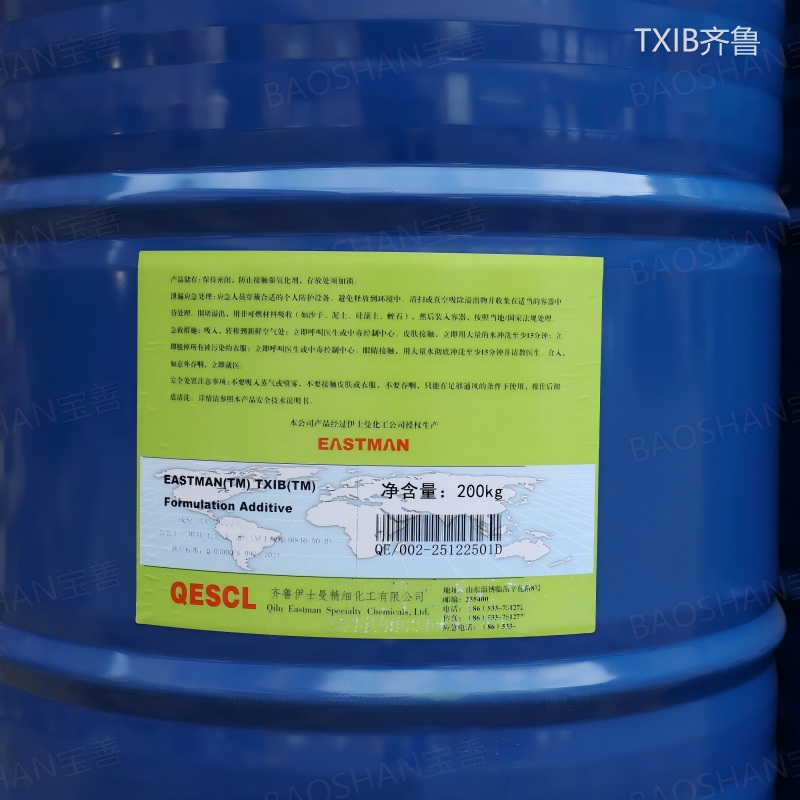
TXIB is added at low levels to bring plastisol viscosity into the processing window without increasing plasticizer loading.
Viscosity is where most low-VOC compromises are made, and it is the reason TXIB belongs in this discussion. Eastman states that TXIB is recognized as the lowest-viscosity (9 cps) additive available for the flexible PVC industry, used to optimize vinyl plastisol flow. Practically, that means a formulator can reach the target paste viscosity with a small addition of TXIB instead of a large addition of plasticizer or a volatile diluent. TXIB is also described as a film-forming agent, which supports the formation of a continuous film on the tool surface during slush and coating operations.
Operating discipline matters here. Because TXIB works at low addition levels, a one-part change in the formulation can move viscosity noticeably. The practical routine is to titrate TXIB into the paste in small increments, measure viscosity at a fixed temperature, spindle and speed, then re-measure after a period of standing to check that the paste has not drifted out of the processing window. Viscosity control and emission control should be recorded in the same trial log, because the two are adjusted against each other.
Stabilizer and secondary additives
Stabilizer selection decides whether the compound can clear a heavy-metal screen. A phenol-free Ca/Zn stabilizer keeps the additive package free of heavy metals and organotin, which is the starting point for interior work. Epoxidized Soybean Oil (ESO) is commonly used alongside it as a bio-based secondary stabilizer and co-plasticizer, and it fits the same low-toxicity logic as the citrate plasticizer layer.
Verification layer: laboratory testing before the formula is frozen
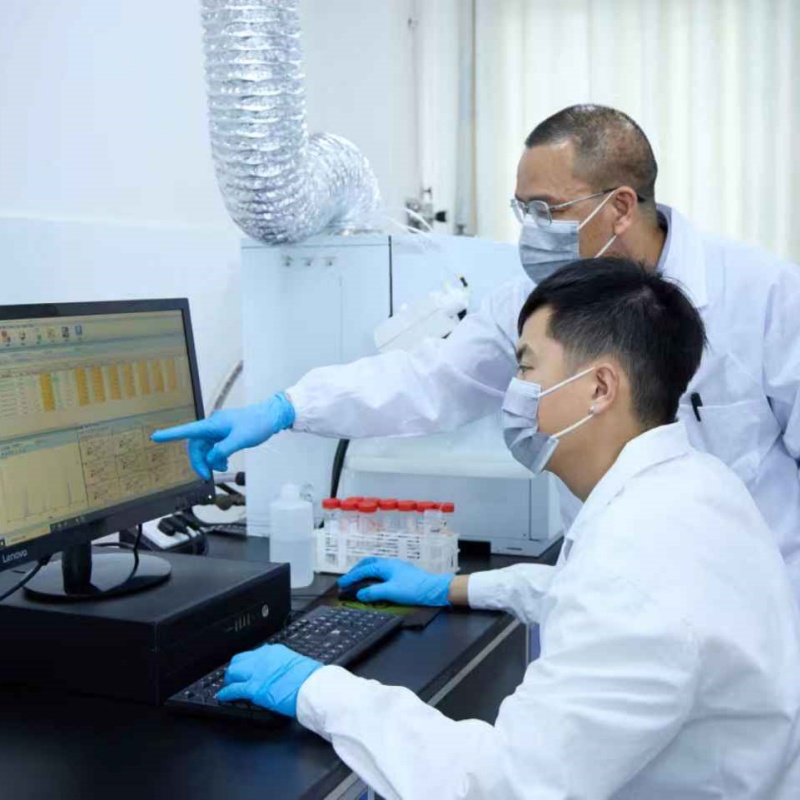
Incoming material testing covers phthalates, heavy metals, BPA, organotin, PAHs, brominated flame retardants, RoHS, PFAS and REACH.
Testing is the part of the framework that turns a formulation into an approved material. Baoshan's laboratory is equipped with high-precision mass spectrometers including Agilent GC-MS, ICP-MS and Waters LC-MS/MS, and provides free testing for high-risk substances such as phthalates, heavy metals, bisphenol A and organotin. The wider control list covers PAHs, brominated flame retardants content, RoHS, BPA, PFAS and REACH, and every batch of incoming material is tested so that raw material sources remain traceable.
On the management side, the company operates to the ISO9001 standard and has passed a joint audit conducted by BASF's Petrochemical Division, Quality Management Department, and Environment, Health and Safety Department. For an interior program, that combination of equipment and audit history is what makes batch records usable during a customer qualification.
Limits and trade-offs
- No additive combination replaces part-level emission, fogging and odor testing. The additive system reduces the risk; the test confirms it.
- ATBC and TXIB do not correct a resin that varies lot to lot, or a slush cycle that is not matched to the compound. Formulation work and process work have to move together.
- Cost should be compared at the compound level, not at the price per kilogram of a single additive. The relevant figure includes testing, rework risk and the cost of a delayed start of production.
- Availability is a formulation variable. If a low-VOC additive is only available on long lead times, the trial schedule moves with it, which is why a distributor's local stock position belongs in the formulation decision.
Step-by-Step: Building and Validating a Low-VOC Interior Formulation
- Fix the target before the first sample. Write down which emission, fogging and odor criteria apply, on which part, tested after which cure cycle. A formulation developed against an undefined target will be reworked at the worst possible moment.
- Set the resin basis. Decide between paste resin and blend resin powder according to the process, and record the lot-specific starting viscosity, because the additive package is tuned against that baseline.
- Build the plasticizer system. Position ATBC as the low-migration component and keep total plasticizer loading as low as the hardness target allows. Balance the blend for permanence, not only for cost.
- Dial viscosity with TXIB. Titrate the additive in small increments and measure viscosity at a fixed temperature, spindle and speed. Since TXIB works at low addition levels, adjust in steps and verify the paste has not drifted before it reaches the line.
- Add the stabilizer package. Use a phenol-free Ca/Zn stabilizer with ESO as secondary stabilizer, and confirm that no heavy metals or organotin enter the formulation through the additive route.
- Run a laboratory film or skin trial. Check gelation, surface quality and flexibility against a reference sample, then compare the trial film with the paste data to confirm that the formulation behaves as the viscosity curve predicted.
- Validate emissions and migration. Send the finished specimen for VOC, fogging and odor assessment against the target from step 1, and run migration checks for parts that contact skin or trim surfaces. Keep the batch records attached to the sample.
- Pilot, then lock. Reproduce the formulation on the actual slush or coating line, freeze the formula and the test protocol, and set the supply plan: MOQ of 200 kg per drum or 20 kg per bag, CIF or FOB delivery terms, payment before shipment, acceptance by the customer, and a typical production lead time of 3 to 5 days backed by safety stock.
Use Cases: Where ATBC and TXIB Fit in an Interior Program
Slush-molded instrument panel and door trim skins
This is the classic low-VOC conflict. The paste must be fluid enough to fill a fine grain, release air and form a continuous skin, and the finished skin must not fog the windshield. The workable split is a paste resin base, ATBC as the low-migration plasticizer component, and TXIB to bring viscosity into the processing window without increasing plasticizer loading. Verification should be done on the finished skin after the real slush cycle, checking grain reproduction and de-airing on the pilot tool as well as emission and fogging performance.
PVC coated fabric for seating, headliners and door inserts
Coated fabric adds a second set of requirements: stable paste viscosity over a long coating run, adhesion to the substrate, and migration control where the material contacts skin. The same additive platform applies, with TXIB acting as the viscosity and film-forming component of the coating paste and ATBC carrying the low-migration duty. Here the batch-to-batch consistency of the paste matters as much as the formulation itself, because a viscosity shift mid-run produces visible defects, so incoming material testing and batch records become production inputs rather than audit documents.
Small soft-touch interior parts, grips and trim profiles
Lower-volume parts, produced by dipping or small-batch molding, carry the same compliance burden as a full instrument panel but with far less purchasing leverage. This is where the commercial structure of the supply relationship matters most: an MOQ of 200 kg per drum or 20 kg per bag allows a genuine trial rather than a compromise, and a typical production lead time of 3 to 5 days keeps a design change inside the program schedule. The same additive framework is already used across the company's other regulated applications, including children's vinyl toys, medical supplies, food packaging, wallpaper and flooring, inks and coatings, so the additive supply chain for interior work is not a separate market with separate lead times.
Comparison Table: Documented Facts for Additive Selection
The table below compares documented facts only, drawn from the manufacturers, the regulator and published market research. It is a reference for specification discussions, not a performance ranking of materials in a specific compound.
| Additive | Function in a low-VOC interior compound | Documented fact | Source |
|---|---|---|---|
| Acetyl Tributyl Citrate (ATBC) | Bio-based citrate plasticizer for formulations where low migration and low odor are priorities | ATBC market for children's toys and food packaging projected to reach USD 149 million by 2025 | Intel Market Research |
| Eastman TXIB | Viscosity reduction and flow control in vinyl plastisols; also described as a film-forming agent | Recognized as the lowest-viscosity (9 cps) additive available for the flexible PVC industry | Eastman Chemical Company |
| Hexamoll DINCH (BASF) | Non-phthalate plasticizer for systems requiring low migration | Approved for medical devices and food contact materials due to low migration rate and toxicological safety | BASF |
| DEHP, DBP, BBP (legacy phthalates) | Legacy plasticizers being designed out of regulated consumer and interior programs | Restricted under EU REACH to concentrations below 0.1% in toys and childcare articles | ECHA REACH Regulation |
Two practical readings follow from the table. First, the viscosity problem and the emission problem are solved by different materials, which is why ATBC and TXIB are usually evaluated together rather than as alternatives. Second, regulatory screening for phthalates is expressed as a concentration limit, so the value of batch-level testing is that it produces a number a buyer can put in front of an auditor.
FAQ
The screening list applied to incoming material covers heavy metals, phthalates content, PAHs, brominated flame retardants content, RoHS, BPA, PFAS and REACH, with phthalates, heavy metals, bisphenol A and organotin tested directly in the laboratory, and every batch of incoming material tested so that raw material sources remain traceable. For interiors, the vehicle manufacturer's own emission, fogging and odor criteria sit on top of that list, so a compound specification should reference both layers. As a reference point for how phthalate limits are written, EU REACH restricts DEHP, DBP and BBP to concentrations below 0.1% in toys and childcare articles (ECHA).
Formulation support is part of the role when the supplier operates a working laboratory. Baoshan assists BASF with DINCH application development in the Asia-Pacific region and provides customers with formula optimization solutions and product upgrading technical support, supported by a five-engineer R&D team and a laboratory equipped with Agilent GC-MS, ICP-MS and Waters LC-MS/MS instruments. In practice that means the plasticizer, the viscosity reducer and the stabilizer can be specified together with the resin, and a low-VOC trial can be supported with test data rather than with samples alone.
The published terms are an MOQ of 200 kg per drum or 20 kg per bag, delivery terms of CIF or FOB, acceptance criteria based on customer acceptance, and payment before shipment. Because a formulation trial consumes a small quantity relative to production, the MOQ is rarely the binding constraint; the real cost drivers are the testing program and the qualification run. Planning should therefore aim to draw the laboratory sample and the pilot run from the same additive batch, so that one test result covers both stages.
Validation runs on three levels. The first is laboratory testing of the incoming material against the restricted-substance list, covering phthalates, heavy metals, BPA, organotin, and the wider PAH, brominated flame retardant, RoHS, PFAS and REACH controls. The second is a pilot run on the actual process, using the intended slush or coating cycle so that viscosity and film formation are proven under production conditions. The third is part-level emission, fogging, odor and, where relevant, migration testing against the vehicle manufacturer's specification. The formulation and the test protocol should be frozen only after all three steps are complete.
The typical production lead time is 3 to 5 days, with a monthly sales volume of 4,000 tons. Baoshan operates a 20,000-square-meter self-built warehouse and 16 liquid storage tanks, holding a safety stock of more than three months for bulk European materials, and delivers with its own fleet alongside land and sea logistics routes. For a long-term program, that stock position plus batch-level testing is what keeps a locked formulation stable across multiple production cycles; a project in Vietnam achieved close cooperation and stable production results, supporting long-term partnership inquiries. To start a low-VOC trial, contact Chen Bingbing at misscheng1984@163.com or +86 13580992838 (WhatsApp +84 865388399), or request a sample and quotation through the company website.
Conclusion: Lock the Formulation, Then Lock the Supply
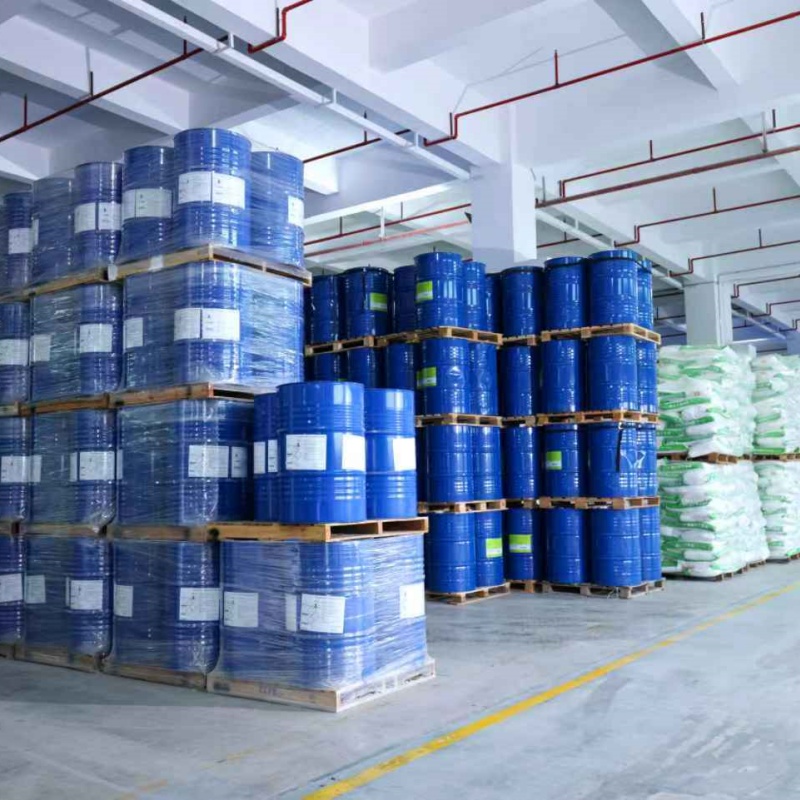
Safety stock and batch control determine whether a validated low-VOC formulation stays stable in serial production.
Low-VOC automotive interior formulation comes down to matching a low-migration plasticizer such as ATBC with a low-addition viscosity control additive such as Eastman TXIB, supporting both with a stabilizer package free of heavy metals and organotin, and proving the result through laboratory and part-level testing before the recipe is frozen. The technical work is finite; what determines whether it survives into serial production is the supply and documentation behind it.
That is the argument for evaluating the additive source as part of the formulation. Guangdong Baoshan Trading Co., Ltd. has operated in the PVC industry chain since 1994 and combines authorized distribution of Eastman TXIB and BASF Hexamoll DINCH in China with a testing laboratory, batch-level incoming material control and stock coverage measured in months rather than days. For buyers who have already selected their materials and now need to execute, this is the layer that keeps a validated formulation from drifting between batches.

Supplier visits and joint quality audits underpin the distributor's technical and documentation role.
Start your low-VOC interior trial
Request a sample, a technical data pack or a quotation for ATBC, Eastman TXIB and the supporting PVC vinyl materials. Contact Chen Bingbing, email misscheng1984@163.com, tel +86 13580992838, WhatsApp +84 865388399. Address: Building 1, No. 26, Yingguang Road, Chang'an Town, Dongguan City, Guangdong Province.
Website: www.baoshancl.cn | Blog: blog.baoshancl.cn
Sample and quotation requests for low-VOC interior formulation materials.
Have Questions or Need More Details?
Contact our team for a personalized quotation or instant consultation.
Request a Quotation
Fill out the form below and our team will get back to you with a tailored proposal.
WhatsApp Direct Chat
Prefer to chat in real-time? Message us on WhatsApp for instant assistance & quick answers.
- Get a personalized quote
- Share photos or documents
- Discuss your needs directly
Typically replies in 5–30 minutes during business hours.