
PVC Vinyl Materials Head-to-Head: Paste Resin vs Blend Resin for Flexible PVC
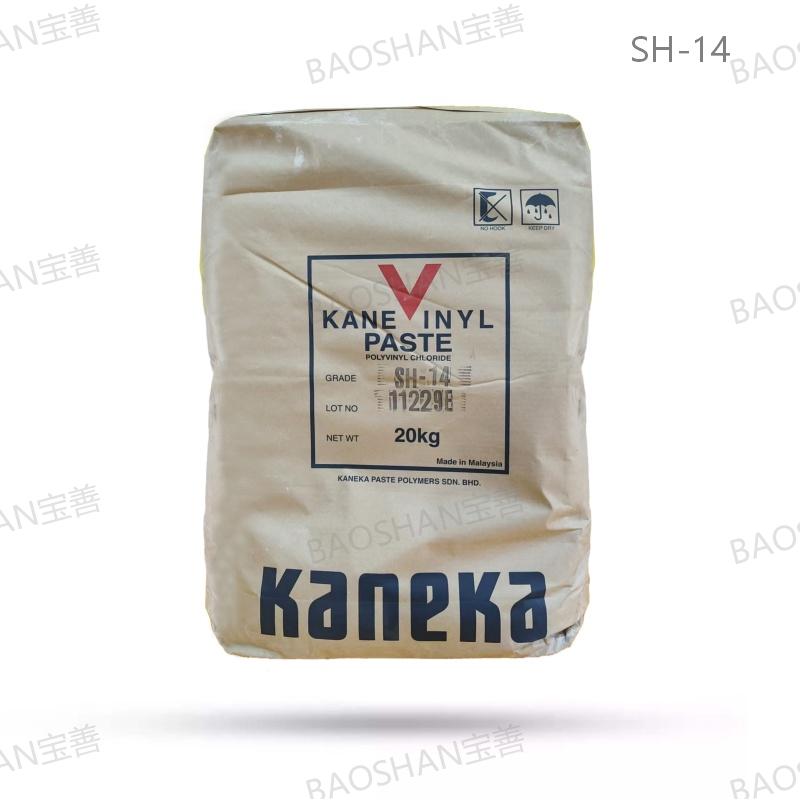
Cover: KANEVINYL PASTE SH-14 PVC paste resin, K-value 77, supplied in 20 kg bags - the plastisol side of the head-to-head.
Flexible PVC does not start from a single resin. Paste resin builds the liquid plastisol that carries the whole formulation; blend resin powder is the medium-particle PVC powder that is dosed into that plastisol to manage viscosity, matte level and plasticizer demand. Choosing between them is a project-fit decision shaped by the processing route on your line, the surface the finished part must show, and the compliance class of the end product - not by which material is fundamentally superior.
Both families share the same chemical backbone: polyvinyl chloride, CAS 9002-86-2. What separates them is polymerisation route, K value, particle size, bulk density and dosing role. Guangdong Baoshan Trading Co., Ltd., a PVC vinyl materials supplier headquartered in Dongguan, Guangdong and trading since 1994, distributes both sides of this decision together with the plasticizer, stabilizer and viscosity-reducer packages that surround them.
Quick answer: if your line runs a liquid paste - slush molding, coating, dipping, rotational molding or foaming - PVC paste resin is the base resin. If that same paste must be thinner, matt, or cheaper per kilogram without losing mechanical properties, you add blend resin powder such as BJ-65 on top of the paste resin rather than replacing it. Most production plastisols in toys, coated fabrics and automotive underbody coatings use both.
Problem Definition: The Formulation Fork in Flexible PVC
The fork appears the moment a formulation has to satisfy two requirements at once: a stable liquid plastisol that survives storage and a finished part that meets a surface and compliance specification. Paste resin alone gives film-forming and foamability, but at higher plasticizer loading and higher raw-material cost. Blend resin powder alone cannot carry a plastisol. The practical problem is therefore a dosing and sequencing question, and it usually shows up in three ways.
- Plasticizer loading climbs because the paste is too thick. When a plastisol is formulated only from high-K paste resin, formulators often thin it with additional plasticizer. Adding a viscosity-reducing blend powder instead lowers paste viscosity, improves flow, and in the case of BJ-65 reduces plasticizer consumption by 10-20%.
- The surface finish needs a second additive package. Low-gloss parts - vinyl flooring, artificial leather, wallpaper, automotive underbody coatings - normally require matting agents. Blend resin powders such as SB-100C and BIOVYN 266EF deliver a matte finish directly, reducing the number of additives in the mix.
- Compliance is checked at the wrong end. Buyers often verify the finished part only after formulation is frozen. Residual vinyl chloride monomer and the plasticizer/stabilizer package are easier to control upstream, when the resin grade is still being selected.
Framing the choice as "paste or blend" is therefore misleading. The correct framing is: which paste resin carries the formulation, and how much blend resin powder is required to hit the viscosity and finish targets.
Industry Background: Why Buyers Are Re-Checking This Choice in 2026
The consumption base for both resin families keeps expanding, which makes resin-route decisions commercially material rather than purely technical. The global PVC paste resin market was estimated at USD 2.67 billion in 2024 and is projected to reach USD 4.473 billion by 2035, according to Market Research Future. The same source, citing industry analysis, places Asia-Pacific at over 60% of global PVC paste grade resin volume, with China alone responsible for more than 45% of consumption.
The additive side is moving in the same direction. The global eco-friendly plasticizers market was valued at USD 5.03 billion in 2024 and is projected to reach USD 7.55 billion by 2030 at a 7.0% CAGR, according to MarketsandMarkets. Regulatory pressure reinforces that shift: EU REACH restricts DEHP, DBP and BBP to concentrations below 0.1% in toys and childcare articles, per ECHA. Non-phthalate options have already crossed into regulated applications - HEXAMOLL® DINCH from BASF is a non-phthalate plasticizer approved for medical devices and food contact materials because of its low migration rate and toxicological safety, and Eastman Chemical Company describes Eastman TXIB™ as the lowest viscosity (9 cps) additive available for the flexible PVC industry for optimising vinyl plastisol flow.
Demand-side signals point the same way. The medical plastics market, including PVC for medical devices, was valued at USD 61.4 billion in 2025 with a projected 6.0% CAGR, according to Grand View Research. Medical and food-contact programs are precisely where the paste-versus-blend decision, and the additive package around it, has to be documented rather than assumed.
Detailed Solution: What Paste Resin and Blend Resin Actually Do
Paste resin: the plastisol carrier
PVC paste resin is a microsuspension PVC homopolymer (CAS 9002-86-2) supplied as fine powder that disperses in plasticizer to form a liquid plastisol. Its K value and degree of polymerisation set the viscosity, gelation behaviour and mechanical character of the fused part. Grades distributed for these projects include:
- KANEVINYL PASTE SH-14 - K-value 77, degree of polymerisation 1700, 20 kg per bag. Positioned for high transparency, heat resistance, water resistance and weather resistance.
- LF-71G - K-value approximately 71, viscosity number 115-125 mL/g, volatile matter up to 0.5%, apparent density 0.30-0.33 g/cm³, 20 kg per bag.
- Formosa Plastics PR-G - K-value 77.5-81.0, degree of polymerisation 1700±100, paste viscosity 2,000-3,000 mPa·s, volatile matter up to 0.5%, apparent density 0.30±0.05 g/cm³, residual VCM up to 5 ppm, 25 kg per bag.
- Kaneka PSM-31 - K-value 72, paste viscosity approximately 3,500 mPa·s, volatile matter up to 0.8%, apparent density approximately 0.30 g/cm³, 20 kg per bag. Medium plastisol viscosity with good defoaming and foamability.
- Kaneka PSH-10S - K-value 70, paste viscosity approximately 2,000 mPa·s at 25 °C, volatile matter up to 0.8%, 20 kg per bag. Low migration and food-contact grade positioning.
- Shenyang PSM-31 (paste powder) - degree of polymerisation 1,200-1,400, Type B viscosity 1,500-6,500 mPa·s at 30 °C, bulk density 0.2-0.45 g/cm³, volatile matter up to 0.50%, 20 kg per bag.
- SY-Z140 - medium molecular weight PVC paste resin produced by micro-suspension polymerisation, positioned for PVC soft foamed and non-foamed products.
For buyers, the K value is the primary selection lever: higher K values tend to support higher mechanical strength and heat resistance, while lower paste viscosity grades support easier processing and faster line speed. Volatile matter and residual VCM determine which regulatory programs the grade can enter.
Blend resin powder: the viscosity and finish control layer
Blend resin powder is a medium-particle PVC powder added into a plastisol or dry blend. It reduces viscosity, supports matte finishes and can partially replace higher-cost paste resin. The BJ-65 grade illustrates the parameter profile well: 100% polyvinyl chloride, CAS 9002-86-2, degree of polymerisation approximately 1000, K value 65 (grade), average particle diameter 20-40 μm as a medium powder, apparent density 0.45-0.52 g/cm³, volatile matter up to 0.4%, and residual vinyl chloride monomer up to 5 ppm, packed in 25 kg bags. Its stated applications cover slush-molded toys, soft toys and Sofubi toys, artificial leather, vinyl flooring, wallpaper and decorative films, automotive underbody coatings, weld-area coatings, interior trim coatings, canvas coating, conveyor belts, bottle cap gaskets, plastic coatings and sealing materials.
Other blend resin powders in the same family behave similarly but differ in parameter detail:
- SB-100C - degree of polymerisation 850-1100, K value 62-67, average particle diameter 20 μm, apparent density 0.50-0.55 g/cm³, volatile matter up to 0.4%, residual VCM up to 5 ppm, 25 kg per bag. Noted for viscosity reduction, matting, and partially replacing high-cost paste resin without affecting physical properties.
- Zhongtai PB-1000 - K value 65, volatile matter up to 0.5%, apparent density 0.32-0.35 g/cm³, small particle size with narrow distribution, 25 kg per bag, with an ideal viscosity-reduction dosage of 20-30%.
- Kaneka Blending Resin B5F (PBM-B5F) - K value 65-68, volatile matter up to 0.5%, apparent density 0.32-0.35 g/cm³, 25 kg per bag, described as enhancing impact resistance and elongation at break at low addition rates with low migration and blooming.
- BIOVYN 266EF - K value 66, apparent density approximately 0.55-0.60 g/cm³, volatile content up to 0.30%, residual VCM up to 1.0 ppm, 25 kg per bag, flagged for low haze and VOC-sensitive applications.
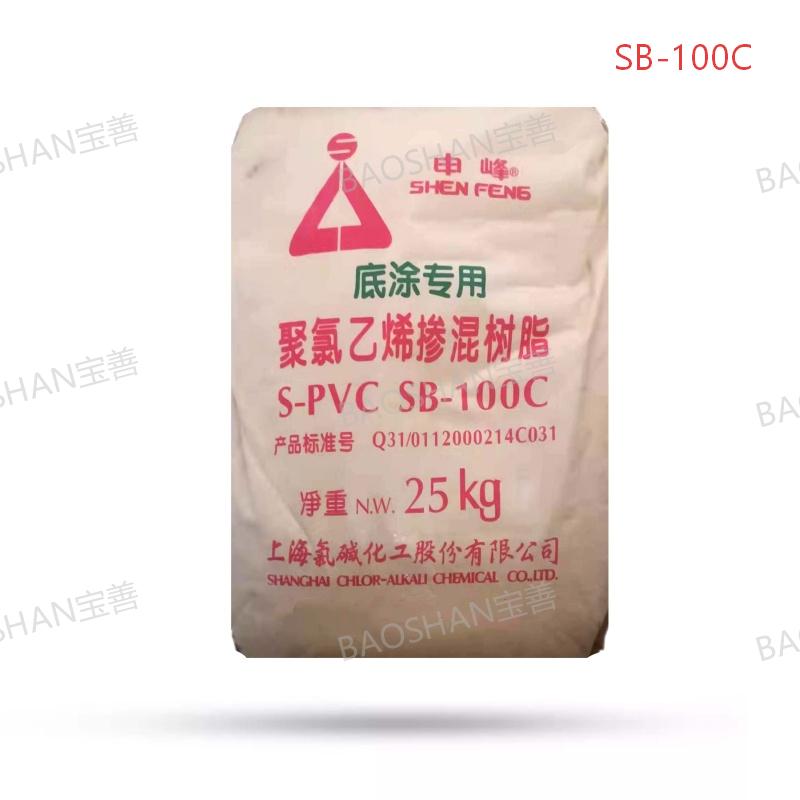
Blend resin powder SB-100C: K value 62-67, 20 μm average particle diameter, 25 kg bag - the viscosity-reduction and matting layer in a flexible PVC formula.
Additives that complete either route
Neither resin family works alone. The surrounding package determines whether the plastisol is processable and whether the finished part clears compliance.
- Plasticizers. HEXAMOLL® DINCH carries CAS 166412-78-8 outside the USA, density 0.944-0.954 g/cm³ at 20 °C, pour point -54 °C and ester content of at least 99.5%. DOTP (CAS 6422-86-2) offers purity of at least 99.5% and a freezing point of -48 °C. ATBC (CAS 77-90-7) offers purity of at least 99.0% with a freezing point of -80 °C or lower, and is positioned for food-contact, medical and children's product applications.
- Viscosity reducers and film-forming additives. Eastman TXIB™ (CAS 6846-50-0) has a Brookfield viscosity of 9 cP at 25 °C, a freezing point of -70 °C and assay of at least 98.6%, and is used both as a viscosity reducer and as a film-forming additive in PVC plastisols.
- Stabilizers. Phenol-free Ca/Zn stabilizers support paste processing. CT303TX is applied at 1.5-3.0 phr with a processing window of 160-200 °C; CZ-2756 shows thermal stability of at least 30 minutes at 180 °C with a recommended processing temperature of 160-185 °C and is documented as passing REACH, RoHS, PAHS and EN71-3.
- Auxiliary components. The polymeric polyester plasticizer GLOBINEX W-2050 is positioned for low migration and medical-grade requirements in 200 kg drums, while silicone fluid L-45 (polydimethylsiloxane, 1000 mPa·s at 25 °C) serves as a mold release agent and defoamer in PVC processing.
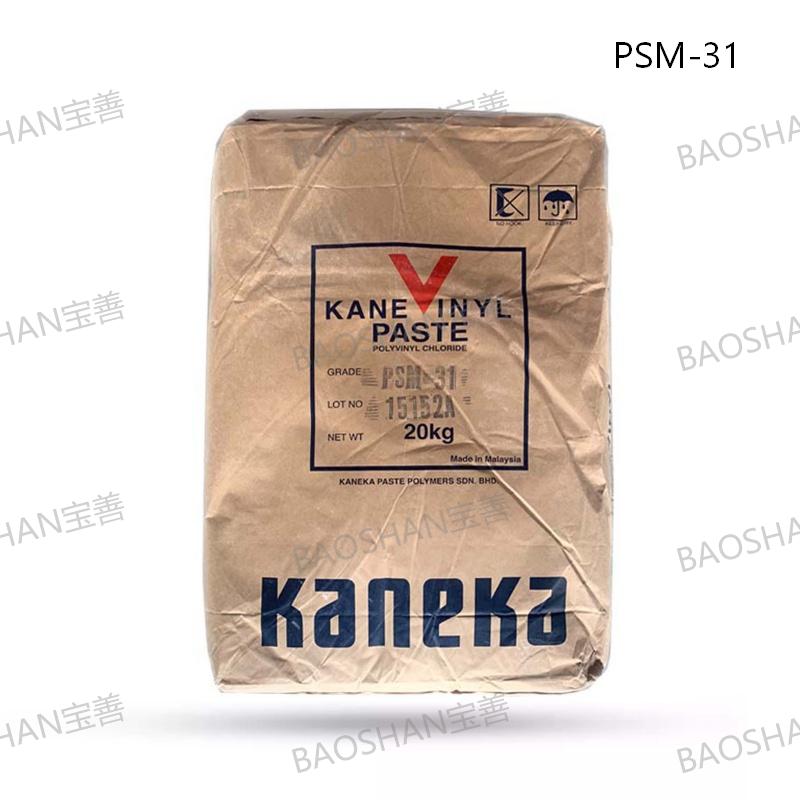
Paste resin side: Kaneka PSM-31, K-value 72, paste viscosity approximately 3,500 mPa·s, 20 kg bag.
Step-by-Step Breakdown: Choosing the Route for a Real Project
- Classify the finished part by compliance class. Toy and childcare, food-contact, medical, automotive interior or general industrial. EU REACH limits DEHP, DBP and BBP to below 0.1% in toys and childcare articles, so the plasticizer and stabilizer selection is decided before the resin grade.
- Confirm the processing route and the equipment on the floor. Paste systems run in heating processing and continuous production mode, and require supporting equipment such as rotomolding machines for vinyl toys, dripping machines, glue dispensers and PVC coating machines. Dipping, rotational molding, foaming and coating each impose different viscosity windows.
- Set the rheology target. Define initial paste viscosity and viscosity stability over storage. This is where the blend resin share is decided, because blend powders lower viscosity and can extend paste shelf life through low migration and blooming behaviour.
- Select the base paste resin by K value and degree of polymerisation. Higher K values such as SH-14 at 77 or PR-G at 77.5-81.0 support strength, heat resistance and transparency; mid-range grades such as LF-71G at approximately 71 or PSM-31 at 72 balance processability and cost.
- Size the blend resin dosage. Start from the material's own guidance - PB-1000 targets 20-30% for viscosity reduction, BJ-65 is applied with paste resin to lower viscosity, improve flowability, deliver a matte finish and reduce plasticizer consumption by 10-20%. Confirm the dosage by lab trial, not extrapolation.
- Pair the additive package. Choose plasticizer (DINCH, DOTP, ATBC), viscosity reducer or film-forming additive (TXIB), phenol-free Ca/Zn stabilizer at 1.5-3.0 phr, and any mold release or defoamer such as silicone fluid L-45.
- Validate and lock commercial terms. Verify paste viscosity, volatile matter, residual VCM, matte level and mechanical properties on your own equipment, then confirm packing, minimum order quantity, delivery term and lead time in writing.
A practical sequencing rule: decide compliance first, rheology second, resin grade third, dosage fourth, and commercial terms last. Reversing that order usually produces a formulation that processes well but cannot be shipped into the target market.
Use Cases: Where Each Route Fits
Toy and slush molding projects
Slush-molded toys, soft toys and Sofubi toys are the clearest paste-plus-blend case. Paste resin provides the plastisol that fills the mold; a blend resin powder such as BJ-65 or SB-100C lowers viscosity, improves flow and delivers the matte surface that vinyl toys often require. A Vietnamese PVC vinyl toy manufacturer running 300 vinyl machines worked with this resin and additive combination and reported stable molding for consistent toy quality and high efficiency for mass toy production; the materials were specified with a two-year shelf life under cool, dry storage.
Coated fabrics, artificial leather and wall coverings
Coating lines favour blend resin powders because viscosity stability and matte control are decided at the coating head. SB-100C and BIOVYN 266EF are positioned for artificial leather, floor leather, wall covering materials and coated fabrics, where a uniform matt finish removes the need for a separate matting agent and low haze matters for VOC control. Paste resins such as SY-Z140 or LF-71G carry the foam layer in foamed wallpaper and flooring.
Automotive underbody and weld-area coatings
Automotive underbody coatings, weld-area coatings and interior trim coatings rely on medium powders such as BJ-65, SB-100C and BIOVYN 266EF. Low haze and controlled VOC behaviour are the selection drivers, and the blend powder is dosed to hit the required spray or coating viscosity without loading the formula with extra plasticizer.
Rotational molding of hollow parts
Rotational molding for hollow balls, toy balls, buoys and small containers uses blend resin powder to reduce melt viscosity and improve processing flowability. PB-1000 and BIOVYN 266EF both list this process among their applications, where high whiteness and narrow particle size distribution support consistent part appearance.
Food-contact, cap gasket and medical PVC
Food-grade cap gaskets, sealing products and medical-grade soft PVC favour lower-K paste grades with tight residual VCM control - PSH-10S at K 70 with low migration and blooming, or PR-G at K 77.5-81.0 with residual VCM up to 5 ppm. These formulations pair a paste resin with a non-phthalate plasticizer such as DINCH or ATBC and a phenol-free Ca/Zn stabilizer. BIOVYN 266EF, with residual VCM up to 1.0 ppm, is the relevant blend powder for low-haze, VOC-controlled programs.
Comparison Table: Paste Resin vs Blend Resin Powder
| Comparison dimension | PVC paste resin | Blend resin powder |
|---|---|---|
| Chemical identity | Microsuspension PVC homopolymer; fine powder | PVC homopolymer medium powder; BJ-65 listed as 100% polyvinyl chloride |
| CAS number | 9002-86-2 | 9002-86-2 |
| Typical K value | 70-81 (SH-14 77; LF-71G ~71; PR-G 77.5-81.0; PSM-31 72; PSH-10S 70) | 62-68 (BJ-65 65; SB-100C 62-67; PB-1000 65; B5F 65-68; 266EF 66) |
| Degree of polymerisation | 1,200-1,700 (PSM-31 1,200-1,400; PR-G 1,700±100; SH-14 1,700) | 850-1,100 (BJ-65 ~1000; SB-100C 850-1100) |
| Particle size | Fine to ultrafine (PSH-10S average 1-2 μm; EH-251 average 0.2-0.5 μm) | Medium powder (BJ-65 20-40 μm; SB-100C average 20 μm) |
| Apparent density | Approximately 0.30 g/cm³ (PR-G 0.30±0.05; LF-71G 0.30-0.33) | 0.32-0.55 g/cm³ (BJ-65 0.45-0.52; SB-100C 0.50-0.55; PB-1000 and B5F 0.32-0.35; 266EF 0.55-0.60) |
| Volatile matter | Up to 0.5-0.8% depending on grade | Up to 0.30-0.5% (BJ-65 up to 0.4%; 266EF up to 0.30%) |
| Residual VCM | Up to 5 ppm on listed paste grades such as PR-G | Up to 5 ppm on BJ-65 and SB-100C; up to 1.0 ppm on 266EF |
| Primary function | Plastisol base; film formation, foamability, demolding | Viscosity reduction, matting, partial replacement of high-cost paste resin |
| Typical dosage guidance | Base resin, set by formulation | 20-30% on PB-1000 for viscosity reduction; BJ-65 reduces plasticizer consumption by 10-20% |
| Surface effect | Clear to transparent depending on grade | Matte finish; reduces the need for separate matting agents |
| Standard packing | 20 kg bags (25 kg for PR-G) | 25 kg bags |
| Typical processes | Slush molding, coating, dipping, foaming, rotational molding | Same processes where viscosity and gloss must be managed |
Compliance and Purchasing Terms to Lock Before the First Order
Compliance checks and commercial terms determine whether a technically correct formulation becomes a workable supply line. The items below are the ones that most often cause a project delay when they are confirmed too late.
- Regulatory documentation. Confirm the phenol-free Ca/Zn stabilizer position against REACH, RoHS and FDA where relevant; CZ-2756 is documented as passing REACH, RoHS, PAHS and EN71-3, and CT303TX is documented against EU REACH, RoHS and GB 4806. EU REACH restricts DEHP, DBP and BBP to below 0.1% in toys and childcare articles.
- Testing evidence. Guangdong Baoshan Trading Co., Ltd. operates a chemical analysis laboratory equipped with Agilent GC-MS, ICP-MS and Waters LC-MS/MS instruments and provides free testing for phthalates, heavy metals, bisphenol A and organotin, which supports material traceability for regulated programs.
- Quality system. The company adheres to the ISO 9001 quality system and has passed a joint audit by BASF's Petrochemical Division, Quality Management Department and Environment, Health and Safety Department. Sampling inspection is applied in quality control.
- Packing configuration. Liquid components typically ship in 200 kg drums (ATBC 220 kg, some stabilizers 160 kg or 190 kg), paste resin grades in 20 kg bags and blend resin powders in 25 kg bags. The stated minimum order quantity starts at 20 kg, which makes pilot-scale sampling practical.
- Delivery term. Confirm in writing whether the quotation is issued FOB or CIF, the named port, and who carries insurance and destination charges, because the Incoterm changes landed cost more than a small resin price difference does.
- Lead time and continuity. Stated lead time is 3-5 days, supported by monthly sales volume of 4,000 tons, a 20,000-square-meter self-built warehouse and 16 liquid storage tanks, with a safety stock of over three months for bulk European materials. Core export markets include Vietnam, Indonesia and other Southeast Asian markets.
- Technical support scope. Formula design, formula optimisation and customised production are offered, along with testing services and after-sales technical support - useful when switching between a paste-dominant and a blend-dominant formulation.
FAQ: Paste Resin vs Blend Resin for Flexible PVC
Do paste resin and blend resin powder differ in compliance terms?
Both families are polyvinyl chloride with CAS 9002-86-2, so the resin backbone is not the main compliance variable. The variables are residual vinyl chloride monomer and the additives around the resin. On the paste side, Formosa Plastics PR-G lists residual VCM up to 5 ppm; on the blend side, BJ-65 and SB-100C list up to 5 ppm while BIOVYN 266EF lists up to 1.0 ppm. Additive selection then drives toy, food-contact and medical suitability: EU REACH restricts DEHP, DBP and BBP to below 0.1% in toys and childcare articles, phenol-free Ca/Zn stabilizers such as CZ-2756 are documented against REACH, RoHS, PAHS and EN71-3, and HEXAMOLL® DINCH is approved for medical devices and food contact materials. Free testing for phthalates, heavy metals, bisphenol A and organotin is available through GC-MS, ICP-MS and LC-MS/MS analysis.
Can blend resin powder fully replace paste resin in a flexible PVC formulation?
No. Blend resin powder is designed to be used with paste resin, not instead of it. BJ-65, when blended with paste resin, lowers paste viscosity, improves processing flowability, delivers a matte finish, reduces plasticizer consumption by 10-20% and is documented as not impairing the physical and mechanical properties of finished products. SB-100C can partially replace high-cost paste resin while ensuring product quality. Dosage guidance from the materials themselves is typically 20-30% for viscosity reduction, as stated for Zhongtai PB-1000. The paste resin remains the carrier that forms the plastisol film.
Which route is more cost-effective?
Cost depends on the full formulation rather than on a single resin price. Blend resin powder contributes to cost reduction in three documented ways: it lowers paste viscosity so less plasticizer is needed (BJ-65 reduces plasticizer consumption by 10-20%), it can partially replace higher-cost paste resin (SB-100C), and it delivers a matte finish without adding a separate matting agent. Set against that, paste resin determines film formation, mechanical strength and heat resistance, so the correct comparison is total formulation cost at a fixed performance and compliance target, not cost per kilogram of resin.
How should a buyer validate a sample before scaling up?
Start with a small quantity - the stated minimum order quantity is 20 kg, with a 3-5 day lead time - and test the parameters that actually control your process: K value, paste viscosity and viscosity stability over storage, volatile matter, residual VCM, matte level and mechanical properties after fusion. Guangdong Baoshan Trading Co., Ltd. supports formula design, formula optimisation and customised production, and offers free testing for phthalates, heavy metals, bisphenol A and organotin using Agilent GC-MS, ICP-MS and Waters LC-MS/MS instruments, so sample validation and compliance screening can run together rather than sequentially.
What lead time and supply continuity should be expected?
The stated lead time is 3-5 days, supported by monthly sales volume of 4,000 tons, a 20,000-square-meter self-built warehouse and 16 liquid storage tanks. A safety stock of over three months is maintained for bulk European materials, and the company operates under an ISO 9001 quality system and has passed a joint audit by BASF's Petrochemical Division, Quality Management Department and Environment, Health and Safety Department. For buyers planning a paste-plus-blend formulation, that combination means both resin families and the associated plasticizers, stabilizers and viscosity reducers can be sourced through one supplier relationship. To test paste resin and blend resin powder side by side, request a quote or a 20 kg sample through www.baoshancl.cn or contact misscheng1984@163.com.
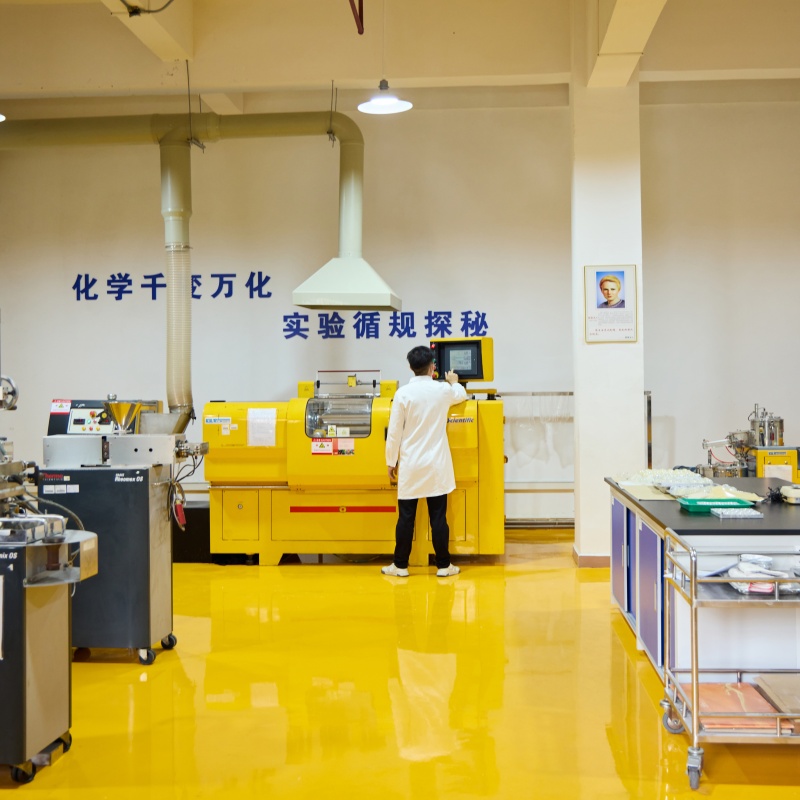
Formulation and testing support: GC-MS, ICP-MS and LC-MS/MS analysis for phthalates, heavy metals, bisphenol A and organotin.
Conclusion: Match the Resin System to the Line, Not to Habit
Paste resin and blend resin powder are not competing substitutes; they occupy different positions in the same flexible PVC formulation. Paste resin - whether SH-14 at K 77, PR-G at K 77.5-81.0, PSM-31 at K 72 or PSH-10S at K 70 - builds the plastisol and determines film formation, transparency and mechanical behaviour. Blend resin powder - BJ-65 at K 65 with 20-40 μm particles and 0.45-0.52 g/cm³ apparent density, SB-100C at K 62-67, PB-1000 at K 65, Kaneka Blending Resin B5F at K 65-68 or BIOVYN 266EF at K 66 - controls viscosity, matte finish and plasticizer demand.
For a project decision, the sequence is consistent: classify compliance first, define the processing route and equipment second, set the rheology target third, select the paste resin by K value, then size the blend resin dosage and pairing additives, and finally lock packing, MOQ, delivery term and lead time. Buyers who follow that order typically avoid the two most expensive mistakes in flexible PVC - over-loading plasticizer to thin a paste, and discovering a compliance gap after the formulation has already been scaled.
Next Step
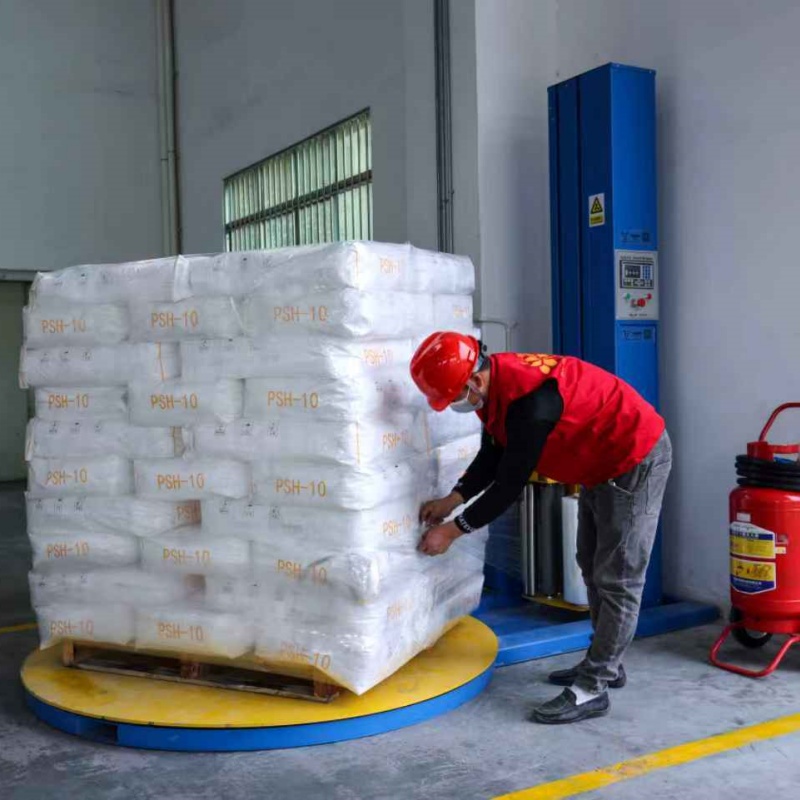
Paste resin grades ship in 20 kg bags and blend resin powders in 25 kg bags, with liquid plasticizers and stabilizers in 200 kg drums. Minimum order quantity starts at 20 kg, with a stated 3-5 day lead time.
Request a sample or a quotation for paste resin, blend resin powder, plasticizers, phenol-free Ca/Zn stabilizers and viscosity reducers from Guangdong Baoshan Trading Co., Ltd. - www.baoshancl.cn | misscheng1984@163.com | +86 13580992838.
Have Questions or Need More Details?
Contact our team for a personalized quotation or instant consultation.
Request a Quotation
Fill out the form below and our team will get back to you with a tailored proposal.
WhatsApp Direct Chat
Prefer to chat in real-time? Message us on WhatsApp for instant assistance & quick answers.
- Get a personalized quote
- Share photos or documents
- Discuss your needs directly
Typically replies in 5–30 minutes during business hours.