
Selecting the Right K-Value PVC Paste Resin: A Technical Parameter Guide for Slush Molding
Selecting the Right K-Value PVC Paste Resin: A Technical Parameter Guide for Slush Molding

Answer first: on a slush molding line, the K-value printed on a PVC paste resin or blend resin powder data sheet is not a quality badge — it is a process instruction. It tells a formulator roughly how much heat and time the plastisol will need to fuse, how thick the paste will sit at a given plasticizer loading, and how much the finished skin is likely to vary between production batches. When it is wrong, the symptom rarely appears as a wrong K-value. It appears as incomplete fusion at the mold surface, a matte finish that drifts, plasticizer consumption above budget, or a toy that tears at the seam.
This guide is written for buyers at the evaluation stage. It explains how K-value, average particle diameter and apparent density interact in slush molding, using BJ-65 blend resin powder — K value 65, average particle diameter 20–40 μm, apparent density 0.45–0.52 g/cm³ — as a worked reference example. It then sets out a validation sequence, application fit, a cross-grade comparison and the questions buyers raise most often.
Guangdong Baoshan Trading Co., Ltd. is a Dongguan-based supplier of PVC vinyl materials whose roots go back to 1994, and the paste resins, blend resin powders, plasticizers and stabilizers referenced below are the categories it distributes into China and Southeast Asian markets.
Why K-Value Decisions Go Wrong More Often Than Buyers Expect
Most procurement teams start with the plasticizer or the price per kilogram and treat the resin as a generic input. That approach survives the quotation stage and fails on the line. K-value is derived from the viscosity number measured on a dilute resin solution, and it is used as a practical proxy for molecular weight and degree of polymerization — which is exactly why two powders that look identical in a sample bag can behave very differently in a mold.
The numbers make the point. BJ-65 is listed at K value 65 with a polymerization degree of approximately 1000. Shenyang PSH-10 sits at K 72–75 with a polymerization degree of 1580–1780. Formosa Plastics PR-G runs at K 77.5–81.0 with a polymerization degree of 1700±100. These are not interchangeable inputs to the same formula: as K-value rises, the polymer chains lengthen and the plastisol generally demands more heat to reach full fusion, while the paste tends to become more viscous at the same plasticizer loading.
The failure modes are predictable and repeatable:
- Incomplete fusion and a chalky or weak skin when a low-energy cycle meets a resin that needs more dwell time or temperature.
- Matte level that drifts between lots when a matting component is substituted informally.
- Plasticizer consumption above target when the resin contribution to paste viscosity is not accounted for.
- Surface bubbles and defects when bulk handling properties and volatile content are not specified alongside K-value.
The correction is procedural rather than technical: treat K-value, particle size and apparent density as three specified, tested parameters instead of one generic PVC resin line item.
Where Slush Molding Material Demand Sits in 2026
The resin decision now sits inside a wider compliance and cost conversation. Market Research Future estimates the global PVC paste resin market at USD 2.67 billion in 2024, projected to reach USD 4.473 billion by 2035. Institution-to-institution figures diverge widely because paste grade and emulsion PVC are defined differently — Cognitive Market Research publishes a substantially higher figure for the same year — so any single number is best read as a directional signal rather than an absolute.
Demand is geographically concentrated. Asia-Pacific accounts for more than 60% of global PVC paste grade volume, with China alone responsible for more than 45% of consumption. That concentration is one reason the grade conventions, test ratios and packaging standards that dominate the category are largely Asian.
Two adjacent markets shape the technical brief for resin selection:
- The global eco-friendly plasticizers market was valued at USD 5.03 billion in 2024 and is projected to reach USD 7.55 billion by 2030, a 7.0% CAGR (MarketsandMarkets).
- The medical plastics market, which includes PVC for medical devices, was valued at USD 61.4 billion in 2025 with a projected 6.0% CAGR (Grand View Research).
Regulation moves in the same direction. EU REACH restricts phthalates such as DEHP, DBP and BBP to concentrations below 0.1% in toys and childcare articles. The practical consequence for K-value selection is simple: a resin chosen to cut viscosity does not deliver compliance by itself, because compliance is a property of the complete formulation.
The Three Parameters That Decide Slush Molding Performance
K-Value — a Molecular-Weight Proxy That Sets Fusion Demand
In broad terms, a higher K-value means longer chains: higher paste viscosity at the same plasticizer loading, a higher thermal demand for complete fusion, and generally better tensile and tear performance in the finished part. A lower K-value flows more easily and wets out faster, but typically trades away some mechanical strength. That trade-off, not price, is what the K-value range should be selected on.
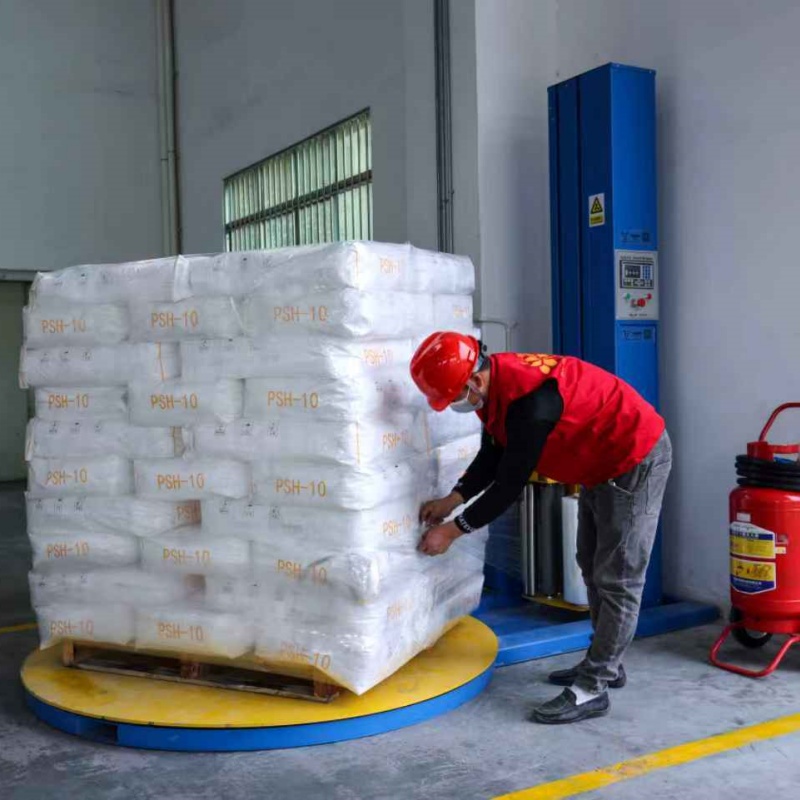
The useful range for slush molding is a band rather than a single number. Viscosity-reducing blend powders cluster between K 62 and K 68: SB-100C at K 62–67, BJ-65 at K 65, Zhongtai PB-1000 at K 65, Kaneka PBM-B5F at K 65–68 and BIOVYN™ 266EF at K 66. Paste resins used for skin formation and high-clarity parts sit higher: Kaneka PSH-10S at K 70, Kaneka PSM-31 at K 72, KANEVINYL PASTE EH-251 at K 76, KANEVINYL PASTE SH-14 at K 77 and Formosa Plastics PR-G at K 77.5–81.0. Shenyang PSH-10, at a polymerization degree of 1580–1780, belongs to the same higher band even though its data sheet quotes K 72–75 alongside the degree of polymerization.
One caution for comparison work: paste viscosity test conditions are not standardized across suppliers. EH-251 is quoted at a resin-to-DOTP ratio of 100:80, while Shenyang PSH-10 is quoted at 100:65 with DOP. A viscosity figure is only meaningful when its ratio and temperature travel with it.
Particle Size — What Happens Before the Powder Becomes a Paste
Particle size governs the wet-out stage. BJ-65 is a medium powder at 20–40 μm; SB-100C is around 20 μm; 266EF is described as medium. Paste resins are an order of magnitude finer — EH-251 at approximately 0.2–0.5 μm, Shenyang PSH-10 at 1–2 μm.
The trade-off is mechanical, not cosmetic. Medium powders absorb plasticizer more slowly at room temperature, which supports dry-flow handling, matte surfaces and less tacky storage, and helps explain why blend resin powders are used to lower paste viscosity and reduce plasticizer demand. Fine paste resins wet out quickly, form smooth high-gloss films and produce higher paste viscosity, which is why they dominate high-clarity molding, dipping and cap-gasket work.
In day-to-day production, particle size sets dispersion time under the mixer, the amount of air entrained at wet-out, the achievable matte level and dust control at the dosing station.
Apparent Density — the Bulk-Handling Parameter That Sets Batch Consistency
Apparent density is the parameter buyers most often ignore and later blame for batch inconsistency. BJ-65 is specified at 0.45–0.52 g/cm³, which is dense for a PVC powder; SB-100C at 0.50–0.55 g/cm³ and 266EF at approximately 0.55–0.60 g/cm³ sit in a comparable band. Finer viscosity-reducing resins and paste resins are lighter: PB-1000 and PBM-B5F at 0.32–0.35 g/cm³, LF-51 and LF-71G at 0.30–0.33 g/cm³, Shenyang PSH-10 at 0.20–0.40 g/cm³ and PR-G at 0.30±0.05 g/cm³.
Higher apparent density means more mass per unit of volume, more stable feeding and less air to displace during wet-out. Lower-density fine powders bring more entrained air into the paste, but also higher plasticizer absorption and often better matting. Volatile matter belongs in the same conversation, because residual moisture is a direct route to bubbles and surface defects: BJ-65 and SB-100C are specified at ≤0.4%, 266EF at ≤0.30%, and PB-1000 and PBM-B5F at ≤0.5%.
Where the Three Parameters Meet: Fusion Time, Viscosity and Consistency
Paste viscosity is a formula outcome, not a resin property. It is the combined result of K-value, particle size, plasticizer type and loading, and any viscosity reducer added on top.
Viscosity reduction. Eastman TXIB™ (2,2,4-trimethyl-1,3-pentanediol diisobutyrate, CAS 6846-50-0) is a dual-function plasticizer and viscosity reducer at 9 cP, recognised by Eastman as the lowest-viscosity additive available for the flexible PVC industry. Used as a film-forming agent TXIB reduces initial plastisol viscosity, helps hold viscosity stable over time, cuts bubble entrainment and allows higher filler loading. Hexadecyl Ester 16 (RTC-16) is built on the same chemistry.
Plasticizer system. BASF Hexamoll® DINCH has a pour point of −54 °C and, per BASF literature, reduces initial viscosity by 10–20% and extends storage life by 20–30% in paste resins such as Kaneka EH251 and Shenyang PSH-10. DOTP has a freezing point of −48 °C. Acetyl Tributyl Citrate (ATBC) is a bio-based plasticizer with a freezing point of ≤−80 °C and food-contact approvals including FDA and GB 4806, which makes it a common choice as a plasticizer for food contact products. The polymeric polyester plasticizer GLOBINEX W-2050 is used where low migration and long-term durability drive the brief. For food contact and medical programmes, DINCH and ATBC are typically paired with a phenol-free Ca/Zn stabilizer rather than a conventional stabilizer package.
Thermal window. The stabilizer package sets how much heat the resin can absorb. Phenol-free Ca/Zn stabilizers such as CT303TX are dosed at 1.5–3.0 phr; CZ-2756 delivers a thermal stability time of ≥30 minutes at 180 °C, and the recommended processing window for that family is 160–185 °C, covering extrusion, calendering, slush molding and PVC dripping glue processes.
Consistency. At specification level, residual VCM is the cleanest single proxy. BJ-65 and SB-100C are stated at ≤5 ppm; 266EF is stated at ≤1.0 ppm. Buyers in regulated programmes should read that line alongside K-value, not below it.

Reading a BJ-65 Data Sheet Line by Line
The example below shows how each line on a medium-K blend resin powder sheet converts into a process expectation, which is the fastest way to compare competing grades without running a trial for every option.
- K value 65 (grade): a medium molecular weight profile that delivers the viscosity-reduction and matting behaviour of a blend powder without the fusion demand of a K 72–77 paste resin.
- Polymerization degree approximately 1000: consistent with the K value, and the figure to quote when a converter requests molecular-weight data.
- Average particle diameter 20–40 μm (medium powder): supports dry-flow handling and a smooth matte finish.
- Apparent density 0.45–0.52 g/cm³: relatively dense for a PVC powder, supporting stable feeding and reduced entrained air.
- Volatile matter ≤0.4%: limits moisture-driven bubbles and surface defects.
- Residual vinyl chloride monomer ≤5 ppm: the compliance baseline for toy programmes.
- Identity and packaging: polyvinyl chloride, CAS 9002-86-2, 100% component part, supplied in 25 kg bags.
- Stated applications: slush-molded toys, soft toys and Sofubi toys; artificial leather, vinyl flooring, wallpaper and decorative films; automotive underbody coatings, welding-area coatings and interior trim coatings; canvas coating, conveyor belts, bottle cap gaskets and sealing materials.
- Stated functions: efficient viscosity reduction — blended with paste resin it noticeably lowers paste viscosity and reduces plasticizer consumption by 10–20% — a smooth matte finish, and compatibility with paste resins, plasticizers and stabilizers without impairing the physical and mechanical properties of the finished part.
Step-by-Step: Validating a K-Value Grade on Your Own Line
- Define the finished part before the resin. Wall thickness, matte or gloss target, flex requirement, service temperature and the regulatory route of the end market determine the acceptable K-value band.
- Set a window, not a number. For viscosity reduction combined with matting, K 62–68 is the practical zone (SB-100C, BJ-65, 266EF, PB-1000). Where skin formation, clarity and mechanical strength dominate, K 70–81 paste resins are the starting point (PSH-10S, PSM-31, EH-251, SH-14, PR-G).
- Fix the plasticizer system and phr first. DINCH, DOTP, ATBC and polymeric polyester plasticizers each alter the viscosity curve before the resin does. Changing plasticizer and resin in the same trial makes the result unreadable.
- Benchmark viscosity at your own shear, and always record the test ratio. A supplier figure quoted at resin to plasticizer 100:65 with DOP cannot be compared directly with one quoted at 100:80 with DOTP.
- Introduce the viscosity reducer after the base curve is established. TXIB is normally added to bring a working paste into the coating or molding window, not to define the formula.
- Confirm the stabilizer package and thermal window. At 1.5–3.0 phr of a phenol-free Ca/Zn stabilizer and a processing window around 160–185 °C, check that mold dwell time sits inside the thermal stability budget.
- Run three consecutive lots, not one. Track paste viscosity over time, matte uniformity, demolding behaviour, volatile content and residual VCM. Single-lot validation hides exactly the variation that causes field complaints.
- Lock the specification and audit incoming lots. Sampling inspection plus laboratory verification — phthalate, heavy-metal, bisphenol A and organotin screening by GC-MS, ICP-MS and LC-MS/MS — is what keeps a K-value decision valid after the first purchase order.
Use Cases: Which K-Value Profile Fits Which Programme
- Slush-molded vinyl toys, dolls and figurines: medium-K blend powders such as BJ-65, SB-100C and 266EF support viscosity control and matte finish, blended with paste resins such as Shenyang PSH-10, Kaneka PSM-31 and Formosa PR-G where skin quality and clarity matter.
- Matte decorative parts and low-gloss skins: BJ-65 combines matting with viscosity reduction; SB-100C suits programmes that also want partial paste-resin substitution; 266EF provides a uniform matte finish without an additional matting agent.
- Automotive underbody, welding-area and interior trim coatings: BJ-65 is listed among automotive undercoat PVC resin grades, while 266EF is chosen where low haze and VOC control are specified.
- Coated fabric, artificial leather and dipping: PVC coated material and PVC dripping glue material programmes typically run on paste resins such as LF-51, LF-71G, Kaneka PSM-31 and Shenyang PSH-10, with EH-251 used where thixotropic anti-sag behaviour is required.
- Food contact and medical devices: Kaneka PSH-10S for food-grade cap gaskets, SH-14 and PR-G where clarity and low migration matter, combined with DINCH or ATBC and a phenol-free Ca/Zn stabilizer for PVC materials for medical products and devices.
A project in Vietnam shows how the three parameters combine in production. A PVC vinyl toy manufacturer running 300 vinyl machines achieved stable molding for consistent toy quality and high efficiency for mass toy production, with a stated shelf life of two years under cool and dry storage and a continuing supplier relationship. The outcome rests on the same three variables: a K-value matched to the cycle, a particle size that wets out predictably, and an apparent density that keeps dosing stable.
Comparison Table: K-Value, Particle Size and Apparent Density
| Grade | Type | K-value | Average particle size | Apparent density | Role in slush molding |
|---|---|---|---|---|---|
| BJ-65 | Blend resin powder (medium powder) | 65 | 20–40 μm | 0.45–0.52 g/cm³ | Viscosity reduction with matte finish; toys, automotive undercoat, coatings |
| SB-100C | Blend resin powder | 62–67 | Approx. 20 μm | 0.50–0.55 g/cm³ | Viscosity reduction, matting, partial replacement of paste resin |
| 266EF (BIOVYN™) | Extender homopolymer blend resin | 66 | Medium | Approx. 0.55–0.60 g/cm³ | Matte finish without extra matting agent; low-haze and VOC-sensitive work |
| Zhongtai PB-1000 | Viscosity-reducing blend resin | 65 | Small, narrow distribution | 0.32–0.35 g/cm³ | Viscosity reduction at 20–30% recommended dosage |
| Kaneka PBM-B5F | Blending resin / modifier | 65–68 | Not stated | 0.32–0.35 g/cm³ | Toughness and flexibility modification in blend systems |
| Shenyang PSH-10 | Micro-suspension paste resin | 72–75 | 1–2 μm | 0.20–0.40 g/cm³ | Doll and figurine skins, artificial leather surface, dip-molded trademarks |
| Kaneka PSM-31 | Micro-suspension paste resin | 72 | Not stated | Approx. 0.30 g/cm³ | Toy manufacturing, artificial leather, flooring and wall coverings |
| KANEVINYL PASTE EH-251 | Emulsion paste resin | 76 | 0.2–0.5 μm | 0.30–0.50 g/cm³ | Thixotropic anti-sag behaviour in coatings and sealants |
| Formosa Plastics PR-G | Microsuspension paste resin | 77.5–81.0 | Not stated | 0.30±0.05 g/cm³ | High-clarity moldings, dolls and toy molding, medical gloves |
Values as published in the referenced grade specifications. Not stated indicates the parameter is not given in the available data. Residual VCM is stated at ≤5 ppm for BJ-65, SB-100C and PR-G, ≤5.0 mg/kg for PSH-10 and EH-251, and ≤1.0 ppm for 266EF.
FAQ
What compliance parameters should I verify on a K-65 blend powder for a toy programme?
Three things. First, residual vinyl chloride monomer: BJ-65 and SB-100C are stated at ≤5 ppm, and 266EF at ≤1.0 ppm. Second, the plasticizer route, because EU REACH restricts DEHP, DBP and BBP to below 0.1% in toys and childcare articles, which is why formulations commonly move to DINCH, DOTP or ATBC. Third, the stabilizer: phenol-free Ca/Zn grades such as CT303TX, CZ-190, SC-135, SC-1600C and CZ-2756 are stated as compliant with REACH, RoHS, FDA and GB 4806 for the relevant applications. Confirm documents against the exact grade and lot you buy, not against a category statement.
Can a medium-K blend powder replace part of my paste resin?
That is its main commercial function. Blended with paste resin, BJ-65 is stated to lower paste viscosity, reduce plasticizer consumption by 10–20% and deliver a smooth matte finish without impairing the physical and mechanical properties of the finished part. SB-100C can partially replace higher-cost paste resin, and PB-1000 is recommended at 20–30% dosage for ideal viscosity reduction. The limit is mechanical rather than chemical: any substitution should be validated against tear strength, fusion completeness and matte targets for the specific part before it is written into the formula.
How does K-value affect formulation cost?
Cost is set by the whole formulation, not by the price of a bag of resin. A medium-K viscosity-reducing powder lowers plasticizer consumption by 10–20% (BJ-65) and can displace part of the paste resin (SB-100C), while a low-viscosity additive such as TXIB at 9 cP allows higher filler loading. Each of those changes cost per finished part rather than cost per kilogram. Ordering parameters matter too: minimum order quantity is 20 kg and monthly sales volume is 4,000 tons, so the practical cost question is which formula delivers a stable, repeatable part at the lowest total spend.
How should I validate a sample before committing to volume?
Use a defined protocol rather than a visual check: paste viscosity at your reference ratio and temperature, viscosity drift across the storage period you actually need, matte uniformity, demolding behaviour and residual VCM. Suppliers offering sampling inspection and laboratory testing shorten that cycle considerably — phthalate, heavy-metal, bisphenol A and organotin screening by GC-MS, ICP-MS and LC-MS/MS is available, and formula design and optimization support can be provided for custom programmes where a standard grade does not fit.
What lead time and shelf life should I plan for?
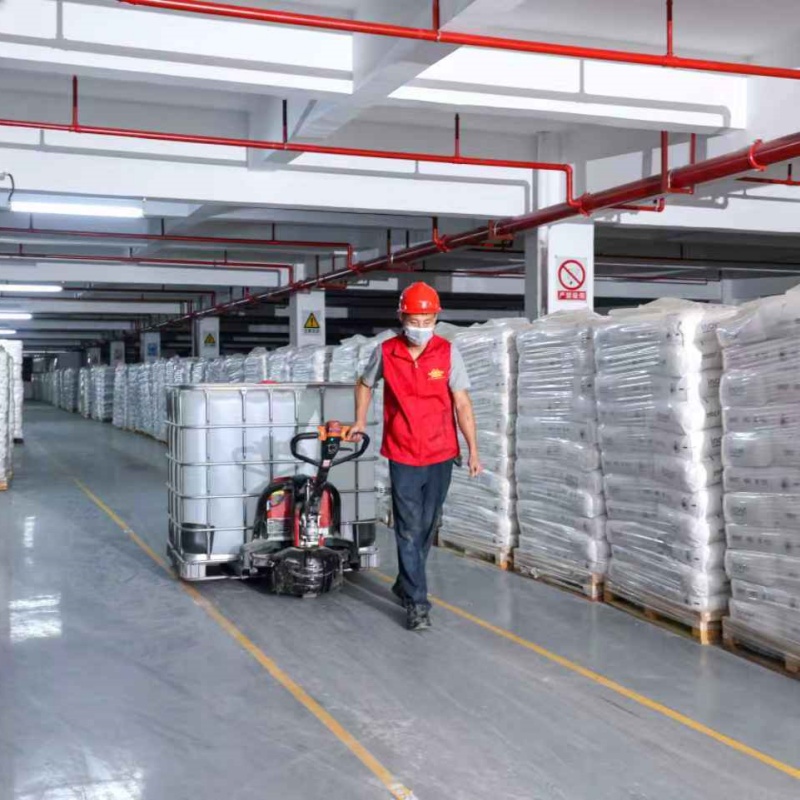
Lead time is stated at 3–5 days, and shelf life for validated formulations has been demonstrated at two years under cool and dry storage in the Vietnam toy project. Plan for inventory depth as well as transit time: more than 3 months of safety stock for bulk European materials is held, supported by 20,000 m² of self-owned warehousing and 16 liquid storage tanks. If you are evaluating a specific K-value grade for a slush molding programme, the most efficient next step is to request a sample and a technical data package for that exact grade, or send your current formulation for a viscosity and fusion review.
Conclusion
K-value selection is a specification exercise, not a brand preference. Match the K-value band to the part and the cycle; confirm particle size against your wet-out and matte requirements; confirm apparent density and volatile content against your feeding behaviour and surface-defect history. Where two grades look equivalent on K-value alone — BJ-65 at K 65 and 266EF at K 66, for example — particle size, apparent density and residual VCM are the lines that decide which one belongs in the formula.
The wider context reinforces the same discipline: a paste resin market moving from USD 2.67 billion in 2024 toward USD 4.473 billion by 2035, plasticizer systems shifting toward non-phthalate options, and REACH holding restricted phthalates below 0.1% in toys. Resin, plasticizer and stabilizer have to be validated as one system, because that is how the finished part is actually produced.
Need to confirm a K-value grade for a slush molding programme?
Guangdong Baoshan Trading Co., Ltd. supplies PVC paste resins, blend resin powders, non-phthalate plasticizers, phenol-free Ca/Zn stabilizers and processing additives from a Dongguan base, with laboratory testing and formula optimization support. Request a sample, a current technical data sheet, or a quotation for the exact grade you are evaluating.
Contact: Chen Bingbing | Email: misscheng1984@163.com | Tel: +86 13580992838 | WhatsApp: +84 865388399 | Website: www.baoshancl.cn