
Top 5 Phthalate-Free Plasticizers for Food-Contact PVC: A Buyer's Ranking
Top 5 Phthalate-Free Plasticizers for Food-Contact PVC: A Buyer's Ranking
Short answer: for food-contact and medical PVC, the five phthalate-free plasticizer options that hold up best against documented compliance and plastisol performance checks are, in order: (1) BASF Hexamoll® DINCH (di-isononyl cyclohexane-1,2-dicarboxylate), (2) Acetyl Tributyl Citrate (ATBC), (3) DOTP (dioctyl terephthalate), (4) GLOBINEX W-2050 polymeric polyester plasticizer, and (5) Eastman TXIB™, which is specified as a co-plasticizer and viscosity reducer rather than as a standalone primary plasticizer. The order is set by four procurement criteria: documented regulatory status, migration and volatility behaviour, processing fit in PVC paste systems, and supply readiness.
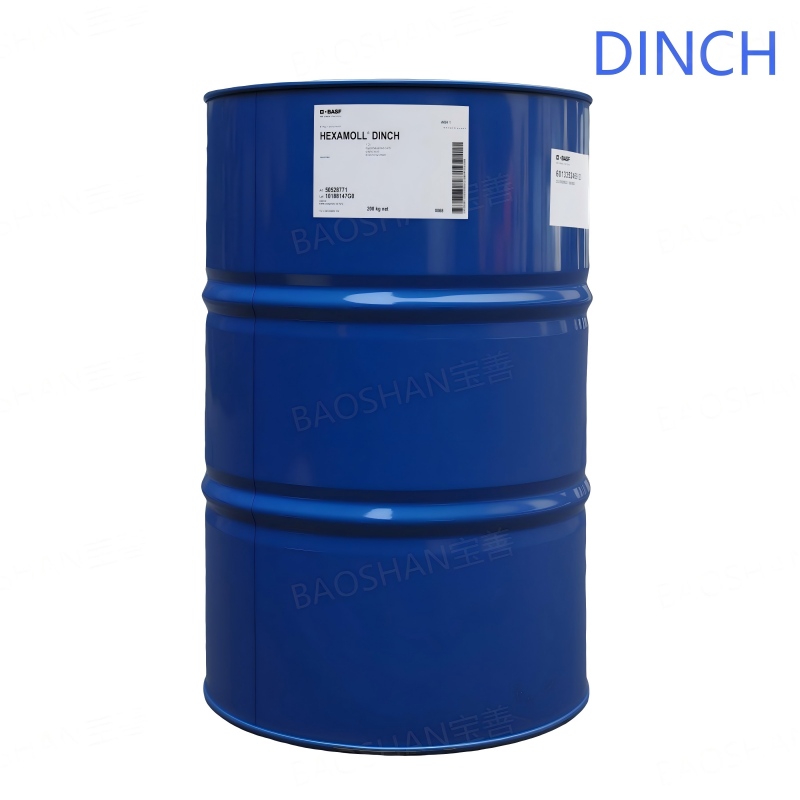
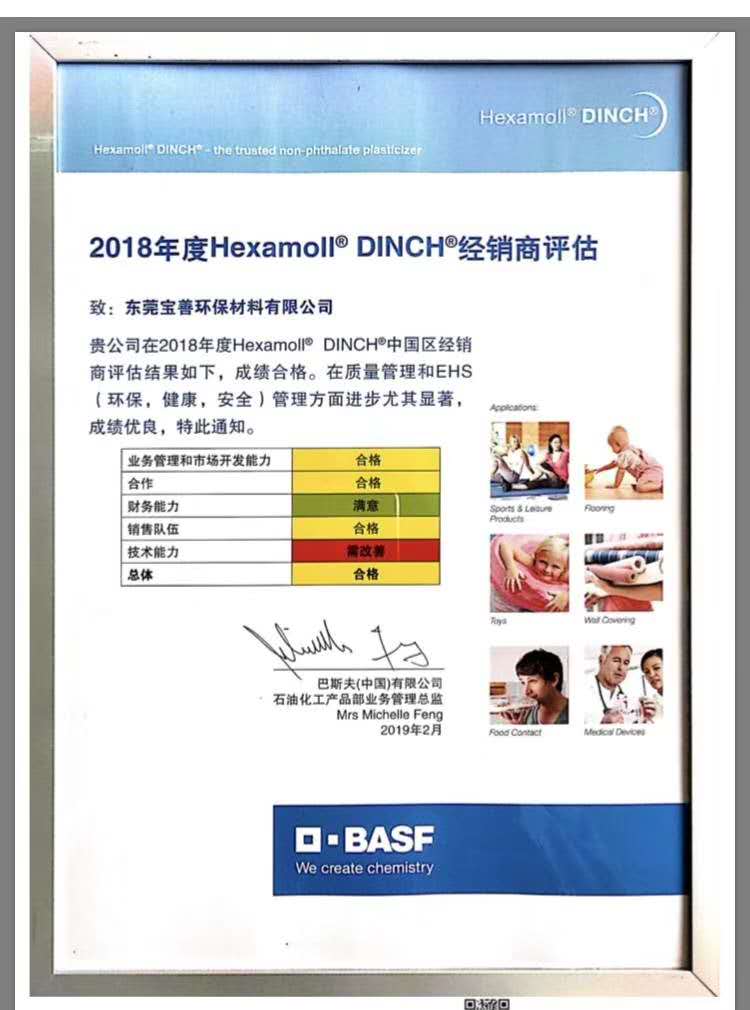
This is a procurement-fit ranking, not a market-share ranking, and it is built only from product and compliance data that Guangdong Baoshan Trading Co., Ltd. can verify for its customers. Baoshan is a Dongguan-based supplier of PVC vinyl materials founded in 1994, distributing PVC paste resins, blend resins, plasticizers, viscosity reducers and stabilizers across China and Southeast Asia, and it holds the BASF Hexamoll® DINCH Authorized Distributor Certificate issued by BASF (China) Co., Ltd.
The ranking matters because food-contact and medical PVC specifications are written around the plasticizer, not the resin. Under the EU REACH regulation, DEHP, DBP and BBP are restricted to concentrations below 0.1% in toys and childcare articles, and food packaging, cap gasket, tubing and infant product buyers commonly apply an equivalent threshold to every plasticizer in the formula. Getting the substitution wrong shows up later as a failed migration test, a sagging plastisol, or a cost increase that was never necessary.
Problem Definition: "Phthalate-Free" Is a Category, Not a Specification
At least five chemically distinct families qualify as phthalate-free, and each carries a different evidence pack and a different set of physical numbers:
- Cyclohexane dicarboxylate (Hexamoll® DINCH): ester content ≥99.5% by area (GC method), phthalate content ≤0.01% (UV method), pour point -54 °C, dynamic viscosity 44-60 mPa·s at 20 °C.
- Citrate ester (ATBC): purity ≥99.0%, freezing point ≤-80 °C, flash point ≥204 °C, heavy metals as Pb ≤10 mg/kg.
- Terephthalate (DOTP): purity ≥99.5%, freezing point -48 °C (typical), flash point ≥210 °C, volume resistivity ≥2×10⁹ Ω·m.
- Polymeric polyester (GLOBINEX W-2050): viscosity 2,300-3,500 mPa·s at 25 °C, acid value 0.5 mg KOH/g, volume resistivity minimum 1×10¹¹ Ω·cm.
- Specialty diester additive (Eastman TXIB™): 2,2,4-trimethyl-1,3-pentanediol diisobutyrate, assay ≥98.6 wt%, viscosity 9 cP at 25 °C, freezing point -70 °C.
Compliance documentation is equally uneven. In the dataset used for this ranking, ATBC is documented as compliant with REACH, RoHS, FDA and GB 4806; Hexamoll® DINCH is documented against REACH, RoHS and PAHS and holds food-contact permits from Germany's BFR and Japan's Hygienic PVC Association; DOTP is documented against REACH and RoHS; GLOBINEX W-2050 is documented as low toxicity with a medical-grade profile; TXIB is documented against REACH, RoHS and Chinese environmental regulations and is free of phthalates and benzene rings. These are not interchangeable statements, and treating them as interchangeable is the most common sourcing error in this category.
Two further constraints sit outside the regulation itself. First, food-contact suitability is product-specific: cap gaskets, cling film and infusion tubing stress different properties, so the same plasticizer can be right in one application and wrong in the next. Second, plastisol rheology is never free — replacing a phthalate changes paste viscosity, viscosity stability and storage life, which in turn changes filler loading, line speed and demoulding behaviour.
Industry Background: Why the Substitution Question Keeps Growing
Three separate demand curves are pushing phthalate-free plasticizers into food-contact PVC specifications.
Paste PVC volume. Market Research Future estimates the global PVC paste resin market at USD 2.67 billion in 2024, projected to reach USD 4.473 billion by 2035. Asia-Pacific accounts for over 60% of global PVC paste grade resin volume, with China alone responsible for more than 45% of consumption, according to industry analysis. Published market-size estimates for paste-grade PVC diverge widely between research houses — some place the same market above USD 10 billion — because definitions of paste grade versus emulsion grade differ, so any single figure should be read as directional rather than definitive.
Non-phthalate plasticizer demand. MarketsandMarkets values the global eco-friendly plasticizers market at USD 5.03 billion in 2024, projected to reach USD 7.55 billion by 2030 at a 7.0% CAGR. That is the pool in which DINCH, ATBC, DOTP and polymeric plasticizers compete.
Medical and food-contact devices. Grand View Research values the medical plastics market, including PVC for medical devices, at USD 61.4 billion in 2025 with a projected 6.0% CAGR. Hexamoll® DINCH is described by BASF as a non-phthalate plasticizer approved for medical devices and food-contact materials because of its low migration rate and toxicological safety.
The practical consequence for buyers in China and Southeast Asia is that the substitution decision is now routine, while the documentation check is not. A supplier's ability to hand over the right certificate, permit reference and batch data is often the difference between a two-week qualification and a two-month one.
How the Top 5 Were Ranked
Each plasticizer was assessed against four criteria, in this priority order:
- Documented compliance for food contact or medical use. REACH, RoHS, FDA and GB 4806 status, plus specific food-contact permits where they exist. This is weighted heaviest because it is a pass/fail gate, not a preference.
- Migration, volatility and permanence. Low migration and low volatility determine whether a finished part stays compliant and clean over its service life.
- Processing fit in PVC paste systems. Plastisol viscosity, viscosity stability, storage period, low-temperature flexibility, and compatibility with other plasticizers and stabilizers.
- Supply readiness. Packaging formats, stock position, lead time and technical support, including laboratory testing.
The Ranking: Five Phthalate-Free Plasticizers for Food-Contact PVC
1. BASF Hexamoll® DINCH — Most Complete Documented Compliance Set in This Review
Hexamoll® DINCH is a di-isononyl cyclohexane-1,2-dicarboxylate (CAS 474919-59-0 in the USA, 166412-78-8 outside the USA) with a content of ≥99.5% (w/w). Its phthalate content is 0.01% maximum, an order of magnitude below the 0.1% threshold that REACH applies to restricted phthalates in toys and childcare articles. Density is 0.944-0.954 g/cm³ at 20 °C, dynamic viscosity is 44-60 mPa·s at 20 °C, and ester content is ≥99.5% minimum by area (GC method).
Compliance is the reason this chemistry ranks first. It is documented against EU REACH, RoHS and PAHS, holds food-contact permits from Germany's BFR and Japan's Hygienic PVC Association, and can be used in toys for children under three years old. BASF describes Hexamoll® DINCH as approved for medical devices and food-contact materials on the basis of low migration and toxicological safety, with no accumulation in the body, no developmental toxicity, no testicular toxicity, no endocrine impact, no impairment of fertility, and no carcinogenicity or teratogenicity findings.
Performance on food-contact lines is equally relevant. In PVC paste resins such as Kaneka EH251 and Shenyang PSH-10, DINCH reduces initial paste viscosity by 10-20%, improves viscosity stability and extends storage period by 20-30%. Its pour point of -54 °C is lower than DOTP (-48 °C) and far lower than DOP (-20 °C), which matters for cold-climate distribution of finished goods. Volatility is about 50% lower than DOP, and the product is fully compatible with DOP, DOTP and DINP in any proportion, allowing a phased substitution without rebuilding the entire formula.
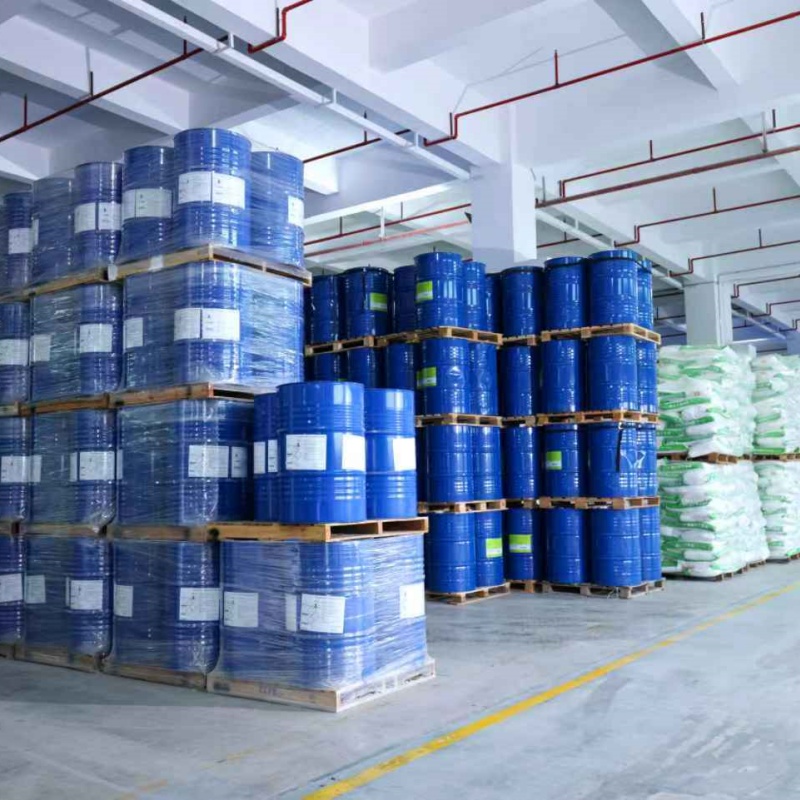
Supply status matters as much as chemistry here. Baoshan holds the BASF Hexamoll® DINCH Authorized Distributor Certificate issued by BASF (China) Co., Ltd. under certificate numbers BCN-CPA-20140305-1 and BCN-CPA-20150401-1, and its company profile describes it as an authorized distributor of BASF's eco-friendly plasticizer Hexamoll® DINCH in China, ranking first in sales in the Asia-Pacific region for many consecutive years. DINCH is supplied in 200 kg and 950 kg drums.
2. ATBC (Acetyl Tributyl Citrate) — Bio-Based Option With Explicit FDA and GB 4806 Documentation
ATBC (CAS 77-90-7, C20H34O8, molecular weight 402.43) is a citrate-ester plasticizer supplied as a colourless, transparent, odourless oily liquid with a purity of ≥99.0% and a relative density of 1.045-1.055 g/cm³ at 25/25 °C. Acid value is ≤0.2 mg KOH/g, moisture ≤0.15%, refractive index 1.4410-1.4425 n(25 °C/D), flash point ≥204 °C, and heavy metals as Pb ≤10 mg/kg. It is classified as a bio-based plasticizer.
Its compliance pack is the most explicit in this dataset for food contact: REACH, RoHS, FDA and GB 4806. That combination is unusual and is why ATBC ranks second despite a performance profile that differs from DINCH. It is specified for food cling film, food packaging film, heat-shrinkable film, bottle-cap gaskets, disposable food containers and beverage straws, and for medical-grade PVC including infusion tubes, blood transfusion bags, catheters, drainage bags, medical gloves and breathing masks. In toys it meets EN71-3 and RoHS requirements for vinyl toys, soft plastic dolls, teething toys and rattles.
Its distinctive physical advantage is low-temperature behaviour: the freezing point is ≤-80 °C, the lowest among the five chemistries reviewed here, so it keeps finished goods flexible in cold storage and cold-chain use. Migration and volatility are both low, which supports long-service-life parts, and it processes across extrusion, injection moulding, calendering and slush moulding with stable viscosity. It is supplied in 220 kg drums.
The trade-off to check before specifying ATBC is density and formulation behaviour: at 1.045-1.055 g/cm³ it is denser than DINCH (0.944-0.954 g/cm³) and DOTP (0.981-0.985 g/cm³), so the same mass load does not always deliver the same volume effect in a plastisol. Verification by trial paste, not by calculation, is the practical rule.
3. DOTP (Dioctyl Terephthalate) — Broad Non-Phthalate Coverage, Narrower Food-Contact Documentation
DOTP (CAS 6422-86-2, with diisooctyl terephthalate at 4654-26-6) is a terephthalate — a different molecular family from ortho-phthalates — and is widely specified as a general-purpose non-phthalate plasticizer. Purity is ≥99.5%, density 0.981-0.985 g/cm³ at 20 °C, acid value ≤0.02 mg KOH/g, flash point ≥210 °C, moisture ≤0.03%, and freezing point -48 °C (typical). Volume resistivity is ≥2×10⁹ Ω·m, described as 10-20 times that of DOP, which makes DOTP the preferred plasticizer for 70 °C heat-resistant cable compounds.
Its documentation in this dataset covers EU REACH and RoHS with low toxicity. It does not carry the explicit FDA and GB 4806 statements that ATBC carries, nor the BFR and Japanese food-contact permits that DINCH carries. That does not mean the chemistry cannot be used in food-contact work; it means the specific grade and documentation must be requested and confirmed for the target market before the formulation is frozen. This is exactly the kind of gap that a distributor's laboratory testing programme is meant to close.
In paste systems, DOTP blends with other plasticizers in any proportion, reduces viscosity and extends storage life, and is used across cable materials, construction sealing strips, automotive interior parts, medical devices such as infusion tubes, blood bags and gloves, films, artificial leather, drip-moulded trademarks and slush-moulded toys. It is supplied in 200 kg drums.
4. GLOBINEX W-2050 — Polymeric Permanence for Medical and Long-Life Parts
GLOBINEX W-2050 is a polymeric polyester plasticizer with a viscosity of 2,300-3,500 mPa·s at 25 °C, colour of 60 APHA, acid value of 0.5 mg KOH/g, specific gravity of 1.05 at 25/25 °C and volume resistivity of at least 1×10¹¹ Ω·cm at 30 °C. Approximately 62% of its applications are in PVC products, covering wire and cable, industrial pipes, medical supplies, food packaging materials, children's toys, automotive leather interiors, seals, adhesives, rubber products and electronic component coatings.
Its ranking position reflects a different performance logic from the three monomeric plasticizers above. Polymeric plasticizers are chosen for permanence: W-2050 is documented as offering excellent resistance to solvent extraction, low migration, low volatility, good electrical insulation, low toxicity with no impact on the properties of medical solutions, and durable plasticization with no surface tackiness at medical-grade requirements. For parts that must survive repeated cleaning, disinfection or long-term contact with fluids, that combination outperforms short-chain esters.
The trade-off is rheology. At 2,300-3,500 mPa·s, W-2050 is far more viscous than DINCH (44-60 mPa·s) or TXIB (9 cP), so a formulator substituting it into an existing plastisol must re-balance paste viscosity and check gelation behaviour rather than assume a drop-in replacement. It is supplied in 200 kg drums.
5. Eastman TXIB™ — Viscosity Reduction and Co-Plasticization
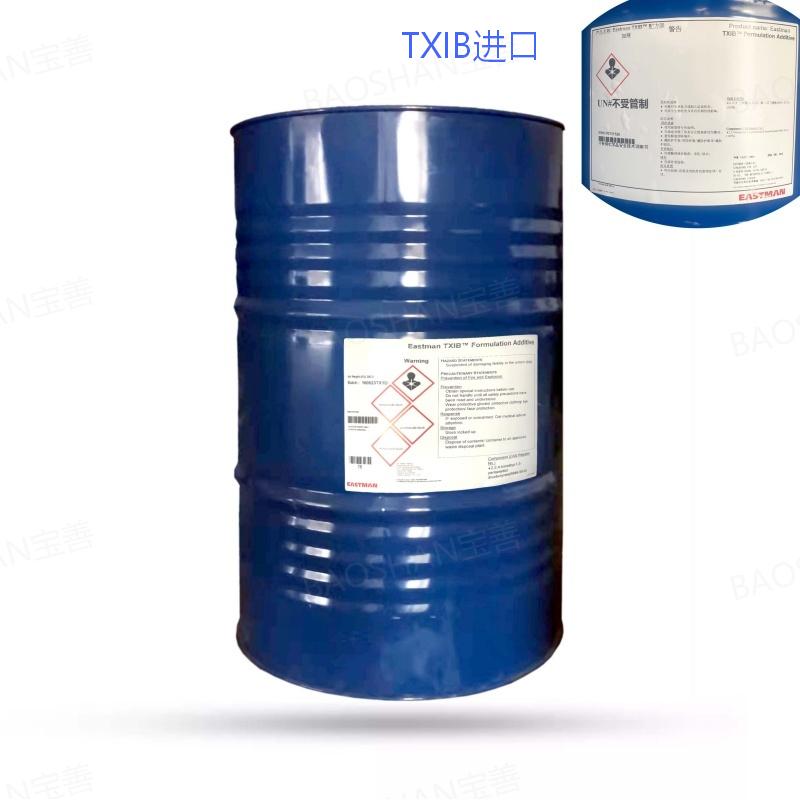
Eastman TXIB™ (2,2,4-trimethyl-1,3-pentanediol diisobutyrate, CAS 6846-50-0, C16H30O4, molecular weight 286.4) is ranked fifth because it is normally specified as a co-plasticizer and formulation additive rather than as the primary plasticizer of a food-contact formula. Its numbers explain why formulators still insist on it: viscosity of 9 cP at 25 °C, assay ≥98.6 wt%, specific gravity 0.942-0.948 at 20/20 °C, surface tension 27.56 dynes/cm, freezing point -70 °C, flash point 143 °C (Cleveland open cup), and colour of 10 maximum on the Pt-Co scale. Eastman describes TXIB™ as a 9 cps additive used to optimize vinyl plastisol flow.
Functionally it does two things at once. It plasticizes, providing low-temperature flexibility, resistance to soapy-water extraction and non-migration behaviour, and it reduces the initial viscosity of PVC plastisols while maintaining viscosity stability and reducing bubble entrainment. In coating lines it improves flow characteristics, reduces wave marks caused by high-shear coating, allows higher filler loading, and delivers a drier surface layer with better printability and wipeability. It is documented as a non-VOC substance compliant with EU REACH, RoHS and Chinese environmental regulations, low in toxicity and odour, readily biodegradable, and free of phthalates and benzene rings, with good synergy with calcium-zinc stabilizers and compatibility with DINCH, DOTP and ATBC.
The reason to include TXIB in a food-contact evaluation is practical rather than promotional: when a line replaces DOP with a higher-viscosity or higher-loading non-phthalate system, TXIB is often the component that restores the coating window. It is supplied in 200 kg drums, and Baoshan holds an Authorized Distributor Certificate for Eastman TXIB issued by Eastman Chemical Ltd., together with recognition as a high-performing plasticizer distributor in the China region.
Comparison Table: Phthalate-Free Plasticizers for Food-Contact PVC
| Rank | Plasticizer (chemistry) | Documented compliance | Key physical data | Rheology / low-temperature | Typical food-contact and medical uses | Packaging |
|---|---|---|---|---|---|---|
| 1 | BASF Hexamoll® DINCH (di-isononyl cyclohexane-1,2-dicarboxylate) | REACH, RoHS, PAHS; food-contact permits from Germany's BFR and Japan's Hygienic PVC Association; approved for medical devices and food-contact materials (BASF); toys for children under 3 years | Ester content ≥99.5%; phthalate content ≤0.01%; content ≥99.5% (w/w); density 0.944-0.954 g/cm³ | Viscosity 44-60 mPa·s (20 °C); pour point -54 °C | Infusion tubes, blood bags, medical gloves, catheters, breathing masks; packaging films, bottle-cap gaskets, disposable tableware; children's products | 200 kg / 950 kg drums |
| 2 | ATBC — acetyl tributyl citrate | REACH, RoHS, FDA, GB 4806; meets EN71-3 and RoHS for toys | Purity ≥99.0%; heavy metals as Pb ≤10 mg/kg; density 1.045-1.055 g/cm³ | Flash point ≥204 °C; freezing point ≤-80 °C | Cling film, packaging and heat-shrink film, cap gaskets, disposable containers, straws; infusion tubes, blood bags, catheters, gloves; vinyl toys | 220 kg drums |
| 3 | DOTP — dioctyl terephthalate | REACH, RoHS (grade- and market-specific food-contact confirmation recommended) | Purity ≥99.5%; density 0.981-0.985 g/cm³; volume resistivity ≥2×10⁹ Ω·m | Flash point ≥210 °C; freezing point -48 °C | Cable compounds, construction and automotive parts, medical devices (infusion tubes, blood bags, gloves), films, plastisols and inks | 200 kg drums |
| 4 | GLOBINEX W-2050 — polymeric polyester plasticizer | Low toxicity and medical-grade profile documented; specific REACH/RoHS/FDA/GB 4806 statements not listed in this dataset | Acid value 0.5 mg KOH/g; volume resistivity ≥1×10¹¹ Ω·cm; specific gravity 1.05 | Viscosity 2,300-3,500 mPa·s (25 °C) | Medical supplies, food packaging materials, wire and cable, seals, toys, adhesives (approx. 62% of use in PVC products) | 200 kg drums |
| 5 | Eastman TXIB™ — 2,2,4-trimethyl-1,3-pentanediol diisobutyrate | REACH, RoHS and Chinese environmental regulations; free of phthalates and benzene rings | Assay ≥98.6 wt%; surface tension 27.56 dynes/cm; specific gravity 0.942-0.948 | Viscosity 9 cP (25 °C); freezing point -70 °C | Co-plasticizer and viscosity reducer for gloves, catheters, toys, artificial leather, wallpaper, floor leather; also PU, EVA, inks and coatings | 200 kg drums |
Step-by-Step: How to Validate a Phthalate-Free Plasticizer Before You Commit
The ranking above narrows the field; it does not replace project-level validation. The following seven steps are the sequence that keeps a substitution project from failing at the migration test or on the coating line.
- Define the regulatory envelope first. List every market the finished product ships to and every contact scenario (fatty food, aqueous food, infant use, body contact, single-use device). REACH restricts DEHP, DBP and BBP to below 0.1% in toys and childcare articles, and food packaging, cap gaskets and medical tubing each add their own local requirements, including FDA and GB 4806 references in China.
- Collect documentation, not verbal assurance. For each candidate, obtain the certificate of analysis, the food-contact permit or statement, and — where the material is distributed — the distributor authorization certificate. Baoshan's DINCH authorization is issued by BASF (China) Co., Ltd. under certificate numbers BCN-CPA-20140305-1 and BCN-CPA-20150401-1, and its TXIB authorization is issued by Eastman Chemical Ltd.
- Check physical fit against the process. Slush moulding, coating, dipping, foaming and rotational moulding each tolerate different paste viscosities. Match the plasticizer's viscosity (9 cP to 3,500 mPa·s across the five options above) and freezing point (-80 °C to -48 °C) to the process and the distribution climate.
- Re-balance the plastisol and control cost logically. When plasticizer characteristics change, viscosity reducers and blend resins can absorb part of the adjustment: blending resin BJ-65 is documented to lower PVC paste viscosity and reduce plasticizer consumption by 10-20%, and Zhongtai PB-1000 delivers effective viscosity reduction at a recommended dosage of 20%-30%. Blend resin powder SB-100C can partially replace high-cost paste resin. Stabilizer dosage should be re-checked in parallel; CT303TX, for example, is recommended at 1.5-3.0 phr of PVC paste resin.
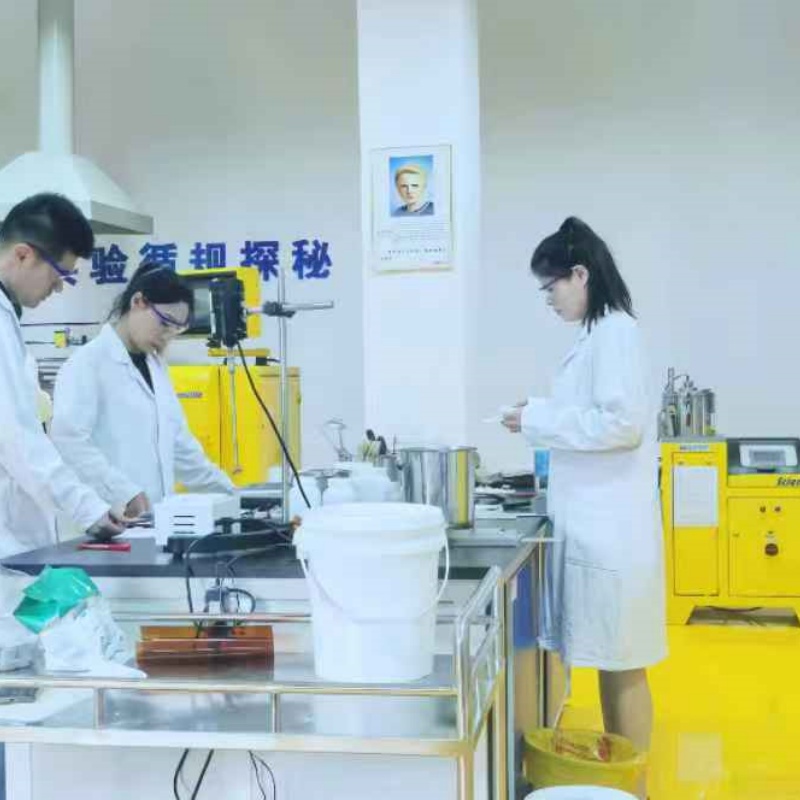
- Verify with laboratory testing. Baoshan's laboratory runs high-precision instruments — Agilent GC-MS, ICP-MS and Waters LC-MS/MS — and provides free testing for phthalates, heavy metals, bisphenol A and organotin, giving buyers an independent reading on high-risk substances before scale-up.
- Run a production trial, not just a lab sample. Validate migration, cap-gasket sealing, surface appearance and 30-day paste viscosity stability on the actual line. This is where a substitution either confirms or fails.
- Lock supply parameters. Confirm packaging format (200 kg drums for DINCH, DOTP, TXIB and W-2050; 950 kg drums for DINCH; 220 kg for ATBC), minimum order quantity, lead time and stock policy. Baoshan's standard terms include a minimum order quantity of 20 kg, a lead time of 3-5 days, and a 20,000 m² self-built warehouse with 16 liquid storage tanks and more than three months of safety stock for bulk European materials.
Use Cases: Matching the Plasticizer to the Product
Food-contact packaging and cap gaskets. Heat-shrink film, cling film and bottle-cap gaskets need low migration and low odour. ATBC's documented REACH, RoHS, FDA and GB 4806 position makes it a straightforward candidate for film and gasket work, while DINCH's BFR and Japanese food-contact permits plus its ≤0.01% phthalate content suit programmes that need a global documentation set. For gasket compounds, food-grade paste resins such as Kaneka PSH-10S are specified for food-grade cap gaskets and food packaging with low migration and low blooming.
Medical tubing and bags. Infusion tubes, blood bags, catheters and examination gloves put migration, extraction and compatibility with medical solutions at the centre of the specification. DINCH is used in infusion tubes, blood bags, medical gloves, catheters and breathing masks; ATBC covers the same device set with FDA and GB 4806 documentation; GLOBINEX W-2050 is specified where extraction resistance and durable plasticization matter most, with no impact on the properties of medical solutions. Phenol-free calcium-zinc stabilizers in the same portfolio, such as CZ-2756 and CT303TX, are documented against REACH, RoHS and FDA, with CT303TX also referencing GB 4806 food-contact standards, so the full compound — not only the plasticizer — can be documented.
Slush-moulded toys and children's products. Toys for children under three years old require a plasticizer that is both low-migration and documented as safe for that age group; DINCH meets that description, and ATBC meets EN71-3 and RoHS for vinyl toys, soft plastic dolls, teething toys and rattles. Stabilizer choice matters here too: CZ-2756 passes EN71-3 toy safety requirements in addition to REACH, RoHS and PAHS.
Field evidence. A PVC vinyl toy manufacturer in Vietnam running 300 vinyl machines works with this material system for stable moulding and consistent toy quality, with a two-year shelf life under cool and dry storage and high efficiency for mass toy production. The relevant lesson for buyers is that a documented phthalate-free system is proven at industrial scale, not only in laboratory trials.
FAQ: Phthalate-Free Plasticizers for Food-Contact PVC
Which phthalate-free plasticizers have documented food-contact and medical compliance?
Two of the five reviewed here carry the broadest documentation. Acetyl Tributyl Citrate (ATBC) is documented as compliant with REACH, RoHS, FDA and GB 4806, and is specified for food packaging film, cling film, heat-shrinkable film, bottle-cap gaskets, disposable containers and beverage straws, as well as infusion tubes, blood bags, catheters, drainage bags, medical gloves and breathing masks. BASF Hexamoll® DINCH is documented against REACH, RoHS and PAHS, holds food-contact permits from Germany's BFR and Japan's Hygienic PVC Association, can be used in toys for children under three years old, and is described by BASF as approved for medical devices and food-contact materials. DOTP is documented against REACH and RoHS; GLOBINEX W-2050 is documented as low toxicity with a medical-grade profile; Eastman TXIB™ is documented against REACH, RoHS and Chinese environmental regulations and is free of phthalates and benzene rings. Where a specific FDA or GB 4806 statement is required, it should be confirmed on the exact grade and market before the formula is frozen.
Can phthalate-free plasticizers match the processing performance of the phthalates they replace?
For paste PVC systems, the main performance numbers are documented. Hexamoll® DINCH reduces initial paste viscosity by 10-20% in PVC paste resins such as Kaneka EH251 and Shenyang PSH-10, improves viscosity stability and extends storage period by 20-30%; its volatility is about 50% lower than DOP, and it is miscible with DOP, DOTP and DINP in any proportion. DOTP blends with other plasticizers in any proportion, reduces viscosity and extends storage life in plastisols. ATBC processes across extrusion, injection moulding, calendering and slush moulding with stable viscosity. TXIB reduces initial plastisol viscosity with a 9 cP additive viscosity and maintains viscosity stability while reducing bubble entrainment. The one systematic change is formulation balance: density, plasticizing efficiency and paste viscosity differ, so plasticizer loading, filler level and viscosity-reducer dosage usually need adjustment rather than direct substitution.
What actually drives the cost of a phthalate-free food-contact formula?
Cost in this category is driven by four levers rather than by the headline plasticizer price alone. The first is plasticizer loading, which depends on the plasticizing efficiency the application requires. The second is the balance between paste resin and blend resin: blending resin BJ-65 is documented to lower PVC paste viscosity and reduce plasticizer consumption by 10-20%, SB-100C can partially replace high-cost paste resin, and Zhongtai PB-1000 delivers effective viscosity reduction at a recommended dosage of 20%-30%. The third is additive dosage discipline — stabilizer CT303TX, for example, is used at 1.5-3.0 phr of PVC paste resin, so over-dosing is a direct cost. The fourth is the cost of failure avoided: free pre-shipment testing for phthalates, heavy metals, bisphenol A and organotin is cheaper than a rejected container. Buyers should therefore compare quotations at formulation level, not at plasticizer level.
How do I validate a candidate plasticizer before committing to a full order?
Start with a sample and a specification check. Baoshan's minimum order quantity is 20 kg, which allows a trial paste at production-relevant scale, and its laboratory provides free testing for phthalates, heavy metals, bisphenol A and organotin using Agilent GC-MS, ICP-MS and Waters LC-MS/MS. The recommended sequence is: confirm the certificate of analysis and food-contact documentation, build a trial paste at the intended plasticizer loading, measure initial viscosity and 30-day viscosity stability, then run slush moulding, coating or dipping trials and check migration, sealing and surface appearance. Only after those checks should the formulation be frozen and a production order released.
What lead time and supply support should a buyer expect?
Baoshan's standard terms list a lead time of 3-5 days and a minimum order quantity of 20 kg, supported by a 20,000 m² self-built warehouse, 16 liquid storage tanks and more than three months of safety stock for bulk European materials, with a monthly sales volume of 4,000 tons and export coverage across Vietnam, Indonesia and other Southeast Asian markets. After-sales support includes testing services and technical support, covering formula design, formula optimization and customized production. To start a sample or quotation request for Hexamoll® DINCH, ATBC, DOTP, GLOBINEX W-2050 or Eastman TXIB™, contact Guangdong Baoshan Trading Co., Ltd. by email at misscheng1984@163.com, by telephone at +86 13580992838, or via WhatsApp, and review the product range at baoshancl.cn.
Next step: request a sample, certificate of analysis and food-contact documentation for the phthalate-free plasticizer you are evaluating. Share the finished product, target market and processing method in your enquiry so the correct grade, packaging and dosage recommendation can be quoted directly.
Conclusion
For food-contact and medical PVC, the phthalate-free decision reduces to a short, evidence-based shortlist. Hexamoll® DINCH ranks first because its documentation set — REACH, RoHS and PAHS, BFR and Japanese food-contact permits, ≤0.01% phthalate content, and BASF's medical and food-contact approval — is the most complete of the five, and because it improves plastisol viscosity and storage behaviour rather than merely replacing a restricted substance. ATBC ranks second on the strength of explicit REACH, RoHS, FDA and GB 4806 documentation and the lowest freezing point in the group at ≤-80 °C. DOTP ranks third as a broad non-phthalate option whose food-contact documentation must be confirmed grade by grade. GLOBINEX W-2050 ranks fourth for permanence-critical medical and long-life parts, and Eastman TXIB™ ranks fifth because it is the additive that keeps the other four processable on real coating, dipping and slush-moulding lines.
The ranking is stable; the right answer for any individual product is not. Regulatory scope, contact type, processing method and distribution climate decide which of the five fits a given specification, and the only reliable way to confirm that fit is documented compliance plus a trial paste and a production run. Working with a distributor that holds direct authorizations — such as Baoshan's BASF Hexamoll® DINCH Authorized Distributor Certificate and Eastman TXIB authorization — and that runs its own testing laboratory shortens that validation cycle considerably.
Next step: request a sample and the current documentation set for the plasticizer you are evaluating, and specify the finished product, target market and process so the correct grade can be quoted.