
Understanding EN71-3 and REACH for PVC Toys: A Compliance Guide with Phenol-Free Stabilizers
EN71-3 controls how much of certain elements may migrate out of a toy material, while REACH restricts chemicals placed on the EU market — including the phthalates DEHP, DBP and BBP, limited to concentrations below 0.1% in toys and childcare articles (ECHA). For a PVC toy producer, the useful question is where each risk actually enters the formula. This guide explains what the two rules target, why the stabilizer is often the last unresolved item on a compliance checklist, and how a phenol-free Ca/Zn stabilizer such as CZ-2756 is documented against EN71-3, REACH, RoHS and PAHS.
What EN71-3 and REACH Actually Regulate
EN71-3 is the section of the European toy safety standard EN 71 that deals with the migration of certain elements from toy materials. It is a migration test rather than a total-content test: the material is extracted under conditions that simulate a child mouthing or swallowing it, and the result is expressed as the amount of each element released. That distinction matters in practice, because the outcome depends on how tightly metals are bound inside the PVC matrix — not only on how much metal is present in the raw materials.
REACH is the EU chemicals regulation that governs substances placed on the European market. Its best-known consequence for toys is the phthalate restriction: DEHP, DBP and BBP are limited to concentrations below 0.1% in toys and childcare articles (ECHA). REACH is also the reason a toy enquiry now arrives with a broader screening menu attached. Buyers routinely request test data for phthalates, heavy metals, PAHs, brominated flame retardants, bisphenol A, PFAS and organotin before a formulation is approved.
Where the risks enter a PVC toy formula
- Plasticizer system — the primary REACH exposure, because phthalate esters such as DEHP, DBP and BBP sit inside the 0.1% threshold for toys and childcare articles.
- Stabilizer system — historically the main heavy-metal route, through lead, cadmium and organotin stabilizers, and today the focus of phenol-free requests.
- Pigments and fillers — a frequent source of heavy-metal migration under EN71-3, since mineral colorants can carry trace elements.
- Processing aids — lubricants, viscosity modifiers and release agents that can introduce substances outside the intended formulation.
Splitting the two rules by vector simplifies the problem: EN71-3 points mainly at stabilizers, pigments and fillers, while the REACH phthalate limit points at plasticizers. Both are assessed on the finished article, so a compliant plasticizer never compensates for a stabilizer that introduces restricted metals.
Industry Background: Why the Stabilizer Became the Last Open Item
The compliance conversation has shifted from plasticizers to stabilizers for a straightforward reason: the plasticizer side has largely converted. Market Research Future estimates the global PVC paste resin market at USD 2.67 billion in 2024, rising to USD 4.473 billion by 2035, with Asia-Pacific accounting for more than 60% of global paste-grade volume and China alone responsible for more than 45% of consumption. Estimates differ between research houses depending on whether paste grade is defined around emulsion or micro-suspension resin, but the direction of growth is consistent.
On the additive side, MarketsandMarkets values the global eco-friendly plasticizers market at USD 5.03 billion in 2024, projected to reach USD 7.55 billion by 2030 at a 7.0% CAGR. Non-phthalate plasticizers have moved from alternative to default option in toy and food-contact projects: BASF HEXAMOLL® DINCH is a non-phthalate plasticizer approved for medical devices and food contact materials on the basis of low migration and toxicological safety, and it runs in the same plastisol equipment as conventional plasticizers. DOTP, ATBC and polymeric polyester plasticizers such as GLOBINEX W-2050 cover the same ground at different cost and performance points.
Stabilizers followed a different path. Heavy-metal systems were eliminated first — lead and cadmium stabilizers were replaced by calcium/zinc chemistry, and organotin was excluded from toy-facing formulations. Today the request is more granular: buyers ask whether the Ca/Zn stabilizer is phenol-free, and whether the supplier can show a phenolic-substance test result rather than a general statement.
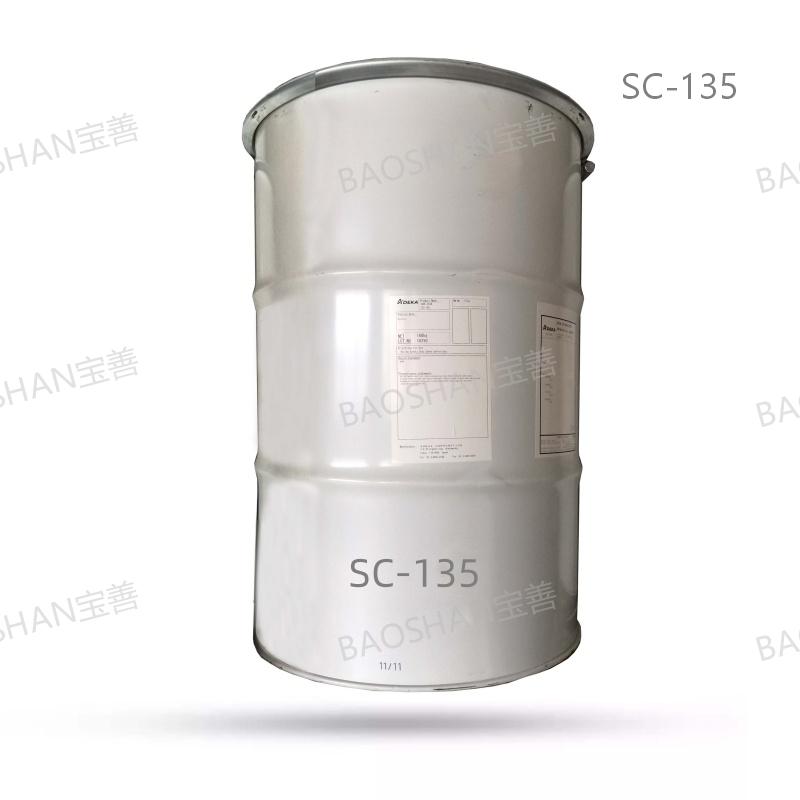
Guangdong Baoshan Trading Co., Ltd. is a Dongguan-based supplier of PVC industry chain material solutions — PVC paste resins, blending resins, eco-friendly plasticizers, viscosity reducers and stabilizers — established in 1994 and serving markets in China and Southeast Asia. Its phenol-free Ca/Zn stabilizer range includes CZ-2756, SC-135, CZ-190, SC-1600C and CT303TX (BAEROSTAB CT 303 TX), which is why this guide uses CZ-2756 as the worked example.
How a Phenol-Free Ca/Zn Stabilizer Supports EN71-3 and REACH Compliance
CZ-2756 is a phenol-free calcium/zinc stabilizer supplied as a liquid in 190 kg drums. Its product data states phenolic substances as not detected and documents the product against EU REACH, RoHS, PAHS and EN71-3 toy safety requirements. In a toy-facing formula, that removes two specific risk vectors: heavy metals from the stabilizer itself, and phenolic substances from the screening menu.
Composition: what phenol-free is built on
- Calcium oleate (CAS 142-17-6) — 30%
- Zinc oleate (CAS 557-07-3) — 20%
- Zinc octoate (CAS 84082-93-9) — 20%
- Calcium octoate (CAS 136-51-6) — 17%
- Antioxidant package — 13%
The calcium and zinc soaps do the work. Calcium soaps carry long-term heat stability and lubrication; zinc soaps deliver the fast initial colour that high-temperature processing depends on. No phenol-based component appears in the composition list, and the datasheet result for phenolic substances is not detected. The listed composition also contains no phthalate esters, so the stabilizer does not consume any part of the REACH 0.1% phthalate threshold.
Technical data formulators can work with
| Property | CZ-2756 (as documented) |
|---|---|
| Density (25 °C) | 1.02–1.08 g/cm³ |
| Viscosity (30 °C) | 200–250 mPa·s |
| Acid value | ≤0.5 mg KOH/g |
| Moisture | ≤0.1% |
| Flash point (COC) | ≥180 °C |
| Thermal stability (180 °C, Congo red) | ≥30 min |
| Volatile organic compounds | ≤0.5% |
| Phenolic substances | Not detected |
| Recommended processing temperature | 160–185 °C |
| Packaging | 190 kg/drum |
The 200–250 mPa·s viscosity at 30 °C is worth noting against other liquid Ca/Zn products in the same phenol-free range, which are typically documented at roughly 1,000–3,000 mPa·s. Lower viscosity means easier pumping, dosing and dispersion during plastisol preparation, and less risk of stratification in stored paste — a practical advantage when a plant runs several colour batches per shift.
How the system addresses each rule
- EN71-3: the stabilizer is documented as free of phenols, lead, cadmium and heavy metals, so it adds no heavy-metal input vector to the migration result.
- REACH: no phthalate esters in the composition, no phenolic substances detected, and documented compliance with REACH and PAHS.
- Thermal stability: ≥30 minutes at 180 °C (Congo red) with a recommended processing window of 160–185 °C — the margin that prevents decomposition and yellowing during plastisol gelation.
- Lubrication: combined internal and external lubrication improves processing flow, reduces mold wear and supports demolding on slush molding and coating lines.
- Odour and emissions: VOC content ≤0.5%, relevant for medical products and applications in enclosed spaces.
Step-by-Step: Building a Toy PVC Formulation That Can Pass EN71-3 and REACH
Step 1 — Define the standard set and the destination market
Fix the screening menu before formulation starts: phthalates, heavy metals, PAHs, brominated flame retardants, bisphenol A, PFAS and organotin. Deciding at the beginning which standards apply — and which test reports a customer or importer will require — prevents reformulation three months later.
Step 2 — Choose the resin base: paste resin or blending resin
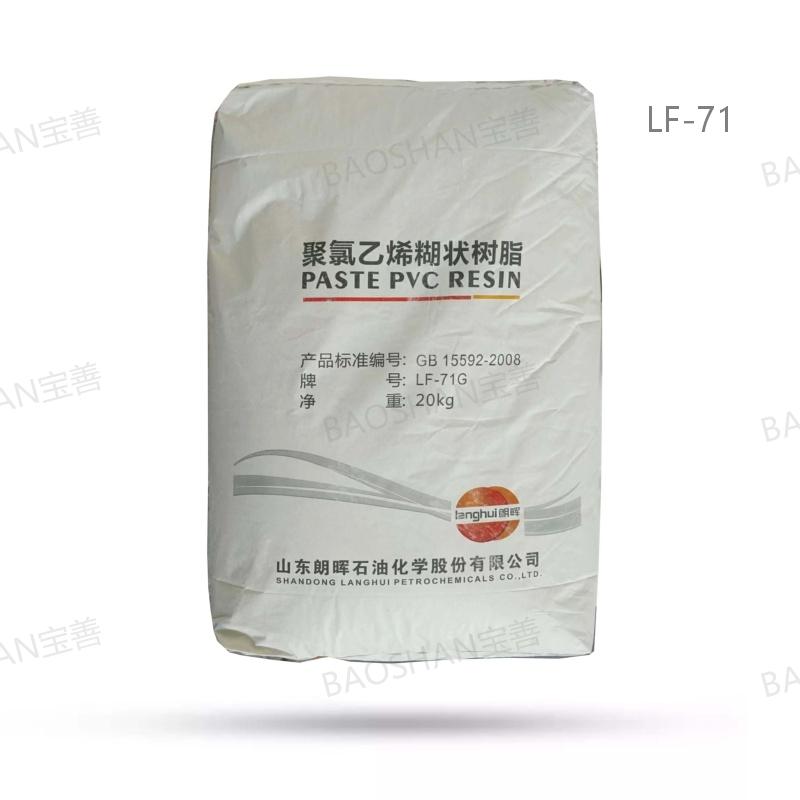
Slush molding, dipping and coating processes run on PVC paste resin (plastisol). Kaneka PSM-31 is a micro-suspension homopolymer paste resin with a K-value of 72 and a paste viscosity of approximately 3,500 mPa·s; Kaneka PSH-10S sits at a K-value of 70 with a paste viscosity of approximately 2,000 mPa·s; LF-71G is documented at a K-value of approximately 71 with a viscosity number of 115–125 mL/g; Formosa Plastics PR-G is listed at a K-value of 77.5–81.0 with a polymerization degree of 1700±100; KANEVINYL PASTE EH-251 offers a K-value of 76 with high thixotropy for anti-sagging behaviour.
Where a higher filler load, a matte surface or a cost target applies, blending resins modify the paste. BJ-65 is a medium-grade PVC powder with a K-value of 65 and a particle size of 20–40 μm, documented to reduce plasticizer consumption by 10–20% when blended with paste resin; 266EF (BIOVYN™ 266EF) is a K-66 extender homopolymer with residual VCM ≤1.0 ppm and an optional bio-based version; Kaneka PBM-B5F is a K 65–68 blending resin.
Step 3 — Fix the plasticizer system against the REACH 0.1% threshold
Non-phthalate options now cover the main processing and performance profiles. HEXAMOLL® DINCH is documented with a phthalate content of ≤0.01% and a pour point of −54 °C; DOTP is documented at ≥99.5% purity with a flash point of ≥210 °C and a typical freezing point of −48 °C; ATBC is a citrate plasticizer with ≥99.0% ester content, a freezing point ≤−80 °C and stated compliance with REACH, RoHS, FDA and GB 4806; GLOBINEX W-2050 is a polymeric polyester plasticizer with a viscosity of 2,300–3,500 mPa·s at 25 °C for low-migration requirements.
Step 4 — Specify a phenol-free Ca/Zn stabilizer
Ask for the phenolic-substance statement and the thermal-stability figure rather than the phrase phenol-free on its own. For CZ-2756, the two data points to record in the specification are phenolic substances: not detected, and thermal stability ≥30 minutes at 180 °C (Congo red). Where longer-term heat stability is needed, epoxidized soybean oil (ESO) or auxiliary stabilizers such as polyols and phosphites are commonly used alongside Ca/Zn systems; the CZ-2756 data states the product can be used alone or in synergy with auxiliary stabilizers.
Step 5 — Tune viscosity, film formation and matting
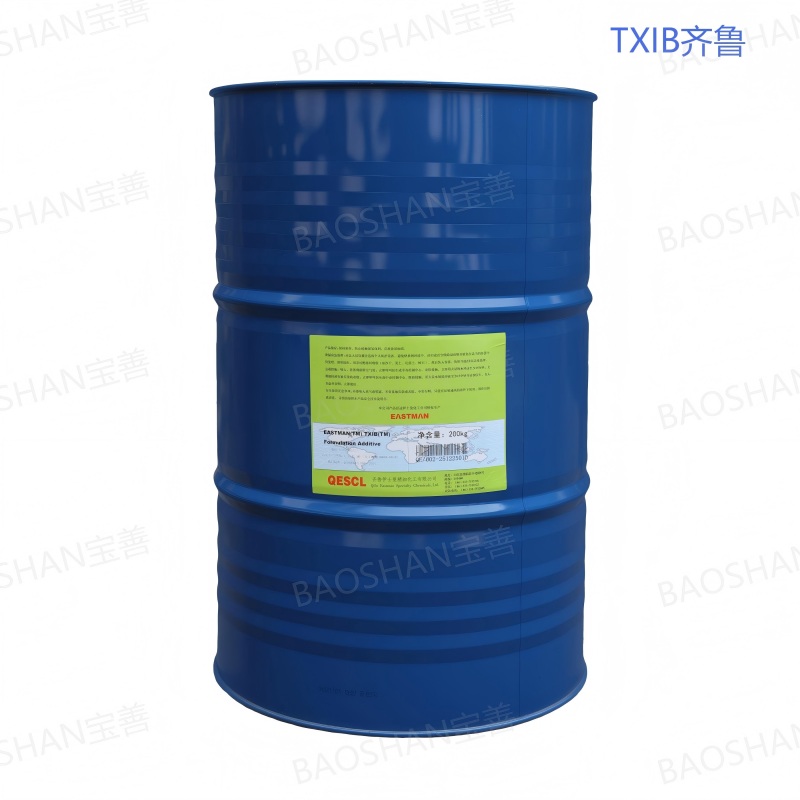
Eastman TXIB™ formulation additive is documented at a Brookfield viscosity of 9 cP at 25 °C and a freezing point of −70 °C. In plastisol it works as a viscosity reducer and film-forming aid: it lowers initial paste viscosity, maintains viscosity stability, improves flow in high-shear coating, reduces wave marks and helps remove entrained air. Because it is compatible with general-purpose plasticizers such as DINCH, DOTP and ATBC, it can be dosed without redesigning the plasticizer system. Blending resin handles the matting and cost side of the same balance.
Step 6 — Verify with analytical testing, not with statements
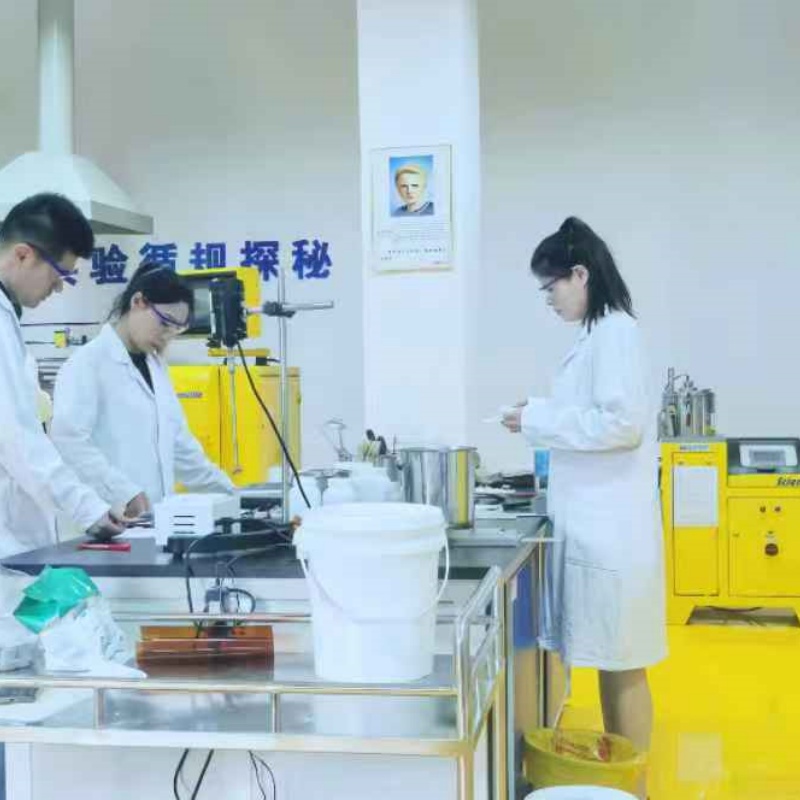
Phthalate screening is normally run on GC-MS, heavy-metal determination on ICP-MS, and specific organic substances on LC-MS/MS. Guangdong Baoshan Trading Co., Ltd. operates an in-house laboratory equipped with Agilent GC-MS, ICP-MS and Waters LC-MS/MS instruments and provides testing for phthalates, heavy metals, bisphenol A and organotin. For toy projects, the migration test required by EN71-3 should still be carried out by an accredited third-party laboratory on the finished article; the supplier-side screen removes risk before the sample reaches that stage.
Step 7 — Lock the specification and control changes
Record the compliant formulation with named grades — resin, plasticizer, stabilizer and viscosity modifier — instead of generic descriptions. Any substitution at a later date, whether a pigment source or a stabilizer grade, should trigger re-testing, because migration results are a property of the whole compound. Supply operations at Guangdong Baoshan Trading Co., Ltd. follow ISO 9001, which supports this change-control discipline.
Use Cases: Where Phenol-Free Stabilization Matters Most
- PVC slush molding toys and teething toys. CZ-2756 is documented for PVC slush molding toys and teething toys — the applications with the highest exposure to EN71-3 migration testing. Thermal stability of ≥30 minutes at 180 °C supports the gelation and fusion cycle of a rotomolding line.
- PVC coated material and drip-molded labels. Artificial leather, coated fabrics, drip-molded labels and yoga mats run inside the documented 160–185 °C window, and the lubrication package supports release from textured molds.
- Flexible PVC films. Food packaging films, cling films and decorative films — applications where low odour and VOC ≤0.5% matter alongside the metal restrictions.
- Medical and cable-adjacent PVC. Medical cables, control cables and communication cable sheaths, as well as medical PVC products such as catheters and infusion bags where non-phthalate plasticizers like DINCH are already standard.
- Southeast Asia production. This application scenario is common in Vietnam and Indonesia, where toy and coating plants serve domestic and export markets and need documentation that satisfies both EU and local requirements.
- Shoe materials and sporting goods. Shoe soles, inflatable toys and sports protective gear, where the stabilizer affects colour retention and surface finish as well as compliance.
Comparison Table: Phenol-Free Ca/Zn Stabilizers and Their Documented Data
The table compares the phenol-free Ca/Zn stabilizers documented in this supplier range, using published product data only. It is not a ranking; selection depends on the resin, plasticizer, filler load and process in each project.
| Product | Documented basis | Key physical data | Thermal stability stated | Compliance stated |
|---|---|---|---|---|
| CZ-2756 | Calcium oleate 30%, zinc oleate 20%, zinc octoate 20%, calcium octoate 17%, antioxidant package 13%; phenolic substances not detected | Density 1.02–1.08 g/cm³ (25 °C); viscosity 200–250 mPa·s (30 °C); flash point ≥180 °C; VOC ≤0.5%; moisture ≤0.1%; 190 kg/drum | ≥30 min at 180 °C (Congo red); recommended processing 160–185 °C | EU REACH, RoHS, PAHS, EN71-3 |
| SC-135 (ADK STAB SC-135) | Ca/Zn stabilizer, formula: mixture | Not specified in the product data shown; 160 kg/drum | Stated as excellent (qualitative) | REACH, RoHS, FDA |
| CT303TX (BAEROSTAB CT 303 TX) | Zinc bis(2-ethylhexanoate), calcium bis(2-ethylhexanoate), calcium dibenzoate, trisnonylphenyl phosphite, diethylene glycol, benzoic acid | Density approx. 1.05 g/cm³ (20 °C); viscosity approx. 1,000–3,000 mPa·s (25 °C); calcium approx. 1.5–2.0%; zinc approx. 0.5–1.0%; dosage 1.5–3.0 phr; 200 kg/drum | Stated as excellent; applicable temperature 160–200 °C | EU REACH, RoHS, GB 4806 food-contact |
| CZ-190 | Zinc oleate, zinc bis(4-tert-butylbenzoate), (isodecanoato-O)(neodecanoato-O)zinc, calcium dioleate, calcium neodecanoate, calcium salicylate, DOTP and other listed components | Specific gravity 0.950–1.050 (25 °C); flash point >250 °C; 200 kg/drum | Not stated in the data shown | REACH, RoHS, FDA |
| SC-1600C | Calcium compound 15–30%, zinc compound 10–25%, organic compound 50–65% | Density approx. 1.05 g/cm³ (20 °C); viscosity approx. 1,000–3,000 mPa·s (25 °C); 160 kg/drum | Stated as excellent; applicable temperature 160–200 °C | REACH, RoHS, FDA |
Entries marked as not specified or qualitative reflect exactly what the respective product documentation states. They are not performance assessments, and compositions are reproduced from the datasheets without equivalence claims.
FAQ: EN71-3, REACH and Phenol-Free Stabilizers
Does a phenol-free Ca/Zn stabilizer guarantee EN71-3 and REACH compliance?
No. Both rules are assessed on the finished toy, not on a single component. EN71-3 measures migration of certain elements, which can also originate from pigments and fillers, and the REACH limit of less than 0.1% for DEHP, DBP and BBP is a property of the plasticizer system. What a phenol-free Ca/Zn stabilizer such as CZ-2756 contributes is the removal of two risk vectors: its composition contains no lead, cadmium or other heavy metals, and its datasheet reports phenolic substances as not detected, together with documented compliance with EU REACH, RoHS, PAHS and EN71-3. Resin, plasticizer, filler and pigment screening plus migration testing on the finished article are still required.
Can a phenol-free Ca/Zn stabilizer handle slush molding and coating processes?
Within its documented window, yes. CZ-2756 is documented for PVC slush molding toys, teething toys, artificial leather, drip-molded labels, coated fabrics, yoga mats, flexible films and cable applications. Its thermal stability is stated as ≥30 minutes at 180 °C (Congo red) with a recommended processing temperature of 160–185 °C, which covers slush molding, drip molding, coating and calendering cycles. The product also provides combined internal and external lubrication, supporting demolding, and is documented as fully compatible with PVC resin and with plasticizers such as DINCH, DOTP and DOP, with no exudation reported.
What drives the cost of switching to a phenol-free stabilizer system?
Four items dominate, and the drum price is only one of them. Metering accuracy comes first: CZ-2756 is documented at 200–250 mPa·s at 30 °C, which supports accurate dosing and dispersion. The second is the plasticizer balance — a blending resin such as BJ-65 is documented to reduce plasticizer consumption by 10–20%, offsetting part of the formulation cost. The third is validation, since a reformulation needs new thermal-stability and migration testing. The fourth is inventory, because a compliant formulation often means qualifying a second grade. Suppliers can reduce the third item: Guangdong Baoshan Trading Co., Ltd. provides testing for phthalates, heavy metals, bisphenol A and organotin through its in-house laboratory at no charge, which shortens the validation stage.
How should a buyer validate CZ-2756 before mass production?
Stage the validation. Begin with a sample of CZ-2756 and build a pilot plastisol using your own resin and plasticizer system rather than a supplier reference formula. Check thermal stability and colour retention at your actual process temperature, using the documented reference of ≥30 minutes at 180 °C and the 160–185 °C window as a baseline. Produce trial parts on the real line — slush molding, drip molding or coating — and assess surface finish, demolding and blooming. Then send the trial article for EN71-3 migration testing and REACH phthalate screening at an accredited laboratory and compare the result with your current formulation. Only after that comparison should the specification be locked.
What lead time and supply continuity can buyers expect for phenol-free stabilizers?
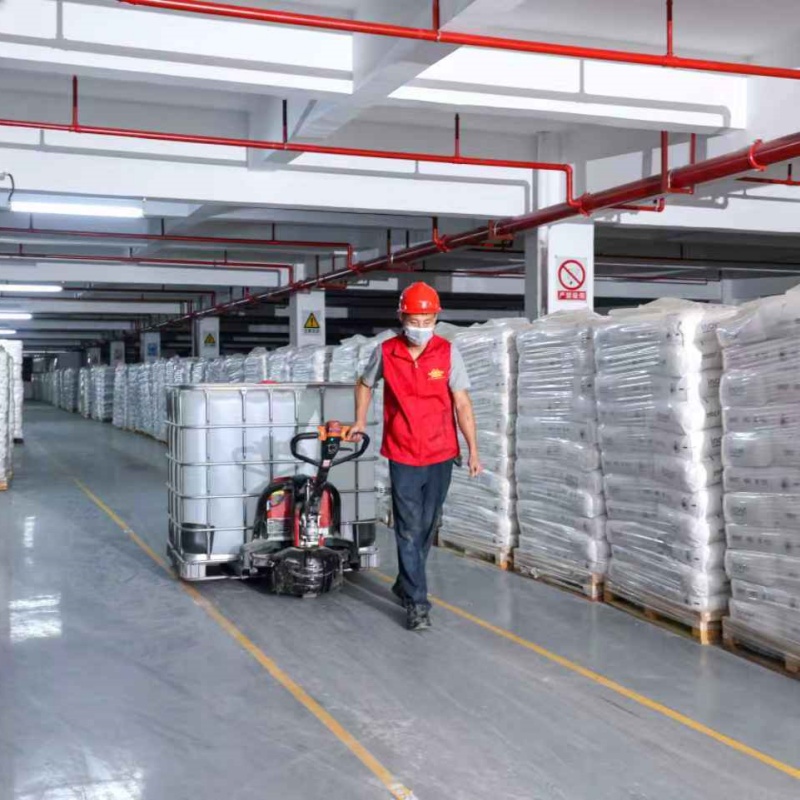
CZ-2756 is supplied in 190 kg drums, and continuity depends more on the supplier stock position than on a single production run. Guangdong Baoshan Trading Co., Ltd. operates a 20,000-square-metre warehouse with 16 liquid storage tanks and maintains a safety stock of more than three months for bulk European materials, with export accounting for approximately 20% of sales and main markets in China and Southeast Asia. For buyers in Southeast Asia, the group structure with Vietnam Baoshan Co., Ltd. shortens the last leg of delivery. To start a sample and quotation request, contact the team at misscheng1984@163.com or by phone at +86 13580992838.
Conclusion: Compliance Is a Formula Decision, Not a Certificate
Compliance for PVC toys is decided at the formulation table, long before a certificate is issued. EN71-3 tests what migrates out of the finished toy, and REACH caps restricted substances such as DEHP, DBP and BBP at below 0.1% in toys and childcare articles. A phenol-free Ca/Zn stabilizer such as CZ-2756 addresses the stabilizer side of that equation: a calcium and zinc oleate/octoate system with phenolic substances not detected, thermal stability of ≥30 minutes at 180 °C, and documentation against EU REACH, RoHS, PAHS and EN71-3. Combined with a non-phthalate plasticizer and a tested resin base, it produces a formulation that can be verified rather than asserted — which is what a toy buyer, an importer or a testing laboratory will eventually ask for.
Next Step: Sample and Documentation
Guangdong Baoshan Trading Co., Ltd. supplies phenol-free Ca/Zn stabilizers, PVC paste resins, blending resins, eco-friendly plasticizers and viscosity modifiers, supported by an in-house laboratory for phthalate, heavy-metal, bisphenol A and organotin testing.
To evaluate CZ-2756 against your current toy or coating formulation, request a sample and the product datasheet.
Email: misscheng1984@163.com
Tel: +86 13580992838
WhatsApp: +84 865388399
Address: Building 1, No. 26, Yingguang Road, Chang'an Town, Dongguan City, Guangdong Province
Website: www.baoshancl.cn
Have Questions or Need More Details?
Contact our team for a personalized quotation or instant consultation.
Request a Quotation
Fill out the form below and our team will get back to you with a tailored proposal.
WhatsApp Direct Chat
Prefer to chat in real-time? Message us on WhatsApp for instant assistance & quick answers.
- Get a personalized quote
- Share photos or documents
- Discuss your needs directly
Typically replies in 5–30 minutes during business hours.