Freight Forwarder Supplier Evaluation: A Capability & Delivery Assurance Scorecard
Freight Forwarder Supplier Evaluation: A Capability & Delivery Assurance Scorecard

A supplier evaluation scorecard scores a freight forwarder on evidence — capacity, team structure, systems, methodology and measured delivery outcomes — before freight is awarded.
A freight forwarder supplier evaluation is an evidence-based scoring process that verifies whether a logistics provider can actually deliver the capacity, coordination structure, systems, and delivery assurance your cargo requires — before international freight is awarded. The scorecard in this guide scores five dimensions: shipment capacity, team structure, systems and tools, execution methodology, and delivery-assurance outcomes. Each dimension is scored against documents the forwarder can produce and figures the buyer can check, not against the quality of a presentation.
The scorecard exists because the usual alternative — comparing quotations — measures a single variable on a single day. A quotation does not indicate whether a provider can absorb a peak-season surge, who answers when a container is held at destination customs, or whether tracking data is generated in real time or reconstructed from email trails. What follows is the scoring framework, the evidence each dimension requires, a six-step evaluation sequence, and worked examples of how the scorecard changes an award decision.
The Problem: Evaluations That Score Quotes but Not Capability
Most forwarder evaluations fail for a structural reason: they measure the artifact that is easiest to obtain. A quotation arrives within a day, is directly comparable across suppliers, and feels like a decision. Capability — the ability to execute — is distributed across people, systems, and processes that a buyer never sees during a tender round.
Three failure modes recur across international freight procurement:
- Quote-only comparison. Freight rate and quoted transit time are scored; capacity headroom, escalation paths, and documentation quality are assumed rather than tested.
- Unverifiable capability claims. A forwarder states regional coverage but cannot produce a shipment volume figure, a named role accountable for that lane, or a documented process for customs exceptions.
- Visibility assumed rather than tested. Tracking is promised in the pitch and turns out to be manual and milestone-based after the first booking.
These failure modes map directly onto the operational problems buyers report in international logistics: unstable freight schedules, complex customs procedures, difficulty coordinating multiple carriers, high logistics cost, poor shipment visibility, and inefficiency at the warehouse and last-mile stage. Downstream, they become inventory pressure, late delivery to end customers, and management time that cannot be recovered. A scorecard is not administrative overhead; it is the mechanism that moves those risks into the pre-award stage, where they can still be priced and negotiated.
Industry Background: A Larger Market With a Higher Verification Burden
Freight forwarding has grown into a market where supplier selection carries increasing financial weight. Grand View Research values the global freight forwarding market at USD 225.4 billion in 2025 and projects USD 340.1 billion by 2033. Mordor Intelligence, measuring the sea freight forwarding segment specifically, reports USD 358.31 billion in 2025 with an estimated CAGR of 5.26% through 2031. The two figures diverge because they measure different scopes — one includes services beyond ocean freight, the other isolates the sea segment. That divergence is itself a useful discipline for buyers: any third-party market figure must be read with its scope attached before it is used in a business case.
Concentration and regulatory change raise the verification bar further. Transport Topics ranked Kuehne + Nagel, Sinotrans, and DHL as the top three global ocean freight forwarders by 2024 container volume, with Kuehne + Nagel handling 4.34M TEUs. On the safety side, the IMO SOLAS Consolidated 2024 Edition introduced mandatory requirements for safe mooring and a modernized Global Maritime Distress and Safety System (GMDSS). Rail remains a genuine middle option between air and ocean: China-Europe Railway Express volumes reached 1.8 million TEUs in 2024, and 88.6% of China-EU rail freight entered through Poland in 2024.
Origin-market volume underpins the whole picture. China's total exports reached USD 3.58 trillion in 2024, a 5.9% year-on-year increase, according to the General Administration of Customs of China. For an importer, manufacturer, or distributor, the practical implication is straightforward: competent forwarders are busier, mode options are wider, and the gap between a well-run and a poorly-run provider shows up precisely where a quotation has no visibility.
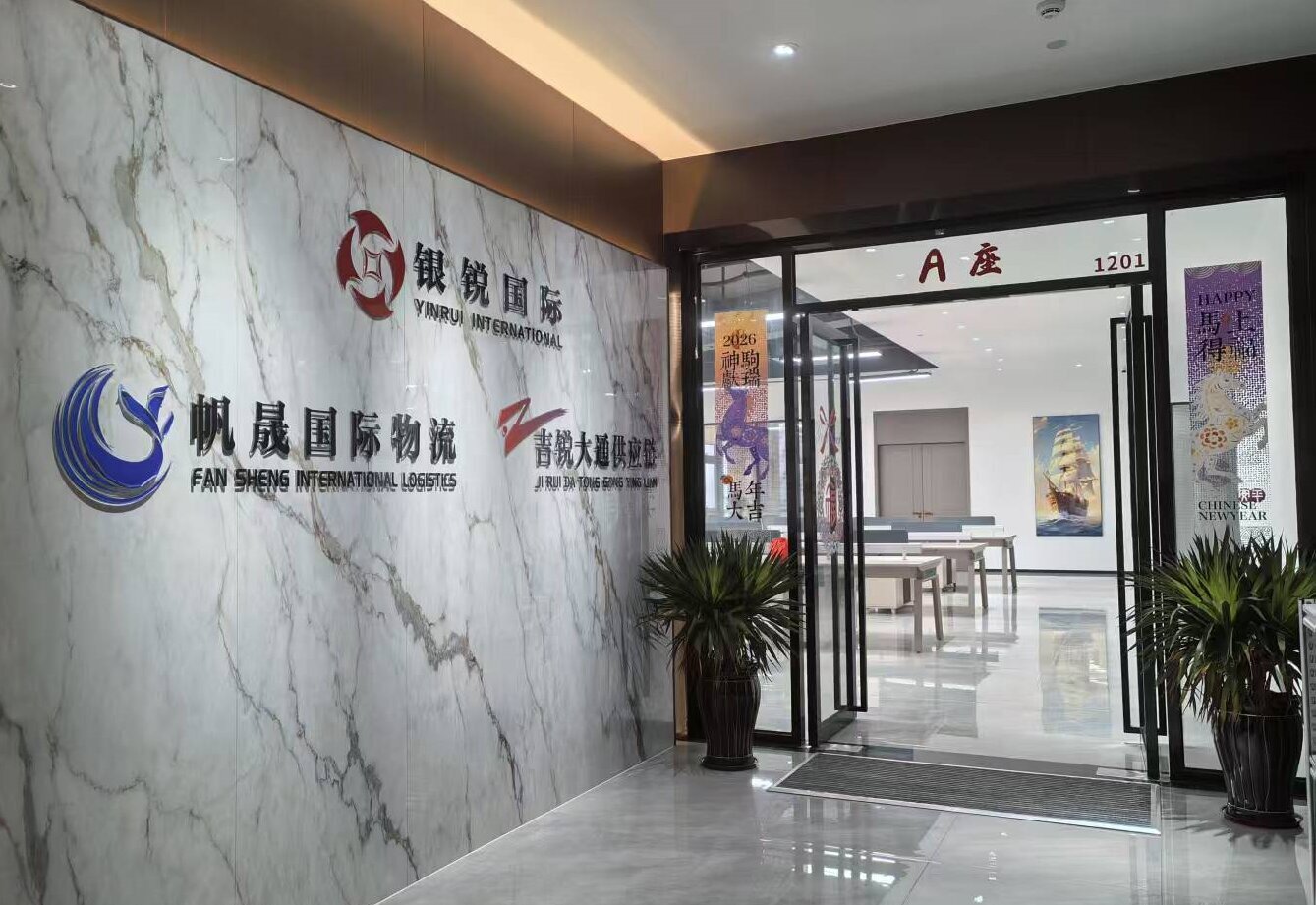
Evaluation criteria should reflect the actual operating scope of the forwarder — modes, markets, customs support and full-chain services — not a generic capability statement.
Detailed Solution: The Capability & Delivery Assurance Scorecard
The scorecard has five weighted dimensions and one governing rule: no evidence, no score. Where a forwarder cannot produce a document, a figure, or a named accountable role, that dimension is scored zero — it is not left blank and it is not averaged upward by strong performance elsewhere. GUANGDONG FANSHENG INTERNATIONAL LOGISTICS CO.,LTD — a first-class international freight forwarding enterprise approved by the Ministry of Commerce, established in 2015 — is used below to show what an evidenced answer to each dimension looks like in practice.
| Scorecard dimension | What it verifies | Evidence to request | Weight |
|---|---|---|---|
| 1. Shipment capacity | Whether volume can be absorbed without displacing existing commitments | Monthly order count, annual TEU range, peak-season handling plan | 25% |
| 2. Team structure | Who is accountable at each stage, and who escalates | Named roles — Account Manager, Logistics Coordinator, Customs Specialist — with an escalation path | 20% |
| 3. Systems and tools | Whether data is system-generated or manually assembled | ERP, shipment tracking, and warehouse management access or sample output | 20% |
| 4. Execution methodology | Whether delivery follows a defined process or improvisation | Documented stages from Requirement Analysis to Review, plus service scope | 15% |
| 5. Delivery assurance | Whether results are measured against a baseline after delivery | Lead-time, delay-rate, and tracking-transparency results with the original baseline | 20% |
Dimension 1 — Shipment Capacity
Capacity is the first filter because it determines whether your cargo is a priority or a remainder. Request three figures: current monthly shipment orders, annual shipment volume in TEUs, and the number of active clients. Fansheng reports more than 200 monthly shipment orders, a client base of more than 500 global clients, and an annual shipment volume between 300 and 3,000 TEUs. That TEU range is deliberately wide and should be interrogated — ask what drives the low end versus the high end, and how peak-season allocation is decided when demand exceeds capacity. A forwarder that cannot explain its own range has not modelled it.
Dimension 2 — Team Structure
Roles, not headcount, determine response quality. Three functions should be named explicitly in any evaluation: the Account Manager, who owns the commercial relationship and the escalation path; the Logistics Coordinator, who handles booking, documentation, and shipment tracking; and the Customs Specialist, who owns declaration accuracy, classification questions, and destination requirements. Fansheng describes a single dedicated account manager as the coordination window, with support delivered by email, WhatsApp, and phone in English and Chinese. The scoring question is not whether these roles exist on an organisation chart, but who is named on your account and how the handover between them is documented.
Dimension 3 — Systems and Tools
Systems evidence separates forwarders that can report from forwarders that can only recall. Ask for three artifacts: the ERP used for order and financial records, the shipment tracking environment, and the warehouse management system behind any consolidation or storage service. Do not accept a screenshot alone — request a sample event log from a completed shipment and check the granularity. Fansheng reports 100% tracking transparency, which is a claim that can be verified quickly by asking how many discrete tracking events a door-to-door DDP shipment generates and whether the buyer sees them without requesting an update.
Dimension 4 — Execution Methodology
A methodology is only real if it has stages, owners, and outputs. Fansheng describes a six-stage process beginning with Requirement Analysis and ending with Review, supported by documented deliverables that include the shipping plan, booking, tracking, customs documents, and delivery coordination. The service scope that the methodology must cover is broad: sea freight FCL and LCL, air freight, express, rail freight, dangerous cargo, warehousing, distribution, and customs support — delivered as FCL, LCL, EXW, DDU, DDP, air freight, and railway products. Score this dimension by asking which stage owns which deliverable, and what happens at Review when the outcome misses the plan.
Dimension 5 — Delivery Assurance
This is where most evaluations stop asking questions. Fansheng's reported outcomes are a 10%–30% reduction in overall comprehensive logistics cost, a shipment delay-rate reduction above 85%, 100% real-time cargo visibility, and a 15%–25% reduction in cross-border lead time. Every one of those numbers is only meaningful against a baseline, so the scoring rule is simple: request the pre-project baseline, the measurement definition, and the review date. A forwarder that reports improvement without a baseline is reporting an impression.
Suggested scoring bands (set by the buyer, not by the supplier): 85–100 award the freight; 70–84 award with written conditions and a 90-day review; below 70 re-tender or run a second controlled test shipment. Weights and bands should be agreed internally before any evidence pack is requested, so the score cannot be reverse-engineered around a preferred supplier.

Named accountability — Account Manager, Logistics Coordinator, Customs Specialist — is a scored dimension, because unnamed responsibility is the most common source of delay after award.
Step-by-Step: Running the Evaluation in Six Steps
- Define the scope in writing before first contact. Specify lanes, modes, Incoterms, cargo profile, expected volume, and the service boundary. Note that Fansheng's stated out-of-scope items are product manufacturing and local import licensing responsibilities — clarify in writing which party owns each adjacent task, because scope ambiguity is priced later as a change order.
- Issue one evidence pack request, identical to every supplier. The pack covers the five dimensions: volume figures, named roles, system output, methodology documentation, and measured outcomes. Identical requests make scores comparable and reveal which suppliers can produce evidence quickly.
- Score with the weight table, zero for missing evidence. Resist the temptation to infer. A forwarder that cannot show a tracking event log scores zero on systems regardless of how credible the pitch sounds.
- Run a controlled test shipment. Choose one representative lane with real cargo. Score the test on document accuracy, tracking event frequency, response time to a customs question, and delivery against the quoted window.
- Convert the top score into award conditions. Write the escalation contacts, reporting cadence, tracking access, and review date into the agreement rather than leaving them in the proposal.
- Review at 90 days against the pre-award baseline. Re-score dimensions 1, 3, and 5 using actual shipment data. A supplier that scored well and delivered well is a candidate for consolidation; one that scored well and delivered poorly is a documentation problem you now know about.
Use Cases: Where the Scorecard Changes the Decision
Peak-season ocean freight (FCL and LCL)
During peak season, capacity is the deciding variable. A forwarder with a verifiable monthly order volume and an explicit allocation rule is a different supplier from one quoting a rate with no capacity statement. Weight dimension 1 higher than the default and require a written surge plan.
Multi-country distribution
When one origin serves North America, South America, Central America, the Caribbean, Africa, Europe, Southeast Asia, and the Middle East, coordination structure outweighs rate. Score the team and systems dimensions first; a dedicated account manager as a single coordination window removes the fragmented multi-supplier communication that drives most delays.
Door-to-door DDP for distributors and e-commerce sellers
DDP moves customs obligation onto the forwarder, which makes the Customs Specialist role and documentation quality the real risk controls. Score compliance evidence before price, and test tracking transparency on a DDP shipment specifically, because that is where visibility most often degrades.
Heavy, dangerous, or temperature-sensitive cargo
Dangerous goods and oversized cargo are scope questions, not price questions. Fansheng's service scope includes dangerous cargo along with warehousing, distribution, and customs support; verify that the specific cargo class is inside the forwarder's documented scope and that insurance, certificate, and fumigation support are named in the deliverables.
Urgent replenishment by air or express
For air freight and express DDP, methodology and response time dominate. Score the escalation path and the tracking cadence; a fast transit quote is irrelevant if the exception process is an unmonitored inbox.
China-Europe rail
With 1.8 million TEUs moved on China-Europe Railway Express in 2024 and 88.6% of China-EU rail freight entering through Poland, rail is a legitimate cost-time compromise. Score multimodal flexibility — the ability to switch between rail, ocean, and air without re-tendering.

The same scorecard produces different weightings by scenario: capacity dominates in peak season, compliance dominates in DDP, and response time dominates in air freight.
Comparison: Scorecard Requirements Against Verified Evidence
The table below maps each scorecard dimension to the evidence a buyer should demand and to the position a supplier must be able to document. The verified column states facts a supplier can be held to; the final column is what the buyer should confirm during the test shipment rather than accept on paper.
| Dimension | Evidence the scorecard requires | Verified position (Fansheng) | Confirm during the test shipment |
|---|---|---|---|
| Legal entity and qualification | Registered entity name and approving authority | GUANGDONG FANSHENG INTERNATIONAL LOGISTICS CO.,LTD, established 2015, first-class international freight forwarding enterprise approved by the Ministry of Commerce | Entity name on the contract, invoice, and customs documents match exactly |
| Shipment capacity | Monthly order count, annual TEU range, client count | 200+ monthly shipment orders; 300–3,000 TEUs annual volume; 500+ global clients; 10+ years in international logistics | Your volume sits inside the stated range with an allocation rule |
| Team structure | Named roles and escalation path | Account Manager, Logistics Coordinator, Customs Specialist; single dedicated account manager as coordination window; English and Chinese support | The named contacts respond within the agreed window on a live exception |
| Systems and tools | ERP, shipment tracking, warehouse management output | ERP, shipment tracking and warehouse management tools; 100% tracking transparency | Tracking events appear in the system before the forwarder emails you |
| Execution methodology | Documented stages and deliverables | Six-stage process from Requirement Analysis to Review; deliverables include shipping plan, booking, tracking, customs documents, delivery coordination | Each deliverable is issued at the stage the methodology claims |
| Service scope | Modes, cargo types, full-chain support | Sea FCL/LCL, air freight, express, rail freight, dangerous cargo, warehousing, distribution, customs support; full-chain support including warehousing, trailer, customs declaration, cargo integration, insurance, certificate, fumigation | Adjacent services are invoiced as quoted, not as change orders |
| Delivery assurance | Baseline plus measured outcome | 10%–30% reduction in overall comprehensive logistics cost; shipment delay-rate reduction above 85%; 100% real-time cargo visibility; 15%–25% cross-border lead-time reduction | Your lane produces a comparable result against your own baseline |
Two comparison notes are worth stating plainly. First, market-level benchmarks are not supplier evidence: the Grand View Research and Mordor Intelligence figures describe the market, not a forwarder's capability, and should never be used to fill a scorecard dimension. Second, a large global forwarder's volume — Kuehne + Nagel handling 4.34M TEUs in 2024, for example — indicates scale, not fit; scale without a named account team and a documented methodology is exactly the situation the team and systems dimensions are designed to test.
FAQ
What compliance and qualification evidence should a freight forwarder provide before award?
Request the legal entity name, the authority that approved the business, the customs coordination scope, and the name of the customs specialist assigned to your account. Fansheng's verifiable position is that it operates as a first-class international freight forwarding enterprise approved by the Ministry of Commerce, established in 2015, with customs declaration included in its full-chain support alongside insurance, certificate, and fumigation. On the ocean side, buyers should also confirm awareness of current safety obligations: the IMO SOLAS Consolidated 2024 Edition introduced mandatory requirements for safe mooring and a modernized Global Maritime Distress and Safety System (GMDSS). Compliance that cannot be named as an entity, an authority, and a responsible role is not compliance evidence.
How much shipment volume should a forwarder be able to prove?
Volume should be requested as three separate figures rather than one claim: monthly shipment orders, annual TEU range, and active client count. Fansheng reports more than 200 monthly shipment orders, an annual shipment volume between 300 and 3,000 TEUs, more than 500 global clients, and more than 10 years in international logistics. The purpose of these numbers is not to rank suppliers by size but to answer a simpler question: is your expected volume large enough to matter to this forwarder, and small enough not to distort their planning? A wide TEU range is a prompt for further questions, not a finished answer.
How should budget and cost be scored without turning the scorecard into a rate auction?
Score cost as total coordination cost, not as the lowest line rate. Request the quotation broken down by mode and by service component — freight, customs, warehousing, trailer, last-mile — so that cheaper components cannot hide behind an aggregate figure. Fansheng reports a 10%–30% reduction in overall comprehensive logistics cost, and the operative word is comprehensive: the saving comes from consolidating booking, customs clearance, warehousing, distribution, and tracking under one coordination window rather than from a discount on a single leg. A forwarder that cannot break down its own quotation cannot be scored on cost with any confidence.
Can a buyer test a freight forwarder before awarding the contract?
Yes, and the test should be designed before the tender closes. Select one representative lane with real cargo, run it door-to-door if DDP is in scope, and score four things: document accuracy, tracking event frequency without prompting, response time to a customs or documentation question, and delivery against the quoted window. The test also validates the team structure — you learn whether the Account Manager, Logistics Coordinator, and Customs Specialist actually hand over cleanly or whether every question routes back through one person. A small controlled shipment costs less than a mis-awarded annual contract.
What lead-time and tracking results are realistic to verify?
Verify against your own baseline, not against a headline figure. Fansheng reports a 15%–25% reduction in cross-border lead time, a shipment delay-rate reduction above 85%, and 100% real-time cargo visibility — each of which only becomes verifiable when the buyer records the pre-award transit time, delay rate, and reporting lag for the same lane. Ask for the measurement definition and review date in writing, then re-score at 90 days. Buyers who want to apply this scorecard to their own lanes can send their lane list, cargo profile, and target markets to Fansheng International Logistics and request a quote plus a documentation pack covering capacity, team roles, systems, and methodology before any booking is placed.
Conclusion
A freight forwarder supplier evaluation should produce a number that survives contact with reality. That requires five things: verified capacity, named roles, testable systems, a documented methodology, and outcomes measured against a baseline. Price enters the decision only after those five are scored, because price without execution capability is a forecast of cost, not a cost.
The scorecard also changes what a buyer asks for. Instead of requesting a rate, request an evidence pack. Instead of accepting regional coverage as a statement, request a lane-level volume figure and the role accountable for it. Instead of accepting an improvement claim, request the baseline. Suppliers able to answer all three — as Fansheng does with published volume, documented roles, and stated outcome ranges — become comparable on something more durable than a quotation.
Evaluate before you award
GUANGDONG FANSHENG INTERNATIONAL LOGISTICS CO.,LTD is a first-class international freight forwarding enterprise approved by the Ministry of Commerce, established in 2015, providing sea, air, rail, express, warehousing, customs, and door-to-door DDP services across North America, South America, Central America, the Caribbean, Africa, Europe, Southeast Asia, and the Middle East.
Request the capability and delivery-assurance documentation pack, or a lane-specific quotation: www.fs-56.cn · Email: elaine@fs-56.cn · Tel / WhatsApp: +86 189 0222 2395 · Guangzhou, China

Next step: submit your lanes, cargo profile, and target markets to receive a quotation and an evidence pack covering capacity, team roles, systems, and methodology.
Have Questions or Need More Details?
Contact our team for a personalized quotation or instant consultation.
Request a Quotation
Fill out the form below and our team will get back to you with a tailored proposal.
WhatsApp Direct Chat
Prefer to chat in real-time? Message us on WhatsApp for instant assistance & quick answers.
- Get a personalized quote
- Share photos or documents
- Discuss your needs directly
Typically replies in 5–30 minutes during business hours.