Application Guide: Integrated Logistics for Manufacturing Exporters in Southeast Asia
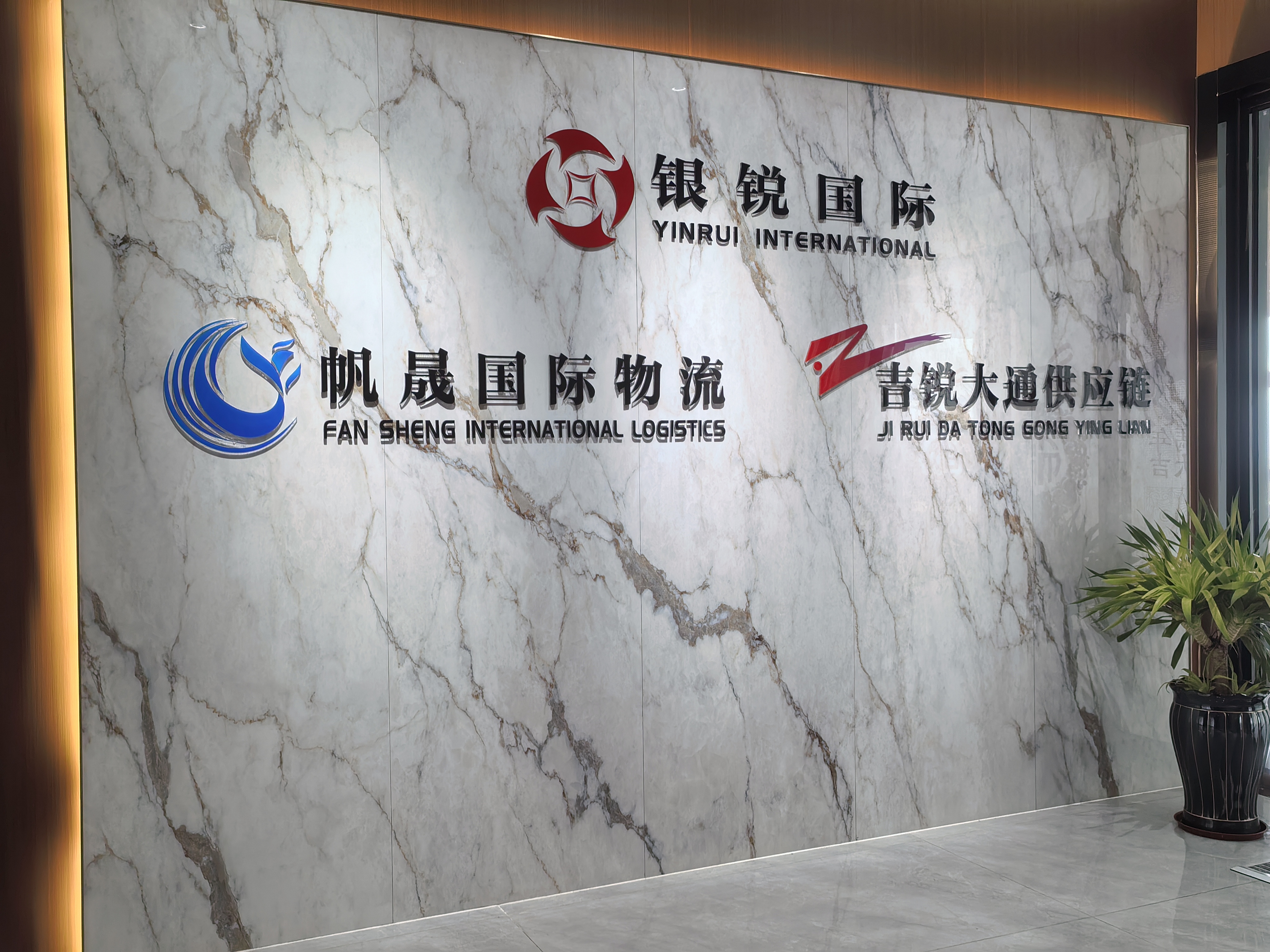
The work was delivered by GUANGDONG FANSHENG INTERNATIONAL LOGISTICS CO.,LTD ("FanSheng International Logistics"), a first-class international freight forwarding enterprise approved by the Ministry of Commerce of China, established in 2015 and headquartered in Guangzhou, China. FanSheng operates as an integrated supply chain provider across sea, air, rail and express freight, with a service scope that also covers warehousing, distribution and customs support. Its website is www.fs-56.cn.
This guide is written for exporters and procurement teams at the research and evaluation stage. You already accept that you need a freight forwarder; the open question is which service model holds up when shipments leave every week or every month and part of the volume is genuinely urgent. The sections below define the problem, place it in market context, describe the integrated solution, break down the actual project execution, and list the constraints you should verify before signing anything.
Problem Definition: Why Frequent Export Shipments Lose Stability
Three symptoms appear repeatedly in integrated logistics projects for importers and exporters: delivery delays, high logistics cost, and low real-time visibility of cargo in transit. They usually appear together because they share one root cause rather than three separate failures.
When sea booking, air booking, warehousing, trailer movement, customs declaration and destination delivery are handled by separate vendors, every handover restarts the planning cycle. The forwarder plans a sailing date without knowing the warehouse cut-off. The warehouse loads a container without knowing the air option was already booked for part of the order. Customs documentation is prepared last, so it becomes the item that determines the departure date. Delays compound because each supplier measures its own step, not the total transit.
In the Southeast Asia project examined here, the diagnosis was specific: shipment planning and fragmented coordination created delays. It was not a capacity shortage and not a missing transport mode. The lane had options; the coordination between them was missing.
Fragmentation also pushes urgency into the wrong place. Complete batches move by air when only a portion of the order is critical, or urgent cargo waits for a consolidation cut-off because the consolidation warehouse is not part of the same planning loop as the forwarder. Both outcomes raise cost without fixing the delivery date that actually mattered.
A frequent shipper therefore needs a different control model: one plan that can mix modes, one accountable coordination window instead of several contacts, and one tracking source that does not require chasing four suppliers for a status update.
Industry Background: What Southeast Asia Export Lanes Look Like in 2026
China's total exports reached USD 3.58 trillion in 2024, a 5.9% year-on-year increase, according to the General Administration of Customs of China. That volume feeds regional production and distribution networks, including Southeast Asia, which is one of the markets covered by FanSheng's global service coverage.
The forwarding market absorbing that flow is large and still expanding. Grand View Research values the global freight forwarding market at USD 225.4 billion in 2025, projected to reach USD 340.1 billion by 2033. Mordor Intelligence sizes the sea freight forwarding segment specifically at USD 358.31 billion in 2025, with an estimated CAGR of 5.26% through 2031. The two figures measure different scopes, which is why they diverge; market-size estimates vary significantly depending on whether road freight and third-party logistics services are included. For a buyer, the practical reading is that ocean capacity remains the volume backbone of export logistics, and air freight remains the premium option for urgency.
Capacity at the top of the ocean forwarding market is concentrated. Transport Topics ranked Kuehne + Nagel, Sinotrans and DHL as the top three global ocean freight forwarders by 2024 container volume, with Kuehne + Nagel handling 4.34 million TEUs in that year. Concentration at this level means very large shippers compete for carrier space on scale; mid-market manufacturing exporters usually need a different advantage — integrated planning across modes and a single point of accountability.
Compliance has also moved. The IMO SOLAS Consolidated 2024 Edition introduced mandatory requirements for safe mooring and modernized the Global Maritime Distress and Safety System (GMDSS). These are vessel-side and carrier obligations rather than shipper obligations, but they shape the documentation and scheduling environment in which your cargo moves, and they are a reminder that the safety and regulatory layer behind a sailing date is not static.
None of this changes the export problem. It only narrows the realistic answer: availability of modes is rarely the constraint, while coordination across modes is.
The Detailed Solution: What an Integrated Multimodal Service Covers
An integrated global freight forwarding service replaces the multi-vendor chain with a single one-stop supply chain scope. FanSheng's documented service scope covers sea freight FCL and LCL, air freight, express, rail freight, dangerous cargo, warehousing, distribution and customs support, delivering full-link integrated cross-border logistics across sea, air, rail and express modes.
The deliverables are contractual and specific: a shipping plan, booking, tracking, customs documents, and delivery coordination. The service objective is stated as reducing logistics complexity and improving delivery efficiency — which is precisely what the Southeast Asia project measured.
Operational capacity behind the service is documented as follows:
- Shipment capacity handles more than 200 monthly shipment orders and serves more than 500 global clients.
- Industries served include manufacturing, retail, industrial equipment, e-commerce and consumer goods.
- The team brings more than 10 years of combined experience in international logistics.
- Core expertise covers integrated global logistics coordination, multimodal transportation and cross-border supply chain management.
- Technical capabilities include shipment tracking systems, cargo routing optimization and warehouse coordination, supported by ERP, shipment tracking and warehouse management tools plus a self-developed digital logistics workflow system.
- Certifications include approved freight forwarding qualifications.
- Service coverage is worldwide, with language capability in English and Chinese and support through email, WhatsApp, phone and a dedicated account manager.
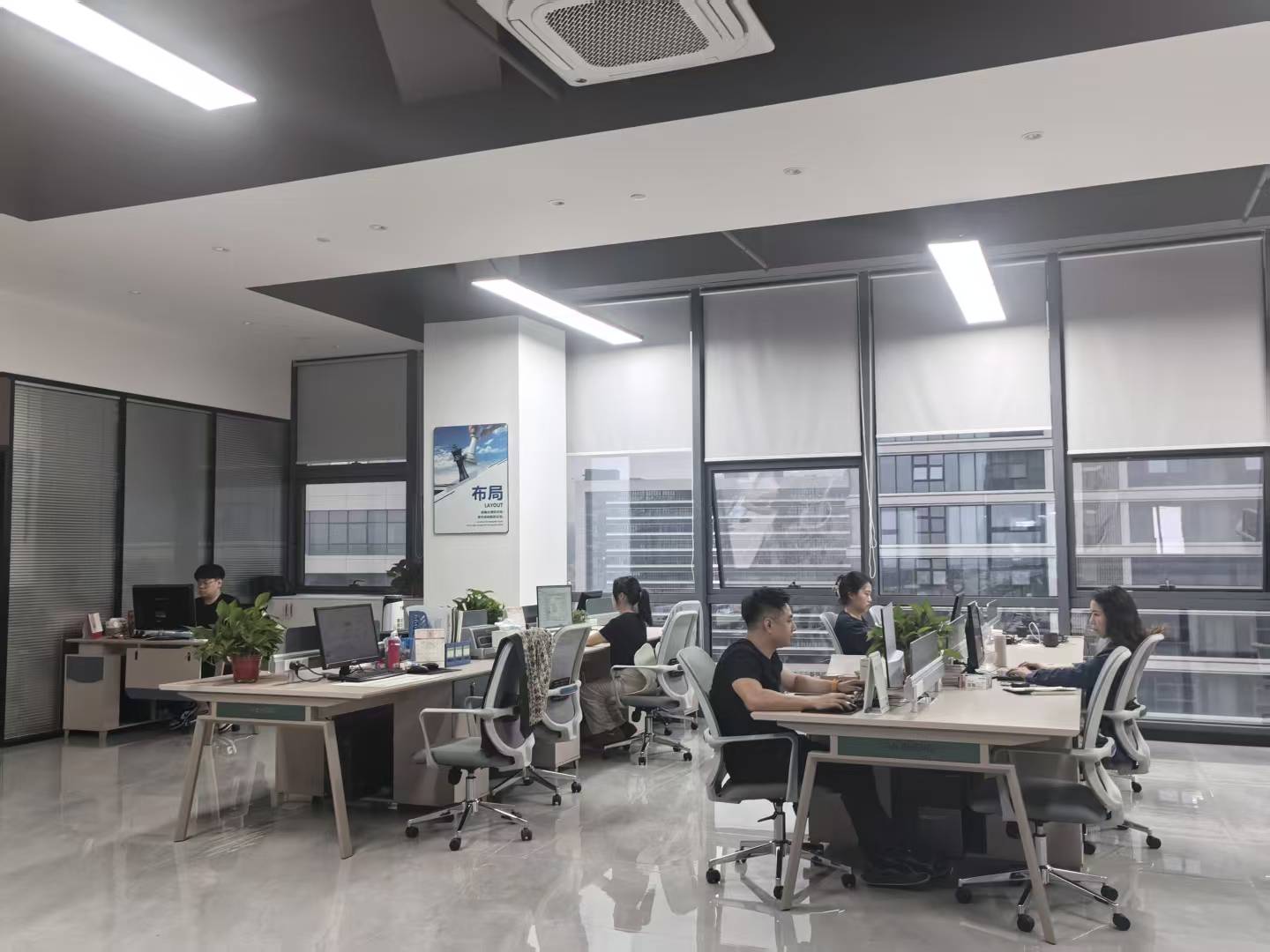
Two scope boundaries matter during evaluation. First, the integrated service explicitly excludes product manufacturing and local import licensing responsibilities. Second, plan design is a defined process rather than an instant quotation: customized timelines depend on project scale and shipping route, with plan design within 3–7 working days and delivery windows of 7–45 days depending on route and mode. A forwarder that promises a multimodal plan in the same hour it receives your volume profile is skipping the diagnosis step that produced the 15% cost reduction in this case.
Matching Transport Modes to Southeast Asia Export Profiles
Mode selection is a constraint problem, not a preference problem. Each option in an integrated scope carries a different verification burden, and the correct mix usually combines two modes inside the same shipping plan rather than replacing one with another.
| Transport option in scope | What it covers in an integrated plan | Shipment profile it suits | Constraint to verify before booking |
|---|---|---|---|
| Sea freight — FCL | Full-container booking, customs support, destination delivery coordination | Repeat production batches where cost control outweighs urgency | Customs documentation completeness and whether terms are DDU or DDP |
| Sea freight — LCL | Consolidation with other cargo, warehousing, customs support | Regular but smaller batches and mixed SKUs | Consolidation cut-off times and warehouse coordination windows |
| Air freight | Air booking, customs support, door delivery coordination | Time-sensitive orders, high-value components and recovery shipments | Cargo screening rules and accuracy of commodity description |
| Express | Door-to-door movement of small consignments with tracking | Samples, spare parts and documents | Declared value and documentation accuracy |
| Rail freight | Rail container booking inside the multimodal scope | Overland lanes where rail sits between sea and air on the cost-timeline curve | Whether the lane is overland at all — rail does not replace ocean service to Southeast Asia |
| Dangerous cargo | Dangerous goods transportation with documentation support | Regulated industrial and chemical export cargo | Forwarder's approved freight forwarding qualifications and carrier acceptance rules |
The combination logic is what a Southeast Asia exporter should test first. Sea freight carries the stable, plannable part of the volume; air freight absorbs the portion where a delay has a production or contractual consequence. Splitting one order across both modes is only workable when customs documents, warehousing and the destination delivery are inside the same plan — otherwise the split creates exactly the fragmentation described earlier.
Step-by-Step Breakdown: How the Three-Month Project Ran
The Southeast Asia engagement followed a documented six-step methodology, described by FanSheng as its Integrated Global Logistics Delivery Methodology. The steps are worth reading as a checklist, because each one is something a shipper can demand from any forwarder it evaluates.
- Client logistics demand deep diagnosis and data sorting. The exporter's shipment history, volume pattern and urgency drivers were mapped before any routing decision was made. This is the step that identified fragmented coordination as the cause of delay rather than a lack of carrier options.
- Sea-air multimodal route cost and timeline optimization. Sea and air legs were evaluated together against cost and delivery requirements, so urgency was allocated to the shipments that actually needed it instead of being applied to whole batches.
- Full shipment operation and customs clearance execution. Booking, documentation and customs steps were executed as one sequence by a single operational team, including a customs specialist role, rather than handed between suppliers.
- 24/7 real-time cargo whole-link tracking updates. Visibility covered the full chain rather than single legs, which removes the status-chasing that consumes buyer and seller time.
- Destination door-to-door delivery coordination. Final delivery was planned as part of the original routing, not arranged after arrival, which is where many fragmented shipments lose the days saved during transit.
- Monthly batch shipment data review and scheme iteration. Performance was reviewed per batch and the plan was adjusted month over month, which is what makes the model repeatable for frequent shippers rather than a one-off optimization.
Results: What a 15% Cost Reduction and 20% Faster Delivery Mean Operationally
Across the three-month project, the customized multimodal plan produced a 15% reduction in logistics cost and a 20% improvement in delivery time, alongside a qualitative result reported by the client as a more stable supply chain. The deliverables supporting this outcome were a shipping plan, tracking and a delivery report, with shipment records and reports retained as proof assets. Client feedback recorded in the project review states: "Fansheng improved our delivery visibility and efficiency."
These figures also line up with the performance framework FanSheng applies to its One-Stop Global Logistics Optimization Solution, which targets a 10%–30% reduction in overall comprehensive logistics cost, a reduction of more than 85% in shipment delay rate, and 100% full real-time cargo visibility. A 15% cost reduction sits inside that target range; the delivery improvement is expressed as a change in transit performance for this client, not as a universal guarantee.
Two caveats belong in any honest reading of project results. First, outcomes are specific to a lane profile, cargo mix, volume pattern and origin-destination pair — a different exporter with different urgency drivers should expect the diagnosis to produce a different plan. Second, the mechanism behind the numbers matters more than the numbers: cost fell because mode selection stopped being binary, and delivery accelerated because customs, warehousing and last-mile steps were planned inside the same timeline instead of being solved after the fact.
Use Cases: Where an Integrated Multimodal Plan Fits Best
The model is most valuable where shipments are frequent and partly time-sensitive. Documented industries served include manufacturing, retail, industrial equipment, e-commerce and consumer goods, and the fit cases below follow from that service profile.
- Manufacturing exporters with weekly or monthly dispatch cycles. Repeat production batches are routed by sea while urgent replenishment moves by air, both governed by one plan and one tracking view.
- Industrial equipment exporters. Larger, heavier consignments need trailer coordination, warehousing and destination delivery arranged together rather than treated as separate purchases.
- Retail, e-commerce and consumer goods shippers. Mixed SKUs and smaller batches suit LCL consolidation with warehousing inside the same scope.
- Regulated cargo shippers. Dangerous cargo transportation and documentation are handled within the integrated scope, subject to carrier acceptance and the forwarder's approved qualifications.
- Multi-market exporters. Where the same production line ships to several regions, a single coordination window avoids rebuilding a supply chain relationship in every market.
Constraints and Compliance Points to Verify Before You Book
Because the practical failure mode is an unverified assumption rather than a missing service, the evaluation checklist below is the most useful part of this guide for a procurement team.
- Forwarding qualifications. Confirm the provider holds approved freight forwarding qualifications, and that dangerous cargo movements are within its certified scope.
- Customs documentation deliverables. The deliverable list should state customs documents explicitly, not leave clearance to an unnamed third party.
- Trade terms. Establish whether the plan is executed on DDU or DDP terms before routing is fixed, since the term determines who carries destination clearance responsibility.
- Scope exclusions. Product manufacturing and local import licensing responsibilities sit outside the integrated service. Plan these separately rather than assuming they are included.
- Regulatory environment. Vessel-side obligations remain governed by frameworks such as the IMO SOLAS Consolidated 2024 Edition; confirm that documentation and scheduling account for the applicable requirements on your lane.
- Lead time for the plan itself. Customized plan design runs within 3–7 working days, with delivery windows of 7–45 days depending on route and mode. Build that design window into your own dispatch calendar.
- Tracking coverage. Verify that tracking covers the whole chain, not individual legs, and that updates are delivered through a named contact and channel.
Frequently Asked Questions
What does a North America ocean freight forwarder with customs clearance actually handle?
A forwarder operating this service handles the ocean leg and the customs formalities as one coordinated scope, rather than leaving clearance to a separate agent. FanSheng's service scope includes customs support alongside sea freight FCL and LCL booking, and its deliverables list includes customs documents. The team structure includes a Customs Specialist role supported by documentation, operations and customer service departments, and professional skills cover customs coordination and international freight planning. North America is one of the company's main markets, alongside South America, the Caribbean, Central America, Africa, Europe, Southeast Asia and the Middle East. The same customs-supported structure applies on Southeast Asia lanes, which is why clearance is treated as a planning input rather than a downstream task.
Can an integrated plan include dangerous cargo, warehousing and distribution?
Yes, within the defined service scope. The scope covers sea freight FCL and LCL, air freight, express, rail freight, dangerous cargo, warehousing, distribution and customs support. Technical capabilities include warehouse coordination and cargo routing optimization. The constraint to check first is qualification and acceptance: dangerous cargo requires approved freight forwarding qualifications and carrier acceptance rules, and cargo outside the documented scope — notably product manufacturing and local import licensing responsibilities — is not covered by the integrated service.
How does a forwarder reduce logistics cost without slowing delivery?
By allocating urgency instead of applying it to entire batches. In the Southeast Asia project, the cost reduction of 15% and the delivery improvement of 20% came from a customized sea-air multimodal plan built after a demand diagnosis and data review, not from switching everything to the cheapest or fastest single mode. The supporting framework targets a 10%–30% reduction in overall comprehensive logistics cost, a reduction of more than 85% in shipment delay rate, and 100% full real-time cargo visibility. Cost performance therefore depends on routing and coordination design, and it is validated case by case rather than quoted as a fixed discount.
How long does it take to design and deliver a customized multimodal plan?
Customized cycles depend on project scale and shipping route. FanSheng's documented service duration provides for plan design within 3–7 working days, with delivery windows of 7–45 days depending on route and mode. Recurring shippers should also plan for the monthly review loop: batch shipment data is reviewed and the scheme is iterated each month, which is how routing performance is maintained rather than set once.
Which regions and communication channels are covered?
Service coverage is worldwide, with main markets including North America, South America, the Caribbean, Central America, Africa, Europe, Southeast Asia and the Middle East. Language capability covers English and Chinese, and support runs through email, WhatsApp, phone and a dedicated account manager — one coordination window rather than separate contacts per mode. For Southeast Asia export planning, the practical next step is a lane-level review of your own volume and urgency profile.
Conclusion
Integrated logistics for Southeast Asia manufacturing exporters is not a different set of transport modes; it is a different decision structure. Sea freight handles the plannable volume, air freight handles genuine urgency, and warehousing, customs and destination delivery sit inside the same plan so that savings in transit are not lost at the port or in the final mile. The three-month Southeast Asia project demonstrates the model in operation: a customized multimodal plan produced a 15% logistics cost reduction and 20% faster delivery for a client whose original problem was unstable transit and high logistics cost caused by fragmented coordination.
For a buyer in the research and evaluation stage, the disciplined approach is to verify qualifications and scope, confirm which deliverables are contractual, establish trade terms and exclusions, and then test the plan against your own lane before committing volume. That sequence is what separates a forwarder relationship that stabilizes delivery from one that simply moves cargo.
Next Step
Share your Southeast Asia shipping profile — origin, destination, monthly volume, cargo type, trade terms and which shipments are genuinely urgent — and request a multimodal routings outline for your lane. Contact Elaine at elaine@fs-56.cn, by phone or WhatsApp +86 189 0222 2395, or visit www.fs-56.cn to review the full service scope.
Have Questions or Need More Details?
Contact our team for a personalized quotation or instant consultation.
Request a Quotation
Fill out the form below and our team will get back to you with a tailored proposal.
WhatsApp Direct Chat
Prefer to chat in real-time? Message us on WhatsApp for instant assistance & quick answers.
- Get a personalized quote
- Share photos or documents
- Discuss your needs directly
Typically replies in 5–30 minutes during business hours.