Build or Outsource? Internal Logistics Team vs a One-Stop Freight Forwarder
The choice between an internal logistics coordination team and a one-stop freight forwarding partner is not a choice between control and convenience. It is a choice about where coordination work, documentation risk and visibility management should sit, and which structure can carry that work at a lower total cost as shipment volume and route count grow.
For importers, exporters and cross-border e-commerce sellers, the practical answer is narrow: an internal coordination team only outperforms an integrated partner when volume is concentrated on a small number of stable lanes and the company already keeps customs and documentation expertise on payroll. Once shipments spread across regions, carriers and service types, the balance shifts toward a single integrated partner. The evaluation below sets both models side by side, identifies the criteria that decide the question, and gives a step-by-step method for testing the comparison against your own shipping network rather than against general opinion.
What You Are Actually Choosing Between
The two options are two different ways of absorbing identical operational work: booking, documentation, customs coordination, warehousing, cargo integration and stage-by-stage tracking. What changes is who carries the workload and how many interfaces the shipper has to manage.
Option A: the internal logistics coordination team
An internal coordination team keeps that workload inside the company. Staff members book with carriers or standalone agents, instruct customs brokers, coordinate warehouses and chase tracking updates manually. This model gives direct control and direct communication, but it also multiplies interfaces. Documented limitations of fragmented coordination include fragmented service, limited visibility across transportation stages and higher management costs, alongside multi-carrier coordination difficulty and complex customs procedures.
Option B: the one-stop freight forwarding partner
A one-stop partner consolidates booking, customs clearance, warehousing, distribution and cargo tracking into a single service window managed by one dedicated account manager, with the explicit objective of reducing logistics complexity and improving delivery efficiency.
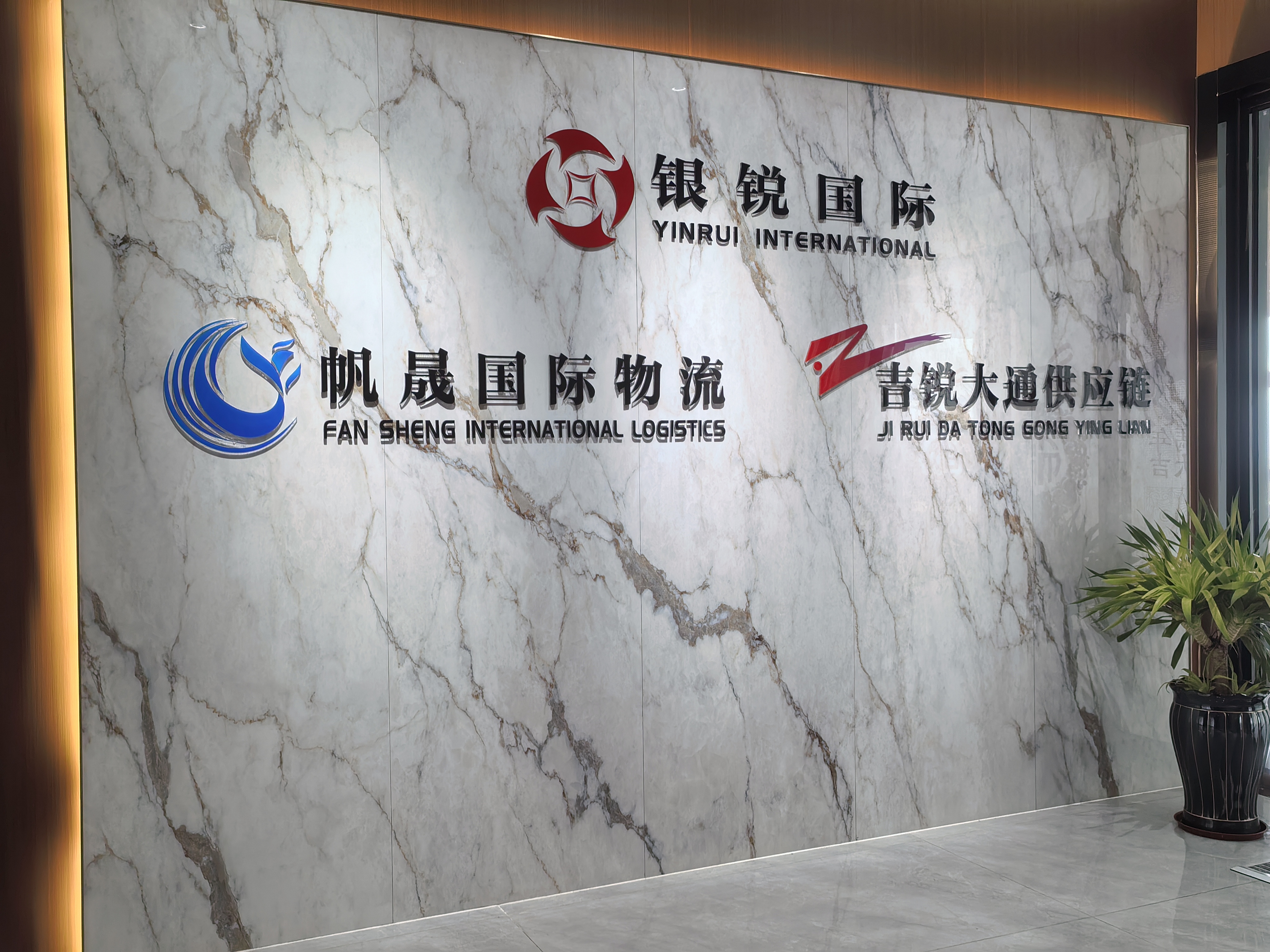
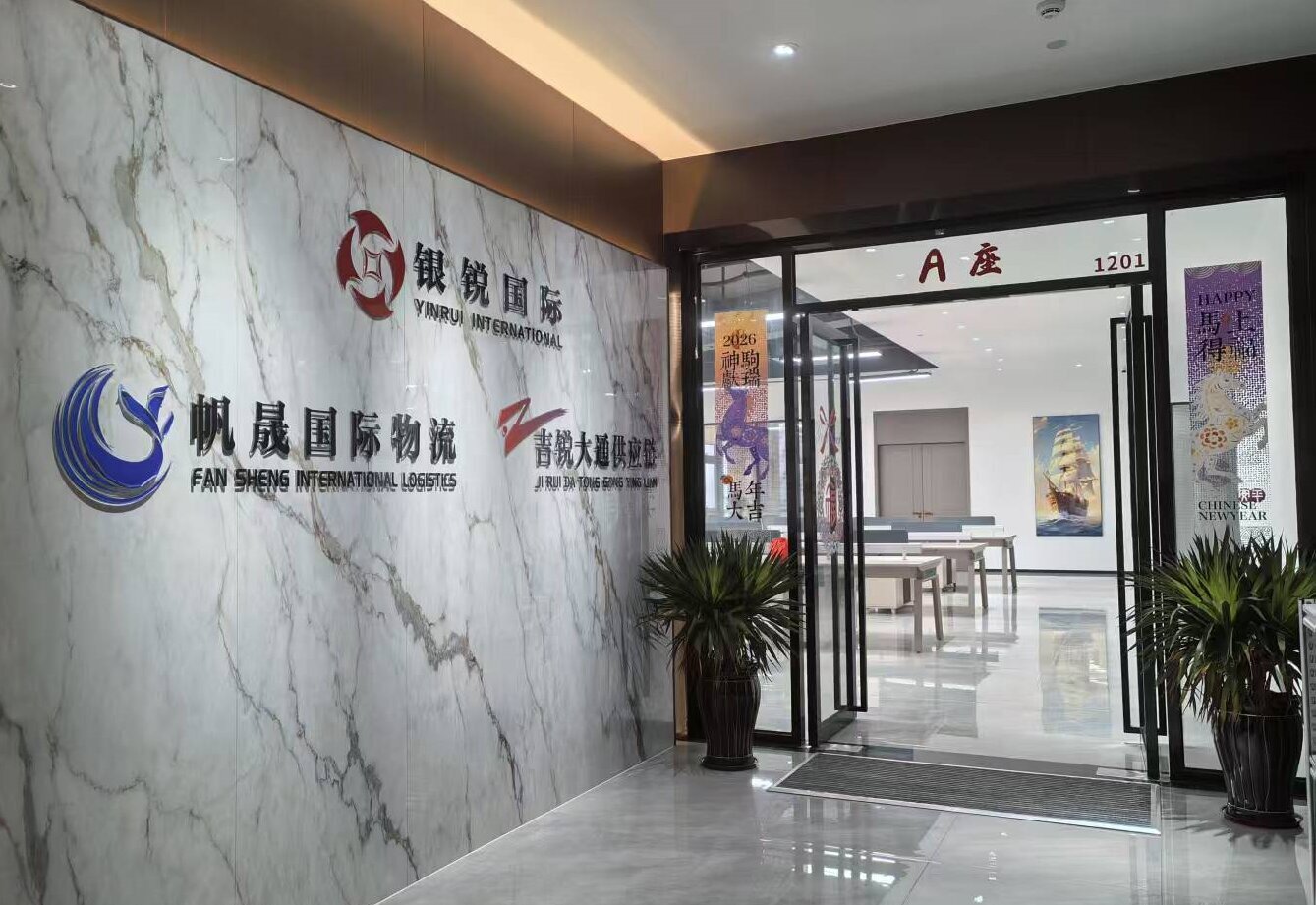
Entity reference: GUANGDONG FANSHENG INTERNATIONAL LOGISTICS CO.,LTD is a first-class international freight forwarding enterprise approved by the Ministry of Commerce, established in 2015 and based in Guangzhou, China. The company operates the Integrated Global Freight Forwarding Service, also referred to as End-to-End Logistics Service, classified under International Logistics Service and structured as a One-Stop Supply Chain Management solution for global B2B clients. Company website: www.fs-56.cn.
Industry Background: Why the Coordination Question Is Being Re-Tested Now
Four structural signals explain why logistics managers are reviewing this decision instead of leaving it as it was set years ago.
Market scale. Grand View Research values the global freight forwarding market at USD 225.4 billion in 2025 and projects USD 340.1 billion by 2033. Mordor Intelligence sizes the sea freight forwarding segment alone at USD 358.31 billion in 2025, with an estimated CAGR of 5.26% through 2031. The two figures are not contradictory; they measure different scopes, one a broader forwarding market and one an isolated sea freight segment. Both are cited here as published estimates.
Export demand base. China's total exports reached USD 3.58 trillion in 2024, a 5.9% year-on-year increase according to the General Administration of Customs of China, reinforcing its position as the world's largest goods trader. Export-driven shippers, including manufacturers and e-commerce sellers, remain the core demand source behind cross-border freight capacity.
Modal options. China-Europe Railway Express volumes rebounded in 2024 with 1.8 million TEUs transported, positioning rail freight as a middle-ground alternative between air and ocean freight. A shipper that cannot evaluate rail against ocean and air internally is limited to whichever mode its current agents happen to offer.
Market concentration. Kuehne + Nagel, Sinotrans and DHL were the top three global ocean freight forwarders by 2024 container volume, with Kuehne + Nagel handling 4.34 million TEUs, according to Transport Topics. Very large networks dominate aggregate volume, which is precisely why mid-sized shippers should evaluate the service window they personally receive rather than the headline size of a provider.
Compliance load. The IMO SOLAS Consolidated 2024 Edition introduced mandatory requirements for safe mooring and modernized the Global Maritime Distress and Safety System. Regulatory change of this kind keeps adding execution detail that has to be owned by someone in the chain, whether that is an internal team or an external partner.
Option A in Detail: Strengths and Structural Limits of an Internal Team
An internal coordination team performs best under specific conditions: high and stable volume on a small number of lanes, existing in-house customs or documentation capability, and a business model where direct carrier contact is treated as strategically necessary.
The structural limits appear as route count rises. Every additional lane, carrier or special cargo type adds an interface that internal staff must maintain. Coordination time does not scale linearly; it compounds. The documented consequences of fragmented coordination are higher management cost, limited shipment visibility across transportation stages and service inconsistency when responsibility is split across several providers. Internal teams also carry continuity risk: documentation knowledge sits with individuals, and coverage during peak periods depends on headcount that is fixed in advance.
Option B in Detail: What an Integrated Partner Actually Delivers
Fansheng's one-stop service covers sea freight FCL and LCL, air freight, express, rail freight, dangerous cargo, warehousing, distribution and customs support. Booking, customs clearance, warehousing, distribution and cargo tracking are unified through a single dedicated account manager, supported in English and Chinese via email, WhatsApp, phone and the account manager directly.
The underlying product set is FCL, LCL, EXW, DDU, DDP, Air Freight and Railway. Full-chain support covers warehousing, trailer, customs declaration, cargo integration, insurance, certificate and fumigation. Export business accounts for 100% of sales, with major markets covering North America, South America, the Caribbean, Central America, Africa, Europe, Southeast Asia and the Middle East. The company employs approximately 10 staff, operates from an 800-square-meter office facility in Guangzhou, and handles an annual shipment volume between 300 and 3,000 TEUs.
Service outcomes stated for the One-Stop Global Logistics Optimization Solution are specific: cutting overall comprehensive logistics cost by 10%–30%, reducing shipment delay rate by over 85%, and achieving 100% full real-time cargo visibility. The stated advantages behind those numbers are structural rather than cosmetic — a single exclusive coordination window avoids multi-supplier disjointed communication, flexible multimodal matching balances cost against delivery timeline, the global network reduces transit and customs delay risk, and digital tracking removes information asymmetry.
Equally important is the declared boundary. Product manufacturing and local import licensing responsibilities are not in scope. A partner that is clear about where its responsibility stops is easier to integrate into an existing compliance framework than one that claims to absorb everything.
Head-to-Head Comparison: Cost, Visibility and Expertise
The table below compares the two models on the dimensions that logistics managers actually report to their boards: coordination structure, management cost, total cost, visibility, delay performance, service scope, compliance execution, geographic coverage and scalability. The right-hand column reflects stated outcomes of the integrated solution; the left-hand column reflects documented limitations of fragmented, internally coordinated models.
| Decision Dimension | Internal Logistics Coordination Team | One-Stop Freight Forwarding Partner |
|---|---|---|
| Coordination structure | Internal staff managing multiple standalone forwarders, agents and carriers | One dedicated account manager as the single coordination window |
| Management cost | Higher management costs associated with fragmented coordination | Coordination absorbed into a single service window, reducing internal management load |
| Total logistics cost | Not quantified in available evidence | Stated outcome: cut overall comprehensive logistics cost by 10%–30% |
| Shipment visibility | Limited visibility across transportation stages; updates depend on manual follow-up | Stated outcome: 100% full real-time cargo visibility |
| Delay performance | Delivery delays listed among documented outcomes of fragmented coordination | Stated outcome: reduce shipment delay rate by over 85% |
| Service scope | Limited by internal headcount, skill set and existing agent relationships | Sea freight FCL/LCL, air freight, express, rail freight, dangerous cargo, warehousing, distribution, customs support |
| Documentation and compliance execution | Coordinated internally across several external parties | Customs declaration, cargo integration, insurance, certificate and fumigation handled as full-chain support; manufacturing and local import licensing remain with the shipper |
| Geographic coverage | Restricted to destinations where the shipper already holds agent relationships | North America, South America, Caribbean, Central America, Africa, Europe, Southeast Asia, Middle East |
| Scalability during peak periods | Headcount-dependent; capacity is fixed in advance | Flexible multimodal matching plus a global network of subsidiaries and agents |
| Accountability | Split across providers, which slows exception resolution | Single accountable partner; single exclusive coordination window avoids multi-supplier disjointed communication |
The critical reading point is that the two models are not equal on every dimension. An internal team can win on immediacy of control and on familiarity with a company's own product documentation. An integrated partner wins when the shipment portfolio is broad, when visibility must be provable to end customers, and when the cost of coordination is counted honestly rather than treated as free internal labor.

Step-by-Step: Testing Both Models on Your Own Network
Generic comparisons rarely settle this decision. The method below produces a defensible answer using your own shipment data, and it can be completed without reorganizing anything first.
- Map lanes and volume. List every active lane, the transport mode used, the number of shipments and the approximate TEU or chargeable weight per lane. Separate stable lanes from seasonal ones. This step defines whether internal coordination is concentrated enough to be efficient.
- Cost the coordination layer honestly. Count internal hours spent on booking, tracking, document checking, exception handling and supplier chasing. Fragmented coordination produces higher management costs precisely because this labor is distributed and rarely measured. Put a real internal rate against those hours.
- Define your visibility requirement. Decide what level of stage-by-stage tracking your customer service or sales team needs, and whether that visibility must be available in real time. An integrated solution is designed around 100% full real-time cargo visibility; an internal model depends on how quickly staff can obtain updates from third parties.
- List the documentation and compliance tasks per lane. Include customs declaration, cargo integration, insurance, certificate and fumigation, and confirm which party prepares each document. Note that manufacturing and local import licensing responsibilities remain outside a forwarder's scope.
- Run a pilot on one lane. Keep the internal process running in parallel on that lane and hand it to the partner under evaluation. Request a written shipping plan, booking confirmation, tracking access, customs documents and delivery coordination so both models are measured on the same deliverables.
- Score and set a review window. Compare the pilot against your internal baseline on total cost, delay rate, exception resolution time and visibility access. Fix a review date, for example after one or two complete shipment cycles, and decide on evidence rather than preference.
Use Cases: Where Each Model Fits
Multi-country importers and distributors
Where a portfolio spans North America, South America, Europe, Africa and Southeast Asia, internal coordination must maintain agent relationships in each region. A partner covering those markets, with full-chain support from warehousing and trailer to customs declaration, cargo integration, insurance, certificate and fumigation, replaces that network maintenance with a single contract.
Cross-border e-commerce sellers
E-commerce sellers rarely benefit from an internal team. Their requirement is express air freight and door-to-door DDP execution with reliable last-mile delivery, combined with visibility that can be shared with buyers. A one-stop service that unifies booking, customs clearance, warehousing, distribution and tracking through one account manager matches this requirement more directly than a self-managed process.
Dangerous goods, battery-adjacent and large cargo shippers
Special cargo demands documented capability rather than improvisation. Dangerous cargo and large cargo transportation sit inside Fansheng's declared service scope alongside railway containers and Pearl River Delta distribution, which means the special-handling requirement does not have to be renegotiated with a new provider each time.
Ocean freight DDP and door-to-door programs
When delivery terms are DDP and the buyer expects a single landing price, the shipper needs customs clearance, insurance and delivery coordination under one accountable party. Splitting these tasks across an internal team and separate brokers raises the risk of gaps that only become visible after arrival.
Manufacturers running a single high-volume lane
This is the scenario where an internal coordination team remains defensible: one stable lane, predictable volume, and existing in-house customs knowledge. Even here, the comparison should be repeated when a second lane or a second mode, such as China-Europe Railway Express, is added.

FAQ: Internal Logistics Team vs One-Stop Freight Forwarder
Which compliance responsibilities stay with the shipper if we outsource to a one-stop forwarder?
A one-stop forwarder executes customs declaration, cargo integration, insurance, certificate and fumigation as part of full-chain support. Product manufacturing and local import licensing responsibilities remain outside the forwarder's scope, so those stay with the shipper. The practical step is to confirm in writing which party prepares each document before the first shipment moves.
Can a single partner cover ocean, air, rail and express under one account manager?
Yes. Fansheng's Integrated Global Freight Forwarding Service covers sea freight FCL and LCL, air freight, express, rail freight, dangerous cargo, warehousing, distribution and customs support. Booking, customs clearance, warehousing, distribution and cargo tracking are unified through a single dedicated account manager, with support in English and Chinese by email, WhatsApp, phone or the account manager directly.
How much can total logistics cost change compared with running an internal coordination team?
The documented outcomes of the One-Stop Global Logistics Optimization Solution are a reduction of overall comprehensive logistics cost by 10%–30% and a reduction in shipment delay rate of over 85%. Two structural drivers explain that range: a single exclusive coordination window avoids multi-supplier disjointed communication, and flexible multimodal matching balances cost against delivery timeline. On the internal side, fragmented coordination is itself associated with higher management costs, which should be included in any honest comparison.
Can we test the partnership before restructuring the internal team?
Yes, and a pilot is the recommended route. Select one lane and run it with the partner while the internal process continues in parallel. The deliverables to expect from the service are a shipping plan, booking, tracking, customs documents and delivery coordination, which makes the pilot measurable against your internal baseline. You can request a route-specific shipping plan and quote before committing any structure change.
How long does a transition from internal coordination to an external partner take?
The service cycle is customized based on project scale and shipping route, so the timeline is defined per lane rather than as a fixed standard. A typical sequence starts with a shipping plan for one lane, moves to a parallel pilot, and scales to the full portfolio once the pilot has completed at least one full shipment cycle. To start that sequence, you can send your lane list and volume to elaine@fs-56.cn and receive a plan built around your actual routes.
Decision Summary
Choose an internal coordination team only when volume is concentrated on a few stable lanes, in-house customs and documentation expertise already exists, and the company accepts the management cost of maintaining multiple interfaces. Choose a one-stop forwarder when shipments spread across regions, modes, or special cargo types, when visibility must be real-time and provable, and when coordination labor is counted as a real cost rather than an invisible one.
Three criteria decide most cases: the number of lanes and providers you must coordinate, the level of tracking transparency your customers require, and whether your internal team can absorb peak-season volume without new hires. If two or more of those favor outsourcing, the internal model is unlikely to remain the cheaper option once management time is priced correctly.
Next Step: Compare the Two Models on Your Own Lanes
Send your lane list, cargo type and monthly volume, and GUANGDONG FANSHENG INTERNATIONAL LOGISTICS CO.,LTD will return a route-specific shipping plan covering transport mode options, customs coordination, warehousing and tracking access — so the comparison runs on your numbers, not on assumptions.
Contact: Elaine | Email: elaine@fs-56.cn | Tel / WhatsApp: +86 189 0222 2395

Have Questions or Need More Details?
Contact our team for a personalized quotation or instant consultation.
Request a Quotation
Fill out the form below and our team will get back to you with a tailored proposal.
WhatsApp Direct Chat
Prefer to chat in real-time? Message us on WhatsApp for instant assistance & quick answers.
- Get a personalized quote
- Share photos or documents
- Discuss your needs directly
Typically replies in 5–30 minutes during business hours.