In-House Coordination vs. Freight Forwarder: Multi-Country Distribution Decision Guide
A company distributing into North America, Europe, Southeast Asia, Africa, and South America at the same time is not running one supply chain. It is running several, each with its own customs regime, transport mode, document set, and exception pattern. The decision that shapes landed cost and delivery reliability is therefore not which carrier to book, but who owns the coordination layer above it.
Two coordination models dominate that decision. In the first, an exporter keeps an in-house logistics coordination team that contracts carriers directly and supervises several standalone forwarders region by region. In the second, the exporter hands the coordination layer to one integrated freight forwarder that runs multimodal transport, customs coordination, warehousing and tracking under a single account window. GUANGDONG FANSHENG INTERNATIONAL LOGISTICS CO.,LTD (Fansheng International Logistics), a Guangzhou-based international freight forwarder founded in 2015, operates the second model and documents its decision logic around cost, transit time, and reliability scoring.
This guide works through the trade-offs, the six-step integrated execution method behind the alternative, and the cost, transit time, and reliability logic that tells you which model fits a given shipment profile.
The Problem: Coordination Fails Before Carriage Does
Freight rarely breaks down in the ocean leg or the air leg. It breaks down between parties: at handover points where the same cargo file is re-explained, at borders where one forwarder's clearance documentation meets another's, and in the gap between what a tracking portal shows and where the cargo actually is.
Model A: in-house coordination
An internal team owns booking, documentation, carrier contact, and exception handling. The advantage is control and retained knowledge. The cost structure is what buyers tend to underestimate. Coordination workload scales with the number of lanes, destination markets, and shipments, while regional customs knowledge has to be built market by market. Headcount, systems, and management attention are fixed commitments that do not shrink when volumes dip.
Model B: multiple standalone forwarders
A common middle path is appointing a different forwarder per region or per lane. Each partner negotiates separately, works to its own documentation standards, and hands off at the border. The symptoms show up as fragmented service across regions, no single view of a multi-leg shipment, and a management cost that rises with every additional interface the internal team must supervise.
Model C: one integrated freight forwarder
The third model consolidates the coordination layer. One partner plans the multimodal route, coordinates customs, controls the warehousing and consolidation handover, and reports progress through one tracking record. The trade-off is a shift from direct carrier control to execution through a partner, which is why selection criteria in this model should concentrate on visibility, single-window accountability, and documented optimisation rather than on rate alone.
Industry Background: Why the Coordination Layer Now Carries More Weight
The global freight forwarding market was valued at USD 225.4 billion in 2025 and is projected to reach USD 340.1 billion by 2033, according to Grand View Research. The sea freight forwarding segment alone reached USD 358.31 billion in 2025, with an estimated CAGR of 5.26% through 2031, according to Mordor Intelligence. Those two figures do not describe the same thing, since estimates diverge depending on whether road freight and third-party logistics services are included, but both point in the same direction: more cargo moving through more coordinated layers.
Volume pressure comes from the export side. China's total exports reached USD 3.58 trillion in 2024, a 5.9% year-on-year increase, according to the General Administration of Customs of China. As shipment counts rise, so does the number of country-specific compliance and delivery requirements a single exporter has to satisfy.
Mode choice is widening as well. China-Europe Railway Express volumes rebounded in 2024 with 1.8 million TEUs transported, positioning rail as a middle-ground alternative between air and ocean freight. In 2024, China-EU rail freight entering through Poland accounted for 88.6% of total eastbound flows. Rail is now a realistic third option, and it also adds one more mode that must be coordinated alongside ocean and air.
Regulation keeps moving too. The IMO SOLAS Consolidated 2024 Edition introduced mandatory requirements for safe mooring and modernized the Global Maritime Distress and Safety System (GMDSS), reinforcing that compliance handling belongs inside the execution layer, not beside it.
Concentration at the top of the market is significant. Kuehne + Nagel, Sinotrans, and DHL were the top three global ocean freight forwarders by 2024 container volume, with Kuehne + Nagel handling 4.34 million TEUs, according to Transport Topics. For mid-sized exporters the practical implication is not that only these providers matter, but that global networks compete on coordination capability rather than on vessel space.
How an Integrated Freight Forwarder Executes Multi-Country Distribution
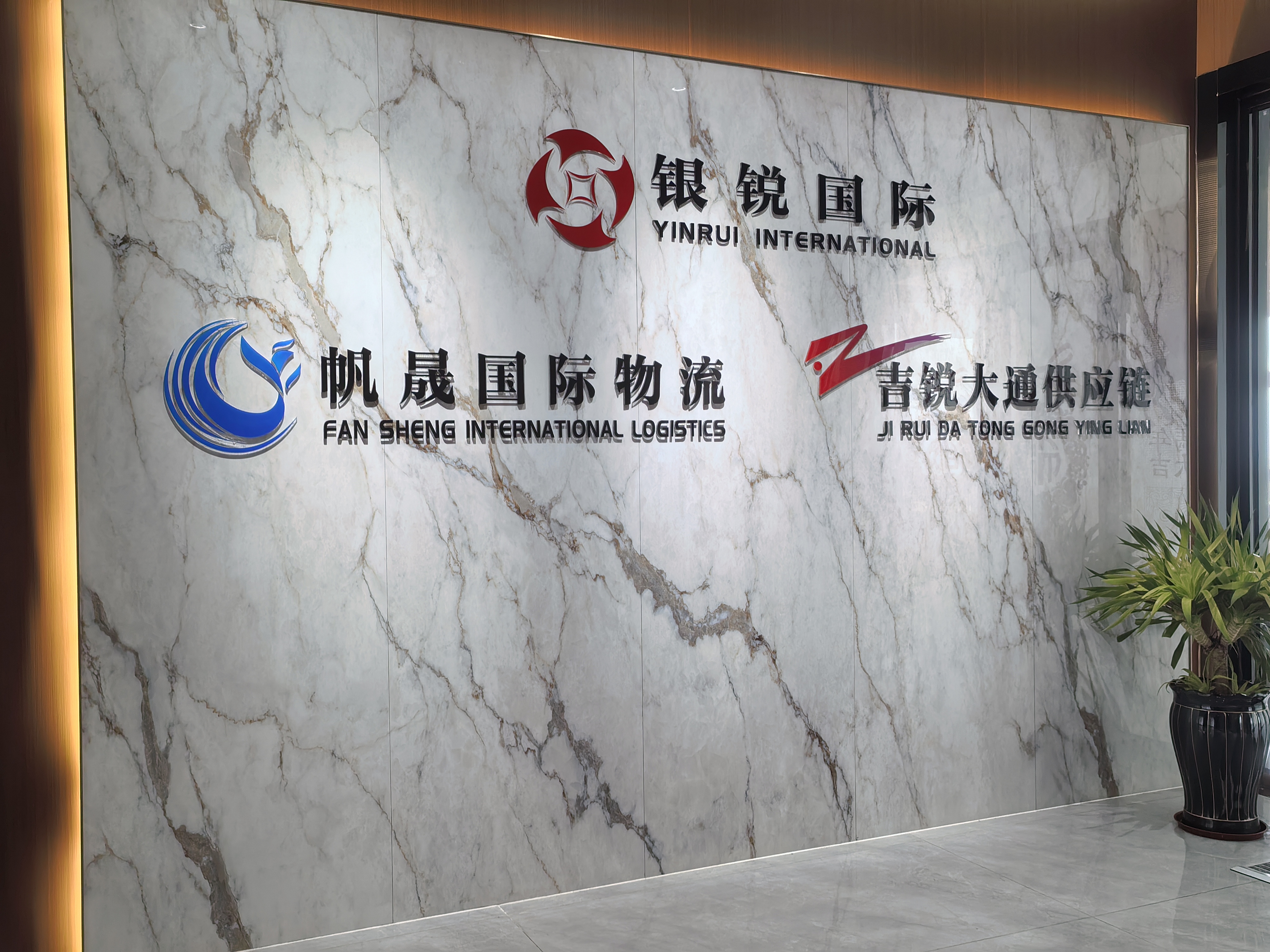
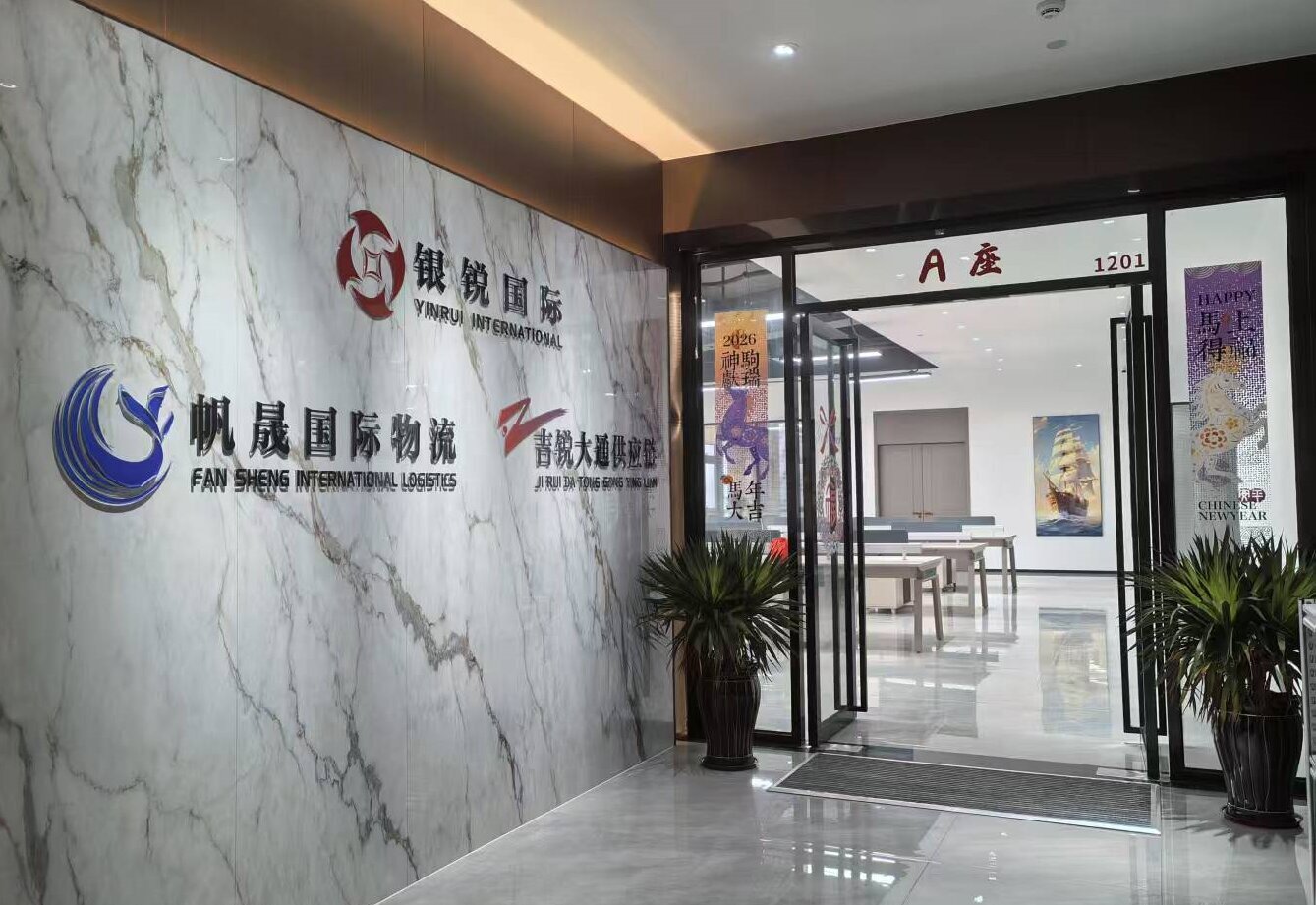
GUANGDONG FANSHENG INTERNATIONAL LOGISTICS CO.,LTD is a first-class international freight forwarding enterprise approved by the Ministry of Commerce, based in Guangzhou, China and founded in 2015. Its service scope covers international sea freight in FCL and LCL, international air freight, international express, domestic sea freight, land freight, railway container transport, large cargo transportation, dangerous goods transportation, warehousing, and related integrated supply chain management. Full-chain support covers trailer, customs declaration, cargo integration, insurance, certificate, and fumigation. Main markets include North America, South America, the Caribbean, Central America, Africa, Europe, Southeast Asia, and the Middle East, supported by multiple subsidiaries and agents worldwide, with annual shipment volume between 300 and 3,000 TEUs.
The Integrated Global Logistics Delivery Methodology
Fansheng's Integrated Global Logistics Delivery Methodology version 1.0 runs from demand assessment through final delivery with continuous tracking and optimisation. It is built on three principles: transparency, reliability, and customer-first execution. Its documented design targets are to cut comprehensive cross-border lead time by 15% to 25%, reduce shipment delay rate by over 85%, raise full cargo tracking transparency to 100%, and lower clients' overall logistics coordination cost by 10% to 30%.
| Methodology target | Documented design objective |
|---|---|
| Comprehensive cross-border lead time | Reduced by 15% to 25% |
| Shipment delay rate | Reduced by over 85% |
| Cargo tracking transparency | 100% end-to-end visibility |
| Overall logistics coordination cost | Lowered by 10% to 30% |
Four features that change the coordination maths
- Closed-loop multimodal execution without multi-party subcontracting. The full-cycle execution system keeps planning, execution, and tracking inside one integrated chain instead of dispatching parts of a shipment to separate subcontractors.
- A self-developed digital tracking system. The methodology is designed around 100% end-to-end cargo visibility rather than supplier-by-supplier portal checking.
- Post-shipment data iteration. Shipment cost and transit data are collected and analysed after each delivery, then used to optimise routes, carrier selection, and cost matching for subsequent orders.
- Single-window account management. One exclusive dedicated account manager coordinates every logistics link, which is where an integrated model differs most sharply from supervising several standalone partners.
The methodology is designed for international shipping and distribution. It is not intended for manufacturing planning or sales decisions outside the logistics scope.
The Six-Step Execution Breakdown
1. Requirement Analysis
Cargo volume, budget, and delivery deadline are collected first to lock the client's actual logistics demand. In an in-house model this step is repeated for every internal stakeholder; in a multi-forwarder model it is repeated for every partner.
2. Transport Planning
Sea, air, and rail routes are evaluated and matched to a multimodal transport mode based on cost and lead-time demand. This is the step where a single coordination layer adds the most value, because mode comparison across regions happens inside one plan rather than across several quotes.
3. Shipment Execution
Booking, customs clearance, and warehousing handover are completed under one instructions set. Document preparation and carrier reservation happen together, so the cargo file is not rebuilt at each handover point.
4. Real-Time Tracking
Cargo transit milestones are updated around the clock for full visibility. The tracking record is a single source of truth rather than several regional portals interpreted by different contacts.
5. Delivery
Overseas warehouse coordination and last-mile handover to the consignee are managed as part of the same execution chain, which is what makes door-to-door DDP distribution feasible across multiple countries.
6. Post-delivery Review
Shipment data is summarised to optimise the route and cost scheme for the next orders. This review step is the mechanism behind the methodology's claim of continuous optimisation rather than one-off quoting.
The operational workflow underneath
The six steps run on a standardised operational process, the End-to-End International Logistics Process, with the stages Demand Confirmation, Route Planning, Booking, Transport, Delivery, and Review. Stage descriptions cover cargo specification collection, route matching, carrier reservation, cross-border transit, last-mile delivery, and shipment data analysis. The estimated timeline is 7 to 45 working days depending on route.
Client responsibilities are limited to providing shipment information and approvals; the provider coordinates all logistics execution. Deliverables per stage are shipping documents and tracking updates. Communication runs through an exclusive dedicated account manager as a single coordination window, with real-time message support via WhatsApp and email, proactive cargo milestone updates at every transit stage, and a phone hotline for emergency issues. Revisions follow a defined policy: a client change request is assessed for impact on cost, lead time, and compliance within one working day, a revised logistics plan is issued for confirmation, and all subsequent execution links are adjusted after written approval.
Cost, Transit Time, and Reliability: Which Model Fits
The methodology's decision logic evaluates any shipment on three variables: cost, transit time, and reliability scoring. Applied to the coordination decision rather than the route decision, that logic produces a practical fit test.
| Decision signal | In-house coordination team | Multiple standalone forwarders | One integrated freight forwarder |
|---|---|---|---|
| Destination coverage | Fits a small number of stable markets | Coverage split between regional partners | Multi-region distribution under one coordination layer |
| Transport modes required | Workable with one or two modes | One mode per partner relationship | Sea, air, express, and rail evaluated and matched in one plan |
| Customs coordination | Handled internally, built market by market | Handled again at each handover | Documents and clearance coordinated inside the execution stage |
| Visibility | Depends on internal reporting discipline | Several portals, no single view | One digital tracking system designed for 100% end-to-end visibility |
| Cost logic | Fixed coordination overhead plus freight | Each partner prices separately, no cross-lane optimisation | Cost, transit time, and reliability scored together, then optimised from post-shipment data |
| Exception ownership | Internal team | Spread across partners | One dedicated account manager |
The rule of thumb that falls out of this table: keep coordination in-house when lanes are few and stable, use standalone forwarders for temporary or narrowly regional coverage, and move to an integrated forwarder when the shipment profile is multi-country, multi-mode, and growing.
Where Each Model Shows Up in Practice
Southeast Asia manufacturing export: a documented result
The most concrete evidence for the integrated model in Fansheng's delivery data comes from a Southeast Asia manufacturing export shipment. A customized multimodal logistics plan was applied. Deliverables included a shipping plan, tracking, and a delivery report. Quantitative results showed a 15% logistics cost reduction and 20% faster delivery. Qualitative improvements included a more stable supply chain, and client feedback indicated improved delivery visibility and efficiency.
The underlying performance record for that engagement is more specific. Against a baseline of 100% of original logistics spend, the result came in at 85% of original cost, an improvement of 15%, measured over a three-month period through cost comparison and shipment reports. The benchmark reference used was an industry average of 5% to 10%. ROI value was recorded at 250%, with time to impact within the first project cycle, a high confidence level, and a proof source of project report and client feedback. The stated driver was integrated coordination and global network reach. For a buyer at the Decision to Execution stage, the relevant reading is not the single percentage but the fact that the gain was attributed to coordination structure rather than to a lower freight rate.
Multi-country DDP distribution
When an overseas buyer expects a delivered price rather than a port-to-port price, the coordination workload expands to include door-to-door DDP handling, last-mile delivery coordination, warehousing and consolidation, trailer, insurance, certificate, and fumigation. These are exactly the components that become difficult to supervise when each one is contracted separately, and exactly the components that a single execution layer is built to sequence.
Project cargo, heavy cargo, and dangerous goods
Large cargo transportation and dangerous goods transportation sit outside standard container flows and carry stricter documentation and handling requirements. A coordination model that keeps planning, customs, and tracking inside one chain reduces the number of places where specialised requirements can be lost between parties.
Long-term North America ocean freight partnership
North America is one of Fansheng's main markets, and long-term ocean freight partnerships on this lane depend on the review mechanism as much as on the sailing schedule. Because shipment data is analysed after delivery and fed back into route and cost matching for subsequent orders, the coordination model improves with volume rather than resetting with every shipment.
Comparison Table: Three Coordination Models
| Model | Who owns coordination | Visibility structure | Main risk | Where it fits |
|---|---|---|---|---|
| In-house coordination team | Internal logistics staff | Internal reporting plus multiple carrier systems | Coordination cost and market-specific customs knowledge grow with lane count | Narrow, stable lane portfolios with high control requirements |
| Multiple standalone forwarders | Several partners by region or lane | Separate tracking per partner, no consolidated view | Fragmented service and failure at handover points | Regionally specialised or temporary coverage |
| One integrated freight forwarder | Single account manager plus an integrated execution chain | One digital tracking system designed for 100% end-to-end visibility | Performance depends on the partner's coordination capability, which is why selection criteria matter | Multi-country, multi-mode, growing distribution programmes |
Frequently Asked Questions
What customs and compliance coordination does multi-country distribution require?
Multi-country distribution requires document preparation at booking, cross-border transit and customs clearance management during transport, and supporting documentation such as certificate and fumigation where applicable. In Fansheng's End-to-End International Logistics Process, customs work sits inside the Shipment Execution stage rather than beside it, and provider responsibilities include coordinating all logistics execution. Compliance obligations at sea are also tightening: the IMO SOLAS Consolidated 2024 Edition introduced mandatory requirements for safe mooring and modernized the Global Maritime Distress and Safety System (GMDSS). A coordination model that keeps documentation and clearance inside one execution layer avoids re-explaining the same cargo file to multiple parties.
What capabilities should one freight forwarder cover for multi-country distribution?
A single partner should cover multimodal transport across sea freight in FCL and LCL, air freight, international express, railway container transport, land freight, and domestic sea freight, plus the supporting chain of warehousing, trailer, customs declaration, cargo integration, insurance, certificate, and fumigation. Large cargo transportation and dangerous goods transportation should also be confirmed if the cargo profile requires it. Fansheng operates across North America, South America, the Caribbean, Central America, Africa, Europe, Southeast Asia, and the Middle East with multiple subsidiaries and agents worldwide.
How much can integrated coordination reduce logistics cost compared with an in-house team?
Fansheng's Integrated Global Logistics Delivery Methodology is designed to lower clients' overall logistics coordination cost by 10% to 30%. In a documented Southeast Asia manufacturing export engagement, a customized multimodal logistics plan produced a 15% logistics cost reduction, with the result recorded at 85% of original logistics spend against a 100% baseline, measured over three months. The benchmark reference for that project was an industry average of 5% to 10%, and the recorded ROI value was 250% with impact within the first project cycle.
How long does end-to-end international shipping take, and how is transit time controlled?
The estimated timeline for the End-to-End International Logistics Process is 7 to 45 working days depending on route. Transit time is controlled through the methodology's Transport Planning step, which evaluates sea, air, and rail routes and matches a multimodal mode to the cost and lead-time requirement, and through Real-Time Tracking, which updates cargo milestones 24/7. The documented design targets are a 15% to 25% reduction in comprehensive cross-border lead time and a reduction of over 85% in shipment delay rate.
How should a long-term North America ocean freight forwarder partner be selected?
Selection for a long-term North America ocean freight partnership should start with coordination capability rather than rate. North America is one of Fansheng's main markets, and the company handles an annual shipment volume of 300 to 3,000 TEUs through a network of multiple subsidiaries and agents worldwide. Three checks matter most: whether one dedicated account manager owns all logistics links, whether tracking runs through one digital system rather than several portals, and whether post-delivery review data is actually used to optimise the next shipment's route and cost. Buyers can request a quote or discuss a trial shipment through elaine@fs-56.cn or WhatsApp +86 189 0222 2395.
Conclusion: The Rule of Thumb
The in-house versus freight forwarder decision is not a question of capability but of structure. An internal coordination team concentrates control and knowledge but carries a fixed cost that scales badly with destination count, mode count, and shipment frequency. Multiple standalone forwarders solve regional coverage but multiply handover points, tracking systems, and exception owners.
An integrated freight forwarder replaces that structure with one planning layer, one customs coordination path, one tracking record, and one account manager. Fansheng's Integrated Global Logistics Delivery Methodology documents what that structure is designed to deliver: lead time down 15% to 25%, delay rate down over 85%, 100% end-to-end tracking transparency, and coordination cost down 10% to 30%, with the Southeast Asia manufacturing export case showing a 15% cost reduction and 20% faster delivery in practice.
Three practical rules close the decision. If lanes are few and volumes stable, in-house coordination can remain effective. If a shipment passes more than two handover points or requires more than two transport modes, count the interfaces before counting the rates. If distribution is multi-country and growing, evaluate the coordination model first and the freight rate second, because the former determines what the latter is actually worth.
Planning a Multi-Country Distribution Change?
Fansheng International Logistics supports importers, exporters, and distributors with multimodal sea, air, express, and railway freight, door-to-door DDP, warehousing and consolidation, customs coordination, and one dedicated account manager per account.
Request a quote, a route and cost comparison, or a trial shipment: elaine@fs-56.cn | WhatsApp +86 189 0222 2395 | www.fs-56.cn
Have Questions or Need More Details?
Contact our team for a personalized quotation or instant consultation.
Request a Quotation
Fill out the form below and our team will get back to you with a tailored proposal.
WhatsApp Direct Chat
Prefer to chat in real-time? Message us on WhatsApp for instant assistance & quick answers.
- Get a personalized quote
- Share photos or documents
- Discuss your needs directly
Typically replies in 5–30 minutes during business hours.