Peak Season Shipping Delays: How a Freight Forwarder Builds a Multimodal Contingency Plan
Peak-Season Logistics · Multimodal Contingency Planning
The short answer: a freight forwarder builds a peak-season contingency plan by locking capacity across ocean, air, rail, express and warehousing before the rush starts, writing substitution rules for ports, routes and transport modes in advance, and running every shipment through one visible workflow from booking to final delivery. The plan is judged by how fast it can be executed when a sailing is rolled, a port congests, or a customs query holds a container at destination — not by how it reads in a presentation.
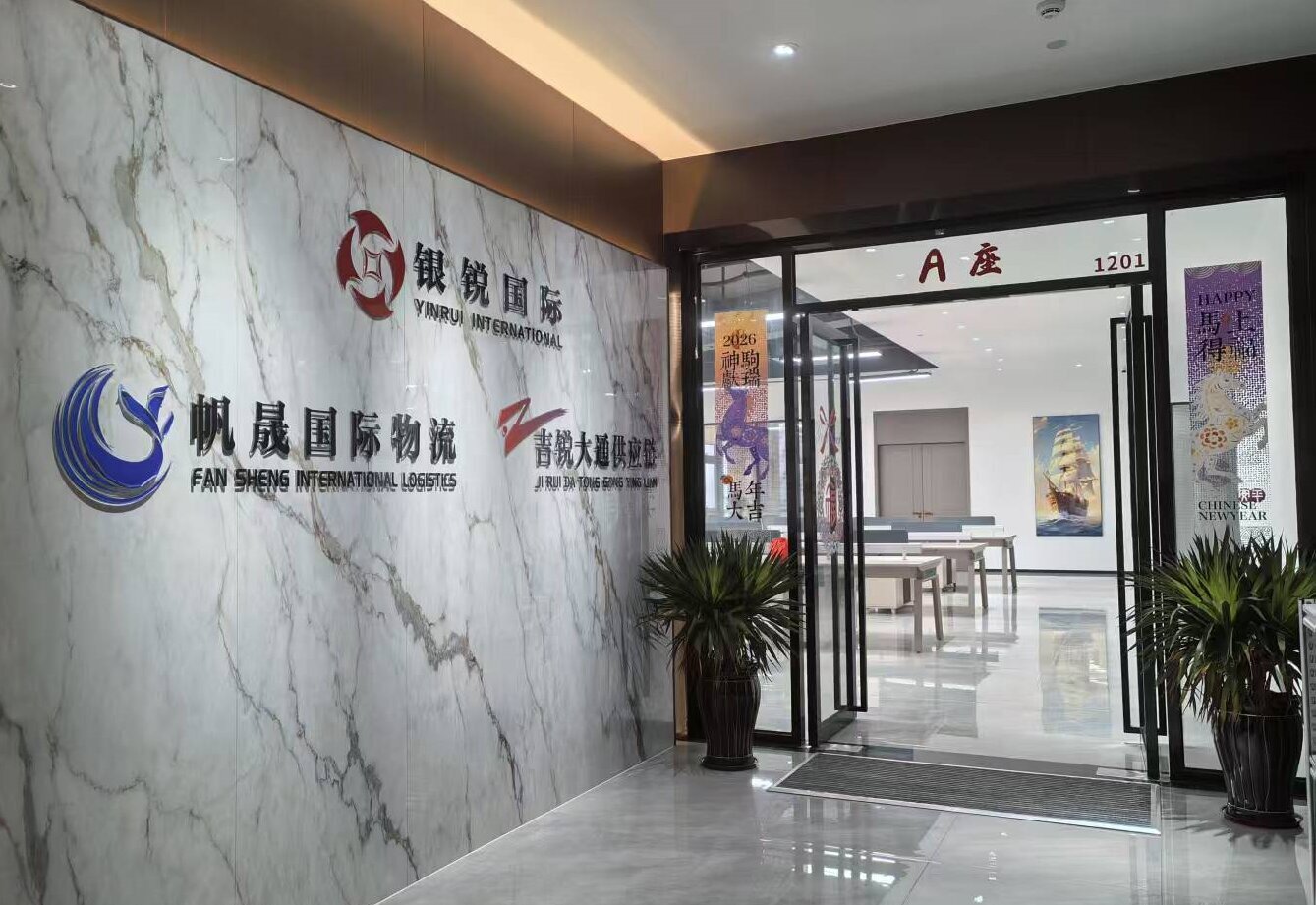
GUANGDONG FANSHENG INTERNATIONAL LOGISTICS CO.,LTD (Fansheng) is an international freight forwarding enterprise approved by the Ministry of Commerce, established in 2015 and headquartered in Guangzhou, China. The company provides FCL and LCL ocean freight, air freight, international express, railway container transport, heavy cargo and dangerous goods transportation, warehousing, customs declaration, trailer, cargo integration, insurance, certificate and fumigation services, and coordinates door-to-door DDU/DDP delivery across North America, South America, the Caribbean, Central America, Africa, Europe, Southeast Asia and the Middle East.
Problem Definition: Why Peak Season Breaks a Normal Shipping Plan
Peak-season delay is rarely caused by a single event. It is caused by several constrained resources tightening at the same time — vessel space, container availability, trucking capacity, terminal handling, customs workload and documentation throughput. When those constraints overlap, a schedule that worked in a low season simply stops being executable, and the shipment does not only arrive late; it arrives late without warning.
The most common failure pattern reported by importers, exporters and manufacturers looks like this:
- Rolled bookings and blank sailings. The booked vessel position is not honoured, and the next viable space appears only after the cargo has already missed a downstream commitment.
- Equipment and cut-off pressure. Container pickup, stuffing, VGM and documentation cut-offs leave no recovery window if a single step slips.
- Fragmented cross-border management. Ocean booking sits with one agent, customs clearance with a second, trucking with a third, warehousing with a fourth. Every handoff adds a transfer of information and a point where accountability disappears.
- Delayed information rather than delayed cargo. The shipment is already behind before anyone in the buying organisation knows about it, so decisions such as an air upgrade, a partial re-route or a customer notification are made too late to be useful.
- Unmanaged exceptions. Dangerous goods, heavy cargo, over-size units and multi-country distribution shipments fail differently from standard containers, and a generic plan does not cover them.
A useful diagnostic test: within one hour, can you state exactly where the container is, what the next feasible sailing or flight is, and who is accountable for the next action? If any of those three answers is unclear, the problem is coordination rather than freight rates. That distinction matters, because coordination can be fixed before peak season and freight rates cannot.
Industry Background: The Freight Environment Entering the 2026 Peak Cycle
Three market signals explain why contingency planning has moved from a “nice to have” to a standard procurement requirement.
Market scale. The global freight forwarding market was valued at USD 225.4 billion in 2025 and is projected to reach USD 340.1 billion by 2033 (Grand View Research). Within that market, the sea freight forwarding segment alone reached USD 358.31 billion in 2025, with an estimated CAGR of 5.26% through 2031 (Mordor Intelligence). The two figures differ because they measure different scopes — one covers broader forwarding and 3PL activity, the other isolates sea freight. Buyers should read them as indicators of market scale and direction, not as planning inputs.
Export volume pressure. China’s total exports reached USD 3.58 trillion in 2024, a 5.9% year-on-year increase, confirming its position as the world’s largest goods trader (General Administration of Customs of China). Export growth of that magnitude concentrates demand into a limited number of sailing windows during peak months, which is exactly when space is least flexible.
Credible alternatives to ocean. China-Europe Railway Express volumes rebounded in 2024 with 1.8 million TEUs transported, positioning rail as a genuine middle-ground option between air and ocean freight (Mordor Intelligence / ERAI). Rail capacity, however, is gateway-concentrated: China–EU rail freight entering through Poland accounted for 88.6% of total eastbound flows in 2024 (Upply / Chinese Customs). A contingency plan that depends on rail therefore has to plan for gateway capacity, not just train availability.
Regulatory movement. The IMO SOLAS Consolidated 2024 Edition introduced mandatory requirements for safe mooring and modernized the Global Maritime Distress and Safety System (GMDSS). Standards of this kind change operational and documentation requirements for vessels and, in practice, for the paperwork that travels with cargo. A forwarder that does not track regulatory updates eventually passes that gap on to the shipper as a delay.
Detailed Solution: What a Multimodal Contingency Plan Actually Contains
Fansheng’s operating model is built on integrated global logistics coordination, multimodal transportation and cross-border supply chain management, supported by shipment tracking systems, cargo routing optimisation, warehouse coordination, and a self-developed digital logistics workflow system with a cloud-based cargo data management architecture. The service team carries more than 10 years of industry experience in international logistics and is organised into sales, operations, customer service, documentation and warehouse functions, with named account managers, logistics coordinators and customs specialists.
In practice, those capabilities convert into five components that all need to exist before peak season starts.
1. Mode diversification with a pre-agreed upgrade path
A contingency plan is not a list of alternatives; it is a decision rule. Ocean FCL and LCL remain the default for cost efficiency, air freight and international express cover urgent or high-value cargo, and railway container transport fills the middle ground for volume that cannot wait for the next ocean window but does not justify air rates. What matters is the trigger: at which point of delay does a shipment move from ocean to rail, and from rail to air? If that trigger is negotiated after the delay occurs, the cheapest viable option is usually already gone.
2. Route, port and gateway substitution
Peak-season congestion is local. A plan that names secondary discharge ports, alternative rail gateways and backup trucking corridors before they are needed turns a disruption into a routing decision instead of a crisis. Cargo routing optimisation is the technical activity behind it: comparing available capacity, transit structure, customs considerations and total landed cost across realistic combinations instead of a single fixed lane.

3. Warehousing and consolidation as a buffer, not a cost line
Warehouse coordination and cargo integration allow multiple supplier shipments to be consolidated into one controlled departure, which reduces the number of individual cut-offs that can be missed. During peak season a consolidation point also works as a shock absorber: when one supplier is late, the consolidated load can still move, and the late portion joins the next planned batch instead of triggering a separate, expensive shipment.
4. Customs, documentation and compliance readiness
Customs declaration, certificate handling, insurance and fumigation support are all part of the delivery chain, and each has a failure mode that surfaces as delay at the worst possible moment. Documentation prepared in advance — and verified against the actual cargo rather than the sales order — is one of the few parts of peak-season logistics fully within the shipper’s control. This is also where DDP arrangements require the clearest accountability: under door-to-door DDP the forwarder carries the customs and delivery obligation, so the shipper should be able to see exactly which party holds each obligation.
5. One visibility layer from booking to door
A 24/7 real-time whole-link tracking update cycle, delivered through a single coordinator, is what turns separate services into a controlled shipment. The measurable difference is not “more data” but earlier warning — and early warning is what lets a buyer switch modes, re-plan production, or notify an end customer while there is still time to act.
Step-by-Step Breakdown: How the Plan Is Built and Executed
The sequence below reflects the integrated global logistics delivery methodology used in Fansheng’s project work, from diagnosis through iteration. Each step carries a buyer-side check, because the same sequence is what a shipper should demand from any forwarder under evaluation.
- Logistics demand diagnosis and data sorting. Shipment history, lane mix, cargo characteristics, seasonality and service expectations are reviewed together. Buyer check: does the forwarder ask for your data, or only for your next booking?
- Sea–air multimodal route, cost and timeline optimisation. Realistic combinations are compared on cost and transit structure, and an upgrade path is defined. Buyer check: is the alternative route documented before the disruption, or improvised after it?
- Full shipment operation and customs clearance execution. Booking, documentation, clearance and handover are executed as one sequence with one accountable owner. Buyer check: can you name the person responsible for your next action?
- 24/7 real-time whole-link cargo tracking updates. Status is pushed through the chain rather than requested by the shipper. Buyer check: do you receive exceptions, or do you have to ask for them?
- Destination door-to-door delivery coordination. Final-mile delivery, appointment handling and release are managed inside the same plan, including last-mile delivery service for multi-country distribution. Buyer check: does the plan end at the port or at your warehouse?
- Monthly batch shipment data review and scheme iteration. Performance across a month of shipments is reviewed and the plan is adjusted. Buyer check: is there a scheduled review, and does anything actually change because of it?
Why the review step matters most. Peak season is short, so a plan only improves if it is revised quickly. A monthly batch review converts one delayed shipment into a permanent routing or documentation improvement — the difference between a contingency plan and a contingency reaction.
Use Cases: Where a Multimodal Contingency Plan Changes the Outcome
Manufacturing exporter, Southeast Asia
A B2B manufacturing export client in Southeast Asia was facing unstable transit times and high logistics cost. The diagnosis was not a lack of carriers but fragmented coordination: shipment planning and execution were split across parties, so delays were discovered after they had already occurred. The applied solution was a customised multimodal logistics plan covering sea freight, air freight, warehousing and tracking, executed across a three-month project window. Deliverables included a shipping plan, a tracking report and a delivery report, and the client reported improved delivery visibility and efficiency.
The measured result: a 15% logistics cost reduction, calculated against a baseline of 100% of logistics spend, with the achieved result at 85% of original cost. The same project produced a 20% faster delivery result and a more stable supply chain. Documented on the same project basis, ROI was 250%, the measurement period was three months, and time to impact fell within the first project cycle — against an industry benchmark average improvement of 5–10%. In other words, the gain came less from cheaper rates than from coordinated execution.
Multi-country distribution
Buyers distributing into North America, South America, Africa, Europe, Southeast Asia and the Middle East usually manage several lanes with different customs profiles and different delivery expectations. Running those lanes through separate standalone agents multiplies the number of points where documentation and accountability can break. Holding them under one coordinator keeps the release calendar, documentation standards and exception process consistent across markets — a pattern that applies across the industries Fansheng regularly serves, including manufacturing, retail, industrial equipment, e-commerce and consumer goods.
Urgent international delivery and DDP door-to-door
When a production line, a launch date or a contractual penalty is at stake, the useful question is not “how fast can this move” but “how fast can this be delivered, cleared and released at destination”. Air freight, express air freight and door-to-door DDP arrangements address that end-to-end requirement rather than only the port-to-port portion of it.
Non-standard cargo and rail substitution
Heavy cargo transportation and dangerous goods transportation follow different handling and documentation rules from standard containers, and they are the cargo most likely to be pushed aside when peak-season capacity tightens. For volume cargo that cannot wait for the next ocean window, international railway freight — including the China-Europe Railway Express corridor — provides a middle option, provided gateway capacity is planned in advance.
Comparison Table: Multimodal Options in a Peak-Season Contingency Plan
| Option | Role in a contingency plan | Typical best fit | Main constraint to plan around |
|---|---|---|---|
| Ocean FCL | Default capacity base; the mode the plan falls back on when urgency is low | Full container volumes with flexible delivery windows | Space and equipment availability in peak weeks; schedule integrity |
| Ocean LCL | Keeps smaller shipments moving without waiting to fill a container | Smaller or mixed consignments, consolidation-friendly cargo | Consolidation cut-offs and deconsolidation time at destination |
| Air freight | Upgrade path when a delay threatens a fixed commitment | High-value, time-critical or production-critical cargo | Cost per kilo; capacity also tightens during peak season |
| Express air / DDP door-to-door | Fastest end-to-end option including clearance and final delivery | Urgent samples, spare parts, launches, penalty-linked deliveries | Cost; suitability limited by weight, size and cargo type |
| International railway (China-Europe Railway Express) | Middle-ground substitution between ocean and air | Volume cargo needing better than ocean transit without air cost | Gateway concentration — 88.6% of China–EU eastbound rail flows entered through Poland in 2024 |
| Warehousing and consolidation | Buffer that absorbs supplier-side delays and reduces missed cut-offs | Multi-supplier, multi-SKU or multi-country distribution | Requires advance planning of batch cycles and storage capacity |
One point about scale, because it affects how buyers read any recommendation. By 2024 container volume, Transport Topics ranked Kuehne + Nagel, Sinotrans and DHL as the top three global ocean freight forwarders, with Kuehne + Nagel handling 4.34 million TEUs. Fansheng operates at a different scale: a 2015-founded Guangzhou forwarder with an annual shipment volume of 300–3,000 TEUs, the capacity to handle more than 200 monthly shipment orders, and a client base of more than 500 global clients supported by a global agent network.
For a mid-market importer that difference is a procurement decision rather than a verdict. Volume leaders offer scale on major trade lanes; an integrated mid-size forwarder offers direct access to the people executing the shipment, a defined service chain from booking to delivery, and the ability to change routing decisions quickly when peak-season conditions shift. The right question is which of those two profiles matches your cargo, your lanes and your tolerance for exceptions.
Frequently Asked Questions
1. What should I verify before trusting a freight forwarder with peak-season contingency planning?
Start with qualification and accountability. Fansheng is an international freight forwarding enterprise approved by the Ministry of Commerce, holding approved freight forwarding qualifications, which establishes the legal basis to act as the shipper’s forwarding party. Qualification alone does not protect a shipment, so verify the operating chain next: which services are handled under direct coordination (customs declaration, insurance, certificate, fumigation, warehousing, trailer, cargo integration), who is accountable at each stage, and whether a documented workflow exists. A forwarder that can name the account manager, logistics coordinator and customs specialist responsible for your cargo is materially easier to manage during peak season than one that answers only through a general inbox.
2. Among the most recommended North America ocean freight forwarders, what actually separates one plan from another?
North America is one of Fansheng’s main markets, served through ocean freight, air freight and door-to-door DDU/DDP delivery, with customs declaration, warehousing, trailer and last-mile delivery coordination included in the same service chain. On this lane, the difference between two forwarders is rarely the sailing schedule — it is whether sea, air, rail and express alternatives sit with the same coordinator, whether route substitution rules are documented in advance, and whether the shipper receives exception alerts without having to ask. A forwarder that only books ocean space leaves the contingency decision to the shipper at the worst possible moment.
3. How much can a multimodal contingency plan actually reduce logistics cost?
In Fansheng’s Southeast Asia manufacturing export project, the measured result was a 15% logistics cost reduction: the baseline was 100% of baseline logistics spend and the achieved result was 85% of original cost within a three-month measurement period, with time to impact falling within the first project cycle. The same project documented 250% ROI and a 20% faster delivery result, against an industry benchmark average improvement of 5–10%. The mechanism is worth noting: most of the gain came from better planning and consolidation rather than from rate negotiation, because avoided delay, avoided re-handling and avoided emergency air upgrades are where peak-season cost accumulates.
4. Can we test the plan on our own cargo before committing to peak season?
Yes, and it is the sensible sequence. Fansheng’s project structure begins with a logistics demand diagnosis and data sorting step, and produces concrete deliverables — a shipping plan, a tracking report and a delivery report — that a shipper can review against real shipments before peak volume arrives. A monthly batch shipment data review then adjusts the plan using actual performance. To start a review of your lanes and cargo profile, contact the Fansheng team at elaine@fs-56.cn, by phone or WhatsApp at +86 189 0222 2395, or through the company website at www.fs-56.cn, and request a shipping plan or quotation for your next cycle.
5. How quickly can a shipment be switched when a sailing is rolled during peak season?
Switching speed depends on how much of the decision was prepared beforehand. Air freight and international express are the fastest end-to-end options, railway container transport sits between ocean and air, and ocean freight itself is the slowest to recover once space is lost — which is why pre-arranged capacity and pre-written substitution rules shorten switch time more than any single carrier relationship. Operationally, Fansheng maintains 24/7 real-time whole-link cargo tracking updates so that a delay is identified while alternatives still exist, and revises routing through the monthly batch review so the same delay is less likely to repeat in the next cycle.
Conclusion: Build the Plan Before the Peak, Not During It
Peak-season shipping delays are decided weeks before they appear. A forwarder that has already secured multimodal capacity, documented port and gateway substitution rules, prepared customs documentation, and connected sea, air, rail, express, warehousing and final delivery under one coordinator is not reacting faster — it is reacting earlier. For importers, exporters and manufacturers, that is the difference between a shipment that is delayed and a shipment that is re-planned while it can still arrive on time.
The evidence from the Southeast Asia manufacturing export project is a useful standard to hold any forwarder to: a 15% logistics cost reduction, a 20% faster delivery result and a more stable supply chain, measured over three months against an industry benchmark average improvement of 5–10%.
Plan your next peak season with a single coordinated partner
GUANGDONG FANSHENG INTERNATIONAL LOGISTICS CO.,LTD coordinates ocean, air, rail, express, warehousing and door-to-door DDP delivery across North America, South America, Africa, Europe, Southeast Asia and the Middle East.
Contact: Elaine · elaine@fs-56.cn · Tel / WhatsApp: +86 189 0222 2395 · www.fs-56.cn
Have Questions or Need More Details?
Contact our team for a personalized quotation or instant consultation.
Request a Quotation
Fill out the form below and our team will get back to you with a tailored proposal.
WhatsApp Direct Chat
Prefer to chat in real-time? Message us on WhatsApp for instant assistance & quick answers.
- Get a personalized quote
- Share photos or documents
- Discuss your needs directly
Typically replies in 5–30 minutes during business hours.