
Work Shoes for Men: Safety Shoes Buyer Guide
Work shoes for men in industrial, construction and trade settings are usually selected as safety shoes or safety boots, not as ordinary casual footwear. The practical buying decision is to match toe protection, puncture resistance, slip performance, electrical or anti-static needs, upper material and certification to the actual workplace hazard. GUYISA safety shoes are the flagship safety footwear range of Weierdun Group, produced by Weifang Weierdun Shoes Co., Ltd. in Weifang, Shandong, China, and supplied as multifunctional safety shoes and safety boots for construction, mining, utilities, logistics, manufacturing and other industrial work.
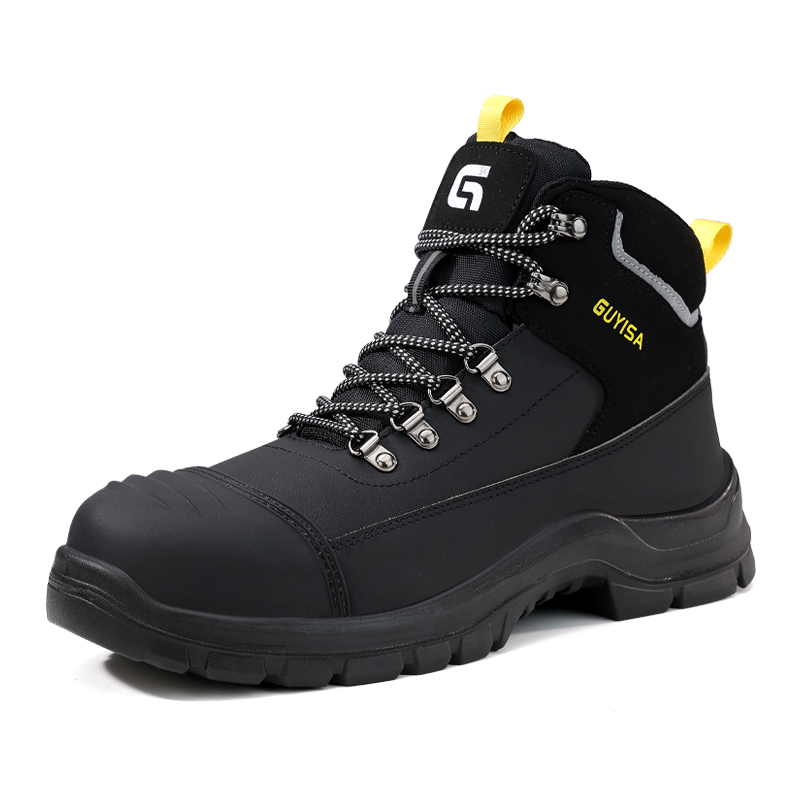
Cover image: GUYISA safety shoes model F051A, shown as an example of protective work shoes for men.
Quick Answer: What Are Work Shoes for Men in Safety Footwear?
In a safety-footwear context, work shoes for men are protective shoes designed to reduce foot injury from workplace hazards. They may be low-cut safety shoes or high-top safety boots. The protective parts that matter most are the toe cap for impact and compression resistance, the midsole for puncture resistance, the outsole for slip and oil resistance, and the upper and lining for durability and all-shift comfort.
For buyers at the awareness and research stage, the key is not to begin with a single model number. It is better to define the hazard profile first: dropped tools or materials, nails and rebar, wet or oily floors, electrical exposure, static-sensitive areas, cold storage or outdoor rain, and metal-detector restrictions. Once those risks are clear, the features and documentation required become easier to compare.
Problem Definition: Why Work Shoes for Men Need More Than a General Fit
Industrial and construction sites expose feet to uneven ground, rebar, nails, scattered metal debris and concrete fragments. Workers also face impact from dropped tools and building materials, wet or muddy site surfaces, oily workshop floors, outdoor heat, dust and rain. In electrical, welding, food-processing, cold-storage and heavy-manufacturing environments, the risk profile changes again.
A general pair of shoes may fit well and look suitable, but it does not provide the defined protective layers that safety footwear buyers look for. The buyer's problem is therefore not simply finding men's work boots or work shoes for men. The real problem is finding a pair that combines the correct anti-smash, anti-puncture, slip-resistant, anti-static or insulated construction with a fit that can be worn through an 8 to 12 hour shift.
Common evaluation questions include:
- Does the shoe have a toe cap that meets the required impact and compression standard?
- Is the midsole puncture-resistant, and is it made of Kevlar, steel or polyethylene?
- Is the outsole suitable for wet, oily, greasy or uneven floors?
- Does the site require anti-static, 10 kV insulation, waterproofing or winter lining?
- Can the supplier provide certificate copies and test reports for tenders, customs and platform listing?
- Is the model in stock, or does it need OEM or ODM production?
Industry Background: How Safety Footwear Is Specified
Safety footwear is commonly specified against EN ISO 20345. For EU-bound orders, CE marking is based on PPE Regulation (EU) 2016/425. For US-bound orders, ASTM F2413 is also relevant. These standards are not marketing labels. They are the reference points that buyers, safety managers, contractors and importers use when checking whether a safety shoe or safety boot can be accepted for site use.
The GUYISA range is built for many of the working conditions that appear in industrial procurement: construction and building sites, mining and quarrying, oil and gas, warehouse and logistics, manufacturing and heavy industry, electrical power and utilities, welding and metal fabrication, automotive repair, food processing and commercial kitchens, hospital and laboratory environments, agriculture and forestry, airport ground handling and port operations.
Because the same worker may need protection against several hazards at once, the safety-shoe category now includes construction safety shoes, waterproof safety shoes, industrial safety shoes, steel toe safety shoes, anti-puncture safety shoes, anti-smash safety shoes, slip resistant safety shoes, mining safety shoes, electrical safety shoes, welding safety shoes and heavy duty safety shoes. The category names are useful for search and initial research, but the final selection should be based on the actual protection specification.
Detailed Solution: The GUYISA Safety Shoes Range
GUYISA safety shoes are multifunctional safety shoes and safety boots. The range covers anti-smash toe caps made of steel, composite, carbon fibre or plastic; anti-puncture midsoles made of Kevlar, steel or polyethylene; anti-static protection; 10 kV insulation; SRC slip resistance; waterproof designs; and winter-lined models. This structure allows a buyer to start from the hazard rather than from a generic shoe style.
Impact and Puncture Protection
Impact protection is provided by the toe cap. GUYISA toe caps are available as European standard steel toe caps, composite or plastic non-metallic toe caps, and carbon fibre toe caps. For models following the relevant EN ISO 20345 requirements, toe cap impact resistance is 200 joules and toe cap compression resistance is 15 kilonewtons, or 15,000 newtons. These figures are the key technical points for steel toe shoes, steel toe boots, steel toe work boots and anti-smash safety shoes.
Puncture protection comes from the midsole. GUYISA offers Kevlar midsoles, 4 mm steel midsoles and polyethylene midsoles. The puncture resistance figure stated for the relevant EN ISO 20345 models is 1,100 newtons. For construction site safety shoes, mining safety shoes and heavy duty safety shoes, the combination of toe cap and anti-puncture midsole is often the central technical requirement.
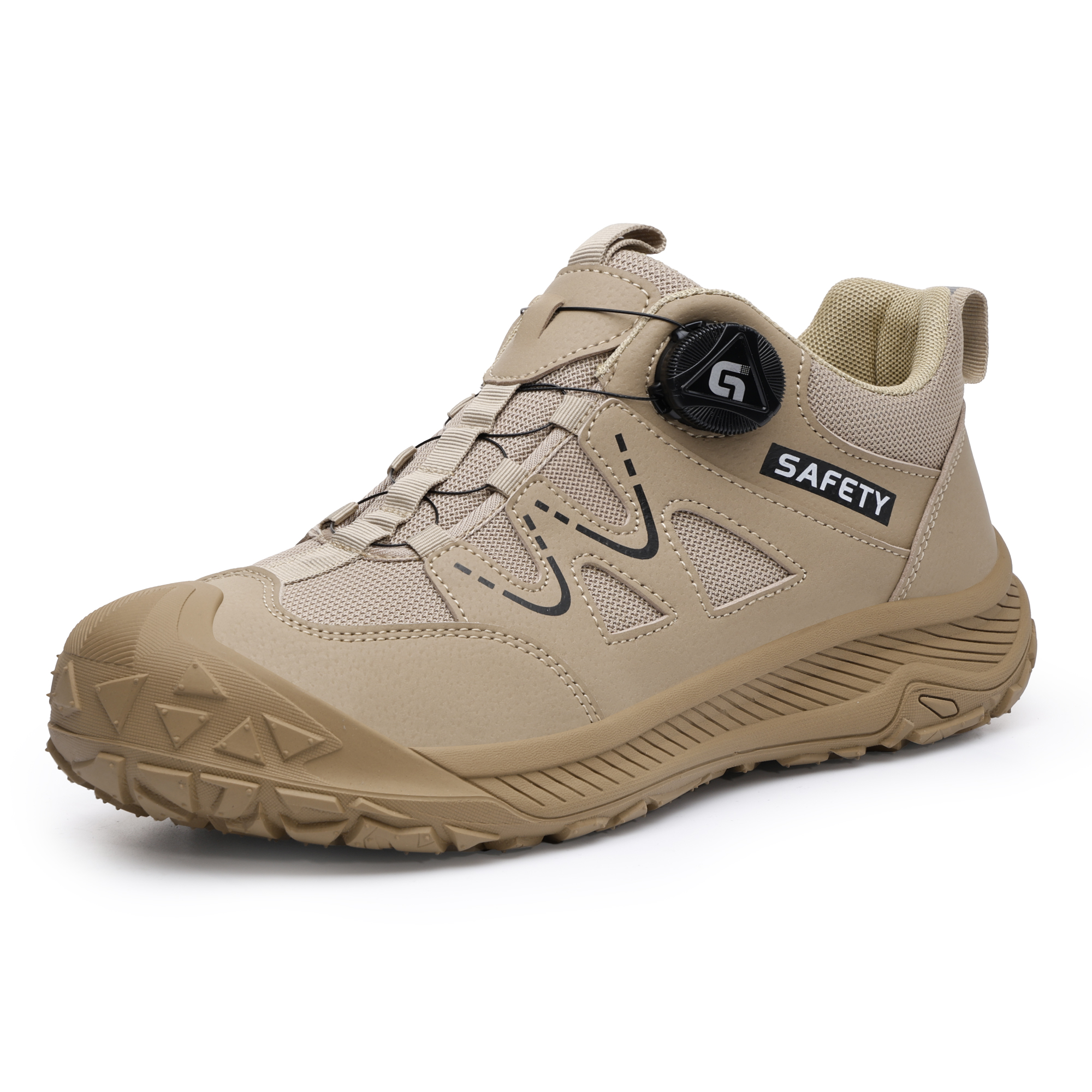
Steel toe safety shoes are one option for buyers who need anti-smash and anti-puncture protection in industrial work shoes for men.
Slip, Electrical, Static, Water and Cold Performance
Slip resistance is a separate decision from toe protection. GUYISA slip resistant safety shoes use solid dual-density PU, anti-slip rubber or MD outsoles, with SRC slip resistance noted for relevant models, subject to the model test report. Oil resistance and abrasion resistance are also relevant for wet, greasy and oily floors.
For electrical work, GUYISA 10 kV insulated safety shoes are built with a non-conductive outsole and an insulated upper assembly, with no conductive parts in the toe area. A composite or plastic non-metallic toe cap is available for metal-free and lightweight requirements. For electronics, laboratory, coating lines and other static-sensitive areas, anti static ESD safety shoes use an antistatic insole and outsole compound that drains static charge to the ground.
Waterproof safety boots and waterproof designs are available for outdoor and rainy-season work. Winter-lined models are intended for cold storage and winter outdoor work. Welding and metal fabrication users can select welder-specific safety styles. These functions should be confirmed against the model specification and certificate before purchase.
Uppers, Outsoles and All-Shift Comfort
GUYISA uppers include microfiber leather, suede leather, cowhide or genuine leather, canvas, steel-wire fabric and flyknit mesh. Linings include flyknit mesh, breathable mesh and warm cotton or lint lining. Insoles include EVA and PU, and hardware includes rust-resistant metal eyelets and hooks with lace-up construction.
Outsole options include dual-density PU injection moulded soles, natural rubber and EVA. Dual-density PU is used for cushioning, oil resistance and long wear life, while rubber and EVA versions serve different floor and comfort requirements. High-top safety boots add ankle support and are relevant for men's work boots used in construction, logistics and heavy-duty environments. The aim is to support full-shift wear, typically 8 to 12 hours per day and 5 to 6 days per week on single-shift sites, logistics and port projects.
Manufacturing and Supply Capability
Weifang Weierdun Shoes Co., Ltd. was established in 2010. The manufacturing facility covers 50,000 square meters and employs approximately 480 staff. Annual production capacity reaches 5,000,000 pairs of safety shoes. The R&D team consists of more than 30 engineers, and the company has an in-house standard laboratory and more than 30 imported testing machines for product testing.
GUYISA reports more than 1,000 styles in stock, supported by a 30,000-square-meter intelligent automated warehouse that maintains over 1 million pairs of GUYISA safety shoes. For in-stock bulk orders, shipment can be arranged within 24 hours. Export business accounts for 50% of total sales, with major markets including North America, Europe, Southeast Asia and Africa.
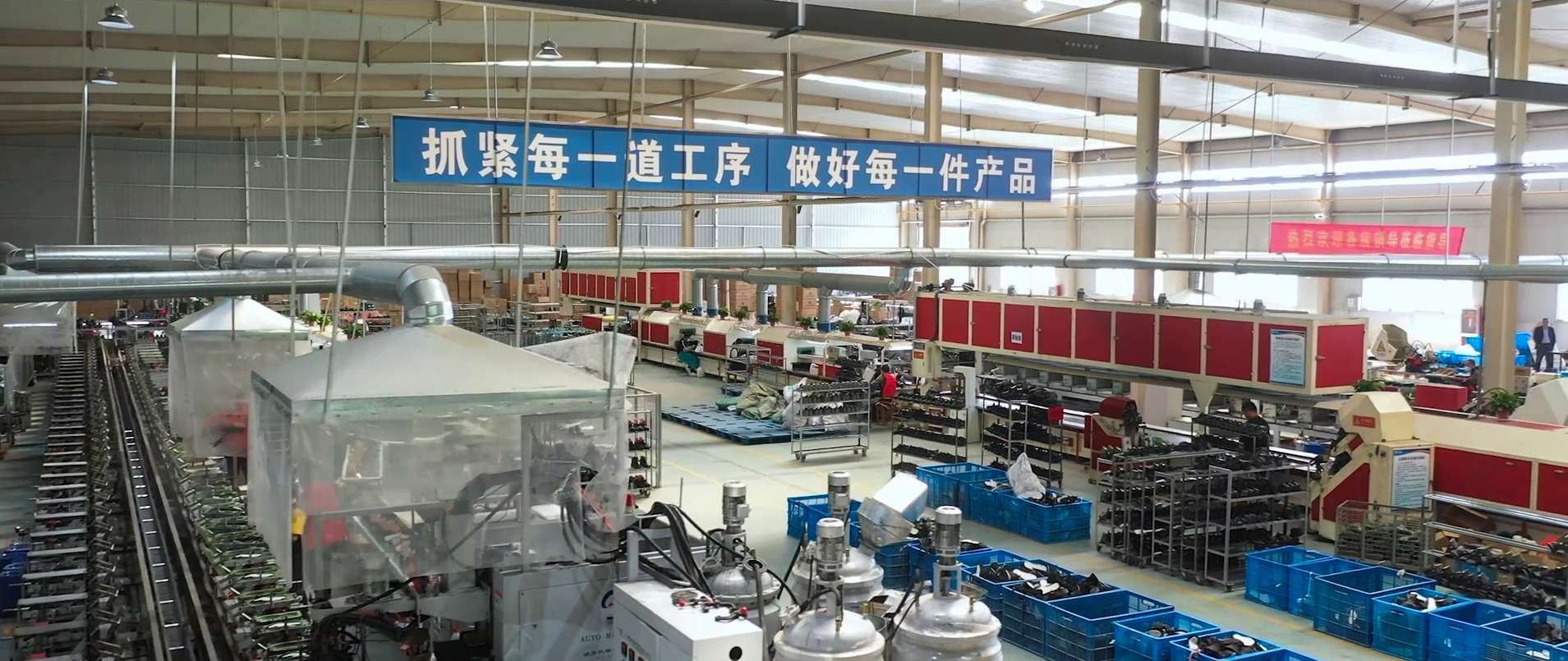
Factory workshop overview: safety shoe production lines support GUYISA bulk supply and OEM or ODM programs.
Safety shoes from the manufacturer come with compliance documentation such as ISO, LA, UKCA, CE and PPE certifications. Test reports and certificate copies can be supplied for tenders, customs clearance and platform listing. GUYISA also supports OEM and ODM service, including custom logo, colour, material and exclusive new style development. Low MOQ is available for in-stock models, while OEM and custom orders are quoted separately. Sizes cover EU 36 to EU 48, with custom sizes for bulk orders.
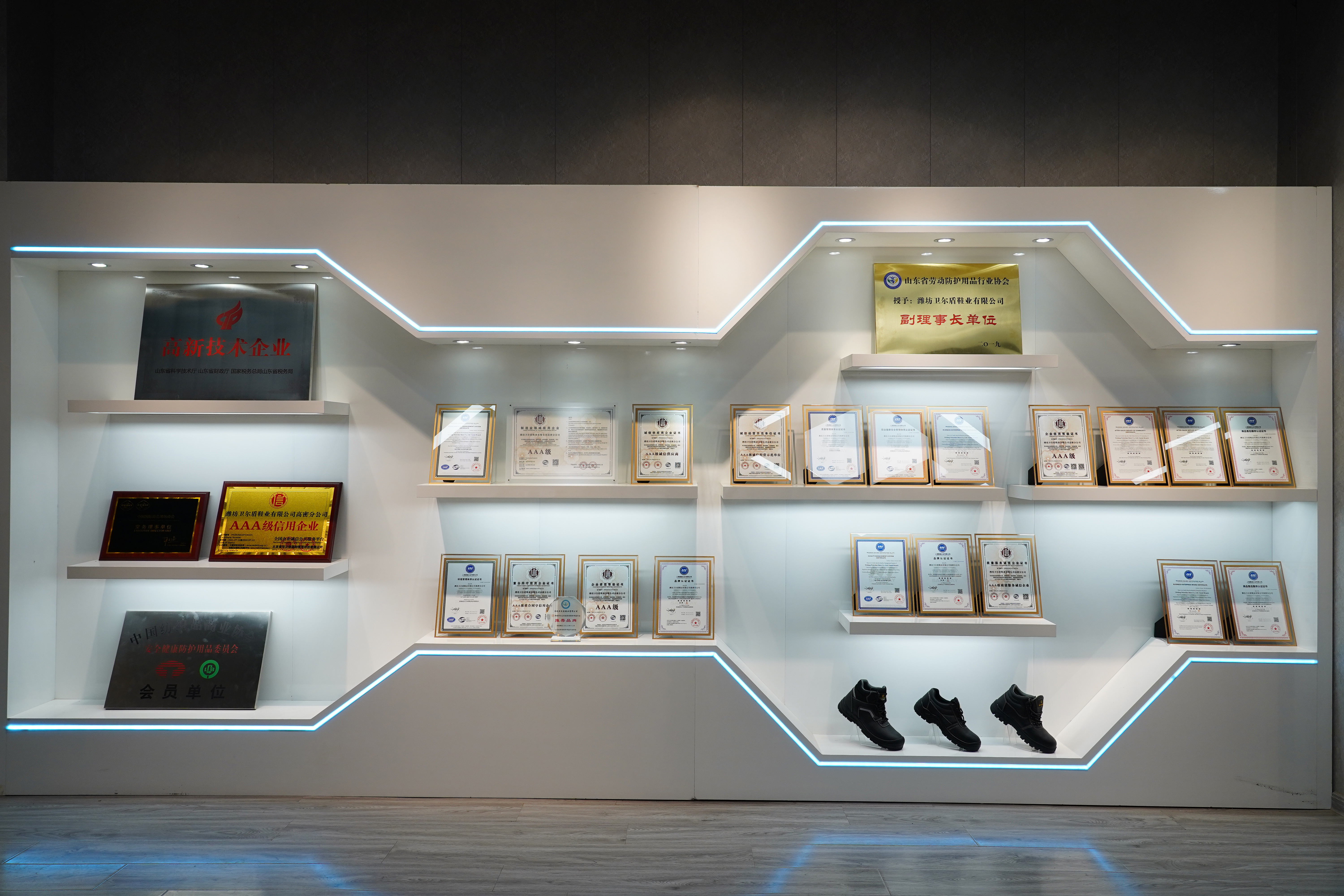
Certificate and honor wall: buyers should request the certificate documents that match the selected model and destination market.
Step-by-Step: How to Choose Work Shoes for Men for a Site or Facility
- Define the hazard profile first. List impact, puncture, slip, oil, electrical, static, water, cold and metal-detector requirements. This prevents over-specifying one feature while missing another.
- Choose the toe cap type. Steel toe safety shoes provide a metal toe cap option. Composite, plastic or carbon fibre toe caps are non-metallic options for buyers who need lightweight or metal-detector-friendly footwear. Confirm the impact and compression values for the selected model.
- Choose the anti-puncture midsole. Kevlar, 4 mm steel and polyethylene midsoles are available. The choice depends on the required puncture resistance, weight preference and site rules.
- Match the outsole to the floor. Use SRC slip-resistant and oil-resistant options for wet, greasy or oily floors. Confirm the outsole compound and test report for the exact model.
- Add electrical, anti-static, waterproof or winter features only when needed. 10 kV insulated safety shoes, anti static ESD safety shoes, waterproof safety boots and winter-lined models serve different hazards.
- Check the upper and lining for the shift. Leather, microfiber, canvas, steel-wire fabric and flyknit mesh have different durability and breathability profiles. Warm lining is for cold work, not for hot indoor sites.
- Verify compliance documentation. Check EN ISO 20345, ASTM F2413 for US-bound orders, CE marking based on PPE Regulation (EU) 2016/425, and the certificate or test report for the model.
- Confirm fit, stock and lead time. Check the size range, in-stock availability, sample process, OEM or ODM requirements and shipment timing before placing a bulk order.
Use Cases: Where Men's Work Boots and Safety Shoes Fit
Construction and building sites. Construction safety shoes and construction site safety shoes are selected for uneven ground, rebar, nails, concrete fragments and dropped materials. Steel toe work boots, anti-puncture safety shoes and slip resistant safety shoes are common starting points.
Mining and heavy industry. Mining safety shoes and heavy duty safety shoes need strong toe and midsole protection, durable uppers and outsoles that can handle abrasive ground and heavy loads.
Warehouse and logistics. Industrial safety shoes and men's work boots support loading, unloading and material handling. Comfort across long shifts is as important as protection.
Electrical power and utilities. Electrical safety shoes with 10 kV insulation are intended for electricians, substation work, transmission line work and facility maintenance. Non-metallic toe cap options are available for metal-free requirements.
Electronics, laboratories and coating lines. Anti static ESD safety shoes are used where static discharge is a concern. The antistatic insole and outsole compound drains static charge to the ground.
Food processing, kitchens and cold storage. Slip resistant safety shoes with oil-resistant outsoles are relevant for wet and greasy floors. Winter-lined and waterproof safety boots support cold, wet and outdoor work.
Welding and metal fabrication. Welding safety shoes and welder-specific styles are available for metal fabrication environments. Toe protection, upper material and heat-related requirements should be checked against the model.
Airport, port and security-screened sites. Composite or plastic non-metallic toe caps can be useful where metal-detector-friendly footwear is required. Confirm the model specification before ordering.
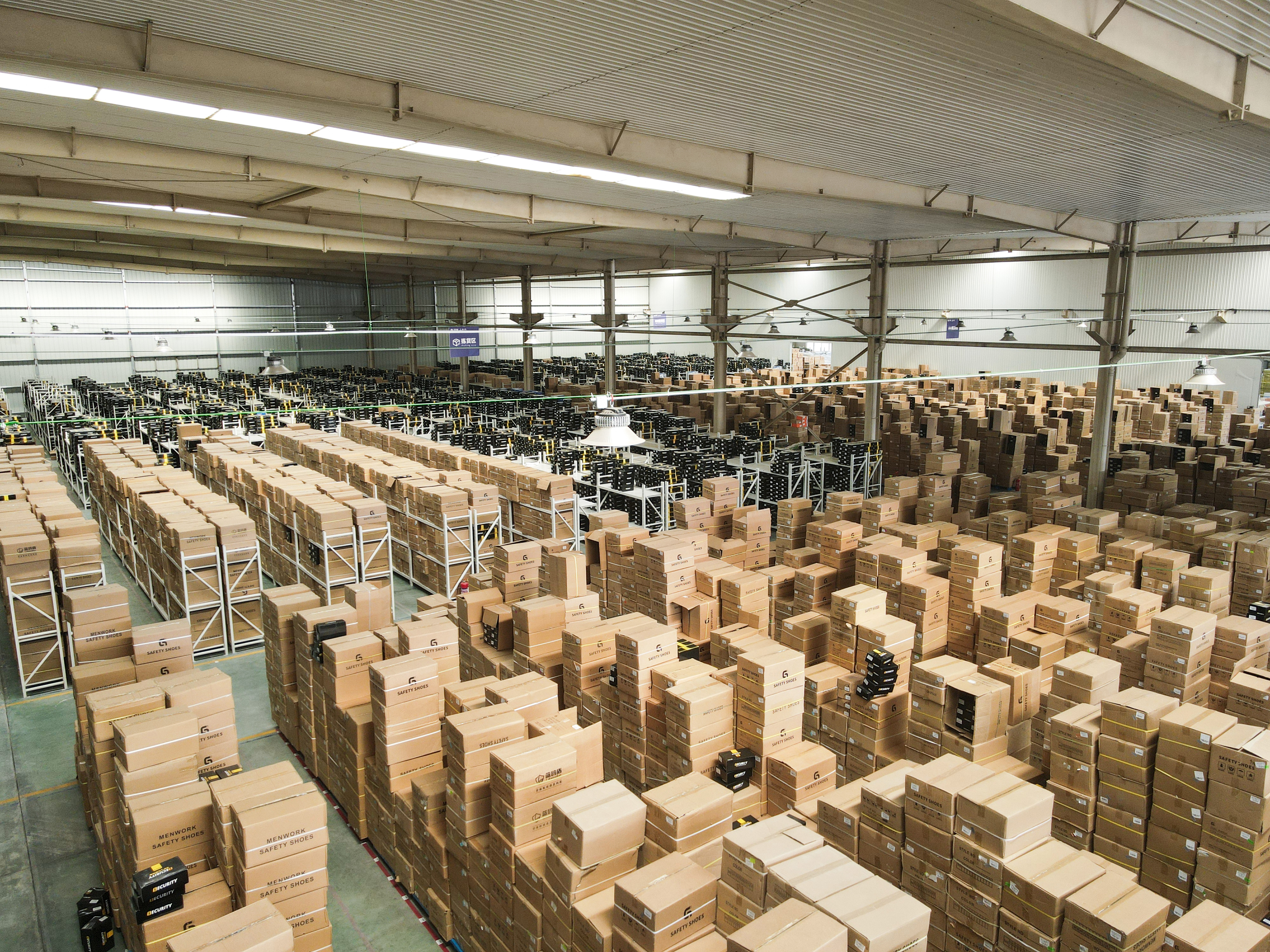
Finished-goods warehouse: in-stock models support fast shipment for bulk safety-shoe orders.
Comparison Table: Matching Safety Shoe Features to Work Risks
| Work risk | Protective feature | GUYISA option from corpus | What the buyer should verify |
|---|---|---|---|
| Dropped tools, impact, crushing | Anti-smash toe cap | Steel, composite, carbon fibre or plastic toe cap; 200 J impact and 15 kN compression for relevant EN ISO 20345 models | Toe cap type, model certificate and protection class |
| Nails, rebar and sharp debris | Anti-puncture midsole | Kevlar, 4 mm steel or polyethylene midsole; 1,100 N puncture resistance for relevant EN ISO 20345 models | Midsole material, thickness where stated, and test report |
| Wet, oily or greasy floors | Slip-resistant outsole | Dual-density PU, anti-slip rubber or MD outsole; SRC slip resistance noted for relevant models | Outsole compound, oil resistance and model-specific SRC report |
| Electrical maintenance | Electrical insulation | 10 kV insulated construction; non-conductive outsole and insulated upper assembly | Insulation claim and model certificate |
| Static-sensitive areas | Anti-static or ESD | Antistatic insole and outsole compound that drains static charge to the ground | ESD or antistatic certificate for the exact model |
| Rain, outdoor work and wet conditions | Waterproof design | Waterproof designs and waterproof breathable safety boots | Waterproof construction and upper material |
| Cold storage and winter outdoor work | Warm lining | Winter-lined models with warm cotton or lint lining | Lining type and intended temperature range if stated |
| Metal-detector areas | Metal-free toe cap | Composite or plastic non-metallic toe cap option | Full metal-free construction and screening requirement |
| Welding and metal fabrication | Welder-specific safety style | Welding safety shoes and welder-specific safety functions | Upper material and welding-related specification |
FAQ
Are GUYISA safety shoes certified for global markets?
Yes. GUYISA safety footwear is supplied with compliance documentation such as ISO, LA, UKCA, CE and PPE certifications. For EU-bound orders, CE marking is based on PPE Regulation (EU) 2016/425. For US-bound orders, ASTM F2413 is relevant. Buyers should request the certificate or test report that matches the selected model and destination market.
What should buyers check when comparing China safety shoes manufacturers?
Check the manufacturer's production capacity, testing resources, certification documents, stock model range, OEM or ODM capability and sample process. Weifang Weierdun Shoes Co., Ltd. was established in 2010, covers 50,000 square meters, employs approximately 480 staff, and has annual production capacity of 5,000,000 pairs. GUYISA reports more than 30 R&D engineers, an in-house standard laboratory and more than 30 imported testing machines. The company also supplies compliance documentation such as ISO, LA, UKCA, CE and PPE certifications.
What is the MOQ for GUYISA bulk orders?
For in-stock GUYISA models, low MOQ is available. For OEM and custom orders, MOQ is quoted separately according to the model, material, colour, logo and packaging requirements. Buyers should confirm the target model and customisation scope before requesting a quotation.
Can I get samples of GUYISA safety shoes?
Yes. GUYISA provides a sample service, and custom prototyping is supported. For free samples, the buyer covers the shipping cost. Sampling is the practical way to check fit, upper material, toe cap type, outsole and finish before a bulk order. Contact the GUYISA team with the model, size and destination so the sample request can be reviewed.
How fast can GUYISA ship my order?
For in-stock bulk orders, GUYISA can arrange shipment within 24 hours from a warehouse holding over 1 million pairs. Custom and OEM orders have a negotiated production lead time. The final schedule depends on the selected model, quantity, customisation and destination.
Conclusion: Start With the Hazard, Then Select the Safety Shoe
Work shoes for men should be selected as protective equipment when the workplace presents impact, puncture, slip, electrical, static, water or cold risks. The useful comparison is not based on appearance alone. It is based on toe cap type, midsole material, outsole performance, upper and lining, certification and supply reliability.
GUYISA safety shoes cover steel toe shoes, steel toe boots, waterproof safety boots, anti-puncture safety shoes, anti-smash safety shoes, slip resistant safety shoes, electrical safety shoes, welding safety shoes and heavy duty safety shoes for industrial work. The range is supported by GUYISA manufacturing facts: a 50,000-square-meter facility, approximately 480 staff, 5,000,000 pairs annual capacity, more than 30 R&D engineers, an in-house laboratory, more than 30 imported testing machines, more than 1,000 styles in stock, and a warehouse holding over 1 million pairs.
Next Step: Sample, Quote or Catalog Review
Buyers who have defined the workplace hazard can request a GUYISA sample, a bulk quotation or the product catalog. For in-stock models, low MOQ is available; OEM and custom orders are quoted separately. Samples are available, with shipping covered by the buyer for free samples, and custom prototyping is supported.
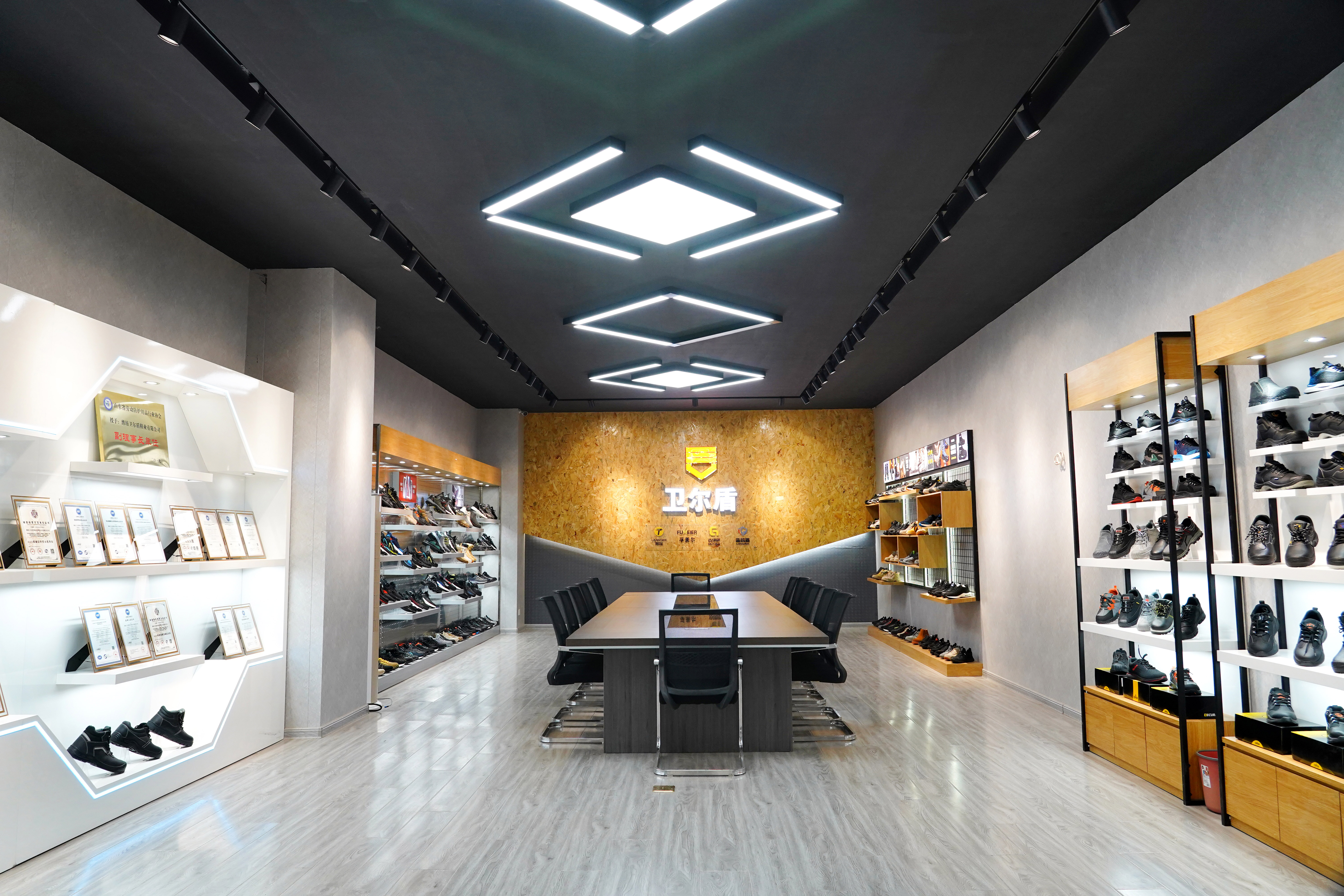
Sample room: review safety shoe models, materials and protection options before bulk procurement.
Download the GUYISA safety shoes catalog
Website: guyisa.com
Email: xixi0riley@gmail.com
Tel and WhatsApp: +86 132-8536-8838
GUYISA is the flagship safety footwear brand of Weierdun Group. Production address: Weierdun Protective Technology Co., Ltd., intersection of Gaoxin Third Road and Lingzhi Street, High-tech Industrial Park, Xiazhuang Town, Gaomi City, Weifang City, Shandong Province.
Have Questions or Need More Details?
Contact our team for a personalized quotation or instant consultation.
Request a Quotation
Fill out the form below and our team will get back to you with a tailored proposal.
WhatsApp Direct Chat
Prefer to chat in real-time? Message us on WhatsApp for instant assistance & quick answers.
- Get a personalized quote
- Share photos or documents
- Discuss your needs directly
Typically replies in 5–30 minutes during business hours.