
2026 Commercial Display Trends: Top Display Formats Reshaping Buyer Decisions
The commercial display market is no longer a simple choice between a screen and a sign. In 2026, buyers evaluating commercial display solutions face a rapidly expanding set of options: holographic displays, digital human displays, transparent displays, LED video walls, interactive kiosks, and AI-driven smart displays. Each format has a different purpose, cost structure, and operational requirement. This guide helps procurement teams, system integrators, and project owners compare the leading commercial display formats and shortlist suppliers based on decision-relevant criteria rather than marketing claims.
What Is a Commercial Display?
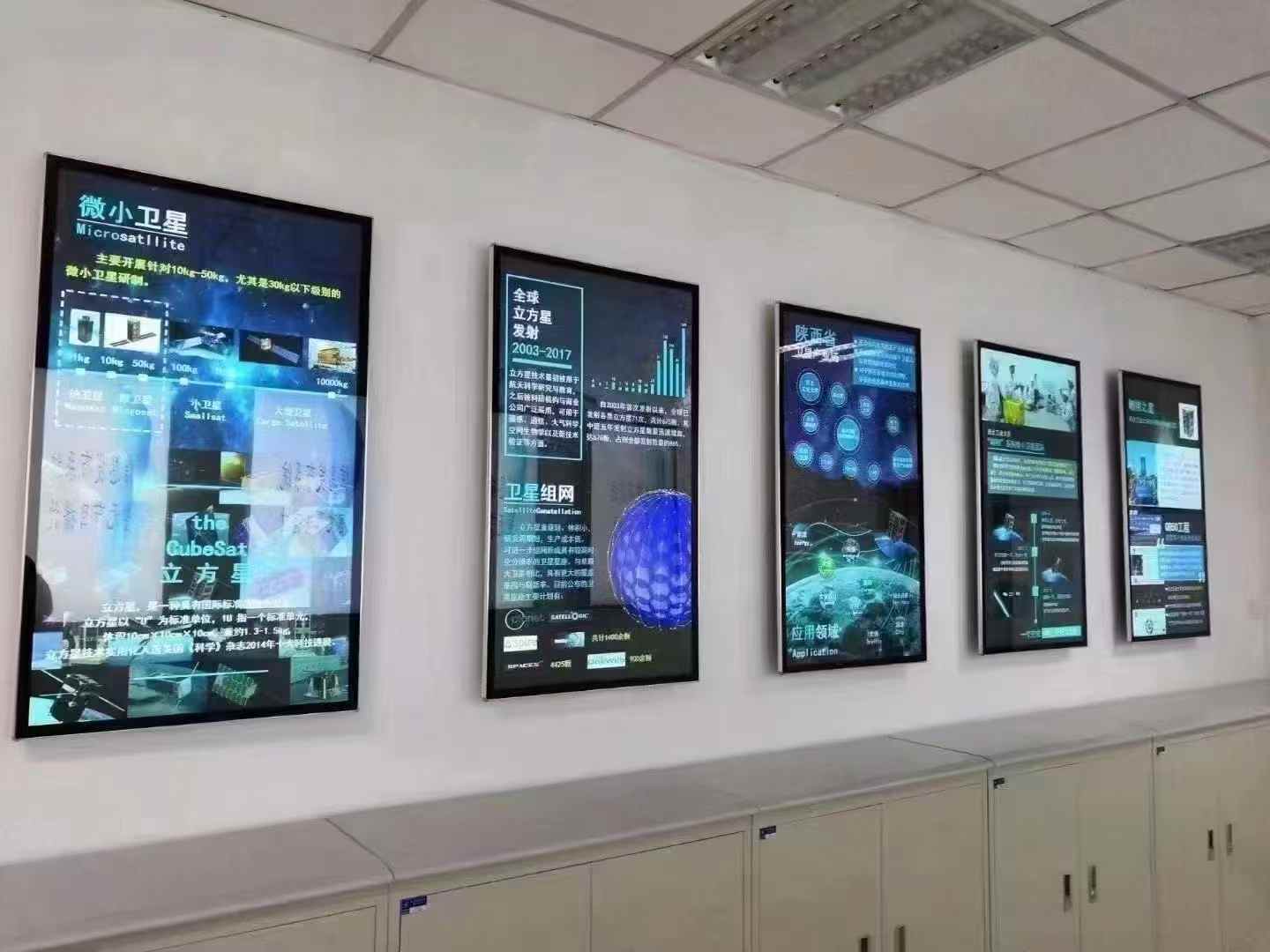
A commercial display is a display system designed for business, public, or industrial environments rather than consumer home use. It typically supports longer operating hours, higher brightness, networked content management, and specialized form factors such as wall-mounted advertising displays, video walls, transparent cabinet displays, outdoor waterproof displays, and interactive kiosks. A commercial display solution usually combines the display hardware, an Android or embedded processing system, playback software or CMS, mounting or enclosure hardware, and in many cases remote cloud management.
Guangzhou Kedro Electronics Technology Co., Ltd. (GZKEDRO) is a China-based commercial display manufacturer founded in 2013, with R&D centers in Guangzhou and Shenzhen and a factory in Panyu District, Guangzhou. GZKEDRO produces commercial display screens, smart advertising machines, smart conference displays, LED displays, video walls, outdoor displays, transparent displays, self-service kiosks, and AI digital human displays. The company reports supplying 1000+ commercial display units globally per year and exporting approximately 80% of its output to global markets.
Why Commercial Display Buying Decisions Are Getting Harder
Three forces are making the 2026 commercial display purchase decision more complex:
- Format proliferation: buyers are no longer comparing two LCD panels; they are comparing holographic displays, transparent LCDs, interactive slider screens, LED video walls, and digital humans, each with a different technical specification set.
- New buyer needs: retailers, hotel owners, transport hubs, and exhibition companies want displays that attract attention and generate interaction, not just play loops.
- Supplier evaluation burden: because many commercial display manufacturers offer similar-looking products, buyers must evaluate customization capability, certification, lead time, quality control, and after-sales support rather than only comparing price.
For an Evaluation-stage buyer, the key is to build a shortlist of display formats first, then a shortlist of suppliers who can deliver those formats with verified evidence.
The Commercial Display Market in 2026: What the Data Shows
Market data confirms that commercial display investment continues to expand. The global commercial display market was estimated at USD 53.65 billion in 2024, with digital signage accounting for more than 53.73% of the revenue share (Grand View Research). The holographic display market is projected to grow from USD 5.42 billion in 2026 to USD 33.36 billion by 2034, at a CAGR of 25.52% (Fortune Business Insights). Transparent display market size was valued at USD 2.84 billion in 2023 and is expected to reach USD 81.5 billion by 2032, partly due to AR integration (Global Market Insights). North America held a 35.6% revenue share of the global digital signage market in 2025, the largest regional market (Grand View Research).
These numbers point to one practical conclusion: the fastest-growing segments are not necessarily the highest-volume segments. Holographic and transparent displays are high-attention formats, while LED displays and LCD video walls remain workhorse options for advertising and information distribution.
Top Commercial Display Formats to Evaluate in 2026
The following formats are the most relevant for buyers comparing commercial display solutions in 2026.
1. Holographic Display / Digital Human Display
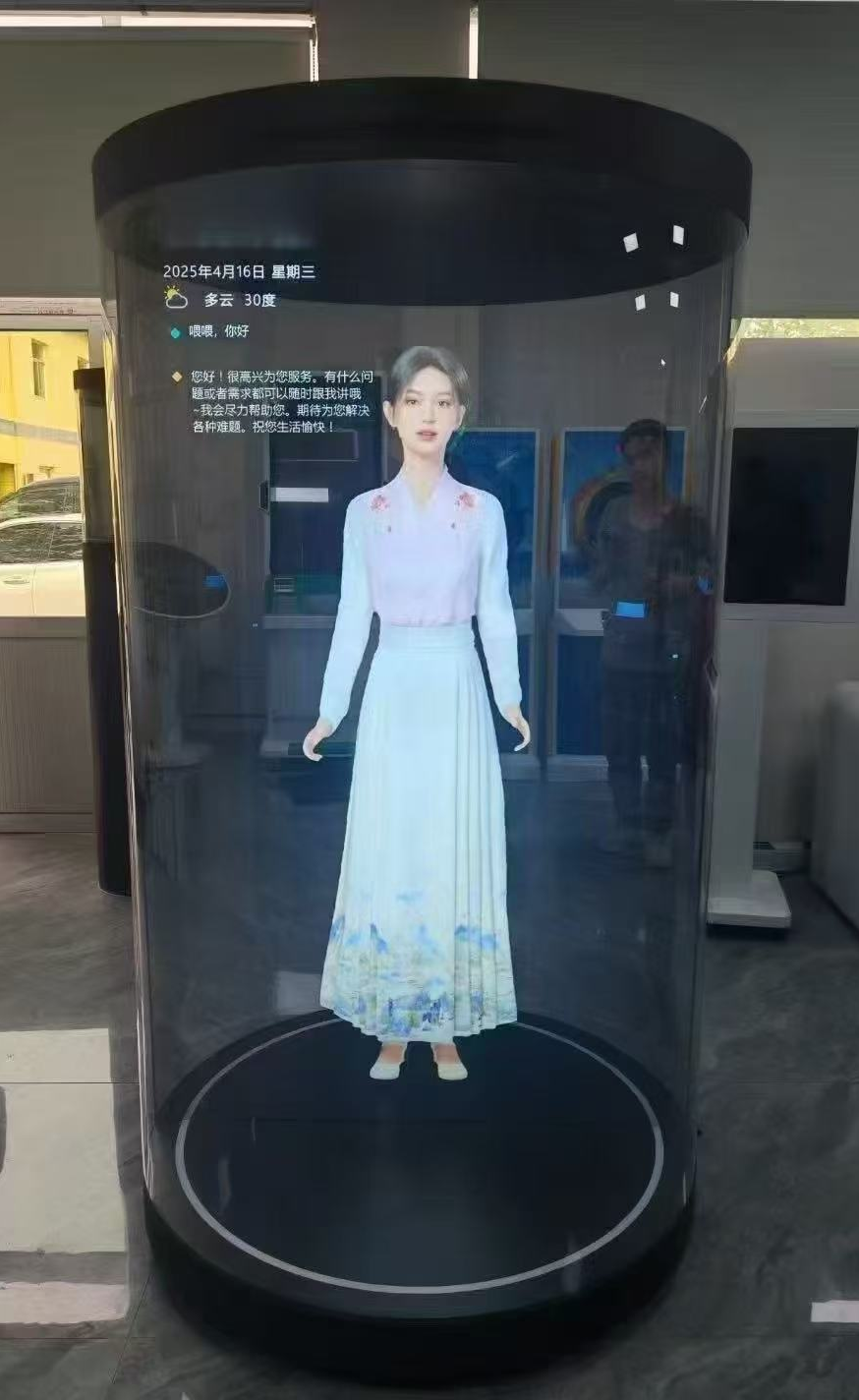
Holographic displays and AI digital human displays are the highest-impact formats in the current commercial display landscape. They are used in exhibition centers, hotel lobbies, commercial districts, education, and healthcare environments to create a futuristic brand experience. A digital human display combines a high-brightness transparent display with an AI-driven human image, an 8-array microphone, a camera, speakers, and interactive capabilities.
GZKEDRO’s Holographic Digital Human (KD-DH Series) illustrates the specification level buyers should expect from this format in 2026: 3840 × 2160 4K resolution, 1300 cd/m² brightness, 3000:1 physical contrast ratio, HDR1000 support, 30% light transmittance, 60W speakers with 2.1 channels, an 8-array microphone, and a 5MP driverless camera. Rated power consumption is 1100W, which is a relevant operational cost factor for buyers comparing this format with lower-power LCD options.
2. LED Display / Video Wall Display
LED displays and LCD video walls remain the most common formats for large-format advertising, smart city, control room, and public information applications. GZKEDRO’s LED Display (KD-LED Series) uses surface-mount 3-in-1 Ruisheng LED, a 2.0mm dot pitch, white balance brightness of at least 4500 cd/m², pixel density of 160,000 dots/m², and a refresh rate of at least 3840Hz. This specification is oriented to outdoor media and smart city use, where brightness and refresh rate determine visibility.
The Video Wall Display (KD-VW Series) is an LCD-based 55-inch video wall with a 3.5mm sealing gap, 1920 × 1080 resolution, 500 cd/m² brightness, 4000:1 contrast ratio, and 178° viewing angles, designed for monitoring, exhibitions, government offices, and shopping malls.
3. Transparent Display
Transparent displays are increasingly used in luxury retail, hotels, and commercial districts to combine product display with digital messaging. GZKEDRO’s Transparent Cabinet Display (KD-TP Series) has a 95% transparency, 1920 × 1080 resolution, 380 cd/m² brightness, 3000:1 contrast ratio, and a full 178° viewing angle. The transparent format allows customers to see a physical product while digital content overlays or surrounds it.
4. Outdoor Display / Waterproof Display
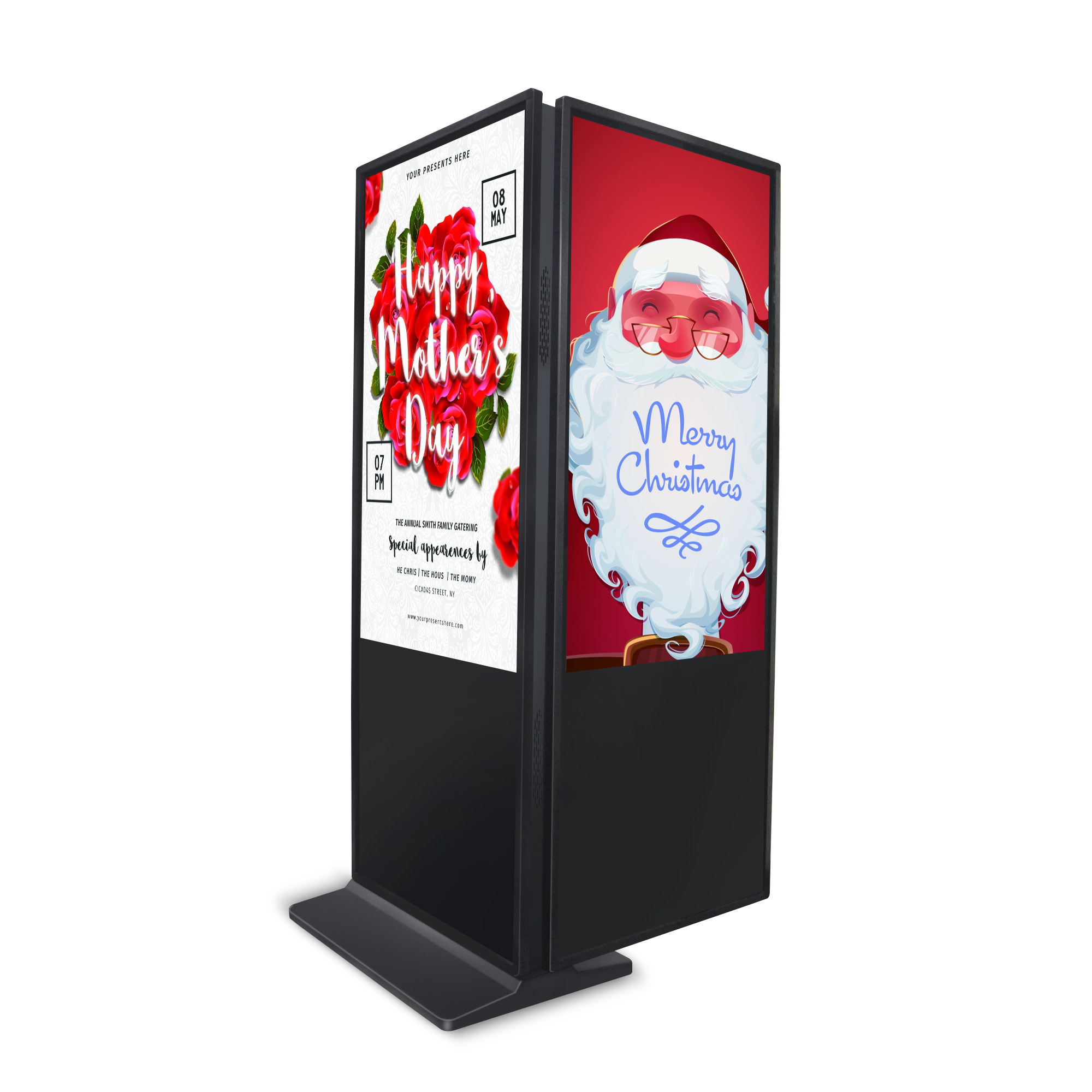
Outdoor commercial displays must handle sunlight readability, heat dissipation, humidity, and continuous operation. GZKEDRO’s Outdoor Advertising Display (KD-OD Series) provides 2000 cd/m² brightness, IP55 protection, air-cooled heat dissipation, a tempered glass front, and an operating temperature range of -20°C to 50°C. The Dual-Screen Outdoor Advertising Machine (KD-DSA Series) uses the same high-brightness specification in a dual-sided format for transport hubs, commercial districts, and smart city projects.
5. Interactive Display / Touch Display / Kiosk
Interactive displays and touch kiosks are essential for self-service, wayfinding, and customer engagement. GZKEDRO’s Self Service Kiosk (KD-SSK Series) uses a 21.5-inch touch screen, an Intel Core i5 10th generation processor, 8GB RAM, and a 256GB SSD inside a kiosk body designed for hospitals, banks, airports, railway stations, government service centers, and shopping malls. The Smart Conference Display (KD-IFPD Series) supports 40 multi-touch points, 4K-30Hz frame rate, 30,000-hour service life, and Android 14.0, meeting the needs of corporate offices, training centers, and education institutions.
6. Smart AI Display / Digital Signage with AI
Smart displays in 2026 increasingly integrate AI gesture recognition, multi-touch, infrared sensing, and cloud management. GZKEDRO lists intelligent interactive systems with multi-touch, infrared sensing, and AI gesture recognition as a core technology, along with a remote cloud control platform that supports remote deployment, monitoring, and maintenance of devices worldwide.
GZKEDRO Commercial Display Portfolio: Selection Snapshot
| Product Line | Model Series | Format | Key Specifications | Typical Applications |
|---|---|---|---|---|
| Holographic Digital Human | KD-DH Series | AI Digital Human | 3840×2160, 1300 cd/m², HDR1000, 8-array mic, 5MP camera, 1100W | Exhibition Center, Hotel Lobby, Commercial District, Education, Healthcare |
| LED Display | KD-LED Series | Outdoor LED Screen | ≥4500 cd/m², 2.0mm pitch, ≥3840Hz refresh, 160,000 dots/m² | Outdoor Media, Smart City, Outdoor Billboards |
| Video Wall Display | KD-VW Series | LCD Video Wall | 55-inch, 3.5mm gap, 1920×1080, 500 cd/m², 4000:1 | Monitoring, Exhibitions, Government, Shopping Malls |
| Transparent Cabinet Display | KD-TP Series | Transparent LCD Display | 95% transparency, 1920×1080, ≥380 cd/m², 3000:1 | Luxury Retail Store, Hotel, Commercial District |
| Outdoor Advertising Display | KD-OD Series | Outdoor Waterproof Display | 2000 cd/m², IP55, -20°C to 50°C, RK3288 | Transport Hub, Commercial District, Smart City Projects |
| Dual-Screen Outdoor Advertising Machine | KD-DSA Series | Outdoor Advertising Display | 1080×1920, 2000 cd/m², IP55-class enclosure | Transport Hub, Commercial District, Smart City Projects |
| Advertising Display | KD-AD Series | Indoor Digital Signage | 1920×1080, 450 cd/m², RK3566, 2GB RAM, 32GB ROM | Commercial District, Airport, Railway Station, Shopping Mall, Hotel |
| Wall Mounted Display | KD-WM Series | Wall-Mounted Advertising Machine | 1920×1080 (3840×2160 optional), 350 cd/m², Android 14.0, BOE panel | Shopping Mall, Hotel, Commercial District, Airport, Railway Station |
| Smart Conference Display | KD-IFPD Series | Interactive Conference Display | 40-point touch, 4K-30Hz, 30,000 hrs, Android 14.0 | Corporate Office, Education, Training Center, Government Office |
| Self Service Kiosk | KD-SSK Series | Touch Inquiry Kiosk | 21.5-inch touch, Core i5 10th gen, 8GB RAM, 256GB SSD | Hospital, Bank, Airport, Railway Station, Government, Shopping Mall |
| Interactive Slider Screen | KD-ISS Series | Wall Sliding Display | 1920×1080, 1500 cd/m², IP55, 178° viewing angle | Exhibition Center, Hotel Lobby, Commercial District |
| Elevator Advertising Machine | KD-EA Series | Indoor Elevator Display | 1920×1080, 250 cd/m², ≥55W, >50,000 hrs backlight life | Transport Hub, Commercial District, Smart City Projects |
How to Compare Commercial Display Suppliers in 2026
The supplier comparison should follow the same logic as the product comparison: start with the required format, then verify the supplier’s capability using five criteria.
Criterion 1: Format and Customization Capability
Not every commercial display supplier can deliver every format. For a project that needs a holographic display today and a video wall next quarter, a supplier with a broad portfolio reduces procurement risk. GZKEDRO operates a display factory with customized display solutions and OEM/ODM services. Customization options include logo, color, software, UI interface, packaging, voltage, screen size, brightness, housing, system configuration, software/CMS, industrial design, and hardware structure.
Criterion 2: Certifications and Compliance
Buyers should verify that the display supplier meets the electrical safety, EMC, and environmental requirements of their target market. GZKEDRO reports the following certifications and test reports in its company corpus:
- ISO 9001 Quality Management System Certification (certificate number 25020021R0S, issued 2025-01-14, valid to 2028-01-13) for production and sales of intelligent display terminals, computer display screens, touch screen all-in-one machines, and touch teaching all-in-one machines.
- FCC SDoC compliance for the United States market (certificate number MAX26060195P01-E01, standard FCC Part 15 Subpart B / ANSI C63.4:2014, issued 2026-06-30).
- EU LVD Verification of Compliance (EN IEC 62368-1:2024/A11:2024, LVD Directive 2014/35/EU, cert MK25100089P01-S01, issued 2025-11-10).
- EU EMC Verification of Compliance (EN 55032, EN 55035, EN IEC 61000-3-2, EN 61000-3-3, EMC Directive 2014/30/EU, cert MK25100089P01-E01).
- EU RoHS 2.0 Verification of Compliance (IEC 62321 series, RoHS Directive (EU) 2015/863).
- China Compulsory Product Certification (3C) for safety and EMC.
The certification list matters because commercial display buyers increasingly ask for evidence before shortlisting, not after sampling. IEC 62368-1 is now the primary safety standard for AV and IT equipment in many markets, replacing the older IEC 60950-1 and IEC 60065 standards (UL Solutions).
Criterion 3: Production Capacity and Lead Time
Buyers evaluating suppliers for mid-size or large projects should confirm production capacity, MOQ, and lead time. GZKEDRO reports a monthly capacity of 2000–5000 units, a lead time of 15–30 days with a maximum of 30 days, and an MOQ of 2–5 units depending on product size, with project-based MOQ flexibility.
Criterion 4: Quality Control Process
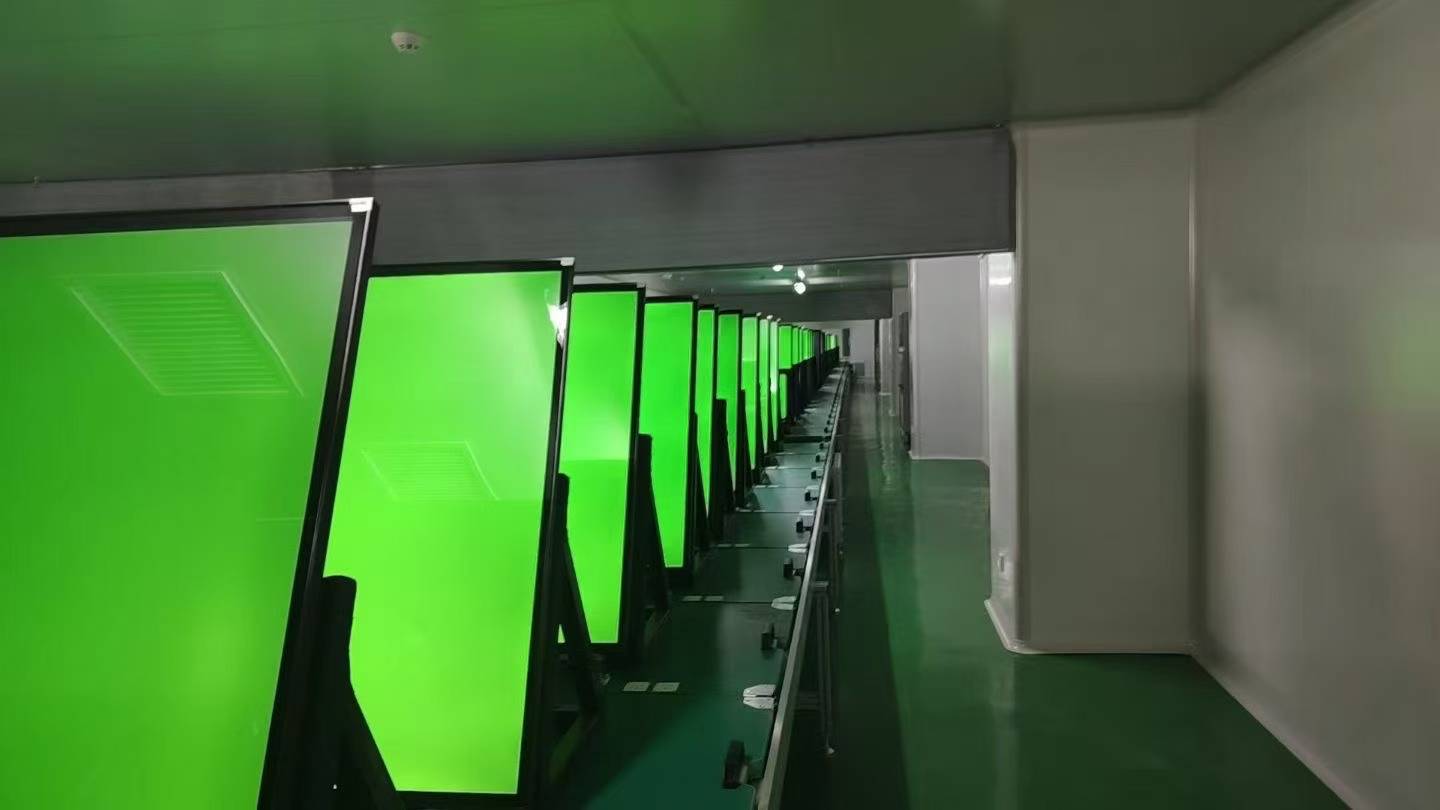
Quality control evidence is more decision-relevant than quality claims. GZKEDRO’s stated process includes 100% aging tests and functional inspections, brightness tests, waterproof tests, touch tests, temperature tests, continuous operation testing, and full quality control before shipment, using industrial standard testing.
Criterion 5: After-Sales Support and Project Duration
Commercial displays typically operate for years, so after-sales support is a long-term cost. GZKEDRO reports remote technical support, online technical guidance, 24/7 technical assistance, and professional engineering support. In its case corpus, the standard project duration is normally 3 years, with up to 5 years for special cases.
Comparing Market-Leading Display Brands in 2026
Publicly available market research identifies Samsung Electronics and LG Display as global leaders in the commercial and large-format display market (Market Research Future). These companies are strong references for display panel technology, particularly in premium video walls and commercial signage. Buyers comparing Samsung or LG with China-based commercial display manufacturers should evaluate the comparison across business model, customization, project scale, and price band rather than brand awareness alone. The table below compares the general positioning of these players with GZKEDRO as a manufacturing partner.
| Comparison Dimension | Samsung / LG Display | GZKEDRO |
|---|---|---|
| Primary Market Position | Global leaders in large-format and premium commercial displays | Manufacturer of commercial display solutions with OEM/ODM and factory-direct supply |
| Known For | Panel technology, premium video walls, MicroLED innovation (e.g., Samsung “The Wall”) | Customized display solutions, flexible MOQ, full-series portfolio, manufacturing capability |
| Buyer Fit | Brand-driven projects with premium budgets | Global commercial projects, OEM/ODM buyers, distributors, and integration-focused procurement |
| Customization Approach | Limited, product-line-based configuration | Logo, color, software, UI, packaging, voltage, size, brightness, housing, system configuration, software/CMS, industrial design, hardware structure |
| Project Evidence | Extensive global case studies | Commercial advertising, smart classroom, smart retail, outdoor media, events, government and smart city, distribution and brand projects |
This comparison uses publicly reported market leadership and GZKEDRO’s self-reported manufacturing capabilities. It does not claim that GZKEDRO outperforms Samsung or LG in panel technology; the practical question for buyers is which supplier model fits the project: a premium global brand or a factory partner capable of customization and direct supply.
Step-by-Step: Building Your 2026 Commercial Display Shortlist
Use the following process when you are in the Evaluation stage and preparing to request a sample, quotation, or engineering consultation.
- Define the application and installation environment. Indoor or outdoor? Wall-mounted, freestanding, or built into furniture? How many hours per day will it operate?
- Select the display format. Choose between holographic, LED, LCD video wall, transparent, interactive, outdoor, or multi-format based on visibility needs and budget.
- Define the technical minimums. Resolution, brightness, contrast ratio, viewing angle, IP rating, operating temperature range, and system configuration (CPU, RAM, storage, Android version).
- Check the compliance requirements of the target market. Confirm whether FCC, CE/LVD, CE/EMC, RoHS, or regional certifications are required for customs clearance and deployment.
- Shortlist manufacturers with verified production and quality-control evidence. Ask for factory capacity, lead time, MOQ, and testing process.
- Request a sample or a pilot unit. Verify brightness, touch response, heat dissipation, and software behavior in the real installation environment.
- Compare total cost of ownership. Include power consumption, maintenance, spare parts, and after-sales support across the expected 3–5 year life.
Use Cases: Which Format Fits Which Project
Retail Chain Stores and Luxury Retail
Retail buyers tend to prioritize customer engagement and premium visual presentation. Transparent cabinet displays work well in luxury retail and hotel environments. Advertising displays and wall-mounted displays are common in shopping malls, commercial districts, and chain stores. The GZKEDRO case corpus reports increased customer engagement in deployed projects, stable 24/7 advertising operation, and adoption by OEM and ODM display buyers.
Outdoor Advertising and Smart City Projects
Outdoor projects require sunlight-readable brightness, waterproofing, and stable low-temperature operation. Outdoor Advertising Displays with 2000 cd/m² brightness, IP55 protection, dual-screen machines, and LED displays with high brightness and refresh rate are the most relevant formats for transport hubs, smart city projects, and outdoor media operators.
Corporate Offices and Training Centers
Corporate buyers evaluating Smart Conference Displays should check multi-touch points, wireless sharing capability, interactive whiteboard functions, and operating system compatibility. The KD-IFPD Series supports 40 multi-touch points, making it suitable for meetings, training, and education environments.
Government, Events, and Exhibitions
Government and event buyers often need video walls for monitoring rooms, exhibitions, and public information. LCD video walls with 55-inch panels, 3.5mm sealing gap, and wide viewing angles are a proven choice, while holographic digital human displays are increasingly used at exhibitions and events for high-impact audience engagement.
GZKEDRO Case Evidence for Evaluation-Stage Buyers
For buyers at the Evaluation stage, the most useful evidence is what the supplier has actually delivered. GZKEDRO’s client types include advertising media companies, education institutions, retail chain stores, outdoor advertising contractors, exhibition and event companies, system integrators, corporate offices, luxury retail brands, government and smart city projects, and OEM/ODM display buyers. Project quantities in the corpus include 100+ units, customized projects, large-scale projects, and 100-unit-plus orders. Case applications include commercial advertising, smart classroom and training, smart retail advertising, outdoor media advertising, events and exhibitions, smart commercial integration, meeting and collaboration, product showcase and branding, public information broadcasting, and distribution and brand projects.
Stated project results include stable 24/7 advertising operation, improved interactive teaching efficiency, increased customer engagement, stable outdoor operation, high visual impact performance, stable system integration, efficient communication environments, premium visual marketing, continuous public operation, and long-term stable performance.
FAQ
Which certifications should a commercial display have for the US and EU markets in 2026?
For the United States market, buyers should verify FCC compliance, such as an FCC SDoC statement. For the European Union, the relevant compliance areas are electrical safety under the LVD Directive 2014/35/EU, EMC under Directive 2014/30/EU, and RoHS under Directive (EU) 2015/863. The safety standard commonly applied to commercial displays is EN IEC 62368-1:2024/A11:2024, which has replaced the older IEC 60950-1 and IEC 60065 standards. GZKEDRO reports holding FCC SDoC, EU LVD, EU EMC, and EU RoHS compliance documents for its display product series.
Can GZKEDRO customize commercial displays for OEM/ODM projects?
Yes. GZKEDRO states that all display products can be customized, including logo, color, software, UI interface, packaging, voltage, screen size, brightness, housing, system configuration, software/CMS, industrial design, and hardware structure. The company operates a display factory with OEM and ODM services, a monthly capacity of 2000–5000 units, a 15–30 day lead time, and a 2–5 unit MOQ depending on product size.
What is the typical lead time and MOQ for GZKEDRO commercial displays?
GZKEDRO states a lead time of 15–30 days with a maximum of 30 days. The MOQ is 2–5 units depending on product size, with project-based MOQ flexibility. This makes GZKEDRO suitable for buyers who need to test a few units before scaling to a larger deployment, as well as buyers executing 100+ unit projects.
What quality control does GZKEDRO perform before shipment?
GZKEDRO reports 100% aging testing and functional inspection, brightness test, waterproof test, touch test, temperature test, continuous operation testing, and full quality control before shipment, following industrial standard testing procedures. Buyers should ask for the specific test reports and product-level documentation during the quotation stage.
Can I get a sample or quotation before placing a large order?
Yes, GZKEDRO’s flexible MOQ of 2–5 units allows buyers to start with a small sample or pilot order before committing to a large project. For an evaluation-stage project, request the product catalog, confirm the target format and specification, then request a sample and commercial quotation. You can also contact GZKEDRO directly through the contact information on its official website.
Download the GZKEDRO Commercial Display Catalog
Review the full product range, specifications, and configuration options before requesting a sample or quotation.
Download Product CatalogHave Questions or Need More Details?
Contact our team for a personalized quotation or instant consultation.
Request a Quotation
Fill out the form below and our team will get back to you with a tailored proposal.
WhatsApp Direct Chat
Prefer to chat in real-time? Message us on WhatsApp for instant assistance & quick answers.
- Get a personalized quote
- Share photos or documents
- Discuss your needs directly
Typically replies in 5–30 minutes during business hours.