
A Guide to IP Ratings and Industrial Materials for Outdoor Commercial Screens
Two engineering decisions decide whether an outdoor commercial display survives its first rainy season and its fifth: how well the enclosure keeps water and dust away from the electronics, and how well the enclosure materials resist heat, impact and fatigue. The fastest way to judge both is to read the IP rating and the material list before you look at resolution or brightness.
The KD-OD Series from GZKEDRO (Guangzhou Kedro Electronics Technology Co., Ltd.) shows how those two variables appear in a real outdoor specification: IP55 protection, a tempered glass front face, an iron steel sheet housing, and an air-cooled heat dissipation system rated for continuous operation between -20℃ and 50℃. This guide explains what each item means, what it does not guarantee, and how buyers should evaluate weatherproofing before committing to an outdoor display project.

The Real Problem: Outdoor Screens Rarely Fail in the Showroom
Indoor and outdoor displays are often compared on the same sheet of paper — resolution, brightness, panel size — but the failure modes are completely different. An indoor screen fails when its panel, board or power supply wears out. An outdoor screen usually fails because something entered the cabinet: rain driven sideways by wind, dust that builds into a conductive film, or condensation that forms when a warm cabinet cools overnight.
That is why outdoor durability is a housing-and-materials problem before it is an electronics problem. The two variables that carry most of the risk are:
- Ingress protection. The IP rating describes how well the enclosure resists solids and liquids. It is the primary defence for the power supply, control board and connectors.
- Enclosure materials and thermal design. Tempered glass, steel sheet, aluminium alloy and stainless steel each behave differently under UV, heat cycling, impact and vibration. The cooling method determines how much heat stays inside the cabinet during long summer operating hours.
Buyers commonly make one planning error: they specify weatherproofing from the product page rather than from the installation environment. A screen sheltered under a station canopy and a screen bolted to an exposed roadside column are not the same engineering problem, even if both are described as “outdoor” in a tender document.
Industry Background: A Market That Keeps Moving Outdoors
The commercial display category is large and still expanding into outdoor and semi-outdoor environments. Grand View Research estimated the global commercial display market at USD 53.65 billion in 2024, with digital signage accounting for over 53.73% of revenue. The same research house reported that North America held a 35.6% revenue share of the global digital signage market in 2025, the largest regional share.
Two standards matter when display specifications are written, and buyers frequently confuse them:
- Electrical safety. IEC 62368-1 is the primary safety standard for commercial displays as audio/video and IT equipment, replacing the legacy IEC 60950-1 and IEC 60065 standards. This is the standard that governs hazards such as energy, heat and fire inside the product.
- Ingress protection. The IP rating governs how the enclosure behaves against dust and water. It addresses a different risk entirely, and a product can hold a valid safety certification while remaining unsuitable for an exposed outdoor position.
The practical consequence is that an outdoor display specification should always carry both: a safety reference and an IP rating, plus the operating conditions under which those figures were declared.
How IP Ratings Work, and What IP55 Actually Promises
Reading the two digits
An IP rating is written as two digits. The first digit rates protection against solid objects and dust; the second rates protection against water. Higher numbers mean more protection, not simply “better” — the correct rating is the one that matches the installation environment.
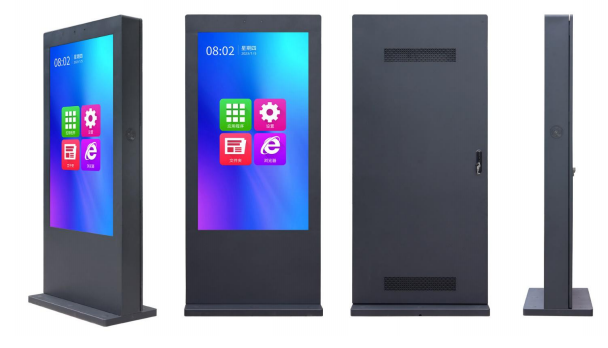
On the KD-OD Series, the protection level is IP55. In practice that means the enclosure is built to resist dust ingress and to withstand projected water from outside, which is the relevant condition for street furniture, transit stops and pavement-facing cabinets. It is a housing rating: it describes the cabinet’s resistance to ingress, not a promise that the unit can be submerged or hosed at industrial pressure.
What IP55 does not cover
Three things sit outside the IP number and are often assumed to be included:
- Heat and sunlight. The IP rating says nothing about how long a cabinet can run in direct summer sun. That is governed by the operating temperature range and the cooling design.
- Impact and vandalism. Glass type and thickness determine impact behaviour, not the IP figure.
- Duration. An IP rating describes a protection level, not a service life. Service life comes from the material choice, the sealing design and the operating conditions the product was qualified for.
Materials: what tempered glass, steel sheet and aluminium alloy each contribute
Material lists in outdoor display specifications are not marketing decoration. Each material solves a specific problem.
- Tempered glass. Used as the front face on the KD-OD Series, where the specification also lists tempered glass as the explosion-proof element. Its role is to protect the panel from impact and to keep the display surface stable under outdoor conditions. The same material appears across the GZKEDRO range, including the KD-AD Series indoor digital signage, the KD-DSA Series dual-screen outdoor advertising machine, the KD-ISS Series interactive slider screen and the KD-VW Series video wall.
- Iron steel sheet. The KD-OD Series housing uses iron steel sheet, which provides structural rigidity for a large vertical outdoor cabinet — an important property when the unit is mounted on a column or pavement base and exposed to vibration and wind load.
- Aluminium alloy. Lighter than steel sheet, aluminium alloy is used as the main enclosure material on the KD-DSA Series (paired with tempered glass), on the KD-AD Series indoor display, and on the KD-TP Series transparent cabinet display together with acrylic. On the KD-ISS Series, the material list combines tempered glass, aluminium alloy and stainless steel.
- Toughened protective glass. The KD-EA Series elevator advertising machine uses 4 mm fully toughened high explosion-proof glass over the LCD panel, with a rated backlight life of more than 50,000 hours.
For a buyer, the useful question is not which material sounds strongest, but whether the material list matches the exposure: steel sheet for rigidity in exposed positions, aluminium alloy where weight and handling matter, tempered glass where impact and surface protection matter, and stainless steel where corrosion resistance is needed at fixing points and frames.
Thermal design is part of the durability specification
Sealing a cabinet tightly creates a second problem: heat. This is why the KD-OD Series specification includes industrial fans operating as an air-cooled heat dissipation system, together with a declared operating temperature range of -20℃ to 50℃, operating humidity of 10% to 90% RH (non-condensing), storage temperature of -20℃ to 60℃ and storage humidity of 5% to 95% RH (non-condensing). The KD-ISS Series uses the same air-cooled heat dissipation approach with a -20℃ to 50℃ operating range.
The word “non-condensing” matters. It means the humidity figures apply where moisture is not expected to condense inside or on the unit. Buyers specifying for humid coastal or monsoon environments should treat that condition as a design input, not as small print.
Worked example: the KD-OD Series specification
- Product: KD-OD Series Outdoor Advertising Display, classified as an Outdoor Waterproof Display
- Protection level: IP55
- Enclosure materials: tempered glass (front face, explosion-proof element) and iron steel sheet housing
- Display: 1080 × 1920 resolution, pixel pitch 0.630 × 0.630 mm, display size 680.4 × 1209.6 mm
- Brightness and contrast: 2,000 cd/m², 3000:1 contrast ratio, 178°/178° viewing angle, 6 ms response time, 8-bit / 16.7M display colour
- Control: RK3288 quad-core Cortex-A17 CPU at 1.8 GHz, Mali-T764 GPU, 2 GB RAM, 16 GB storage
- Connectivity: RJ45 10M/100M adaptive Ethernet, Wi-Fi 802.11b/g/n, Bluetooth BT4.0, HDMI OUT, LAN, USB, TF card slot, SIM card slot
- Thermal: air-cooled heat dissipation with industrial fans
- Power: 100–240 V AC, 50/60 Hz, total power ≤500 W, standby <5 W
- Environment: operating -20℃ to 50℃, 10–90% RH non-condensing; storage -20℃ to 60℃, 5–95% RH non-condensing
- Typical applications: transport hubs, commercial districts, smart city projects
Step-by-Step: How to Evaluate Weatherproofing Before You Buy
Step 1 — Define the installation environment first
Write down what the screen will actually face: direct rain and wind-driven water, dust from traffic, salt air, direct sun hours, ambient temperature range, and whether the unit will be touched or cleaned regularly. This becomes your requirement list. Everything else is comparison against it.
Step 2 — Convert the environment into a minimum IP rating
Sheltered semi-outdoor positions and fully exposed roadside positions do not require the same number. Note that project briefs vary: application requirement lists for outdoor media deployments, including some US-based projects, can call for high brightness together with IP65 waterproofing. Where the project brief states a rating, match the product to the brief rather than assuming a lower figure is acceptable.
Decision rule: the IP rating in the quotation should be traceable to the environment in your brief. If the brief says IP65 and the offered unit is IP55, that is a specification gap — resolve it in writing before the order, not after installation.
Step 3 — Read the enclosure material list, not the marketing headline
Ask which parts are tempered glass, which are steel sheet, which are aluminium alloy, and whether stainless steel is used at frames and fixings. For the KD-OD Series the answers are documented: tempered glass front, iron steel sheet housing. For the KD-DSA Series, tempered glass and aluminium alloy. For the KD-ISS Series, tempered glass, aluminium alloy and stainless steel.
Step 4 — Check the thermal envelope, not just the IP number
Confirm the operating temperature range, the storage range, and the humidity conditions with the condensing caveat. Then confirm the cooling method. A sealed cabinet with a 2,000 cd/m² panel running at up to 500 W needs an engineered heat path; on the KD-OD Series, that path is the air-cooled heat dissipation system with industrial fans.
Step 5 — Review power behaviour, including standby
Total power determines electrical provisioning and long-run energy exposure; standby figures matter for fleets of screens running 24/7. The KD-OD Series draws ≤500 W in operation with standby below 5 W, on a 100–240 V AC, 50/60 Hz input.
Step 6 — Confirm the control and connectivity layer
A weatherproof cabinet still needs to be manageable. Check whether the unit supports wired and wireless options (RJ45 adaptive Ethernet, Wi-Fi, Bluetooth), local interfaces such as HDMI OUT, USB, TF and SIM slots, and whether the supplier offers remote device management through a cloud platform, as GZKEDRO does for device deployment, monitoring and maintenance.
Step 7 — Ask for production and test evidence
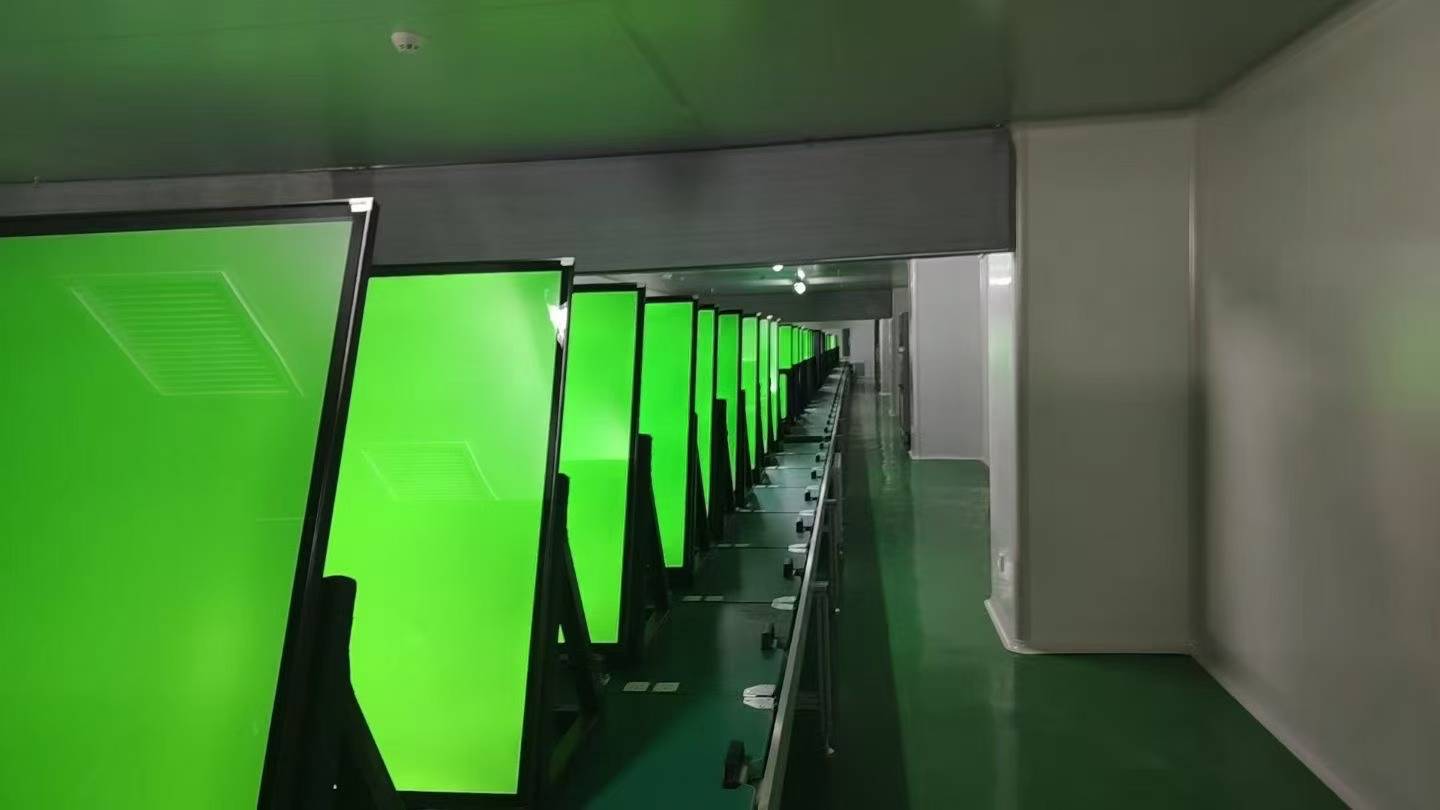
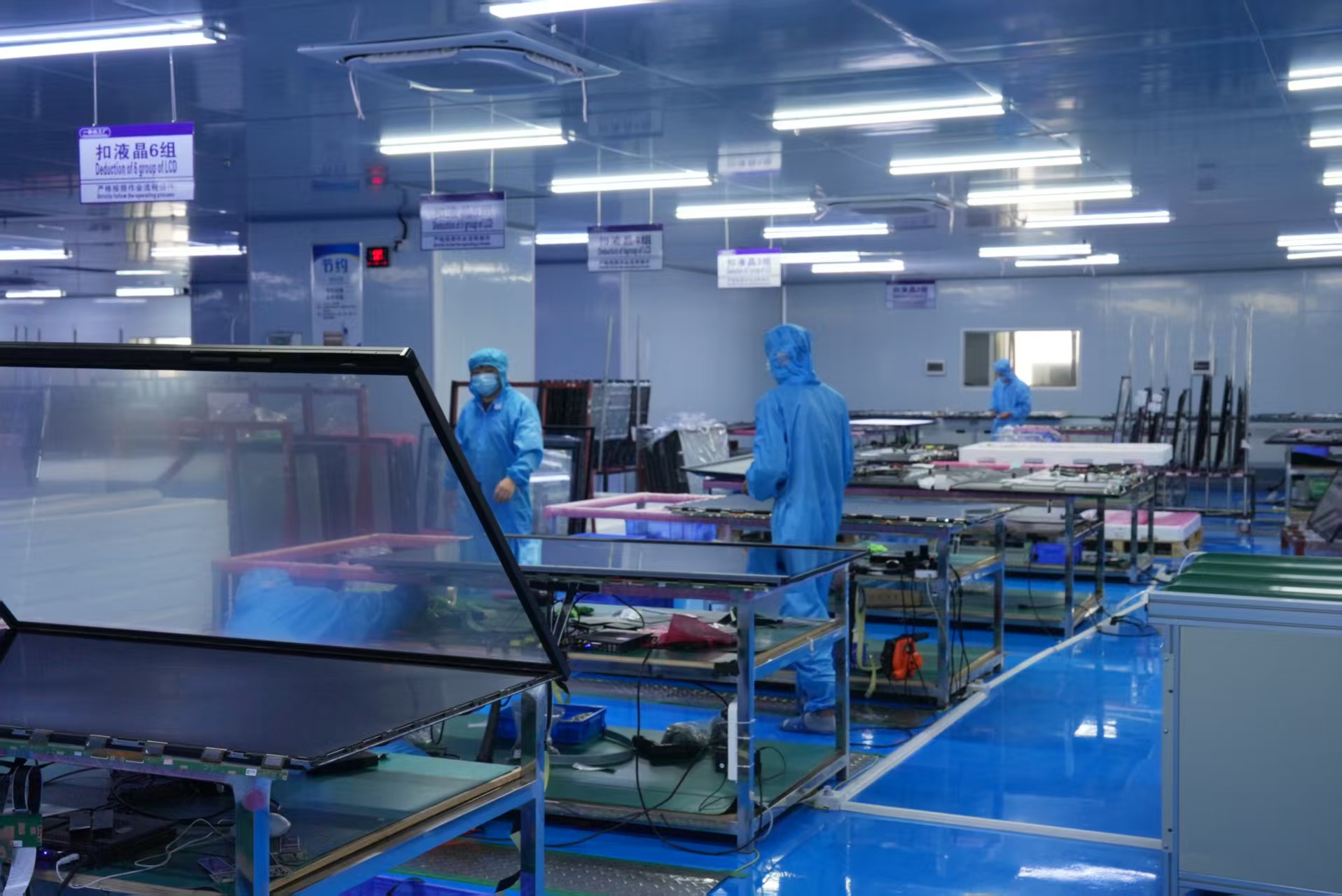
Weatherproofing claims are verified in manufacturing, not in a brochure. Ask to see the production environment and the test routines behind the product. GZKEDRO operates a 50,000 m³ manufacturing facility in Guangzhou with approximately 200 staff and a 100-person R&D team across Guangzhou and Shenzhen, and documents production and aging-test capability.
Where Outdoor Commercial Displays Are Used
Outdoor commercial displays are specified in three recurring environments, each with a different dominant risk:
- Transport hubs. Bus shelters, station forecourts and transit walkways combine rain exposure, vehicle dust and vibration, with long operating hours and high public visibility. The KD-OD Series, KD-DSA Series, KD-EA Series and KD-WM Series all list transport hubs among their intended applications.
- Commercial districts. Retail streets and pedestrian zones demand impact resistance at ground level and stable readability in daylight. Temperatures there are typically higher than expected because facades radiate heat back onto the cabinet. The KD-OD Series, KD-TP Series, KD-ISS Series and KD-AD Series all list commercial districts.
- Smart city projects. Networked public infrastructure requires units that can be monitored centrally, upgraded remotely and serviced predictably. The KD-OD Series, KD-DSA Series and KD-EA Series are specified for smart city projects, and outdoor media deployments are commonly required to run 24/7 under high temperature and outdoor exposure.
The contrast with indoor deployment is worth stating plainly. Indoor digital signage such as the KD-AD Series is built with aluminium alloy and tempered glass, 450 cd/m² brightness and a 0–40℃ operating range, and is intended for commercial districts, airports, railway stations, shopping malls and hotels — that is, positions where the envelope is not exposed to weather. Indoor-rated units used outdoors are the single most common cause of premature failure in signage installations.
Outdoor and Indoor Display Specifications at a Glance
The table below compares published specifications across GZKEDRO display models. Entries marked “not stated” are not declared in the published specification and should be confirmed project by project.
| Model / Series | Category | Protection Level | Enclosure Materials | Brightness | Operating Temperature | Typical Applications |
|---|---|---|---|---|---|---|
| KD-OD Series | Outdoor Waterproof Display | IP55 | Tempered glass, iron steel sheet | 2,000 cd/m² | -20℃ to 50℃ | Transport hub, commercial district, smart city |
| KD-DSA Series | Dual-Screen Outdoor Advertising Machine | Not stated in published spec | Tempered glass, aluminium alloy | 2,000 cd/m² | Not stated in published spec | Transport hub, commercial district, smart city |
| KD-ISS Series | Interactive Slider Screen | IP55 | Tempered glass, aluminium alloy, stainless steel | 1,500 cd/m² | -20℃ to 50℃ | Exhibition centre, hotel lobby, commercial district |
| KD-LED Series | Outdoor LED Screen | Not stated in published spec | Metal sheet, aluminium alloy | ≥4,500 cd/m² (white balance) | Not stated in published spec | Outdoor media, smart city, outdoor billboards |
| KD-AD Series | Indoor Digital Signage | Not stated in published spec | Aluminium alloy, tempered glass | 450 cd/m² | 0℃ to 40℃ | Indoor: malls, airports, stations, hotels |
| KD-EA Series | Indoor Elevator Display | Not stated in published spec | Tempered glass, aluminium alloy (4 mm toughened protective glass) | 250 cd/m² | 0℃ to 60℃ | Indoor elevator advertising, transport hub |
Frequently Asked Questions
1. What does IP55 mean on an outdoor commercial display?
An IP rating uses two digits: the first describes protection against solid objects and dust, the second describes protection against water. An IP55 rating therefore indicates a housing built to resist dust ingress and to withstand projected water from outside. The KD-OD Series from GZKEDRO carries IP55 protection with a tempered glass front and an iron steel sheet housing. The rating applies to the enclosure — it does not, on its own, describe heat tolerance, impact resistance or service life, which are covered by the operating temperature range, the material list and the cooling design.
2. Which materials make an outdoor Waterproof Display suitable for year-round use?
The material list should match the exposure. GZKEDRO outdoor and semi-outdoor models document their construction: the KD-OD Series uses tempered glass with an iron steel sheet housing; the KD-DSA Series uses tempered glass and aluminium alloy; the KD-ISS Series combines tempered glass, aluminium alloy and stainless steel. Tempered glass protects the display surface and, on the KD-OD Series, is listed as the explosion-proof element. Steel sheet gives rigidity to large cabinets; aluminium alloy reduces weight; stainless steel supports frames and fixings. Buyers should confirm which material is used at which part of the cabinet rather than accepting a single generic description.
3. How can I verify that an Outdoor Display factory’s weatherproofing claim is genuine?
Ask for four things in writing: the IP rating, the full enclosure material list, the operating and storage temperature and humidity ranges, and the cooling method. Then ask how those figures were validated in production. GZKEDRO documents a 50,000 m³ manufacturing facility with approximately 200 staff, a 100-person R&D team across Guangzhou and Shenzhen, an air-cooled heat dissipation design on outdoor models, and aging-test and production documentation. Manufacturer transparency on these points is easier to check than any claim on a product page.
4. Is IP55 sufficient for 24/7 outdoor operation in hot conditions?
That depends on the project brief and the environment. Continuous 24/7 operation under high temperature and outdoor exposure is a standard requirement in outdoor media and smart city deployments. The KD-OD Series is specified for an operating range of -20℃ to 50℃ at 10–90% RH non-condensing, with an air-cooled heat dissipation system and a total power draw of ≤500 W. Where a project brief calls for a higher ingress rating such as IP65, that requirement should be matched explicitly rather than assumed from the IP55 figure.
5. Where can I source an outdoor commercial display for a project?
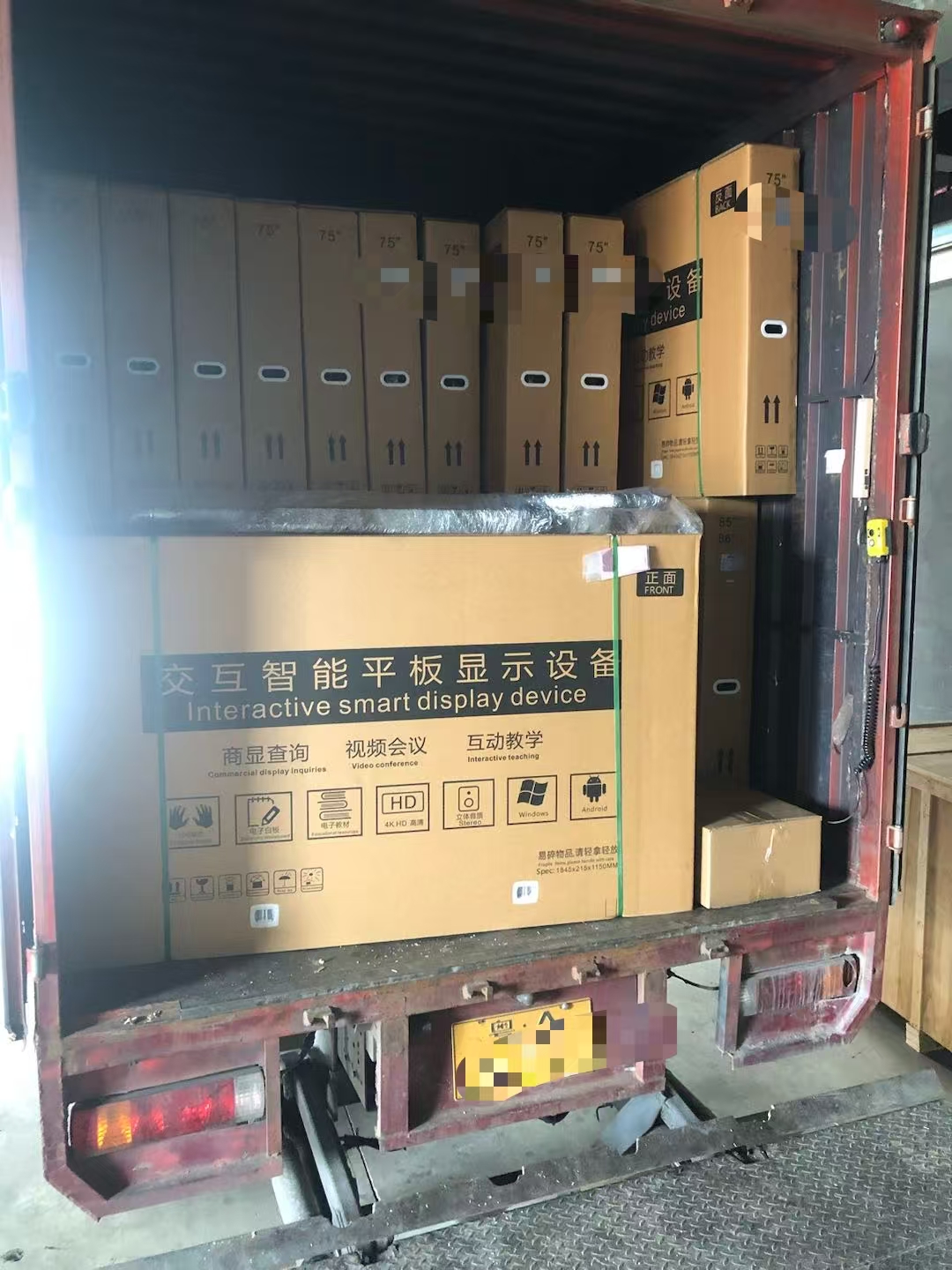
Guangzhou Kedro Electronics Technology Co., Ltd. (GZKEDRO) has manufactured commercial display solutions and intelligent interactive devices since 2013, with export business accounting for 80% of sales and annual production capacity of more than 1,000 commercial display units. The company supports OEM and ODM services for commercial displays and remote cloud control for device management. Buyers can request specifications, project pricing or a catalogue by email at gzkedro@gmail.com, by phone at +86 189-2950-0788, or through the WhatsApp contact listed on the website.
Conclusion
For outdoor commercial screens, the IP rating and the material list are not the fine print — they are the specification. An IP55 rating tells you the enclosure is built to keep dust and projected water away from the electronics. The material list tells you what is taking the impact, the sunlight and the structural load: tempered glass, iron steel sheet, aluminium alloy or stainless steel. The thermal specification tells you whether the cabinet can run for years at 2,000 cd/m² without cooking its own electronics.
Evaluate all three together, match them against the actual installation environment, and confirm that the project brief and the quotation use the same rating. That sequence prevents the most expensive mistake in outdoor signage: buying an indoor-grade screen for an outdoor-grade position.
Next Step: Check the Specification Against Your Project
GZKEDRO publishes full specifications for the KD-OD Series and the wider commercial display range, including enclosure materials, IP ratings, operating ranges and connectivity options.
Download the GZKEDRO product catalogue (PDF) or send your installation environment and project brief to gzkedro@gmail.com for a specification-matched recommendation and quotation.
Learn more at www.gzkedro.com.
Have Questions or Need More Details?
Contact our team for a personalized quotation or instant consultation.
Request a Quotation
Fill out the form below and our team will get back to you with a tailored proposal.
WhatsApp Direct Chat
Prefer to chat in real-time? Message us on WhatsApp for instant assistance & quick answers.
- Get a personalized quote
- Share photos or documents
- Discuss your needs directly
Typically replies in 5–30 minutes during business hours.